Preface

1/ Our Confusion in Architecture
In the 20th century we have passed through a unique period, one in which architecture as a discipline has been in a state that is almost unimaginably bad. Sometimes I think of it as a mass psychosis of unprecedented dimension, in which the people of earth -- in large numbers and in almost all contemporary societies -- have created a form of architecture which is against life, insane, image-ridden, hollow. The ugliness which has been created in the cities of the world, and the banality and pretentiousness of many 20th-century buildings, streets, and parking lots have overwhelmed the earth. Much of this construction is caused by developers, housing authorities, owners of hotels, motels, airport authorities. In that sense architects might be considered blameless, since in some degree the ugliness of what has been created is caused by new relations between time, money, labor, and materials and by a set of conditions in which the real thing -- authentic architecture that has deep feeling and true worth -- is almost impossible. But architects are not blameless. For the most part, architects have stood by, content to play their role as part of the 20th-century machine. In many cases they make it worse. They gild the lily of commercial development with pretentiousness. Many architects have raised the designer-conscious fashion of building to new levels, have invented absurd ways of thinking about architecture, have altogether poisoned the earth with an abundance of terrible and senseless designs which have few redeeming features. Of course there are many architects who struggle to make socially useful architecture. Low-cost housing, shelters for homeless people, communities and pedestrian neighborhoods, better apartment buildings, offices set in green landscapes and parks. But somehow these, too, often fail to hit the mark. The intellectual satisfaction of these sincere goals is rarely matched by a true feeling of value achieved, of buildings, streets, and neighborhoods which are nourishing and which act as fitting vehicles for our sacred human life. In traditional society, building was almost always something that stood for human value, that raised life to its greatest possible heights, that supported a spiritual and meaningful conception of human existence. Now, instead, too many architects rub their hands cynically, foisting images on the public, creating works which are not friendly to people, or to the human spirit, but are friendly to the developers who make huge profits from these buildings and which do much to bolster those architects with financially rewarding glossy images in magazines. Of course architects, like others, have a conscience. Many of us regret the situation. Many struggle, like drowning men and women, in the sea that engulfs us. Some of us, though, do not know what to do. We must eat, we cannot afford to lose our jobs. The conditions which create the inhumane architecture that is being produced cannot be too closely scrutinized, since too close a scrutiny can lead to uncomfortable questions, which may ultimately make us unemployable. So, in one form or another, we -- all of us, architects, builders, planners, and financiers, who have taken part in the construction of the modern environment -- have participated, willy-nilly, and for the most part with little more than mild objection to this robbing of the earth. That is what I mean by a mass psychosis. Has there ever been a time in the history of the earth when a group of people, entrusted by society with the creation and preservation of our physical world, have so sadly undermined it, become collaborators with the enemy -- when the enemy is, even, unknown to many of us? Is there even an enemy at all? Yet we have, many of us, parlayed our own profession to a new con-
dition in which it not only follows this madness, but even leads others on, continues it, protects it, enlarges it. I do not think architects are happy with all of this, any more than other members of society are happy. In the last two decades voices have begun to be heard. People have written, spoken out. Away with the emperor's new clothes! We can all see that he is naked. Let us not go on with these charades. What is it that has to be done? How should an architect who feels that things are wrong set them right? Many of us know that something is wrong, and yet do not know, concretely, how to act to correct the wrong. How is it possible to improve the situation, when the process that causes so much destruction is so deeply rooted in society that it is almost impossible for one architect, or even a hundred architects, to stand up against it and have any positive effect?
2 / How Architecture Depends on Our Picture of the World
Very few people realize, I think, how much the present confusion which exists in the field of architecture is wound up with our conception of the universe. I have come to believe that architecture is so agonizingly disturbed because we -- the architects of our time -- are struggling with a conception of the world, a world-picture, that essentially makes it impossible to make buildings well. I believe this problem goes so deep that it even makes it extremely difficult to build the most modest, useful building in an ordinary way. Many of us are not especially aware that our conception of things -- our picture of the universe -- could have any concrete or immediate effect on our activity as architects. We go about our business trying our best to make good buildings -- in whatever fashion we understand "good." The task is difficult. We struggle with it. But we are not aware, I think, that our effort is affected in any substantial way by the picture we have of things, the picture we have of the world. Most of us are not even aware, perhaps, that we have any special picture of the world. And, if we do ever carefully examine our own picture of the world, we shall find, no doubt, a rather complicated mixture of things: vague conceptions of atoms, galaxies, and stars; organic life as it appears on earth from, we are told, some primordial soup of amino acids. Mixed with this, there is no doubt some form of concern for our fellow human beings, some kind of piety, some awareness that certain things are more beautiful and others less. How can all this muddled mess of a conception of the world be responsible for anything? How could it possibly be true that this conception might interfere so deeply with our efforts as builders, that it makes it all but impossible to make a building well? The implication seems fantastic. And yet this is just what I believe. I believe that we have in us a residue of a world-picture which is essentially mechanical in nature -- what we might call the mechanist-rationalist world-picture. Whether or not we believe that we are subscribing to this picture, whether or not we are aware of the impact of its residue in us, even when we consider ourselves moved by spiritual or ecological concerns, most of us are still -- I believe -- to a greater or lesser extent in the grip of some residue of this mechanical world-picture. Like an infection it has entered us, it affects our actions, it affects our morals, it affects our sense of beauty. It controls the way we think when we try to make buildings and -- in my view -- it
has made the making of beautiful buildings all but impossible. What exactly do I mean by the mechanistrationalist picture of the world? What I mean, roughly, is the 19th-century picture of physics. That is, a picture of a world made of atoms which whirl around in a mechanical fashion: a world in which it is assumed that all the universe is a blind mechanism, whirling on its way, under the impact of the "laws of nature." These laws are, essentially, those mechanistic laws which explain how the atoms and the structures made of these atoms proceed on their way, under the influence of forces and configurations. Coupled with this picture there is a larger picture of weather, climate, agriculture, animal life, society, economics, ecology, medicine, politics, administration, and even family life -- all understood in a more or less mechanical fashion. Even though we would admit that the precise laws and mechanisms may not be known, we assume that underlying our ignorance there are some laws, not quite formulated, which do account for how things work, even in these everyday surroundings. Thus we carry forward a blithe and rather simple mental assurance that it is all created by the pushing and pulling of events, very much the way we also understand the pushing and pulling of 19th-century atoms. Of course, there are relatively few people alive today who wholeheartedly believe that the world really is such a place. Physicists -- especially the great physicists -- have a more humble and wondering attitude about the nature of the universe. So do many non-scientists. Architects are, at least explicitly, rarely concerned with such a mechanistic picture. On the surface architects appear to be concerned with deeper questions -- artistic and social questions -- that are often more mysterious and more interesting. However, in trying to probe the nature of the puzzle surrounding the collapse of architecture, I have slowly become convinced that many architects -- especially those who have become
famous in recent years and whose work now forms the model for the work of younger architects -- are in the grip of such a mechanistic conception, even if they do not know it. I have reached the conclusion that the strange fantasies, the private in-house language about architecture, the strange nature of 20th-century gallery art, deconstructionism, postmodernism, modernism, and a host of other "isms," all of which affect our physical world hugely, are created because of an entanglement between the nature of architecture, the practice of architecture, and the mechanical conception of the universe. Thus, I believe that there is, at the root of our trouble in the sphere of art and architecture, a fundamental mistake caused by a certain conception of the nature of matter, the nature of the universe. More precisely, I believe that the mistake and confusion in our picture of the art of building has come from our conception of what matter is. The present conception of matter, and the opposing one which I shall try to put in its place, may both be summarized by the nature of order. Our idea of matter is essentially governed by our idea of order. What matter is, is governed by our idea of how space can be arranged; and that in turn is governed by our idea of how orderly arrangement in space creates matter. So it is the nature of order which lies at the root of the problem of architecture. Hence the title of this book. When we understand what order is, I believe we shall better understand what matter is and then what the universe itself is. But so long as we are -- -- even unconsciously -- prisoners of a too-simple mechanical picture of matter, it is inevitable, I am afraid, that we -- and the architecture we create -- must continue in the blind confusion which too many of us have experienced for more than half a century. That is my effort in this book: to show how architecture can be made whole again, through a new picture of the nature of order, and through a new picture of the nature of matter itself.
3 / What Is Order?
What is order? We know that everything in the world around us is governed by an immense orderliness. We experience order every time we take a walk. The grass, the sky, the leaves on the trees, the flowing water in the river, the windows in the houses along the street -- all of it is immensely orderly, It is this order which makes us gasp when we take our walk. It is the changing arrangement of the sky, the clouds, the flowers, leaves, the faces around us, the dazzling geometrical coherence, together with its meaning in our minds. But this geometry which means so much, which makes us feel the presence of order so clearly -- we do not have a language for it.
And what should we do to create order? Even the smallest building has order of great complexity. In the course of laying out and making the volume of the building, the filigree of structure, floors, windows, doors, and ornament -- we face a dazzling task. What is the order we should infuse it with? In large projects, especially, we can easily get muddled. More is at stake, so the nature of the order we put in is especially crucial. We rely more on intellectual conceptions. So then, our assumptions about order begin to enter in explicitly. It is not only a single brick, or door, or roof. It might be a whole neighborhood -- millions of dollars of construc-

tion -- perhaps the living environment for hundreds of people at a time. How do I do this? What kind of order should it embody, to make sure it is a success? In facing any one of these tasks, I come up against this question right away: What exactly do I mean by order? If I want to get an idea of order which is deep enough to be really helpful -- helpful to me, helpful to my craftsmen, helpful to my students, helpful to my clients, helpful to my apprentices and my staff -- I have to define exactly what I mean by order. In a sense, everyone knows what order is. But when I really ask myself "what is order" -- in the sense of deep geometric reality, deep enough so that I can use it, and so that it is able to help me create life in a building -- then it turns out that this "order" is very difficult to define. Look at the yellow tower on the facing page. It has the smile of the Buddha, of life and simplicity. It moves us in the heart. I want a conception of order subtle enough to explain the way the yellow tower makes us feel. The conceptions of order which physics currently defines, and most other current ideas of order, are simply inadequate for a profound task like this. Scientists have been trying to define order for about a century. The idea of order as a precise concept first entered physics as a by-product of thermodynamics, when the orderliness of molecules in a perfect gas was analyzed numerically by Ludwig Boltzmann in 1872 through the idea of entropy. Unfortunately the order which can be treated as negative entropy is too simple, and, for complex artistic cases, almost trivial.' In the 20th century, the hunger of the scientific community for some precise concept of order was so great that attempts to extend the notion of thermodynamic order to cover all order were made by many writers outside the field of physics. Sober generalizations of the thermodynamic concept of order were also made by physicists. None of this went far enough to be helpful to artists. What other ideas of order can we get from modern physics? We could concentrate on special types of order like crystallographic order, defined by repetition.' But this concept is too limited to be much help in making something subtle and beautiful. We could develop conceptions of military or hierarchic order. These too have been analyzed, but are too limited to be much help.' Complex patterns generated by interacting rules are more interesting, and raise the possibility of seeing all order as the product of a computable generative process.' This could give us a general view of order as any system produced by interacting generative morphological rules. In other cases of this type we have an orderly pattern-making process based on the interaction of rules which can simulate the motion of a thrown ball, or a breaking wave. Still more complex, we are beginning to have some idea of biological order, an order of a growing thing in which one system unfolds continuously to form another.' In recent years, biologists have tried to formulate more sophisticated concepts of order." Unfortunately, these attempts have also not yielded results which are practically useful in the art of building. Deeper theories of order have been attempted. A preliminary sketch of a very much deeper theory was once made by the physicist Lancelot Whyte, who tried to develop a view of all biology as a science of asymmetrical ordered structures.'! The theory of catastrophes, which tries to describe the birth of configurations out of chaos, has been developing in recent years and is considered by many to be promising.'? Perhaps one of the clearest statements so far has been expressed by the physicist David Bohm. Bohm tried to outline a possible theory in which order types of many levels exist and are built out of hierarchies of progressively more complex order types." But none of this, suggestive as it all is, is directly useful to a builder. Even the most advanced of these ideas is still not deep enough or concrete enough to give us practical help with architecture, where we actually try to create order every day. If I want to build a building as beautiful as the yellow tower, these theories of order
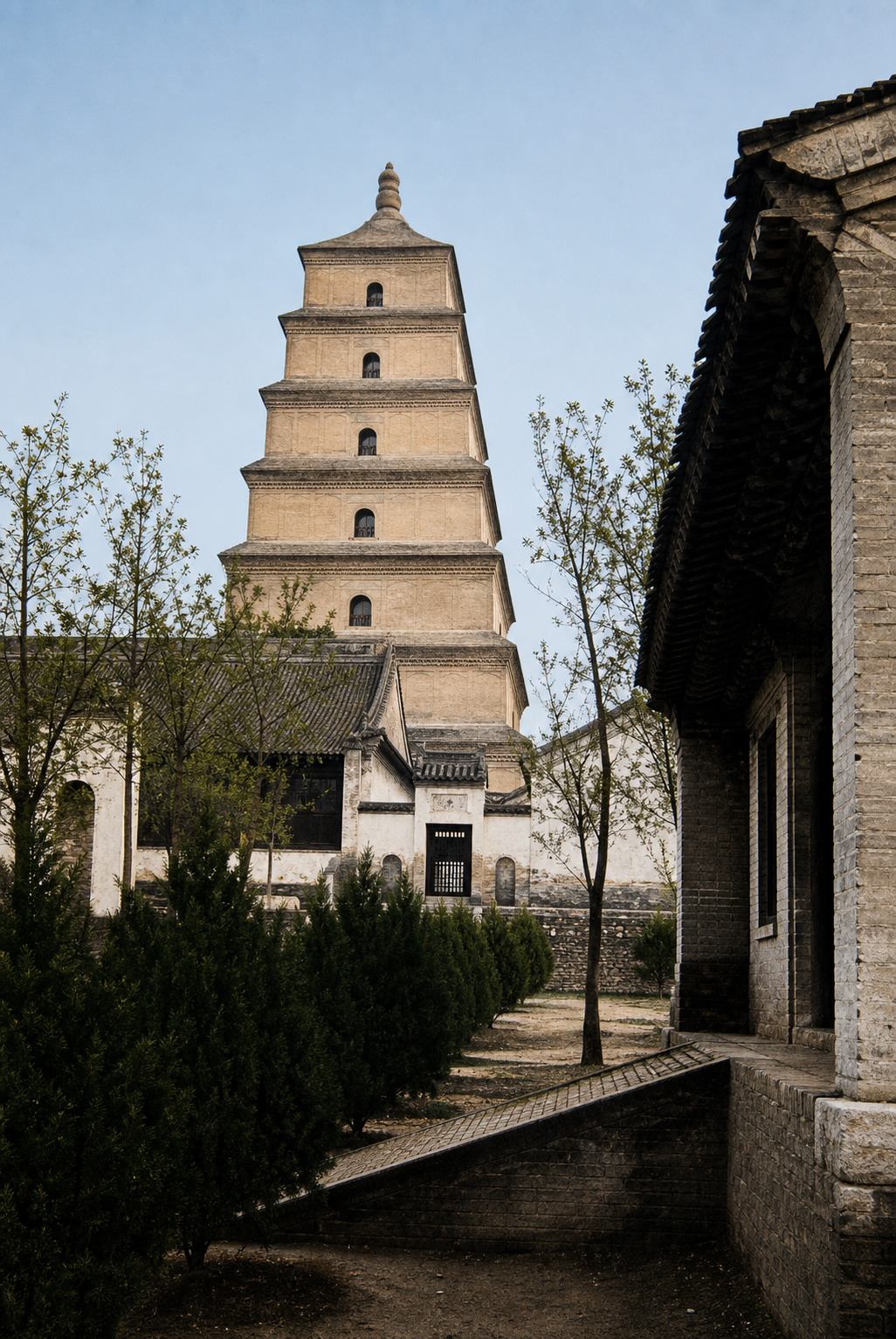

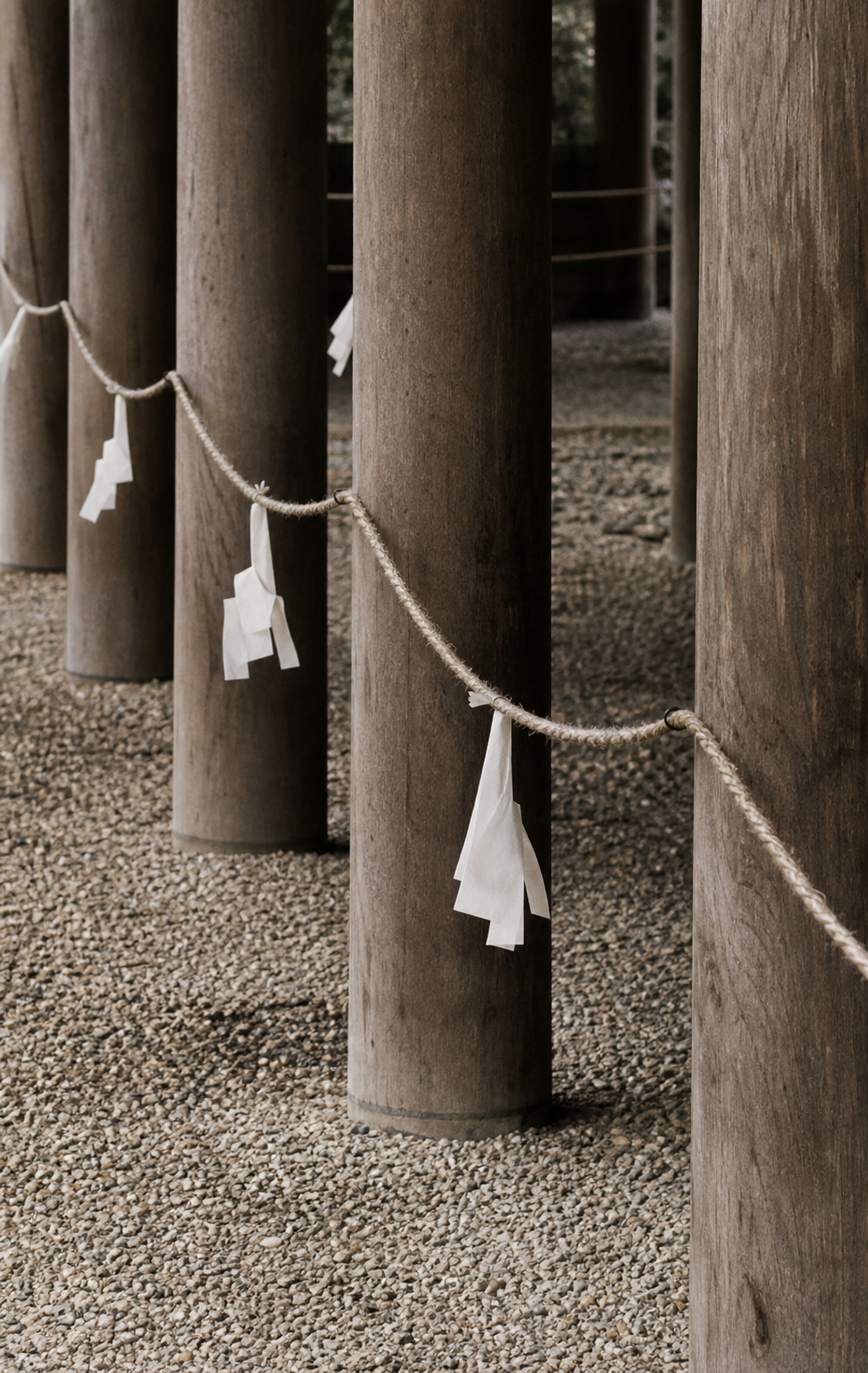
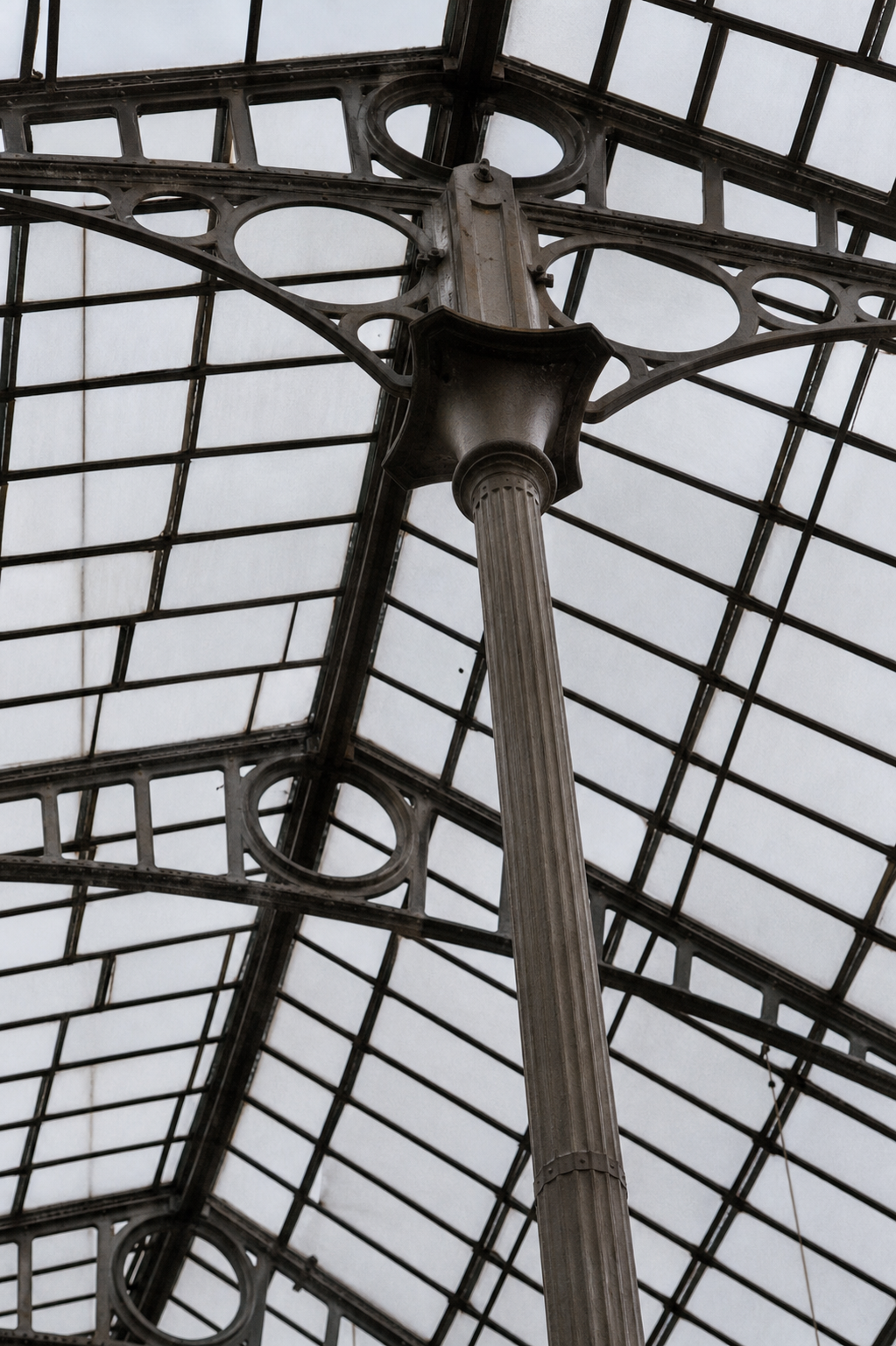
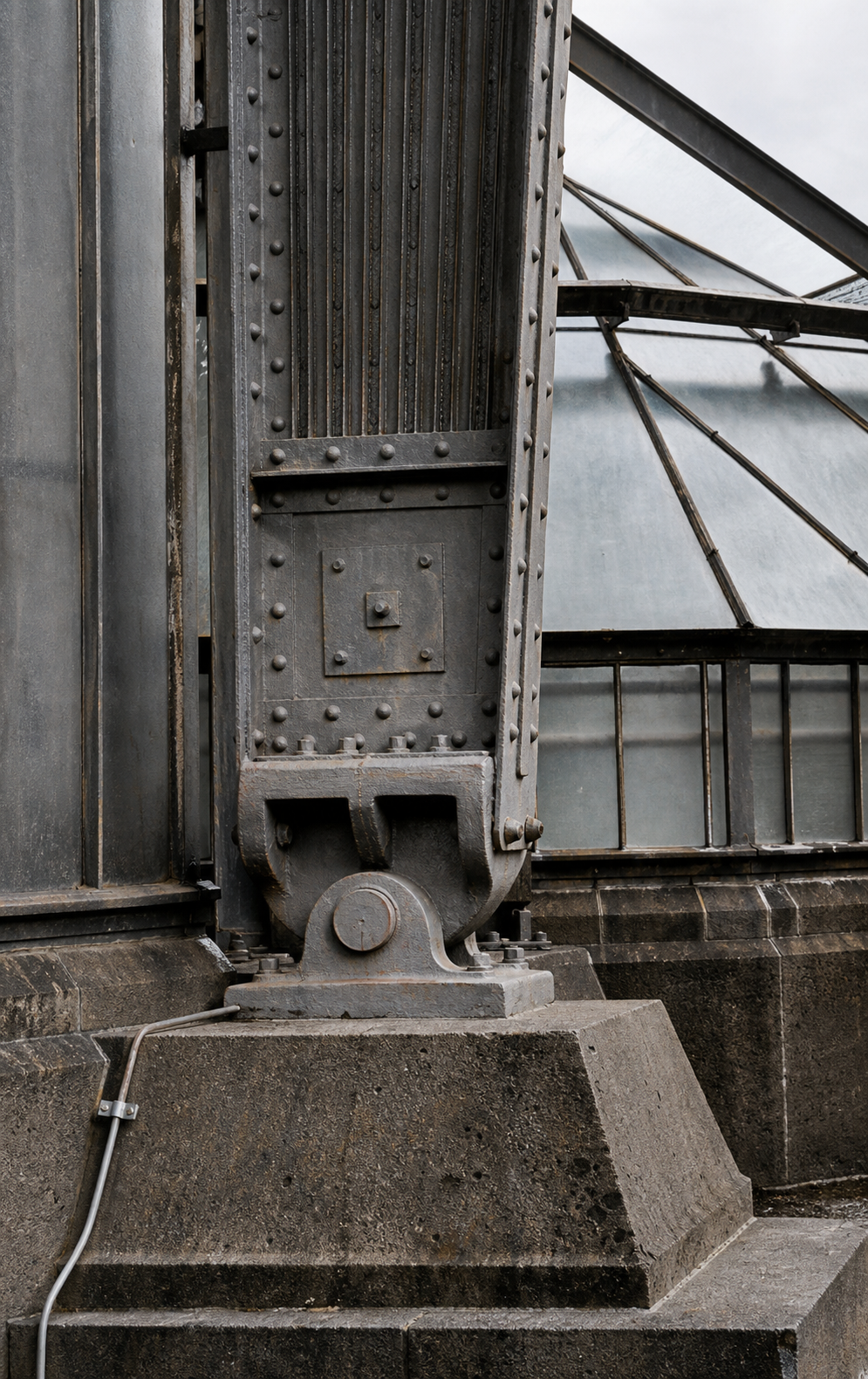
are not even remotely deep enough to help me in a practical fashion. None of these theories are even capable of helping us to understand the order of the yellow tower. Look at the other examples of buildings on pages 12-13. Each has some kind of profound order. But within our present limited worldview we cannot describe this order scientifically. Do we even understand what their makers were trying to do? The beautiful smooth columns from Ise have an immensely subtle order, where a few ropes and small pieces of white cloth utterly change the building. The tomb of Timur has a magnificence which comes from its high body, and the fluting on the dome. These buildings move us, and touch us in our hearts. In a more modern form, the steel base of the Palm House at the Berlin Botanical Garden has a similar quality. The steel plates and bolts are very harmonious, perfectly sized. It feels like
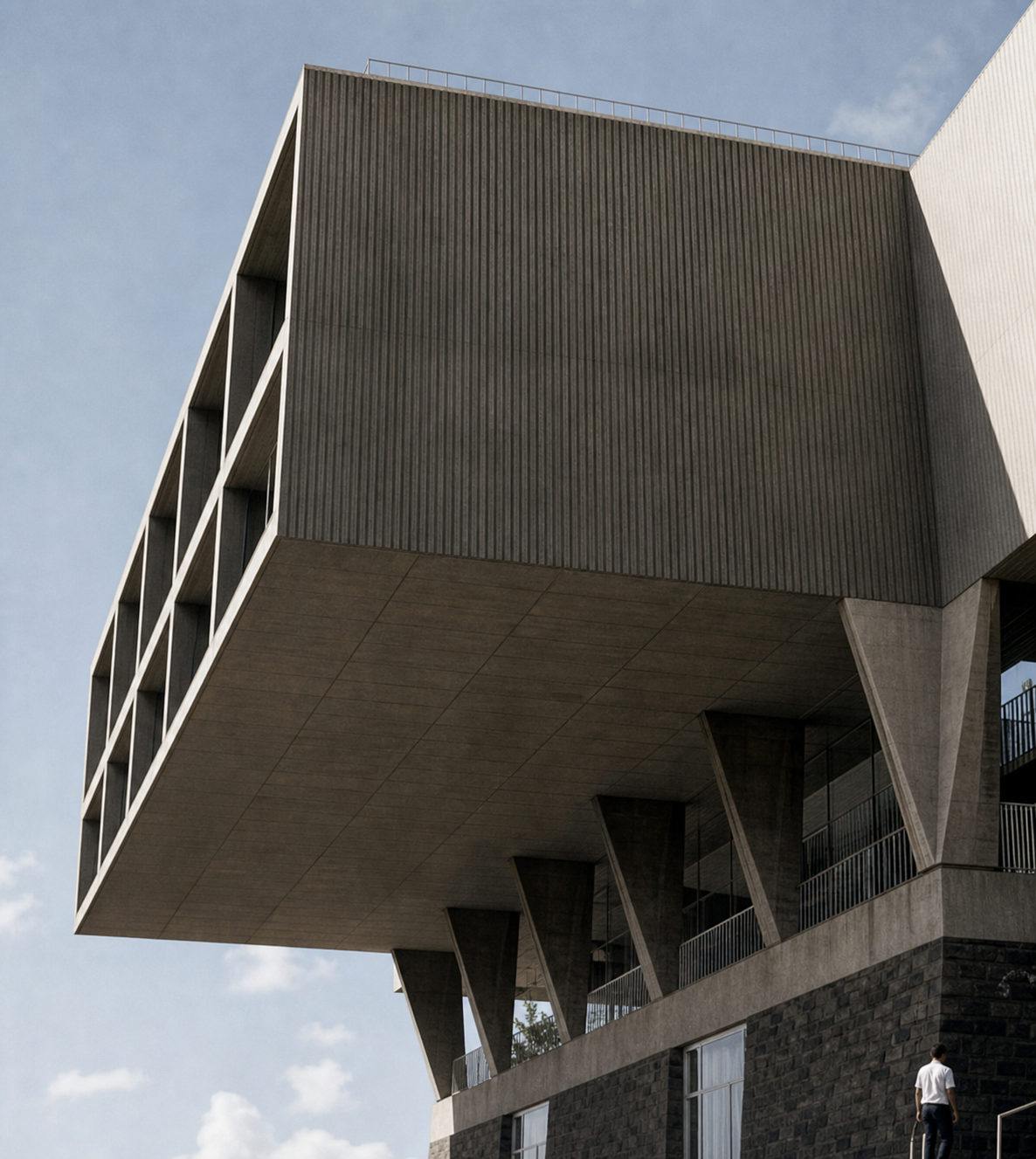
the bones of an animal. The glass and ironwork roof of the London arcade has a similar, completely naturalistic quality. And the small drinking cup, a simple piece of cut bamboo, leaves my heart pure and quiet. For contrast, on page 14 there are a few examples of more recent buildings. They also have order of some sort; but they are less gentle: they do not go to the heart; they are less beautiful. The apartments in Amsterdam have a brutal repetition which has little to do with the organic order of human life. The fake arches of Frank Lloyd Wright's Marin County Civic Center in California are purely decorative: they have little to do with the profound sense of order we feel in something that is structurally real. The bank building of white stucco is uninteresting and oversimplified. Its order, insofar as there is any, is certainly not one which reflects the actual beauty and subtlety of a large build-
ing, or of a complex human group. Eero Saarinen's war memorial building in Minneapolis is gross, brutal, and appalling. Are these intuitions objectively verifiable? Is there actually less order in these later examples than in the earlier examples? Or is it just a different order? We feel the difference in order between the examples on pages 12-13 and the examples on page 14. But can we understand this difference objectively? Are these apparently crude examples really more crude than the other examples? Is the order of the Ise shrine, or of the tomb of Timur the Great, genuinely and objectively more profound than the repetition of the Amsterdam apartments? What, indeed, is that thing we intuitively feel as order in all these different cases? It is extraordinary to realize that, in the current intellectual context, not one of these questions has had a clear answer.'* Among current ideas of order, there is no conception of
order which helps us create the profound life that can exist in buildings and in other artifacts.
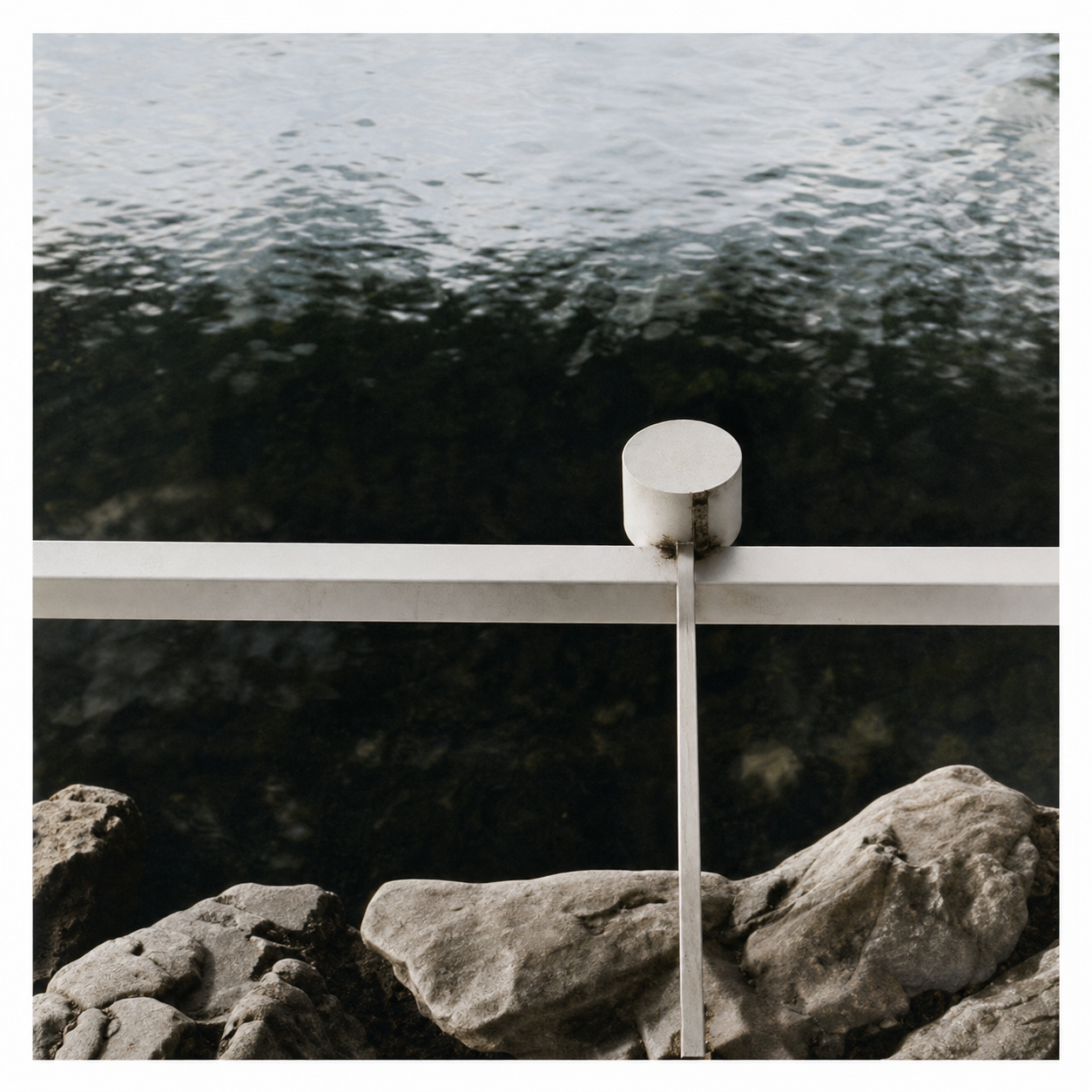
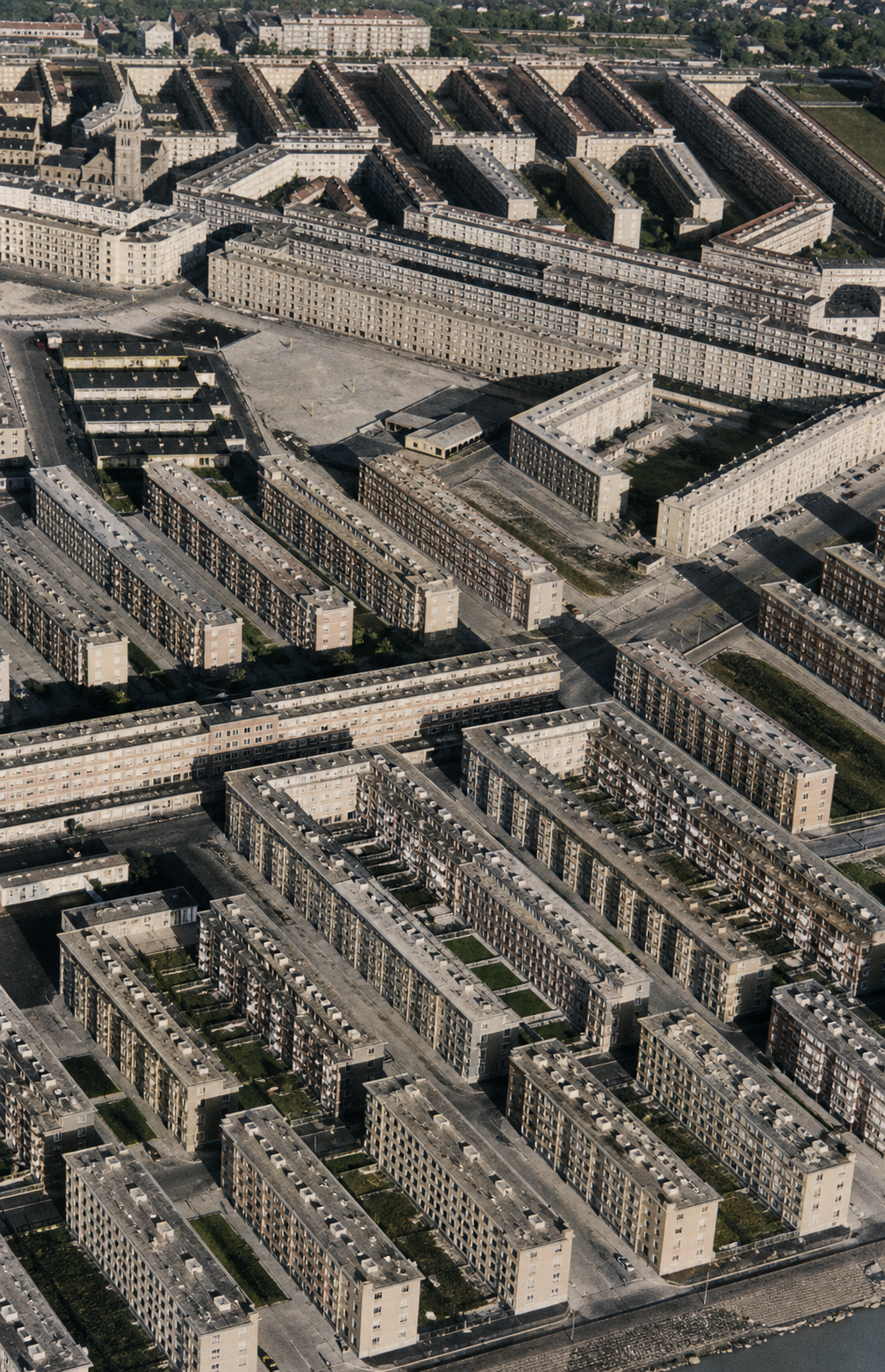
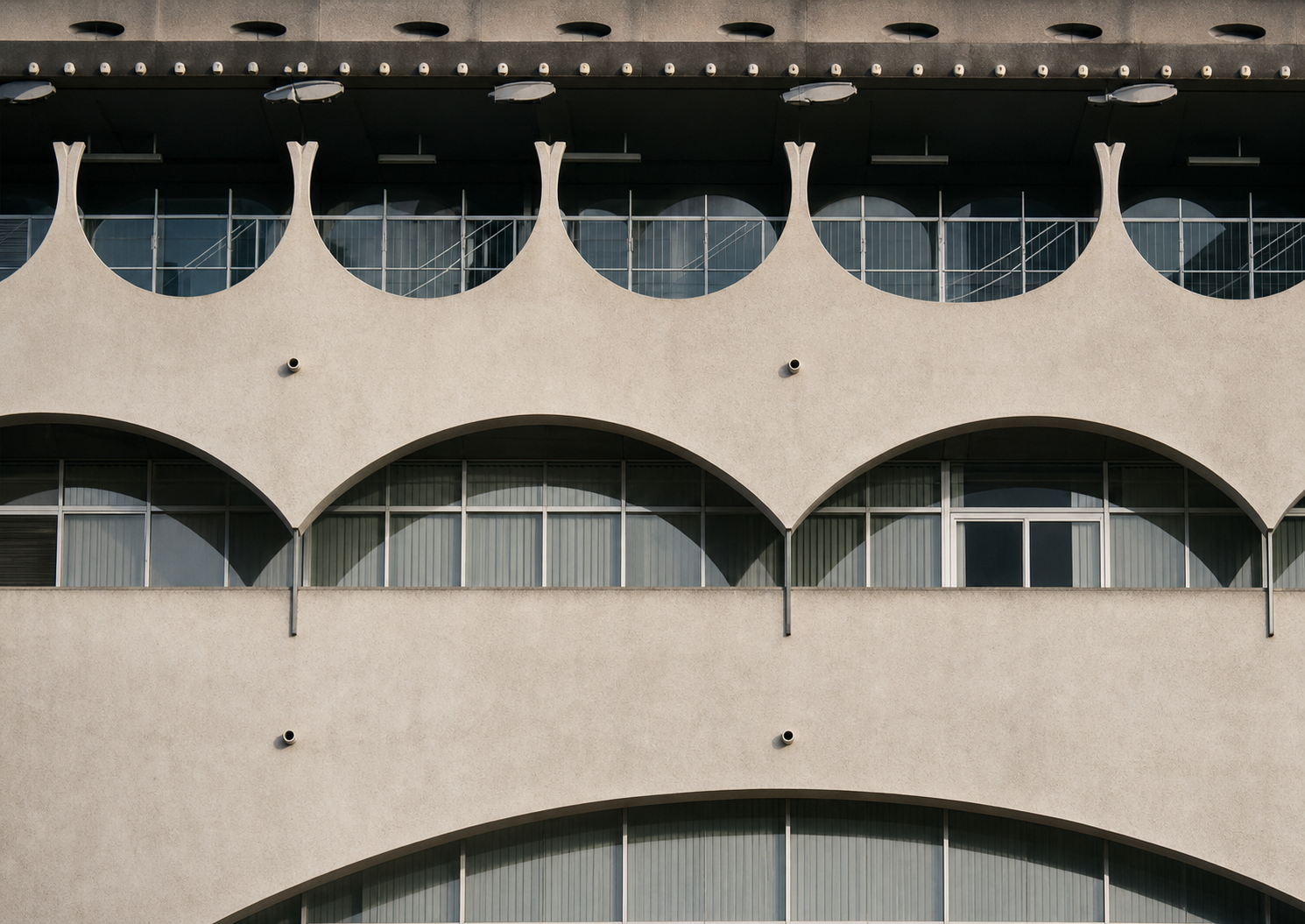
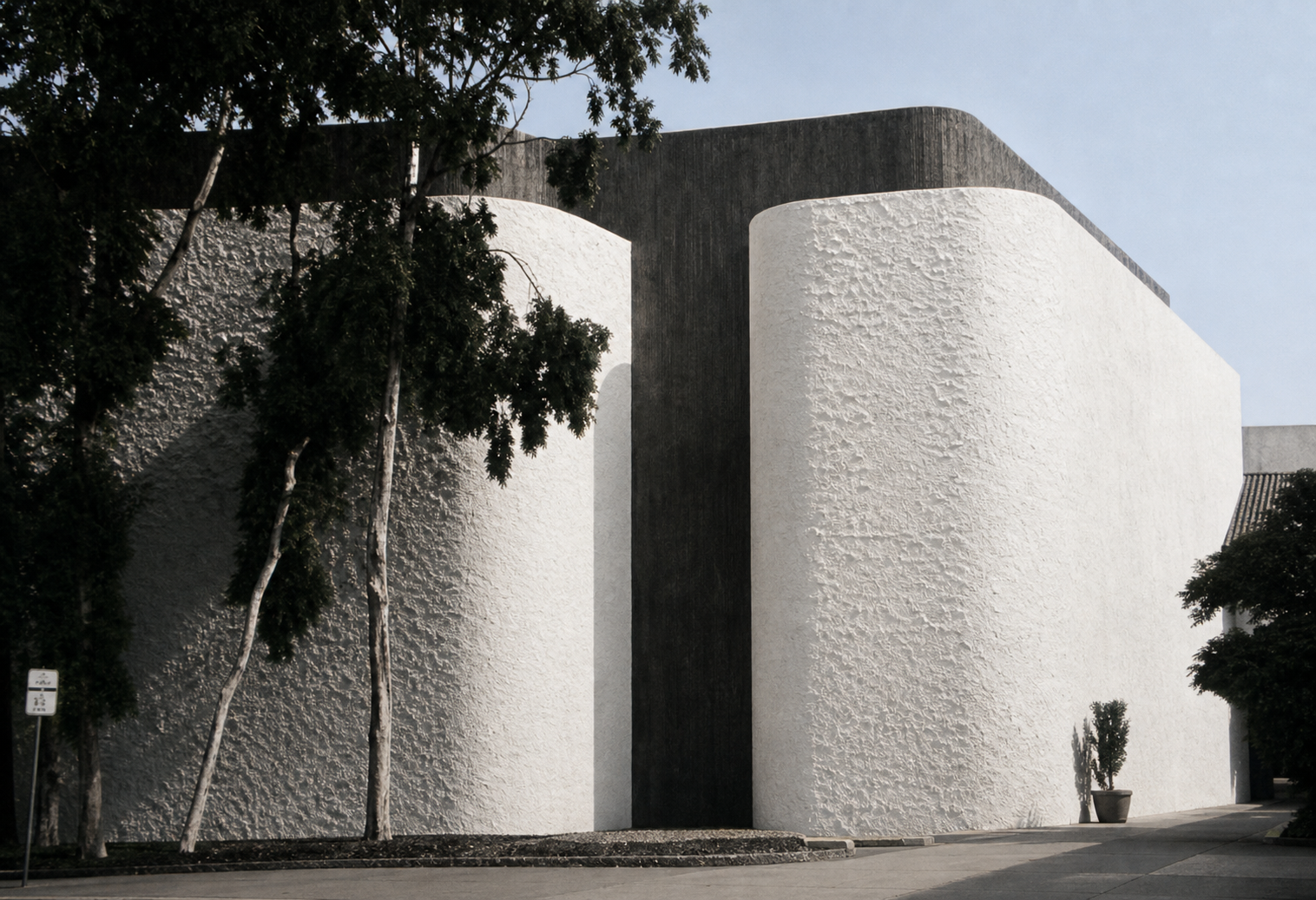
Of course, today, as a matter of practice, when we try to make a building we usually ignore this problem. We know that what physics has to say about order isn't enough, and we use our intuition to try and get the order of the building right. But this weak and only mechanical view of order is unlikely to go on working in the intellectual climate of the 21st century. It is not only the particular kinds of order that occur in physics that are inadequate. Every idea of order, even our intuitive and artistic ideas of order, are inadequate because they are, in my view, based on a wrongheaded foundation. It is the whole idea of order, the whole idea of what order is, as it exists in 20th-century thought, which is inadequate. And for making things, or giving life to them, our current ideas of order are utterly inadequate.
4 / Order as Mechanism
In the 20th century, we have had the illusion that all the order we see around us in the world can be explained by science -- mainly, we assume, by physics. But physics and the other sciences tend to represent certain things for us as mechanisms. This gives us a partial picture of some kinds of order. That is all. We may take, for instance, the structure of a leaf, the structure of a bridge, the structure of an atomic nucleus. In each of these cases we have a well-worked-out conception of the mechanical order which is there. The stems of the leaf support its membranes, which hold the cells, which receive sunlight, and transform the energy of the sunlight into materials from which the leaf can grow. The members of the bridge are conceived as elements in a certain pattern of forces which develops inside the bridge in response to a given pattern of loads, trucks and cars passing over it, wind forces, stresses and strains caused by thermal expansion, and so on. Even in the picture we have of the atomic nucleus, the order is conceived essentially in relation to forces. The particles of which the atom is made are themselves seen as carriers of forces which hold the nucleus together and which, under particular conditions, may also cause it to fly apart. What is the order which physics helps us talk about in each of these cases? It is only the mechanical order. The order is always described -- and even invented -- in relation to the way the thing works as a mechanism. Within our current scientific world-picture, each of the three examples I have given is conceived of as a little machine that produces certain kinds of results when pushed, prodded, squeezed, or bombarded. So, in the present scientific world-picture, the order which we see in the thing, the way we describe it to ourselves, is essentially the order of a machine which has a certain mechanical mode of operation -- or which, at any rate, has a certain kind of mechanical behavior as a result of the arrangement of its parts. But what of the order itself? The order itself -- that order which exists in a leaf, in the Ise shrine, in the yellow tower, or in a Mozart symphony, or in a beautiful tea bowl -- a harmonious coherence which fills us and touches us -- this order cannot be represented as a mechanism. Yet it is this harmony, this aspect of order, which impresses us and moves us when we see it in the world. It is almost impossible to view a Mozart symphony as a machine which has certain kinds of behavior. The same is true of the yellow tower. If, as an artist, I want to understand the tower -- if I want to make something of comparable beauty -- it is useless to conceive it as a mechanism, because the beauty and order which I see in it, and yearn for, cannot be expressed in any way that can be understood mechanically. So, in works of art, the mechanistic view of order always makes us miss the essential thing. Although 20th-century science gives us a way of seeing order as a producer of effects -- in particular because the scientific view of things shows us the geometry of matter as if it were part of a machine, a machine which can do certain things -- we still do not have a way of seeing the order of a thing which simply exists. We do not have a way of seeing the order in the smile of a statue of the Buddha, or in the exact position of a flower in a vase, or of the arrangement of notes in a song, or of the harmony within a wonderful building."
5 / Descartes
The mechanistic idea of order can be traced to Descartes, around 1640. His idea was: if you want to know how something works, you can find out by pretending that it is a machine. You completely isolate the thing you are interested in -- the rolling of a ball, the falling of an apple, the flowing of the blood in the human body -- from everything else, and you invent a mechanical model, a mental toy, which obeys certain rules, and which will then replicate the behavior of the thing. It was because of this kind of Cartesian thought that one was able to find out how things work in the modern sense." However, the crucial thing which Descartes understood very well, but which we most often forget, is that this process is only a method. This business of isolating things, breaking them into fragments, and of making machinelike pictures (or models) of how things work, is not how reality actually is. It is a convenient mental exercise, something we do to reality, in order to understand it. Descartes himself clearly understood his procedure as a mental trick. He was a religious person who would have been horrified to find out that people in the 20th century began to think that reality itself is actually like this. But in the years since Descartes lived, as his idea gathered momentum, and people found out that you really could find out how the bloodstream works, or how the stars are born, by seeing them as machines -- and after people had used the idea to find out almost everything mechanical about the world from the 17th to the 20th centuries -- then, sometime in the 20th century, people shifted into a new mental state that began treating reality as if this mechanical picture really were the nature of things, as if everything really were a machine. For the purpose of discussion, in what follows, I shall refer to this as the 20th-century mechanistic viewpoint. The appearance of this 20th-century mechanistic view had two tremendous consequences, both devastating for artists. The first was that the "I" went out of our worldpicture. The picture of the world as a machine doesn't have an "J" in it. The "I," what it means to be a person, the inner experience of being a person, just isn't part of this picture. Of course, it is still there in our experience. But it isn't part of the picture we have of how things are. So what happens? How can you make something which has no "I" in it, when the whole process of making anything comes from the "I"? The process of trying to be an artist in a world which has no sensible notion of "I" and no natural way that the personal inner life can be part of our picture of things -- leaves the art of building in a vacuum. You just cannot make sense of it. The second devastating thing that happened with the onset of the 20th-century mechanistic world-picture was that clear understanding about value went out of the world. The picture of the world we have from physics, because it is built only out of mental machines, no longer has any definite feeling of value in it: value has become sidelined as a matter of opinion, not intrinsic to the nature of the world at all. And with these two developments, the idea of order fell apart. The mechanistic idea tells us very little about the deep order we feel intuitively to be in the world. Yet it is just this deep order which is our main concern.
The real nature of this deep order hinges on a simple and fundamental question: "What kinds of statements do we recognize as being true or false?" This is the question which divides the mechanistic world-view originating with Descartes from the one which I describe in this book. In the world-view initiated by Descartes -- and largely accepted by scientists in the 20th century -- it is believed that the only statements
which can be true or false are statements about mechanisms. These are the so-called "facts" familiar to everyone in the 20th century. In the world-view I am presenting, a second kind of statement is also considered capable of being true or false. These are statements about relative degree of life, degree of harmony, or degree of wholeness -- in short, statements about value. In the view I hold, these statements about relative wholeness are also factual, and are the essential statements. They play a more fundamental role than statements about mechanisms. It is for this reason that the view of order which I am presenting in this book inevitably involves us in a shift of world-view. Suppose I am trying to place a door in a certain wall. While I try to decide where to put it, I can make various mechanical statements of fact. For example, I can say of one door that it is wide enough to allow a refrigerator through it, that it will resist a standard fire for one hour, that it weighs 25 kilograms, and so on. I can also make more elaborate statements of fact. In one case people can see through the door, in another they can't. I can even say that the position of one door may disrupt people's work because their desks are too exposed to the noise of passers-by. I might have to do an experiment to check this statement, but it is still, in principle, a statement of fact in the normal Cartesian sense. All these statements are, potentially, statements of fact in the 20th-century mode. This is the sense in which the word "fact" is understood today. It is generally agreed that statements of this type may be true or false. But if I am trying to put the door in the wall, there is also a second kind of statement about the different possible positions for the door. For example: "When the door is in a certain range of positions, the result is more harmonious than other positions." "This position for the door is more in keeping with the wholeness of the room than this other position." "One door frame is more harmonious and more in keeping with the life of the room than another door frame." "One door creates more life in the room than another door." "A pale yellow on this door has more life than a dark gray." Within the canon of 20th-century science, these are not considered statements which can be true or false. They are thought of as statements of opinion. As a matter of principle within the 20th-century mechanistic view, statements of this kind may not be considered potentially true or false. We have learned to live with this principle simply because we are used to it. But consider how bizarre it really is. As architects, builders, and artists, we are called upon constantly -- every moment of the working day -- to make judgments about relative harmony. We are constantly trying to make decisions about what is better and what is worse in an evolving building. If the only statements considered potentially true or false are mechanistic statements of fact, and if all statements of harmony, beauty, what is better or worse, what has more life or less life, are always considered matters of opinion which can only be referred to private and arbitrary canons of judgment -- then, in principle, rational discussion about buildings should be impossible. The devastating impact of this state of affairs on the progress of architecture has not, I think, been sufficiently discussed in recent decades. Within a world-view in which statements about value are not allowed, by the accepted canon, to be considered as potentially true or false, we cannot (in theory) legitimately discuss what we are doing as architects with any hope of reaching consensus. If we accept the 20th-century idea that statements of value are -- of necessity -- merely statements of opinion, it is in principle impossible to reach any sensible shared conclusion in the process of making the environment -- only arbitrary and private conclusions. The chaos with which we are familiar in the built world, must then follow as an inevitable conclusion -- as indeed it has. Discussion of an earlier book may perhaps help to make the problem clear. In 1977 my colleagues and I published a book called a PATTERN LANGUAGE." In this book we made a number of observations about good environments. The
book was -- and still is -- extremely controversial. It describes a number of key patterns in cities, buildings, gardens, and building details which are necessary to support life. Some people said that it described an important form of truth. Others said it was impossible for the book to describe any form of truth and that it was only opinion dressed up as truth. According to the strict canon of contemporary science, it would indeed be impossible for statements about "good" patterns to be true since they do not have the right logical form to be true. In the present-day scientific canon patterns in the pattern language must be statements of opinion. And some writers, working within the Cartesian-mechanistic mental framework, indeed took this point of view." However, after the book was published, many hundreds of other people came to the conclusion that the statements in the pattern language are not statements of opinion but are in some sense true. Since the patterns seem to confirm people's instincts about what is true in the environment, to these people, who were not committed to the mechanistic canon, the patterns represented a triumph of deeper wisdom reflecting common sense." What are we to make of this? It suggests, I think, that there must be some other way not covered by the limited mechanistic idea of what can and cannot be true, in which statements about value can be true. And indeed, this is the main philosophical assumption which underlies the arguments of the present book. Throughout this book I shall present a further and more extended idea of objective truth -- one which extends the current idea of truth given us by r9th- and 20th-century science in such a way that it includes statements of value. As I hope to show, this new extended idea of truth is not only objective, but is also directly linked to people's feelings. Most importantly, this extended idea of objective truth will allow statements about relative harmony, wholeness, and so forth to be judged as true or not true. In this view, these kinds of statements are not left as private intuitive opinions or agendas, but describe the structure of things in the world as they are.
6 / The Destructive Impact of Mechanistic Thought on the Art of Building
It is not a small thing to construct a theory of architecture based on a new form of truth. To make sure the reader understands -- thoroughly -- why I believe it is necessary for us to develop a new form of truth, I shall give a few more examples of the highly negative impact the mechanistic idea of truth has had on the art and architecture of the 20th century. In the architecture of the last decades, constructive discussion about value has become difficult -- sometimes nearly impossible. In the wake of the mechanistic world-picture, we have constructed a pluralist view of value. When we want to discuss the pros and cons of a particular action -- in architecture, planning, landscape -- each person is understood to have a "view," or attitude, or value-orientation. There is rarely any theoretically coherent way of combining different people's values. So, if it is a public matter, we simply give each person the opportunity to express his point of view as strongly as possible, in the hope that the ensuing democratic dialogue will somehow get us to a balance point roughly in the middle. And this is indeed what happens in 20th-century discussion of building projects, planning, and the actions which may arise in any public situation. In discussing what to do in a particular part of a town, one person thinks poverty is the most important thing. Another person thinks ecology is the most important thing. An-
other person takes traffic as his point of departure. Another person views the maximization of profit from development as the guiding factor. All these points of view are understood to be individual, legitimate, and inherently in conflict. It is assumed that there is no unitary view through which these many realities can be combined. They simply get slugged out in the marketplace, or in the public forum. But instead of lucid insight, instead of growing communal awareness of what should be done in a building, or in a park, even on a tiny park bench -- in short, of what is good -- the situation remains one in which several dissimilar and incompatible points of view are at war in some poorly understood balancing act. Our 20th-century failure to construct a living world arises necessarily from this situation. Since, in the mechanistic framework, the different values brought to architecture are inherently inconsistent, architects quite contentedly take the confusion of their many individual, wildly different, and inconsistent ways of thinking as the basic situation which must exist in architecture. Consciously or unconsciously, the architect assumes that only "factual" statements (in the mechanistic sense) can be true, and therefore has it as a further (unconscious) assumption
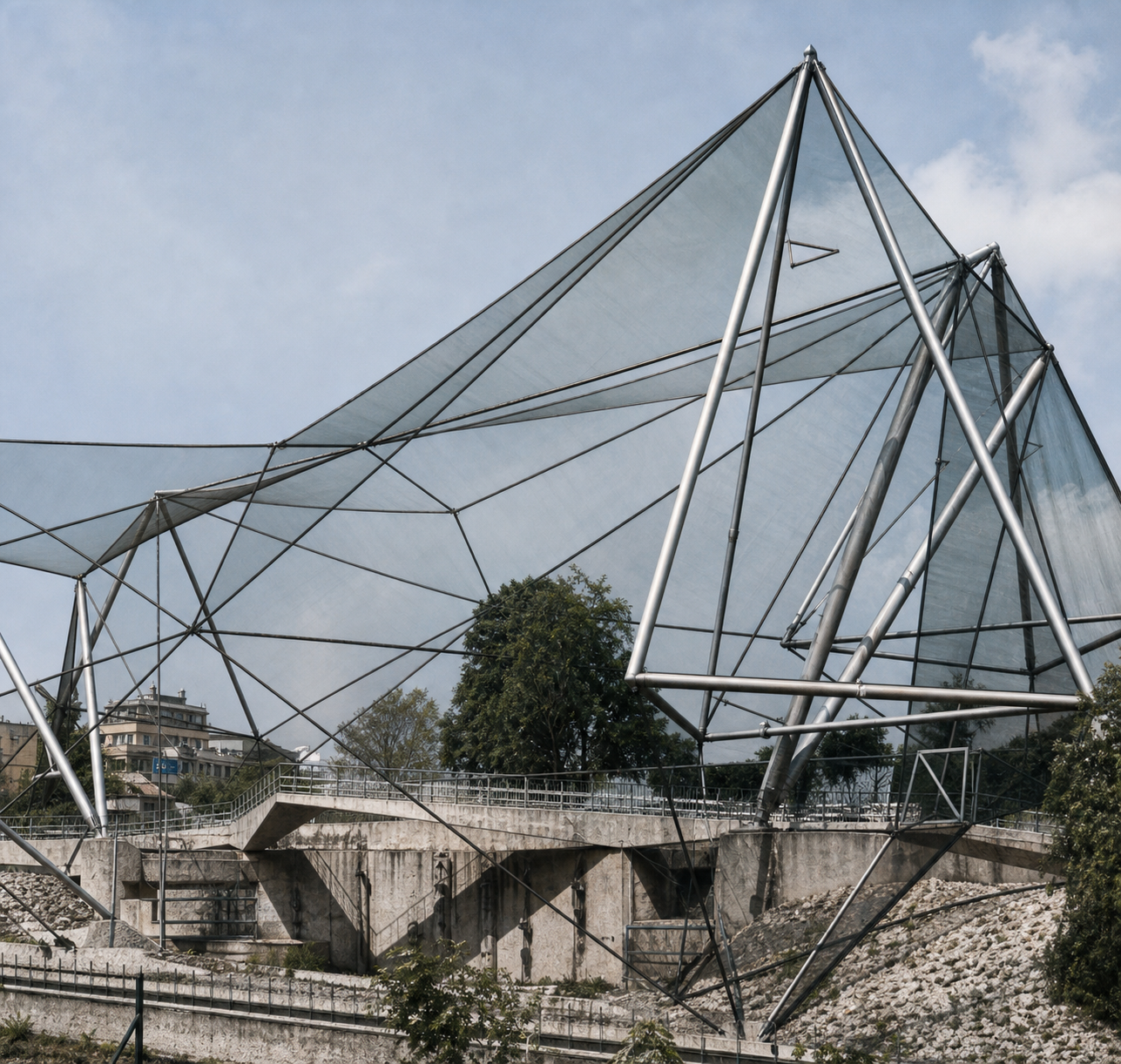
that the idea of what is good is something that you add to the factual statements -- something that is (of necessity in the current scientific world-view) only a matter of opinion. All this sounds abstract. But its impact on our world has been enormous. It has created a mental climate of arbitrariness, and has laid the foundation for an architecture of absurdity. For example, a few years ago a man came to show me a design he had drawn for a building. The building was to be made entirely of oil-drums filled with water. It was intended to be an energy-efficient building. Yet the building was absurd in many ways. It was ugly, impractical, hard to build, not even pleasant to be near. But it made sense to him because, as far as he was concerned, he was only trying to make an energy-efficient building. He had chosen this particular goal, and elevated it above all others, making it the basis for his work. To Buckminster Fuller, weight was paramount. He therefore emphasized the idea of least-weight structures. It didn't matter to him that a geodesic dome is difficult to use, perhaps not so pleasant to look at, almost impossible to subdivide internally in a nice way. What mattered was his chosen goal of making buildings which span the longest distance for the least possible weight."
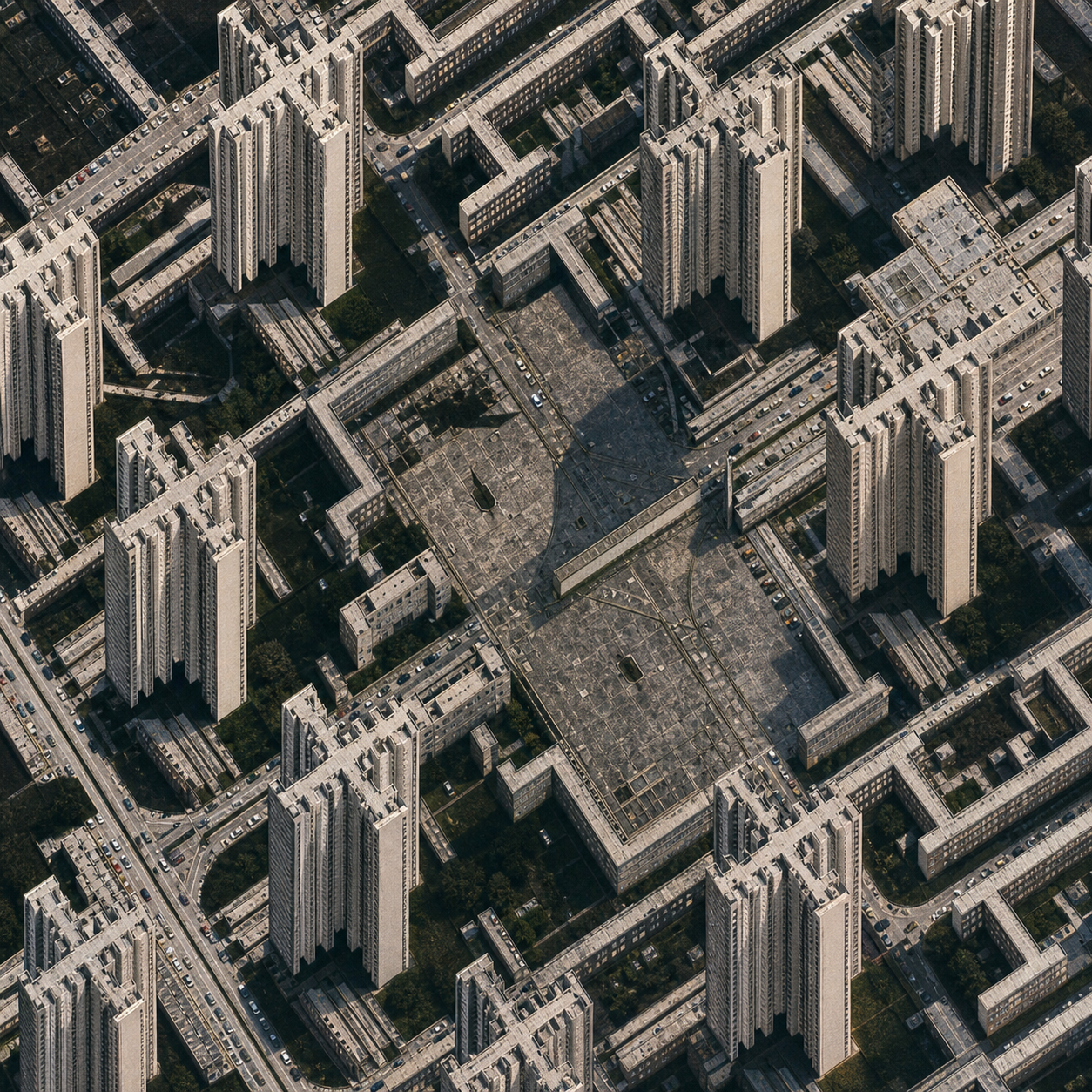
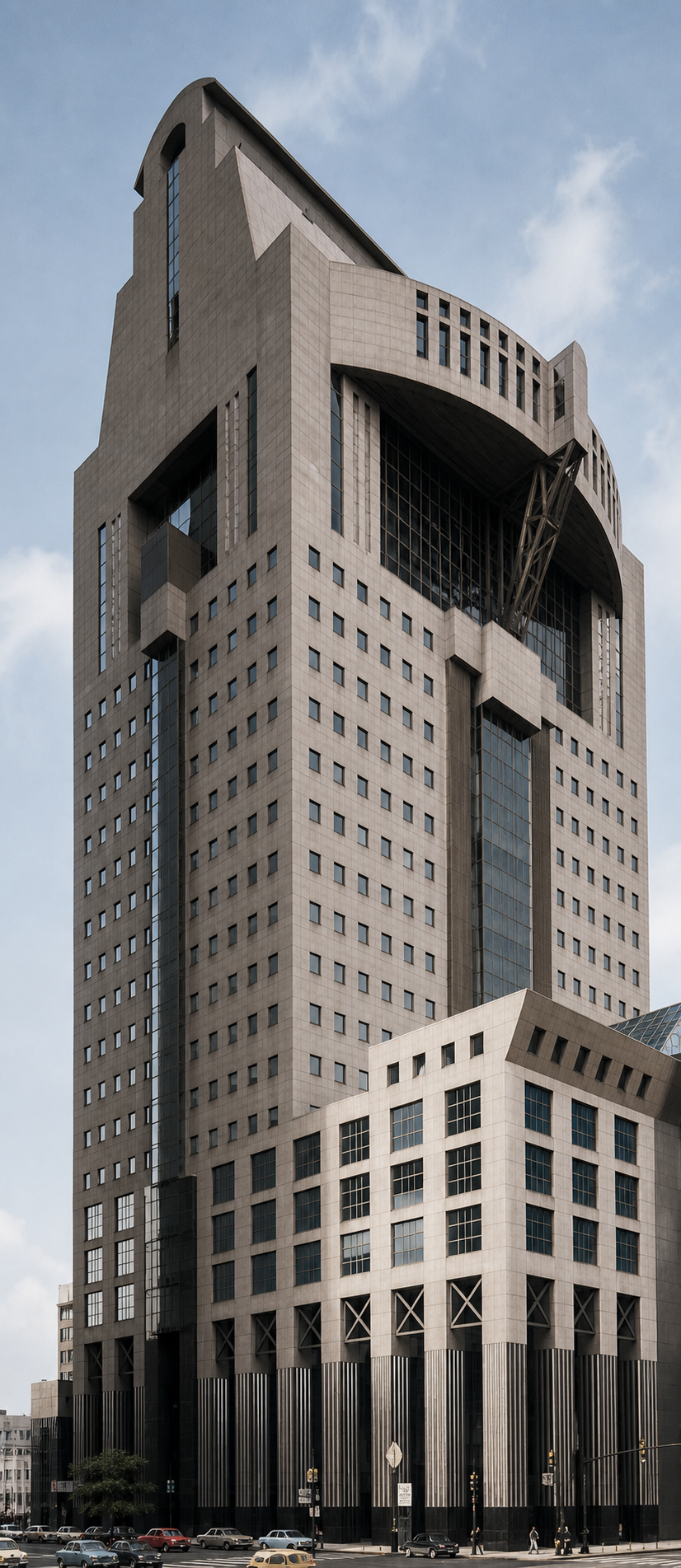
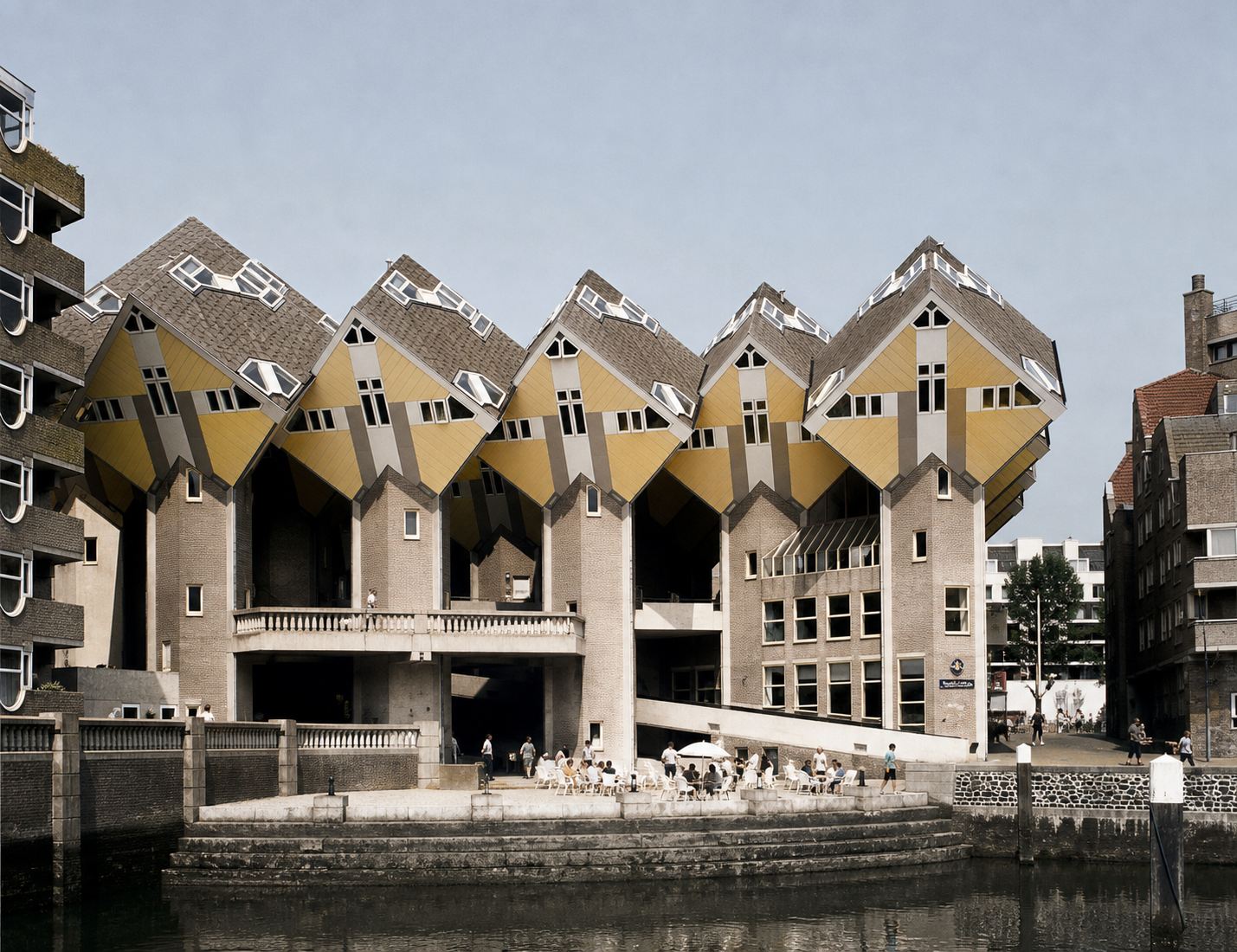
about the interweaving of other functions -- but it was this goal of separating the four functions, above all others, which dominated his city plans. This was his chosen value, and this is what he reflected in his diagram of the Radiant City." More recently we have examples of architects who choose historical reference as the primary value in their work. Look, for instance, at the neo-classical facade on this page. In this case it might not matter whether the building works well or not: what matters is that it has a certain "image" -- perhaps the image of Palladio mixed with images of the 1940s. This architect chose this particular goal -- the making of an image -- above all others. Another architect may choose to make wildly formal geometric shapes on the grounds that they are "good design." There is no empirical basis for believing that this is true. But again, in the absence of believable empirical facts about what is true or not, one must choose something. So, a one-sided belief that crystalline geometric forms have an absolute goodness can provide yet another architect with the underpinning for his work: as in the Rotterdam offices contained in rhombic crystals which I show on the facing page. Architects make different idiosyncratic choices because within the mechanistic worldview it is not possible to function mentally without making some private choices of this kind. Virtually every architect who works today is forced to do something similar. Yet another architect is an adherent of ecology. He seeks to preserve nature. But how should this be done? In fire-prone brushland above the Berkeley hills, should the land be cleared of trees and brush to protect it against fire? Should it be made into a useful park, thus leaving the trees for shade? Should it be left messy and wild to preserve the habitat of the native birds and plants (a biologist's point of view)? Should it be left as it is simply to save money (the university's point of view)? Should it be wild, or tamed? Once again, within the mechanistic framework, it is simply a matter of
Le Corbusier chose the separation of functions. With the CIAM (Congres International de l'Architecture Moderne), he decided that housing, recreation, transportation, and work were of such importance that he chose as an underpinning value the task of giving these four functions adequate and separate space in the city. In the process, he may have had to forget
opinion. You take your pick between the opposing viewpoints. Although these points of view do not have quite the insane arbitrariness of the more extreme architectural examples I have given, still each point of view that can be expressed is still essentially arbitrary: whether one of them is chosen, or some combination of them, any particular choice is individual, and arbitrary again. So far the 20th-century response to the arbitrariness inherent in mechanistic thought has been to keep on asserting the dignity and privacy of value. Something like this: "Science only tells us about facts. When it comes to figuring out what one ought to do, that is a private matter of art or ethics. It is your natural right to work out your own values. Not only will our scientific world-view not tell you anything about value, it is your democratic obligation to do it for yourself." But all this only continues to make the "life" of towns and buildings and landscapes seem unreal, almost as if it did not exist. It also makes cooperative work, collaboration, and social agreement very difficult in principle. It has a superficial permissiveness which seems to encourage different opinions. But what is encouraged, really, is only the essential arbitrariness of ideas rooted in a mechanical view of how the world is made. What we need is a sharable point of view, in which the many factors influencing the environment can coexist coherently, so that we can work together -- not by confrontation and argument -- but because we share a single holistic view of the unitary goal of life.
7 / A New Vision of Architecture
To achieve this aim -- to make buildings which have life and profound order -- it is necessary to be rescued from the mechanistic trap by concentrating on the life and order of a building as something in itself" I believe such a formulation can only come from a new view of the world which intentionally sees things in their wholeness, not as parts or fragments -- and which recognizes "life," even in an apparently inanimate thing like a building, as something real. In this new view of order we shall find, necessarily, a post-Cartesian and non-mechanistic idea of what kinds of statements can be true, a theory in which statements about relative degree of harmony, or life, or wholeness -- basic aspects of order -- are understood as potentially true or false. This means we shall have a view of the world in which the relative degree of life of different wholes is a commonplace and crucial way of talking about things. Such a new view of order will create a new relationship between ideas of ornament and function. In present views of architectural order, function is something we can understand intellectually; it can be analyzed through the Cartesian mechanistic canon. Ornament, on the other hand, is something we may like, but cannot understand intellectually. One is serious, the other frivolous. Ornament and function are therefore cut off from each other. There is no conception of order which lets us see buildings as both functional and ornamental at the same time. The view of order which I describe in this book is very different. It is even-handed with regard to ornament and function. Order is profoundly functional and profoundly ornamental. There is no difference between ornamental order and functional order. We learn to see that while they seem different, they are really only different aspects of a single kind of order. What is even more important, we shall see that the structure I identify as the foundation of all order is also personal.* As we learn to understand it, we shall see that our own feeling, the feeling of what it is to be a person, rooted, happy, alive in oneself, straightforward, and ordinary, is itself inextricably connected with order. Thus order is not remote from our humanity. It is that stuff which goes to the very heart of human experience. We resolve the Cartesian dilemma, and make a view of order in which objective reality "out there" and our personal reality "in here" are thoroughly connected. In forming this idea of order, we shall have to take intellectual steps which touch all of science -- even physics and biology -- because we need to include a new view of what statements can be true or false. The life of a building will become visible as something empirically real. We shall see that the yellow tower and other buildings in the first group of examples in this chapter empirically have more life than the modernistic buildings in the second group of examples. This will become objectively clear not as a matter of opinion, but as a matter of fact about the order they contain. The theory which I shall lay out is in no sense against science; it is simply an extension of science. Like all science, it will show a view of things which depends on clearly defined structures: but structures which show us order in new ways, not available to present-day scientific thought. What will be presented is a slightly modified vision of science, which includes mechanism as understood in the past, but also includes a powerful new kind of structure, coupled with a new form of observation, that transforms the range and extent of the experiences which science can illuminate. The new view will show us the world as an altogether different kind of place from the one we have imagined. When we are done, everything will look different, not only buildings.
Flowers, puddles, waterfalls, bridges, mountains, the moon, the earth, the tides, the waves of the ocean, paintings, the rooms in which we live, the clothes we wear -- all of these will be different in our eyes and will appear to us as something fresh and marvelous. We shall, then, literally, be living in a different mental universe. At that stage we shall not only have a concrete grasp of order as a single phenomenon which affects all of architecture, but shall also be led to a view of space and substance which is transcendental. Although this conception of order is lucid in material terms, it will also provide us with a partial understanding of the nature of matter which reaches beyond our present material view of substance, and beckons to some domain beyond the limits of space and time. Thus it is not only the detail of what "order" is which needs to be questioned, but also the very nature of order." So long as we have a confused or inaccurate conception of what kind of thing order is, we shall inevitably make buildings which are ugly, houses which do not support ordinary human well-being, gardens and streets which are at odds with nature, and a world which destroys our souls. To make good architecture, we must fundamentally alter our idea about the nature of order -- about the kind of thing it is.