Chapter Five
Fifteen Fundamental Properties
1 / Introduction
I have introduced the idea of life as something which may occur in any spatial system, and suggested that the degree of life which appears in a thing depends on the life of its component centers and their density. Thus, broadly, we have a theoretical scheme in which the life of a thing, or building, or system, depends on the extent to which the centers in this thing cohere and help each other. What follows in this chapter is an analysis of the different ways in which this can occur.
About twenty years ago, I began to notice that objects and buildings which have life all have certain identifiable structural characteristics. The same geometric features keep showing up in them, again and again. Initially I began writing these characteristics down informally, and I began to "keep watch" on them.
What] did was straightforward and empirical. I simply looked at thousands and thousands of examples, comparing those which had more life with those that had less life. Whenever I looked at two examples, I could determine which one had greater "life" or greater wholeness, by asking which of them generated a greater wholeness in me. Thus, I did not impose on myself the modesty of judgment typical in a pluralistic society. I did not worry about "my" values compared with someone else's values. I simply identified those examples which had the greater wholeness, judging this by the degree of wholeness they induced in me, and assuming, with as much confidence as I felt to be real and reliable, that what I measured here would also be shared with others.
I asked myself this question: Can we find any structural features which tend to be present in the examples which have more life, and tend to be missing in the ones which have less life? In other words, can we find any recurrent geometrical structural features whose presence in things correlates with their degree of life? To find this out, it is necessary to make thousands and thousands of comparisons, to ask oneself constantly whether any features can be identified which correlate with the degree of wholeness which things have. This is what I did. For twenty years, I spent two or three hours a dav looking at pairs of things -- buildings, tiles, stones, windows, carpets, figures, carvings of flowers, paths, seats, furniture, streets, paintings, fountains, doorways, arches, friezes -- comparing them, and asking myself: Which one has more life? And then asking: What are the common features of the examples that have most life?
I managed to identify fifteen structural features which appear again and again in things which do have life.' These are: 1. LEVELS OF SCALE, 2. STRONG CENTERS, 3. BOUNDARIES, 4. ALTERNATING REPETITION, 5. POSITIVE SPACE, 6. GOOD SHAPE, 7. LOCAL SYMMETRIES, 8. DEEP INTERLOCK AND AMBIGUITY, 9. CON- TRAST, 10. 12, ECHOES, 13. THE VOID, 14. SIMPLICITY AND
GRADIENTS, II. ROUGHNESS, INNER CALM, I5. NOT-SEPARATENESS.
At first, I observed these features without understanding what they were. I simply recorded them. And, indeed, up until about 1985, I did not really understand what these fifteen properties were. That is, I understood each of them by itself as something which was present, often or very often, in a living system -- to such an extent that one might almost say that each one was a predictor of whether a thing would have life or not -- but during that first decade of study I did not understand why these fifteen properties had this effect. I did not even understand the key role which centers play, the key role of the wholeness. In the list of these fifteen properties as it first appeared, in unpublished manuscripts from 1975 to 1985, one of the fifteen was CENTERS, but I did not know then that this particular item had any kind of logical priority over the others. I simply knew that the presence of strong centers,
FIFTEEN just like the presence of the other fourteen properties, made a system more likely to have life.
During those many years of observation, I often asked myself what these fifteen properties signified, what they are, what they do. And finally, I came to understand that all of them are, in effect, just the fifteen ways in which centers can help each other come to life. I came to understand that they work, they make things have life, because they are the ways in which centers can help each other in space.
As a writer I now have two options open to me. I could present these fifteen properties as they first appeared in my mind -- as nearly raw observations about things which help buildings and objects have their own life, without reference to their dependency on centers. In this form of explanation, I would describe them as I first saw them, fifteen isolated, independent properties, with no special rhyme or reason to them, just as end-products of observation. I could then explain, at the end, how the fifteen of them are just those ways in which centers are able to help each other -- indeed the only ways -- thus explaining why they exist and have such a powerful effect.
Or, I could start with a different kind of explanation, showing from the very beginning that these are indeed the fifteen ways in which
centers help each other, emphasizing their relationship to centers, and showing how they do it. But if I did this, the raw force and empirical force of the observations I originally made would be lost to the reader. There might be something too polished, almost contrived, about my presentation, and you would miss the empirical excitement of the process of observation and perhaps, therefore, be less able to see for yourself, by making your own observations in the world, that these fifteen properties, as features of life, really are true, necessary, and empirically verifiable. This would be a great shame. What I shall try to do, therefore, is to go between these two methods of presentation. ] should like the reader to feel the raw excitement I felt, when I first began to notice these fifteen properties, and tried to define them, to make them precise.
But I should also like the reader to understand how these fifteen properties fit together with the theory I have presented in chapters 3 and 4 -- how indeed they form one of the underpinnings of that theory -- something that I did not understand originally, and something that was in fact not available to me as an idea during the first ten years of my observations. My task was a simple scientific one: to find out what I could about the structural correlates of life by making observations and distilling them.
2.1 / Levels of Scale
The first thing I noticed, when I began to study objects which have life, was that they all contain different scales. In my new language, I would now say that the centers these objects are made of tend to have a beautiful range of sizes, and that these sizes exist at a series of well-marked levels, with definite jumps between them. In short, there are big centers, middle-sized centers, small centers, and very small centers. In the language I used at that time, I would simply have said that I noticed a great variety of well-formed wholes of many different sizes and that this was often the first thing one noticed about those things which have great life in them.
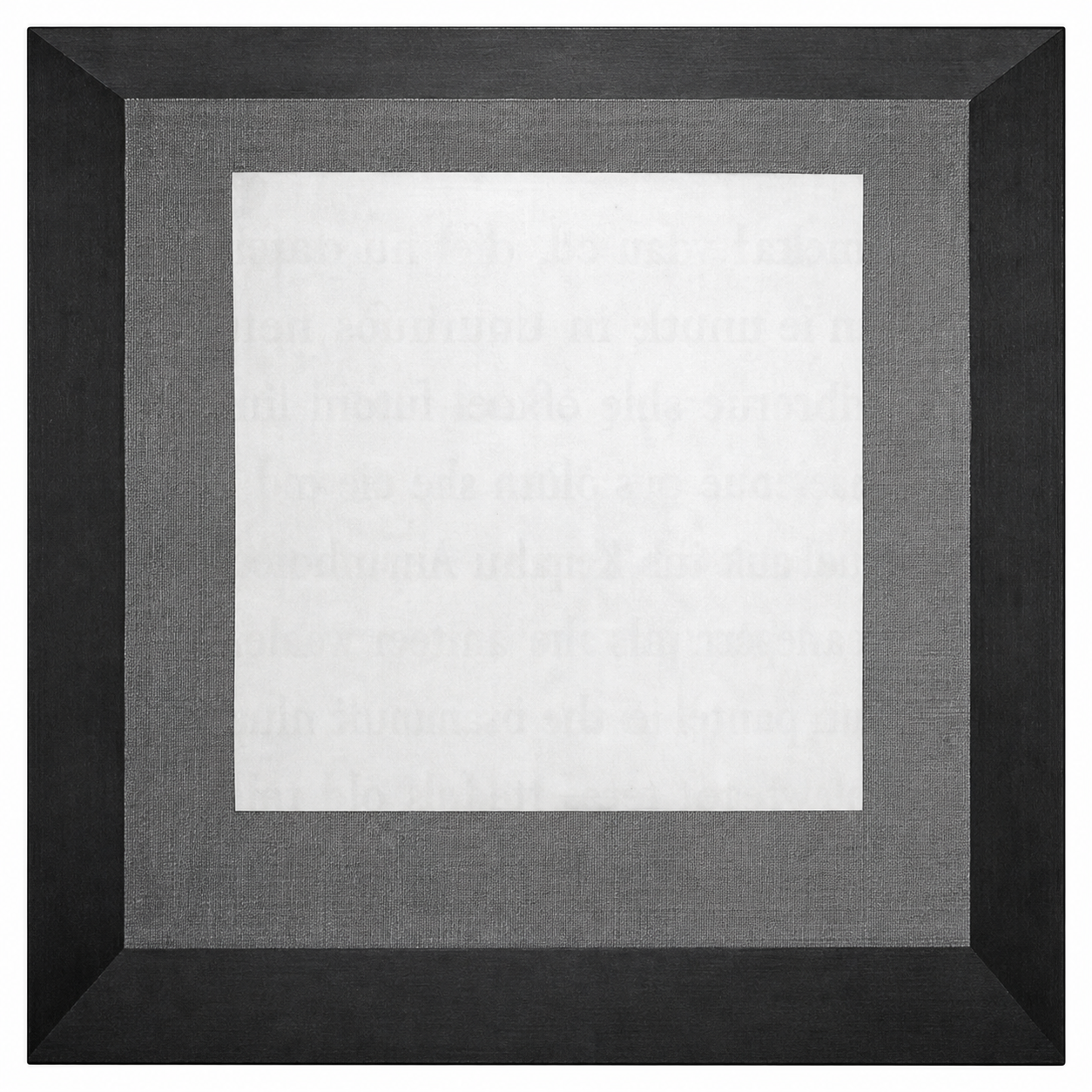
This observation may seem obvious -- almost tautological. But it is not obvious at all. As we shall see, many things which have been made in our period of history do not have this feature. On pages 146-7 is a pair of examples, one with good levels of scale and one with poor levels of scale. The Albers painting has very poor levels of scale. There are subtle differences of size among its elements, but there are no noticeable levels. As a result, the painting seems dead, lacks depth. The Matisse drawing, on the other hand, has a remarkable range of scales. There is the young woman's body as a center; the centers formed by the large open area on her back; the intermediate centers like her head, the hat, the brim; smaller centers like the flowers; and the very small centers like the petals in the flowers and the details of lace and buttons. The range of scales forms a continuum which ties the drawing together and makes it whole. This is what gives the drawing its life.
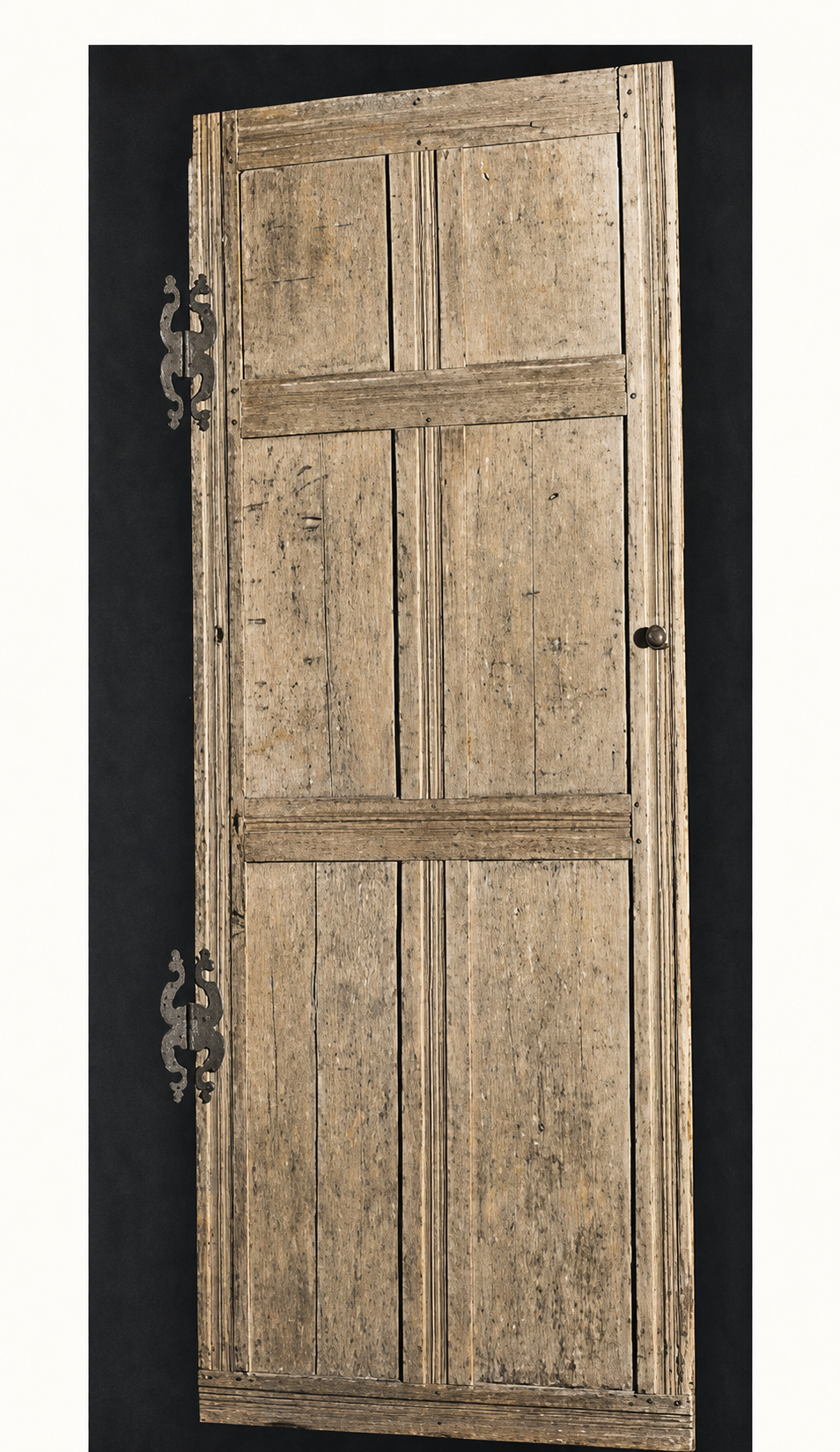
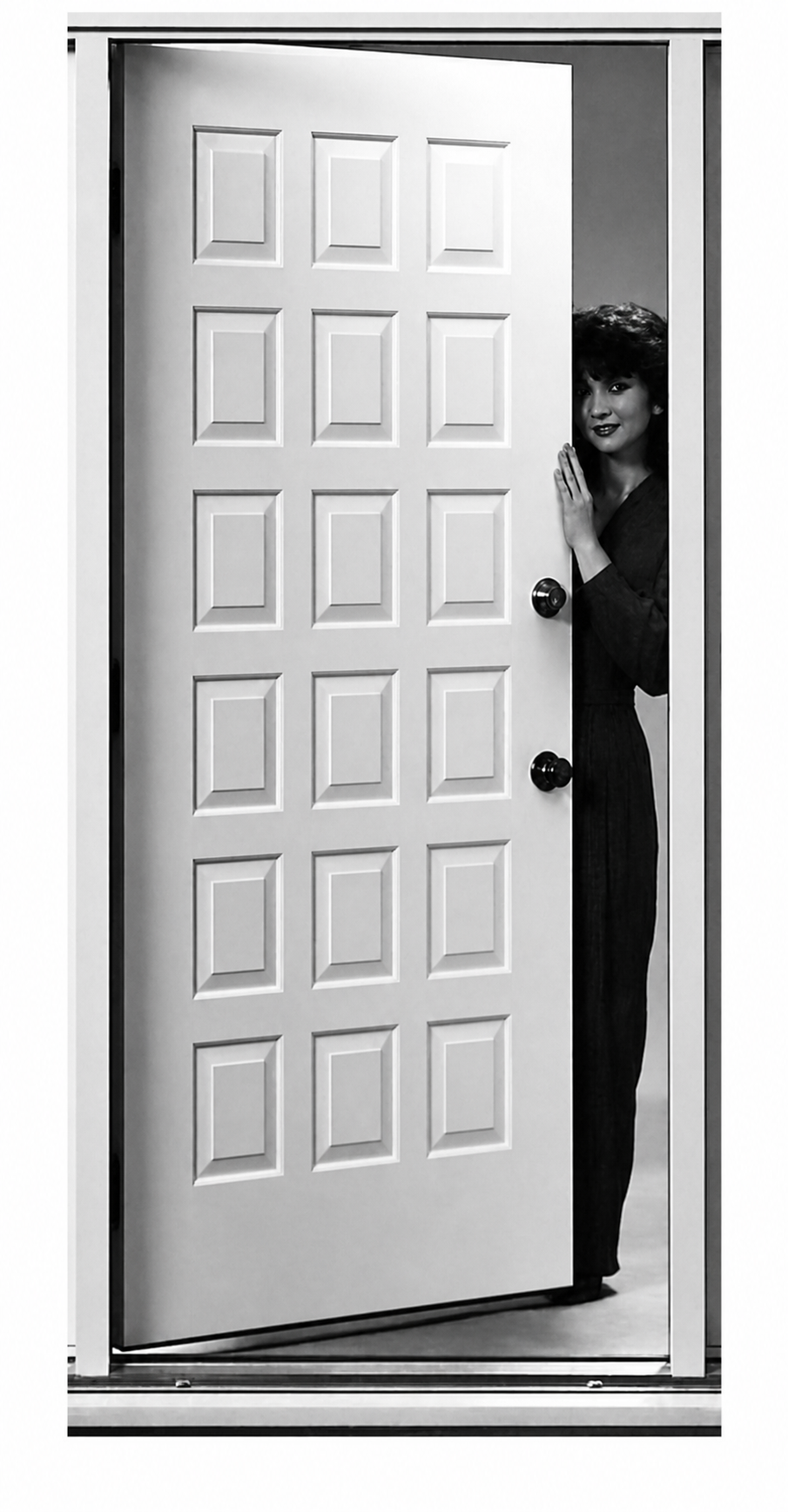
If you compare any two things, one with more life and one with less, it is very likely that the one with more life will have better levels of scale in it. The idea is far more subtle than it seems. To understand its subtlety, consider the following pair of doors. Both doors have parts of different sizes in them: panels, jamb, moldings, handle, and so on. But the old Irish door on the right has a variety of sizes which is more dramatically differentiated, more "extended"
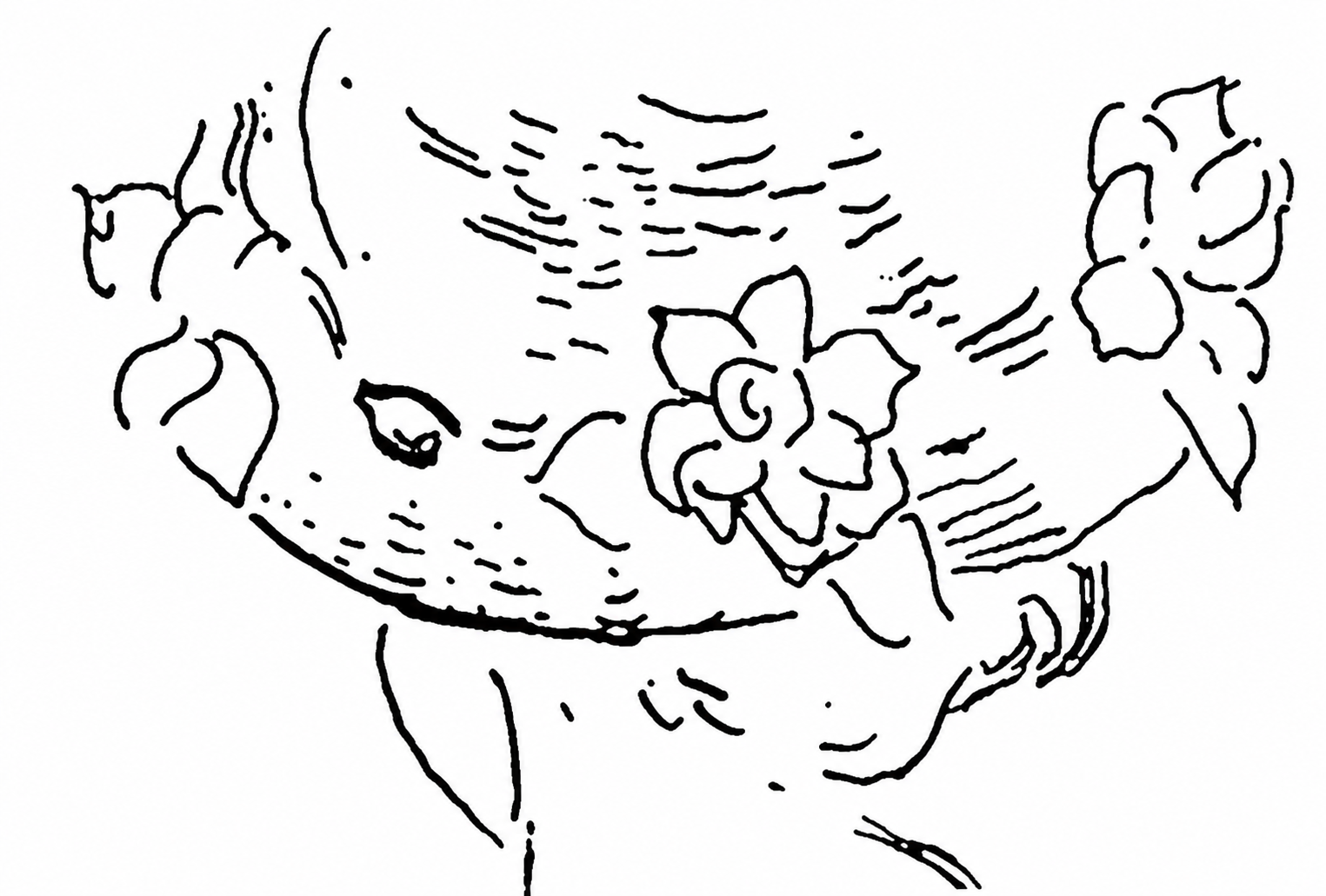
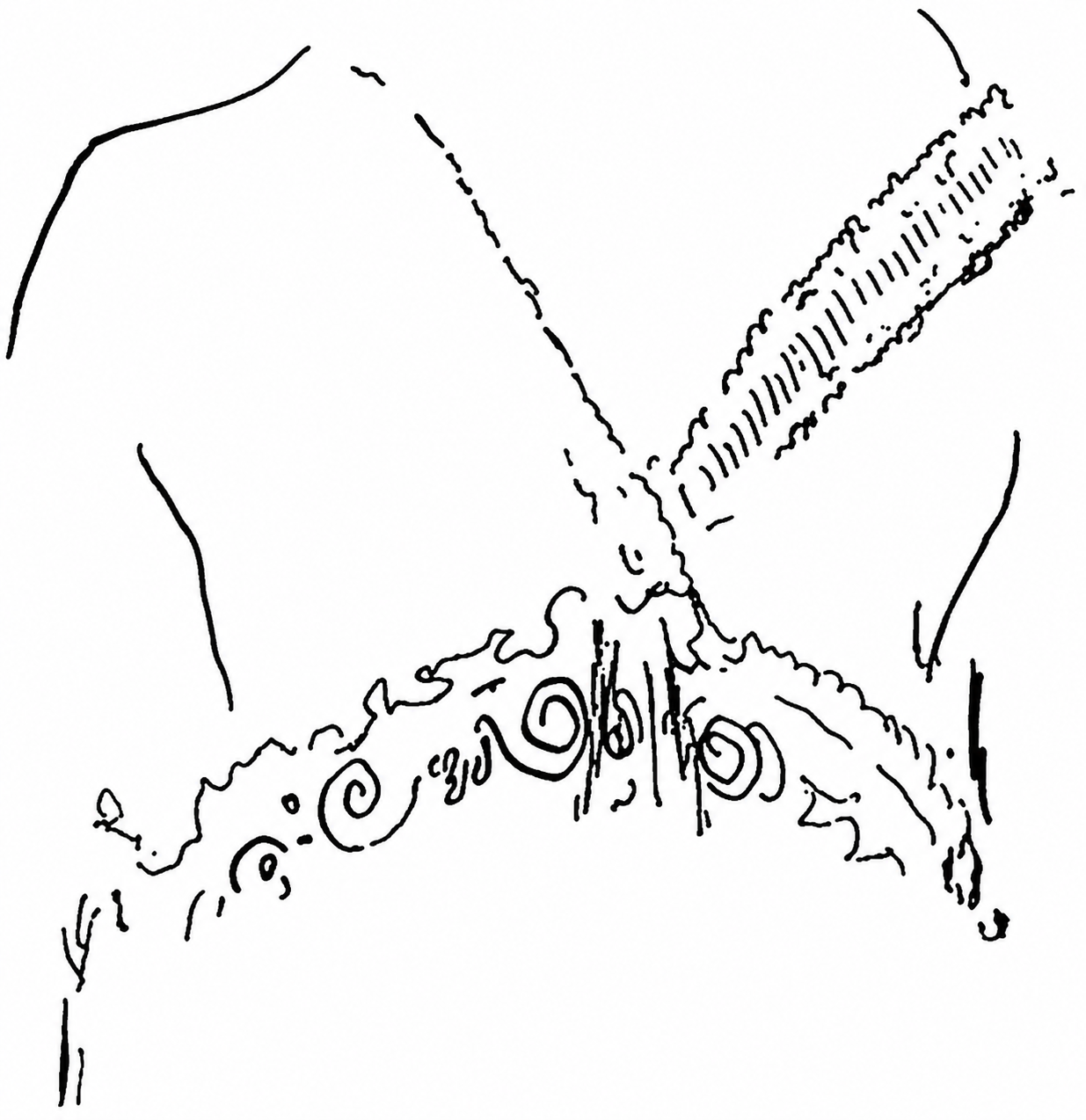
Matisse drawing -- with beautifully developed levels of scale along the range of scale than the door on the left. It has three sizes of panels; it has a gradation of scale from the bottom to the top. It has the jambs that are smaller than the panels, and the stiles are smaller than the jambs. It has a handle which has LEVELS OF SCALE within itself in the lock and in the finger plate.
Now let us consider the left-hand door, with eighteen equal panels. Why does this fail to have the levels of scale property as much as the righthand door? In the right-hand door, we experience the levels more deeply for two reasons. First, there actually are more levels: because the panels are more finely differentiated, there are centers formed at intermediate scales, formed by the top panel and middle panel together, for example -- something that doesn't happen in the other door. But what is really missing is the degree to which the centers help each other. In the right-hand door this helping is made to occur dy the levels of scale. The actual life of each center comes about because it is enlivened by the size and position of the next larger center which lies near it, and by the size and position of the next smaller center which lies near it.
In the left-hand door the detail is there -- but the detail isn't doing anything to create life in the larger centers, and is therefore almost meaningless. Superficially, the left-hand door has many panels, hence many levels of scale. But although there are indeed many panels forming an impression of scale in the door, these panels are cut in on a machine jig, automatically, as they often are in a door trying to be like an oldfashioned door. So, the centers in the panels have no real life. And this comes about because the centers are not really made to help each other. The door-maker, I can say quite confidently, was not trying to make this happen. Probably it was made in a factory, without much attention to the individual door. So, the levels of scale are rather superficial and empty.
Thus the property of having levels of scale is not a mechanical thing, which merely requires a wide range of different sizes. It arises properly only when each center gives life to the next one.
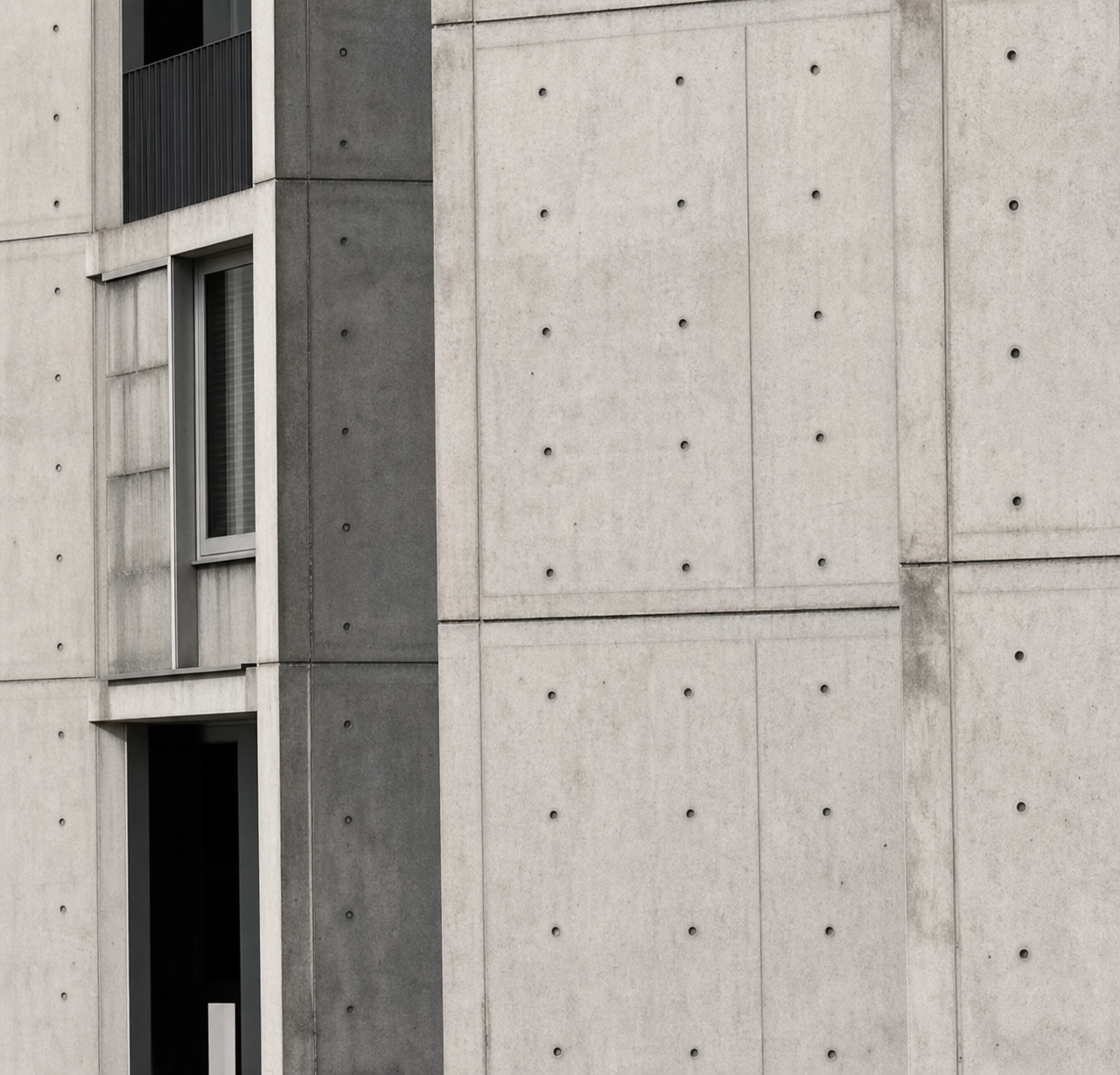
It is also extremely important that to have levels of scale within a structure, the jumps between different scales must not be é0o great. For example, if we look at the concrete wall in the picture below, we shall see the wall itself as a center, and we also see small individual centers (bolts or bolt holes) still visible from the formwork, Naively one might therefore say, "The con-
Excellent levels of scale: here the levels are beautiful, and really work.
crete marked by the small bolts has levels of scale." But according to my definition of this property, it does not. These two systems of centers (the whole wall and the small bolts) are too far apart in scale to be coherent with each other. Each panel of the wall itself is perhaps 36 inches by 72 inches. The individual bolts are perhaps an inch across. The area of the whole wall segment is
Concrete wall. A jump in scale of 2000 to I from panel to bolt-heads, too huge to create levels of scale effectively at all.
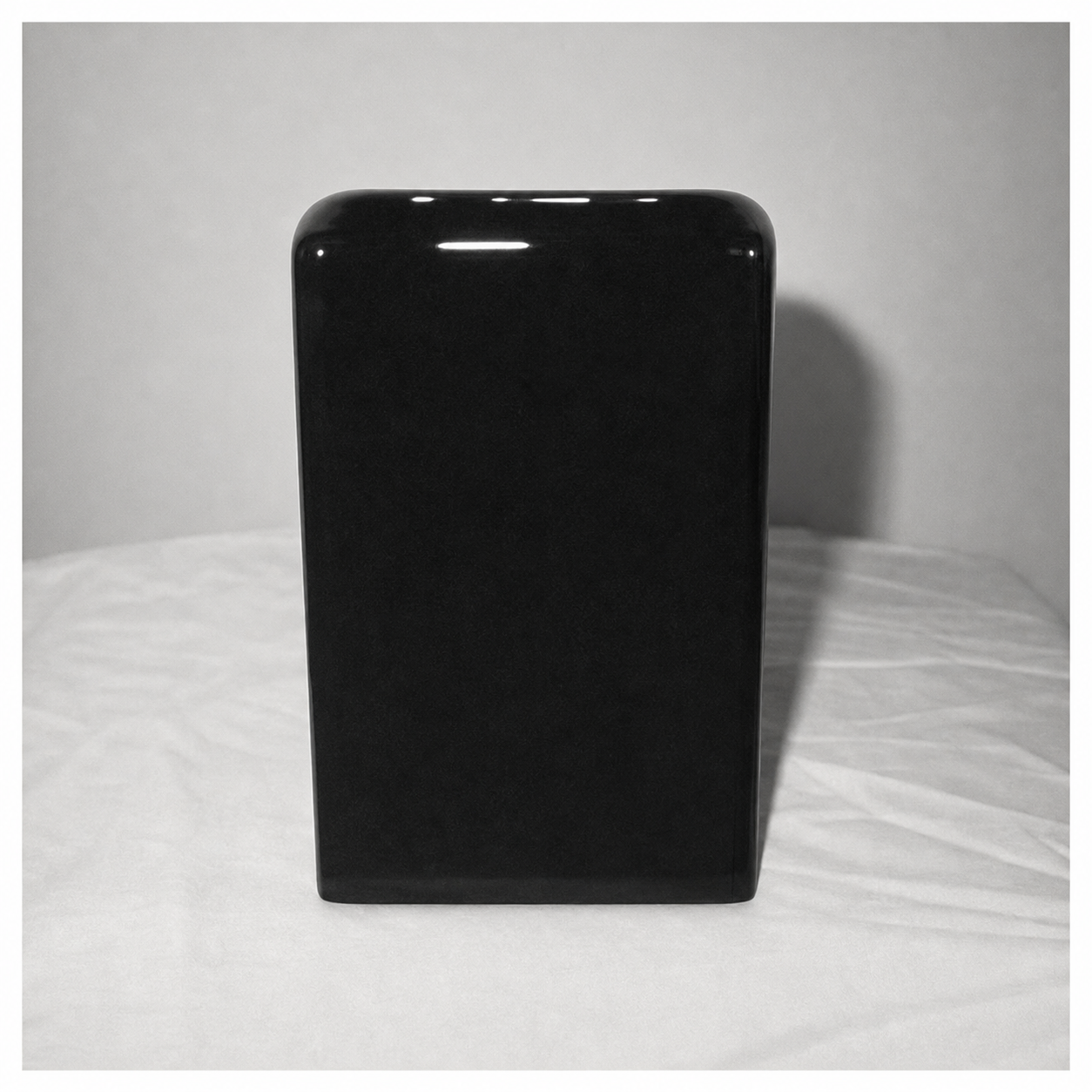
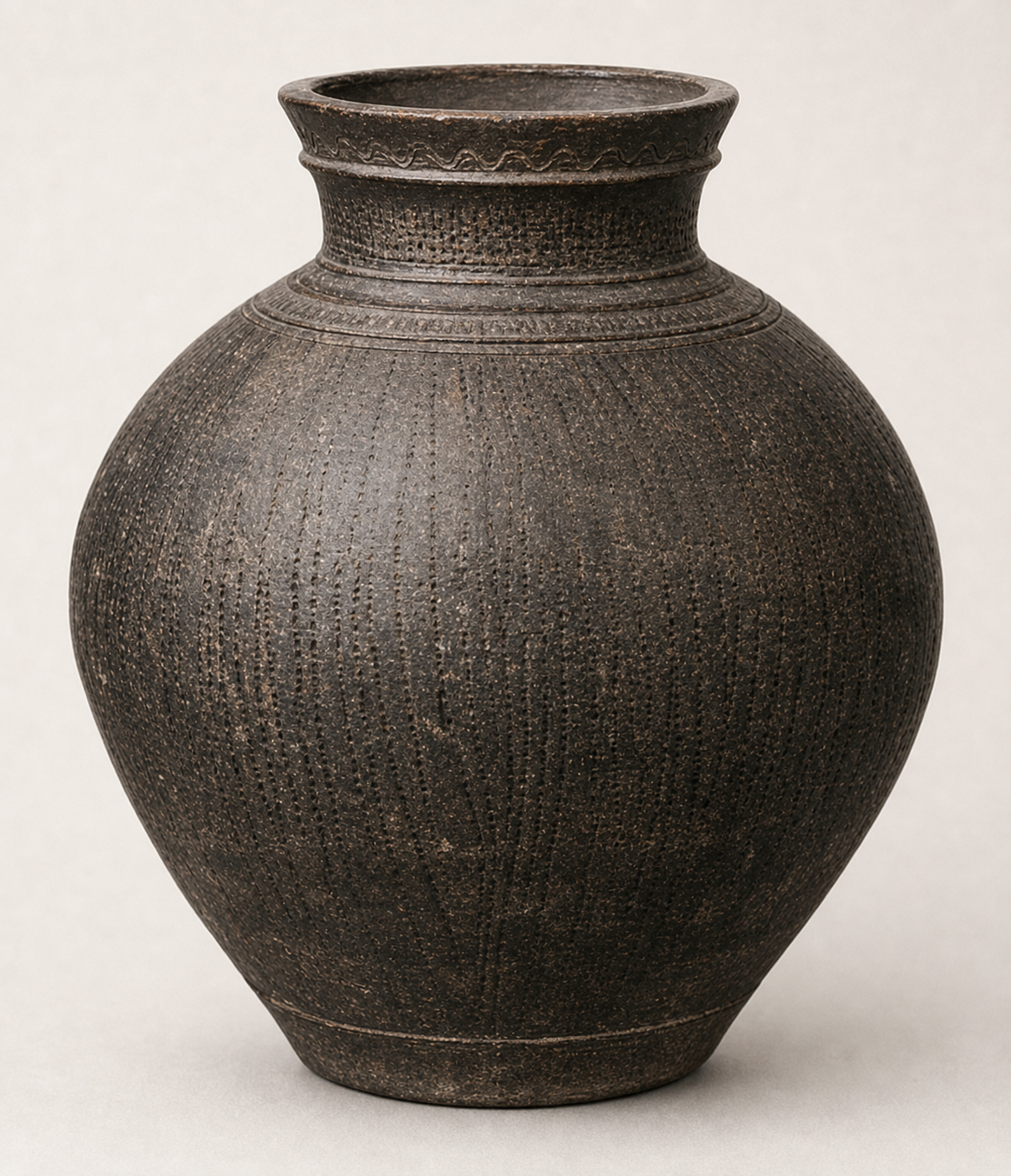
Beautifully shaped vase with excellent levels: the body is three times the lip, and the lip is three times the ornament, thus about 2,000 square inches while the area of one bolt is less than 1 square inch. The jump in scale is 2000 to 1 -- far too great to form levels of scale -- too great to form a nice chain of levels, or a nice step in levels.
When we introduce a single level at a jump of about 20:1 we get something like the modern -- and undifferentiated -- vase shown at the left. Here, still, the jump in scale of 20 to 1, between neck and body, is too great. It doesn't do anything to bring life to the struccure.
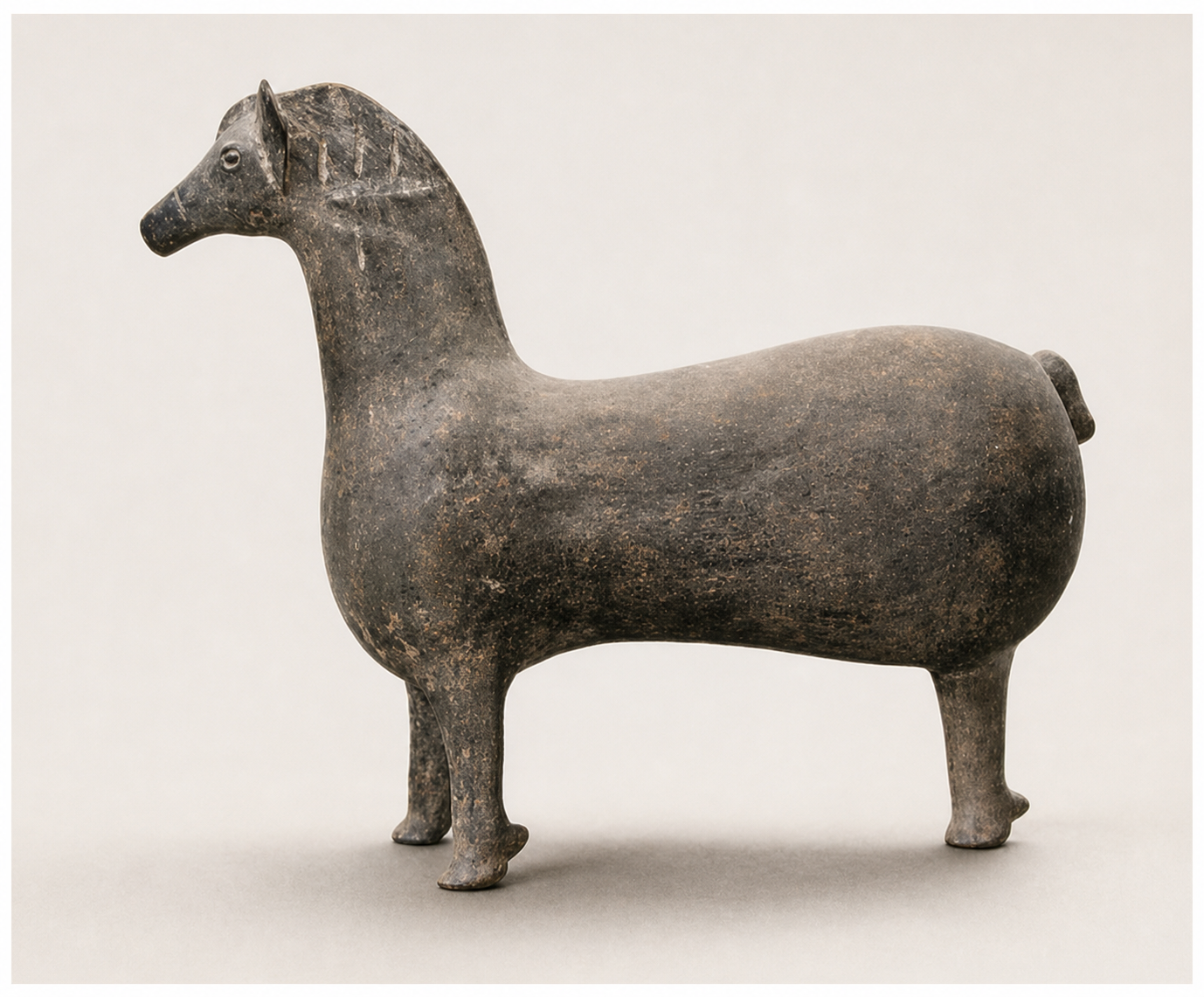
Much better, and beautifully proportioned, are the levels of scale in the pottery horse. It has simple, strongly executed levels of scale. The body is about twice the size of the head; the head about twice the size of the legs; the legs about twice the size of the feet and hooves. These details, not quite real when compared with the levels in a living horse, are dramatically and beautifully judged, just so that each level really helps the level next to it. The pottery horse has its life as a result.
In the vase below, the scale-jumps are more beautiful still. They are magnificently gauged. The body of the vase is perhaps three times the size of the neck: the neck falls in two parts, one three times the size of the other; and the upper part of this "neck-band" is perhaps three times the size of the ornaments chiselled into the top neck band. For some reason, especially in the impact of the body of the vase, the levels of scale have a nearly chilling power to create real life.
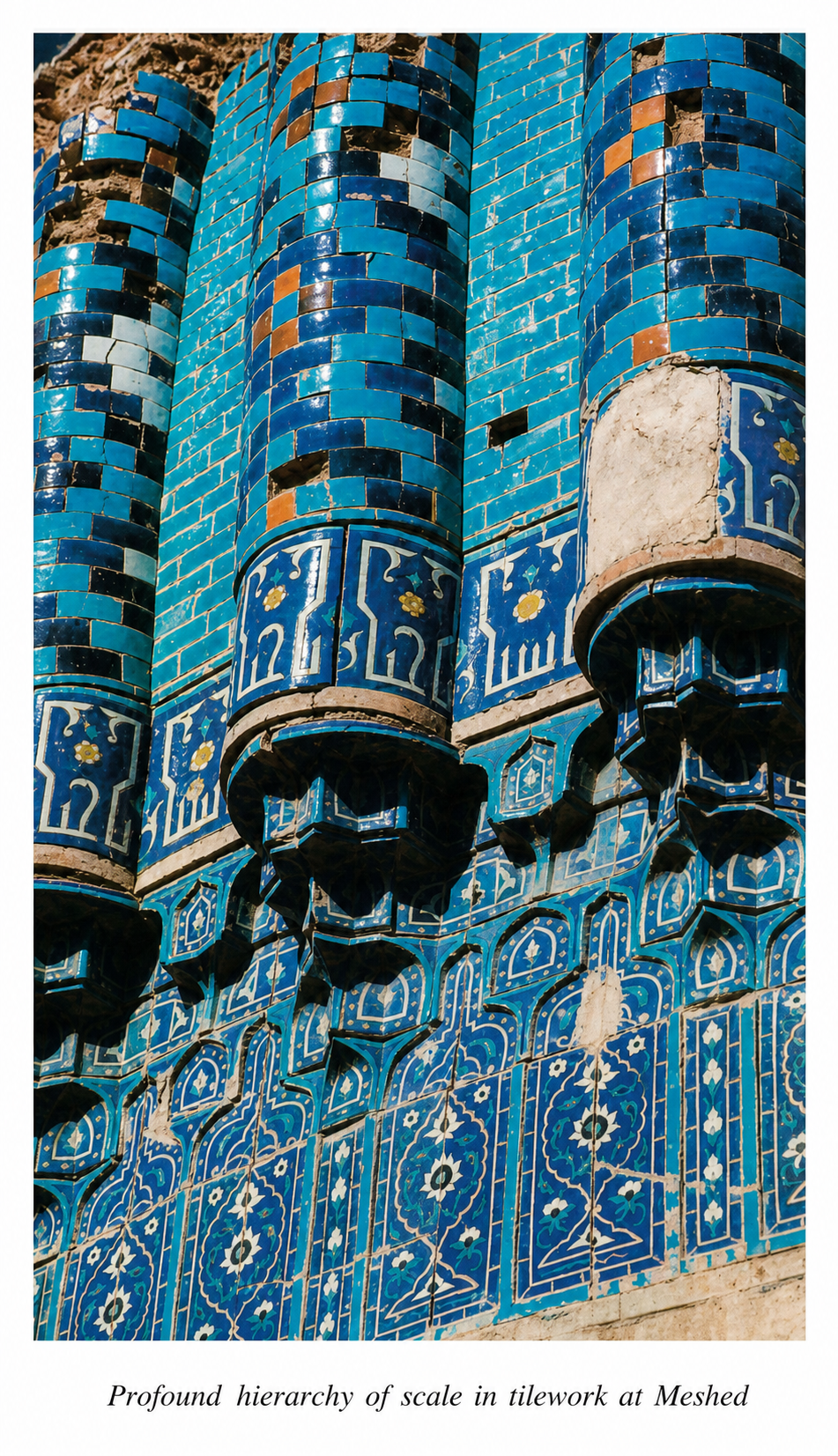
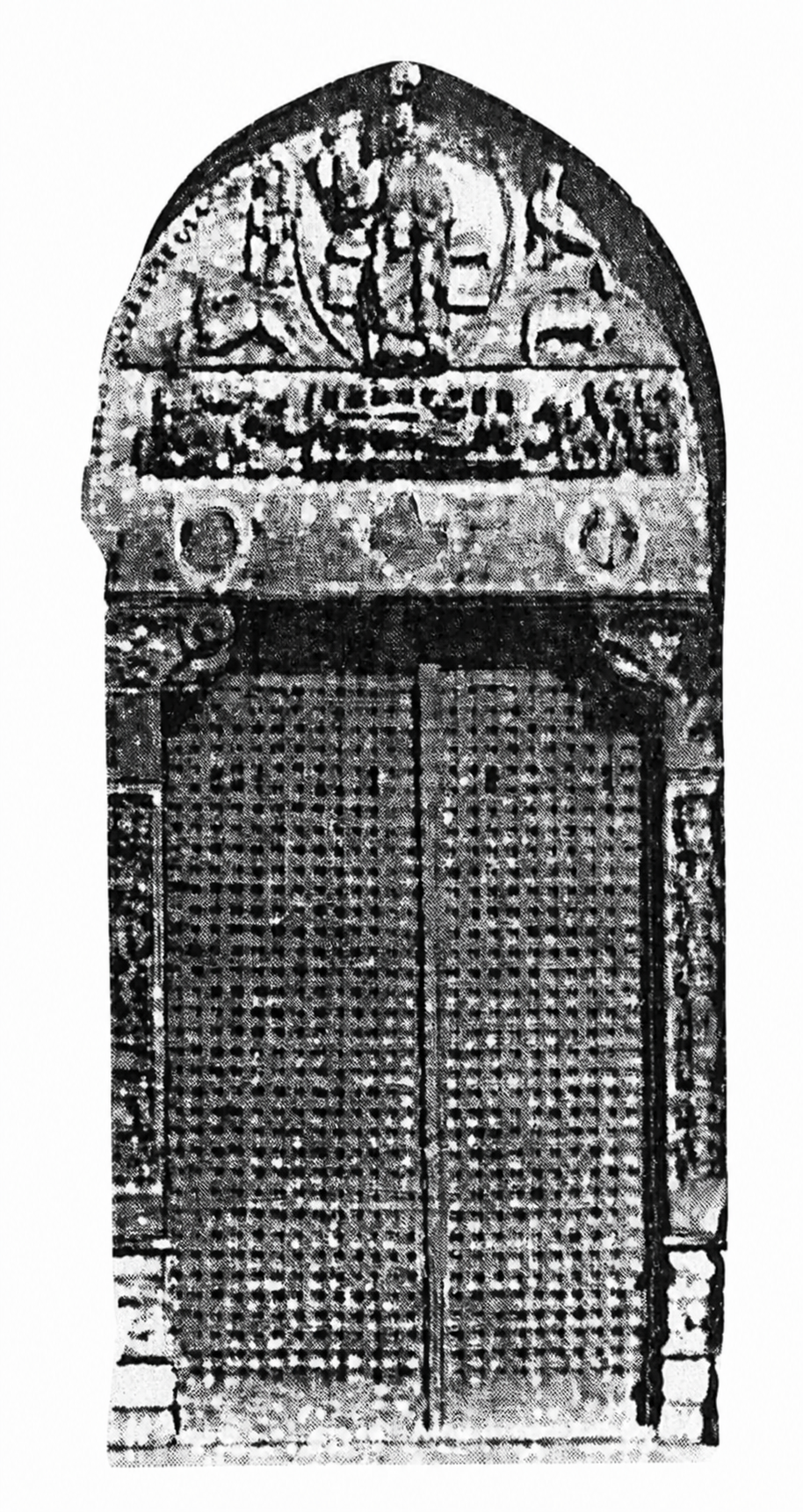
If the jumps in scale are heavy, deliberate, and somewhat evenly spaced through the levels of scale, a thing will often have this powerful life. For instance, in the good vase the jumps are roughly 3:1 and 3:1 and 3:1 and 3:1 again, step by step as we go down in scale. In this case, the life which is attained in the object is very great indeed. See also, for instance, the exterior of the Meshed mosque shown on the facing page.
Throughout these examples we see that a center becomes most intense in its life when other centers near it have a definite size relation to it at a scale which is perhaps half ics size, or twice its size -- but not enormously bigger, or
enormously smaller. To intensify a given center, we need to make another center perhaps half or quarter the size of the first. If the smaller one is less than one-tenth of the larger one it is less likely to help it in its intensity.
Let us understand clearly, then, what this levels of scale is actually doing in an object. It provides a way in which one center can be helped in its intensity by other smaller centers. If I try to make a certain window a strong center, then I can intensify this center by making a second smaller center to support the first, at the sill, or at the jamb, or in the wall next to the window. This second center will tend to be most helpful in intensifying the first one (the window itself) if it is not foo different in its size. For instance, a window can be intensified by a windowsill, but it is unlikely to be intensified by a nail. And, often, a big sill will do it better than a small sill. Thus, the centers need a rather well-ordered range of sizes and scales in order to help each other most practically.
In the tilework at Meshed, we see this principle carried from the giant tower-like structures through many intermediate levels, all the way down to the tiles themselves. There are distinct wholes, or centers, visible at every level in between the two.
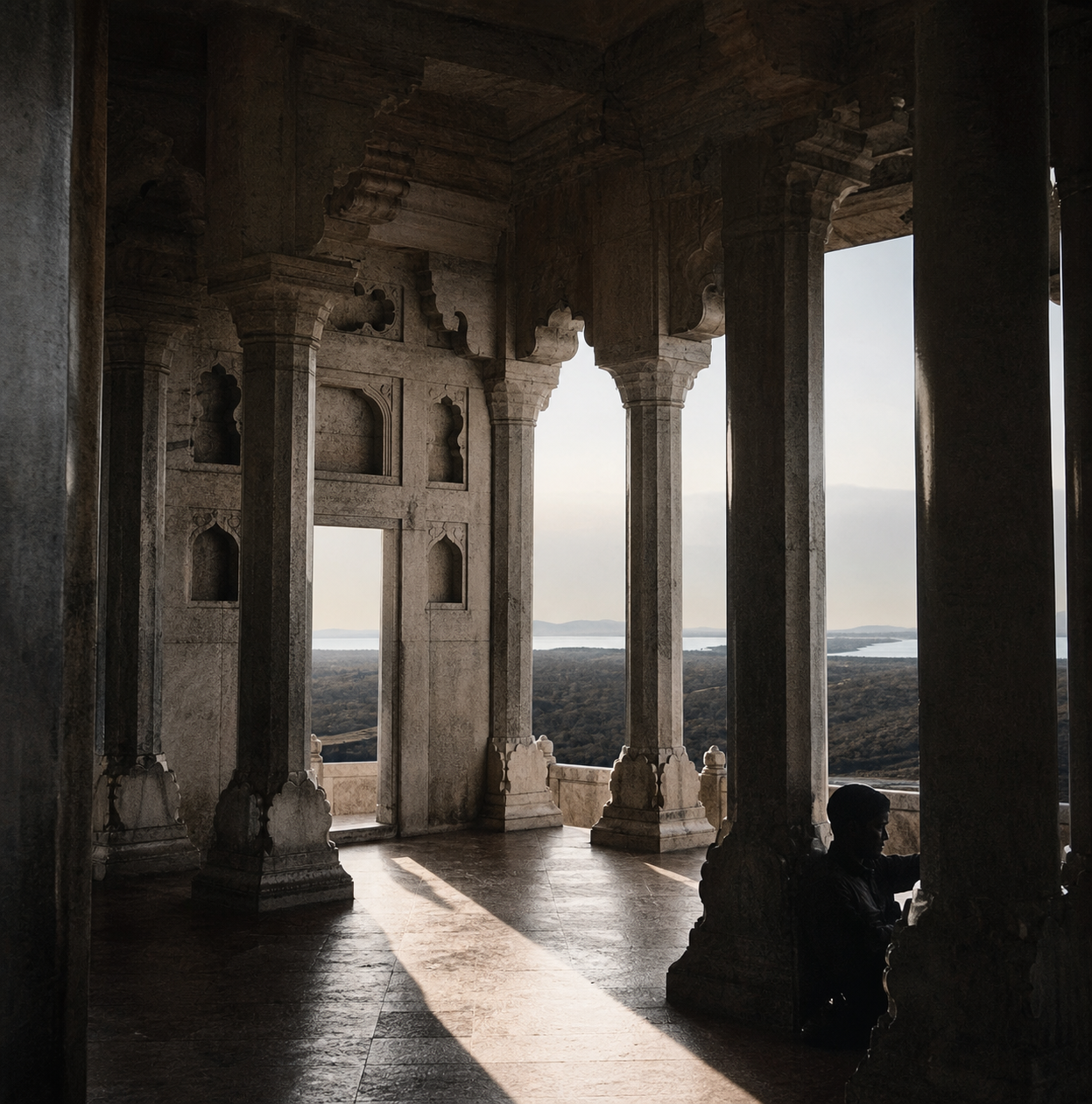
The same is true of the sparse but magnificent high porch near Isfahan on the next page, where the rooms, members, and scales help our feelings by supporting practical life profoundly. In the more miserable structure of Le Corbusier's Marseilles apartments (shown at right), there are merely a few distinct sizes of things visible, as in any design, but no way in which each level has its centers, and in which one clearly feels how each enlarges and enlivens the smaller ones and larger ones. The different-sized members are merely different in size. But in the good examples, like the porch on the next page, the levels of scale create a field effect which creates centers: it is not only true that the small centers intensify the large ones, but the large centers also intensify the small ones. The property creates life
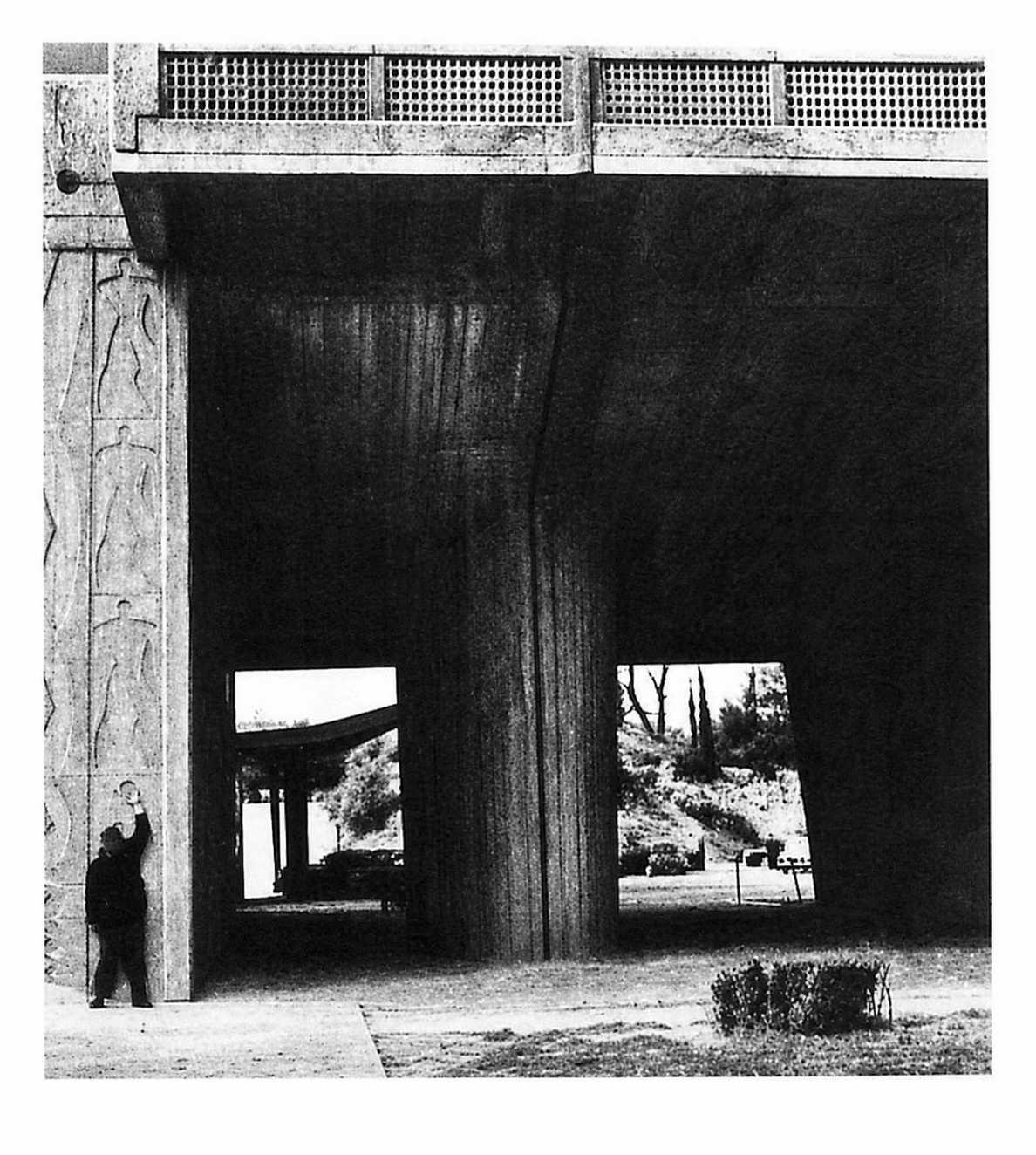
Poorly developed levels of scale in Le Corbusier's Marseilles block of apartments
Functional Notes
Throughout this chapter references to A PATTERN LanGuaGgE (New York: Oxford University Press, 1977) will be given in shorthand as APL, followed by the name of the pattern and a page number.
Levels of scale are necessary to many practical examples from the sphere of building and a great many patterns in APL deal with this topic. Construction members, especially in their connection to one another, are helped and complemented by small pieces of trim which set a hierarchy of levels in the finish work, cover cracks, and make the finishing more practical (HALF INCH TRIM, p. 1112). A window works best emotionally, when it is divided into smaller windows. The subdivision of panes helps the way the window creates the glazing bars also add strength, and make it easier to replace broken glass without waste (SMALL PANES, p. 1108).
Larger examples of levels of scale are equally significant. Consider the structure of regions, communiti neighborhoods. INDEPENDE 7000, IDENTIFIABLE NEIGHBORHOOD, and HIERARCHY OF OPEN SPACE (pp. 10, 70, 80, 557) all show that distinct and definite levels of saview.
and
le in the large structure of the city will help maintenance of human community.
Or consider the variety of room sizes in a building. Several patterns in APL deal with this topic. The patterns to do with the necessary variety of different activities in a building, and the resulting variety of size of different rooms. Buildings whose rooms are all the same size are often rather stale. But in a house with a large room, and smaller rooms, the social atmosphere and the range of possibilities for life which the building provides are intensified. Even a tiny house in which there is one dramatically large room, two small rooms, and two tiny alcoves, will work very much better than one in which there are four equal-sized small rooms (ALCOVES, BED ALCOVE, CEILING HEIGHT VARIETY, pp. 828, 868, 876).
In all these examples the bolster the life of the larger sp somehow smaller space and the larger ones bolster the life of the smaller ones.
There is more ion in the life of the different rooms when are extremes of size va coope: th are homogencous. Thus, in th amples, levels of ile among functional centers affect the practical behavior of the building, and make it more capable of supporting life.
jation, than when
ee:
2.2 / Strong Centers
The next property -- the frequent appearance of STRONG CENTERS in living structures -- appeared in my list of properties about 1975, long before I recognized the more fundamental and more general role of centers as the key elements of all wholeness. When I first noticed it, it was simply as one characteristic of those wholes I observed in living structures.
It may seem strange that I now choose to leave it on the list as one of fifteen properties, when I know that centers play a much more fundamental role as basic elements. Nevertheless, I leave it in the list, because it is one thing to emphasize the presence of centers as elements of the wholeness -- as I have done in chapters 3 and 4 -- -- and quite another to concentrate on the strength of these centers as a feature all the centers have in living structures -- which I do here. What follows is essential, and not covered in the earlier discussions.
I began to notice that, next to the property of LEVELS OF SCALE, possibly the most important feature of a thing which is alive is that we find that the various wholes which exist at different levels appear not merely as centers or "wholes" or "blobs," but actually as strong centers.
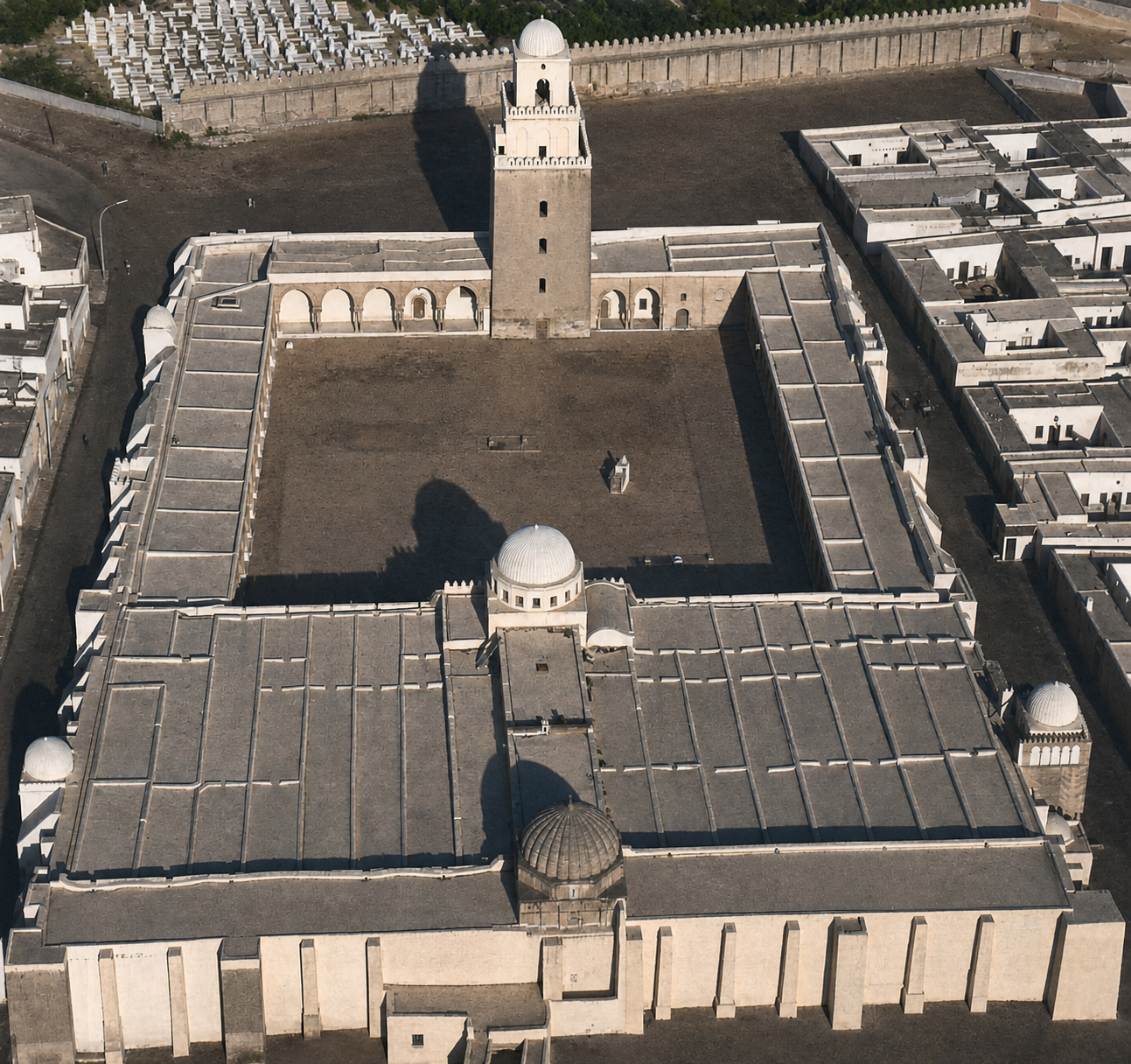
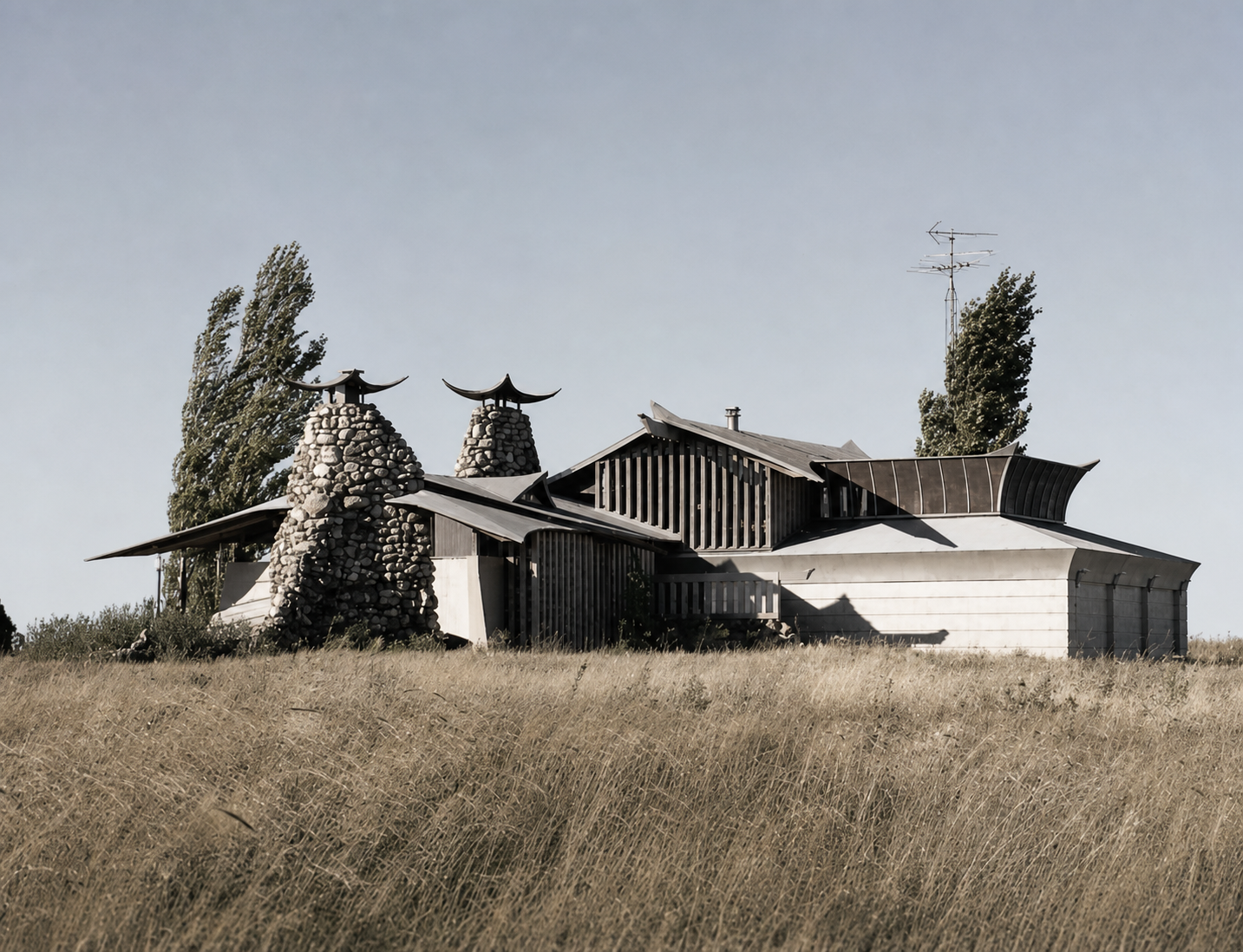
Contrast two buildings: the mosque of Kairouan and the house by Bruce Goff above. As we look at the mosque, we see many mutually reinforcing centers. The great courtyard, the large dome, the smaller dome, the individual battlements, the steps, the entrance, the individual arches, even the segments on the roof. In contrast, there are virtually no strong centers at all to be seen in the Goff house. Some people might call the house organic. But it lacks the cumulative power of strong centers which I am talking about. Whether you think that the wholes it is made of are wholesome or not, you can hardly claim that they form strong centers. Its elements are amorphous in a definite and intention al fashion, which prevents them from being strong centers.
To some extent, the difference between the two buildings is caused by a difference in symmetries. In the mosque the various centers which exist are locally symmetrical. In the house almost none of the parts are locally symmetrical. But the fact that there are strong centers in the one building, and not in the other, depends on more than symmetry. In the mosque each center exists as a field-like effect, which extends beyond the local symmetry of the individual parts. For example, the power of the dome in Kairouan is caused by the progressive sequence of three domes, each one higher than the other, leading up to the main dome as a pinnacle. The entire structure builds up to the main dome. The fact that we perceive this dome as a center is caused not just by the shape of the dome, but by the location and geometric role which this dome has in the building complex as a whole.
By contrast, in the Goff house, there is none of this progressive quality. The individual parts are not intensified by their position in the whole, except perhaps for the one or two small leaf-like roofs over the central tower, the other elements stand in isolation, and do not create any feeling of centeredness in one another.
To understand this quality more dramatically, let us look at an Anatolian carpet fragment from the 18th century. It has the feature of centeredness to a striking and extraordinary degree. Almost every good carpet has some strong center, not necessarily a geometric center, but a center of attention, a center of focus. If the center is merely a something in the middle, which disappears when you cover it, it has very little power. In order to work as a strong center, there is usually the feeling that the entire carpet is orga-
ex prpinanesnanpe?

The imperial inner city of Beijing: greater centeredness formed by the nesting of the centers nized in layers to support and surround this middle, so that one approaches this middle, the eye rests on it, one keeps coming back to it, going away from it, coming back to it. In short, the entire design sets up a vector field so that every point has the property that from that point the center is in a certain direction: one direction is going to the center, and another is going out away from it. As a result, the whole visual field is oriented towards the center, and the field feels centered, Even when you put your hand over the
middle, you can feel the center just by looking at the vectors set up by the layers all around it. In this great Anatolian carpet the red figures progressively take the eye to the middle; again and again, each part takes the eye to another part, which moves towards the middle. The cross shapes at the end seem to point out, yet oddly create a field effect towards the middle. The diagon als in the border seem unconnected, and yet powerfully send the eye again on a diagon al path, which ultimately moves towards the middle.
In a building, creation of this kind of centeredness can be considerably more subtle. The imperial inner city of Beijing has a centered quality. It is a layered system of nested domains which lead, one by one, to the inner city, and then to the inner sanctum of the inner city. The hierarchy of layers creates the deep feeling and intensity of the center: the deep center arises at the heart of the inner city, because of the field effect generated by the nesting. We pass through a series of zones of increasing intensity as we go into the
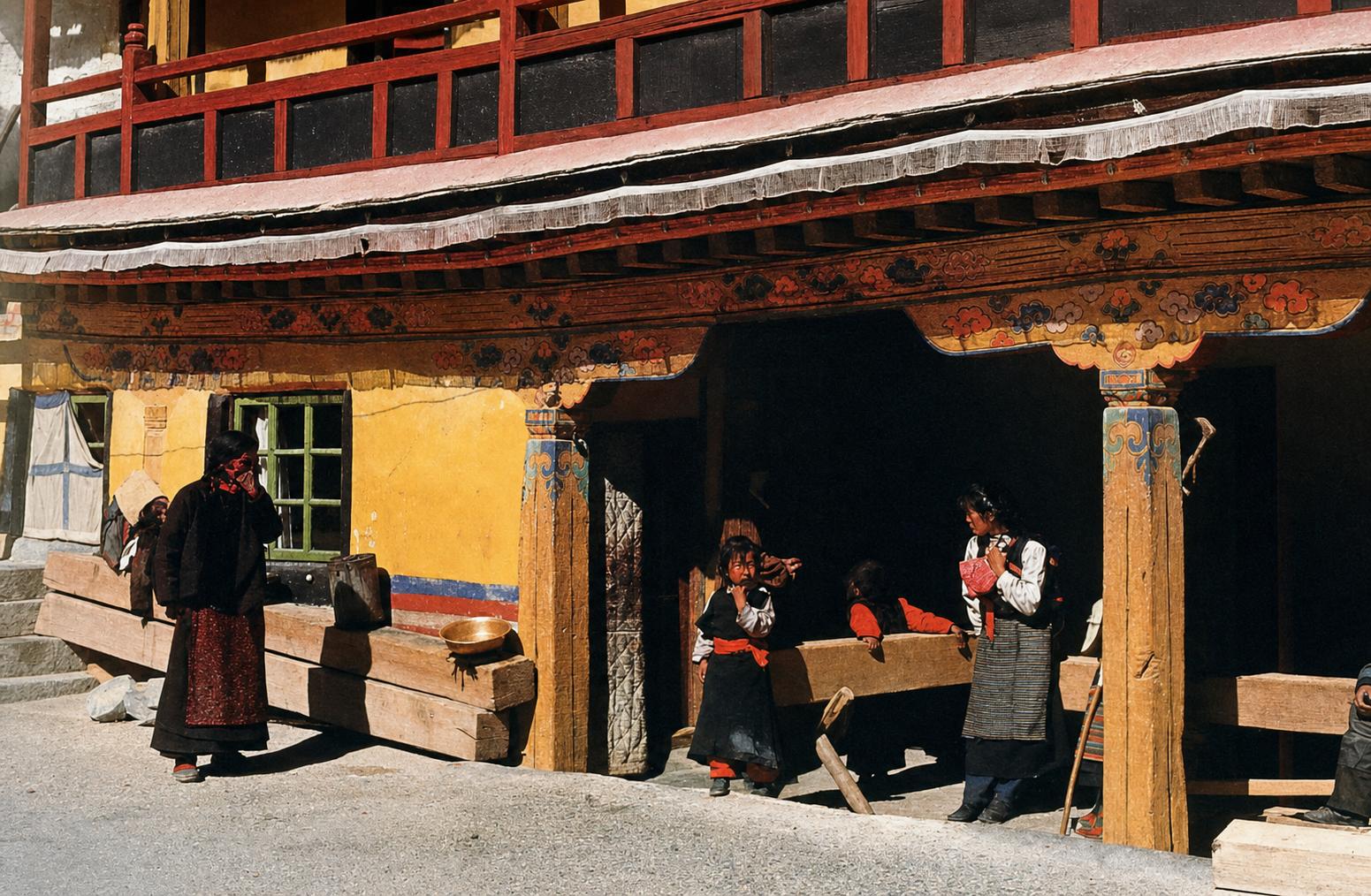
Part of the Potala, Tibet, where the strong centeredness of the centers is formed, informally, but very powerfully, in three dimensions
Kitchen
Bedroom
Living/Dining
Bedroom
building: the gradient of increasing intensity creates a center in the middle. The Potala courtyard shown opposite has a similar structure in three dimensions. Arcade, columns, capitals, detail -- each one contributes to the overall field effect, which makes each of these centers, large and small, so powerful. Look at the way the column capital creates a field effect which makes the column bay more intense, at the way the bay, becoming intense as a center, then creates a field effect in the courtyard where the photographer stood, making this courtyard a stronger field-like center, too.
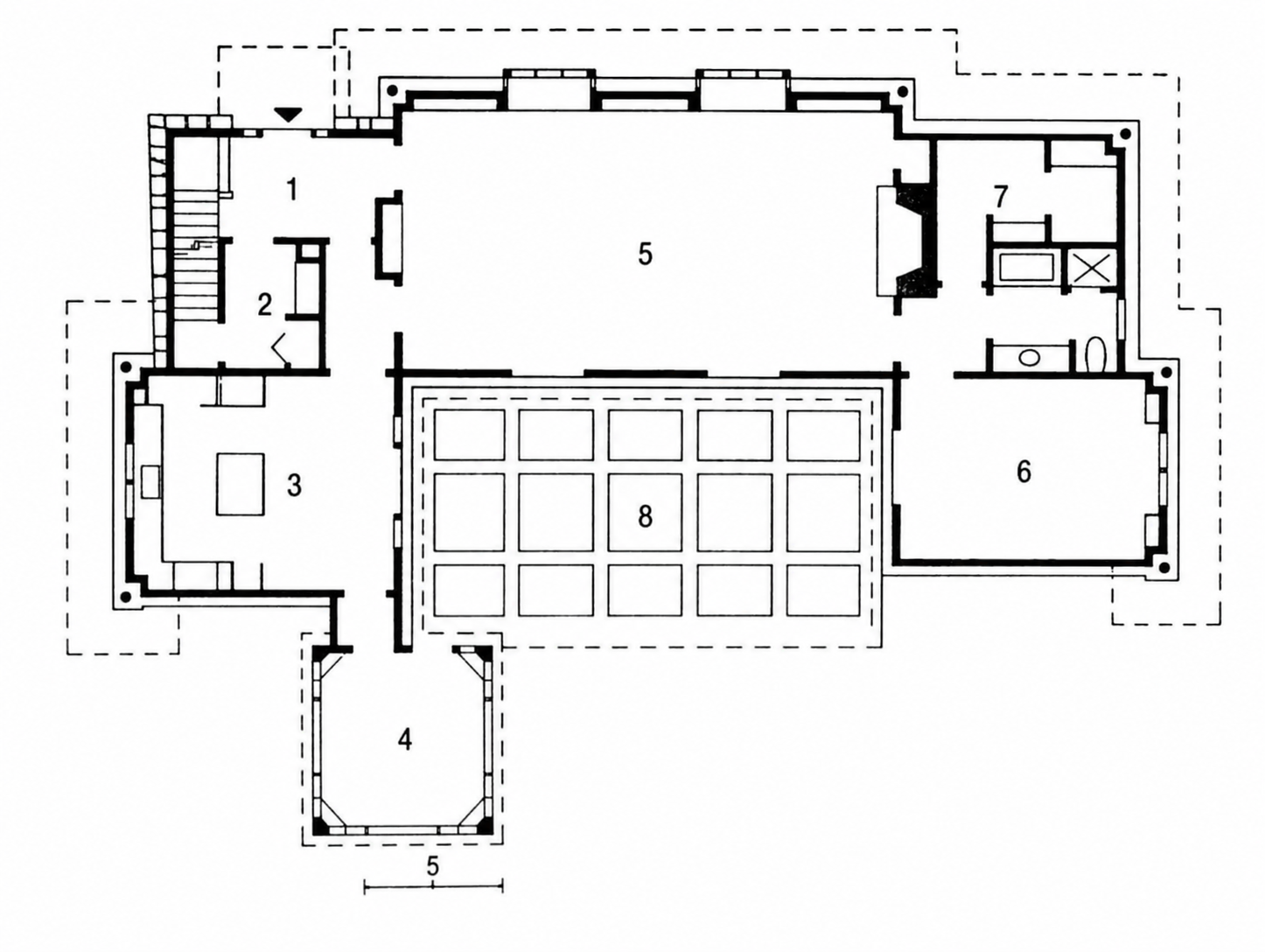
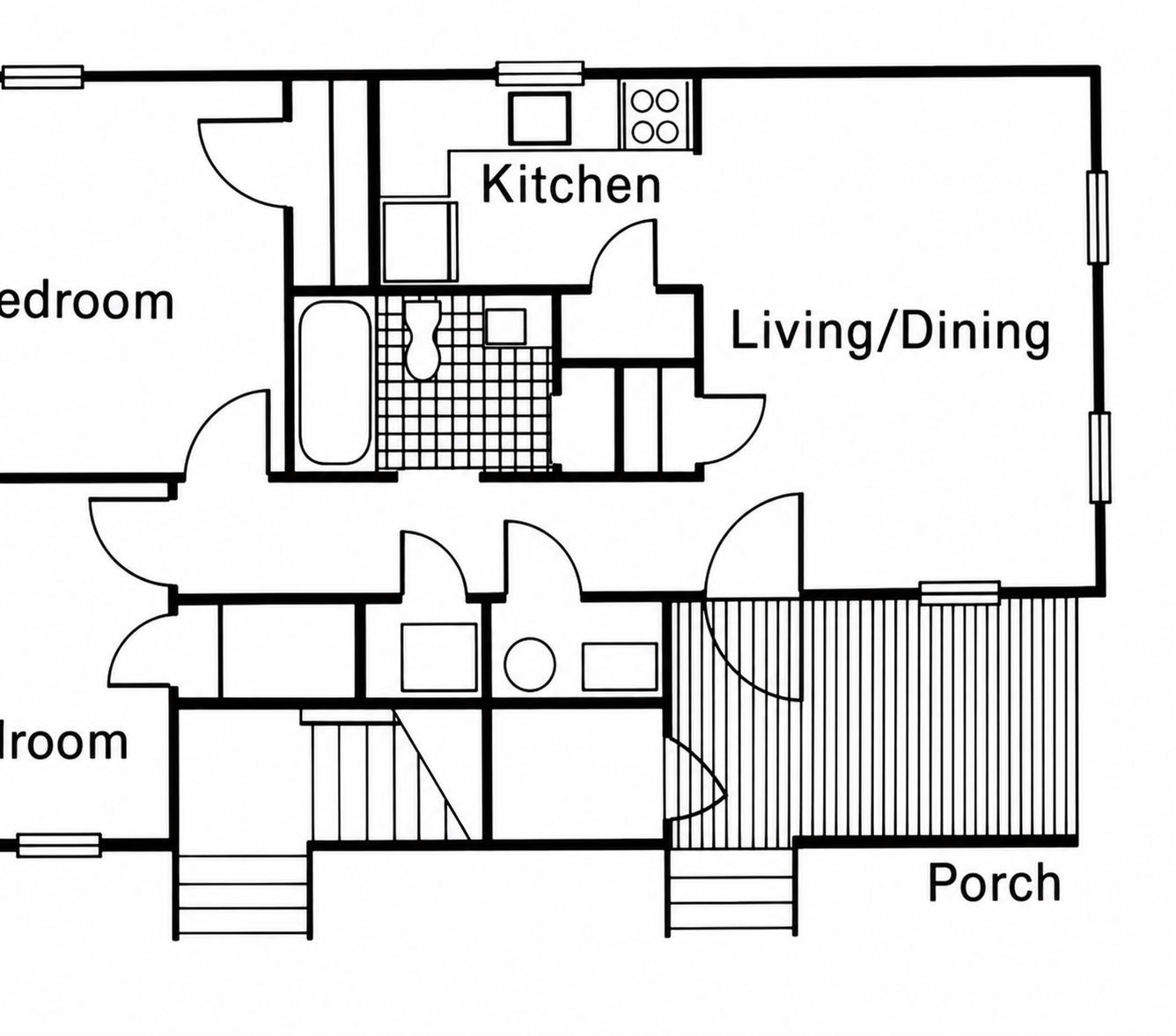
In contemporary buildings, it is often hard to create this hierarchy of centers, perhaps above all because -- in practical terms -- we don't know what to put at he center. A typical house of a modern family. What is the center? Above I show a typical house with a number of rooms and little clarity. It reflects a situation where people wander in and out, relationships change, little is stable. The plan itself lacks a center, even in the physical organization, which perhaps reflects a lack of center in the modern idea of the family. But if we want to know how to correct the problem, we find ourselves asking, "What function could there be at the center that is important enough to make the building have a series of levels in this fashion? The kitchen? the movies or CDs of the day? the living room?" These functions, though important, are too neutral emotionally to be able to carry a powerful geometrical center. What once were powerful centers -- the fire, the marriage bed, the table -- no longer have this power, because individually
Frank Lloyd Wright house plan with rich centers: the rooms are intense as centers, and they make the house intense as a single center too.
and as families we are not centered in ourselves. The emotional confusion of the present-day family reveals itself in the lack of power in these centers of the house.
But when a house is organized with clearer centers -- with a center that exists in the plan as a focusing field of energy, focusing the house towards a place -- it becomes immediately more potent, even in its ability to harness unknown and undeveloped tendencies of centering in the life people live there together.
To clarify the idea of a strong center look at the example by Frank Lloyd Wright, above, which allows us to study the field effect which creates a center. The field effect and the power of "the" center are created by the sequence of other nearby centers leading up to it. For instance, a long religious building with a series of bays leading to one end will mean more if the bays become more and more intense, leading to a climax, than if they are all equal. In general, there is some kind of principal structure, and other structures are subsidiary to it. There is one largest structure guiding the whole.
Sometimes this weight, or centrality, can be created by apparently small details. For example, the lamp hanging in the prayer arch (mihrab) of a prayer carpet has a certain very definite function: to hold the eye, to make a center. But it is not enough for the lamp to be a dot. It needs to be a "structure" which forms centers in itself, perhaps, as a minimum, a large dot, with three smaller dots below it. It can even be an upsidedown jug, any design with enough structure to establish a strong field effect.
na rt
Prayer arch empty and weak: it lacks the key center that organizes it
Prayer arch completed as a center by a smaller system of centers
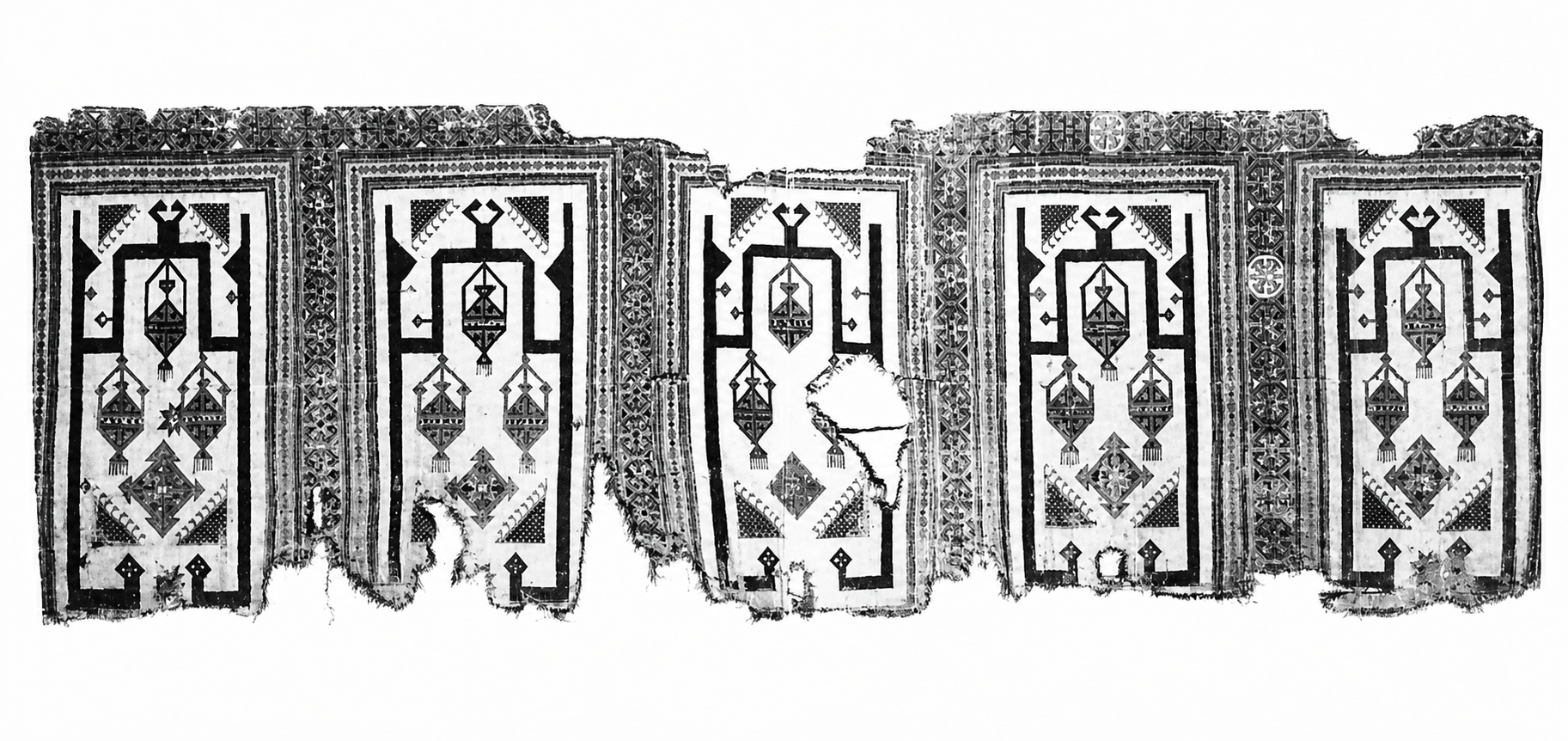
In the complex and sophisticated carpet example with five niches, from the 15th century, the lamps play an enormous role in making the niches into strong centers. Although the nichecenters are effectively created by the lamps, it is not the lamp itself which is the center. The lamp merely serves to orient the space, and to set up a field effect in the larger space. The center which is then created is a centered, oriented zone, five or ten times bigger than the lamp alone: and it is this which creates the deep feeling in this carpet.
The lamp is just one of many structures which create a progressive sense of movement towards the core of each niche. It is the overall, combined effect of all these different centers working together which creates the strong center. The reason why a single dot would do less than a "lamp" is that the lamp itself is a progression of centers, not just a single center -- and this
progression of centers, in this one place, will do more to organize the field than a single spot could do.
As in this example, every strong center is made of many other strong centers, a multiplicity of centers. Like levels of scale, the concept of a strong center is recursive; it does not refer to some one grand center, but to the fact that at a great variety of scales, in a thing which is alive, we can feel the presence of a center, and that it is this multiplicity of different centers, at different levels, which engages us.
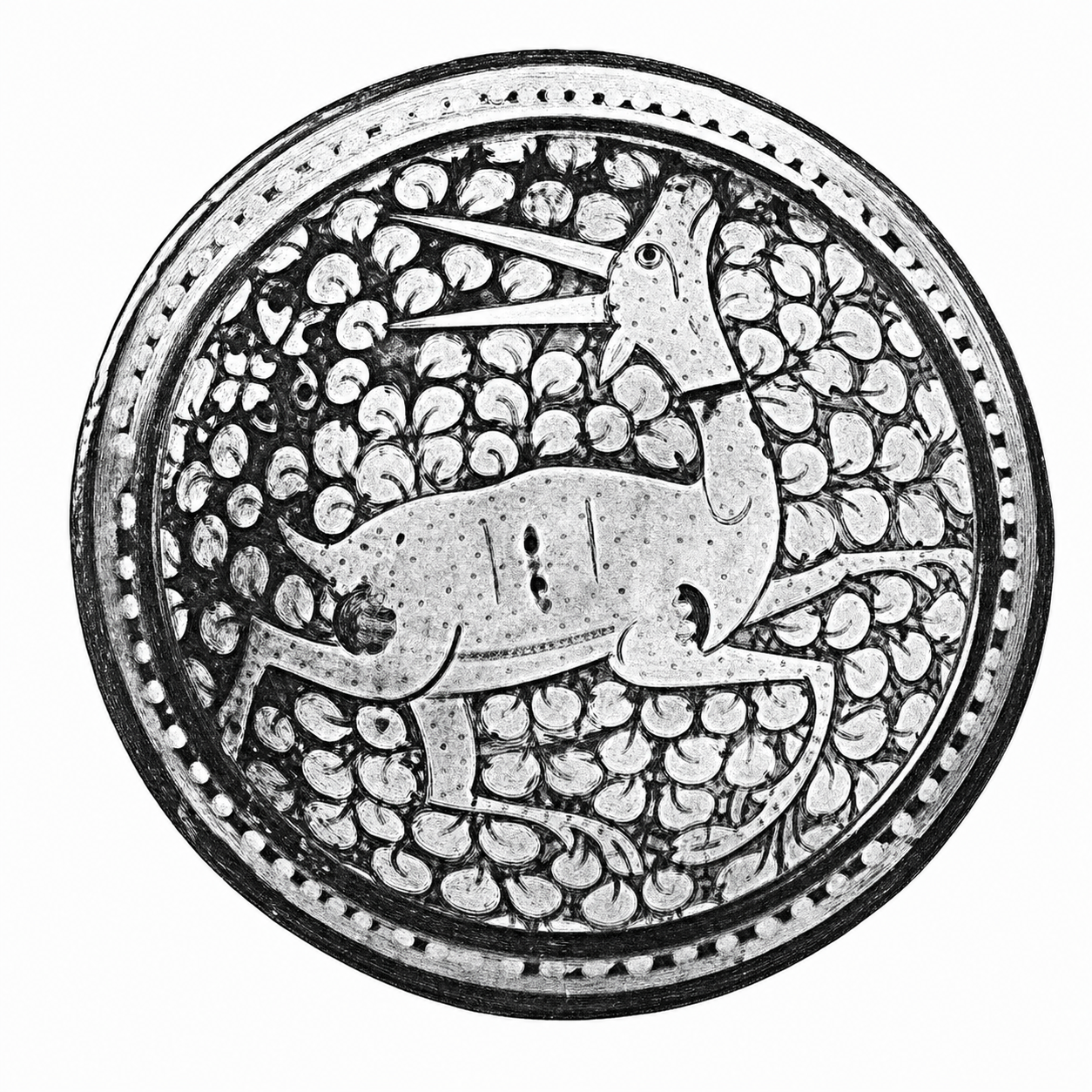
In many cases there is nevertheless one principal center, the center of the whole composition -- the resting place, the middle, the most important place. In other cases which are equally breathtaking, there is no one center, but an undulating series of minor centers, as in the deer on the plate shown on the facing page. But even in cases like these we see, at various points, things which we can identify as "centers," forming and making other centers powerful and strong.
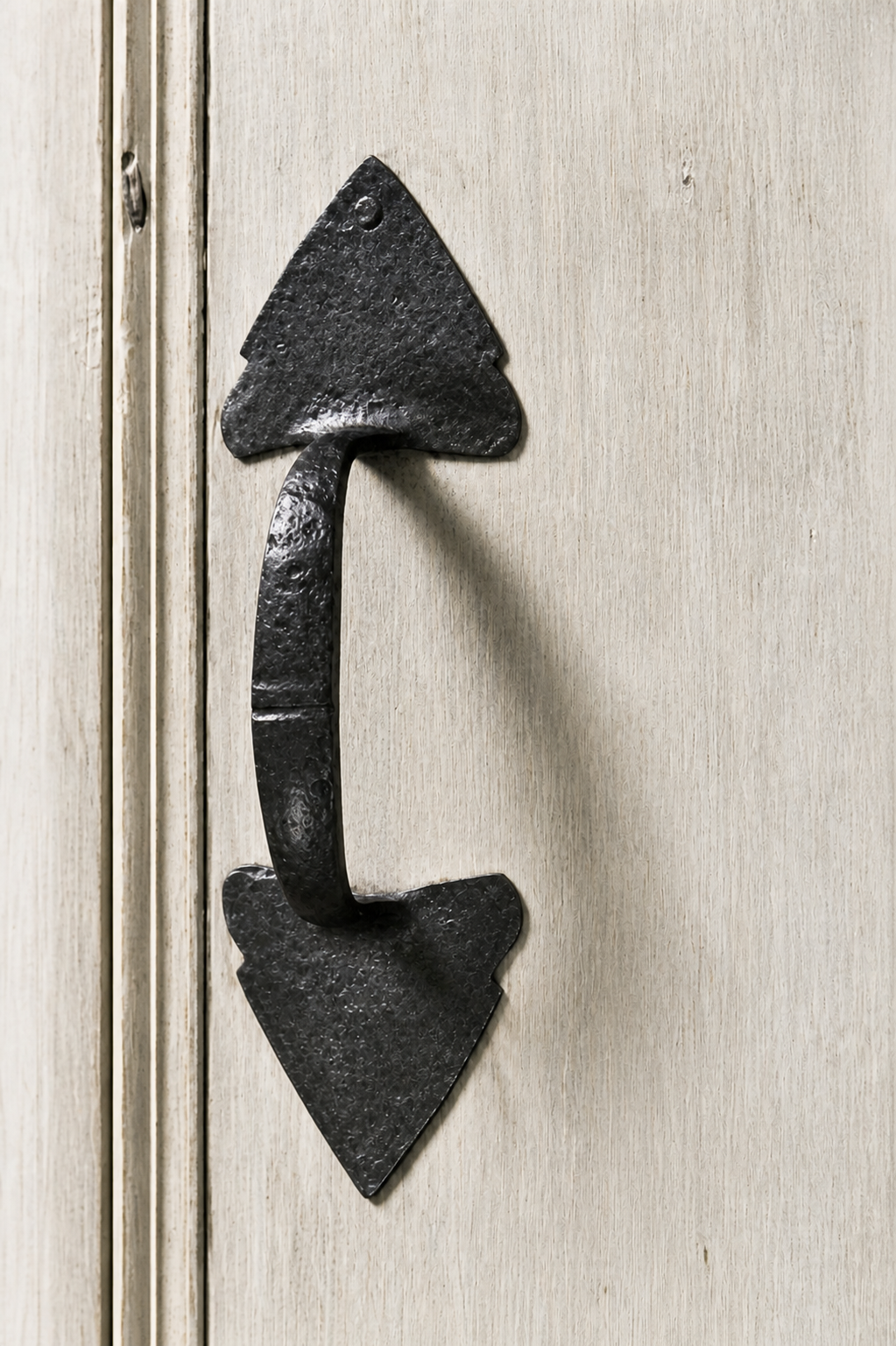
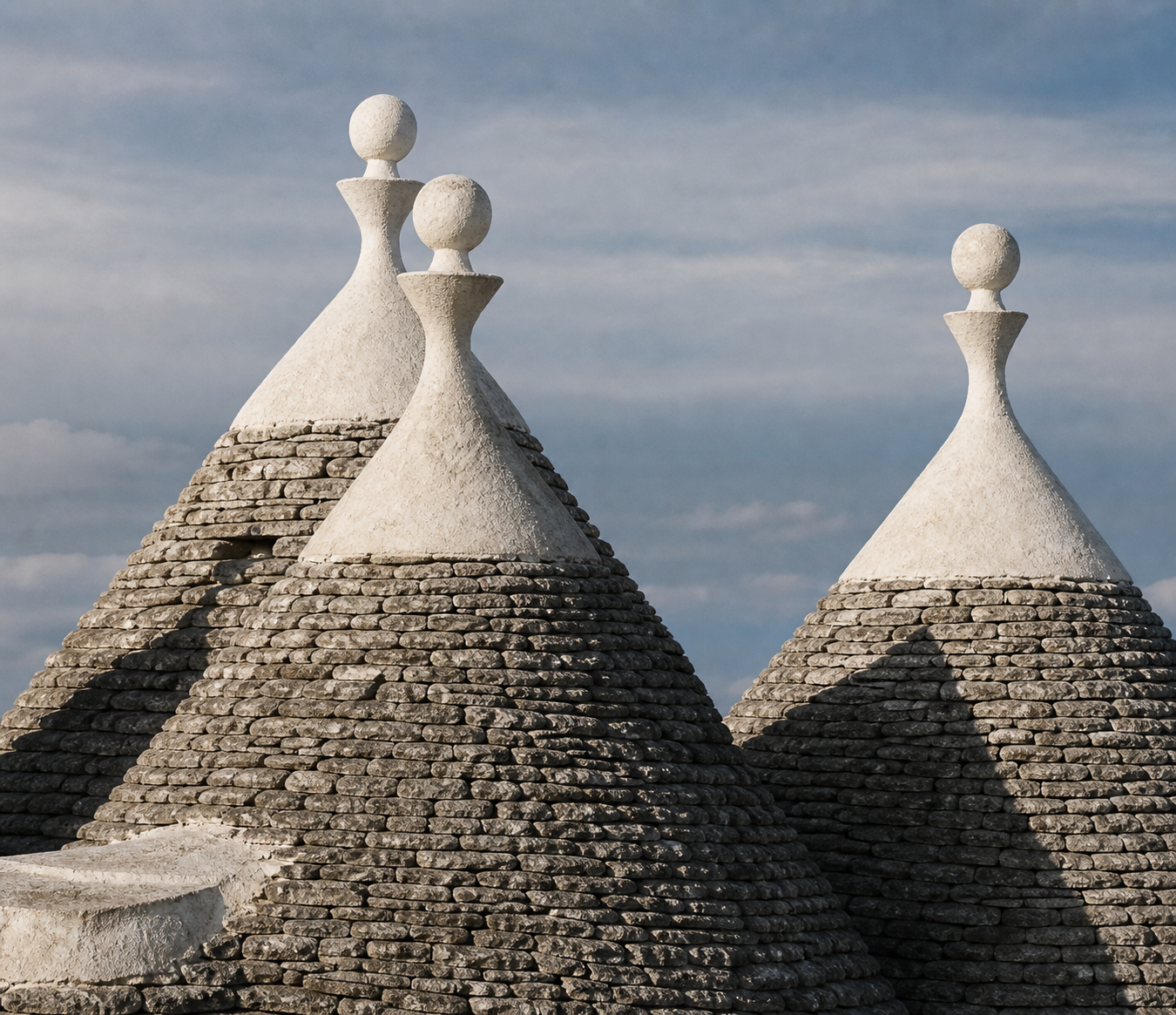
The tip of each roof in the trulli at Alberobello is a strong center which is formed, not merely by the little knob, but by the way the whole roof form is focused towards the tip, the way the tip is painted white, and the way this then culminates as a core of a center that is formed. The forged iron handle gets its strength as a center from the two plates, forged top and bottom, which are then screwed to the door. The
FIFTEEN deer on the Turkish plate becomes a strong center because of the way it stands out from the repeated roundel elements, and from the border, which all focus their attention on the deer. In the Piazza
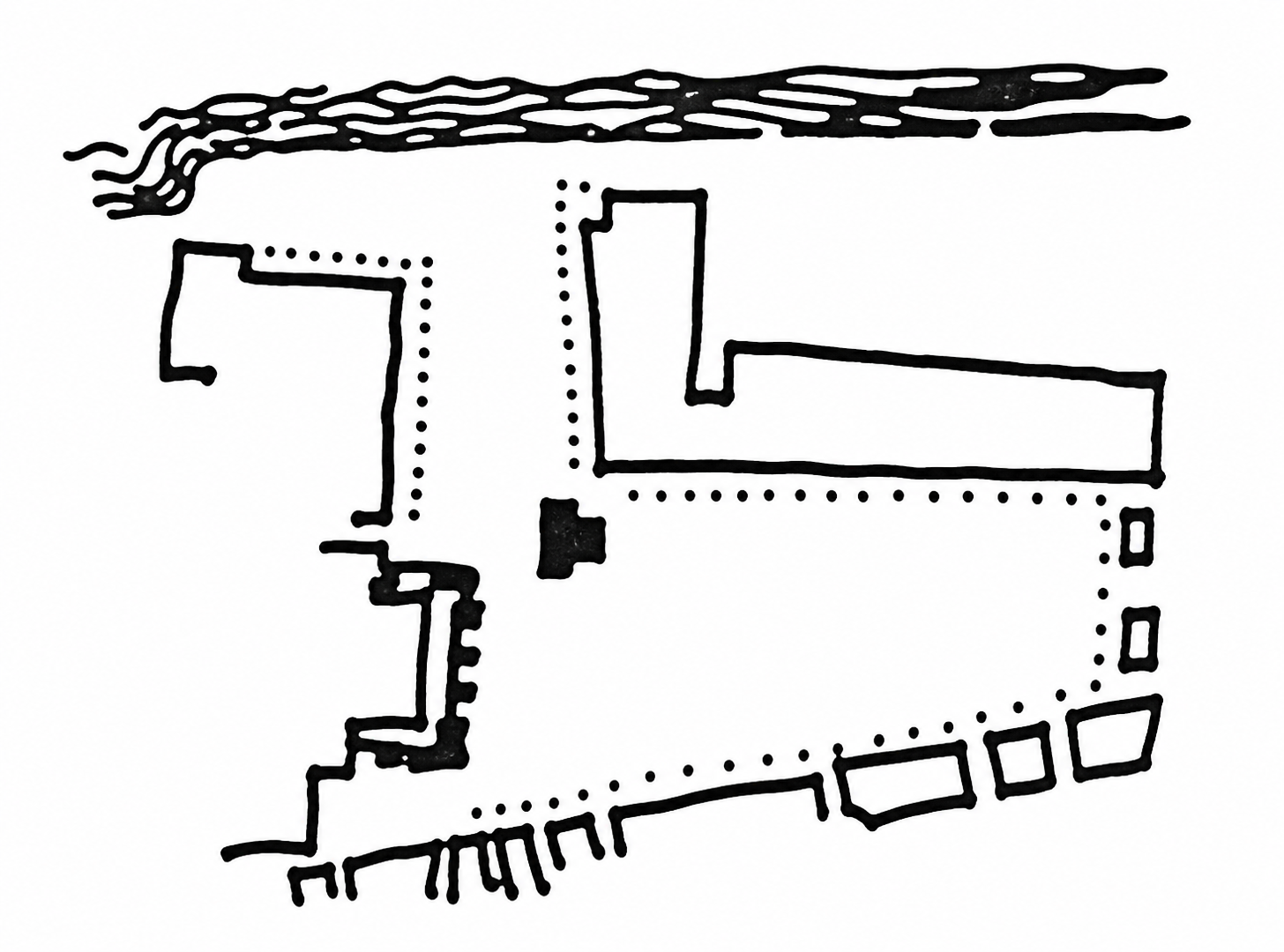
San Marco the front of St. Mark's, the irregular shape, all focus towards that one spot where the campanile stands: it is carefully focused to create this field effect.
Piazza San Marco
Functional Notes
es become more useful, or more deeply felt, when they are made strong centers (MAIN BUILDING, p. 485). For example, it is necessary to provide a fireplace, or something equivalent, as the nucleus of a main living room (THE FIRE, p. 838). It is necessary to organize the center of the house as a point to which all other paths are tangent (COMMON AREAS AT THE HEART, p. 618). One should see the sunshine as the kernel of a south-facing area just outside a house (SouTH FACING OUTDOORS and SUNNY PLACE, pp. 513 and 757). It is necessary to see the seating area of a room as a protected kernel of activity, with its
Many cases discussed in APL show how s own hull, and its own edges protected from circulation (CORNER DOORS, p. 904).
Strong centers also play a key role by creating necessary focal points in the city, at the urban scale (see, for instance, MAGIC OF THE CITY, p. 58, SMALL PUBLIC SQUARES, p. 310, HIGH P- 315, ROUGHLY IN THE MIDDLE, p. 606, TREE PLACES, p. 797).
And again, strong centers also play a fundamental role in the construction of graded sequences which protect privacy and deeper feeling in a building. Rooms which are public and easy to get to, gradually leading to rooms which are more remote, and then leading to others still more remote. The field-like quality of each center comes from the gradient as a whole (APL, INTIMACY GRADIENT, p. 610). Sometimes, even the most remote rooms are public, not necessarily private -- but they have a beautiful stillness about them if they lie at the end of such a sequence.
Finally an example from construction: when we install a window, we locate the window as a center first (its rough frame), then set the finished sash in the rough frame. As we do it, the fine-tuning of the verticals, the sill, trims, and fine trims we place, all work together to make its edges become centers; and in so doing we make the window as a whole a center. The strong center arises from the practical problem of setting a precise square sash into a rough opening, and making it as neat as possible.
2.3 / Boundaries
Early in my studies I noticed that living centers are often -- nearly and strengthened by sounpaArtEs. You may see this always -- formed strengthening in traditional architecture, and the lack of it in many conemporary buildings. Compare the following: The Norwegian storehouse is replete with boundaries at every scale. The other building on the opposite page -- a condominium from around 1950 -- has virtually no boundaries at any scale.
The purpose of the boundary which surrounds a center is two-fold. First, it focuses attention on the center and thus helps to produce the center. It does this by forming the field of force which creates and intensifies the center which is bounded. Second, it unites the center
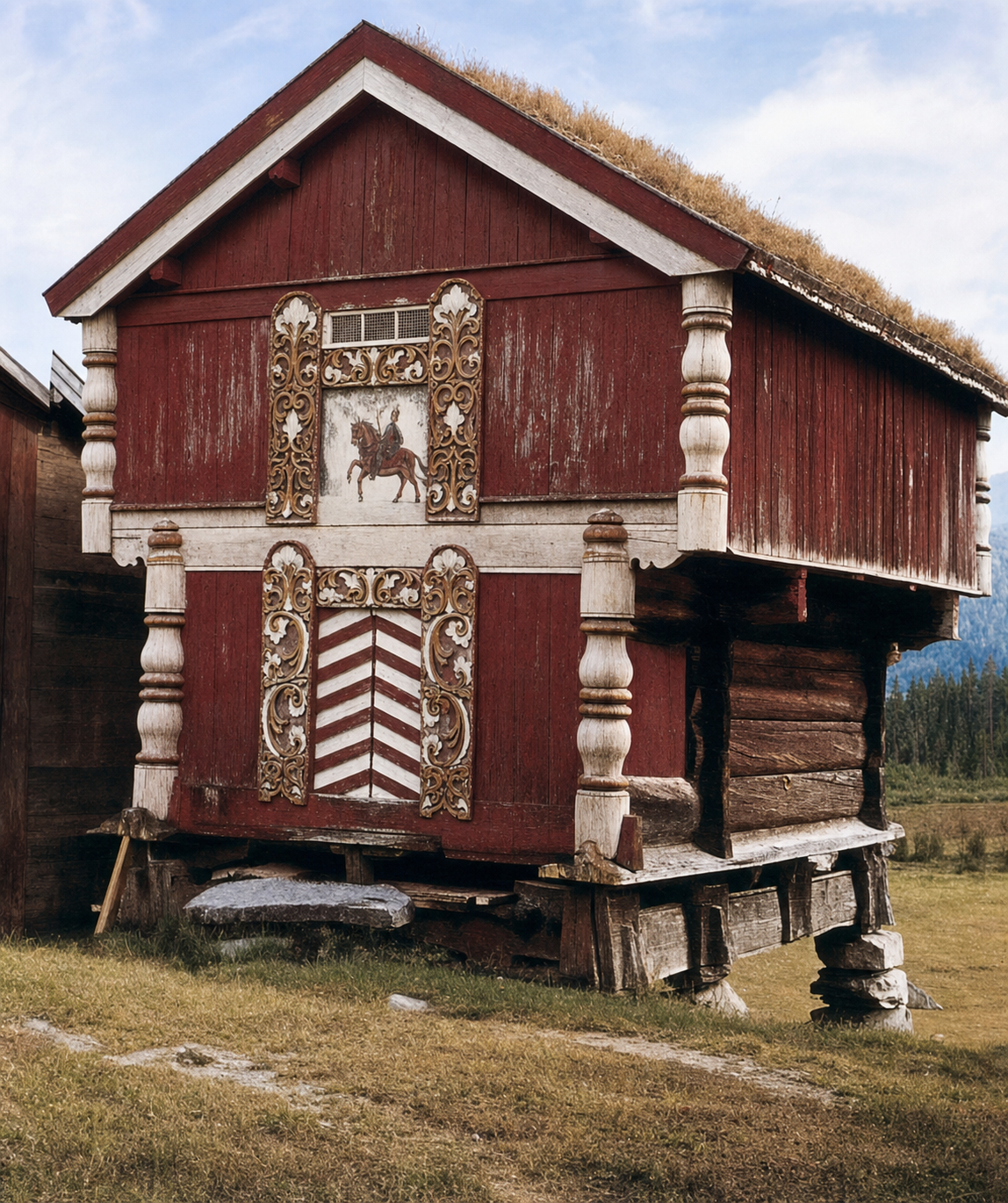
Tradition al Norwegain storehouse: a building replete with boundaries, so filled with boundaries that it is almost entirely made of them. Here the life and structure comes from the fact that the building is made of nearly nothing but boundaries.
FIFTEE
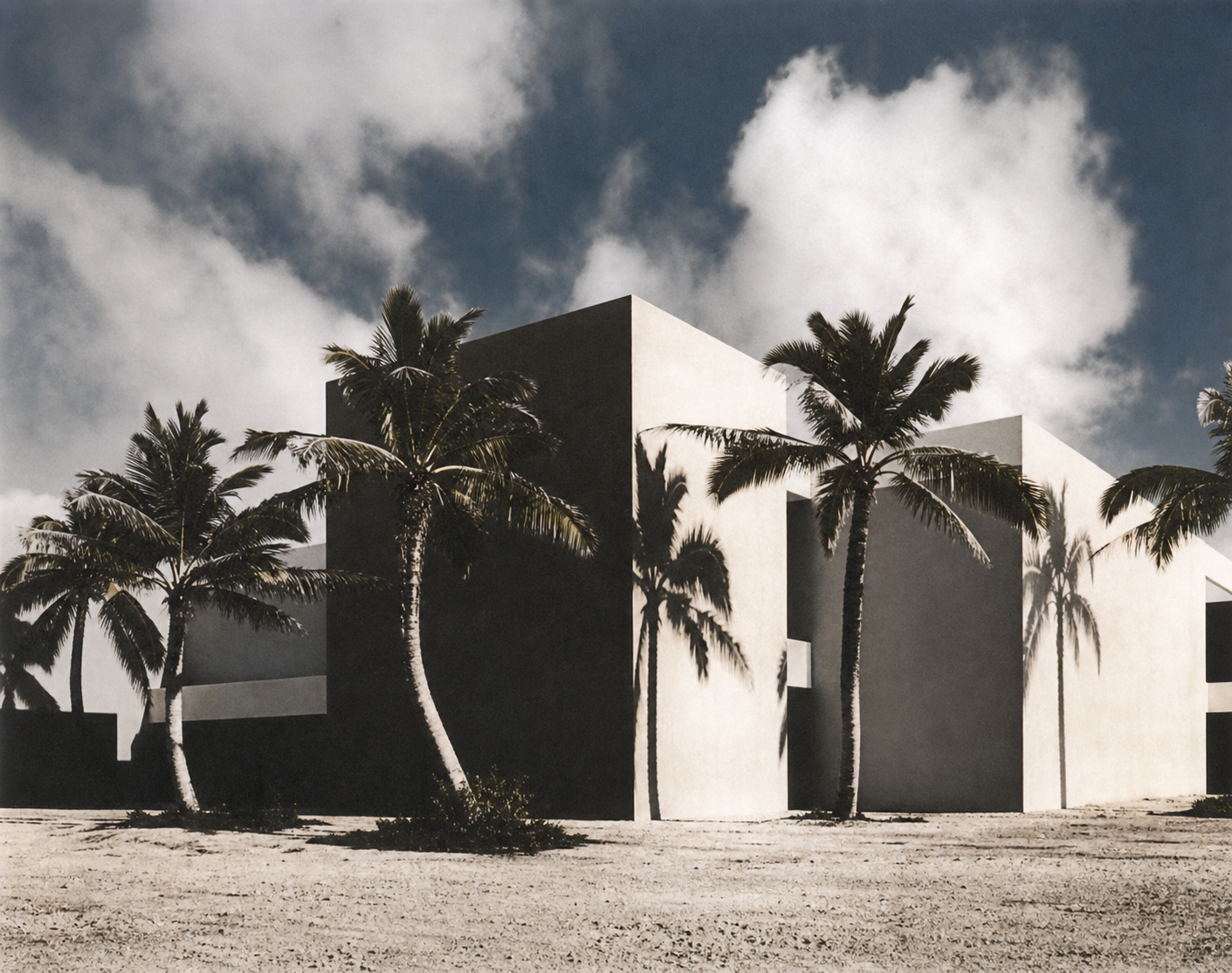
which is being bounded with the world beyond the boundary. For this to happen, the boundary must at the same time be distinct from the center being bounded, must keep this center distinct and separate from the world beyond it, and yet also have the capacity of uniting that center with the world beyond the boundary. Then the boundary both unites and separates. In both ways, the center that is bounded becomes more intense.
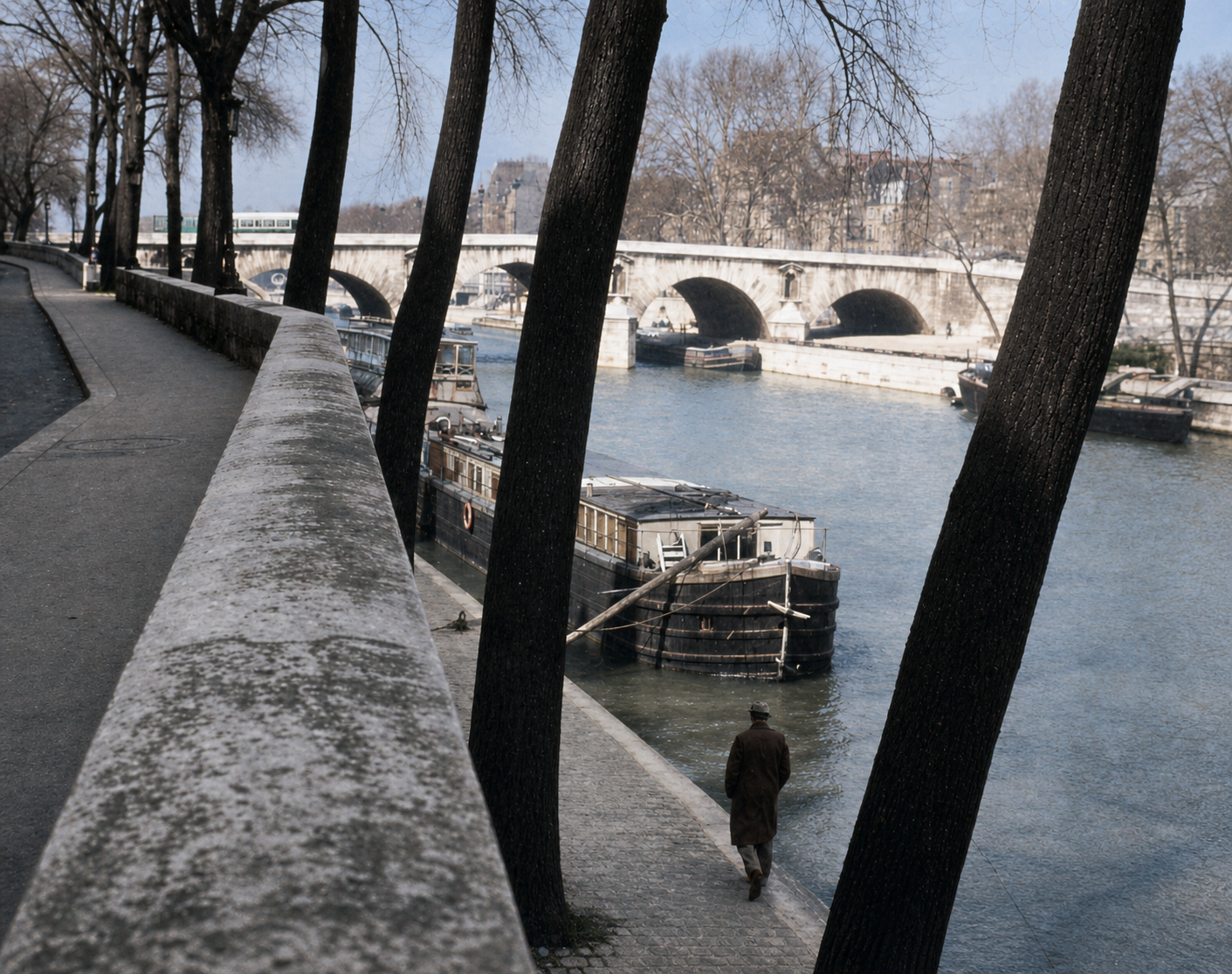
Boundaries do the complex work of surrounding, enclosing, separating, and connecting in various different geometric ways, but one vital feature is necessary in order to make the boundary work in any of these ways: the boundary needs to be of the same order of magnitude as the center which is being bounded. If the boundary is very much smaller than the thing being bounded, it can't do much to hold in or form the center. A two-inch border cannot hold a threefoot field. In a room, the boundary between floor and wall needs more than a six-inch molding -a wainscoting, 30 inches high, is more in scale with both. An effective boundary for the river Seine consists of roads, walls, paths, quays, trees, sive as the river itself. In something almost as ma general it is necessary to think of boundaries as very large.
large.
When taken seriously this rule has a very big effect on the way things are organized. For instance, the lips as the boundary of the mouth are similar in size to the mouth; an arcade as the boundary of a building is on the same order of size as the building; a truly generous window frame with deep reveals as the boundary of a window is of the size of the window itself; the marsh as boundary of the lake; the capital and base as boundary of the column. In all these cases the boundary is very /arge compared with the thing it is bounding -- often surprisingly
On page 161 I show a simple center -- a door -- showing the effect of its boundary. The door as a center (Figure A) is intensified by placing a beautiful frame of centers around that door
(Figure C). The smaller centers in the boundary
cas ne SEO TMS [a ana * + « [a = ® ++} + + t:
rer.s ae noes
MM a e"
ast TROT Ot
* ae
Mae py)
ek Pe
Alhambra wall surface: the boundaries are very large compared with the center being bounded.
are also intensified, reciprocally, by the larger center which they surround. For example, suppose we look at the door frame without the door (Figure B). The centers of the frame are nice, already well formed and intense. Now, when we put in the door (Figure C), the centers in the outer boundary become more intense. The effect works both ways. The life of almost every center is caused by the fact that the center itself, and its subsidiary centers, too, all have strongly marked boundaries.
Having established the importance of size in a boundary, the next thing that is needed to establish the interlock and connection, coupled with separation, is that the boundary itself is also formed of centers. For instance, in the manuscript border on the next page, the boundary is formed of large centers, sometimes almost as large as the field, but made in such a way that they unite the thing bounded with the world beyond. They achieve this in various rather concrete geometric ways. Essentially they form centers, or systems of alternating centers, which look both ways: they face in and they face out; they create connections to the inside of the boundary, and connections to the outside, by establishing new centers that span the two. Some work by pure interlock (e.g., border of reversed arrows). Sometimes the border has a motif like a running vine, or alternation, which first relates to one side, then the other, creating ambiguity. At other times, the border is simply made of large square tiles, each one containing flowers: it has no special interlock but a feeling of similarity with what is on either side in terms of shape and color.
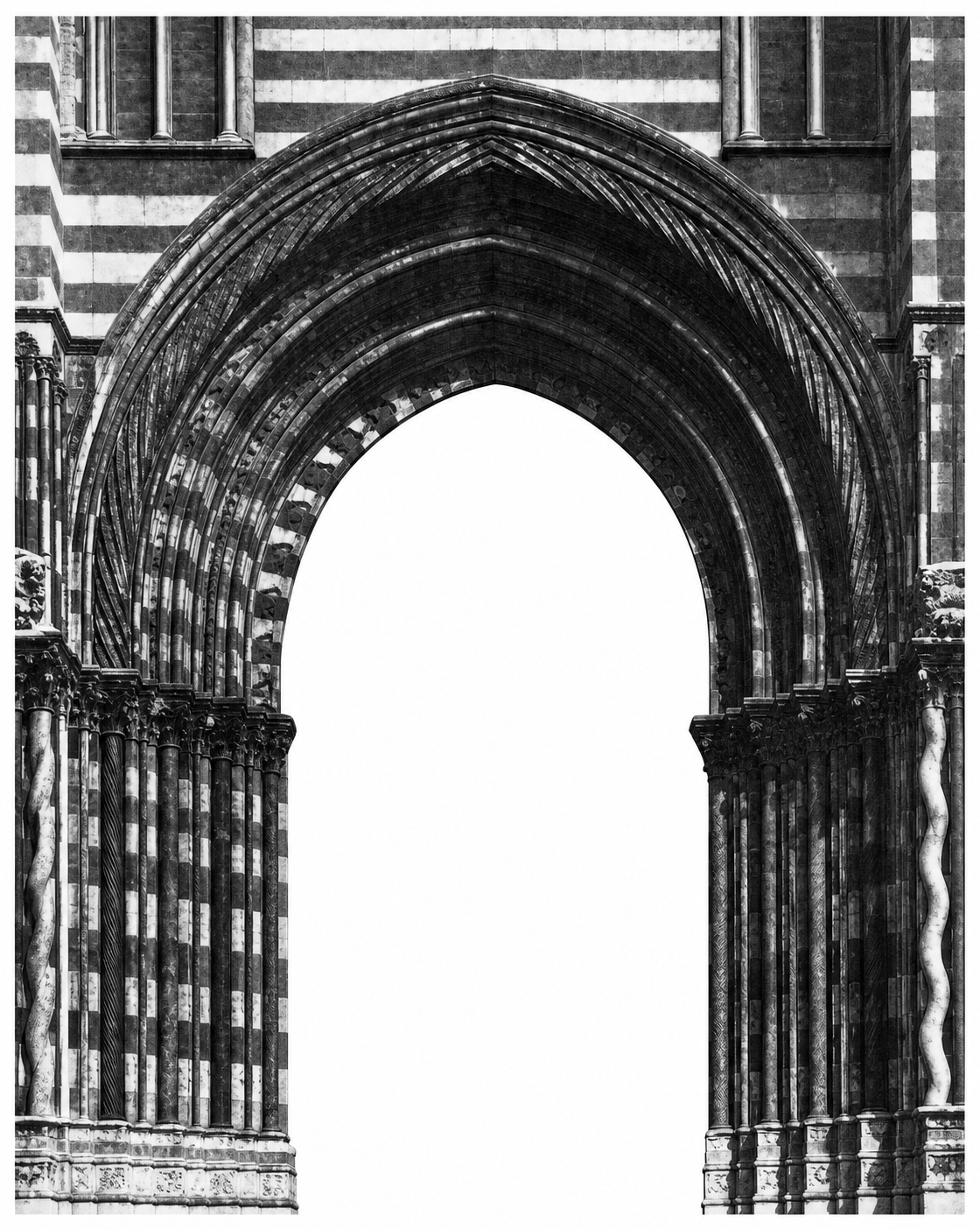
The boundary rule does not apply only to two-dimension al areas. Even a one-dimension al thing may be bounded by one-dimension al zones at its ends: for instance, the wooden ridge-beam of the Ise shrine is bounded by the brass cap that protects the end. A two-dimension al surface within a room may be bounded by other twodimension al zones in space, for example, the wall of a room can be bounded at top and bottom perhaps by a wainscot or a baseboard at the bottom, and by a beam or zone of plaster at the top.
Figure B: Gothic door-surround without the door
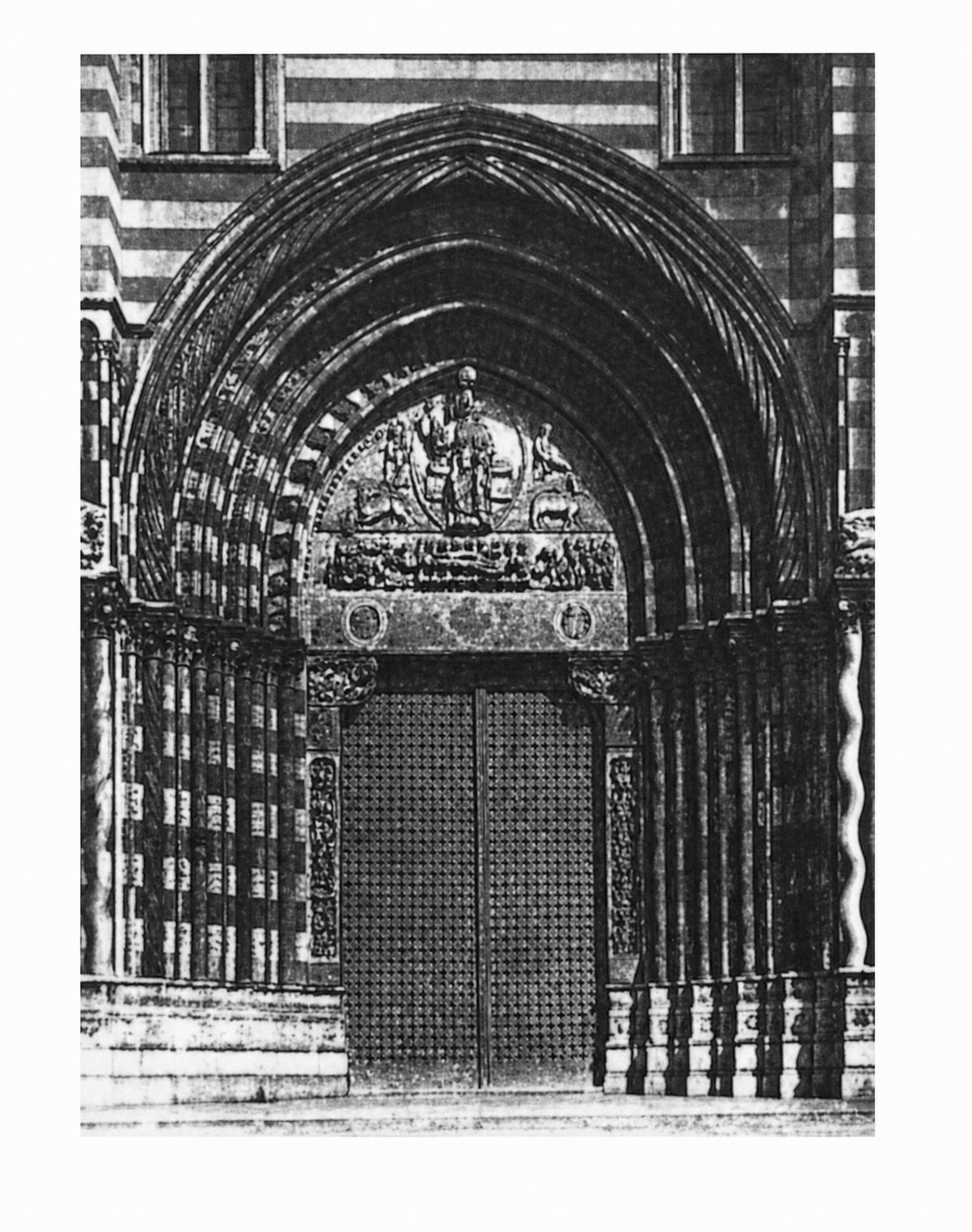

The rule also applies to volumes. A threedimension al volume may be bounded by a smaller volume around its edge. For example, a building or a court can be bounded by an arcade, a room by a series of deep alcoves, the volume of the Seine in Paris by the waterfront quays along its edge and their magnificent trees.
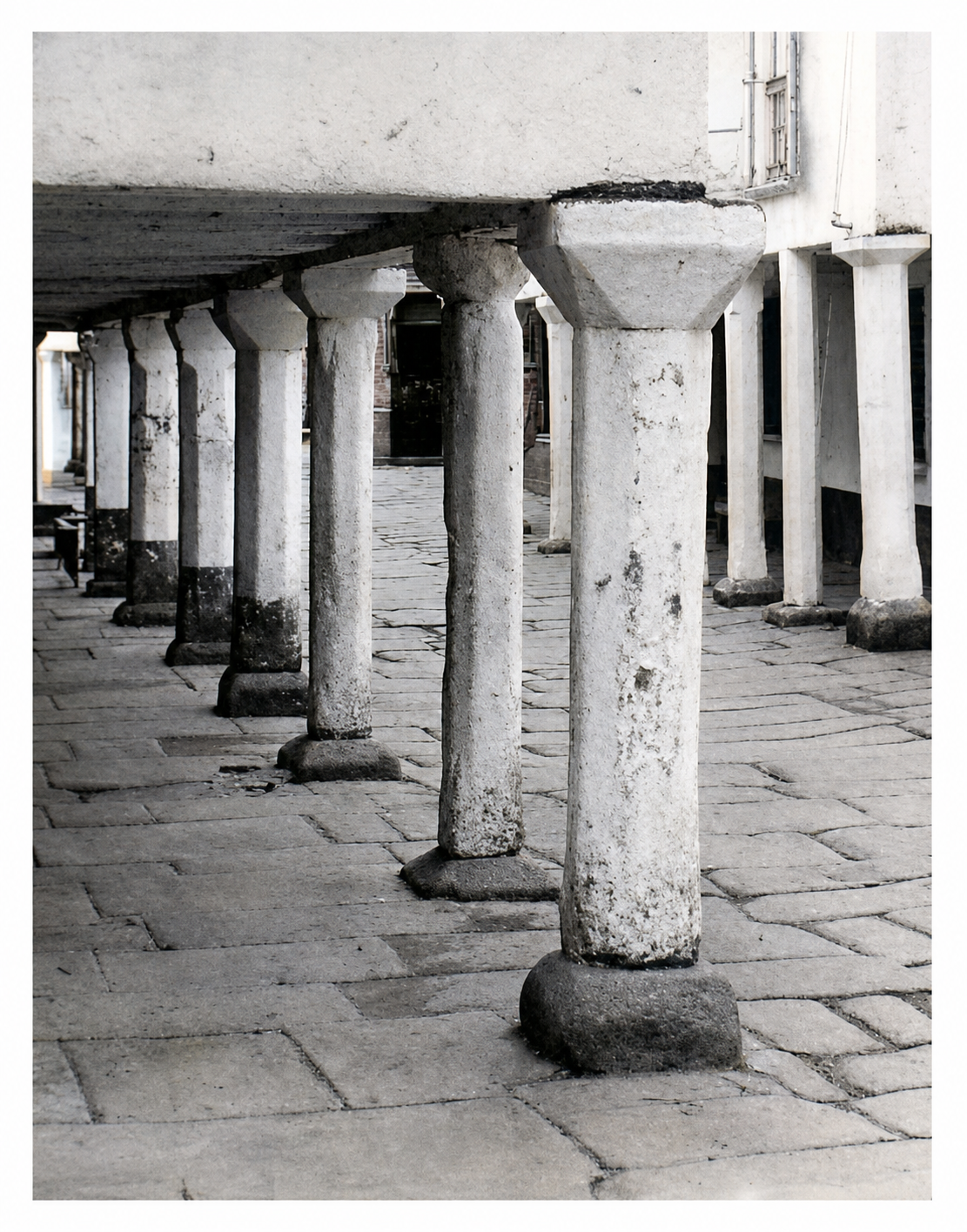
There is a further point. Taken by itself, the boundary rule seems simple. But the rule does not merely refer to the ower boundary of the thing. If we apply the rule repeatedly, it says that every part, at every level, has a boundary which is a thing in its own right. This includes the boundaries themselves. They too have boundaries, each of which is a thing in its own right. What seems like one rule, then, is a pervasive structural feature of enormous depth, which is
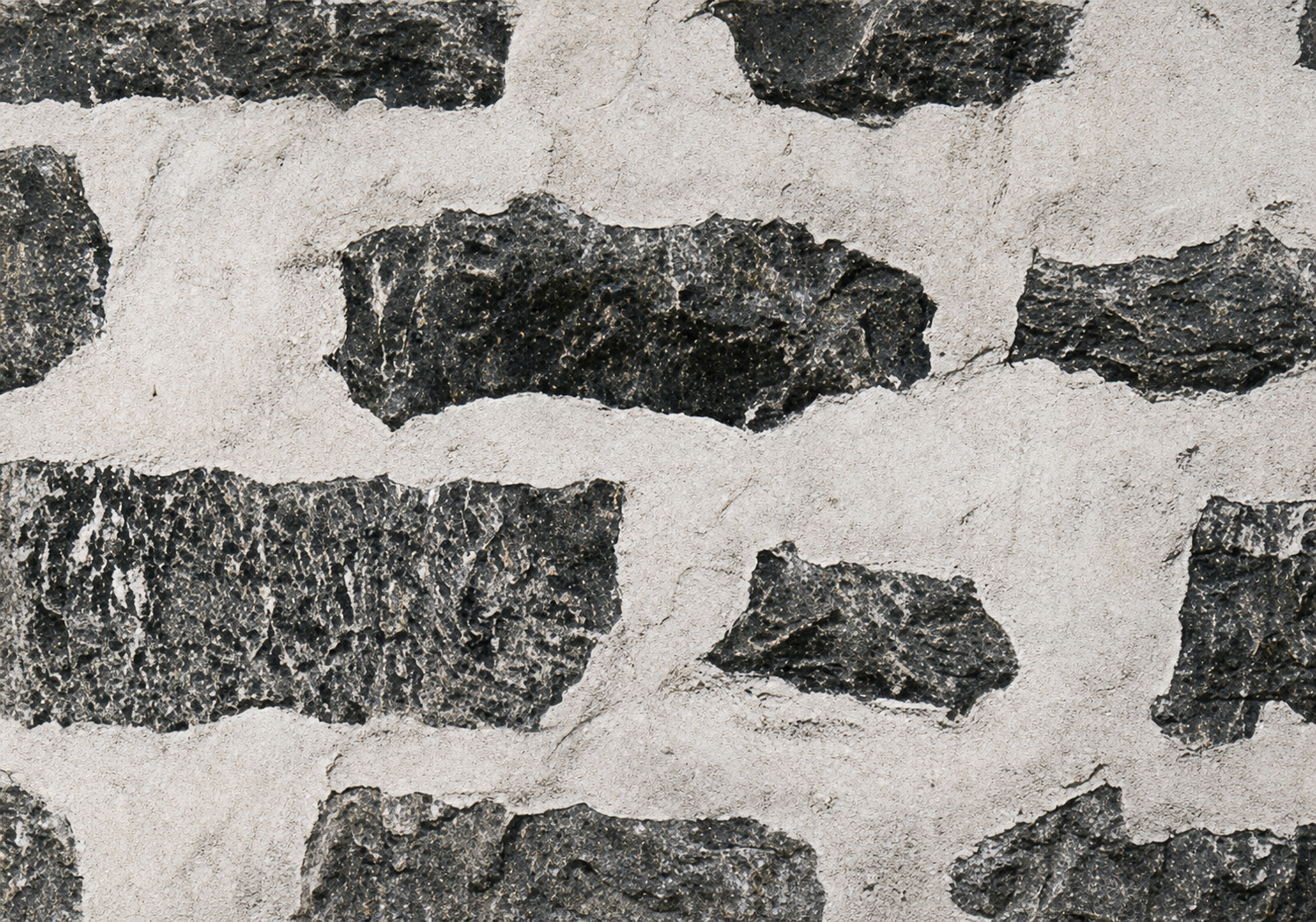
Stones laid in a thick bed of mortar that makes the boundary of the mortar as big, almost, as the stones themselves
tps)
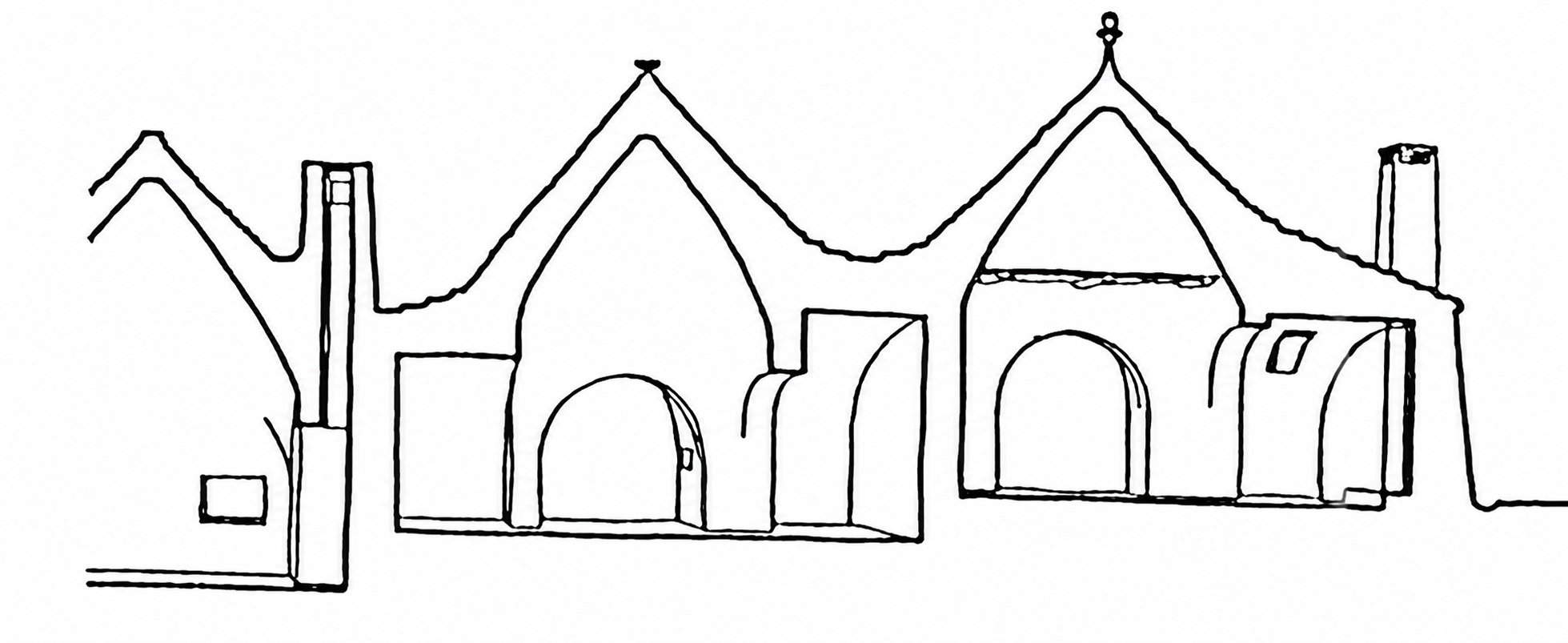
Beehive dwellings of Apulia: the rooms are bounded by the space is bounded by the heavy thickness of the stone vault. The main center of each room is surrounded in three dimensions, by massive space and stone, all forming boundaries.
alcoves; in effect applied dozens or hundreds of times, at different scales throughout the thing.
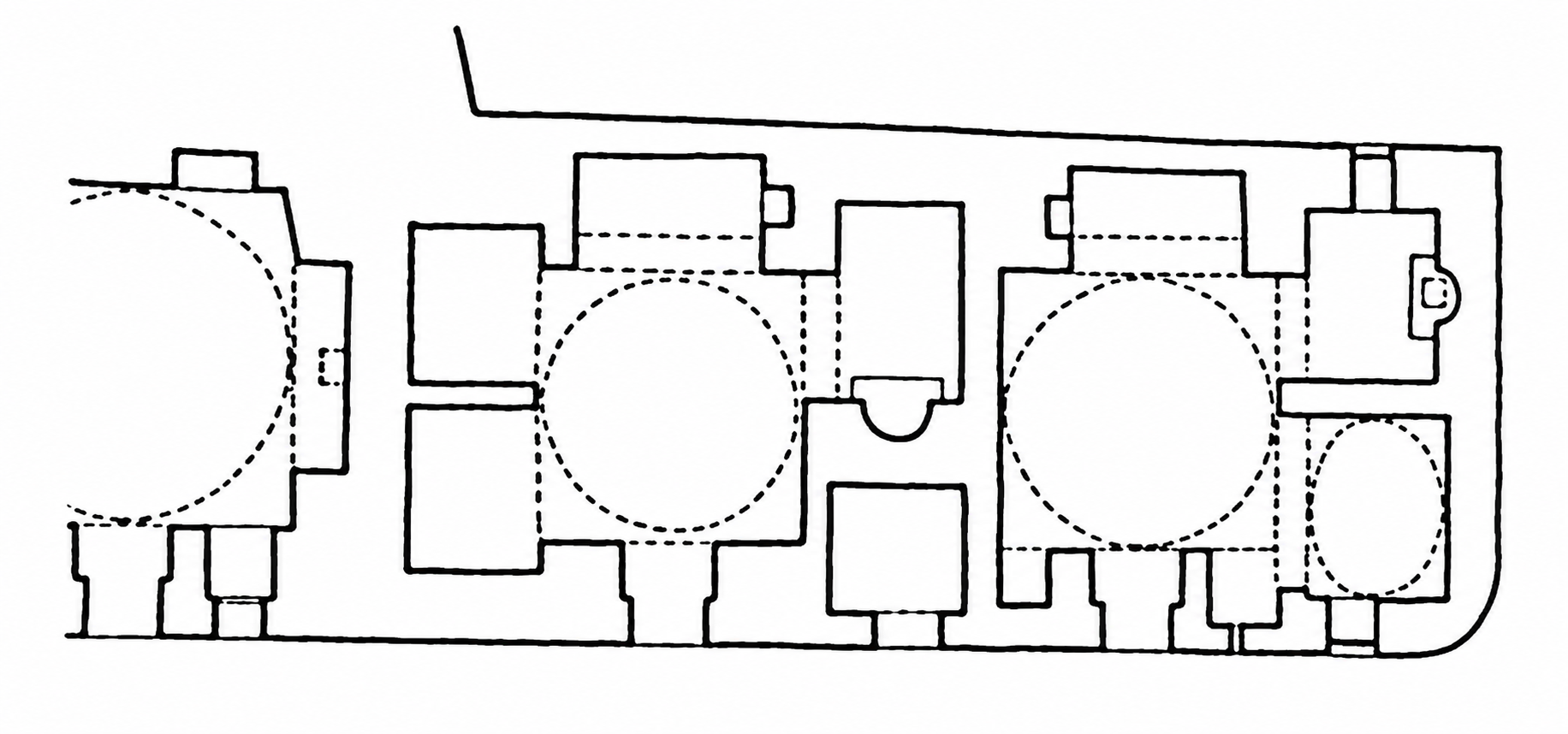
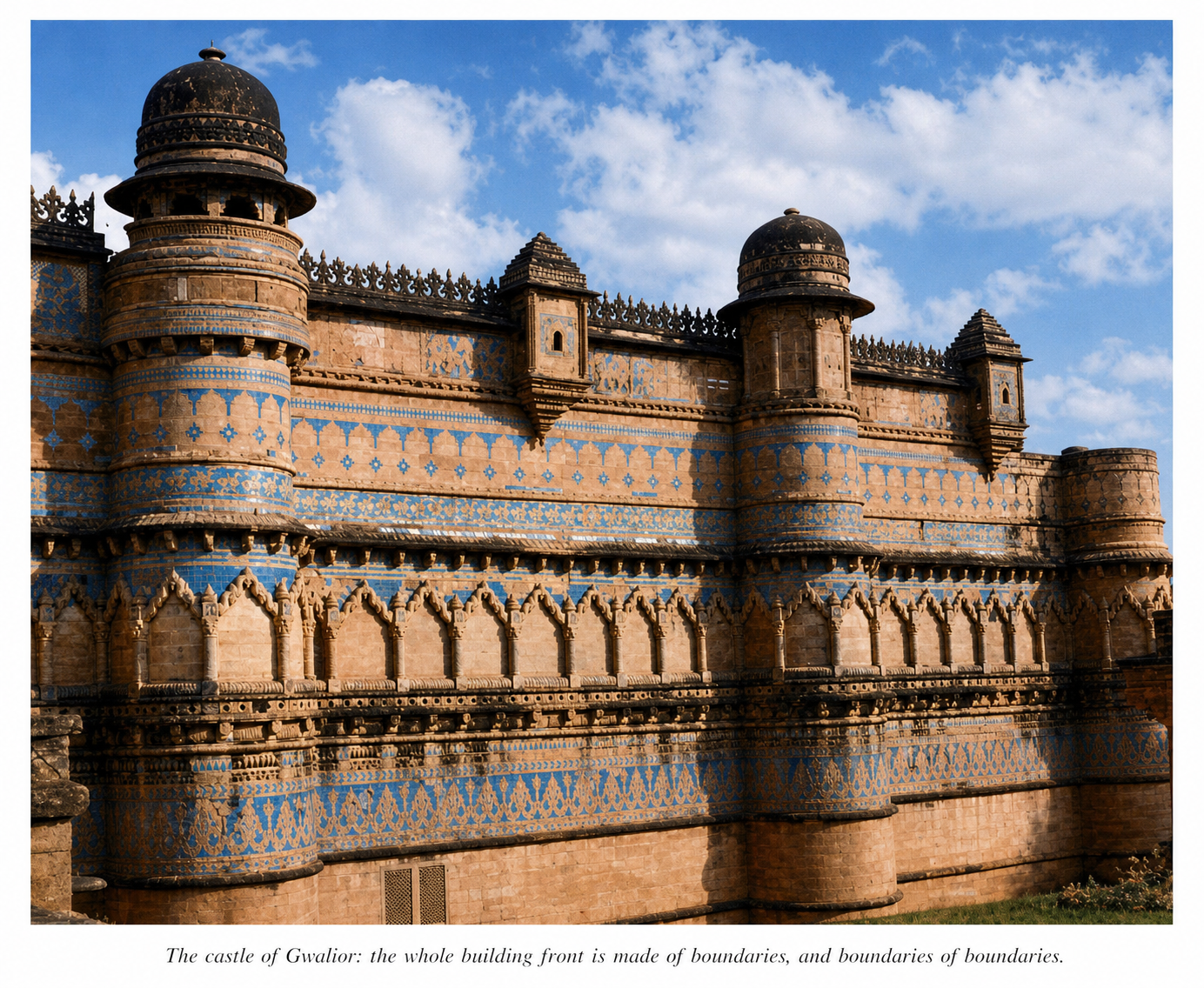
And this makes it clear not only how immense a rule it is, but also how it is possible for a thing to follow this rule and still lack an outer boundary around the whole, because that outer boundary (present or not) is merely one of ninety-nine other boundaries which do exist within the whole, at different scales. So this rule by no means merely says that any center which has life, like a building or a town, must have a boundary. The limited idea of a main boundary by itself completely fails to convey the shimmering sense that is created when a thing has boundaries within boundaries, which are boundaries of boundaries, and that all together permeate its structure.
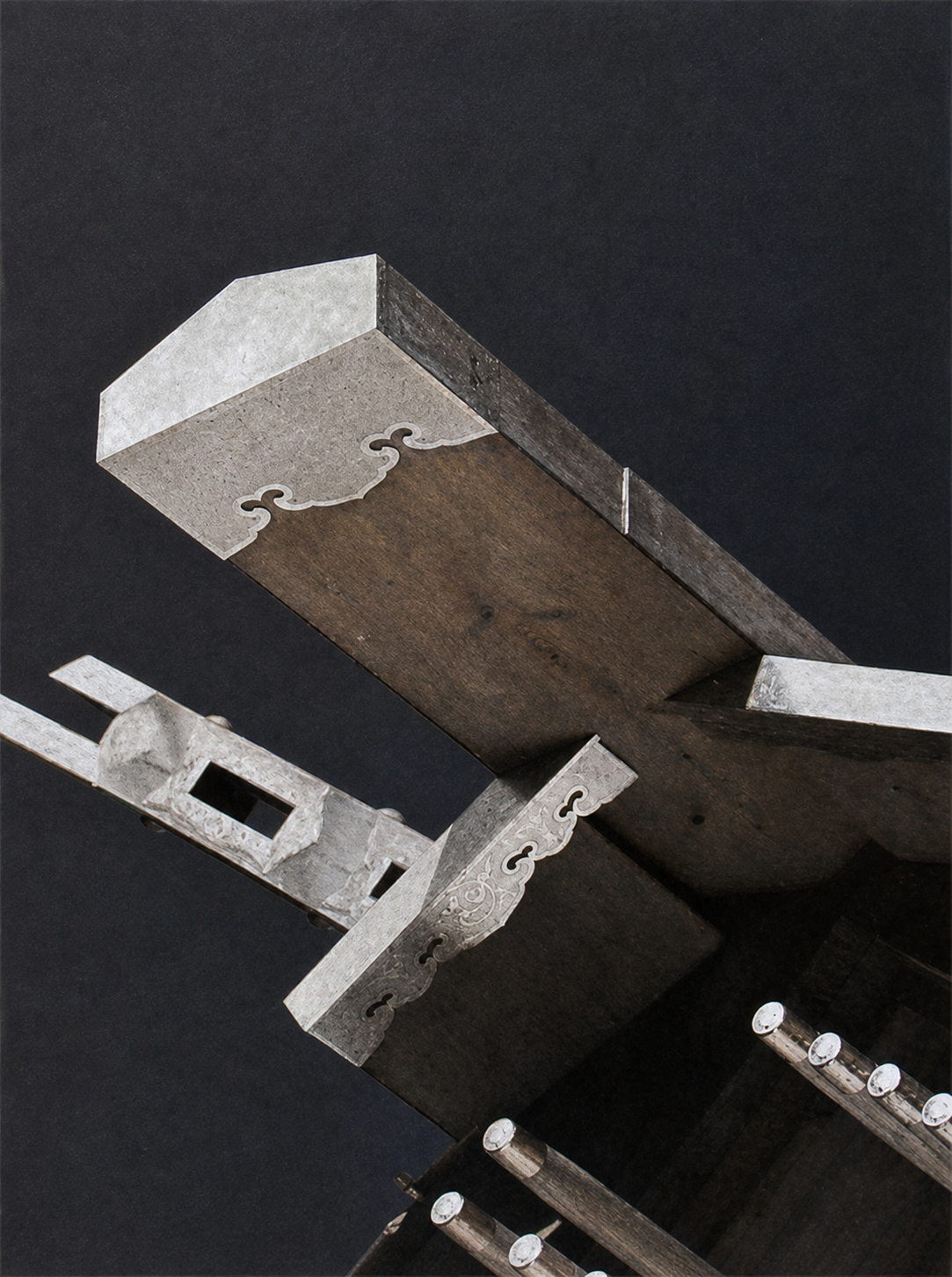
Boundaries at the ends of the boards on the Ise shrine: a stick-like element that is, in principle, one-dimension al capital and base; and how these two have their own boundaries in the line of detail which bounds them in turn.
is bounded by a cap, to make it beautiful and to protect the end-grain.
{ gi
a
Functional Notes
Here are some examples of the functional and practical needs for the effects of boundaries described in APL: a neighborhood needs a strong boundary around it (suB- CULTURE BOUNDARY, NEIGHBORHOOD BOUNDARY, pp. 75 86). We need thickening of windows and doors around openings, to stiffen the membrane of the wall (FRAMES AS STIFFENED EDGES, p. 1059). At the scale of rooms, many rooms become most beautiful and useful when they are surrounded by window-seats, or alcoves, or thick walls, with cabinets and closets in them (ALcoves, WINDOW PLACE, THICK WALLS, CLOSETS BETWEEN ROOMS, pp. 828, 833, 908, 913). A building itself is often made most comfortable in its relation to the outdoor spaces, if there are galleries, arcades, and terraces between the two (GALLERY SURROUND, ARCADES, OUTDOOR ROOM, pp. 777, 580, 764). NECKLACE OF COMMUNITY PROJECTS (p. 242) puts small public services around a major public building, to intensify the heart of a community.
All these patterns embody boundaries: but the boundaries work in different ways. Some, like alcoves, provide places where a small space intensifies the activities in a larger space by providing "thicker" boundaries. Some isolate sound: closets form acoustic boundaries between rooms. Sometimes the centers in the boundary focus life on the larger bounded center: this happens in cades and galleries which form a boundary layer between inside and outside, and in the window-seats and thick walls around a room.
In all cases, the boundaries help one s to insulate and reinforce the functions of others by creating zones of separation and zones of mixing. The key point is that when the functions of the centers that form the boundaries are correctly chosen, this allows the smaller centers forming the boundary zones to intensify the functioning of the major centers being bounded.
t of spaces
2.4 / Alternating Repetition
One of the ways that centers help each other most effectively is by their repetition. Centers intensify other centers by repeating. The rhythm of the repeating center, slowly, like the beat of a drum, intensifies the field effect. But this drumbeat, when it intensifies the field effect, is not just simple repetition.
It is a fact about the world that things repeat. Most things are made from repetition at some level: repetition of atoms, crystals, molecules, waves, cells, volumes, roofs, trusses, windows, bricks, columns, tiles, entrances, and so on. But the repetition which occurs in things which have life is a very special kind of repeti-
tion. It is a kind where the rhythm of the centers that repeat is underlined, and intensified, by an alternating rhythm interlocked with the first and where a second system of centers also repeats, in parallel. The second system of centers then intensifies the first system, by providing a kind of counterpoint, or opposing beat.
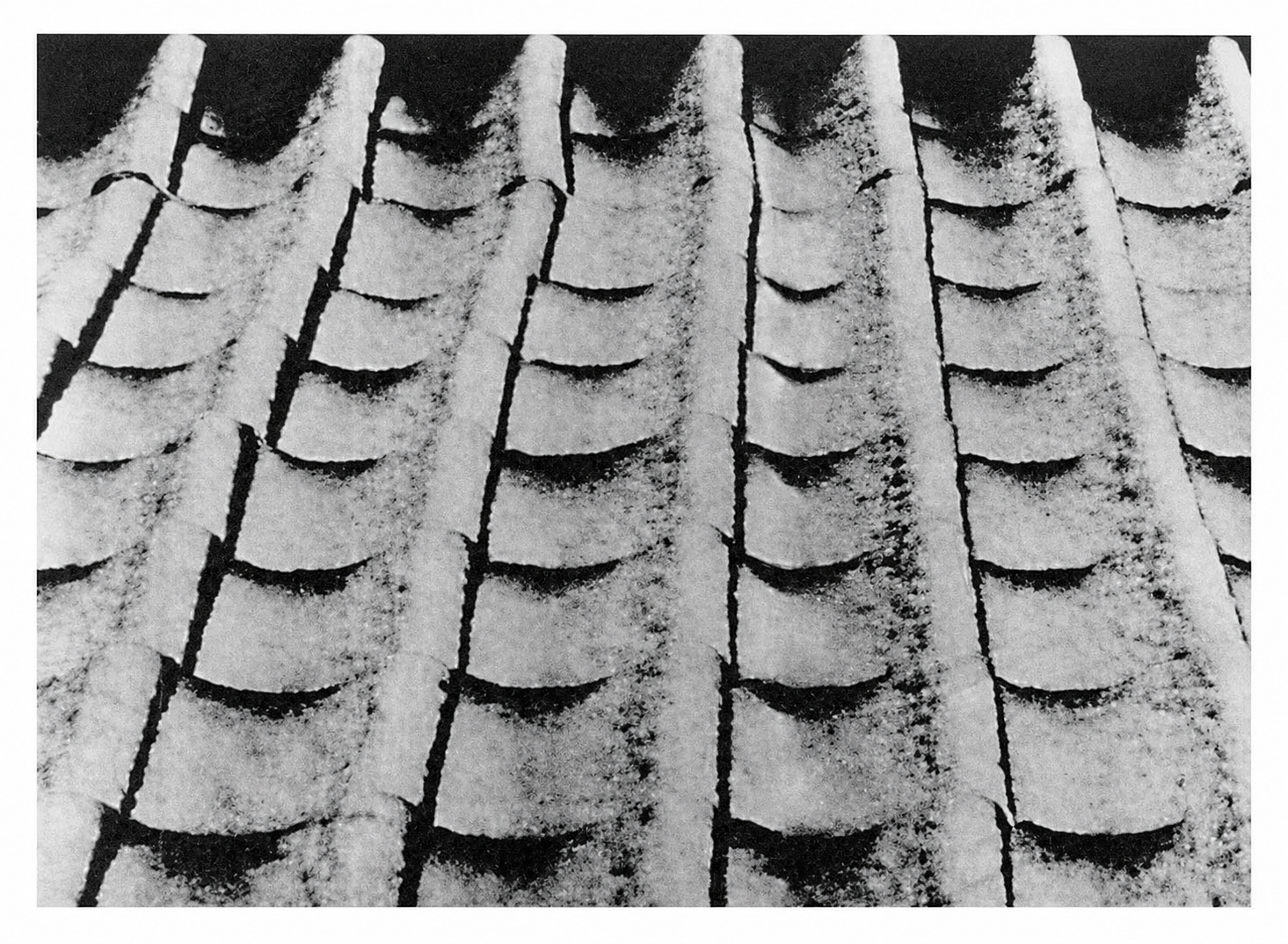
To see it, let us start with some general examples of satisfying repetition. Consider the beautiful repetition of tiles on a roof, waves in the ocean, cells in the body, the scales of a fish, the blades of grass, the bricks in a wall, the hairs on a head.
In all these cases, the life itself seems to come largely from the repetition. We often see this in drawings in which we give life to the drawing by the simple repetition of a certain kind of pencil stroke. We often see it in buildings, where certain simple, distinguishable elements are repeated over and over again. The repetition, by itself, already begins to create a satisfying harmony. Somehow the sense of orderina thing comes from the fact that elements are repeated over and over and over again. And often the calmest life arises when a thing, like a basket, is made entirely out of one kind of smaller element, repeating.

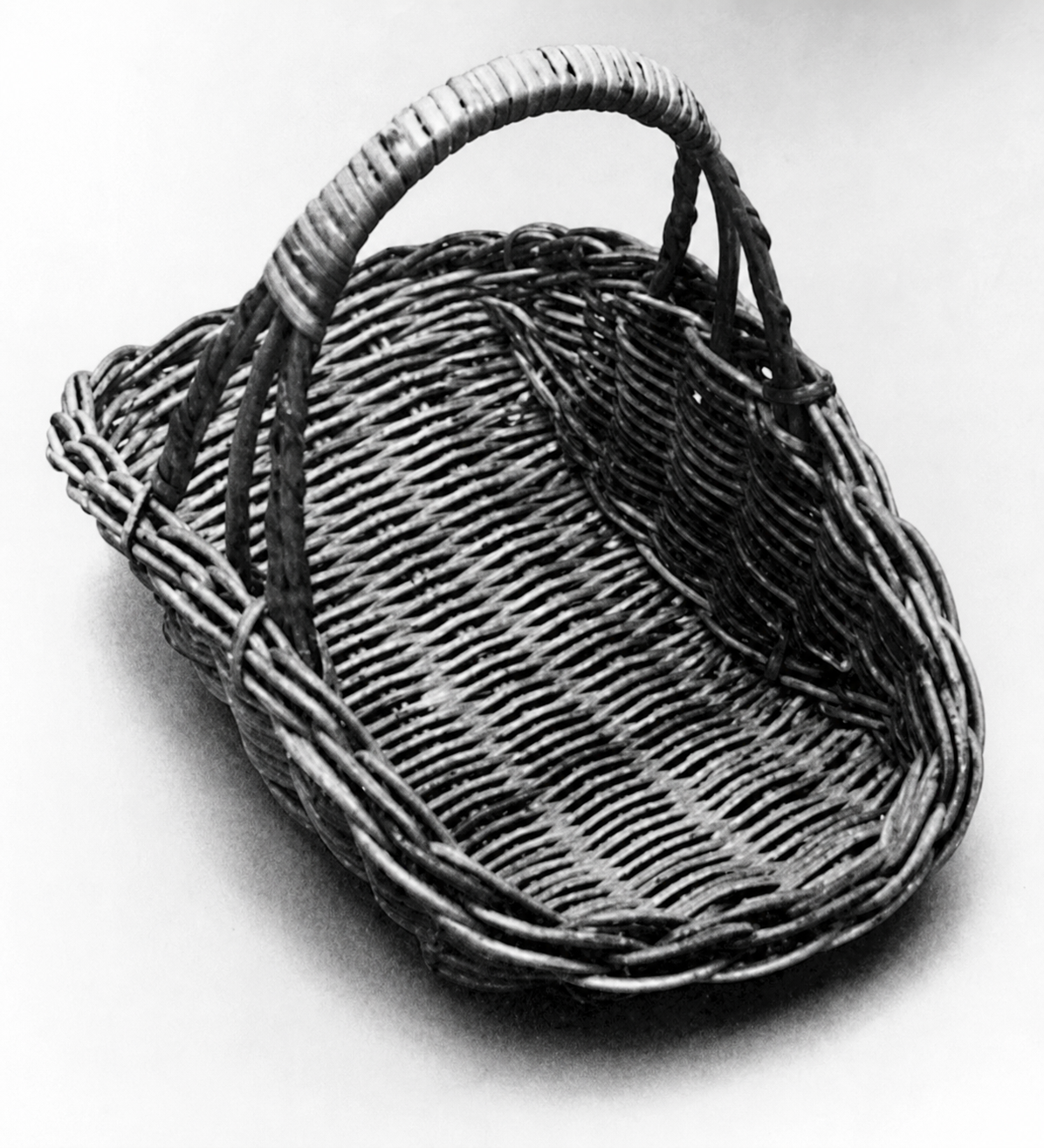
Alternating repetition in the weave of a basket
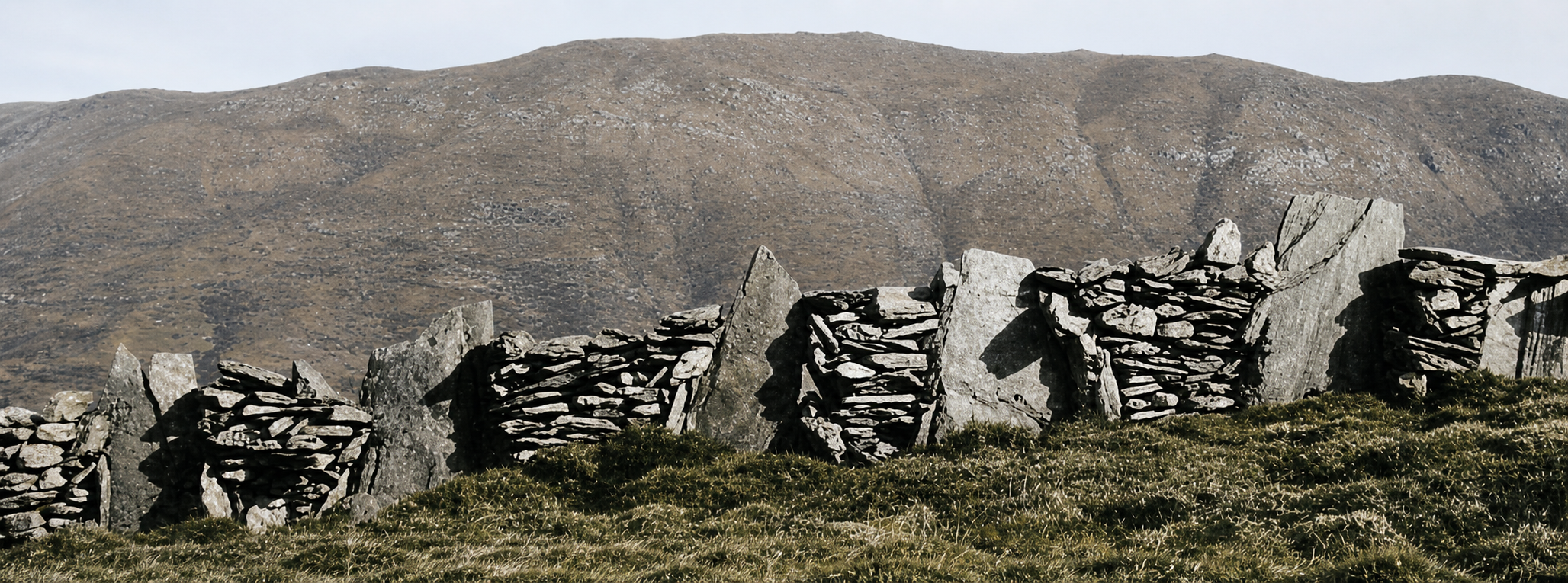
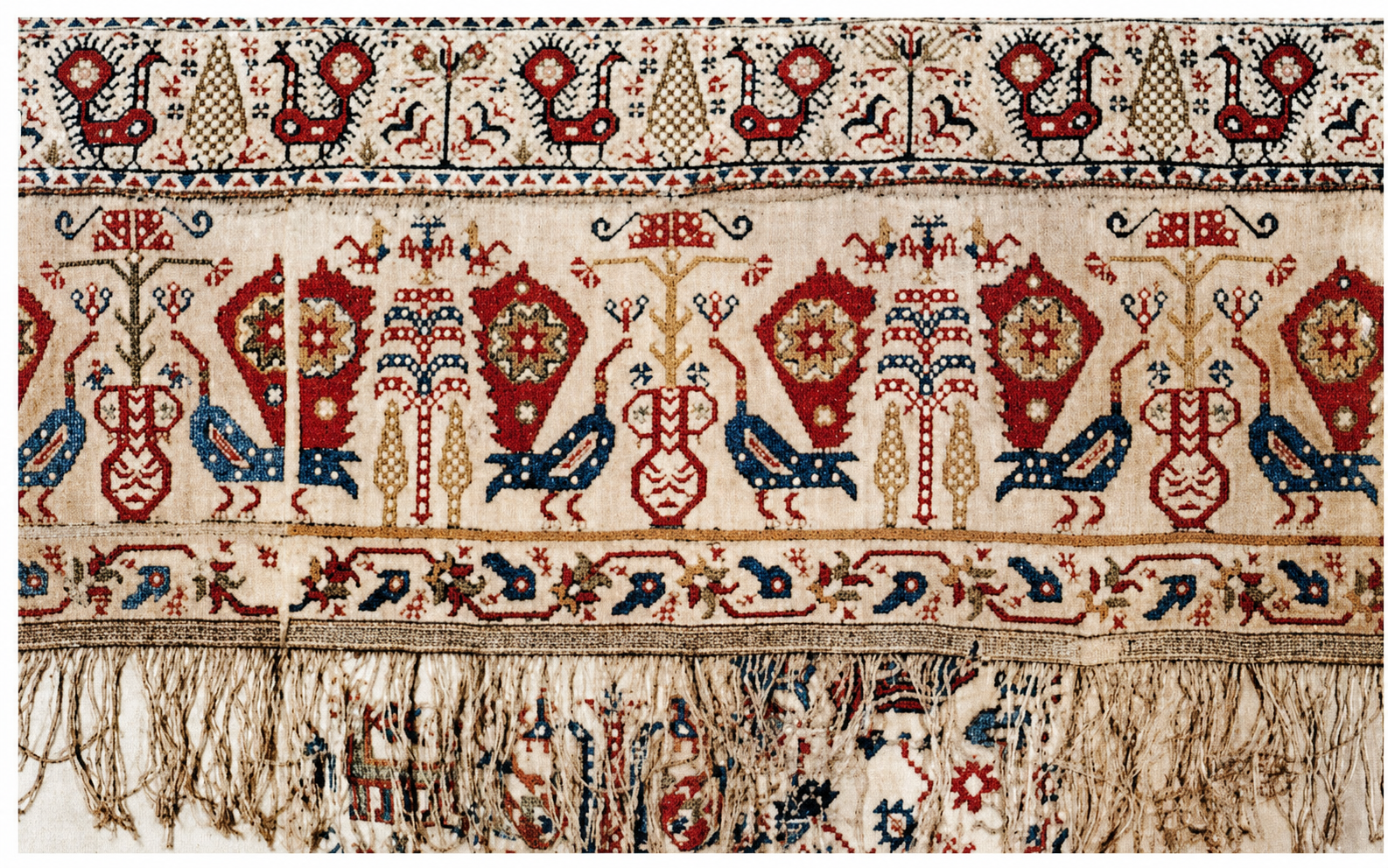
Of course, in many cases where a structure gets intense life from repetition the repetition tends to be inexact; it is then the subtle variation which comes with the repetition that is satisfying and life-giving. This happens because the elements are not identical, but modified, each according to its position in the whole, creating a subtle variation in the repetition.
But there is a deeper aspect of the repetition, more vital than its variation. This concerns the fundamental character of the repetition and the way that elements are repeated: there is profound and satisfying repetition of living centers, and there is banal repetition of elements.
A crucial comparison which should make this idea clear is presented on the facing page. One example shows a subtle and delicate embroidery from a Greek island. The entire surface becomes whole, from the flickering alternation of the shapes and spaces, all repeating, all alter-
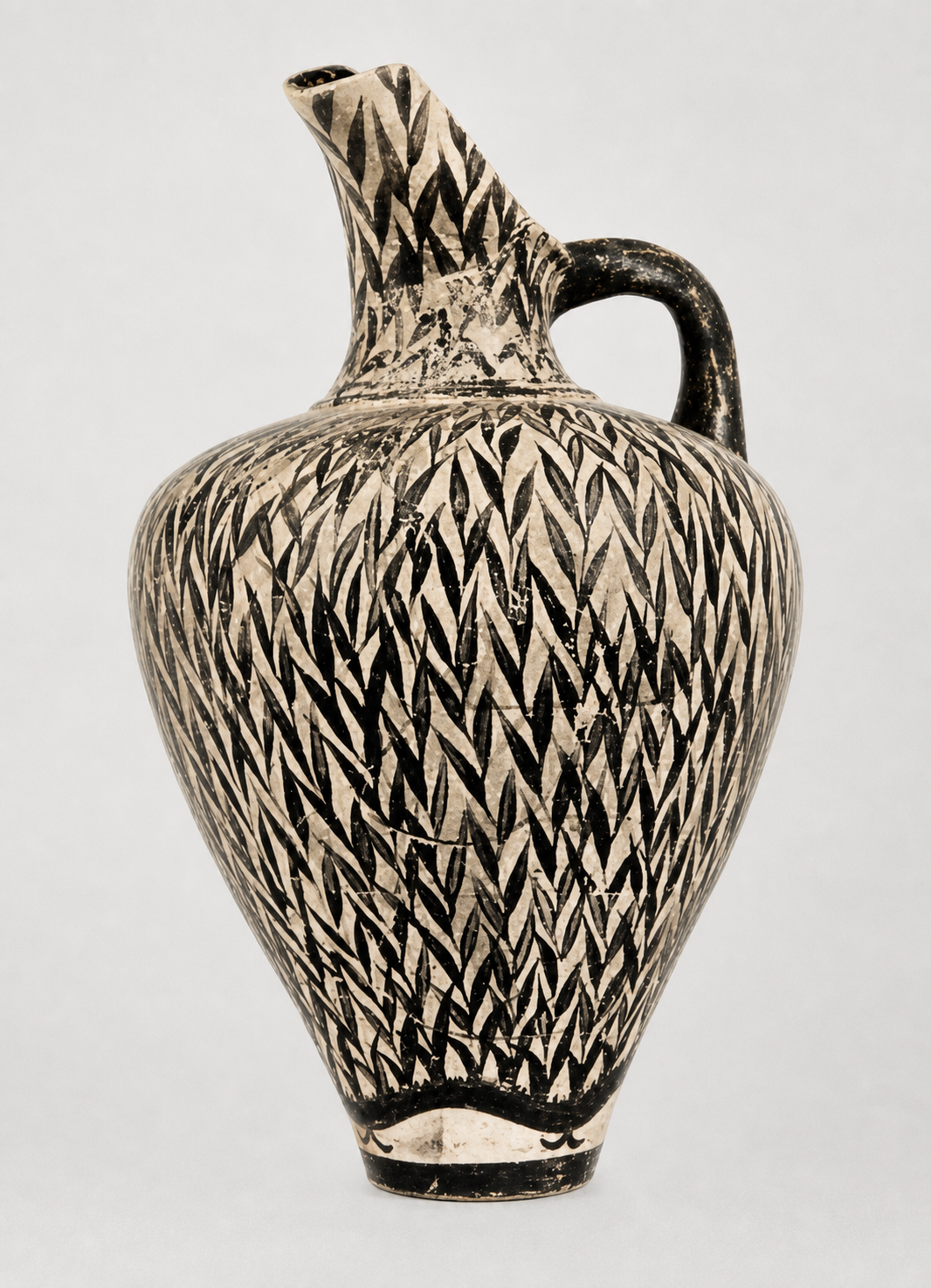
nating. Both primary and secondary centers in the repetition are alive; that is what causes the alternation, and what engages the eye continuously. The glass jug on page 167, with its beautifully interlocking herringbone pattern etched in the glass, has a similar life, so vivid that one can almost see the greenish color of the vase in the black-and-white photograph.
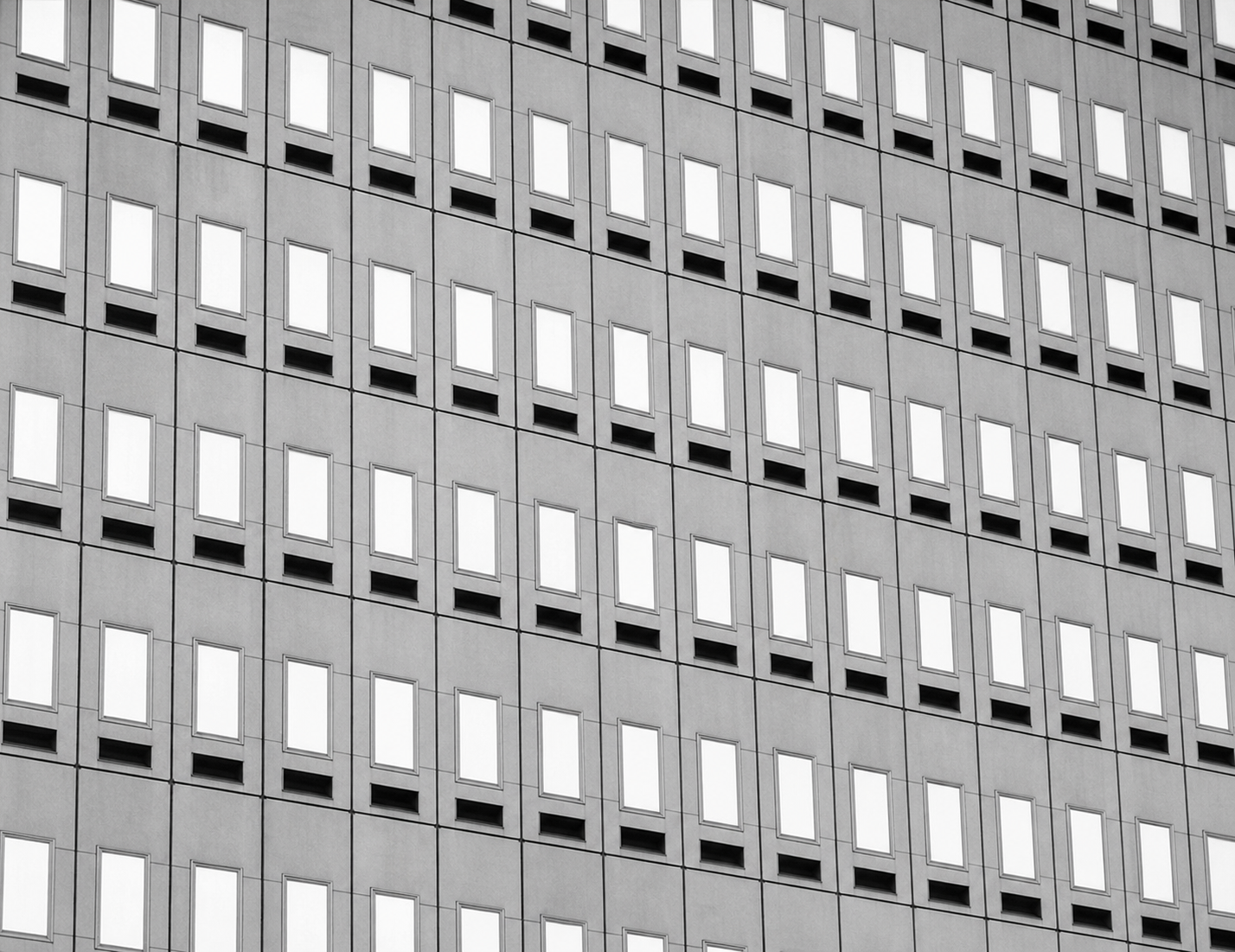
The second example on the facing page shows the facade of a modern office building. Here the alternation is brutal, banal. The tired yet killing repetition comes from the fact that what repeats is one-dimension al: there is no alternation to speak of, no living centers which repeat. And there are no vital secondary centers repeating between the primary ones.
The difference between the kind of repetition which has life, and supports life, and the kind which is banal, always lies in this matter of the alternation.

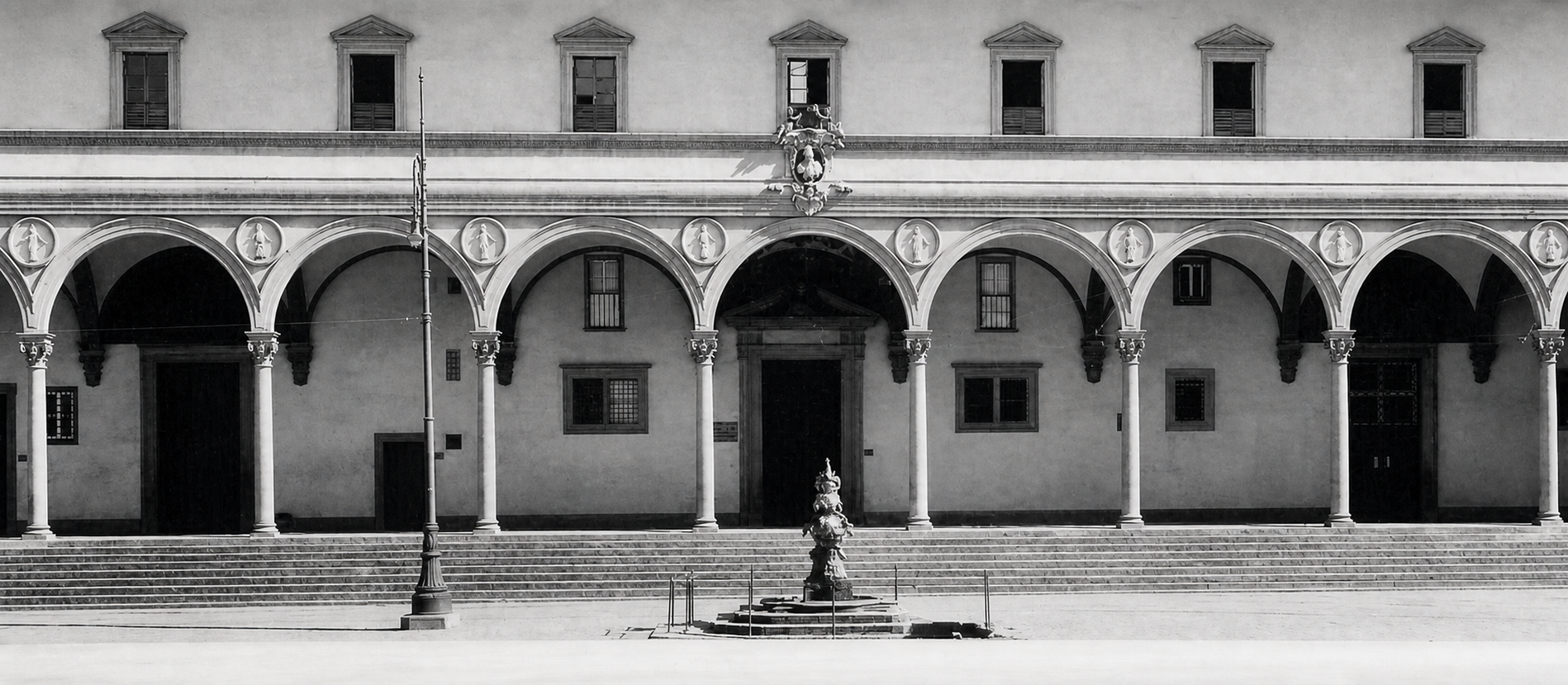
In the upper building, Brunelleschi's Foundling Hospital, the round medallions (by Della Robbia) alternate with the columns and column bays. We see the columns repeating; we see the arches repeating; we see the space of the bays repeating; we see the triangular space between adjacent arches repeating; we see the ceramic roundels in these triangles repeating. Each of these things that is repeating is a profoundly formed and living center. The result is beautifully harmonious, and has life.
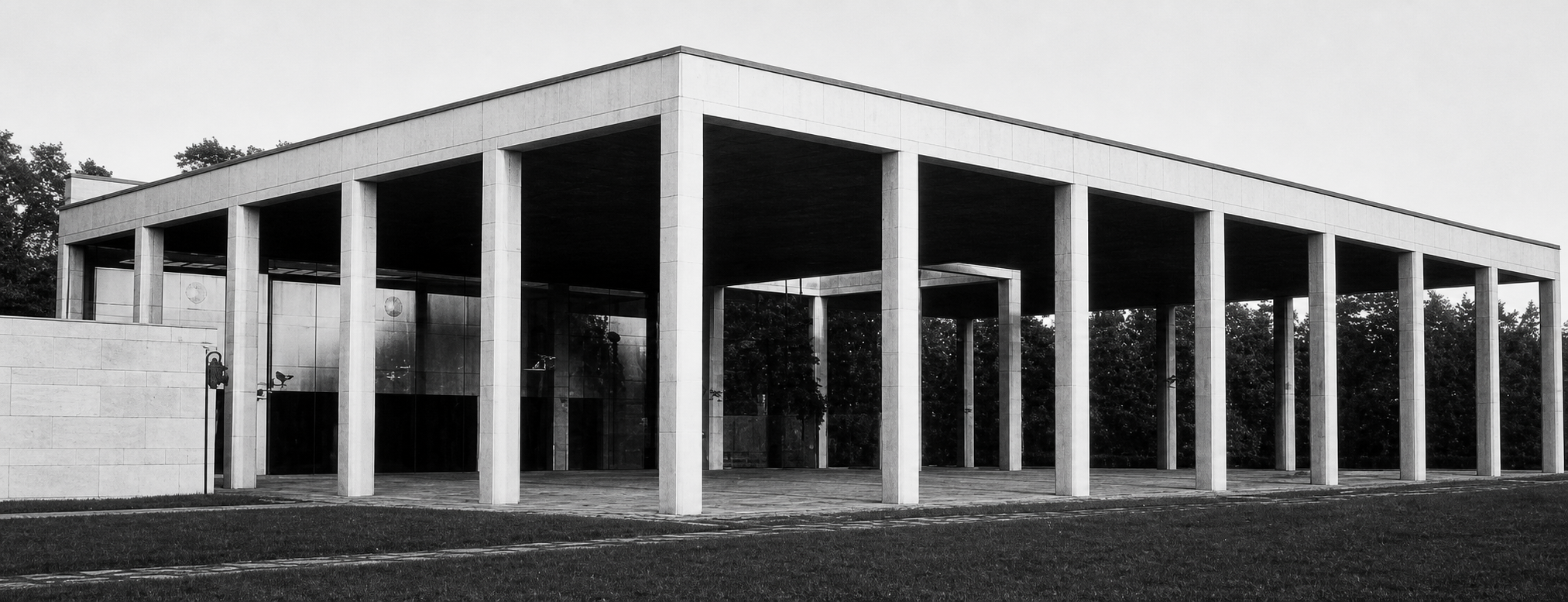
In the lower building -- also a colonnade with columns and bays -- there is repetition, but no significant living centers in the repetition. The repetition does not alternate because the centers have no life to make it alternate. The columns repeat, the space between the columns repeats. But because neither the columns themselves nor the space between the columns form profound centers, there is no beat, no life of genuine alternation. The building is depressing, and dead.
Why is alternating repetition more satisfying, more profound, than simple repetition? One answer lies, once again, in the recursiveness of the rule. For what repeats within a whole is not merely the units. In a whole, the space between the units also repeats. And often even the repetition itself repeats. Thus the rule about the repetition applies to all the elements within the whole. When we apply it to all the elements, to the entities, to the spaces between the entities, and even to the sequences of repeating entities themselves, then there is wholeness in the result.
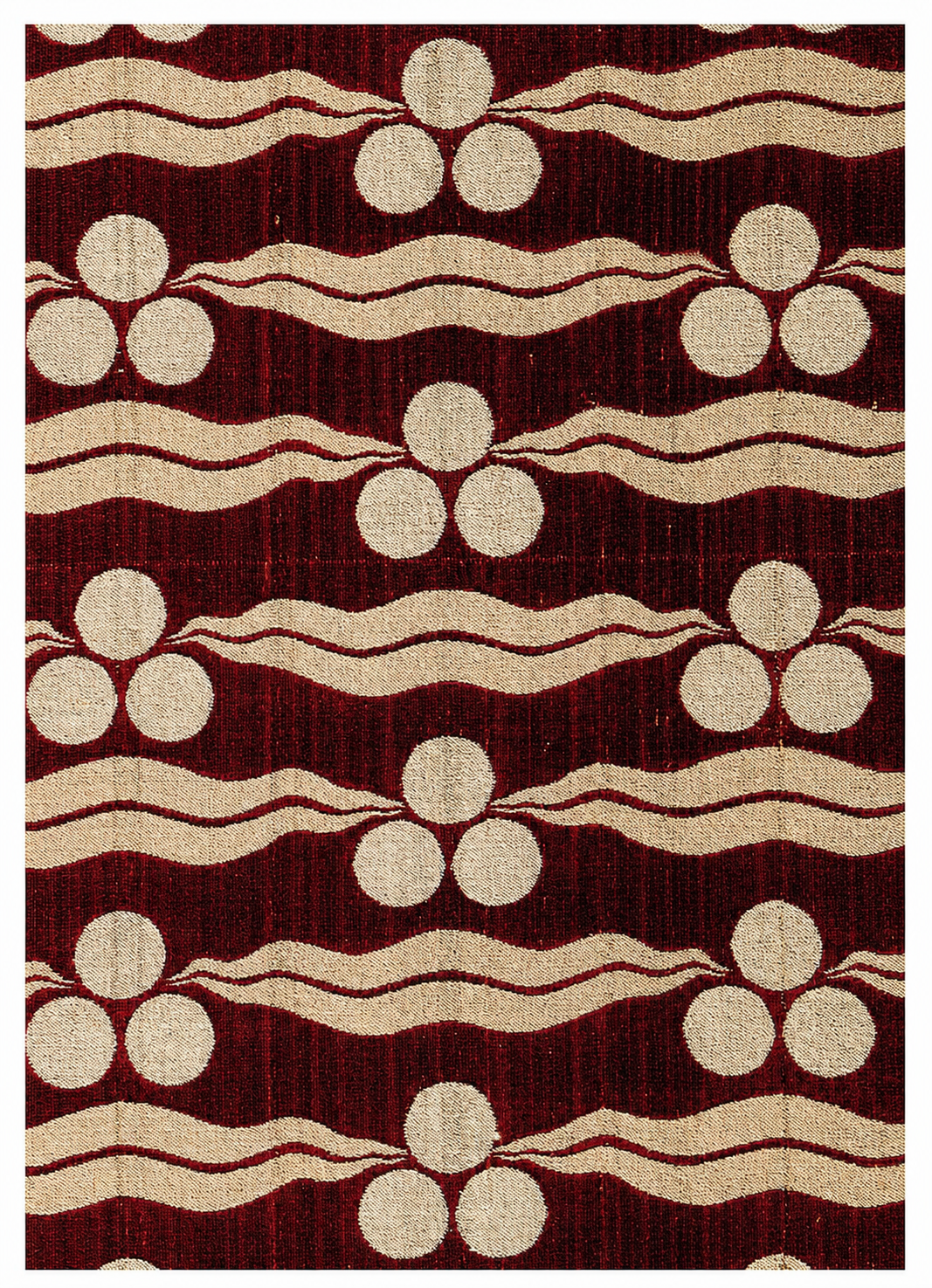
More exactly, it seems that what is really happening is not repetition, but oscillation. The thing repeats like a wave -- one, then the other, then the one again, and so on. In the Ottoman velvet on page 165, the oscillation and alternating repetition has reached tremendous and profound subtlety. The waves with the "lips" oscillate. The triple circles oscillate. The space between circles and lips oscillates and repeats. The overall effect is a profound unity.
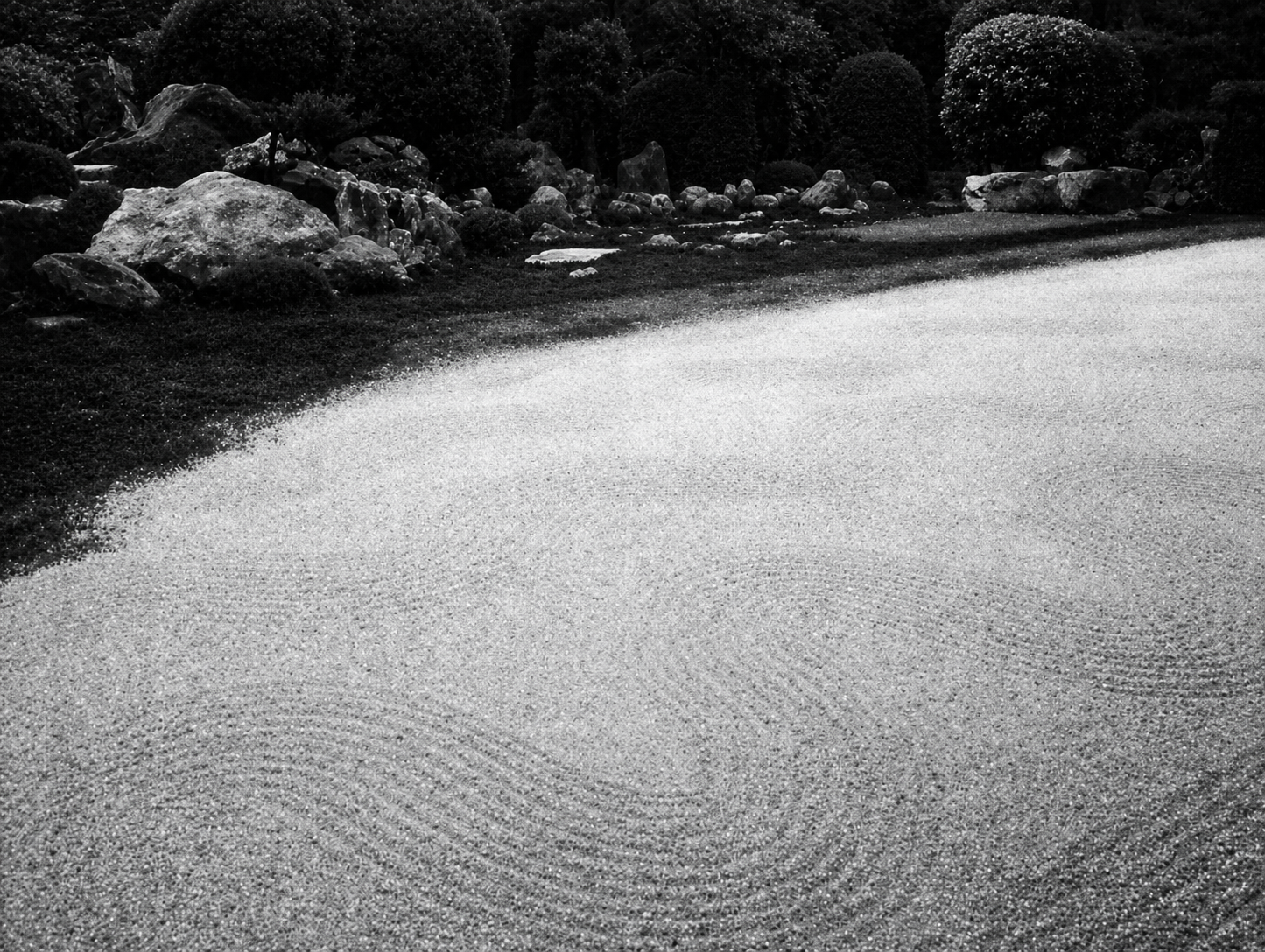
This partly explains the deep life of the Japanese raked sand garden. The teeth of the rake make waves in the sand. Then, the repetition of the sand ridges alternating with the repetition of the sand valleys work together with the larger alternating repetition of the design: the waves and whorls made by the moving rake leave, in the sand, the trace of the rake's own parallel and larger alternating movement.
On the next page, Matisse's simple, waving, brightly colored shapes, his trademark, cut out from colored paper, form the same waves and alternations in the space of his picture.
Whenever centers repeat within a structure, they will generally unite to intensify a larger center only when a second system of centers is inserted in between them, forming a second alternating system, sometimes even creating a third system of centers mutually caused by the first two, which once again ripple and alternate and oscillate.
How subtle the alternation has to be in order to work! In the bad examples the repetition does form some kind of alternation, but there is nothing beautiful or graceful about it: it is mechanical. In the good examples, we see a subtle beauty. The life comes about only when the alternating wholes are beautifully and subtly proportioned and differentiated.
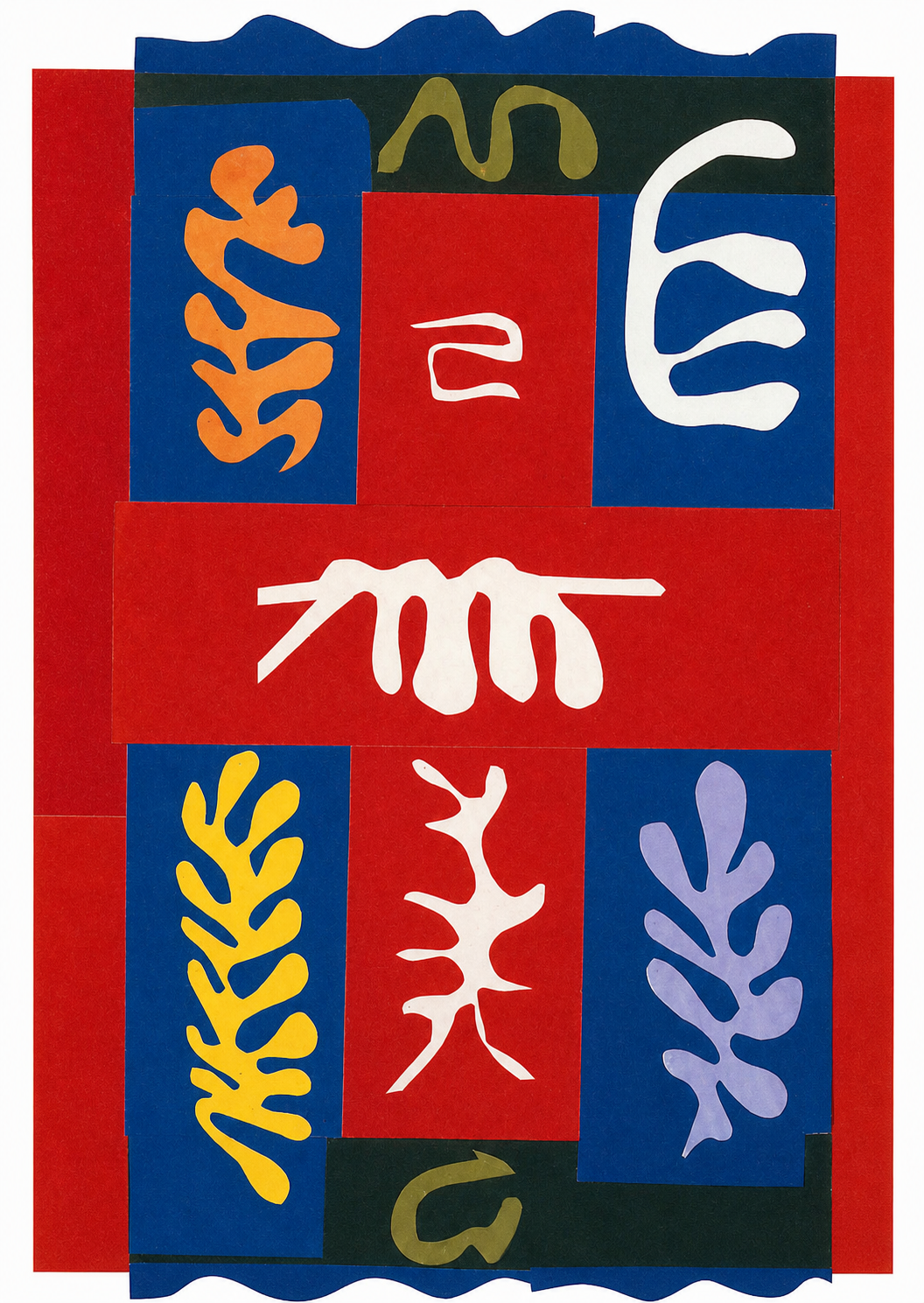
alternating, waveli by Henri Matisse, using his trademark
Functional Notes
Examples of patterns in APL which make use of alternating repetition ¢ FINGERS (p. 21), which calls for an alternation of city and countriside; PARALLEL ROADS (p. 126), which calls for an alternation of roads and buildings; paTHs AND GOALS (p. 585), which calls for a regular alternation of paths and stopping points; BULK STORAGE (p. 687), which calls for alternation of inhabited rooms and storage; TERRACED ource of life are: CITY COUNTRY
SLOPE (p. 790), which calls for an alternation of walls and CLOSETS BETWEEN ROOMS (p. 913), again an alternation of rooms and closets; and NETWORK OF PATHS AND CARS (p. 270), which calls for a complex five-way syncopated alternation of pedestrian paths and the spaces between them, roads for cars at right angles to the paths, terrace and the spaces between them, and a systern of nodes where the two networks cross each other.
2.5 / Positive Space
What I call posrrive space occurs when every bit of space swells outward, is substantial in itself, is never the leftover from an adjacent shape. We may see it like ripening corn, each kernel swelling until it meets the others, each one having its own positive shape caused by its growth as a cell from the inside.
My observations have led me to believe that in almost anything, large or small, the extent to which every single part is positive is fundamental to its life and wholeness. A work of art has life more or less to the extent that every single one of its component parts and spaces is whole, wellshaped and positive. Of all the properties which
create life in space, this is probably the most simple and the most essential, since it is this one which guarantees to every part of space the status of being a relatively strong center.
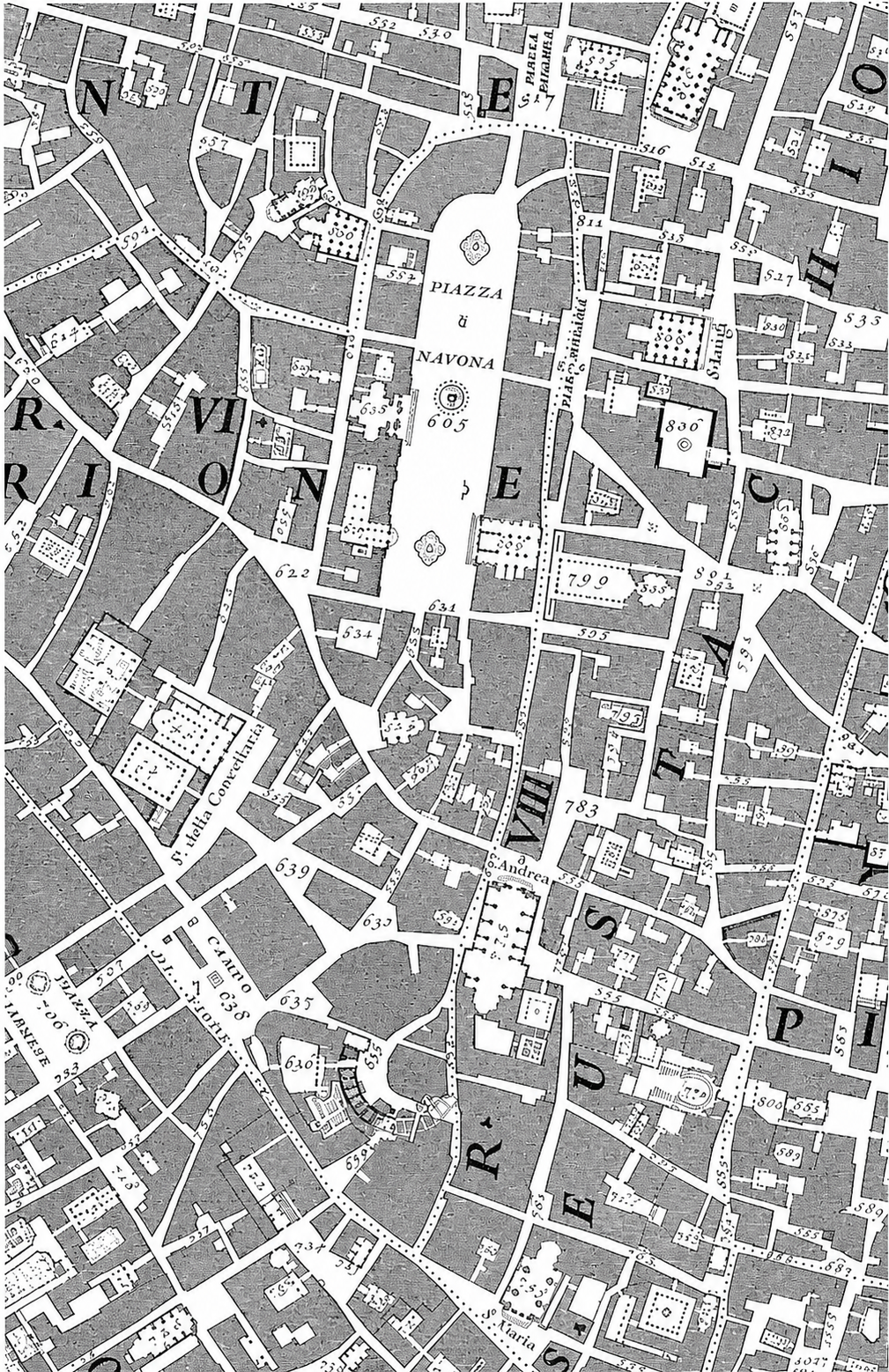
An almost archetypal example of this positive and coherent state of space may be seen in the 17th-century Nolli plan of Rome. In this plan each bit of every street is positive; the building masses are positive; the public interiors are positive. There is virtually no part of the whole which does not have definite and positive shape. It is a packing of definite entities, each of which is definite and substantial in its own right. This has come about, I think, because each of these places -- whether street, square, or block of buildings -- has been shaped over time by people who cared about it, and it has therefore taken a definite, cared-for shape with meaning and purpose. Each of these entities has been formed by the slow deliberate strengthening of centers.
In the present Western view of space, we have forgotten the powerful force of space visible in the Nolli plan, even though it was commonplace in almost every ancient culture. We tend to see buildings floating in empty space, as if the space between them were an empty sea. This means that most often the buildings are placed and have their own definite physical shape -- but the space which they are floating in is shapeless, making the buildings almost meaningless in their isolation. This has a devastating effect: it makes our social space itself -- the glue and playground of our common public world -- incoherent, almost non-existent. And the character of positive -- that is to say "shaped" -- space has been forgotten in private gardens, in rooms, in the space of objects and paintings and textiles -- even in the typefaces we use.
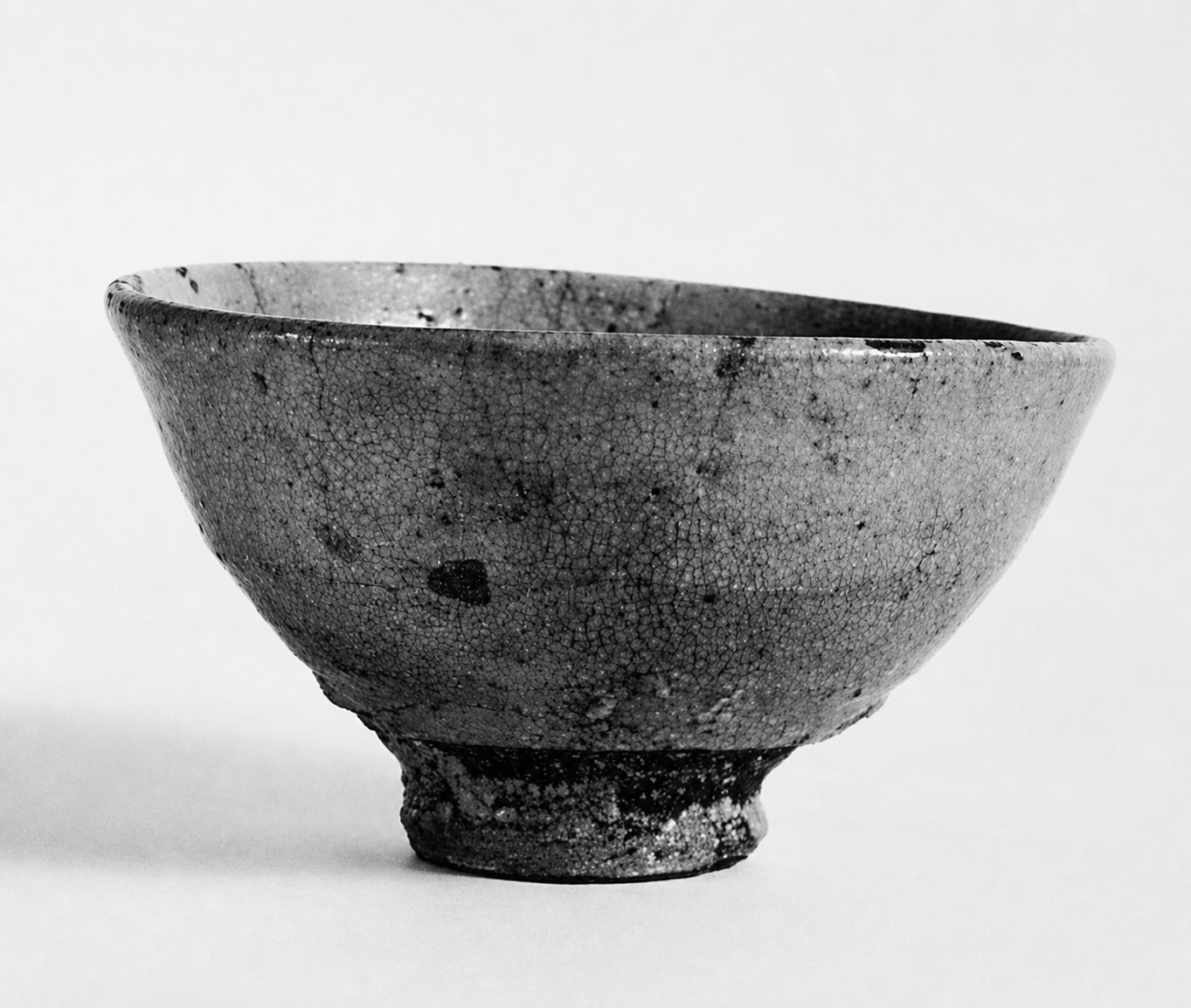
Here, in the famous Kizaemon tea bowl, now preserved in Japan, we see the phenomenon in a very subtle case. Looking carefully at this bowl, we come to realize that its beauty lies in the fact that not only does the bowl have a beautiful shape in itself, but that also the space next to the bowl has a beautiful shape. One might even say that the beauty of the bowl is created by
The Kizaemon tea-bowl. Spaces inside and outside the bowl are all positive.
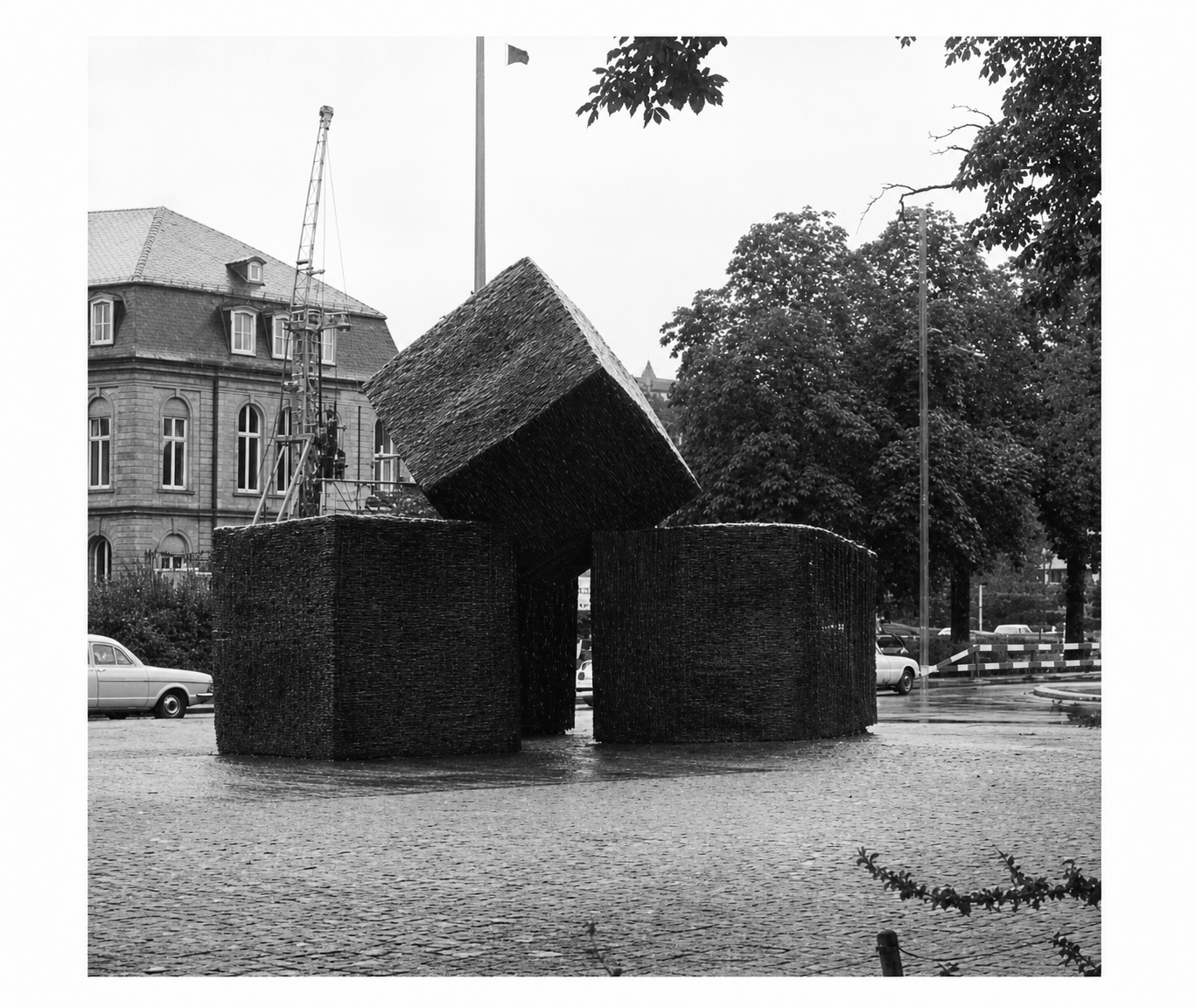
the fact that the space next to it is beautiful. This is an excellent example of positive space at work. In a cruder work of art, the thing is shaped with careful intent, but the space next to the thing is not. The 1960s sculpture of three almost random cubes shown at the bottom, on the facing page, is a typical example of this kind of thing.
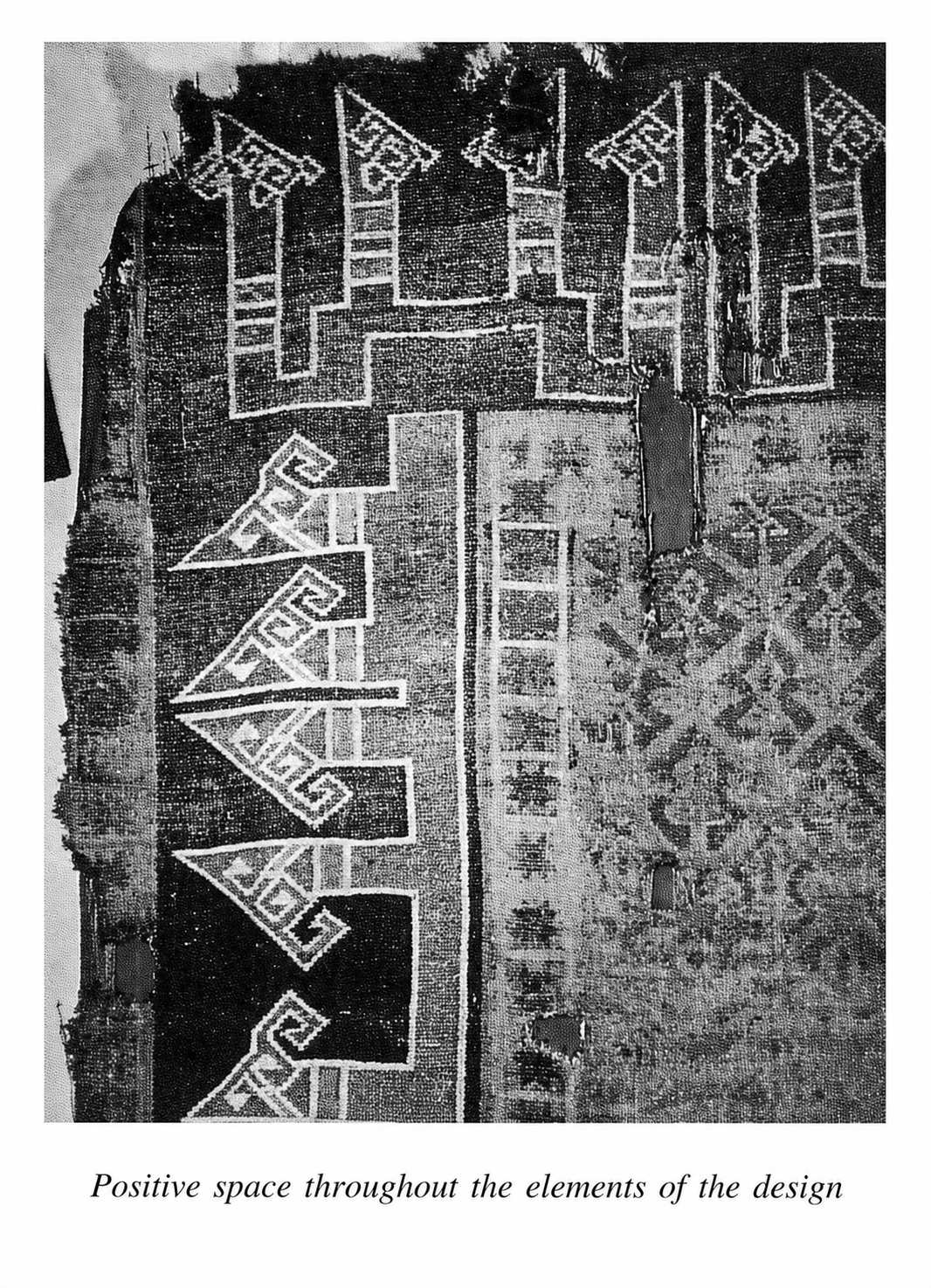
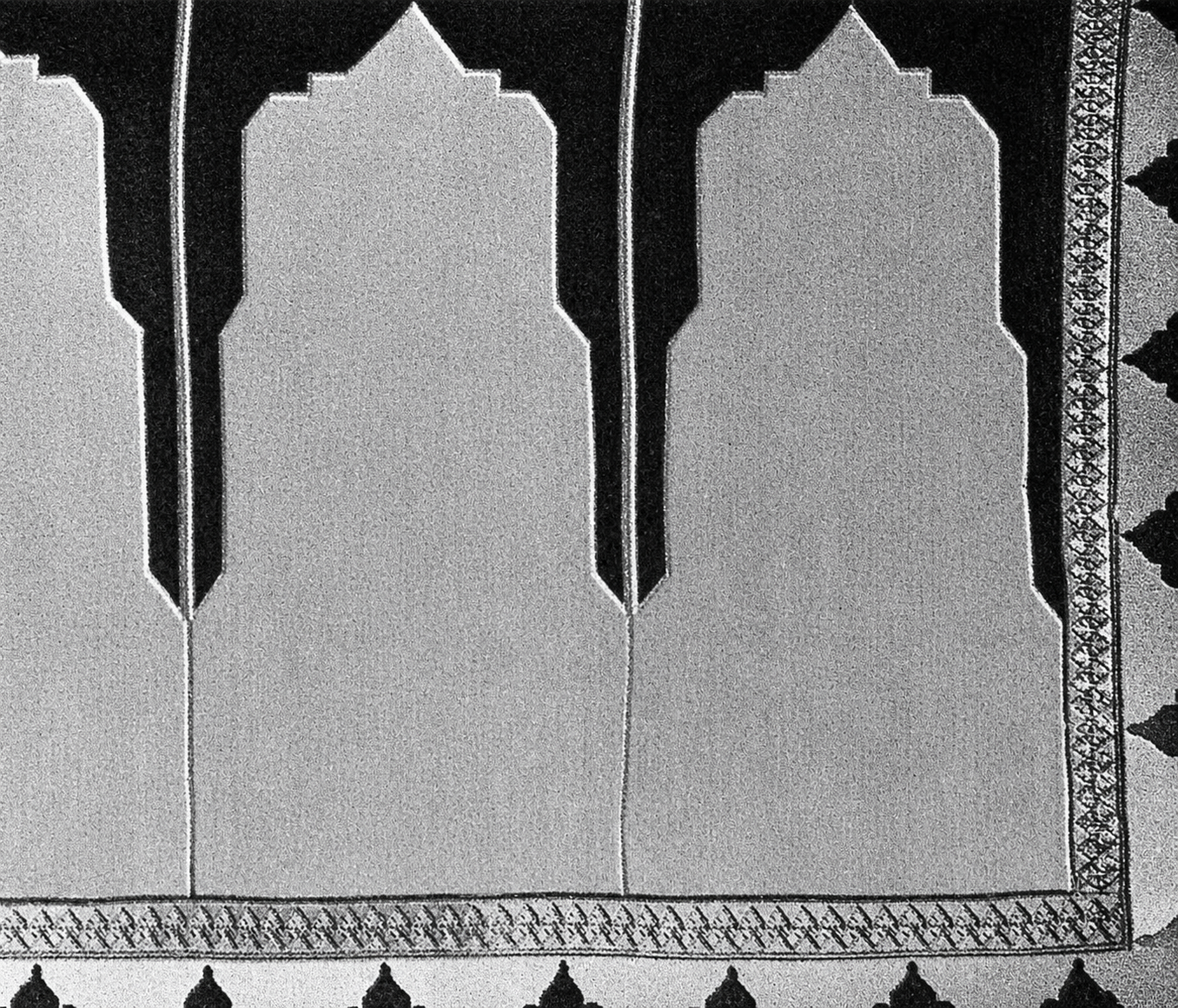
Consider two further examples of positive space from Anatolian carpet design. The border of a Seljuk carpet is especially good because both positive and negative shapes are extreme -- rather original. And in the field of an Anatolian multiple-niche prayer carpet, every whole is shaped, essentially, by the shape of the wholes which lie next to it, making every part of space positive, composed of living centers. Signifying God, as the carpet does, hence perfect unity, the positive character, the centeredness of every particle of space, is an important practical and spiritual aspect of the carpet's life.

Matisse: cut paper nude. The way the composition is made, placing the cut paper, helps the artist achieve this almost incredible weaving of positive and negative, where the positive space between the body is almost alive, and so makes the woman's body come to life.
In poor design, in order to give an entity good shape, the background space where it lies sometimes has leftover shape, or no shape at all. In the case of living design there is never any leftover space. Every distinct piece of space is a whole. In Matisse's cut-out blue nude, every part of the space is positive -- and hence it has life. In the ancient Mughal frieze below, every bit of space between the flowers and the leaves, even between the veins of the leaves, has its life.
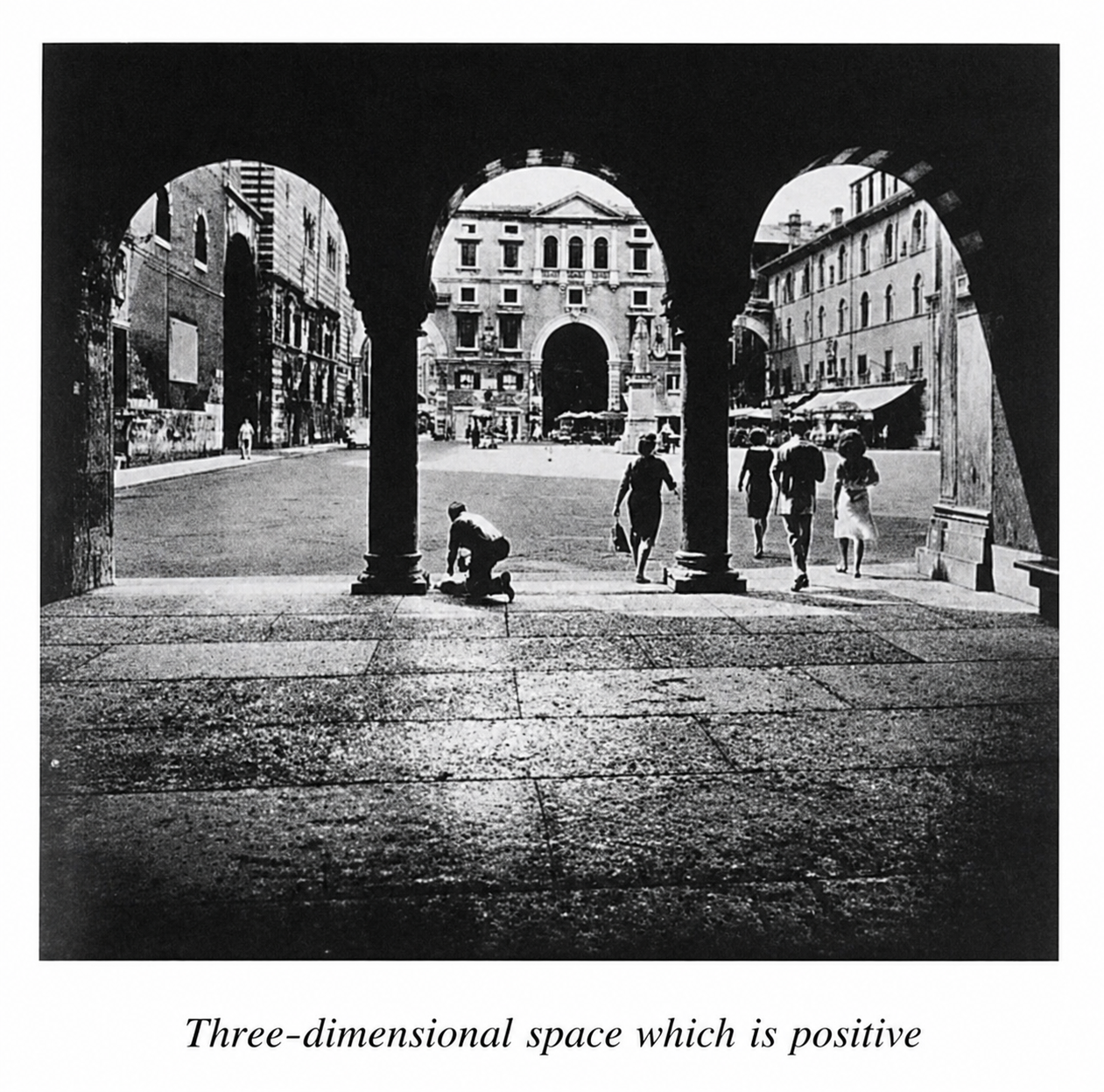
It is especially hard to see positive space in the interior three-dimensional space of buildings. In a building which works well, the various parts are always spatially positive. This means that even closets, small leftover rooms, hallways, and places between rooms all have the quality of being positive, useful, and beautifully shaped. And of course, the same thing continues to the outdoors, so that the various exterior places around the building all have a positive character, each one of them. There is not a single place which is "leftover." We see positive examples in the arcade in Italy shown on the left, and in the great room of a Japanese castle, on the right. But the "modern" space in the other examples fails. The rooms by Louis Kahn, though meant to be interesting and composed in "new" ways to create a modernistic effect, fall apart spatially because there is no positive space in them: and hence no life.
The definition of positive space is straightforward: every single part of space has positive shape as a center. There are no amorphous meaningless leftovers. Every shape is a strong center, and every space is made up in such a way that it only has strong centers in its space, nothing else besides.
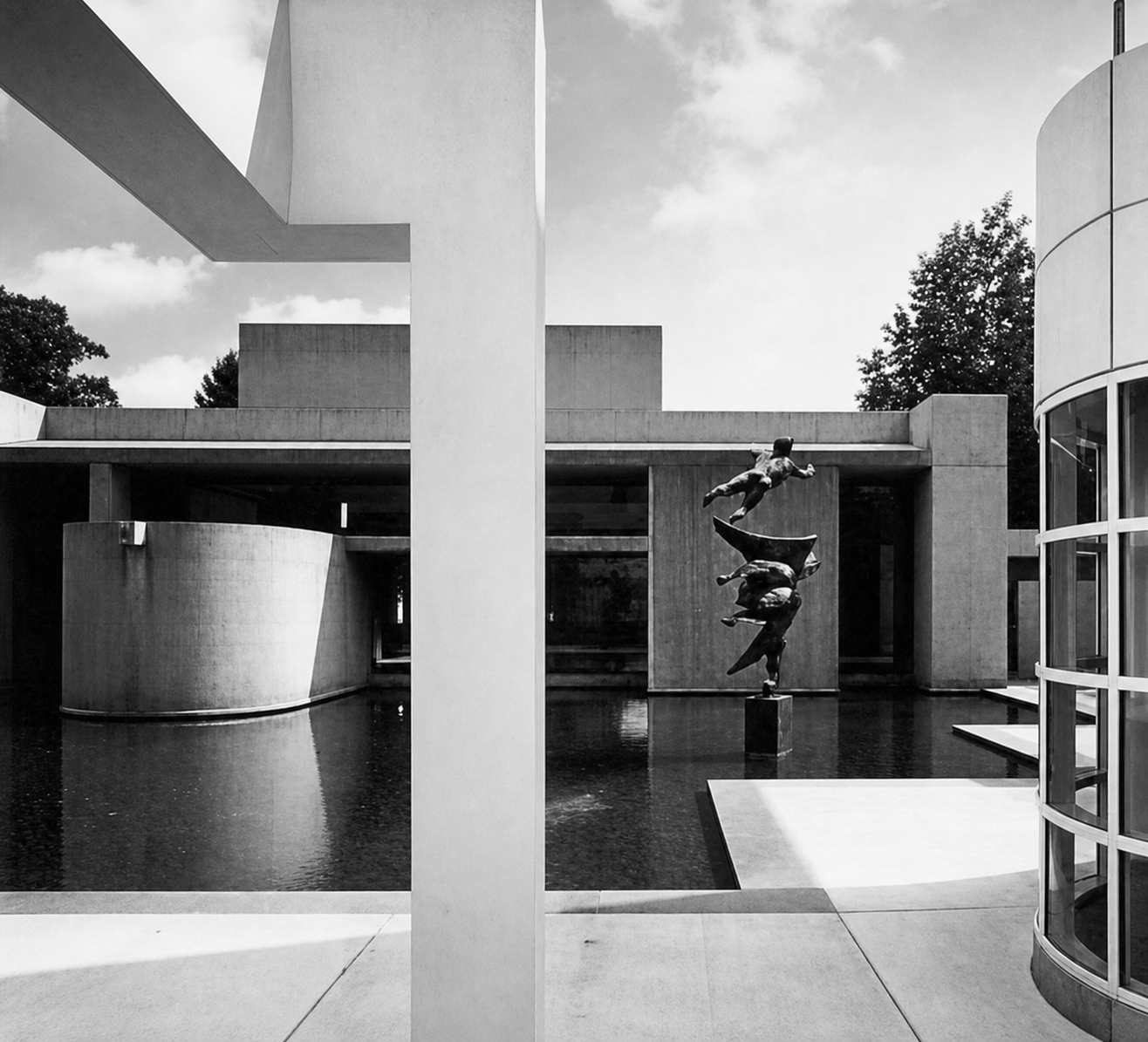
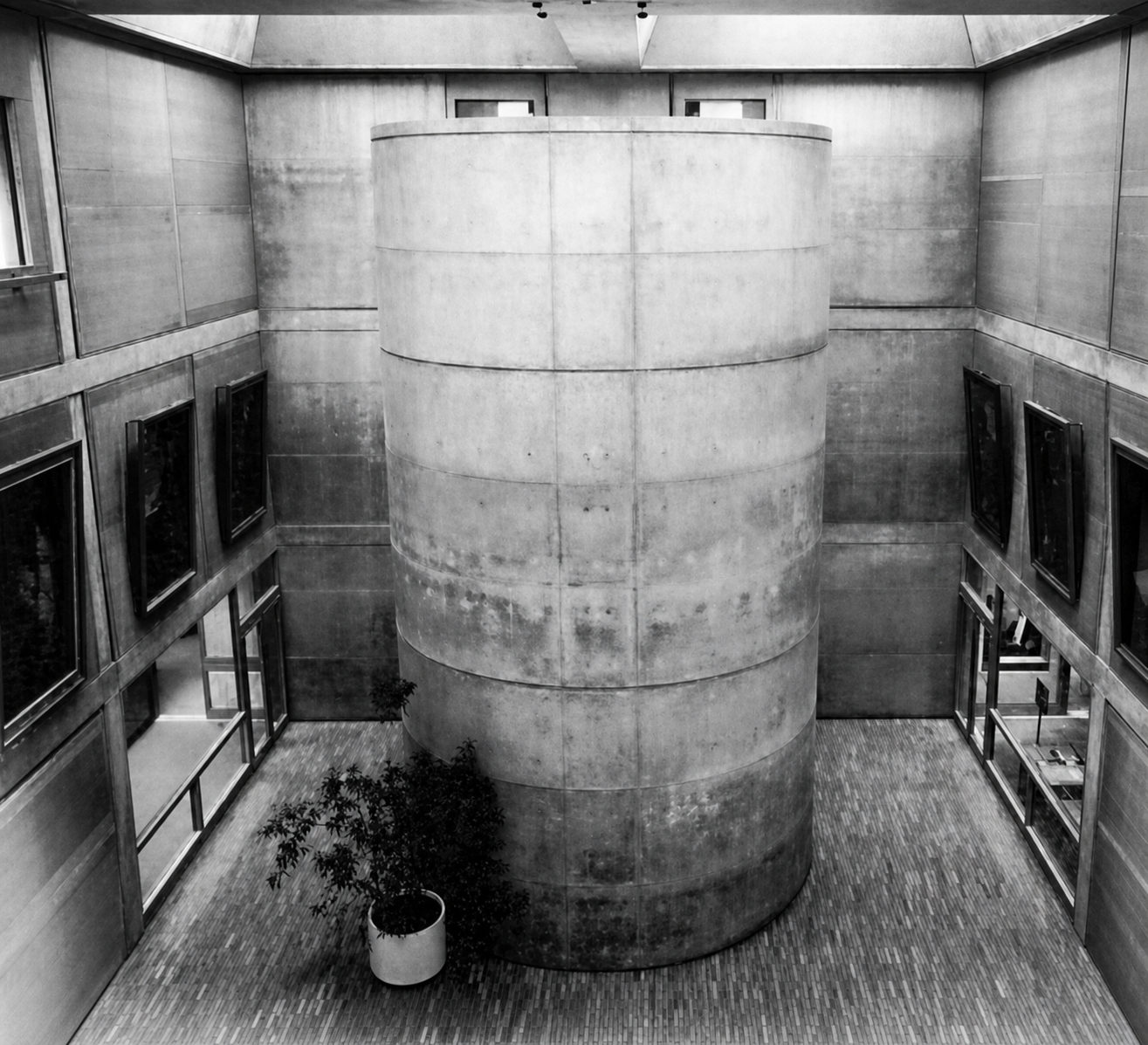
Louis Kahn: three-dimensional space in which positive space fails.
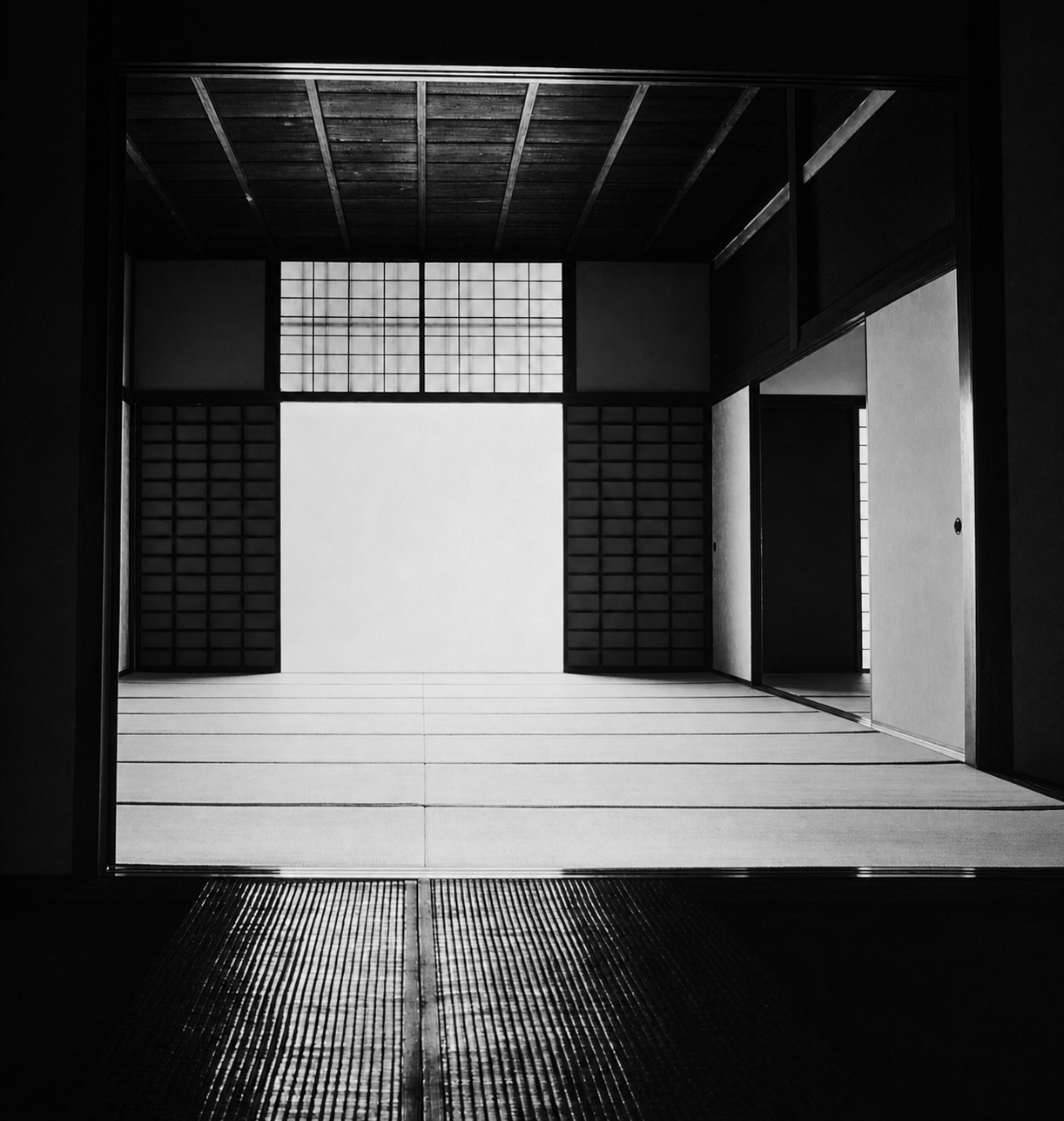
Functional Notes
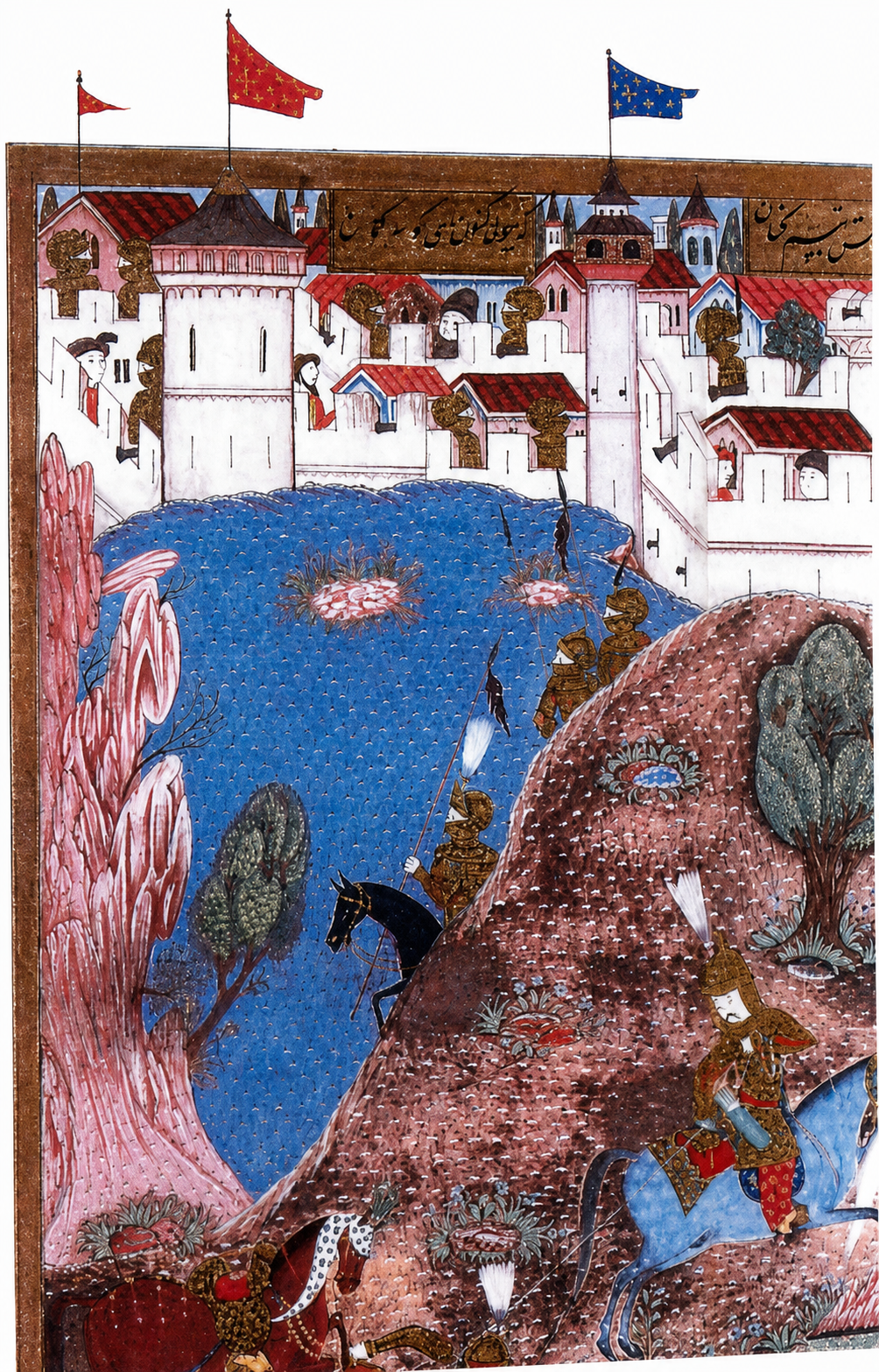
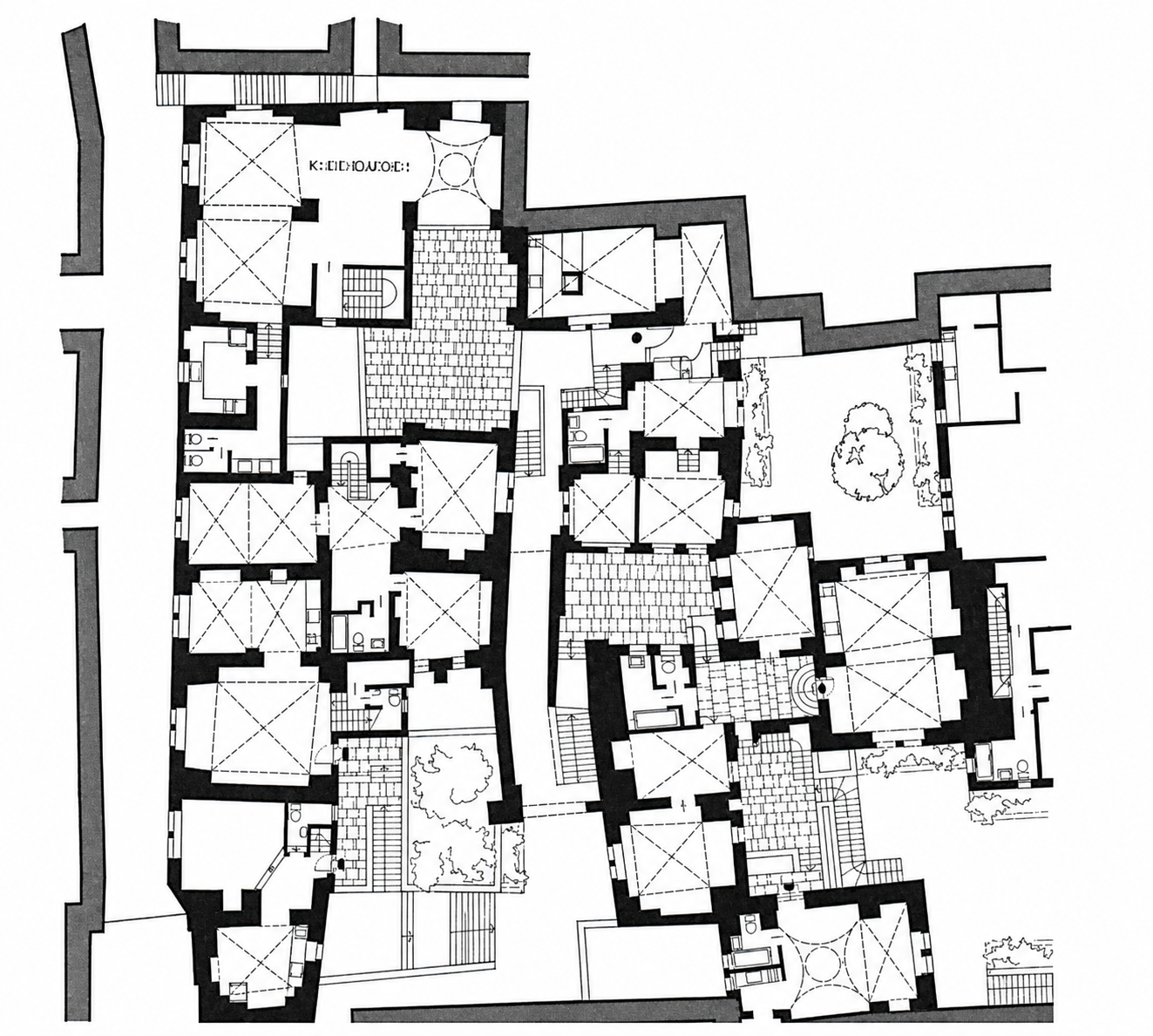
These two illustrations belong with the functional notes. Beautiful positive space in a building plan. The rooms of this settlement are almost like kernels of corn on a cob, as if they had been grown, and pressed together.
Detailed functional arguments explaining the functional effects of positive space are given in APL under the discussion of posrrive OUTDOOR sPace (p. 517). Other versions are scattered throughout the text in, for instance, THE SHAPE OF INDOOR SPACE (p. 883); HOUSING IN BETWEEN (p. 256); SHIELDED PARKING (p. 477); SITE RE- PAIR (p. 508); SIX FOOT BALCONY (p. 781); WINDOW PLACE (p. 833); CEILING HEIGHT VARIETY (p. 876).
The practical issues for a building are straightforward. Rooms and passages which have "neutral" character reduce the life of a building. In a case where every space has positive space, this means that we invent an arrangement of spaces in which all the rooms fit together and yet take the size and shape and form and character they need: each swells to its "perfect" character forcefully, and dramatically, and well; they are not just laid side by side as in a "conventional" plan.
Even in a painting, the effect is practical. Space is positive throughout this Turkish miniature. The painting is deceptively sweet, and one may not at first realize the toughness and calculated organization which the discipline of the painter has put in the space.
More generally, the main two practical results that happen from positive space in its various forms are (a) that every bit of space is very intensely useful, and (b) that there is no leftover waste space which is not useful. The combination of the two creates well-used, effective space, and therefore a very solid living character throughout the space.
In the built world, large or small, the extent to which every single part of the thing -- solid or void -- is positive is key to its practical life. Setting tiles, we try to make the grout between the tiles just thick enough to have its own "weight," and thus even in the grout lines we form positive space between the tiles. Making a chair, we use the members to form positive and geometrically simple shapes in the air between the members, because these shapes will be strongest and most effective in the structural frame of the chair.
2.6 / Good Shape
When I began looking for living structures, I was surprised to find out how often, mixed with other properties, there was an element that seemed to defy analysis: the works contained elements with the most gorgeous, beautiful, powerful shapes. Sometimes this beauty of shape seemed subtle, complex, beyond analysis. I became aware of a special quality that 1 began to think of as GOOD SHAPE, but could not very easily explain it, or define it.
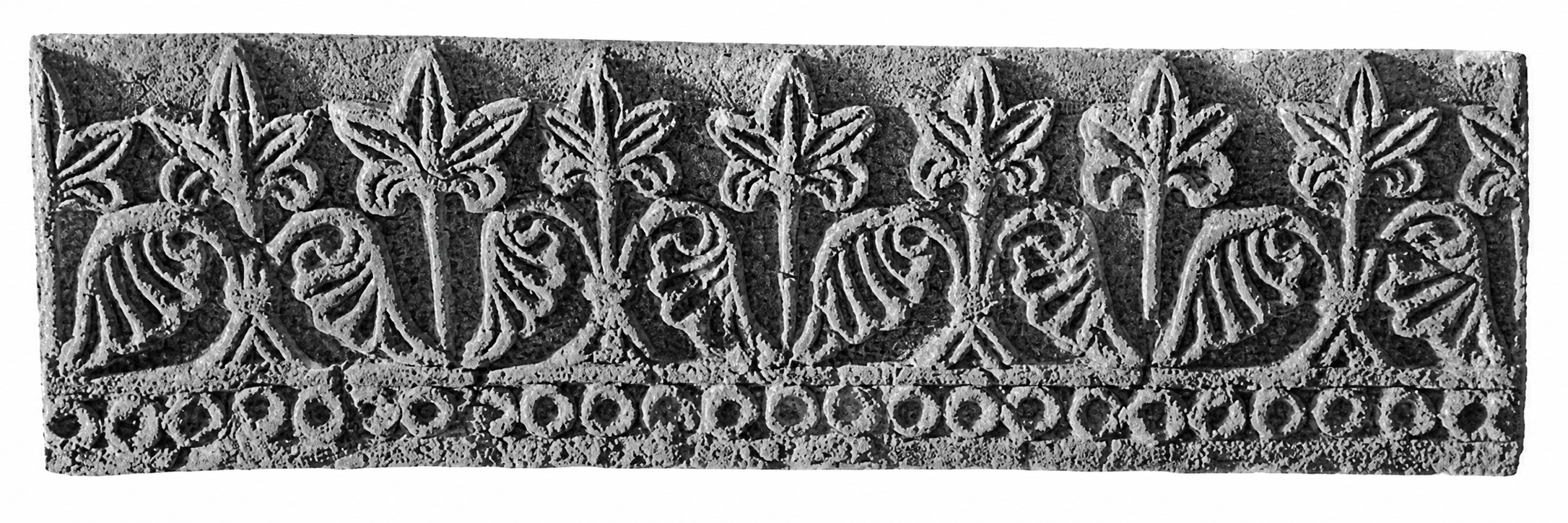
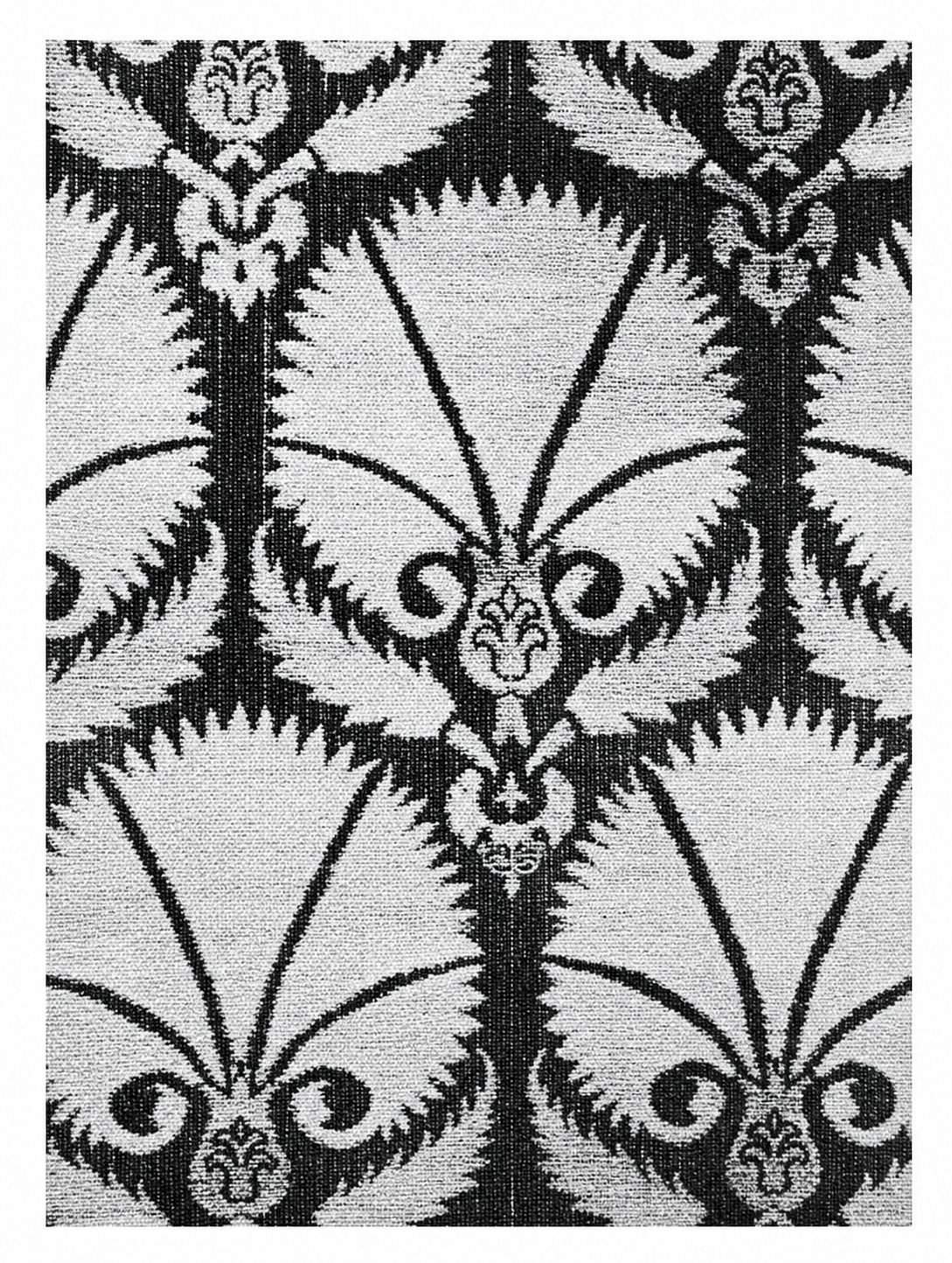
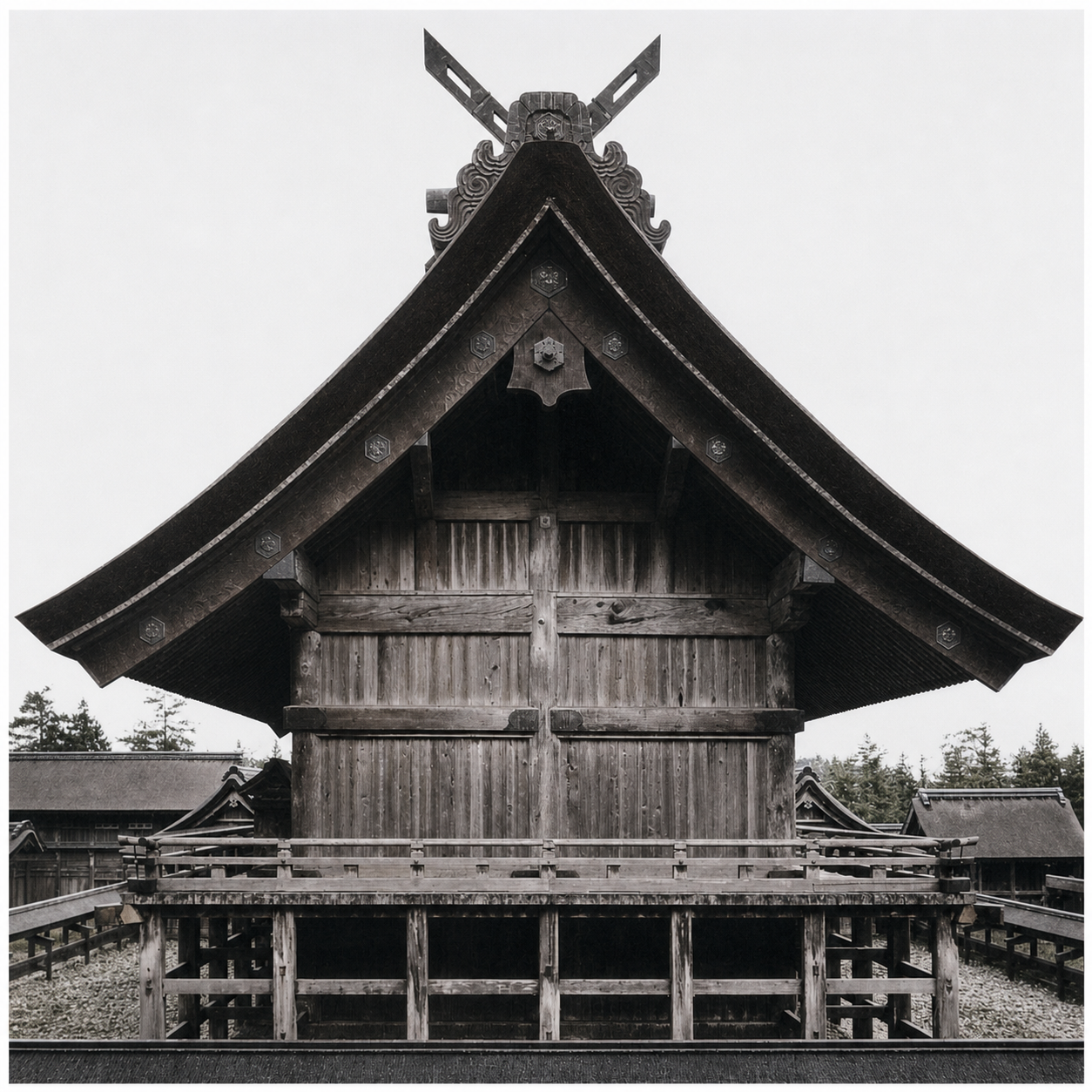
The fan flowers shown on the brocaded velvet below. The carving of the massive wooden columns in Romania, and its lovely forceful shapes. The intense shape of the Japanese shrine (next page). The powerful shapes even of a simply repeating carved ornament like that on the Abbasid stone relief (next page). For a long time I simply collected these things, and noted that they had good shape. But what did it mean? What is good shape?
It took mea long time to see that good shape itself is also related to the centers; and that, indeed, a shape we see as good is a shape which is itself, as a shape, made up from multiple coherent centers. For example, the beauty of shape in the fan-shaped leaves in the Turkish velvet comes about because of the peculiar way that each individual shape is made from multiple centers.
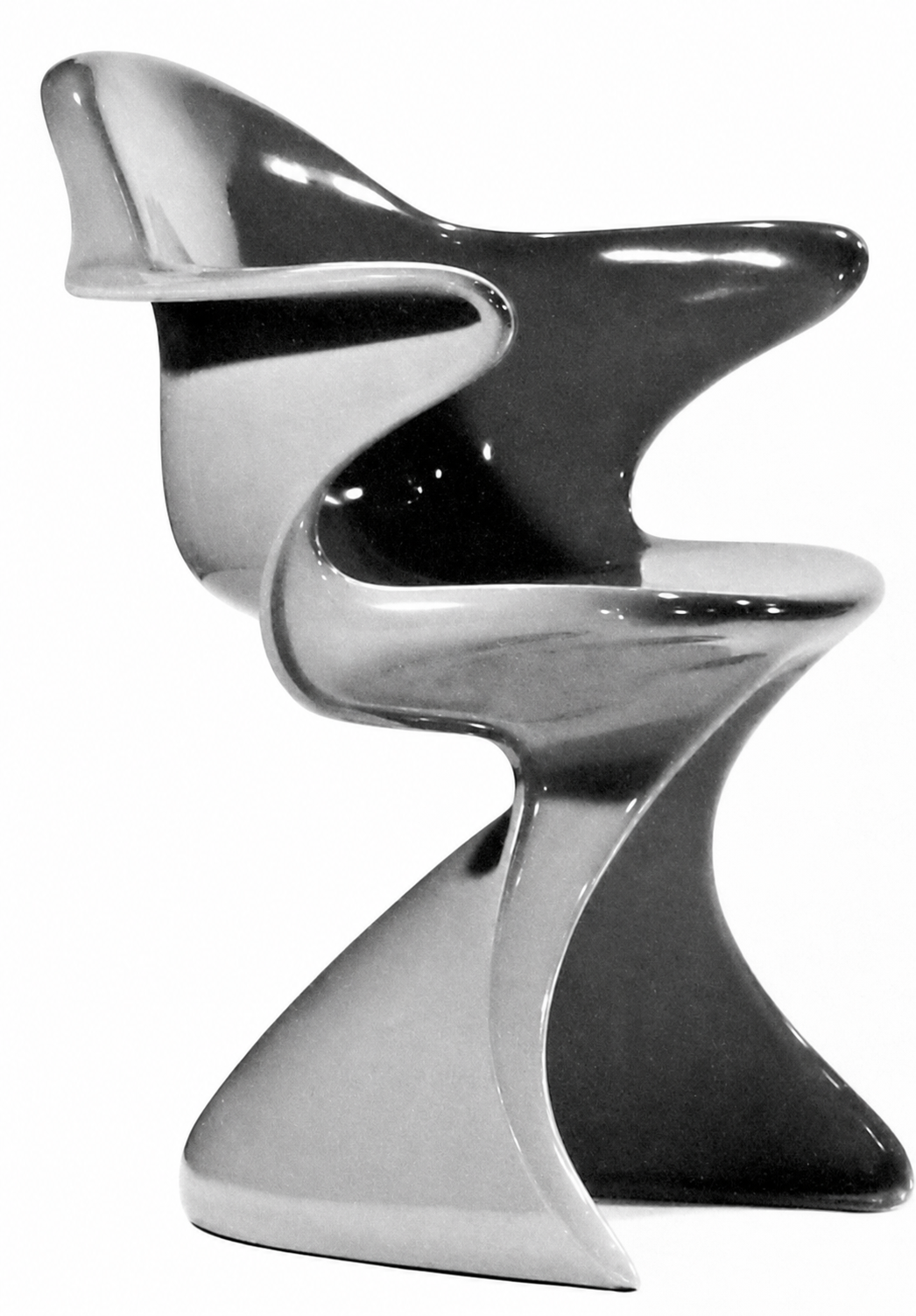
To make the point quite clear, it may be helpful to pick out two objects, one which has very good shape in itself, the other which strongly lacks good shape. On page 181, the Japanese teapot stand we have studied before has beautiful "good shape" within itself. It has centers in every part of its shape, and it is this which makes the shape good. In contrast, the futuristic chair has quite appallingly bad shape: none of its components are centers, and it is this which makes the shape dad.
What is a "good shape"? What is it made of? It is easiest to understand good shape as a recursive rule. The recursive rule says that the elements of any good shape are always good shapes themselves. Or, we may say this once again in terms of centers. A good shape is a
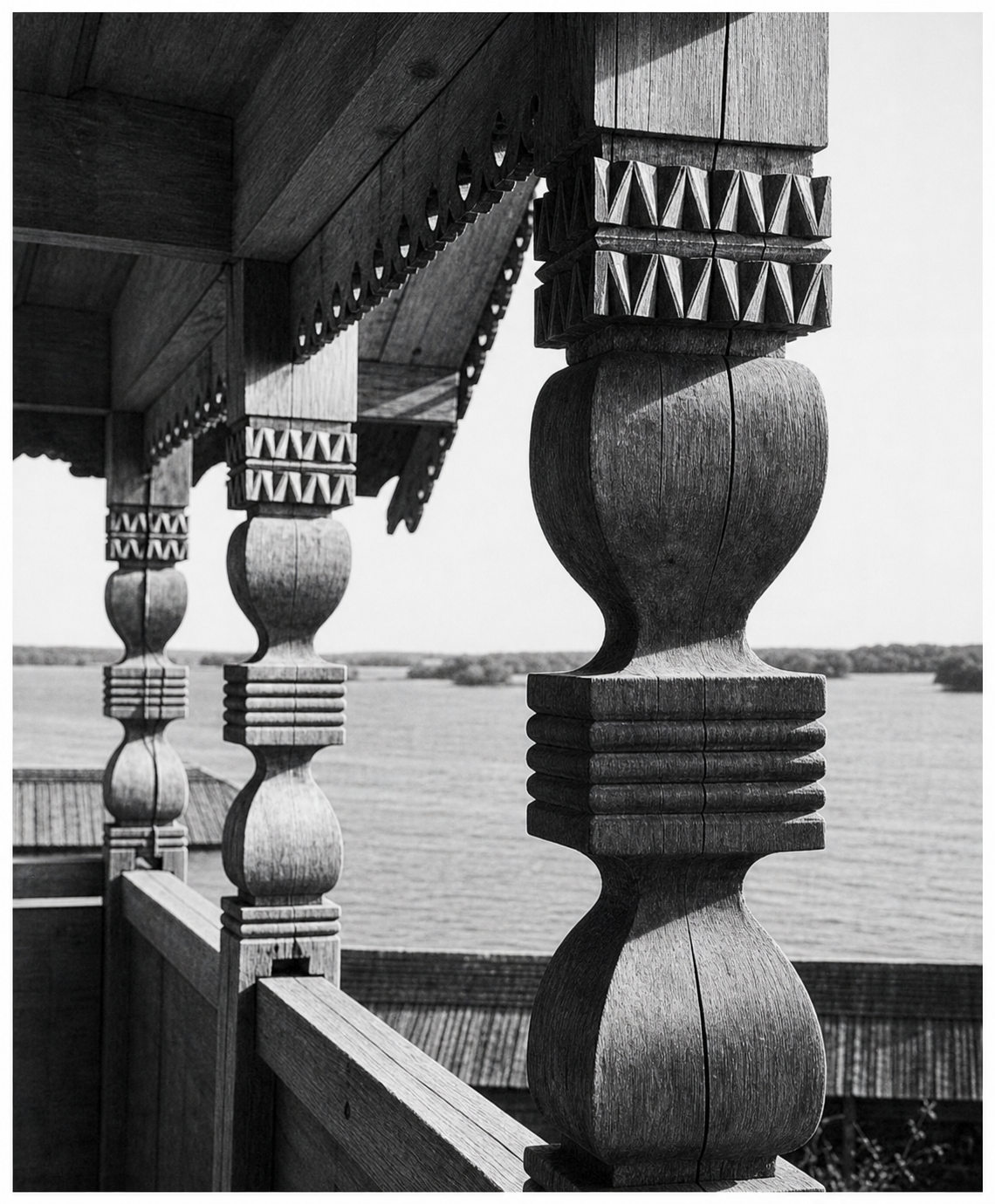
Good shape in a primitive carved column, Romania
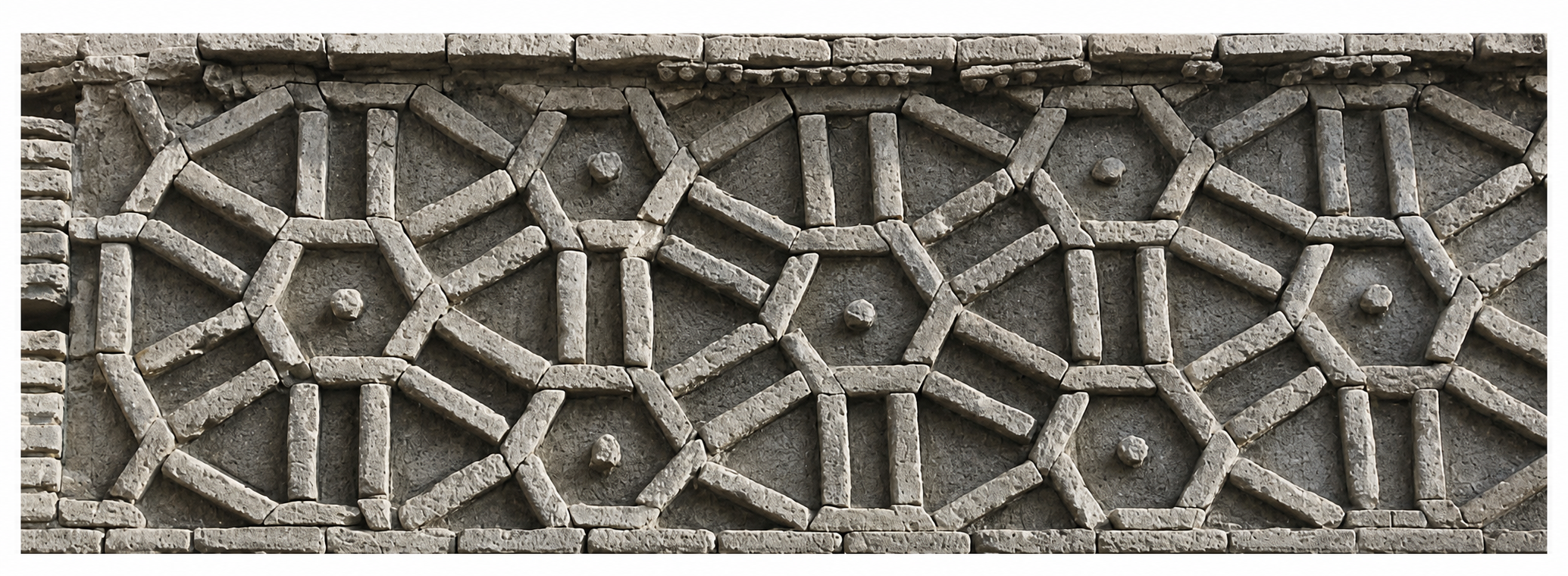
Abbasid stone relief: what seems like a rather intricate "'tracery'' design is actually immensely solid, because the shapes -- wheels and infill -- are made of such simple and solid pieces. The good shape of the ornaments appears in the way that every part, ev ingle part, has positive and definite shape, thus helping the overall organization, and making the large ''wheels'' magnificent in their resulting shape.
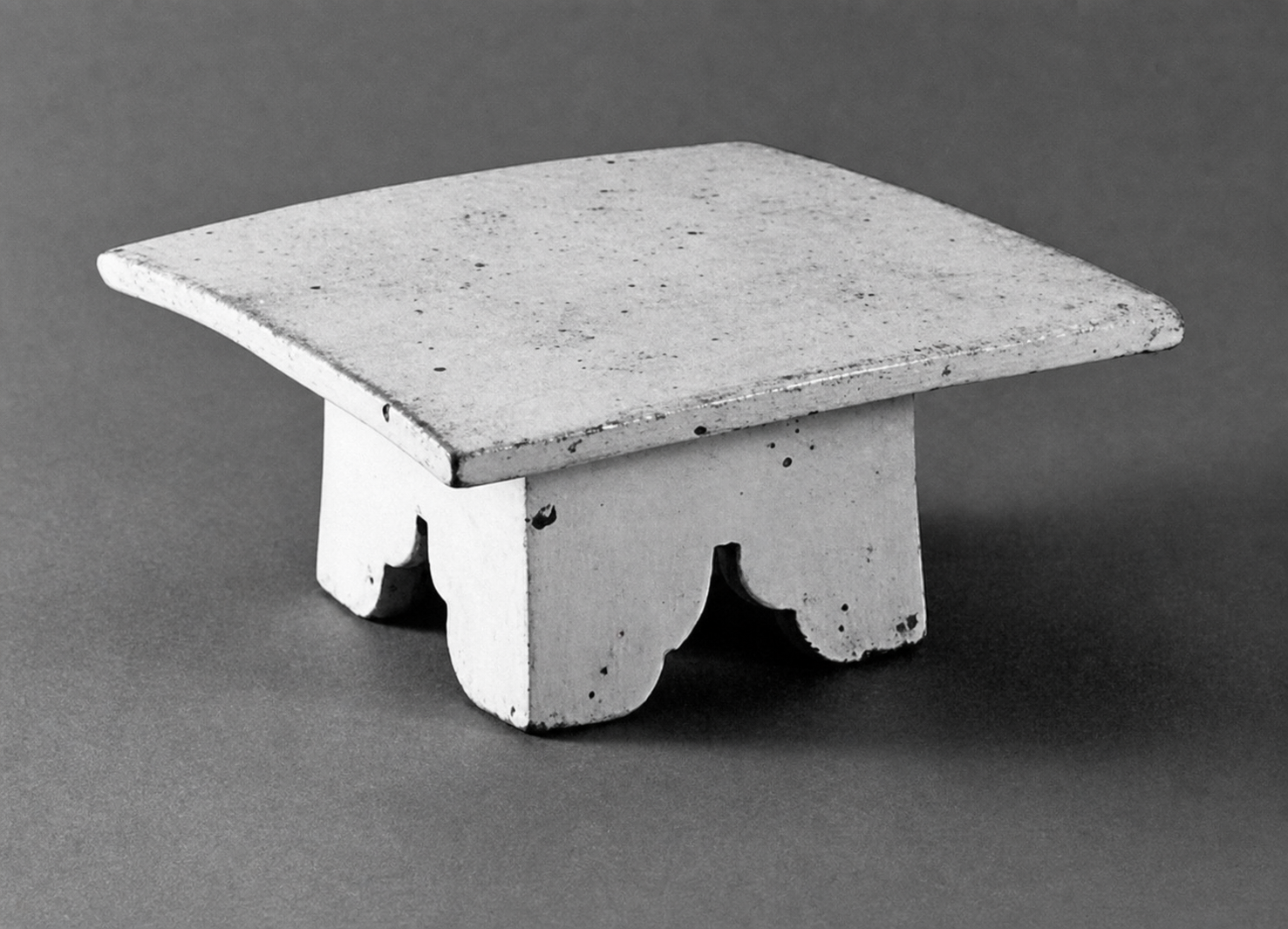
In addition, we note that the simplest and most elementary good shapes are made from elementary figures. Thus the first thing to realize is that in most cases the good shape, no matter how complex, is built up from the simplest elementary figures. The teapot stand can be seen to be built up from the illustrated simple shapes, each of which has good shape. Notice that I include the shape of the positive space under the lip of the teapot stand as one of its component centers.
On the other hand, the amorphous mass of the futuristic chair cannot be understood as being composed of simple elementary shapes at all. If one tries to take it apart, and identify its component shapes, then these shapes are themselves seen to have very bad shape again. In effect, it is not made of centers at all. When space is truly whole, the elements are always made up from shapes which are much more regular in some sense.
Let us start a more detailed understanding by looking at the Persian carpet on the next page. It seems superficially "floral." But on close inspection it turns out to be made up of simpler forms, including triangles, rhombuses, hexagons, arrowheads, pieces of circles, all rather regular -- and it is their regularity which allows the formation of so many ambiguous cr
$srelationships within the form. The shapes of the
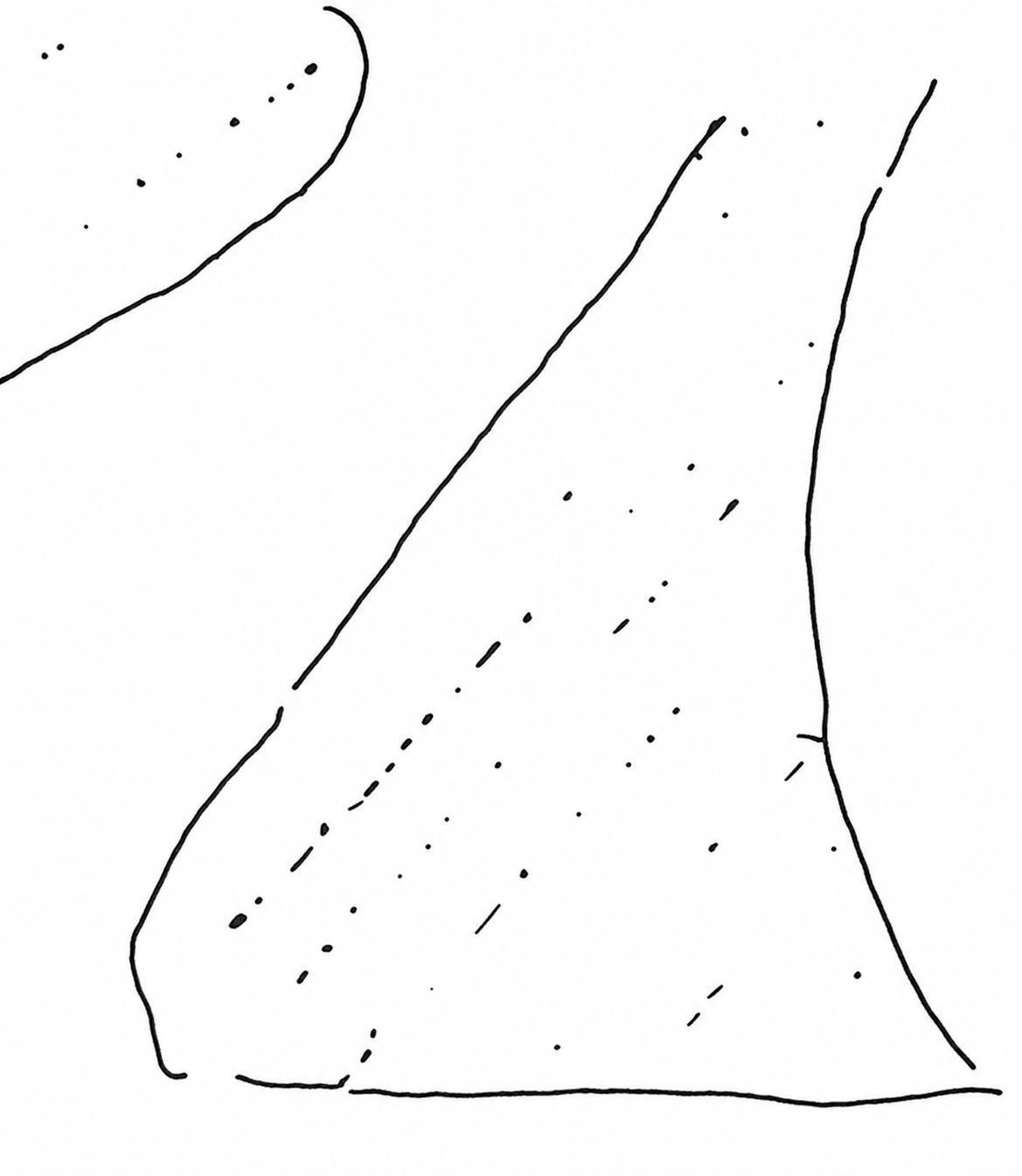
Elementary centers in the teapot stand form its beautiful shape.
Terrible shape in a futuristic chair
Amorphous figures in the futuristic chair

Early Persian carpet: even the individual flowers are made up of good shapes made of geometrically simple shapes, powerful as bits of local geometry. Here even the flower __ it turns out to be made up entirely of diamonds, petals are made of elements that are essentially straight line figures, squares, and triangles, both the colored pieces and the triangles, hexagons, etc., put together in very complex ways to create the illusion of organic shapes. Why is this so important? I believe the regularity of the simple shapes creates a potential for much more complex systems of cross-relationships in space which can never be attained by the loose organic kinds of shape. And what seem like complex centers are made of simpler centers which are also alive -- and it is these centers above all which give the complex ones their life.
Again it is floral-/ooking. Yet on close inspection, squares, and triangles, both the colored pieces and the space between. The resulting ornament, as a whole, has good shape. The good shape is an attribute of the whole configuration, not of
For clarity, here is an extremely simple ex-
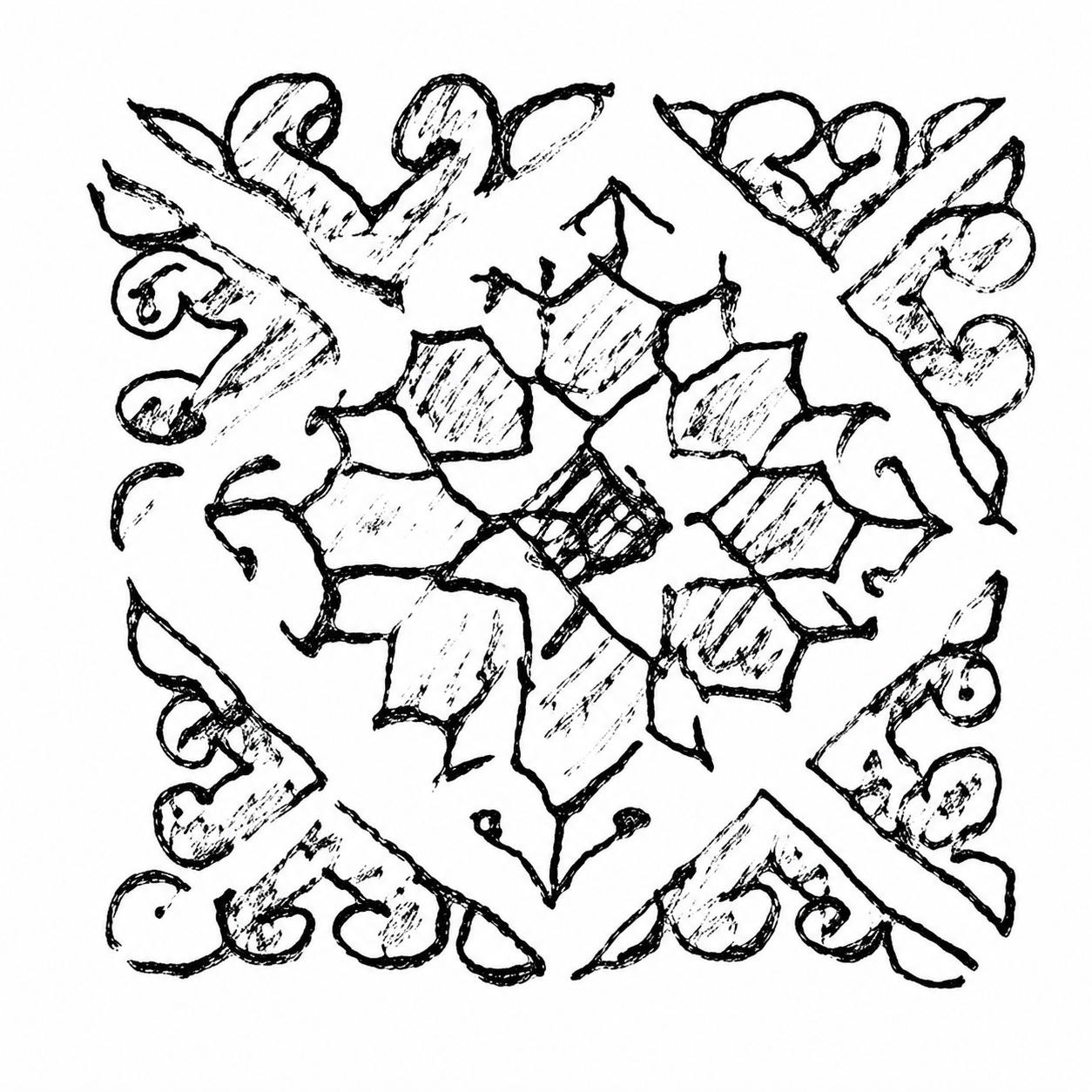
Floral carpet element made mainly of rhombs and triangles
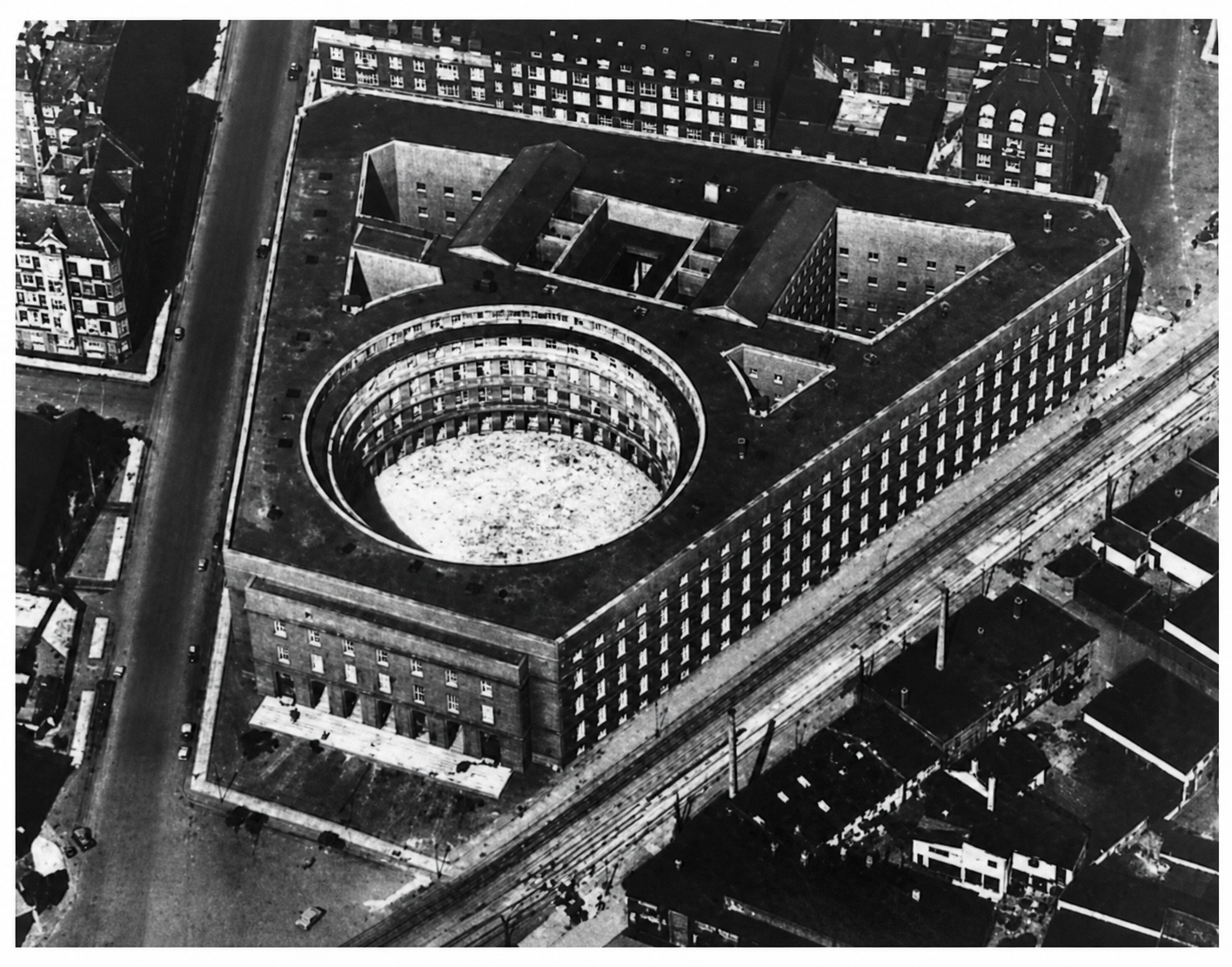
Copenhagen, Police Headquarters: this is not good shape but a caricature of it. It is a single highly simplified shape, in which other shapes are not **good,"" and in which, as a result, no mutual helping of the centers occurs.
the parts; but it comes about when the wéole is made of parts that are themselves whole in this rather simple geometric sense.
In one sense all this is obvious. We are going to apply the rule that every visible part of the design, at every level, must be a good figure or a strong "entity." This clearly rules out amorphous blobs, vague shapes, etc., and clearly includes squares, octagons, eight-blossomed flowers, 45degree triangles, etc. But when we try to go more deeply into the matter, and to give a precise rule for distinguishing things which have goodness of shape, it turns out to be hard to define the idea exactly. The following is a partial list of properties required to make a good shape, and for the elements from which a good shape is made:
1. High degree of internal symmetries.
2. Bilateral symmetry (almost always).
3. 4 well-marked center (not necessarily at the geometric middle).
4. The spaces it creates next to it are also positive (positive space).
vy. It is very strongly distinct from what surrounds it.
7. It has closure, a feeling of being closed and complete.
centers.
Allin all, in my experience, in the build-up of a good shape the following elements are the most common: square, line segment, arrowhead, hook, triangle, row of dots, circle, rosette, diamond, S-shape, half circle, star, steps, cross, waves, spiral, tree, octagon. The things which we identify as "good" shape are just those complex shapes which are most strongly made up of
All this is subtle when we try to apply it. Take the circle, for instance, a symmetrical compact figure, which would appear to be a "good shape" -- or so one would assume. But the circle has great problems. The space next to it is not easily made positive, not easily made into centers -- and the circle, when used in a design, can easily then not be good shape at all. We see such
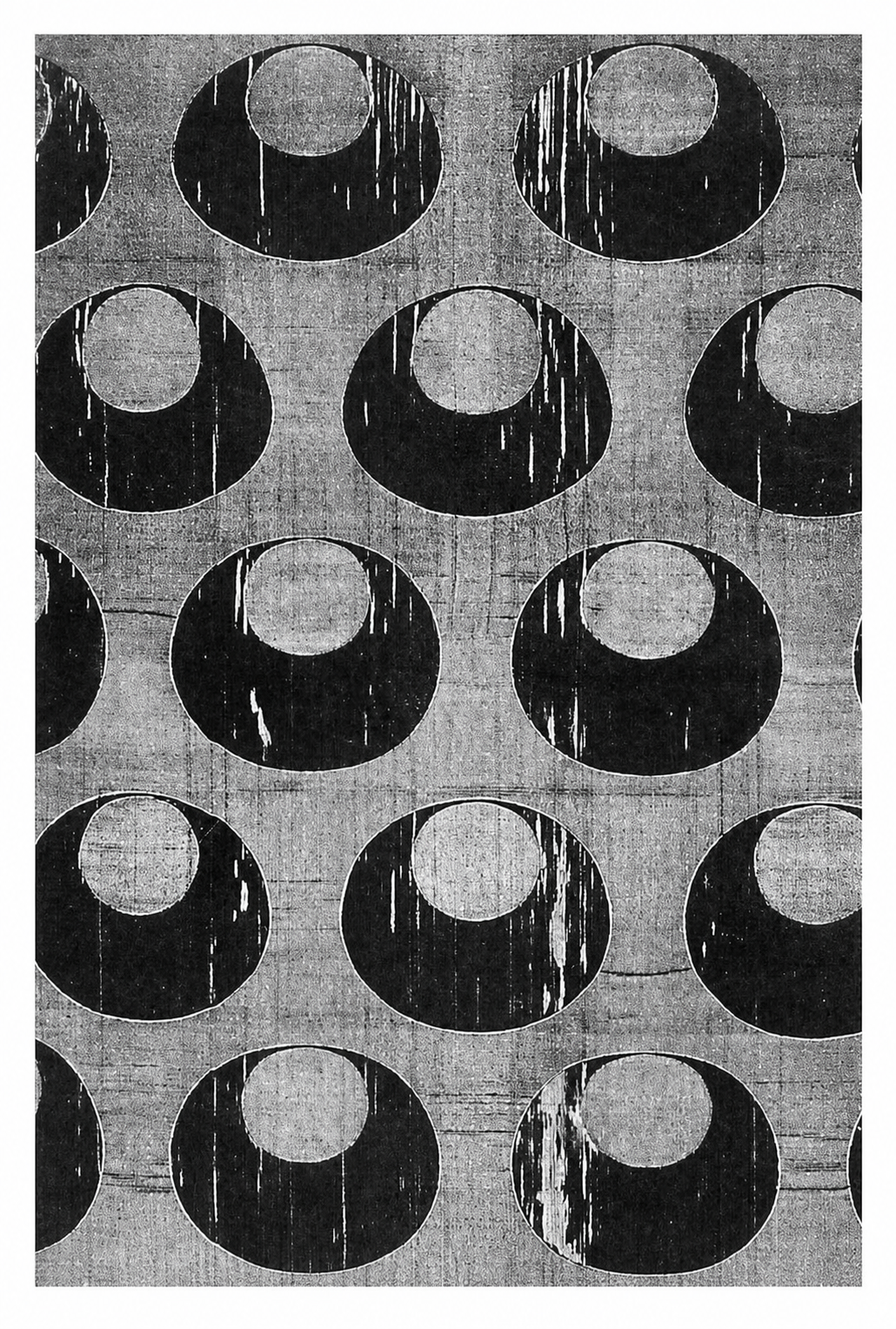
Ottoman velvet: here, the circles are used to magnificent effect, in a way which uses the good shape of the circle, to create powerful centers. This is at the opposite extreme, artistically, from the triviality of the Copenhagen Police Headquarters building.The circles, the portion of circle left in the larger circle, and the spaces between the circles are all calculated to be beautiful and powerful elementary shapes in their own right.
an example in the courtyard of the Copenhagen Police Headquarters building: a ridiculous plan, which is trivial because the space next to the circle is formless, and therefore meaningless. The high degree of sophistication needed to make a circle have good shape is seen in the fabulous Ottoman velvet on page 183, where the two systems of circles are drawn slightly distorted so that the moon shapes, the space between the circles, and the small circles and large circles all work as centers. The pattern is stunning in its power.
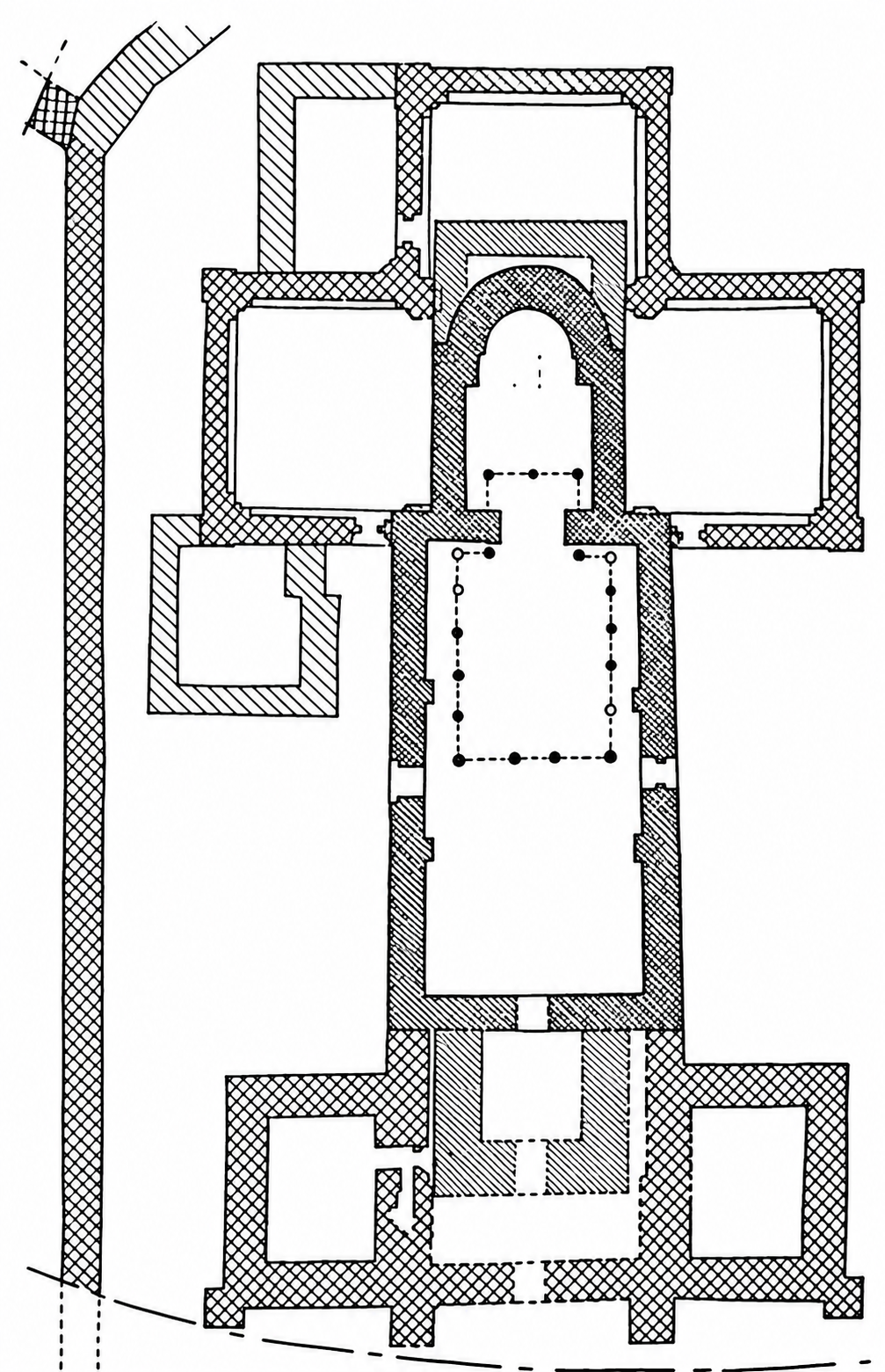
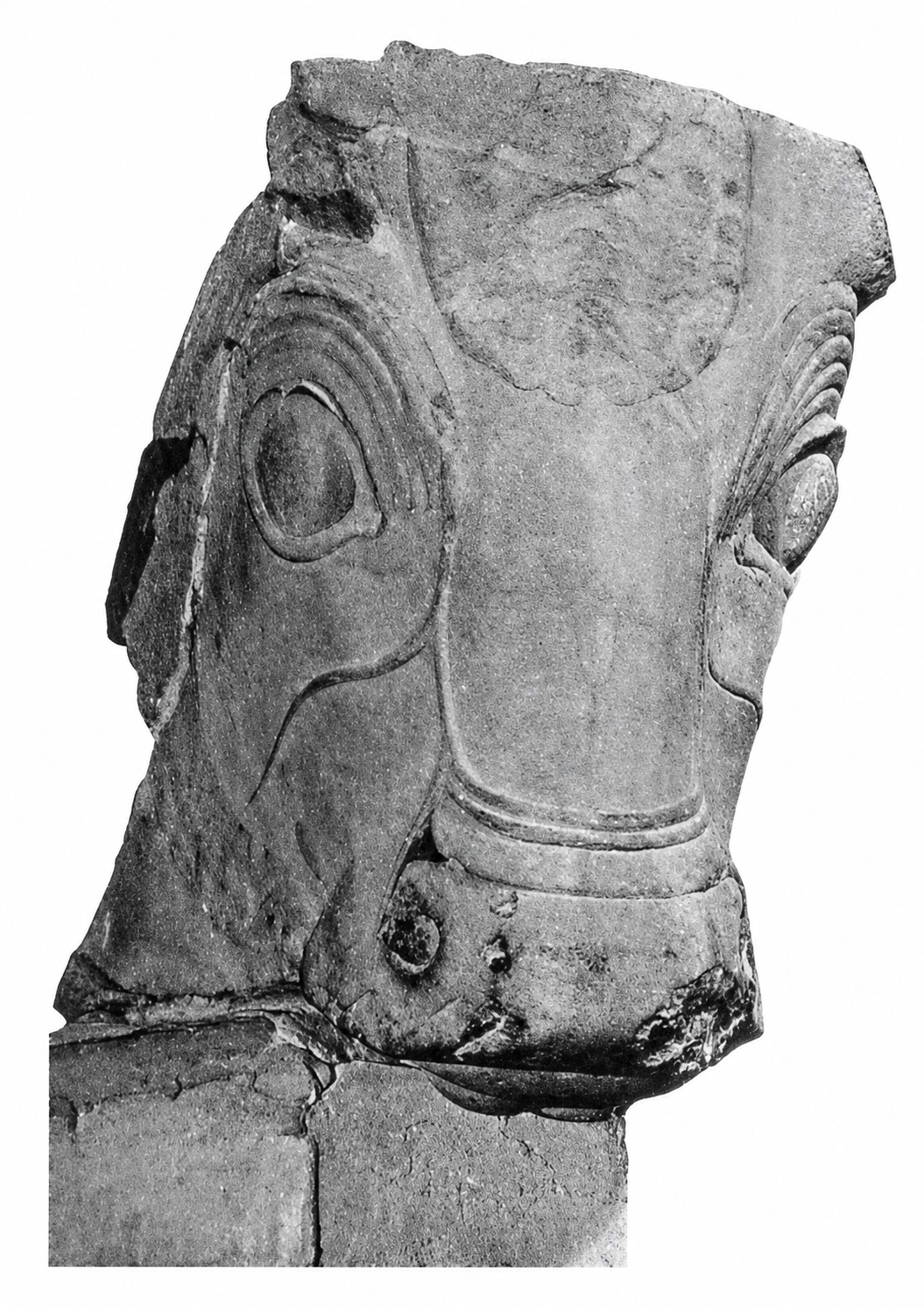
Above all, we must remember that the quality of good shape occurs only when the shape itself, as a whole, becomes powerful and extraordinary, when we have good shape by following the principles I have outlined. The ancient classical Greek horse's head, the early Christian church plan, the deeply hewn wooden members in the Romanian log house -- these all show good shape in this large, wonderful sense, to the extreme.
The horse especially, with its bulbous eyes, creates an unforgettable shape, hewn as if from three-dimensional living centers. And the early Christian church, almost at the opposite extreme, simple, quiet... and yet composed in the same way so that its simple elements together also make an unforgettable shape. How the apse and many squares together, forming locally symmetric pieces in the composition, create all in all something which is matter-of-fact, simple -- yet like somehow unforgettable, ancient an haunting melody.
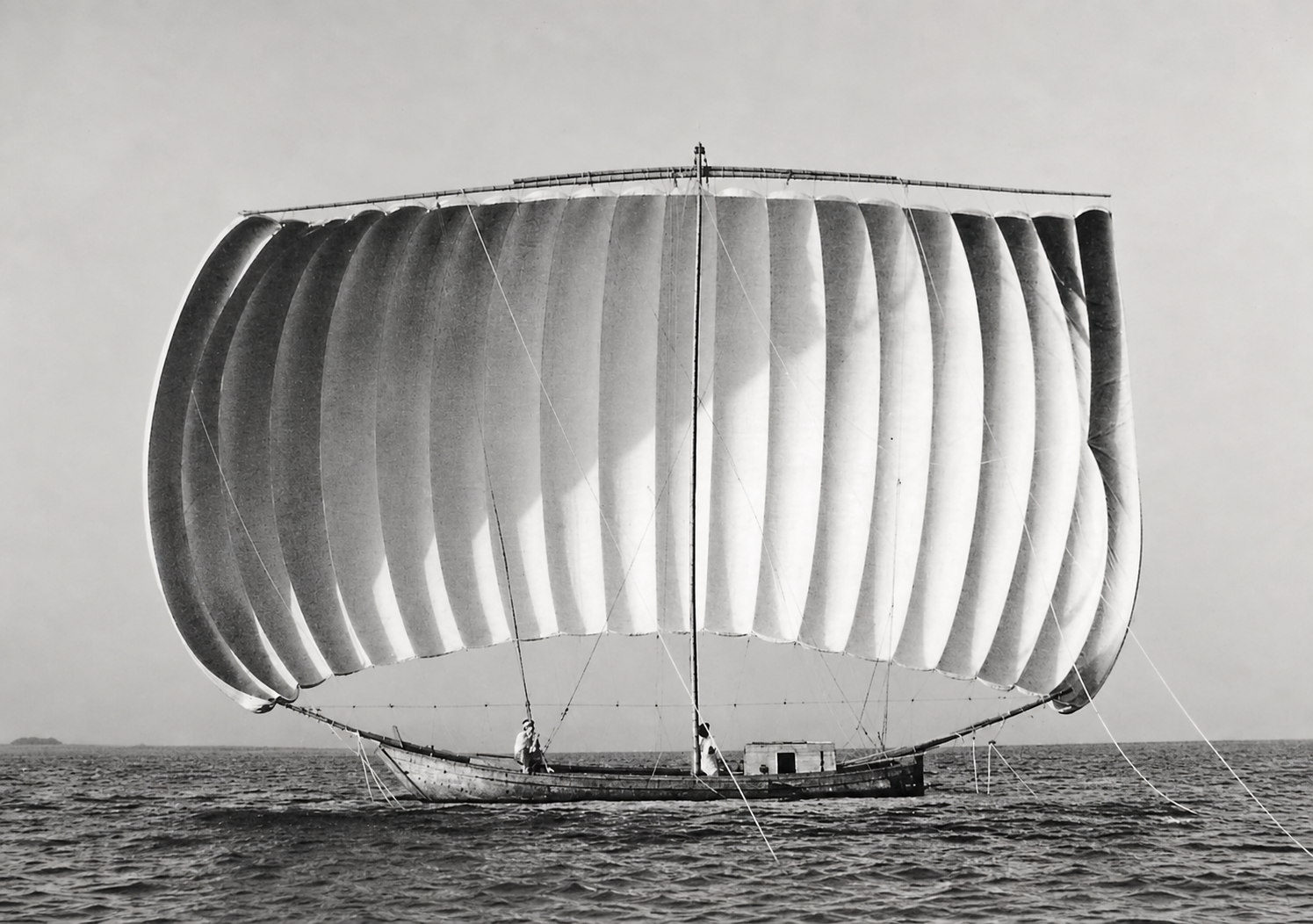
And, perhaps most beautiful of all, this lovely sail from an Egyptian boat has the quality of good shape to an extraordinary degree. We see it and feel it immediately, and we feel the intense and lovely character it has. But -- being analytical again -- we also see that this complex shape is made up of the furls in the sail, and every one of these -- modest, gently curving -- is a center in itself. By having good shape, the life of dozens of centers is created. The sail has life because its shape, as a shape, is made up of dozens of good centers.
Although it may seem surprising to someone raised in the mechanist-functionalist tradition, good shape in buildings, rooms, gardens, streets, plays a vital role in the way they work. Essentially, what happens is that the thing which works effectively has -- must have -- more centers in it and, by virtue of having more centers, has better shape. So the good shape is not only making things more beautiful; it also makes them work more profoundly, more effectively.
Functional Notes
Some of the practical arguments which show why good shape makes things work better. We have seen in the last section, things which are alive have good positive space in them. So in a well-working thing, all the space between the parts has to have good shape.
This special rule is really just part of a more general rule, which says that in a thing which is alive almost every visible part, at every level, has good shape, and is therefore a living center. In the leaf we see the shape itself as made up from centers. In a bridge with good shape, the members play an effective and efficient structural role. In a window with good shape, the arch, header, casements, and jambs all play their roles efficiently and well.
In an amorphous blob-like shape, on the other hand, we cannot really see any centers. Thus the shape is not made of centers in any obvious way, does not induce a field of centers in any clear way, and the beauty of function, the clarity and subtlety of the way it works, will be lessened.
The essence of "good shape," then, is that each part of space is positive and definite. Asa result we also tend to see simple good figures within a good shape, and good shapes tend to be made from simple figures. This is the basic rule.
Making a dovetail, we choose its shape in such a way that the pieces of wood on both sides are intense centers, in order to preserve the structural integrity of the members. The good shape that results always has a shape just right for structural strength. In a wall with openings, we choose the best shape for the openings, so that both the openings themselves, and the panels between openings, have simple structural integrity. In APL, PATH SHAPE (p. 589), BUILDING FRONTS (p. 593), COLUMN PLACE (p. 1064), and ROOF caps (p. 1084), all show examples. As for the actual space in rooms, several arguments are given in APL to show that the shape of rooms, spaces, and streets, in plan and in section, will always play a vital role in the way they work (£.G., THE SHAPE OF INDOOR SPACE, p. 883).
2.7 / Local Symmetries
We have seen that each strong center is a microcosm of the widespread wholeness which can occur in space. In many of the examples, it has been implicit that the presence of a strong center in the field depends, to a great degree, on various interlocking and overlapping LocAL syMMErrigs. This happens, most obviously, because the existence of a center and the existence of a local symmetry are closely related. Wherever there is a local symmetry, there tends to be a center. Where a living center forms, it is often necessary to have some local symmetry.
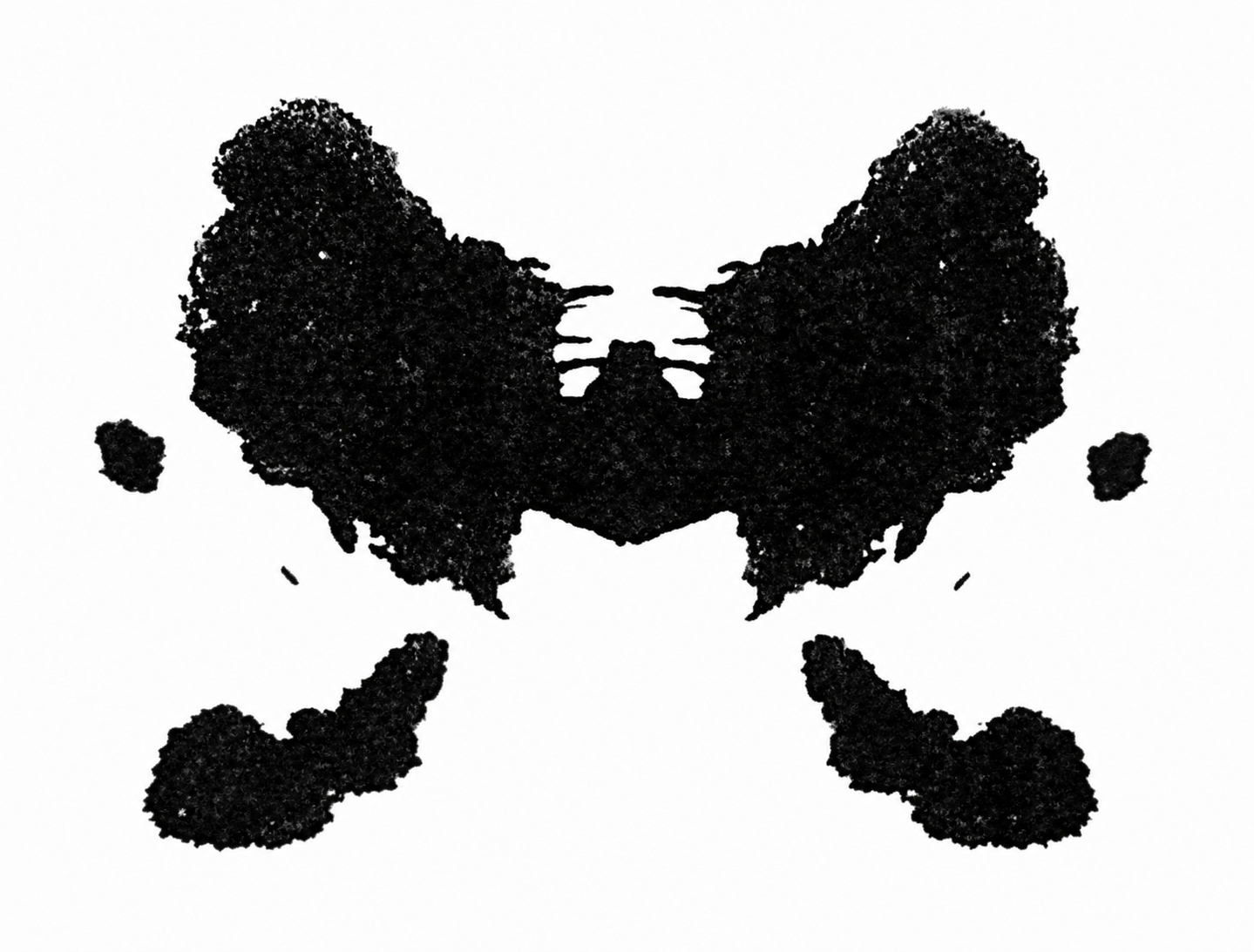
However, the exact relation between life and symmetry is muddy, Living things, though often symmetrical, rarely have perfect symmetry. Indeed, perfect symmetry is often a mark of death in things, rather than life. I believe the lack of clarity on the subject has arisen because of a failure to distinguish overall symmetry from local symmetries.
Observe, first, that overall symmetry in a system, by itself, is not a strong source of life or wholeness. This Rorschach ink-blot, for in-
A Rorschach blot: perfect overall bilateral symmetry, but no others. A rather weak center.
stance, is a rather weak whole; it has relatively little life as a structure; its centers are poorly developed. The one large symmetry it has, by itself gets you very little.
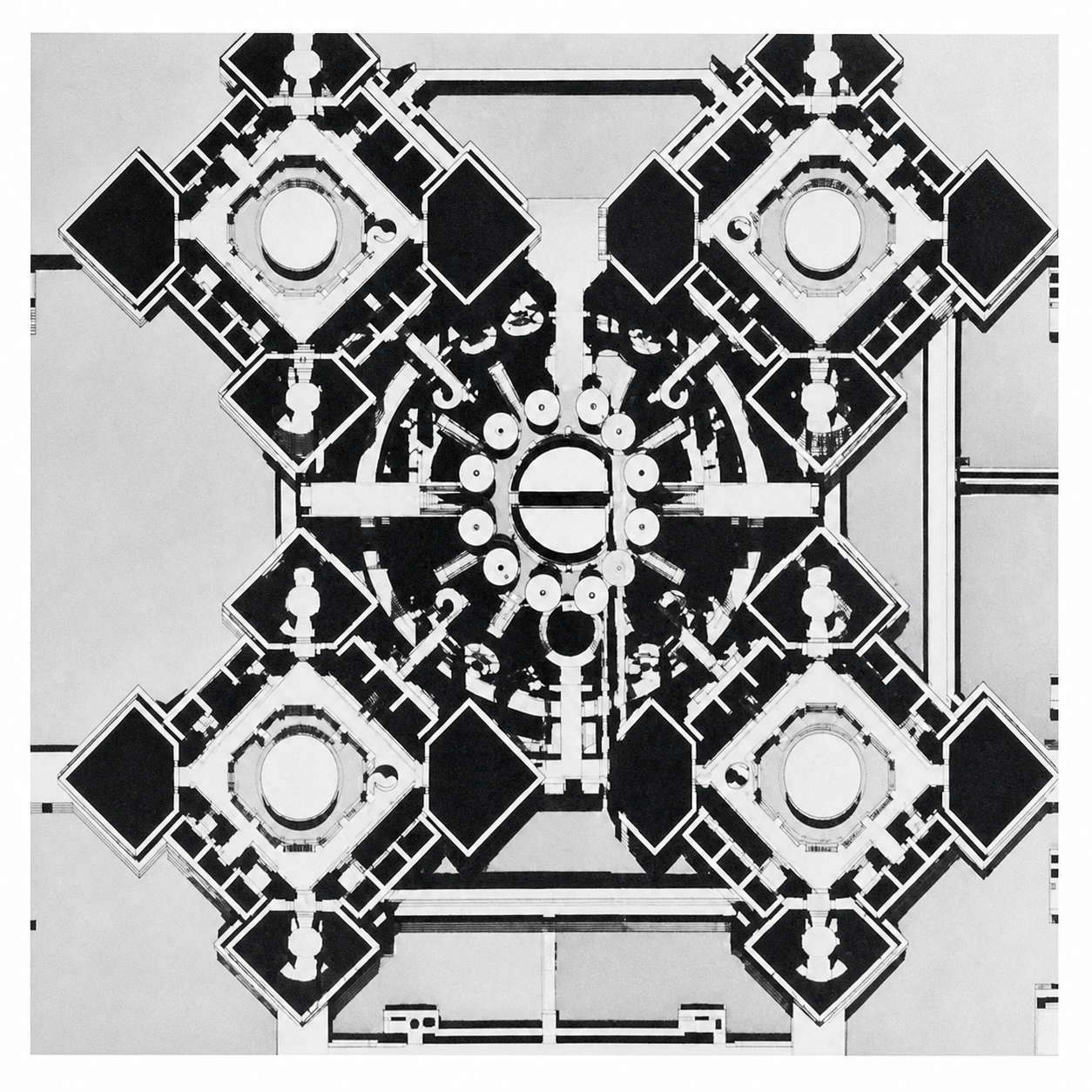
Observe further that over-simplified overall symmetry in buildings is most often naive and even brutal. The neoclassicist buildings of Mussolini's fascist era are often perfectly symmetrical but, like the ink-blot, have little life in them. Albert Speer's design for Zeppelinfeld, shown here, is another example. And the plan for the Renaissance Center, Detroit, shown opposite, and ac-
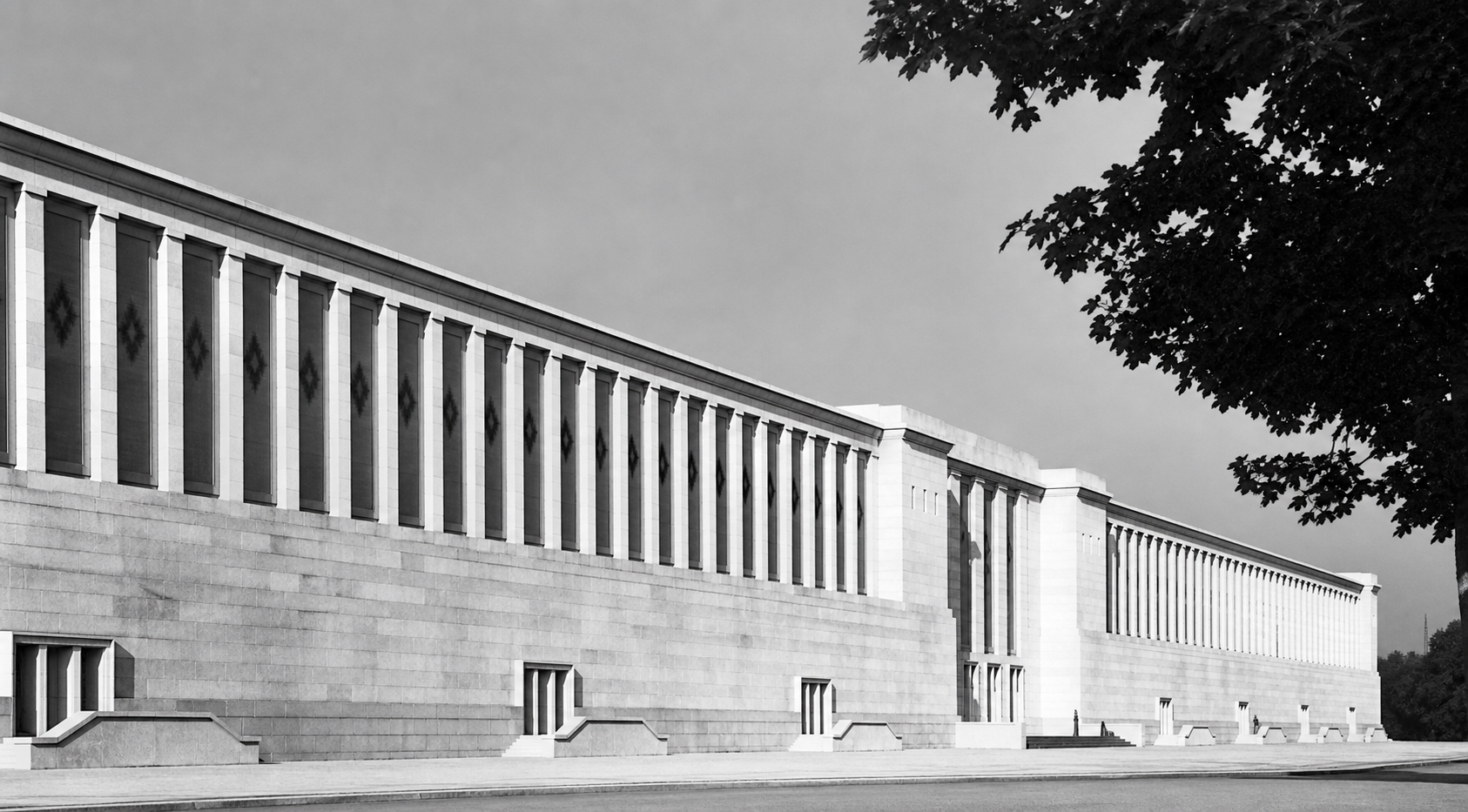
tually proposed by a real architect, has a similarly rigid and exaggerated symmetry. Obviously this place would not have had much life, if it had been built as drawn. There is powerful overall symmetry in the large composition and in the parts. But we do not experience subtle wholeness. Instead, we experience almost insane rigidity -- the very opposite of life.
In general, a large symmetry of the simplified neoclassicist type rarely contributes to the life of a thing, because in any complex whole in the world, there are nearly always complex, asymmetrical forces at work -- matters of location, and context, and function -- which require that symmetry be broken.
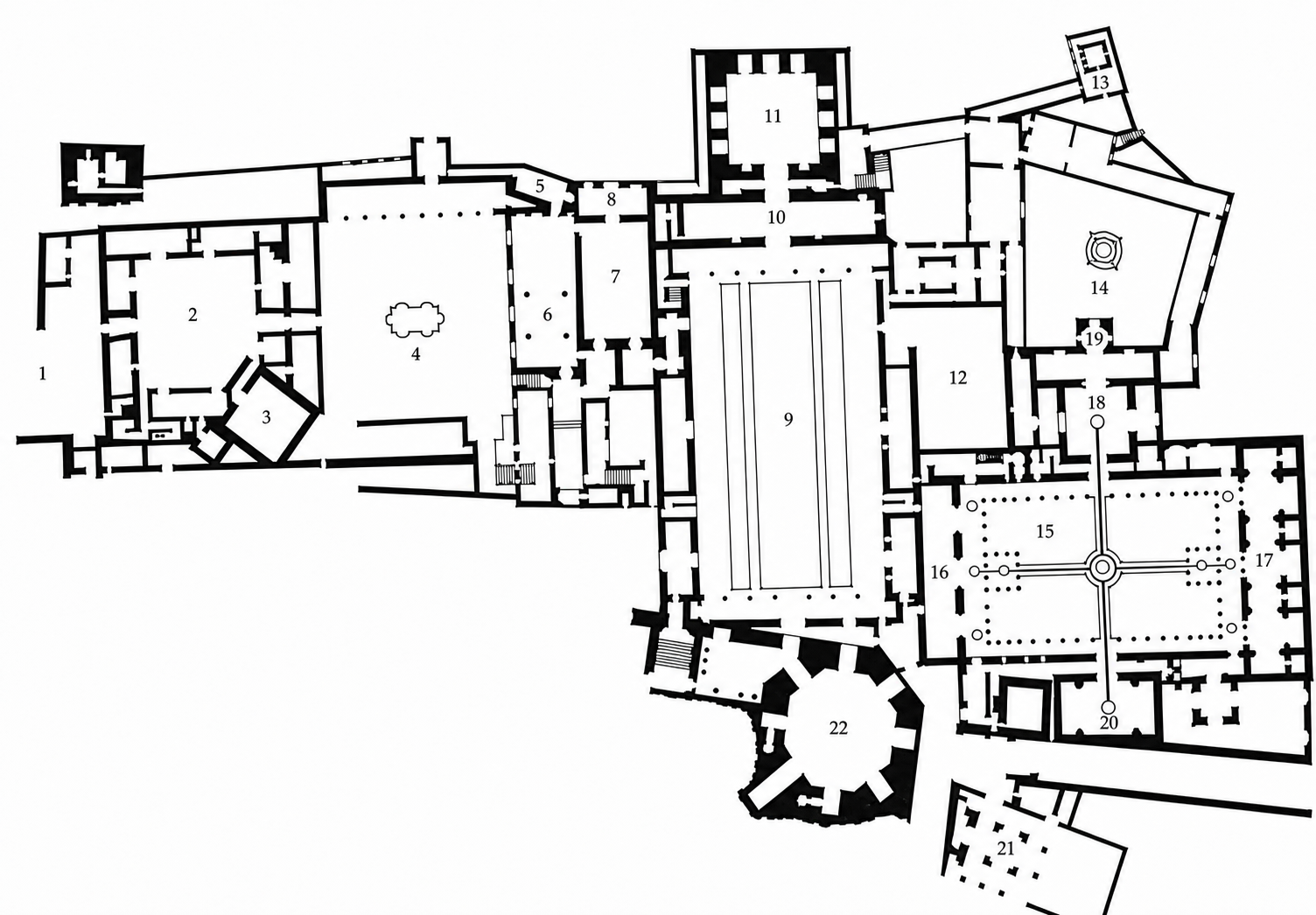
We see this clearly in the Alhambra, shown on this page and the next -- a marvel of living wholeness. It has no overall symmetry at all, but an amazing number of minor symmetries,which hold within limited pieces of the design, leaving the whole to be organic, flexible, adapted to the site.
To understand to what a deep extent the beauty of the Alhambra plan lies in the loose and subtle interweaving of local symmetries, we may compare it with the plan of the Detroit Renaissance Center I have referred to. In the Alhambra, we sense that each room, court, garden, hall, works in its own right -- because its local symmetry helps locally to make better space. In the Renaissance Center plan we feel
Rigid and exaggerated overall symmetry in an urban plan: the Renaissance Center, Detroit. Here the symmetries are crude and totalitarian. They arise from conceptually imposed order, not from natural adaptations within a whole.
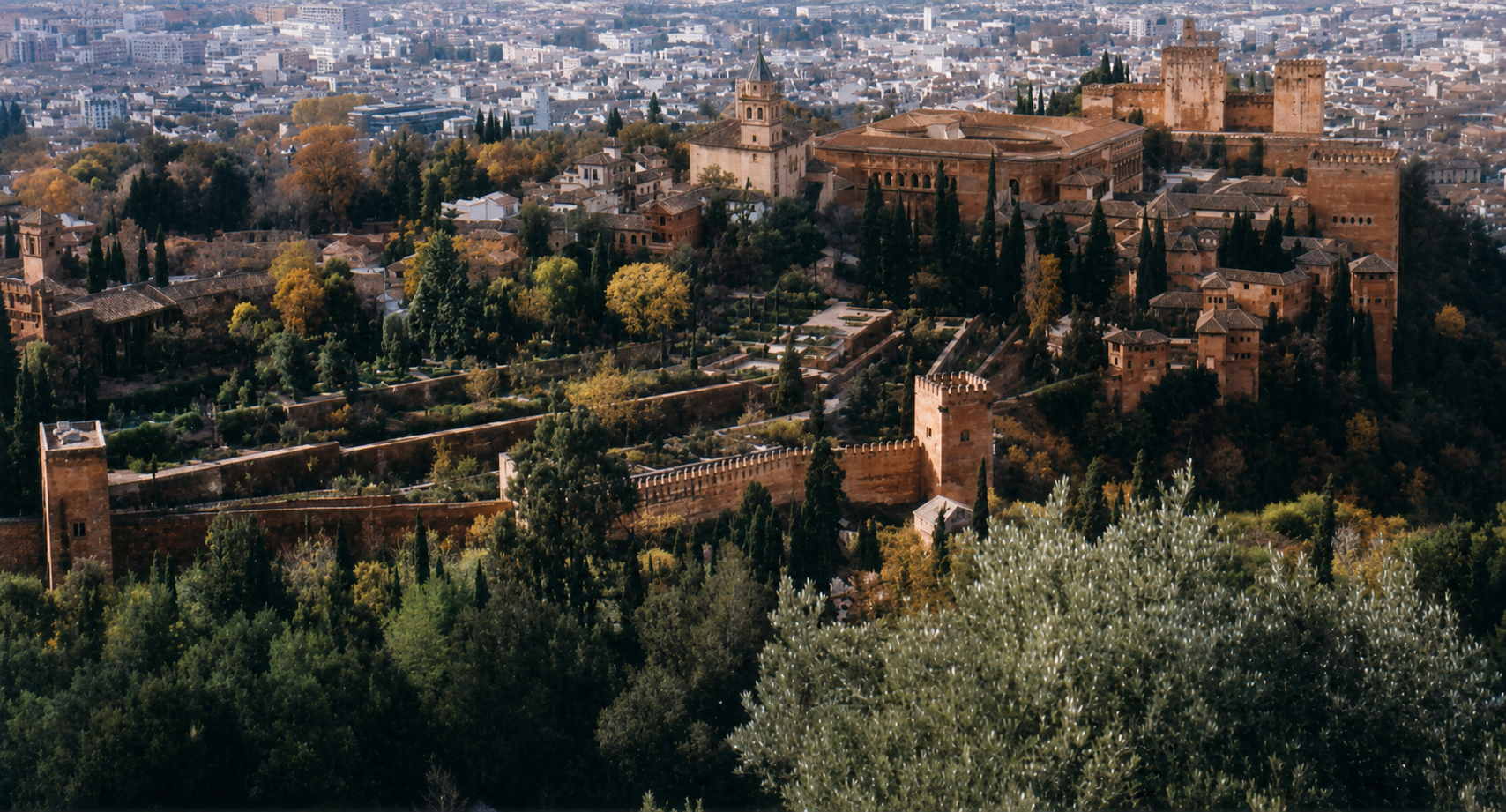
y asymmetrical in the large, but is covered with a multitude of local symmetries.
something quite different: the various aspects of symmetry that appear seem not to be governed by the local needs of each space, but are, rather, extensions of some huge symmetrical scheme which is irrelevant to the character of any particular room or garden, and instead merely reflects automatic and totalitarian reach of a larger scale order which is ultimately irrelevant to life as it arises locally. Thus the real binding force which symmetry contributes to the formation of life is not in the overall symmetry of a

The fact that /oca/ symmetries work to create coherence, while overall symmetry rarely does, was dramatically illustrated by an experiment I did many years ago while working at the Harvard Center for Cognitive Studies. In this experiment, I compared a number of black and white paper strips, and measured their coherence as felt, experienced, perceived, remembered, by different experimental subjects. The black and white strips I used are shown on page 189, in order of their coherence (as measured by my experiments).
I was able to show that the coherence ofa strip depends on the number of local symmetries which appear in its pattern (a local symmetry being defined as a shorter segment of black and white squares within the strip as a whole, which is itself locally symmetrical). Apparently, the perceived coherence of the different patterns depends entirely on the number of symmetrical segments which they contain. Since each of the segments, when symmetrical, is a "/oca/ symmetry," I summarized this experimental result, by saying that the most coherent patterns are the ones which contain the largest number of local symmetries.
In another series of experiments my colleagues and I very strongly established the vital role of local symmetries.' (In fact the experiments go rather deeper, and provide confirmation for the existence of the wholenes noverlapped structure of centers, as I have defined it in chapter 3. But above all, they focus on the key role which local symmetries play in the creation of wholeness.)
The experiments were performed with 35 black-and-white strips seen on a neutral gray background (this page). Each strip was 7 squares long, and was composed of 3 black squares and 4 white squares, arranged in different arrangements. There are 35 possible strips of this kind.
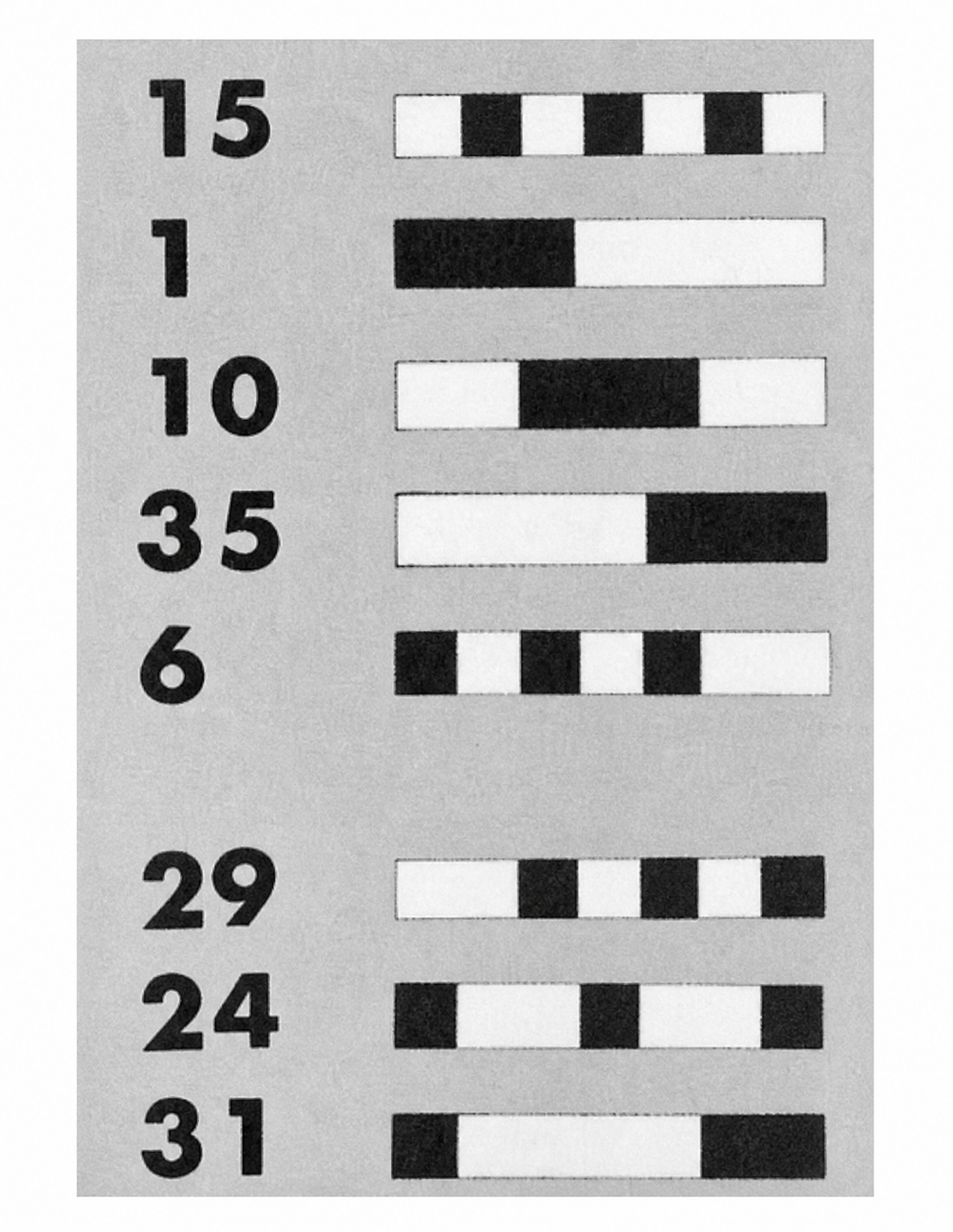
First, we established that the relative coherence of the different patterns -- operation ally defined as ease of perception -- was an objective quality that varied little from person to person. That is to say, the coherence is not an idiosyncratic subjective feature of the patterns seen differently by different people. It is an objective measure of cognitive processing, roughly the same for everyone.
Second, we were then able to identify the structural feature of these patterns which caused this perceived "coherence." It turned out that the perceived coherence depends, simply, on the number of local symmetries present in the pattern. However, since most of the symmetries are hidden, this feature is far from obvious, and is a deeply buried structure in the patterns.
We first devised various different experimental tasks which were designed to find out which of the patterns people saw as most orderly, most coherent, or most simple, or "as having the most structure." The experimental tasks varied. They ranged from simply asking people which patterns they found most orderly to ways of establishing which ones could be seen, and recognized, most quickly, at very high speeds; from ways of testing which ones could be most easily described in words to ways of testing which ones were objectively easiest to remember, under difficult memory conditions.
We found that, whether we used ease of description, ease of memorization, subjectively
31 5 = 20 fess 2] 21 = és
i | 30 =e 16 fi] 7. = on | 3 io = 23 = 18 sn 7 wa 19 ie
The 35 strips, in order of decreasing coherence, as measured by experiment
g local symmetries 9 local symmetries 7 local symmetries 9 local symmetries
7 local symmetries
7 local symmetries 7 local symmetries 8 local symmetries
7 local symmetries 8 local symmetries
6 local symmetries 6 local symmetries 6 local symmetries
7 local symmetries
6 local symmetries 6 local symmetries 6 local symmetries 6 local symmetries 6 local symmetries 6 local symmetries 6 local symmetries 6 local symmetries 6 local symmetries 6 local symmetries 5 local symmetries 6 local symmetries 5 local symmetries 6 local symmetries 6 local symmetries 6 local symmetries
6 local symmetries 5 local symmetries
5 local symmetries 5 local symmetries 5 local symmetries
The number of local symmetries in each of the strips judged "simplicity," or ease of recognition in a tachistoscope, the relative coherences as measured by these different experiments were very strongly correlated. It was therefore possible to combine the rank orders in the different experiments to create an overall rank order of perceived cognitive coherence for the 35 strips.
From this first series of experiments, two important results emerged. First, in any one experiment, the relative degree of coherence seen in different patterns was rather constant from person to person. This means that the coherence is not a subjective thing seen differently by different people. People agree about it. Second, the relative coherence of the different patterns, as measured by the different experiments -- even though these experiments were based on widely different kinds of cognitive processing -- remained roughly the same.
Taken together, these two results indicated that the relative coherence of the patterns is an objective matter of cognitive processing, independent of the person who is judging, and independent of the particular kind of experimental judgment which is used to measure it. It is therefore possible to construct a single overall order of coherence for the 35 patterns. The photograph on page 189 shows the strips in order of perceived coherence, the most coherent at the top, the least coherent at the bottom.
For three or four years after completing this experiment, I worked almost continuously to find some structural feature of the 35 black and white patterns which would explain the rank order of coherence of the different patterns. What do the more coherent ones have in common? What do the less coherent ones have in common? To solve this problem, I would try some measure of orderliness, then calculate this measure for the 35 different patterns, and then see if the rank order which this measure generated was the same as the one we had obtained earlier, experimentally.
It it was an extremely difficult thing to do. The crux of the problem lay in the fact that, among the 35 strips, the "good" ones are of very different types. One, for instance, is completely symmetrical, and has the black and white squares alternating. Another is completely asymmetrical, and has all the black squares together in a lump, and all the white ones together in a lump. Others have both lumpiness and overall symmetry. Others have neither.
Since lumpiness and symmetry were two of the main explanations for cognitive simplicity in common currency around 1960, it was hard to get beyond these features. I tried various combinations of the two, but always concentrated on lumpiness and on overall symmetry in some combination.
It took me three or four years to find the right answer. The reason is that local symmetries (as opposed to overall symmetry) were not under discussion at all in the literature. Further, the local symmetries are nearly invisible in the pattern -- they do not jump out at you, but are lost, rather as children's tiger-in-the-trees pictures confuse the eye and make you lose the tiger.
Further, it was quite unclear how to unite the idea of symmetry with the idea of large lumps. It was this that finally gave me the key, when I realized that both overall symmetries and large lumps actually contain more local symmetries inside them. For instance, a lump of white that is four squares long is symmetrical, overall. But it also contains three symmetrical segments that are two squares long and two that are three squares long, making -- with the four-square long lump itself -- a total of six local symmetries. Five of them are hidden. But, even though hidden, the local symmetries are capable of being counted and measured to show both the presence of overall symmetry, and the presence of large lumps. Two other examples are shown on the opposite page.
So, after four years of work, and hundreds of tries, I found a very simple measure which correlated very strongly (in fact almost perfectly) with the ranked coherence of the different patterns.
This measure is the number of local symmetries which the pattern contains. To count the local symmetries in one of these strips, I considered the strip as made of seven adjacent squares. There
FIFTEEN are, within a strip, twenty-one connected segments made of two, three, four, five, six, or seven adjacent squares (just one segment that is seven squares long, two segments that are six squares long, three that are five squares long, four that are four squares long, five that are three squares long, and six that are two squares long -- twenty-one connected segments in all). In any particular strip, with a particular pattern of 3 black and 4 white squares, we can examine each of these twenty-one segments, one by one, and ask if it is symmetrical or not within itself. I called each symmetrical segment a subsymmetry of the pattern. Among the 35 strips made of 3 black and 4 white squares, the strip with the highest number of internal symmetries has nine subsymmetries among its twenty-one segments. The strip with the lowest number has five subsymmetries.
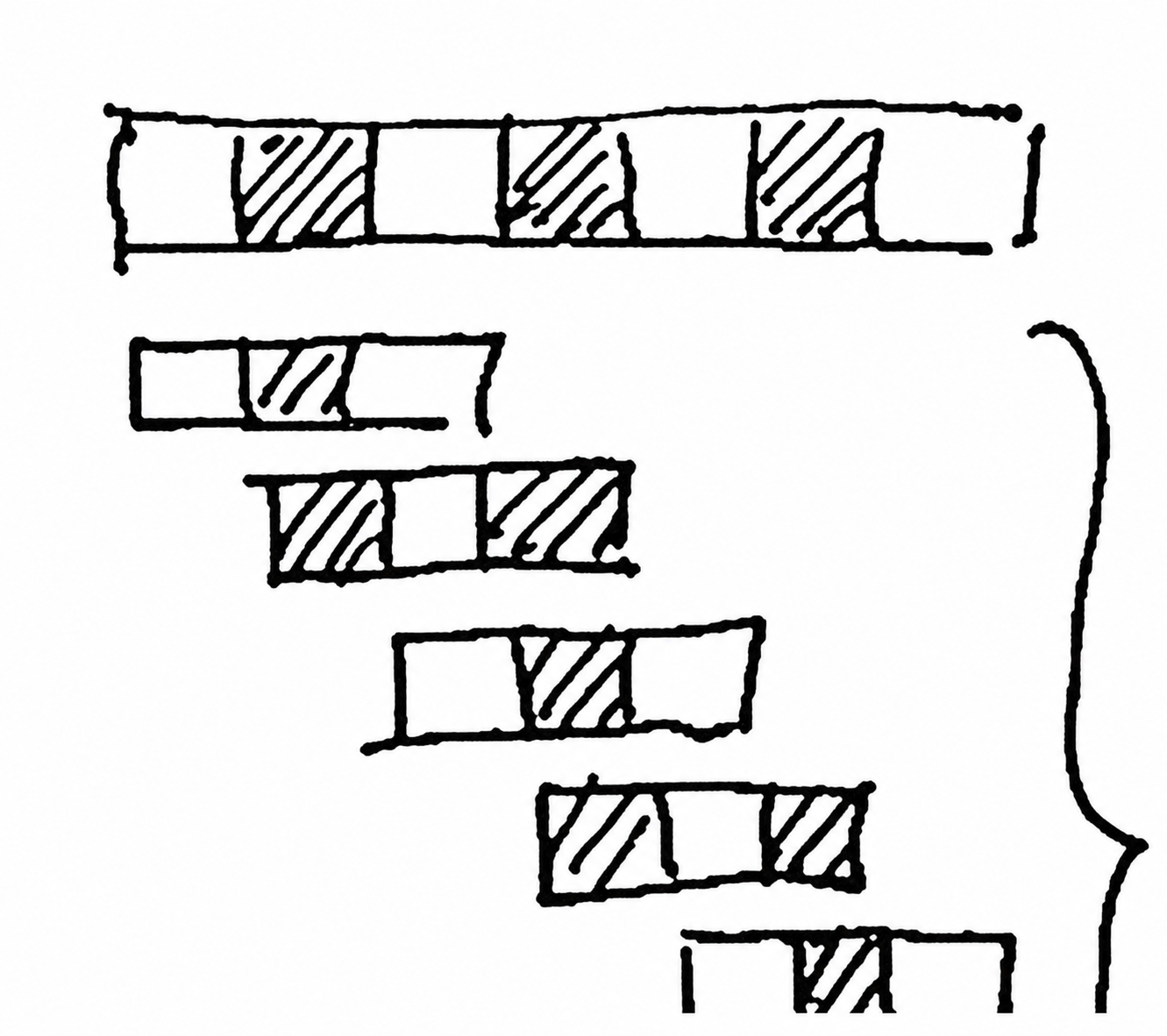
I have displayed the number of subsymmetries that are in each strip opposite the picture of the strip, in the photograph on page 189. The 35 strips are arranged in the overall combined order of perceptual coherence. To the right of the photo is the number of subsymmetries the strip contains.
As we see, the strips which are most coherent experimentally also have the highest numbers of subsymmetries to within a high degree of correlation. Those strips which are least coherent experimentally have the lowest number of subsymmetries. The number of local symmetries the pattern contains essentially predicts how "good" it is.
The measure is subtle and refined. Even in the most coherent patterns only 9 of the 21 segments are symmetrical. And in the least coherent patterns 5 of the 21 segments are symmetrical; so the number of subsymmetries varies only modestly from pattern to pattern. Nevertheless, the way it varies mirrors, almost perfectly, the actual cognitive coherence as measured by experiment.
It is important that I stress once again that this result has little or nothing to do with the overall symmetry of the design. At the time I analyzed the original experimental data and first discovered the relation between local symmetries
CT] 8 lat Taz Squmivn OITA TAI aC ALIA ZZ) > Lach
(Ozv7a7a]
Two of the patterns, shown with their local symmetries. The upper pattern has 9 local symmetries and appears high on the order of coherence; the lower pattern has 6 local symmetries, and appears low on the order of coherence.
and perceived coherence, I also tested another criterion, in which the symmetrical segments are weighted by their length. In this second criterion, the longer a symmetrical segment is, the more points I gave it, and the strips with large overall symmetries thus got extra points in this measure. I found out that this second criterion correlates less well with the experimentally measured coherence. Apparently large symmetries do little to contribute extra coherence to a pattern: what matters more is the number of smaller -- i.e., local -- symmetries.
Why does the presence of many local symmetries in the design make it coherent and memorable? It is as if the symmetrical segments act as a kind of glue -- the glue which holds the space together. The more glue there is, the more the space is one, solid, unified, coherent. And notice one more detail: for the glue to be effective, it seems that many of the symmetrical segments must overlap. They are by no means discrete or disjoint. One symmetrical segment overlaps another -- and it is not only the number of symmetrical segments, but also their continuous overlapping which makes the glue that makes the design "whole."
These experiments played a very big role in my own effort to find a theory of wholeness, since it strongly confirmed my growing suspicion that the wholeness in the world is in some fashion a structure of overlapping wholes. Note that the subsymmetries are not distinct, but overlap within any one pattern. It is this overlapping structure of perceived entities, in this case defined by their local symmetry, that forms the salient wholeness which is perceived and felt. In later years the entities (seen in the experiments only as local symmetries) were extended to be wholes, and later centers, to provide the underpinning of the theory in its entirety. What is essential is that the local symmetries in these patterns play a decisive and quite unexpected role. Though hidden from view, they essentially control the way the pattern is seen and the way it works.
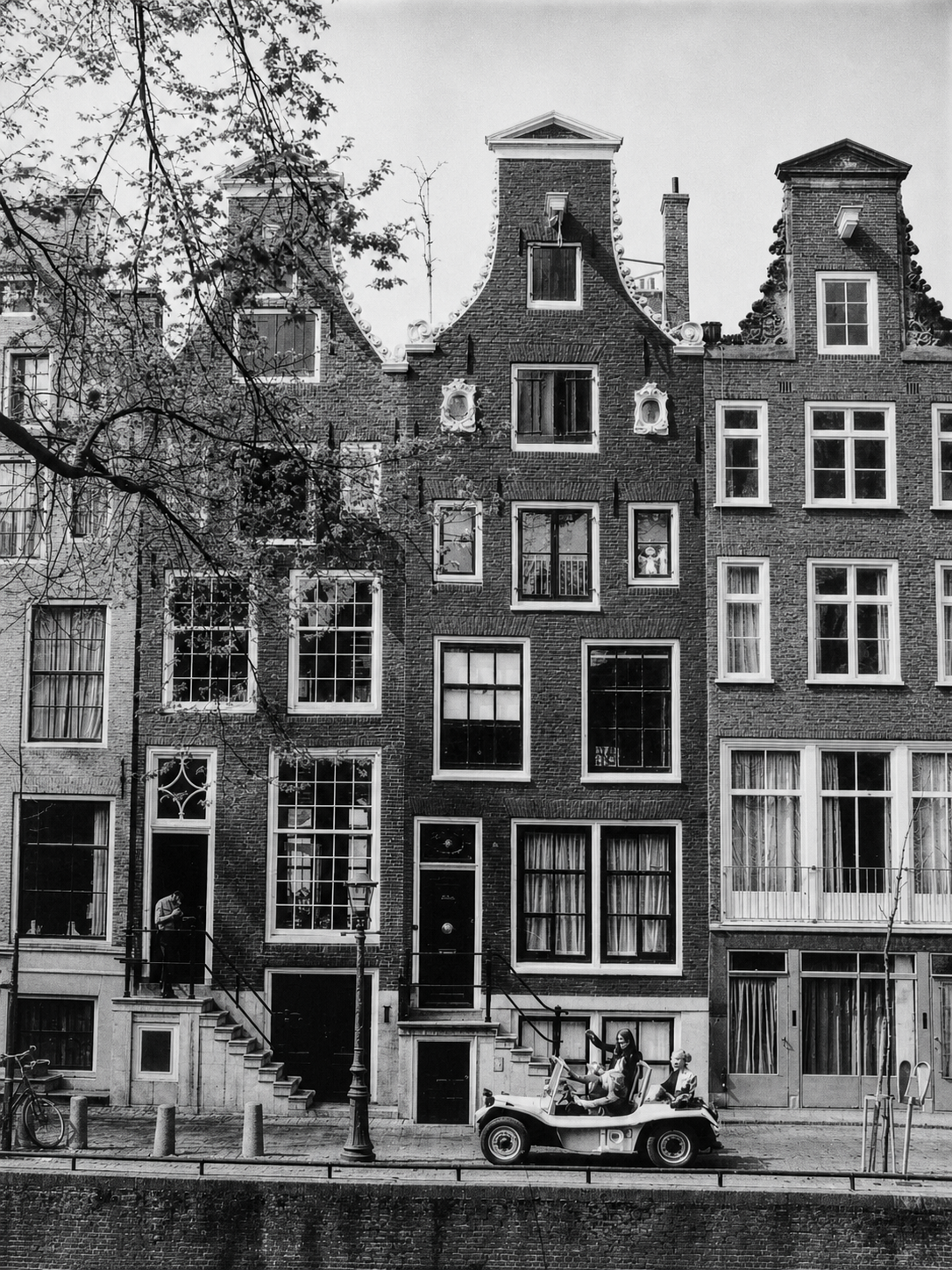
<gnam
quam pe
fa100 uobdi
-- +

Detail of a page from the Book of Kells. Although the swirls and grotesques are curvilinear, when we look closely at them we see that they are filled with overlapping local symmetries, and this is, in large part, the source of their beauty.
Look again at the plan of Alhambra. It illustrates the point magnificently. The Alhambra's plan, overall, is wildly asymmetrical, it has nothing in common with the excesses of neoclassicism -- it is free, free as a bird. Yet in its detail, it is simply fi// of symmetries at many levels. There are courtyards which are internally symmetrical, rooms which are symmetrical, pieces of wall, windows, columns, which are symmetrical -- the plan is a maze of intricate and subtle smaller symmetries, symmetries of segments or subsymmetries, yet none of this ever creates that dead and lifeless overall neoclassicist symmetry of which we should rightly be afraid.
On a smaller scale we see the very same thing in a row of Amsterdam canal houses. The row of houses as a whole is not symmetrical. Nor is any one house, taken by itself, perfectly symmetrical, neither in its plan, nor in its front facade. Yet both in plan and in elevation, each house, and the row of houses as a whole, contains vast numbers of powerfully symmetrical elements put together, so that the feeling of symmetry and order pervades the structure. It is the Jocal symmetries which cause its beautiful order.
What is the relation between symmetries and centers? How do symmetries allow centers to intensify each other? In many cases, a symme-
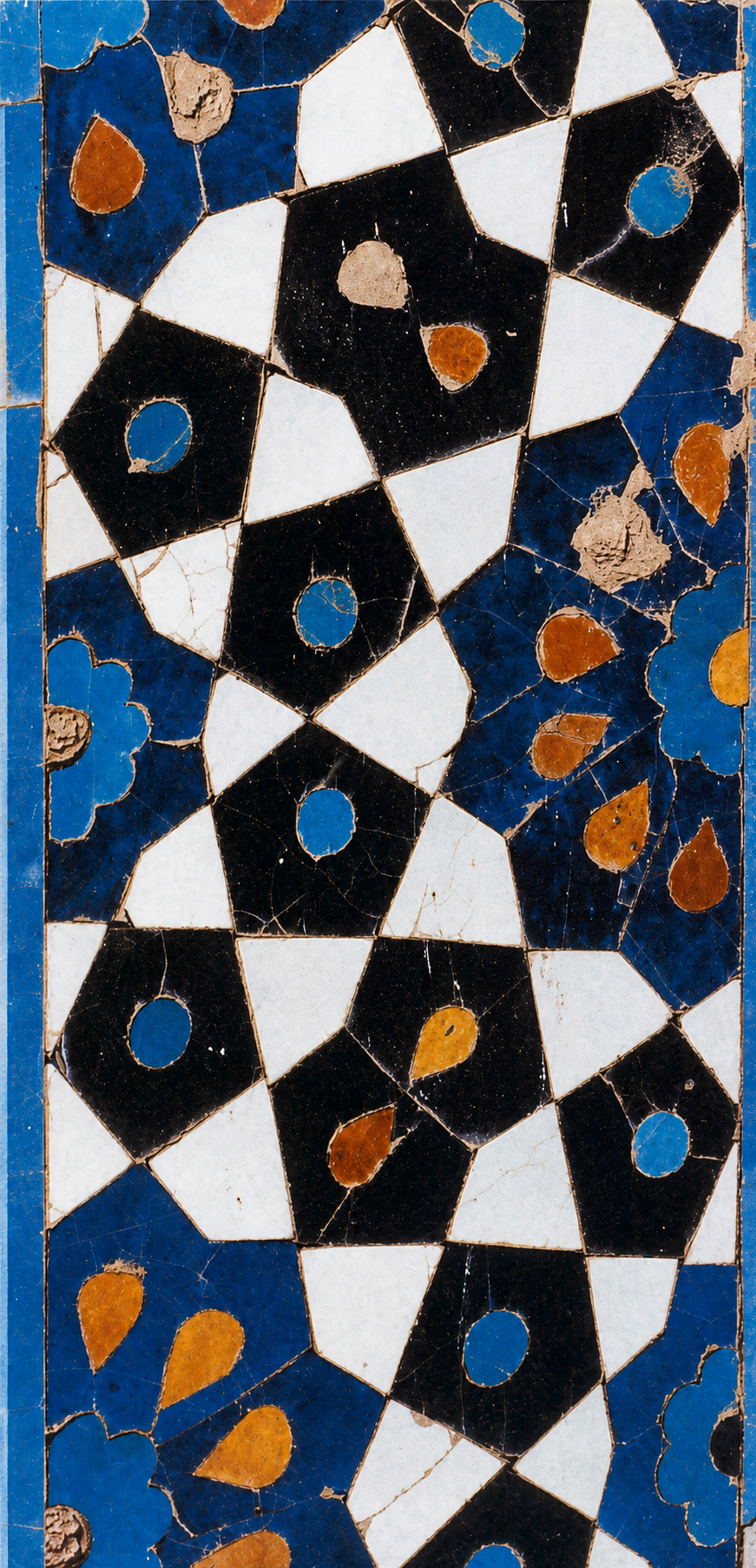
Tile-work from the mosque in Gazur-Gah try is used to establish an elementary center. Indeed, an overwhelming majority of centers are locally symmetrical. Each local symmetry establishes a symmetry between two smaller centers to create a larger center. Indeed, one might almost say, "When in doubt, make it symmetrical." Most centers become stronger when symmetrical, except, of course, that symmetries must not be used to smooth out real asymmetries in external conditions, and must always be true to the local conditions.
However, provided that the irregularity of the local context is not violated, local symmetries provide a glue which binds the field of centers, thus making centers more coherent. We see this in the primitive and beautiful pattern of the 9thcentury illustration from the Book of Kells, where an apparently irregular field is disciplined by the powerful presence of many symmetries and symmetrical structures -- yet the whole thing is strongly asymmetrical, bent by its own laws, formed by the process of growth in the draftsman's hands.
If we want to create or intensify a center, we can always most easily do it by making a local symmetry between other centers. And, in practice, the easiest way to make a complex thing is often to make it up out of regularly shaped pieces, and then patch in any irregularities. This method of composition is illustrated by the incredible Persian tilework on the left, where very simple symmetries are chained together in this wild and powerful composition, replete with new centers which the symmetries have formed.
Functional Notes
Among functional examples, a rough fence on a rough terrain is most easily made from pieces of wood that are square and vertical, patched with connectors to make up for the unevenness of the terrain. The same thing is true with built-in furniture, where we often build regular symmetrical cabinets, and then cover the irregularities where the cabinet is fit to the room (which is usually not perfectly square) with trim.
On a more significant level, the same is true in very much larger environmental issues. For example, in APL, LACE OF COUNTRY STREETS (p. 29) relies on the symmetry of roads, and squares of countryside between the roads, to provide its regular structure. CIRCULATION REALMS (p. 480) uses symmetrical centers as the core centers for circulation to provide clarity of movement in a complex urban space. Streets, obviously, are made symmetrical, with departures from the symmetry as needed by unusual junctions, buildings, gardens, or terrain (PROMENADE, p. 168, ROW HOUSES, p. 204.) And rooms, too, should most often be symmetrical, to start with, with minor modifications then patched in, to correct for odd situations (THE SHAPE OF INDOOR SPACE, p. 883).
2.8 / Deep Interlock and Ambiguity
Ina surprisingly large number of cases, living structures contain some form of interlock: situations where centers are "hooked" into their surroundings. This has the effect of making it difficult to disentangle the center from its surroundings. It becomes more deeply unified with the world and with other centers near it.
The hooking effect is sometimes done literally, as in the giant star ornament from the tilework of the Tabriz Mosque (page 198). At other times, a similar unification is accomplished through the creation of spatial ambiguity, an ambiguous zone which belongs both to the center and to its surroundings, again making it
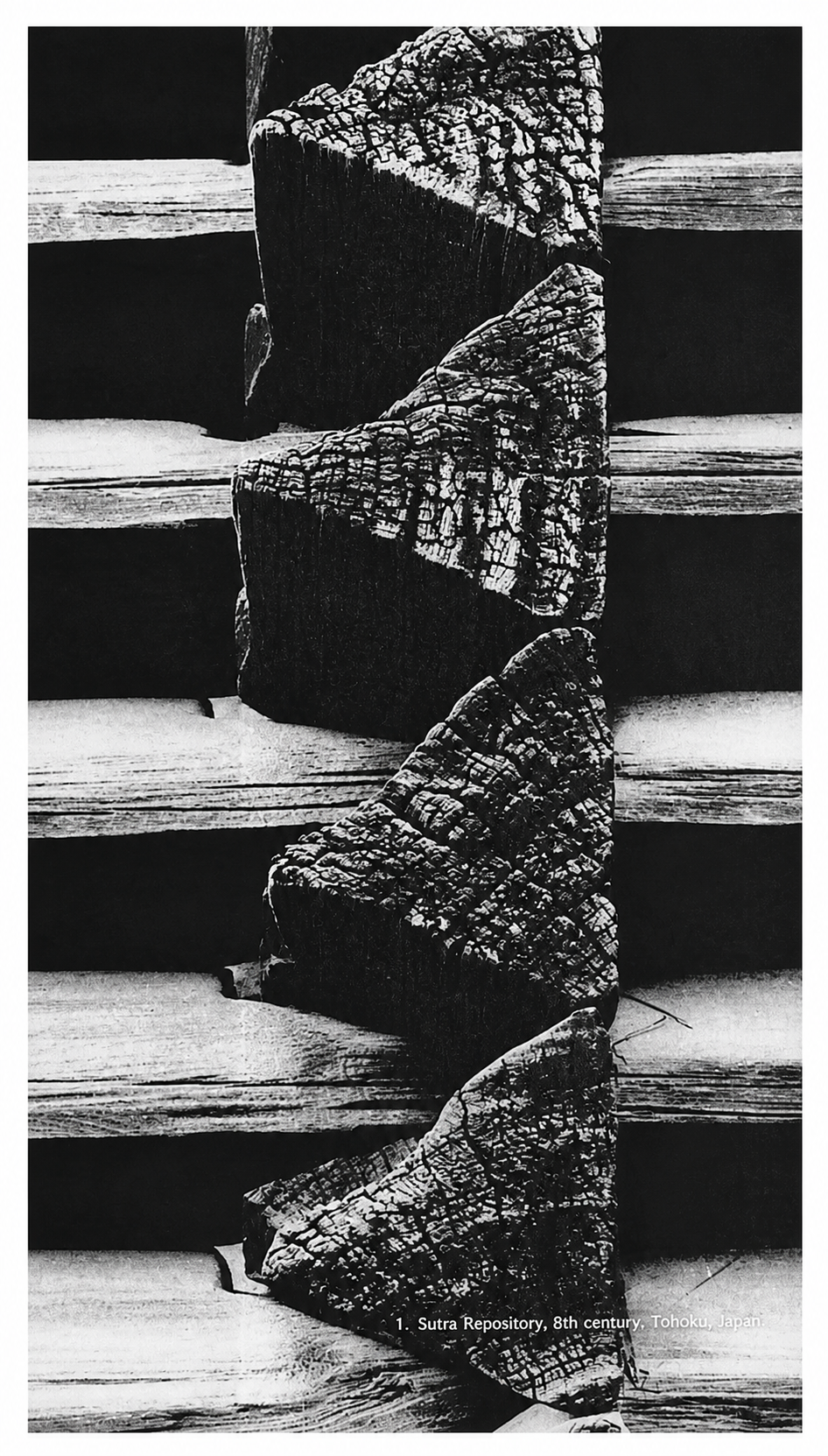
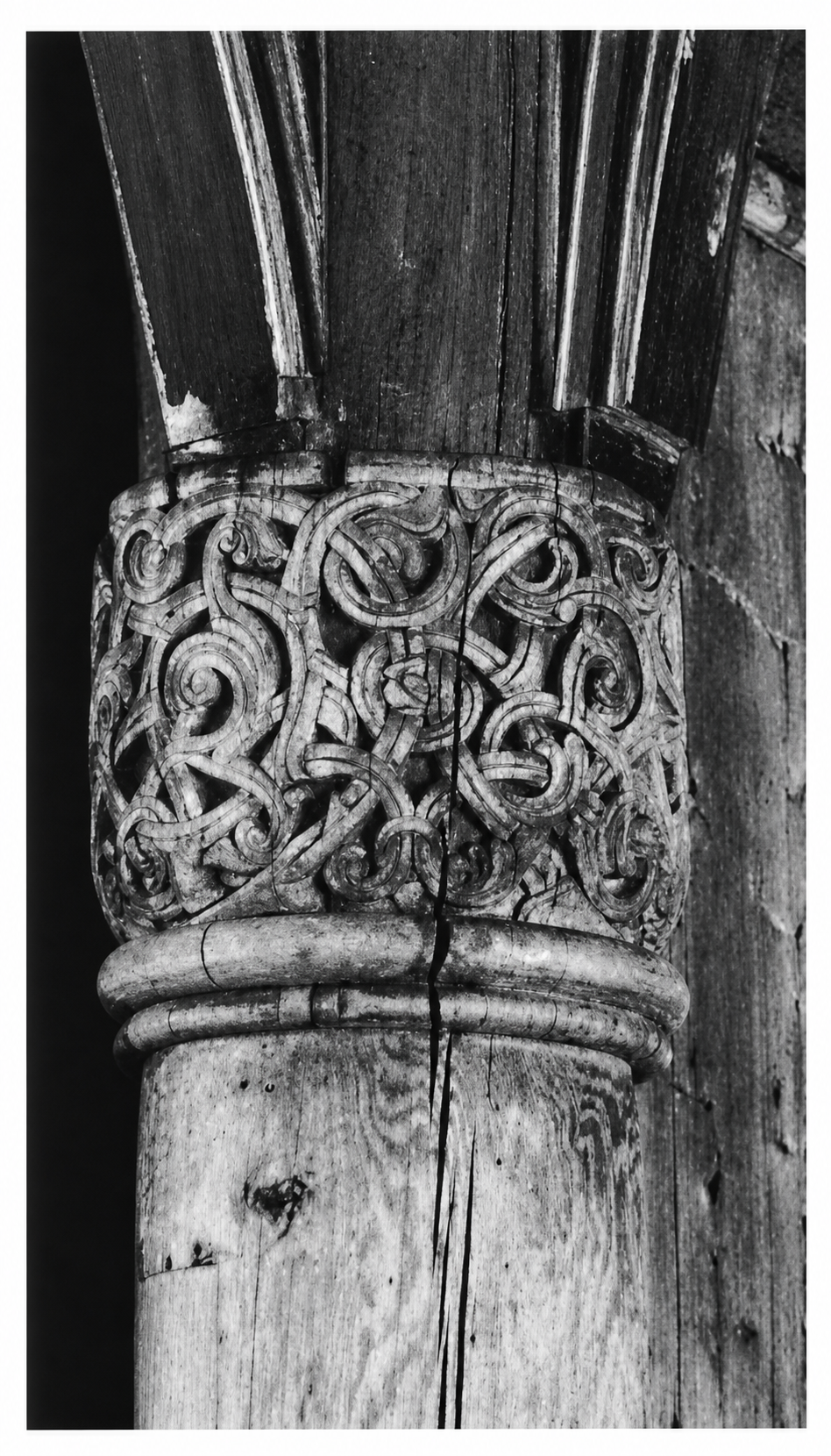
Interlock as the source of practical cohesion in a log cabin difficult to disentangle the two. A common example of this situation in building is the house with a gallery or arcade round it (photograph on next page). In both cases, a center is enmeshed with its surroundings, and therefore achieves more life. I think of the relation between the center and its surroundings, in both cases, as DEEP INTERLOCK AND AMBIGUITY. The center and its surroundings interpenetrate each other, using intermediate centers which belong to both of two adjacent larger centers.
As in the photographs below, the different elements in a work seem to reach out and grip each other. In buildings, the space outside the building
Interlock in the carving of a wooden capital
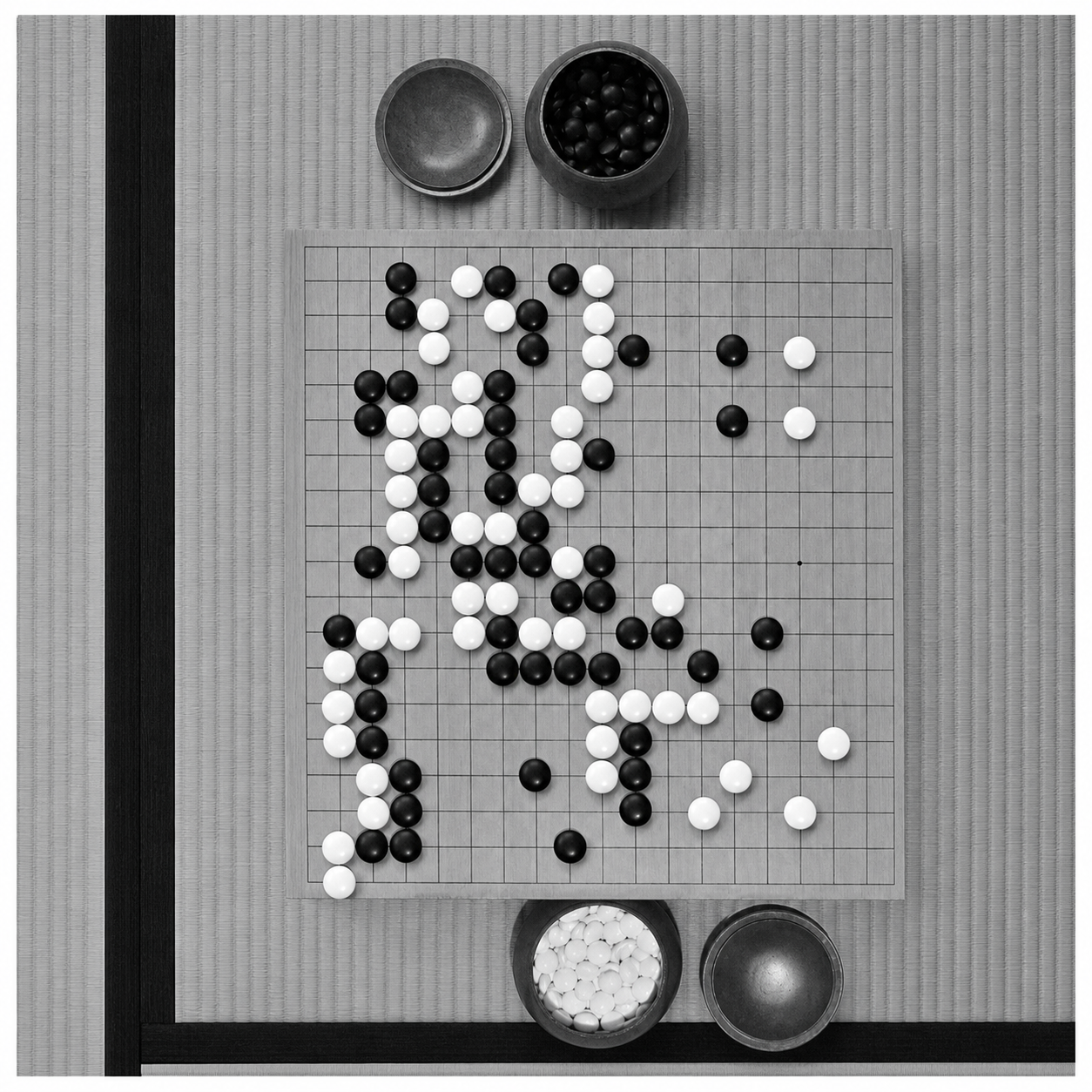
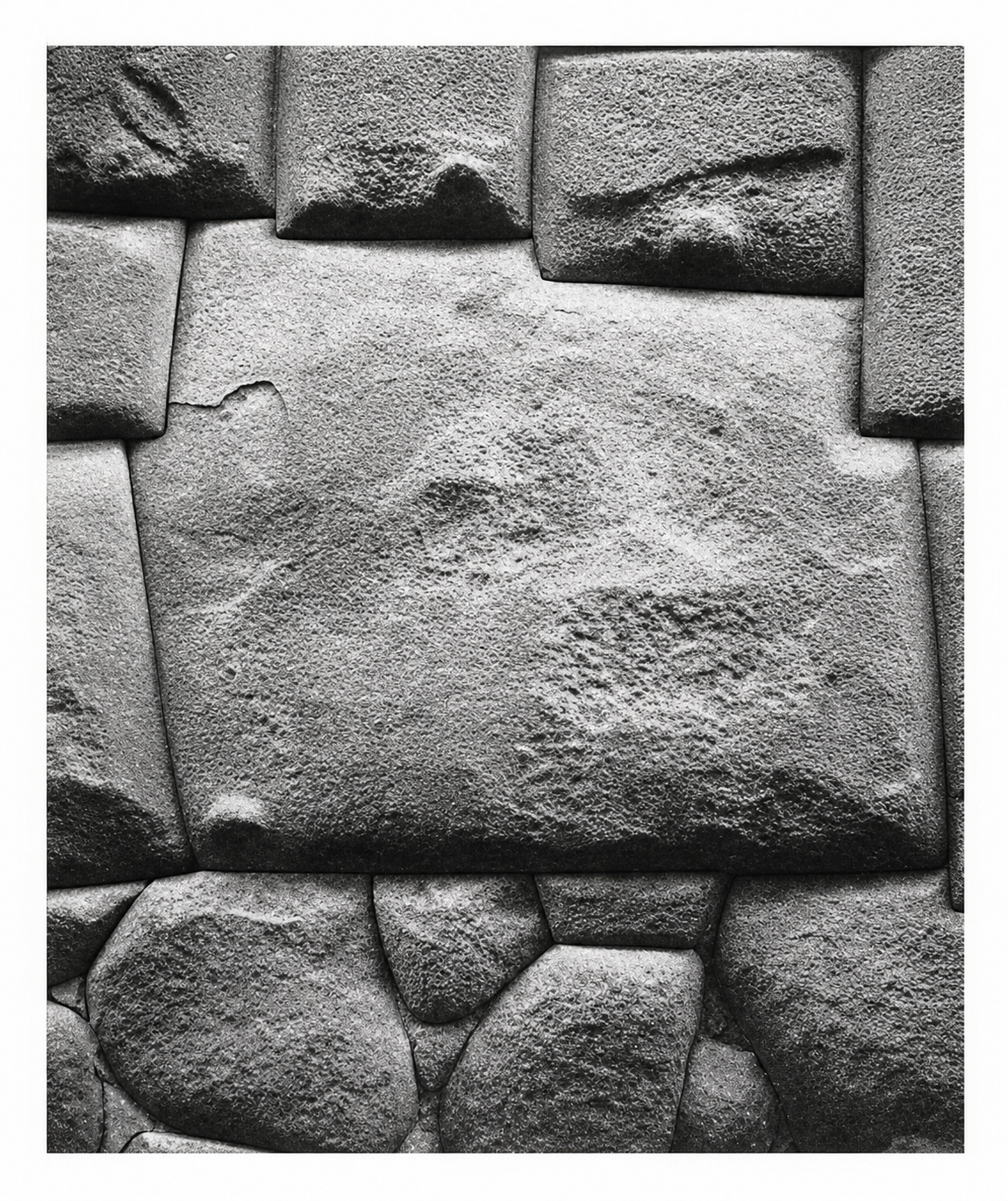
A game of Go, organized by the interlock of black and white stones on the board
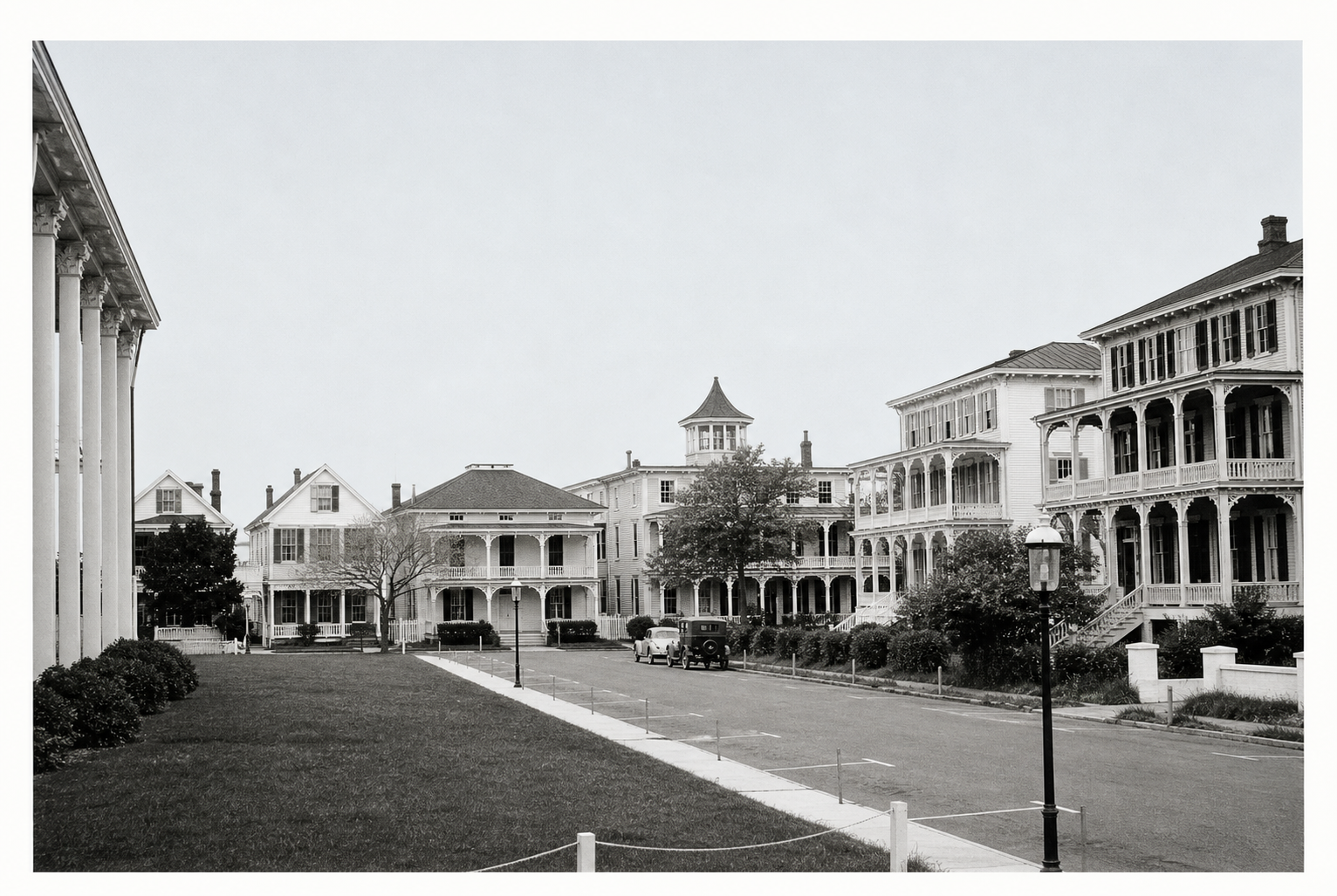
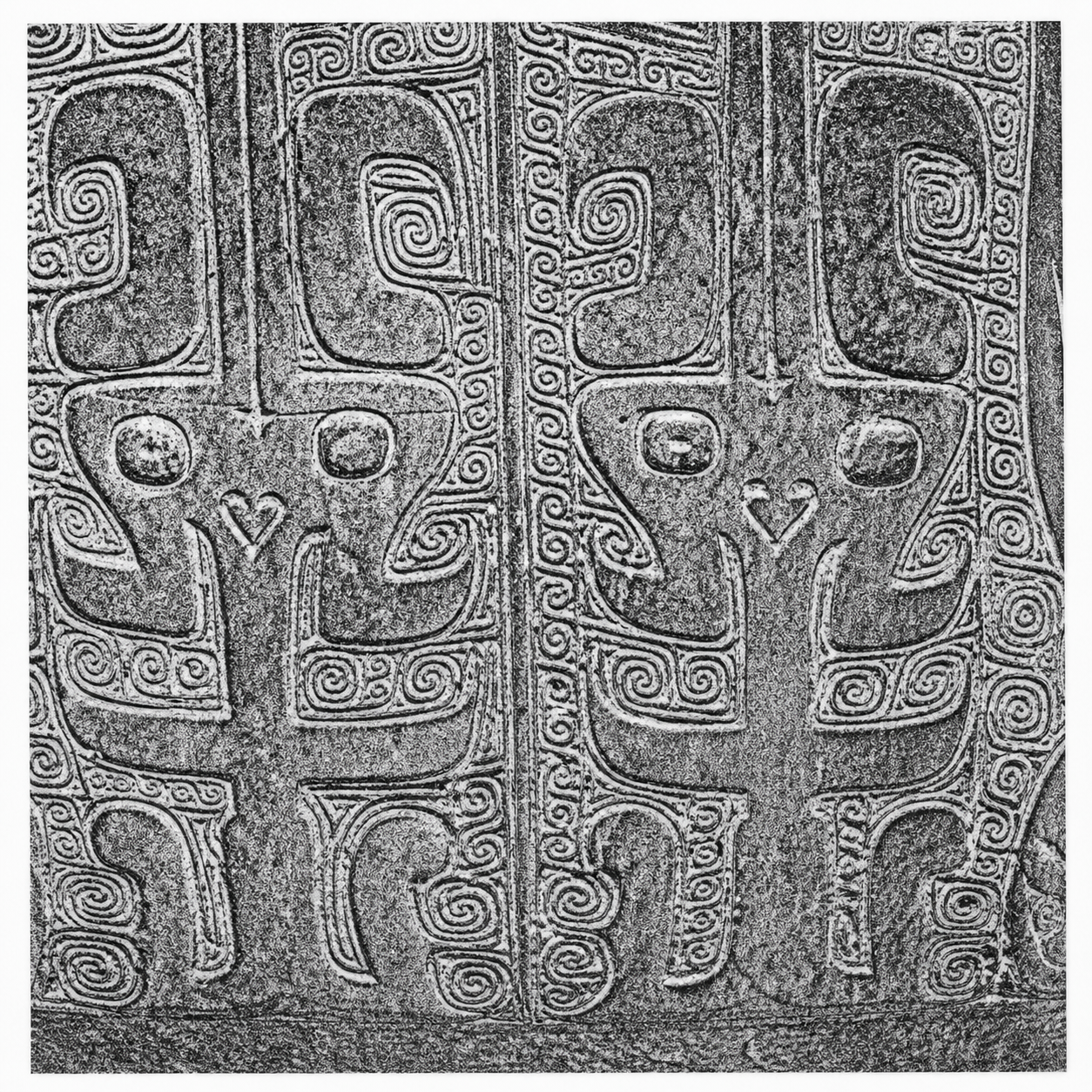
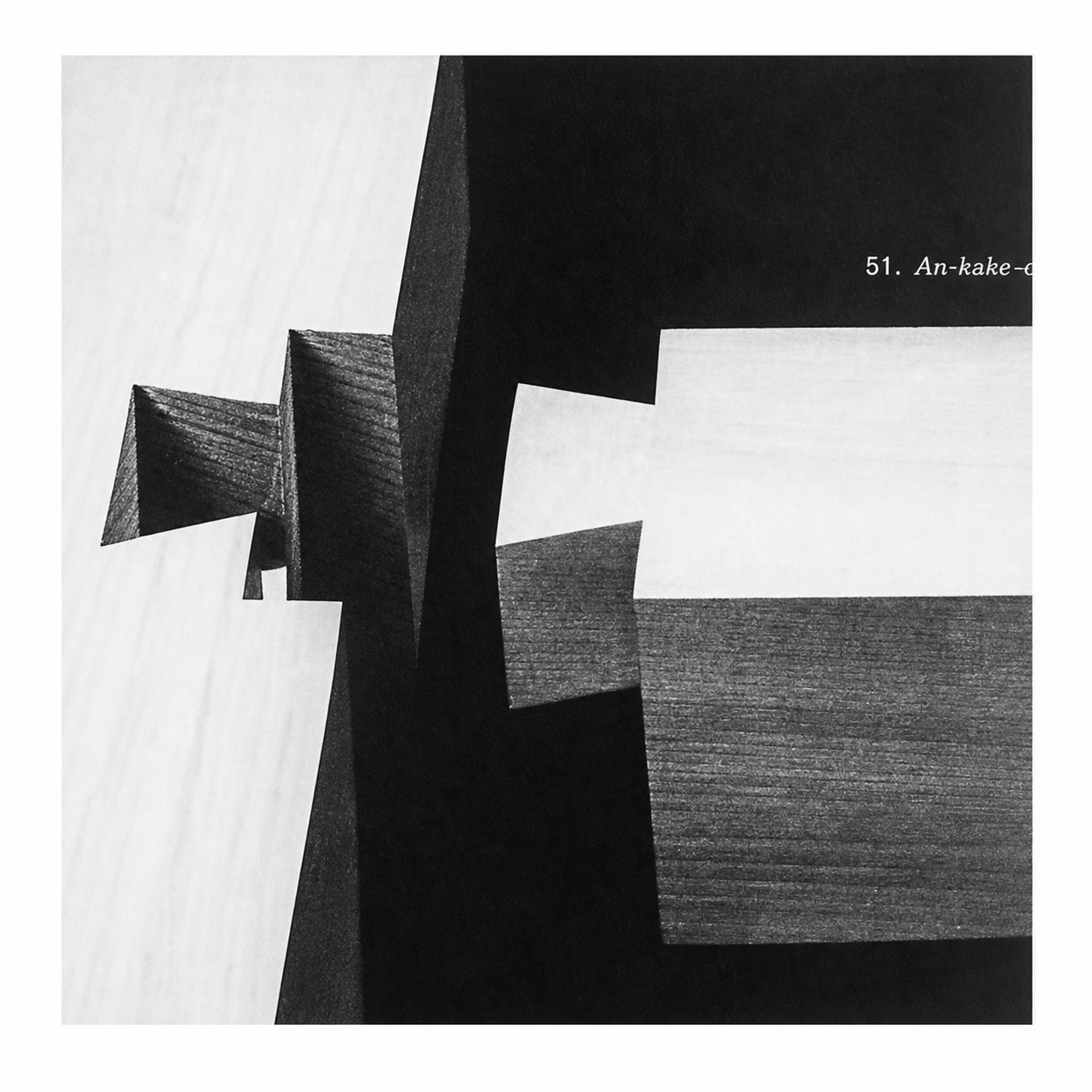
Dovetail as an example of deep interlock reaches in and grips the building anywhere where it is surrounded by a gallery or an arcade. The space in the gallery belongs to the outside world, and yet simultaneously belongs to the building -- thus causing a fusion of the two. The center which is the building is linked to the center which is the volume of the arcade. The space of the outside, and its center, is linked to the center which is the volume of the arcade. Thus the space of the arcade and its center form a bridge which links the two centers on either side in an indissoluble knot. The interlock, or ambiguity, strengthens the centers on either side, and they get their strength from the strength of the center in the middle.
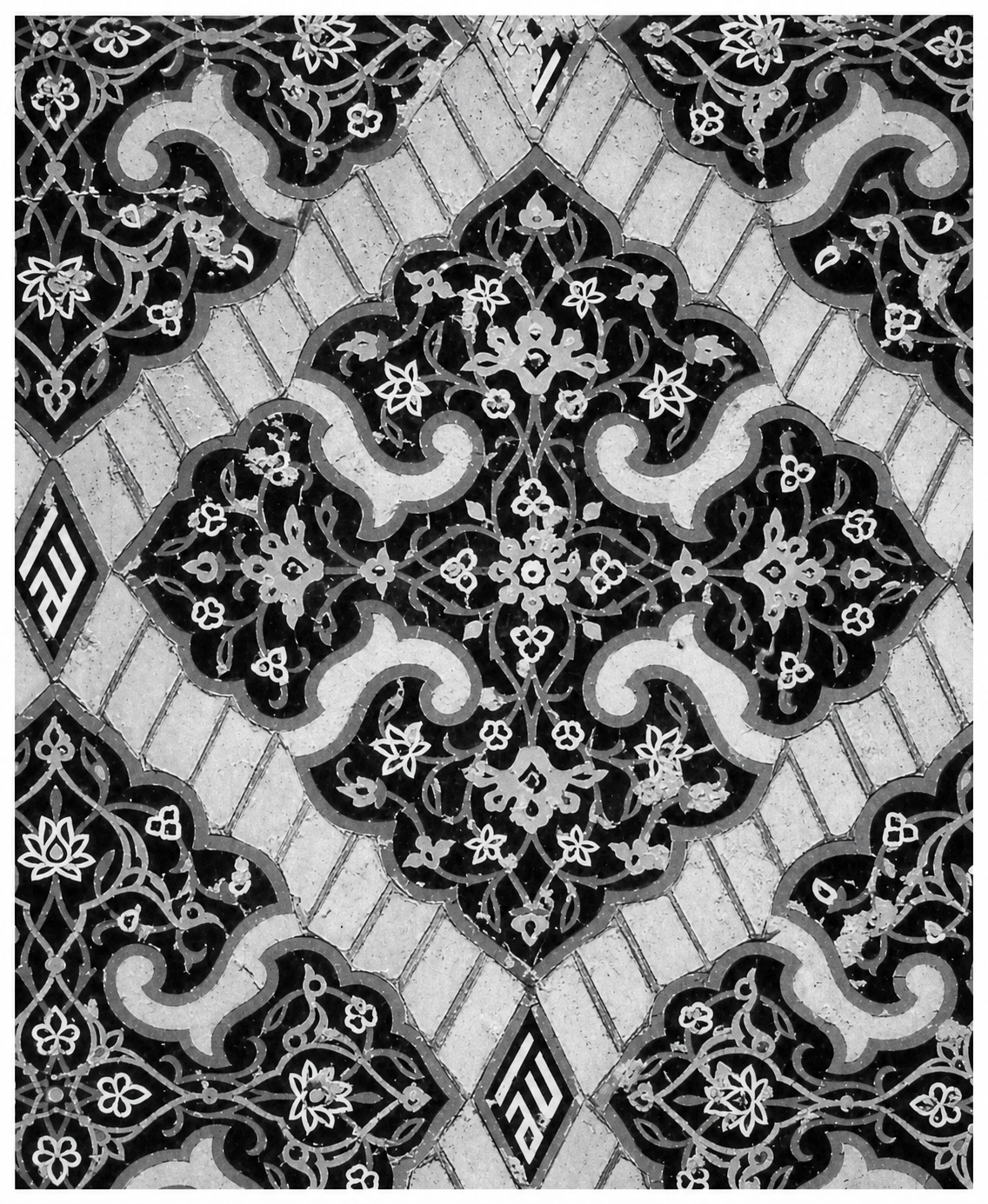
It is fascinating to see the interlock of the tilework on the great ornament of the 16thcentury Tabriz Mosque side by side with the interlock in the yellow brush strokes in the famous painting by Pierre Bonnard, L'A¢elier au
Mimosa (painted 1939-46), and _ following the magical interlock on the surface carving of the Shang bronze (2,500 B.c.). The use of interlock goes on and on, It has no time and no place.
Functional Notes
A great many practical examples of deep interlock and ambiguity are given for many scales in APL. The principle creates fusion and connection at an enormous number of region al
Ap on a very large scale indeed, the region al scale, is given world, from the largest » to the tiniest physical detail. ical example of the way deep interlock works in the discussion of city and country in crry COUNTRY FINGERS (p. 21), or of and industry, INDUSTRIAL RIB- BON (p. 227). On the scale of buildings we have a similar phenomenon in the way that indoor and outdoor space must interlock deeply, to provide the building with the proper light for all its rooms. Rooms with light on two or three sides are the most likely to be alive (WINGs OF LIGHT,
LIGHT ON TWO SIDES OF EVERY ROOM, pp. 524,746). This requires a structural relation between the centers inside (the space itself), centers in the walls (the windows), and the centers on the outside (centers in exterior space).
The ambiguity between indoors and outdoors in a building is also crucial for social reasons, thus leading to yet another typical kind of interlock between indoors and outdoors which we know as arcades and terraces. This
199.
is described explicitly under the functional arguments for arcades and terraces (ARCADES, p. 580; PRIVATE TERRACE ON THE STREET, p. 664). Other examples include win- DOWS WHICH OPEN WIDE (p. 1100), where the interlock is physical between the casements and the air outside, Or TRELLISED WALK (p. 809), where it exists between the lattice-work of the trellis and the space around it with which it interlocks.
2.9 / Contrast
Another feature I have found repeatedly in works of art which have great life is a surprisingly intense Conrrast -- far more contrast than one imagines would be helpful or even possible to sustain. The following examples show contrast at its extreme.
Life cannot occur without differentiation. Unity can only be created from distinctness. This means, that every center is made from discernible opposites, and intensified when the notcenter, against which it is opposed, is clarified, and itself becomes a center. The "opposites" take many forms. But in all of them, contrast of some kind is visible. And in order for the thing to be truly whole, the contrast has to be pronounced. Black-white and dark-light contrast are the most common kinds. Empty-full, solid-void, busysilent, red-green, and blue-yellow are all possible forms of contrast, too. However, the most important contrasts do not merely show variety of form (high-low, soft-hard, rough-smooth, and so on) but represent true opposites, which essentially annihilate each other when they are superimposed. In some sense, it is the contrast -- awareness of silence created by a hand-clap -- which is going on here. The difference between opposites gives birth to something. This is the origin of yin-yang, active-passive, light-dark.
The three examples shown opposite exemplify the beauty which can be created by contrast, in silhouette (the gate), in spacing (the arabic calligraphy), and in the intensity of color (especially the blue) which is achieved by the forcefulness of the neighboring black and white contrast.
On page 202 the example of a Shaker schoolroom shows how contrast actually works to create life. In the schoolroom the contrast be-
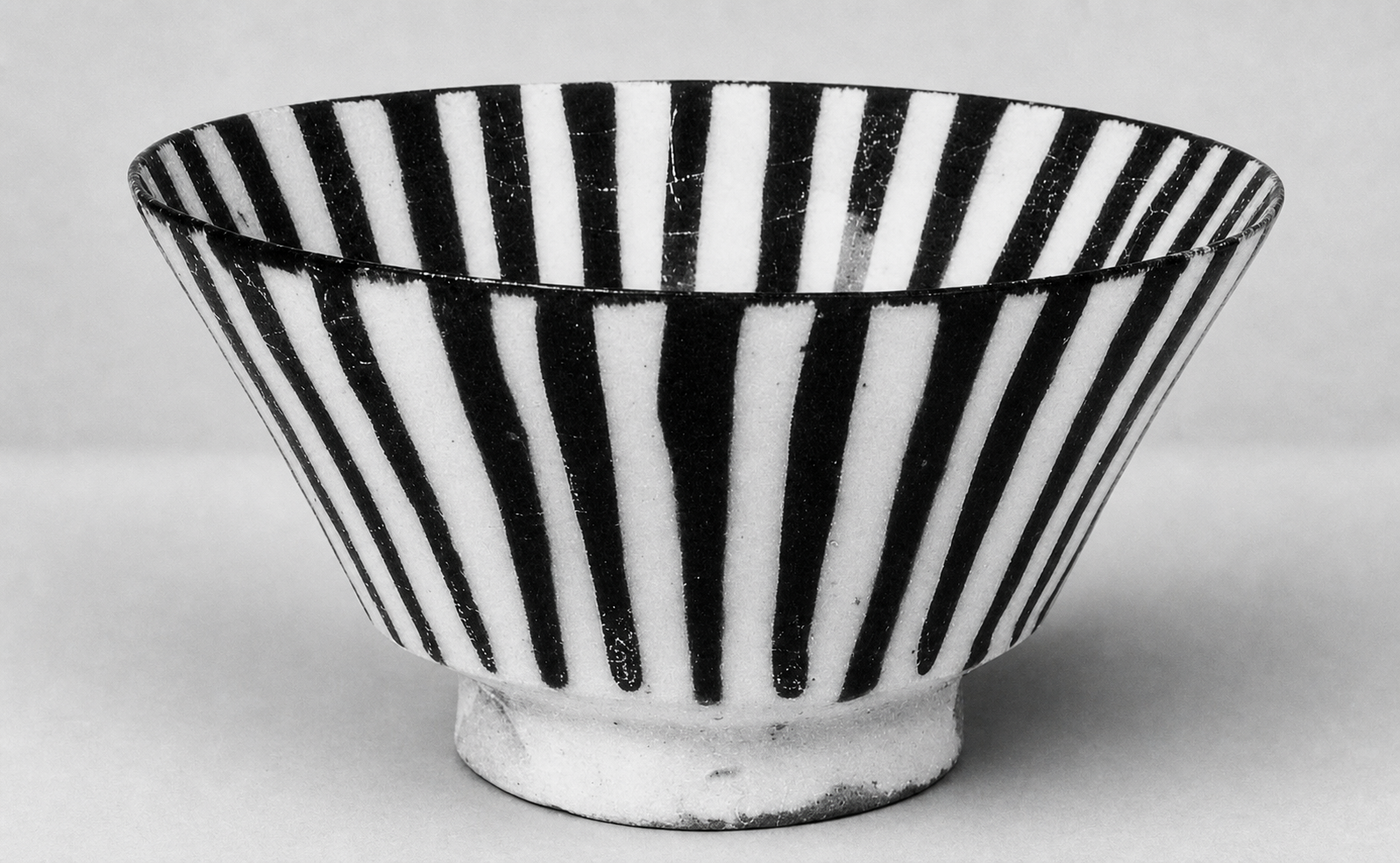
Black and white
FIFTE

Beauty comes from the extreme contrast


Li nd, bl
dd s

tween the dark wood and the light plaster is used throughout the room to bring it peacefulness and unity. Next to itis avery different case ofa recently built lobby where the contrast destroys life instead of creating it. The lobby example shows how violent contrast exists between the light of the sky and the dark of the stair against the windows, but the contrast fails completely to make life. If anything, it does the opposite.
In the case of the Shaker schoolroom, the contrast is used, again and again, to make the various centers unified. For instance, the two bands of wood above shoulder level, because of the contrast, form a definite center which would not be there or felt so strongly -- if the wood were pale, or painted. The center which is so formed helps the room to become one, unified. You can see how much less unified it would be, if this center were not there, by placing your finger over it. The contrast, instead of separating things, brings them together. In the same way, the contrast between the plaster of the wall and the darker wood of the platform and wainscot creates centers whose opposition (only apparent) actually relates them, unites the wall and the floor, and unites the school benches with the space of the room. Again and again in this example, the contrast helps the centers become unified with one another.
In the glaring lobby staircase, on the other hand, something quite different is going on. Here the contrast -- between dark stair and
FILET REN
bright window -- does not unify, but separates. This is because it is a kind of contrast which is merely accidental, perhaps even foolish. It is not contrast created in order to help centers become alive. It is either a mistake, or an eye-catching device. And for this reason it fails.
I use this rule to help people understand make experiments, in which you try to make somethe fifteen properties: "Draw diagrams, thing, sketch something, which has the property in it. But it is not enough to catch the property as you believe it is defined. To succeed, you must make a thing which has the property, and which gains deeper feeling because of the presence of the property. Only when you have managed that, can you be sure that the meaning of the property has not eluded you." In this case, for instance, if you thought that making a dark stair against the light was an example of contrast, you could check yourself, and realize your mistake, when you see that the property used in this way fails to make something with deep feeling. Only when you reach an example like the Shaker schoolroom, or the Tuscan church on the next page, by using the property, can you make the thing have a deeper feeling, can you say you have grasped the property. There can be many other kinds of contrast which have an effect. In functional situations, two materials will often work best together when they are entirely different, so that each one can take care of its own function. For instance, take the leather top and lacquered surface on a desk. The lacquer is clean and beautiful on the woodwork; the leather is soft and rich. Each one does most effectively what it needs to do. In the plan of Rheims cathedral (next page) we even see a contrast between the massive outer piers and the slender inner piers, which plays a great role in the created unity and life of the church as a whole. For functional and cognitive clarity, contrast is also practically necessary: the shop in the neighborhood is different from the houses next to it. The front door is different from the back door. The roof is different from the wall. The kitchen is different from the living room. The light in the bedroom is different from the light in the passage. In case after case evidence suggests that the sharp extended and visible differences between things which are different allows each center to take its proper nature. It permits more intensive attention to individual functions. And it creates a feeling of distinction which relaxes people, because it acknowledges and permits different dimensions of experience. Contrast is the thing which creates differentiation, and allows differentiation. It is the differentiation of the void which gives birth to matter. All differentiation requires that contrast is created in space, in order to give birth to anything at all.
werner Fe
=
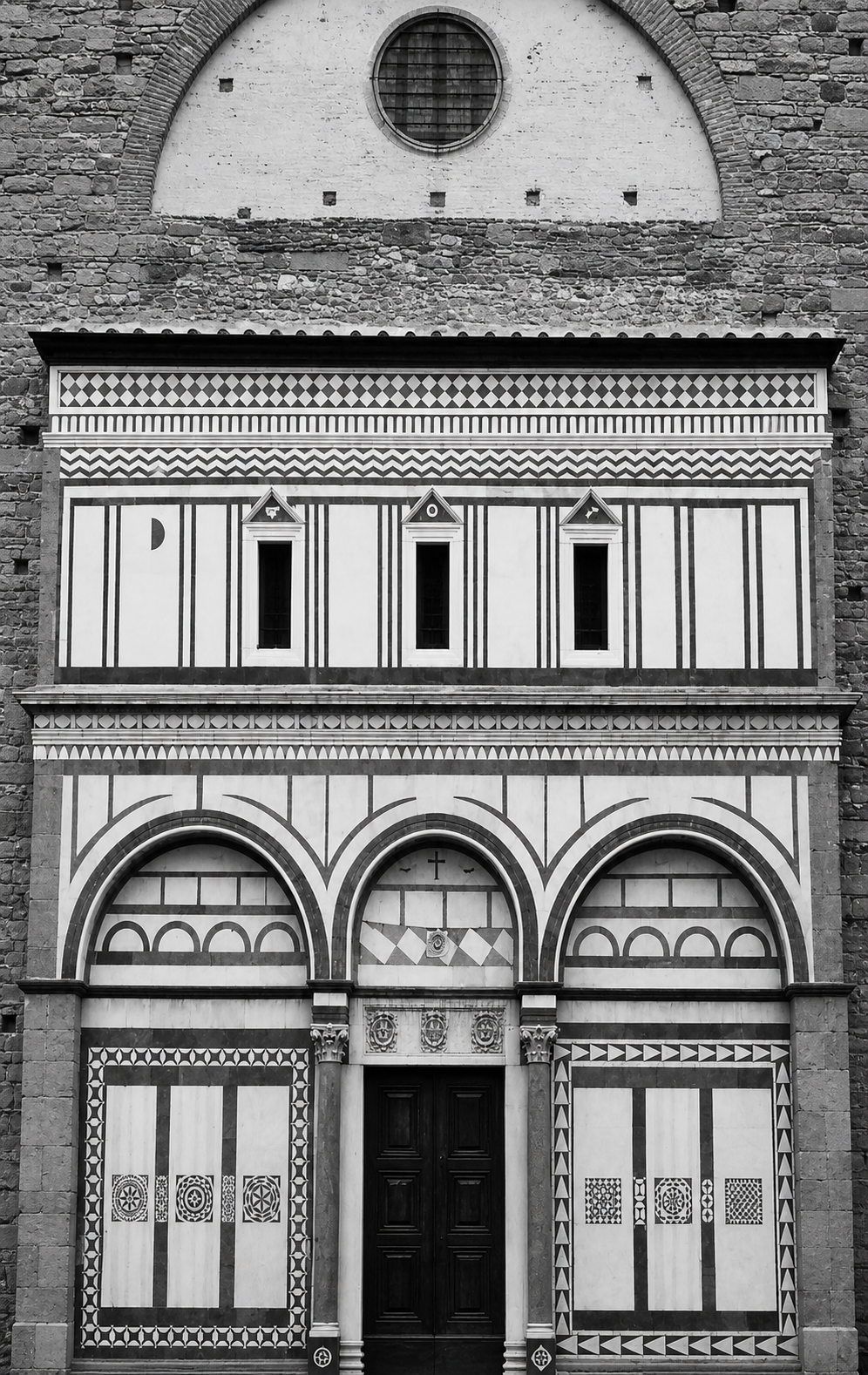
| a aera
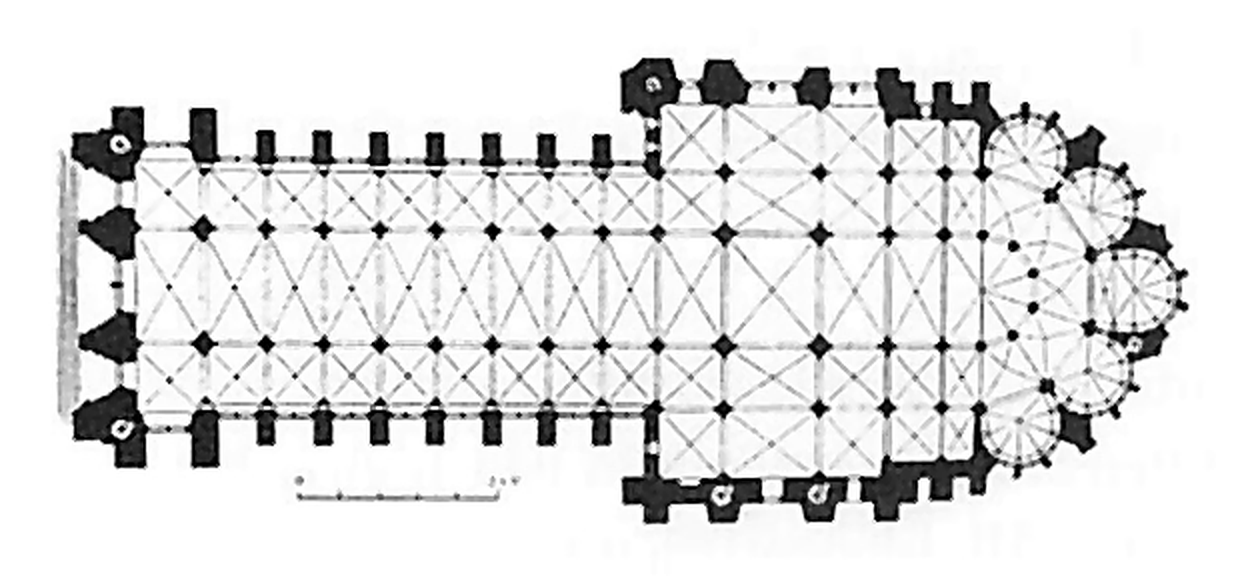
FUNCTIONAL NOTES
In APL the importance of contrast between different human groups is emphasized in Mosaic OF SUBCULTURES and the need for the two to feed each other, is discussed in scaT- TERED WORK (p. 51); the complementary contrast between space and structure, and the way each defines the other, is described in srRUCTURE FOLLOWS SOCIAL SPACES (p. 940). More detailed necessary contrast, in light and dark for instance, is defined in TAPESTRY OF LIGHT AND DARK (p. 644), and POOLs oF LIGHT (p. 1160). More subtle kinds of contrast, and their effects, are described in winpows OVERLOOKING LIFE (p. 889) and THE FIRE (p. $38).
(p. 42); the contrast between work and housing,
PIFTEEN
2.10 / Gradients
You have noticed, I am sure, that almost anything which has real life has a certain softness. Qualities vary, slowly, subtly, gradually, across the extent of each thing. GRADIENTS occur. One quality changes slowly across space, and becomes another.
Gradients must arise in the world when the world is in harmony with itself simply because conditions vary. Qualities vary, so centers which are adapted to them respond by varying in size, spacing, intensity, and character. Daylight varies from the top floor of an urban building to the bottom floor: both windows and ceiling heights will probably have to adapt to these conditions by varying ceiling height, by varying window size -- perhaps, too, by varying window character.
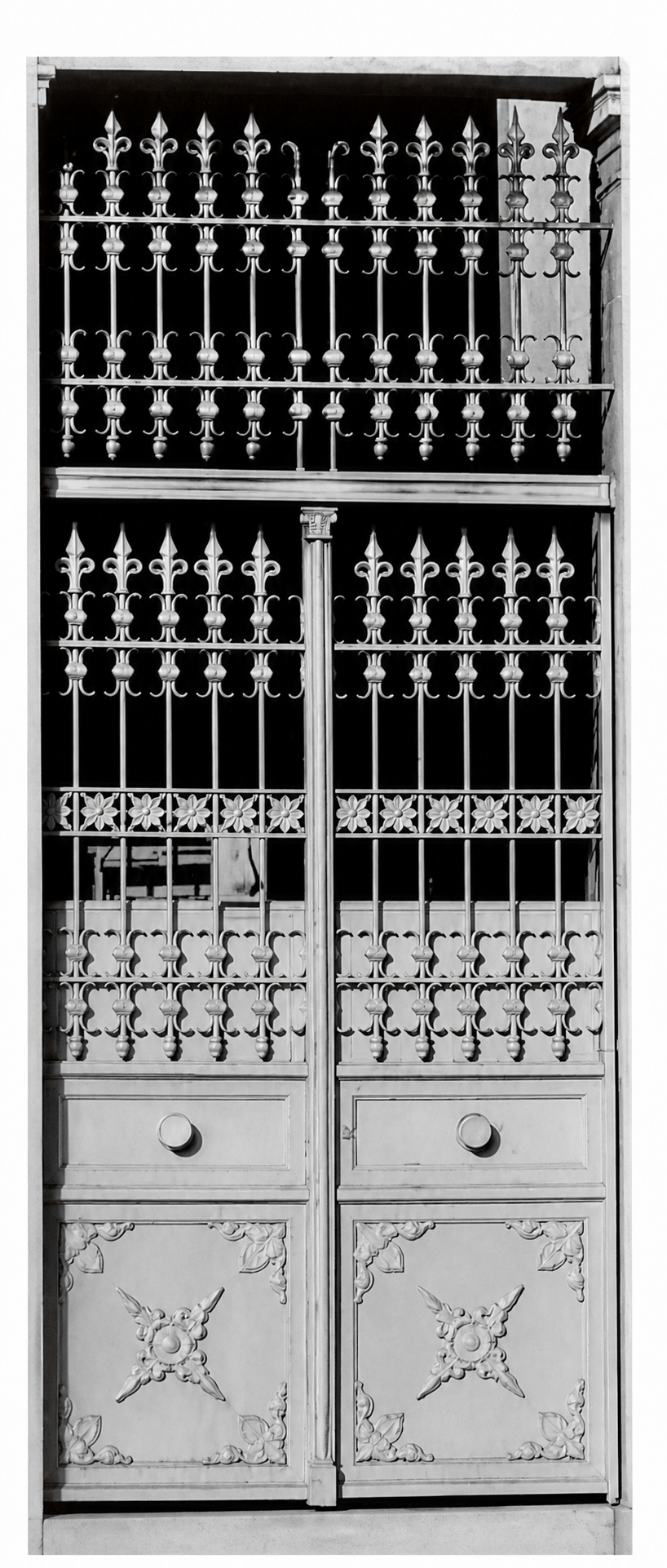
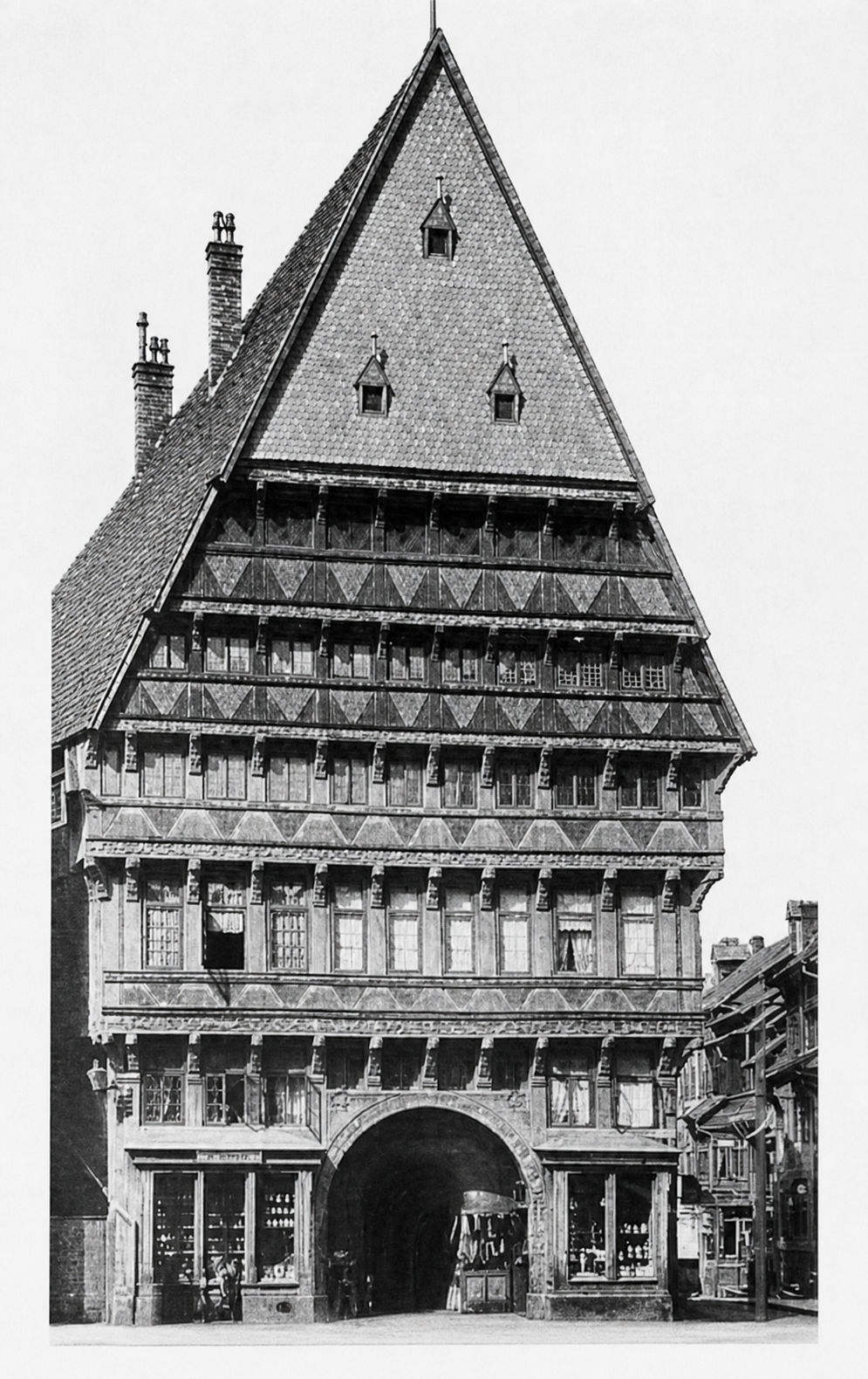
Gradients will follow as the natural response to any changing circumstance in space, as centers become adapted correctly to the changes which move across space: in doing so, they will vary systematically, thus forming gradients. These gradients will also farm centers because the fieldlike character which is needed to make every
German half-timbered house strong center is precisely that oriented, changing condition which "points" towards the center of the center, forms the center, establishes it, and makes the center real as a field. So, in adapting to the changing circumstances, and therefore making a series of graded centers, still further and larger centers are created.
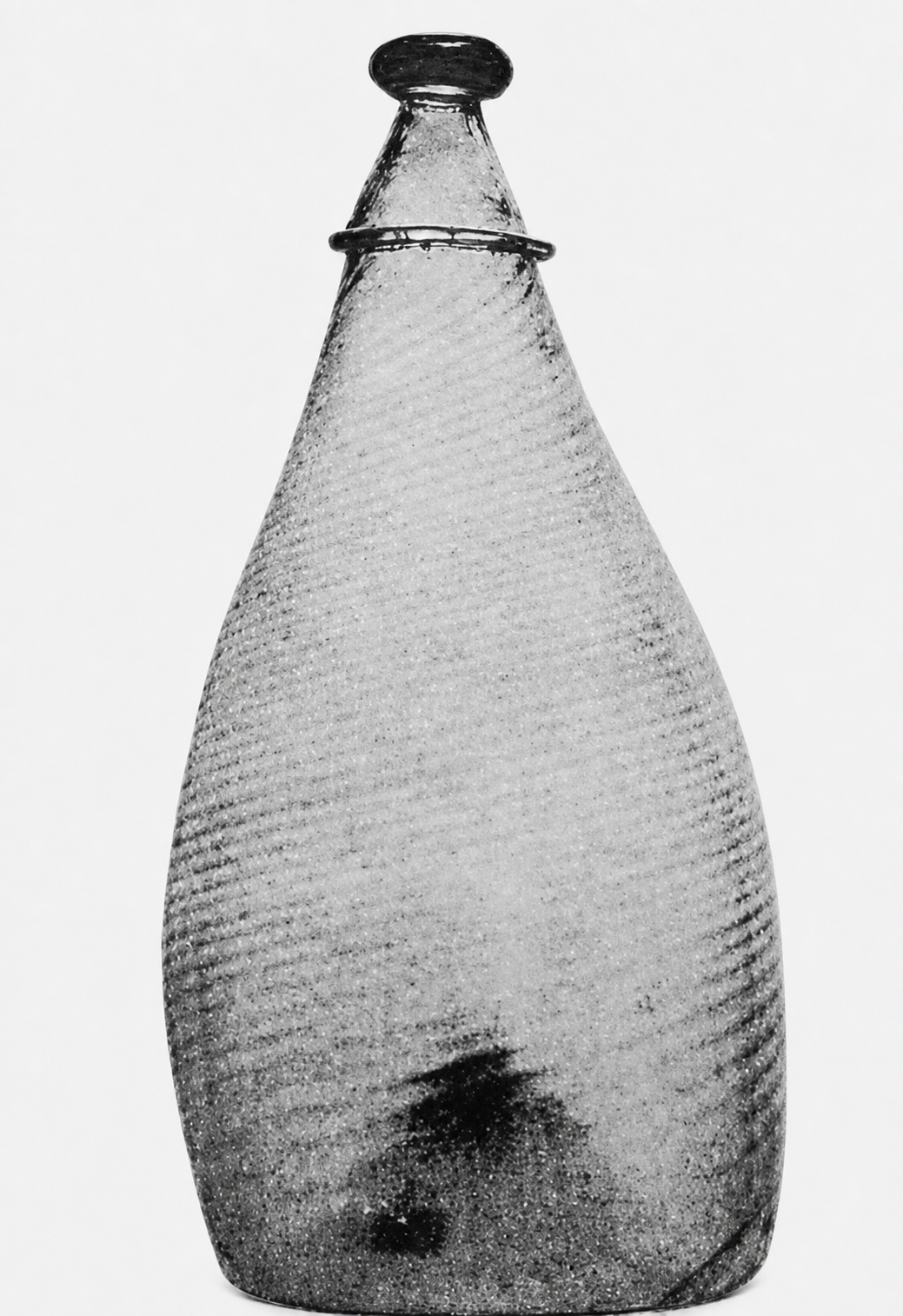
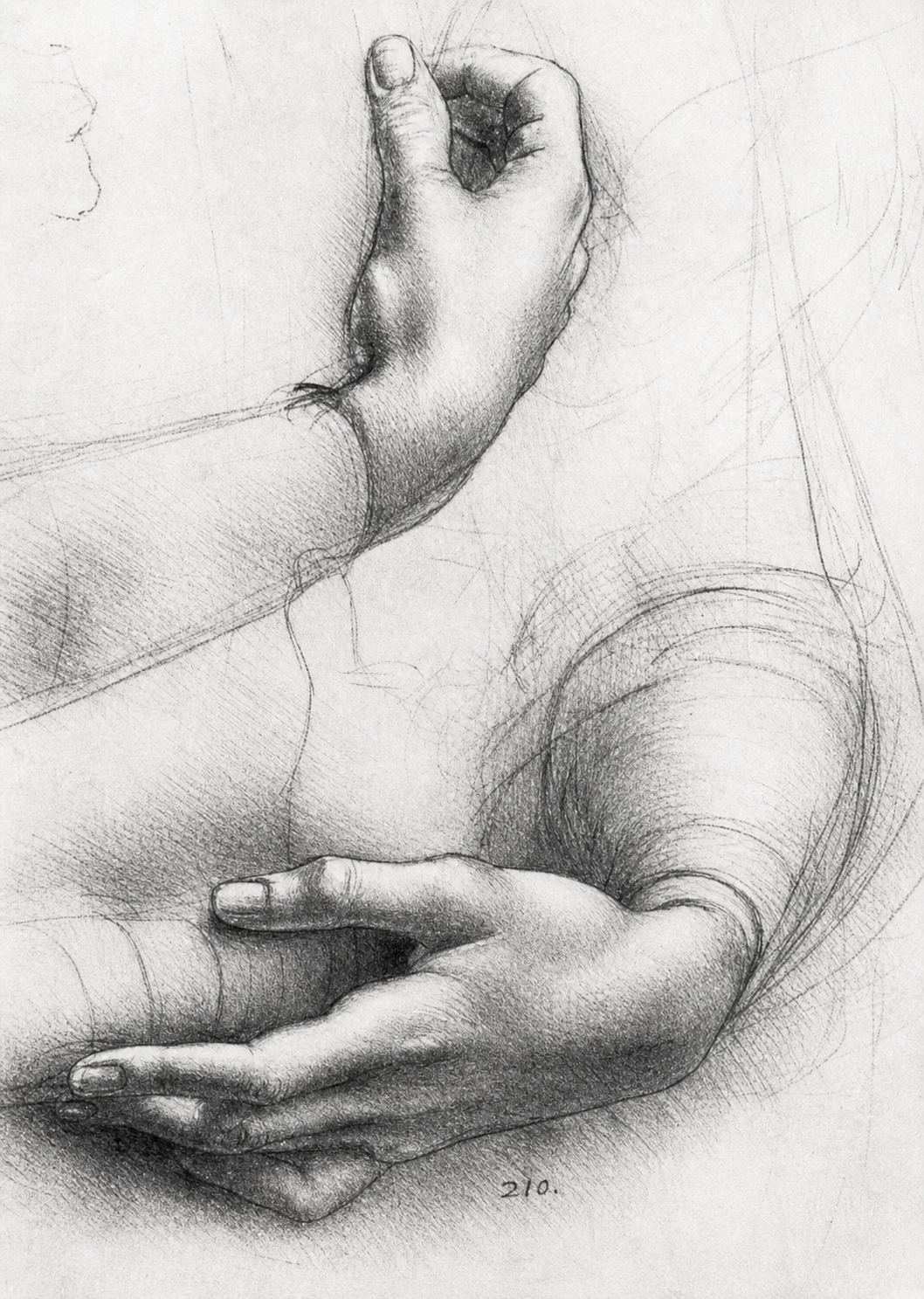
Leon ardo's hands
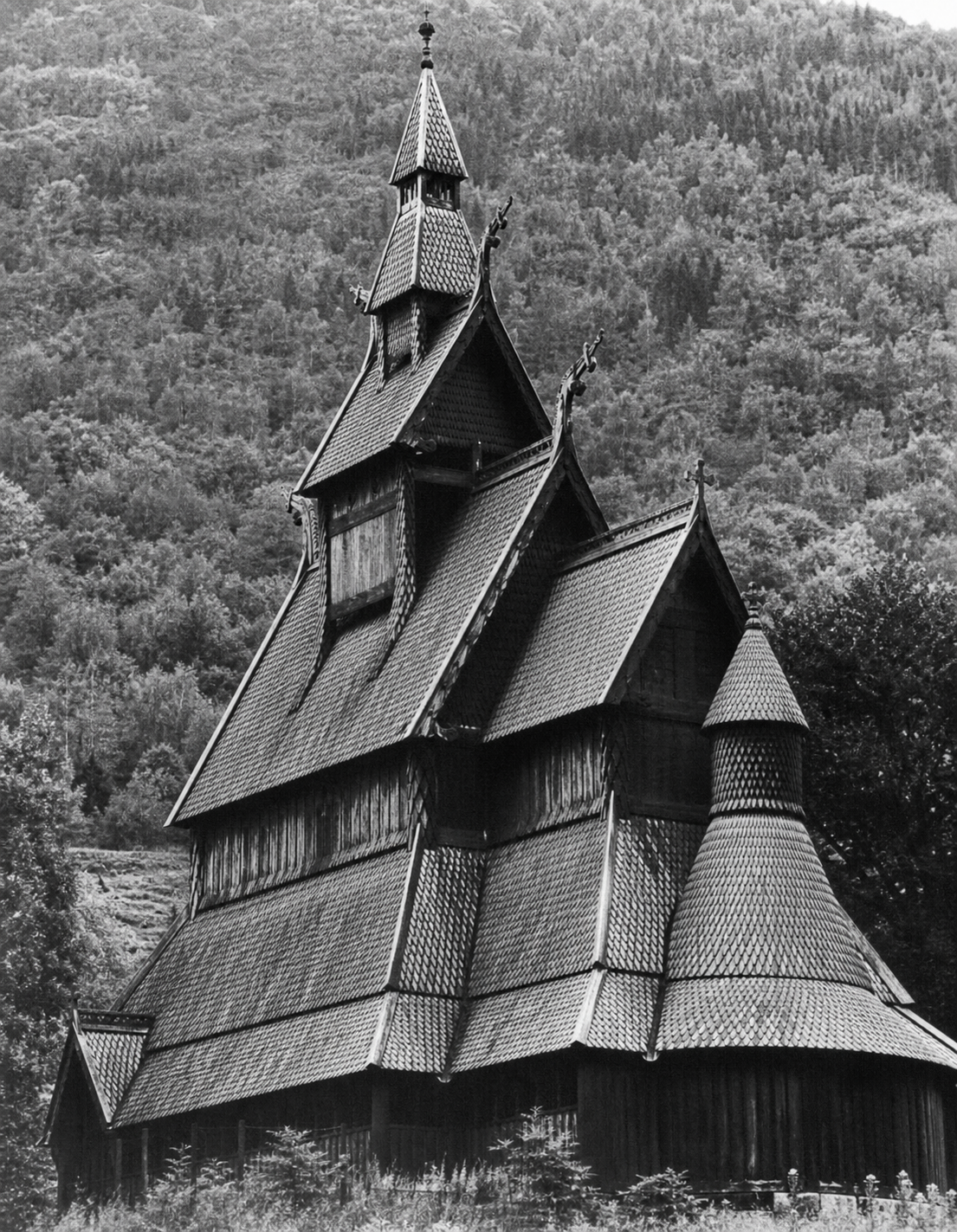
Look at the examples illustrated here. Window sizes vary from the top to the bottom of a building. There is a gradient in the lengths of fingers on a hand. The spacing and pattern of the ironwork in the gate varies from the bottom to the top. The depth of the rills in the ancient Persian glass bottle vary from the neck, where they are small in proportion to the size of the bottle, to the lower part where the bottle diameter is greater and the rills therefore become larger, too. Shape, line, size, spacing, all vary gradually, not suddenly, in the progression across the thing. All these have life in them.
Buildings and artifacts without gradients are more mechanical. They have less life to them, because there is no slow variation which reveals the inner wholeness.
In something which has life, there are graded fields of variation throughout the whole, often moving from the center to the boundary, or from the boundary to the center. Indeed, gradients are essentially and necessarily connected to the existence of a living center. Almost always the strengthened field-like character of the center is caused, in part, by the fact
that an organization of smaller centers creates gradients which "point to" some new and larger virtual center. Sometimes the arrows and gradients set up in the field give the center its primary strength.
For example, in the subtly drawn cornice on page 205, the few lines of varying thickness which form the bands that generate the cornice set up a gradient in the building. This gradient, or progression, orients the eye towards the top. Thus we see and feel the top of the building coming. The gradient which is created both signals and produces the beginning of the boundary. And by creating this gradient, the building itself -- the mass of the building below this cornice -- is made more of a center, is a more powerful center. It is the gradient, in this case, which gives that center its life. We see similar phenomena in the gradient of roofs from the Norwegian stave church; in the progression of windows as we move upwards through the German halftimbered house; in the railings of the Greek ironwork; in the variation from finger to finger in Leon ardo's drawing of hands.
It is also worth saying that, although gradients are commonplace in nature (see also chapter
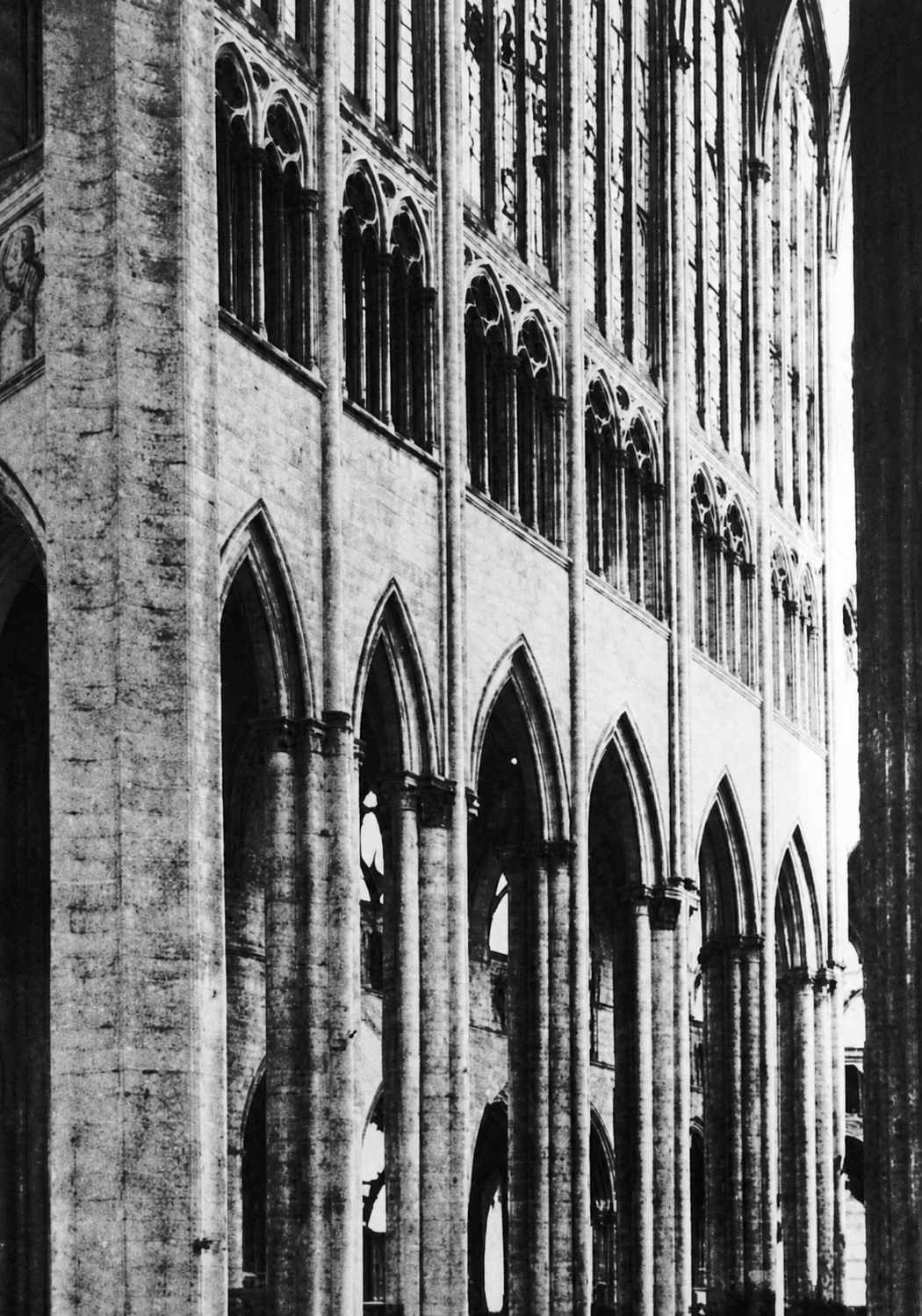
6) and in much traditional folk art, they are nearly non-existent in much of the modern environment. That is, I think, because the naive of
(room height determined by 8-foot sheets of plyforms standardization, mass-production wood) and regulation of sizes (zoning, bank rules, and so on) all work against the formation of gradients, and almost do not allow them to
occur in buildings or in neighborhoods. As a result, one of the most powerful, and necessary, forms of life has been almost removed from the environment.
The beautiful gradients in the openings of the Golden Gate Bridge towers occurred because the high cost of the bridge and the importance of structural efficiency made specialized steelwork
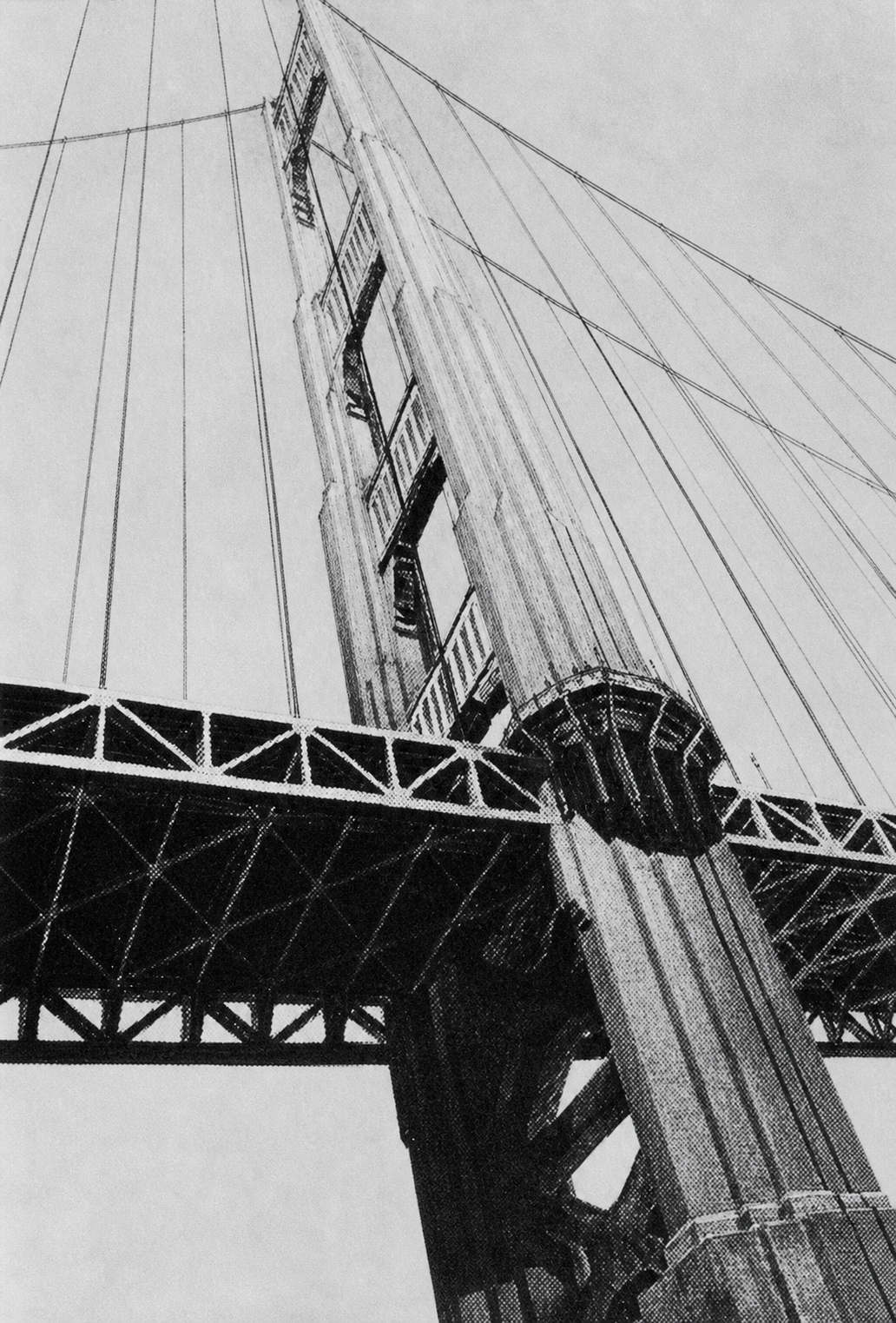
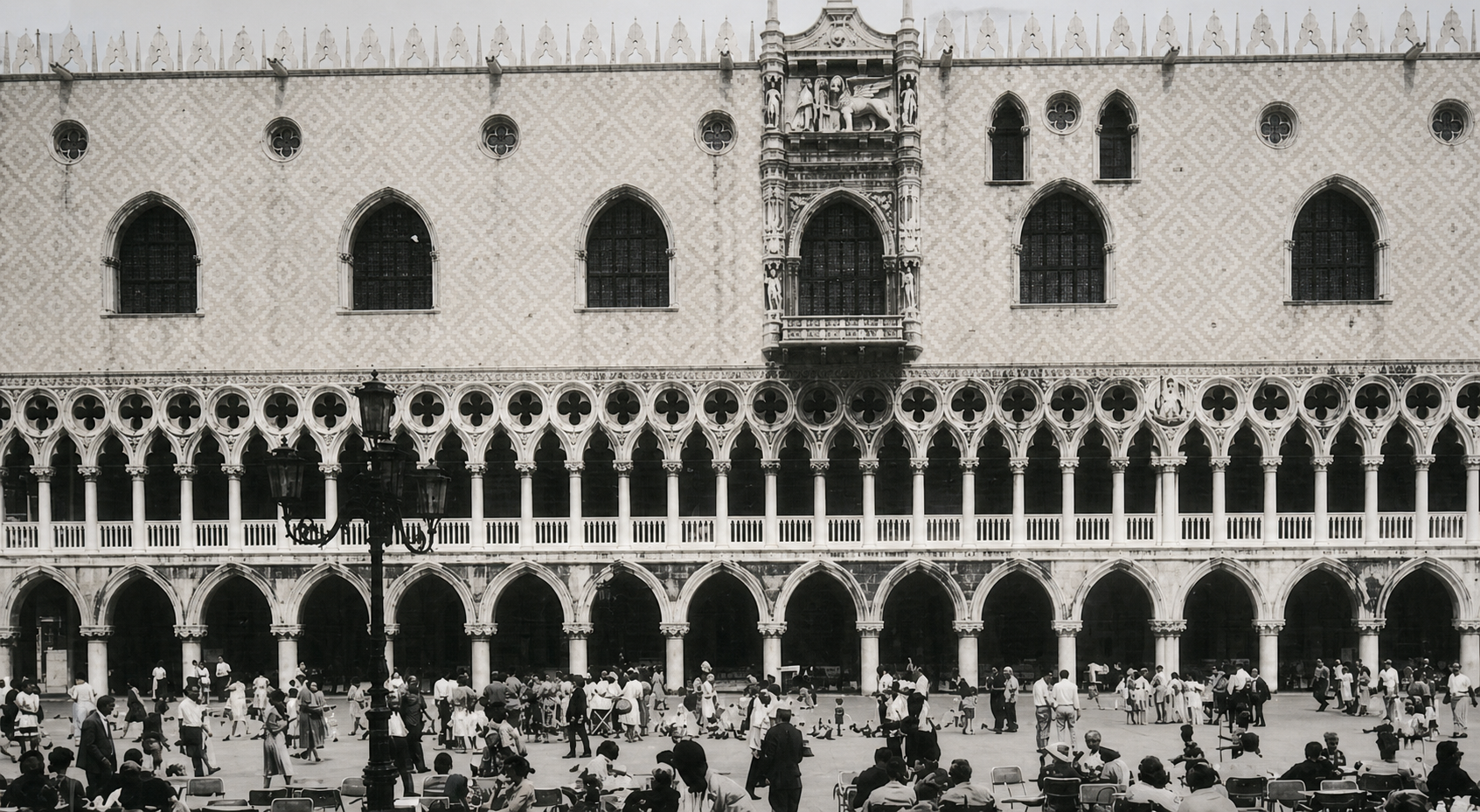
A true gradient requires that the morphology of elements -- walls, columns, roofs, windows, eaves, openings, doors, stairs -- are able to exhibit sustained and gradual change of size and character, as one moves through the environment, or through a building. This requires new forms of making, production, manufacture, which are at present only in their infancy.
Functional Notes
A geometric gradient must occur in the environment almost any time that a true "field" exists with respect to any functionally important variable. As a result, it is one of the most noticeable features of any building complex or building which has life, that we find these examples of steady variation within them. For instance, variation in window size, from the bottom to the top of the building; variation in size or type of tile, or height, or slope, according to the position of a roof (cAscADE OF ROOFS, p. 565); variation in column size and beam size according to the spans (FINAL COLUMN DISTRIBUTION, p. 995); variation in door handle size, even, according to the importance of a door; or variation in door size, cabinet size, shelf size, with height; door size, with importance and distance from the center; plank size, with location in the building; tile size, with roughness of usage of an outdoor area. In each case, the gradient in the smaller centers helps to intensify the life of the larger center which the gradient points towards.
In large-scale engineering we use differen d members in a frame, to use steel in the most economical way. In the towers of the Golden Gate Bridge there is a fine gradation of cell size, member size, and plate thickness, from the top of the tower to the bottom, to economize on steel, and place the most material where it is needed most by stresses. A similar thing is described in APL under FINAL COLUMN DISTRIBU- TION (p. 995).
At the city scale a gradient occurs, for instance, in the density which falls off systematically from an urban center (DENSITY RINGS, p. 156), and in the relative position of the local center with regard to its catch basin and the line towards the center of the region (ECCENTRIC NUCLEUS, P. 150).
It must occur, also, when we have a sequence of objects that change in size -- or in their spacing -- as may occur, for instance, in a sequence of rooms, which goes from a small one to a larger one, and from more public to more intimate (INTIMACY GRADIENT, p. 610; ENTRANCE TRANSITION, p. 548; and DEGREES OF PUBLIC- NESS, p. 192). And it occurs in a molding when a sequence of large and small pieces, next to each other, forms a more fitting edge. It does so by setting up a gradient which points toward the middle.
2.11 / Roughness
Things which have real life always have a certain ease, a morphological RouGHNEss. This is not an accidental property. It is not a residue of technically inferior culture, or the result of hand-craft or inaccuracy. It is an essential structural feature without which a thing cannot be whole.'
The Persian bowl below gives us an example. The interior of the bowl is covered by small designs (sine/i), made of two blobs and two strokes, each one a very rapid brush-stroke. When we look at the bowl, we are struck by the beauty of the placing of these brush-strokes, which are of course not perfectly identical. They are rough, in the sense that the size of the individual brush-strokes, their exact spacing, and the exact shape and length of stroke all vary from one to the next, continuously, throughout the fabric of the design.
It is intuitively clear that this subtle variation is partly responsible for the charm and harmony of this bowl -- but once again, we are apt to misunderstand it, misinterpret it, because we probably attribute this charm to the fact that the bowl is handmade and that we can see, in the roughness, the trace of a human hand, and know therefore that it is personal, full of human error.
This interpretation is fallacious, and has entirely the wrong emphasis. The reason that this
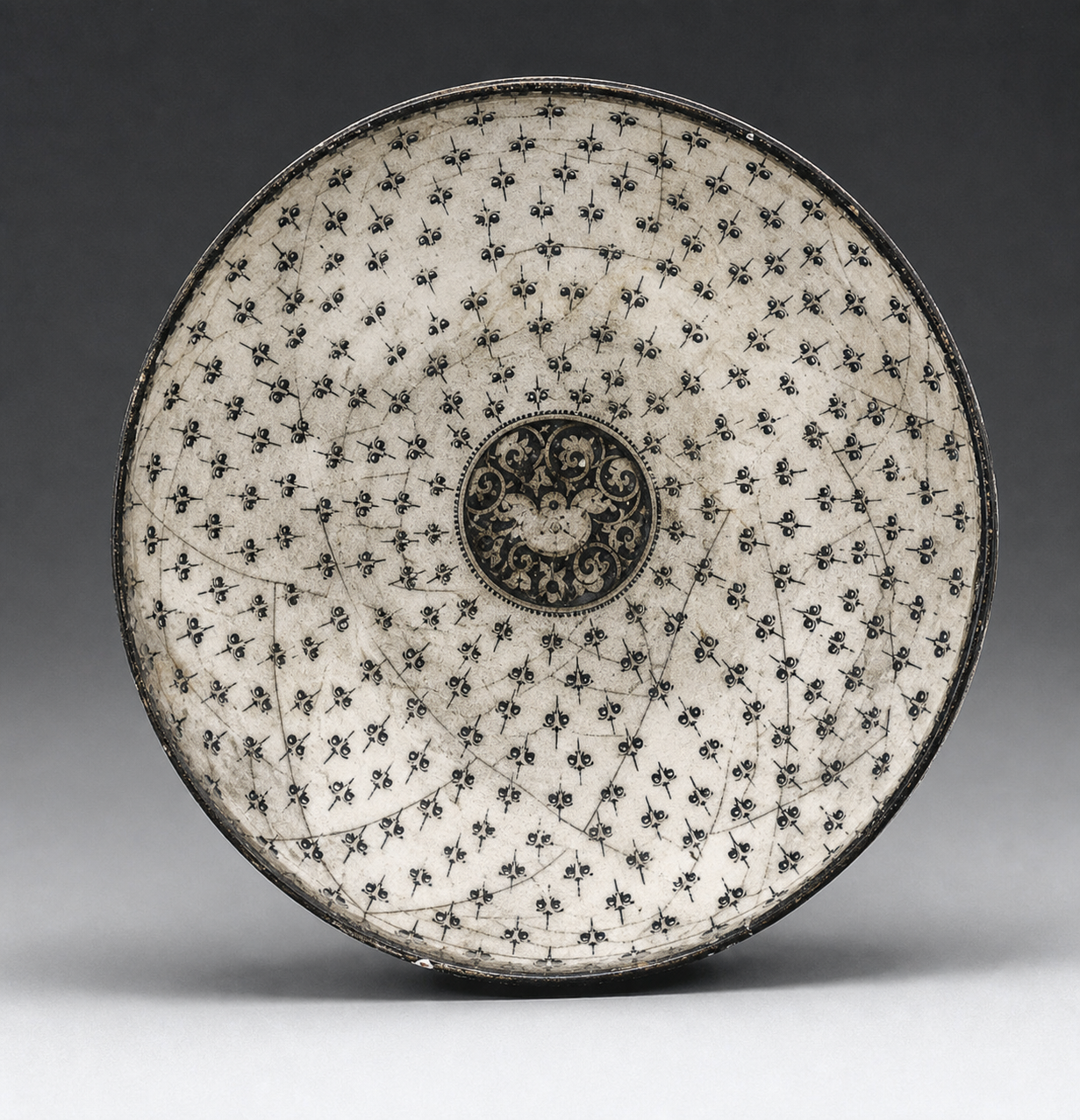
FIFTEEN roughness in the design contributes so greatly to the wholeness of the bowl is that a perfect triangular grid of the kind used here, cannot be made to fill a spherical surface properly. If the design were composed of identical units, identically placed, it would break down, and there would be really difficult problems where the grid became tighter toward the center of the bowl. Thus, for instance, near the center of the bowl, there are rows where an extra brush-stroke is squeezed in to overcome the mathematical impossibility of bringing the triangular grid near the center of the bowl. And at these places where the strokes are close together, they are also made smaller, to compensate for the way that they are crowded. If the design was perfectly "regular," this would be impossible.
Indeed, throughout the design the subtle variation of the brush-strokes and their spacing, are done in such a way that each brush-stroke has a size perfectly suited to its place, and each one is placed, by eye, just exactly where it needs to be to create the most beautiful and positive white space between the strokes. When the painter painted the strokes, he could do this almost without thinking, because his hand and eye were so well coordinated -- it does not require very intense intellectual effort -- but still, it is sis which makes the bowl so perfect, and this simply could not be obtained if the brush-strokes were all exactly the same size, or placed at exactly equal intervals.
To continue the same point, compare, on the next page, the beautiful hand-drawn tiles from the mosque of Kairouan with the banal repetition of the postmodern painting of brickwork. The repetition of the tiles (shown in color in chapter 1) is lovely, subtle, heartwarming, and pleasant. The repetition of the brickwork is unpleasant, nearly frightening. Above all the tiles are wholesome. There is a profound feeling of unity in them. On the other hand, the brickwork feels unwholesome, dead; there is only the slightest feeling of unity there. The difference in feeling between the two arises in large measure from the roughness of the one and the sterility of
the other. But this roughness is not merely an accidental feature of the tiles and of other living things. It is an essential feature of living things, and has deep structural causes.
Consider the example on page 213: the wavy border of a carpet, and the way the border design is handled at the corner. Often the border of an ancient carpet is "irregular" where it goes round the corner; that is, the design breaks, and the corner seems "patched together." This does not happen through carelessness or inaccuracy. On the contrary, it happens because the weaver is paying close attention to the positive and negative, to the alternating repetition of the border, to the good shape of each compartment of the wave and each bit of open space -- and makes an effort all along the border to be sure these are "just right." To keep all of them just right along the length of the border, some loose and makeshift composition must be done at the corner.
If the weaver wanted instead to calculate or plot out a so-called "perfect" solution to the corner, she would then have to abandon her constant attention to the right size, right shape, and right positive-negative of the border elements, because these would all be determined mechanically by outside considerations, i.e., by the grid of the border. The corner solution would then dominate the design in a way which would destroy the weaver's ability to do what is just right at each point. The life of the design would be destroyed.
All the examples show how the seemingly rough solution -- which seems superficially inaccurate -- is in fact more precise, not less so, because it comes about as a result of paying attention to what matters most, and letting go of what matters less. As the power of this completed carpet clearly shows, a perfect corner does not matter nearly as much as the correct balance and positive space in the border. The seemingly rough arrangement is more precise because it comes from a much more careful guarding of the essential centers in the design.
In a man-made thing, another essential aspect of the property of roughness is its abandon. Roughness can never be consciously or deliberately created. Then it is merely contrived. To
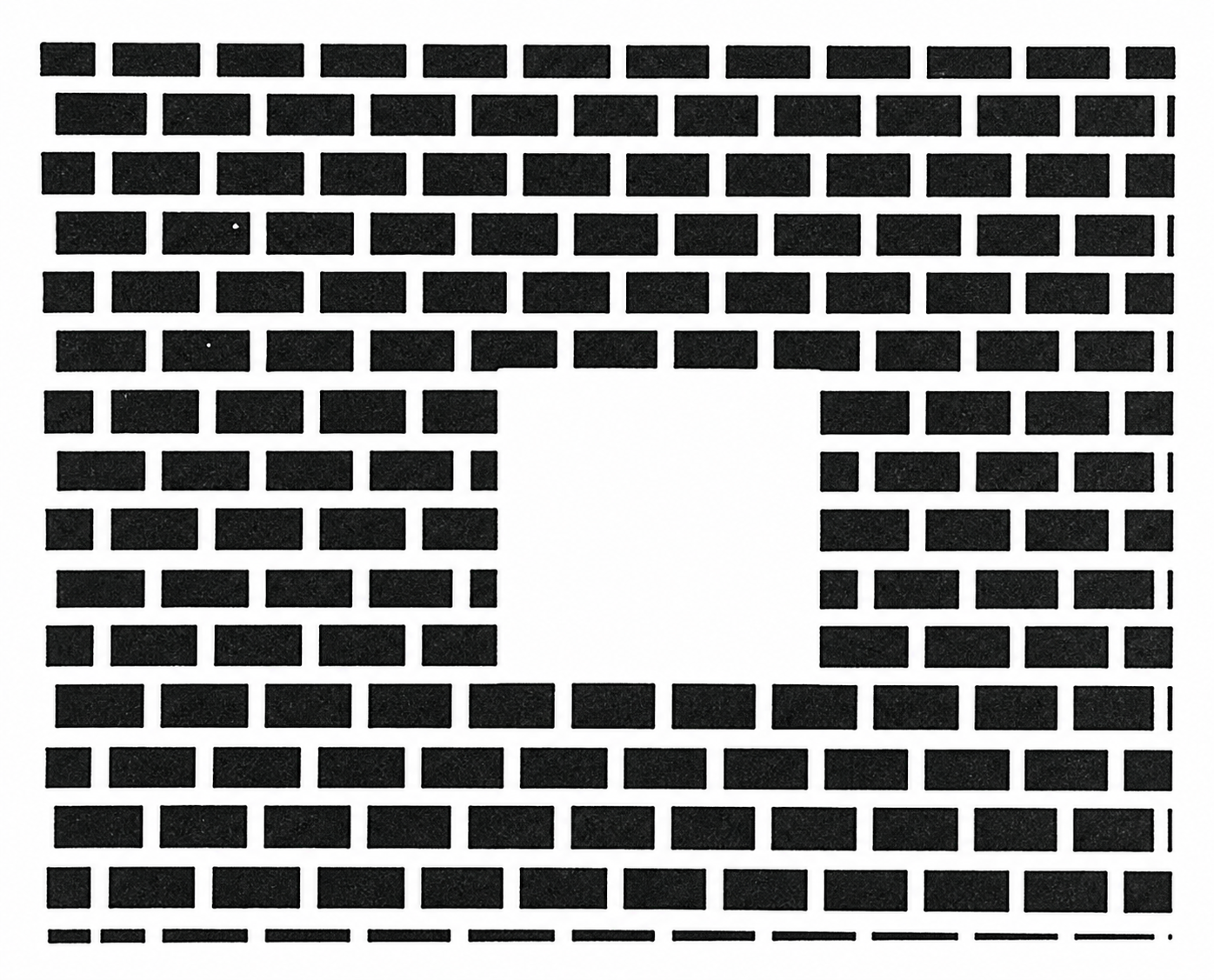
No roughness at all: postmodern painting of brickwork make a thing live, its roughness must be the product of egolessness, the product of no will. The green tile array from the mosque of Kairouan has this quality. One feels that the different tiles were picked from a pile of slightly different kinds of tiles, or that they were made specially, but once again in a spirit of childish abandon -- certainly not with a careful, contrived desire to make it "interesting." In this sense, roughness is always the product of abandon -- it is created whenever a person is truly free, and doing only whatever is essential, whereas the artificial, excessively formal, careful, calculated quality in a thing always comes about when the person is not sufficiently abandoned, and not free.
This quality of abandon, which exists in roughness, is embodied beautifully in a story which Soetsu Yanagi tells, of his visit when he was young to the workshop of an elderly Korean maker of wooden bowls.' The old man was a great master, and Yanagi describes his awe at being allowed to meet the master. As he describes it, he went to visit, and was horrified to see that the old man, so much revered, was using green wood to turn his bowls. At first he does not dare even to mention it -- since any question about it would imply a criticism -- but finally he plucks up his courage, and says to the master: "You are using green unseasoned wood -- and the sap is still flying out of the bowls as they are turned. Will it not cause the wood to split, and check, and crack?" he asks. The old man, without turning a hair, simply says, "Yes, some-
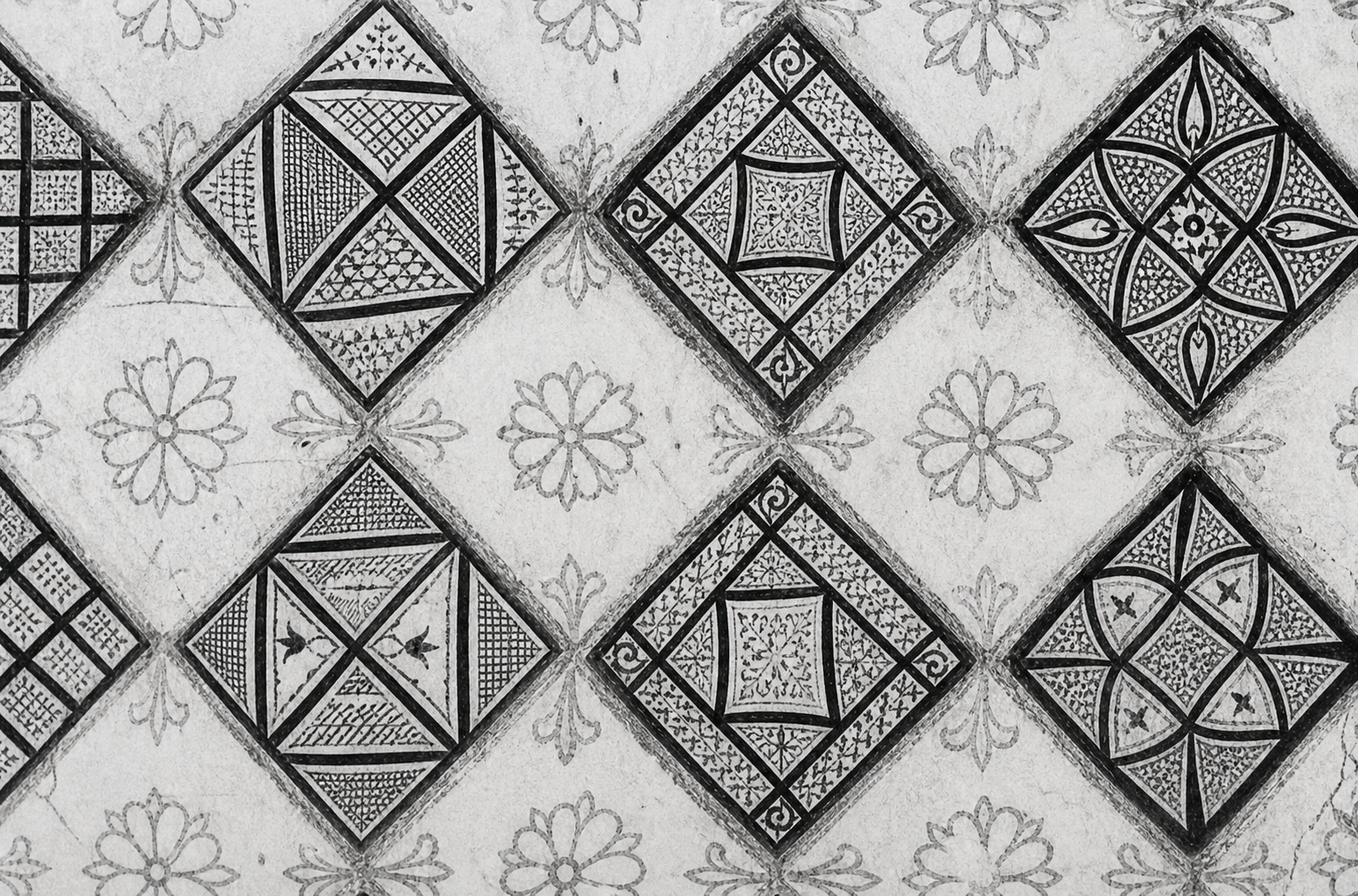
nD is)

Anatolian carpet with "'inaccurate'' corners; the carpet is full of life, because the weaver was paying careful attention to the many centers in the border, and drew them, and chose them, so that all the centers would come out right.
times." And the young man, again, hardly dares to say what is on his mind, but finally plucks up his courage, and stammers, "But, but what happens then, what happens if one of the bowls is checked or cracked?"
"I patch it," says the old man, calmly, and goes on with what he is doing.
That is all. It does not mean that the old man doesn't care about the bowls he makes. But he is deeply relaxed about it, not panicked. And in this state where nothing is quite so important, nothing is so terribly, heart-twistingly vital, he knows that he can let the greatest beauty show itself -and this is the only state of mind in which the property of roughness and the breath that lies ina thing which has the "it" in it can ever come to life.
Going back to the more fundamental meaning of the property of "roughness," a person can only allow the regularity or order of a situation to be let loose, according to the wholeness which is required, when he or she is in this very special state of mind, this egolessness, which allows each part to be made exactly as it needs to be. Roughness does not seek to superimpose an arbitrary order over a design, but instead lets the larger order be relaxed, modified according to
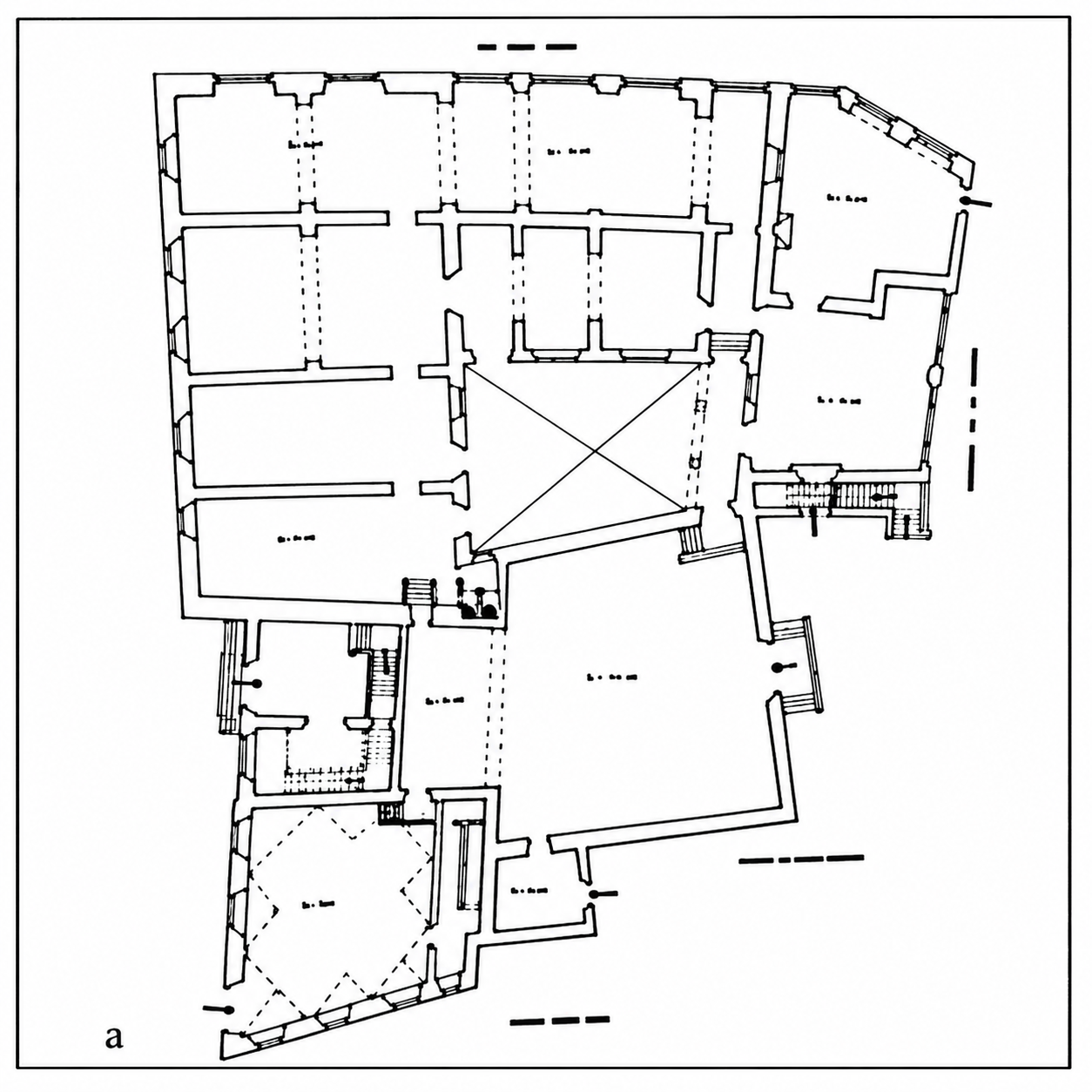
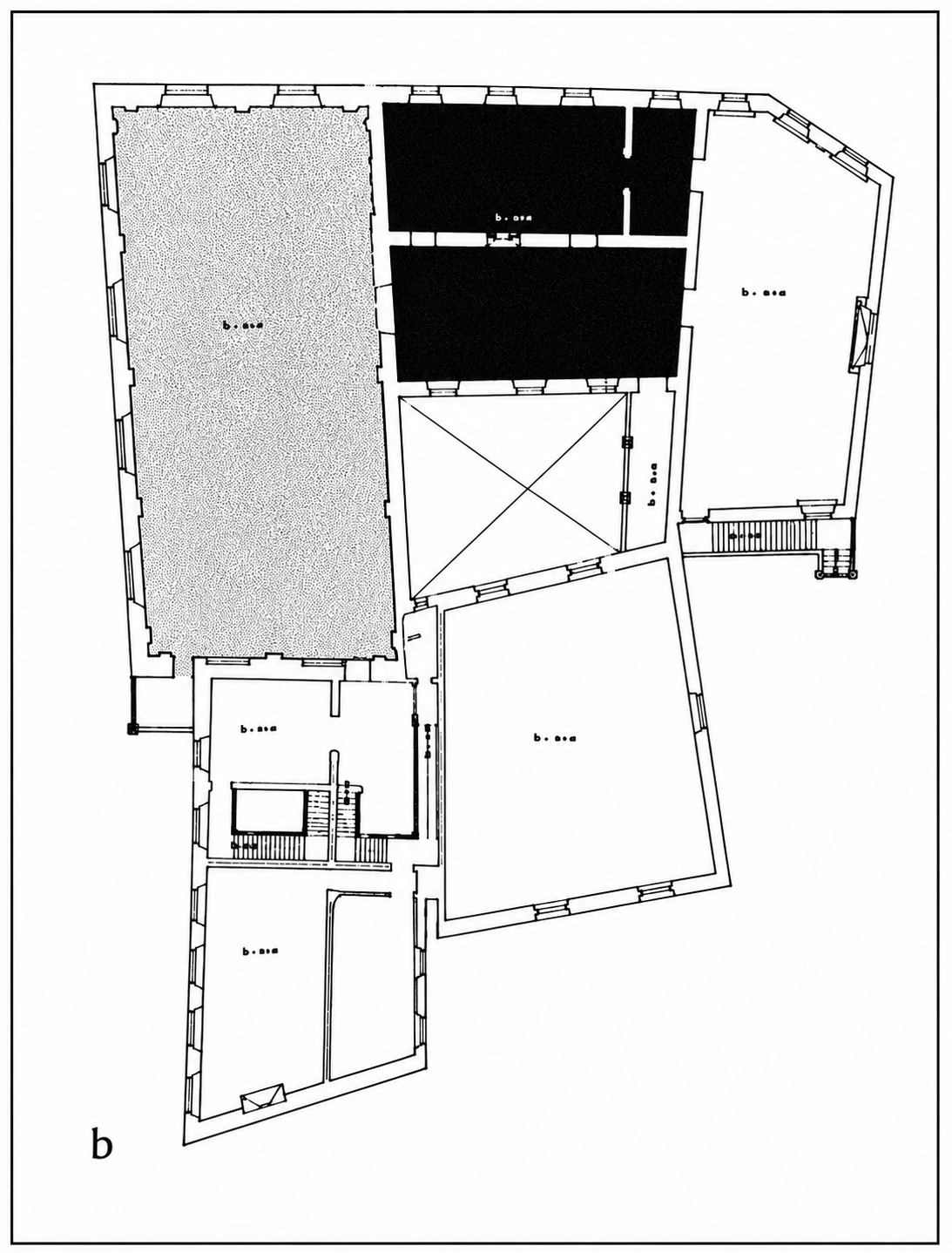
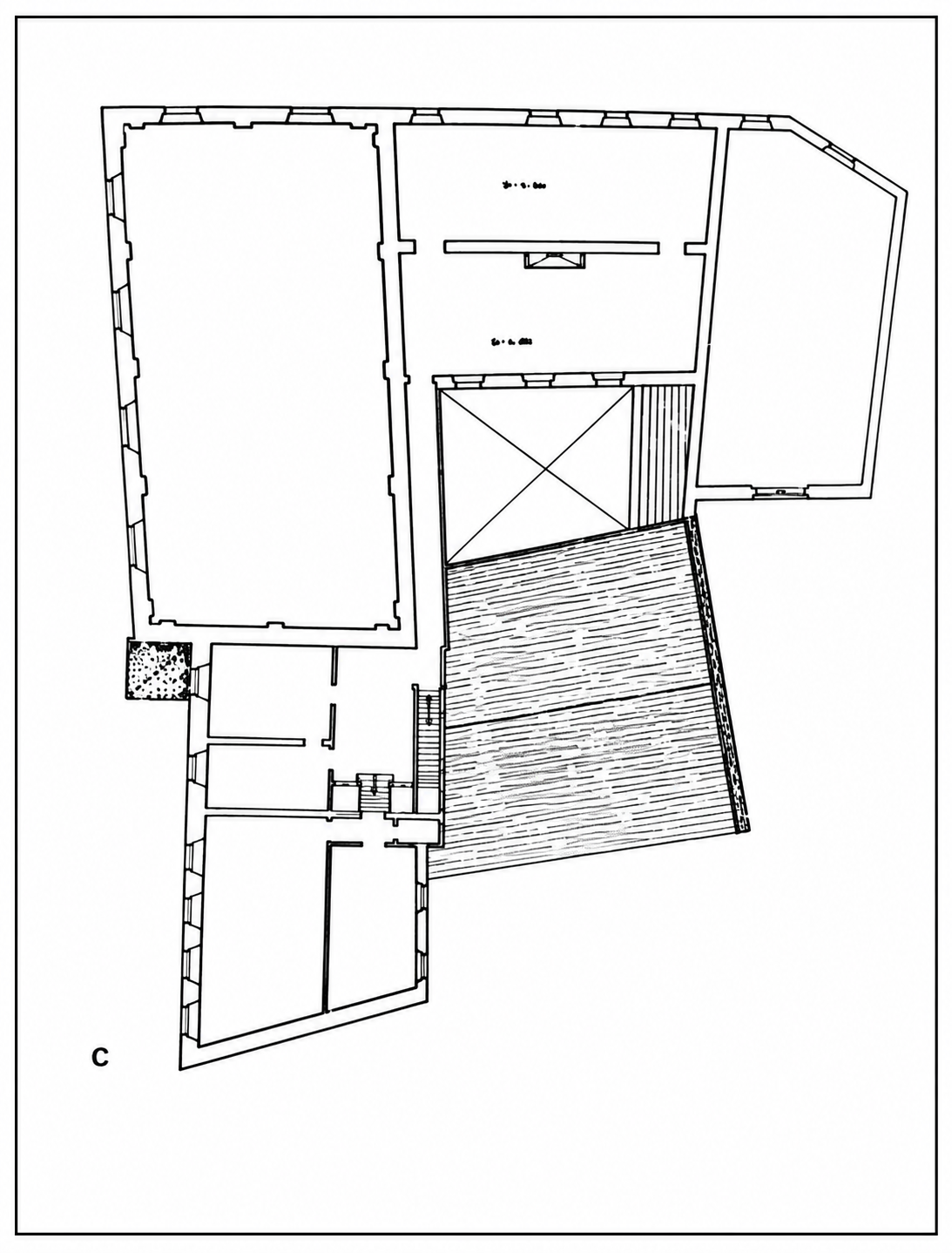
It is certainly noticeable that all great buildings do have various small irregularities in them, even though they often conform to approximate overall symmetries and configurations. By contrast, buildings which are perfectly regular seem dead. This arises because real things have to adapt to irregularities in the exterior environment correctly. They become partially irregular in response. If I have a paintbrush loaded with paint and want to make a line of dots, I will splash them down, and indeed create a rhythmic line. But of course, the spacing is imperfect, the line is not perfectly straight, because I don't need those things. By paying attention to the global structure only to the extent that is needed, a much more fresh and vital line comes into being.
In the illustrated examples of traditional buildings and town plans shown here this roughness, as a form of perfection, is profoundly visible.
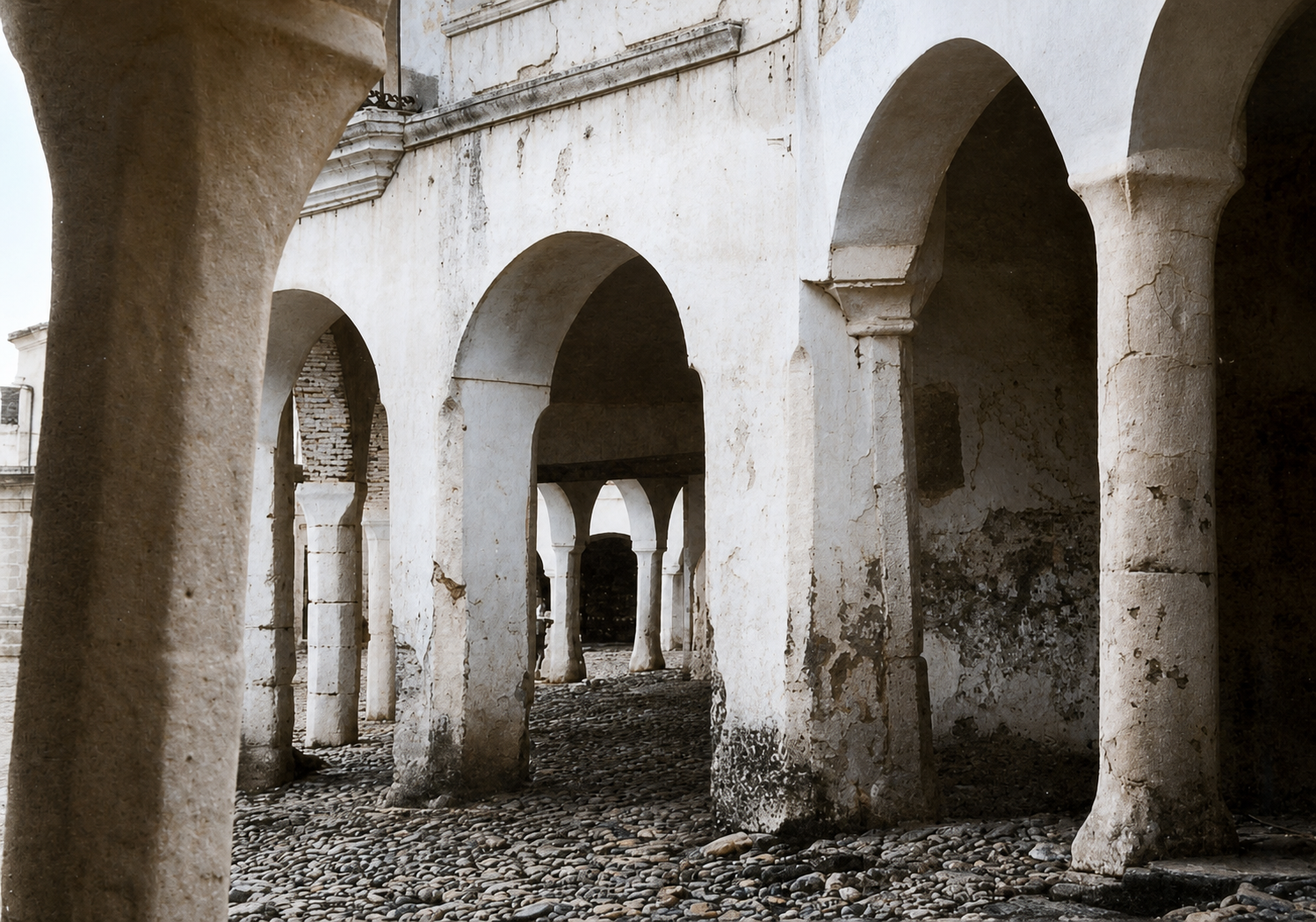
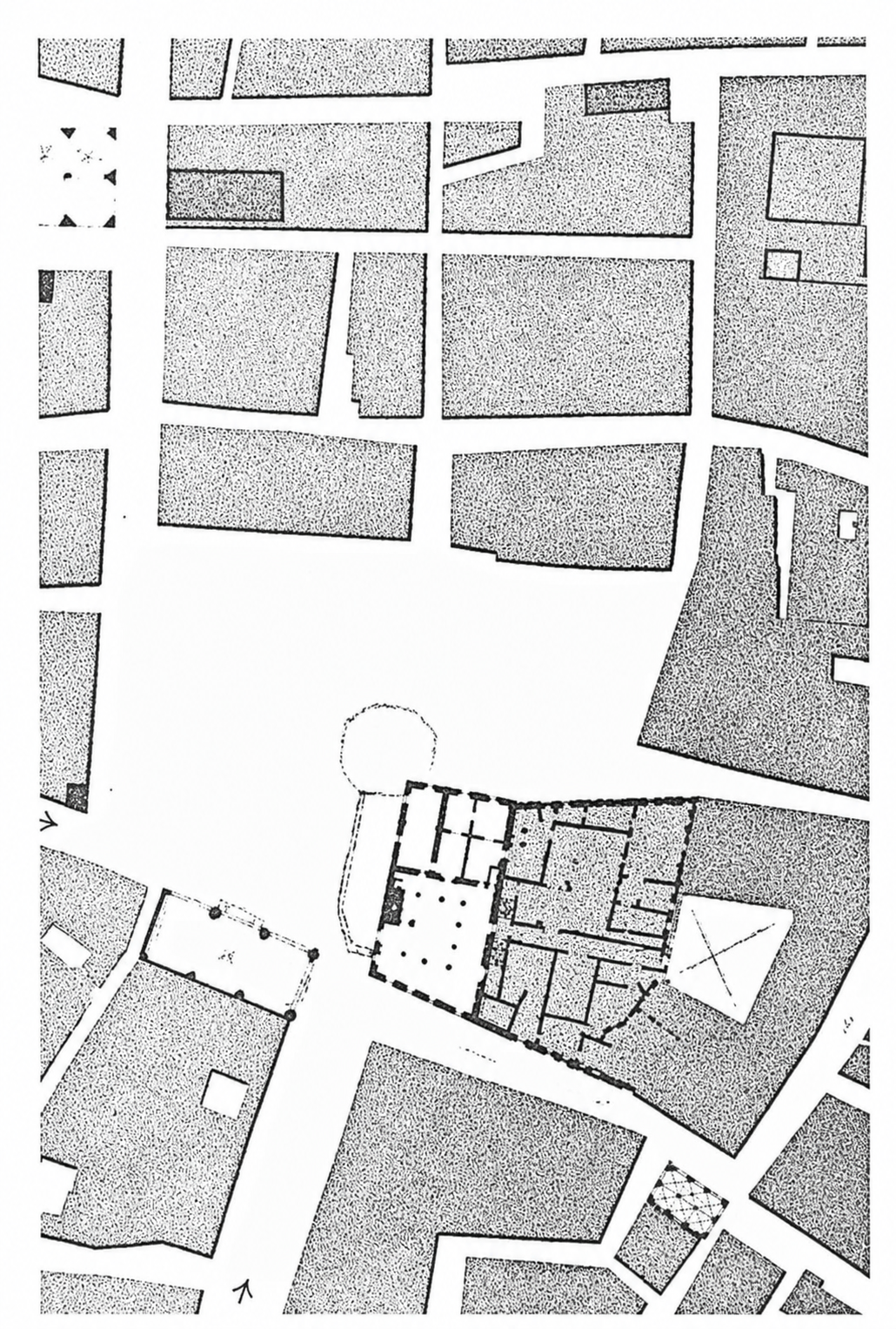
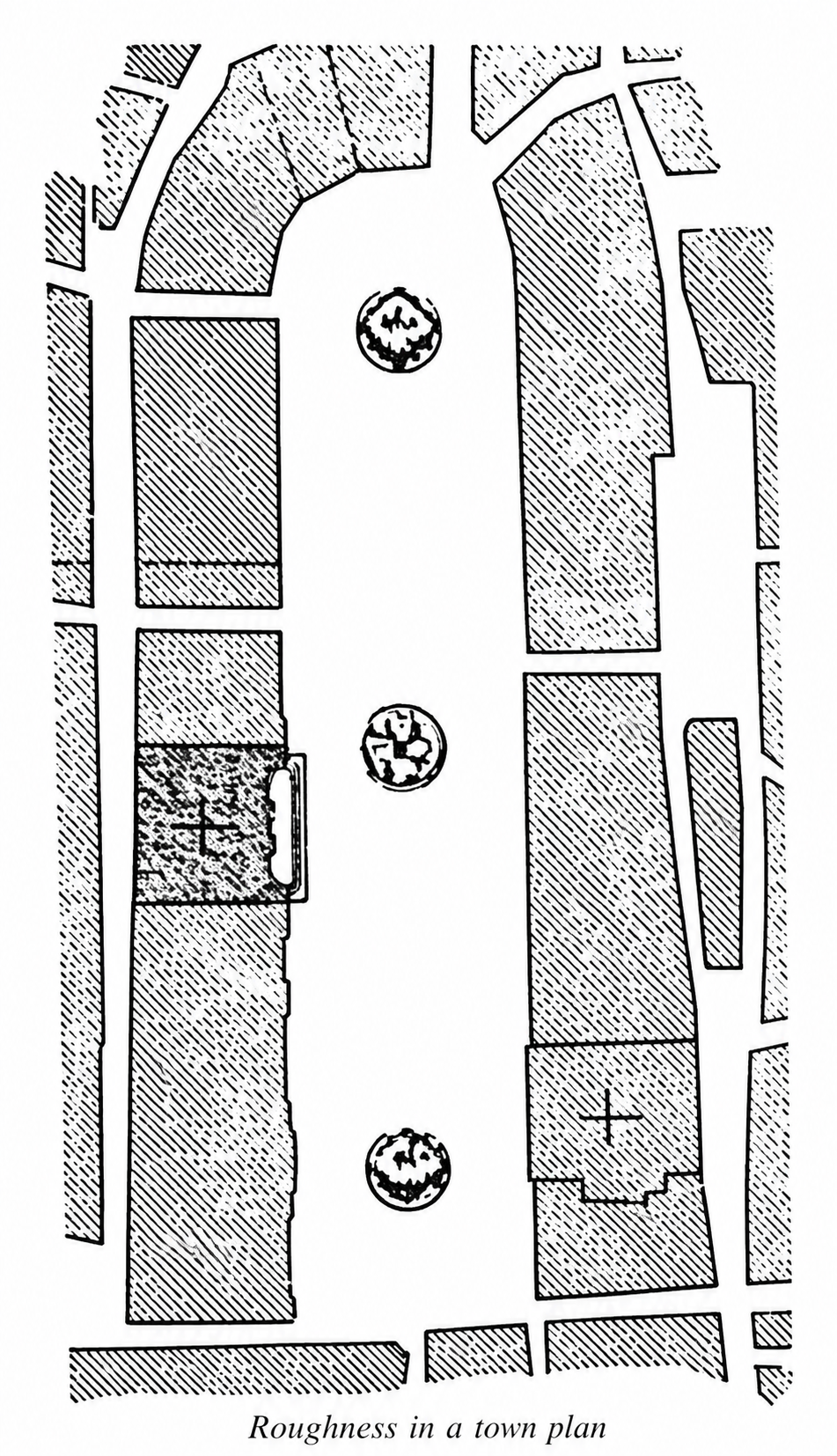
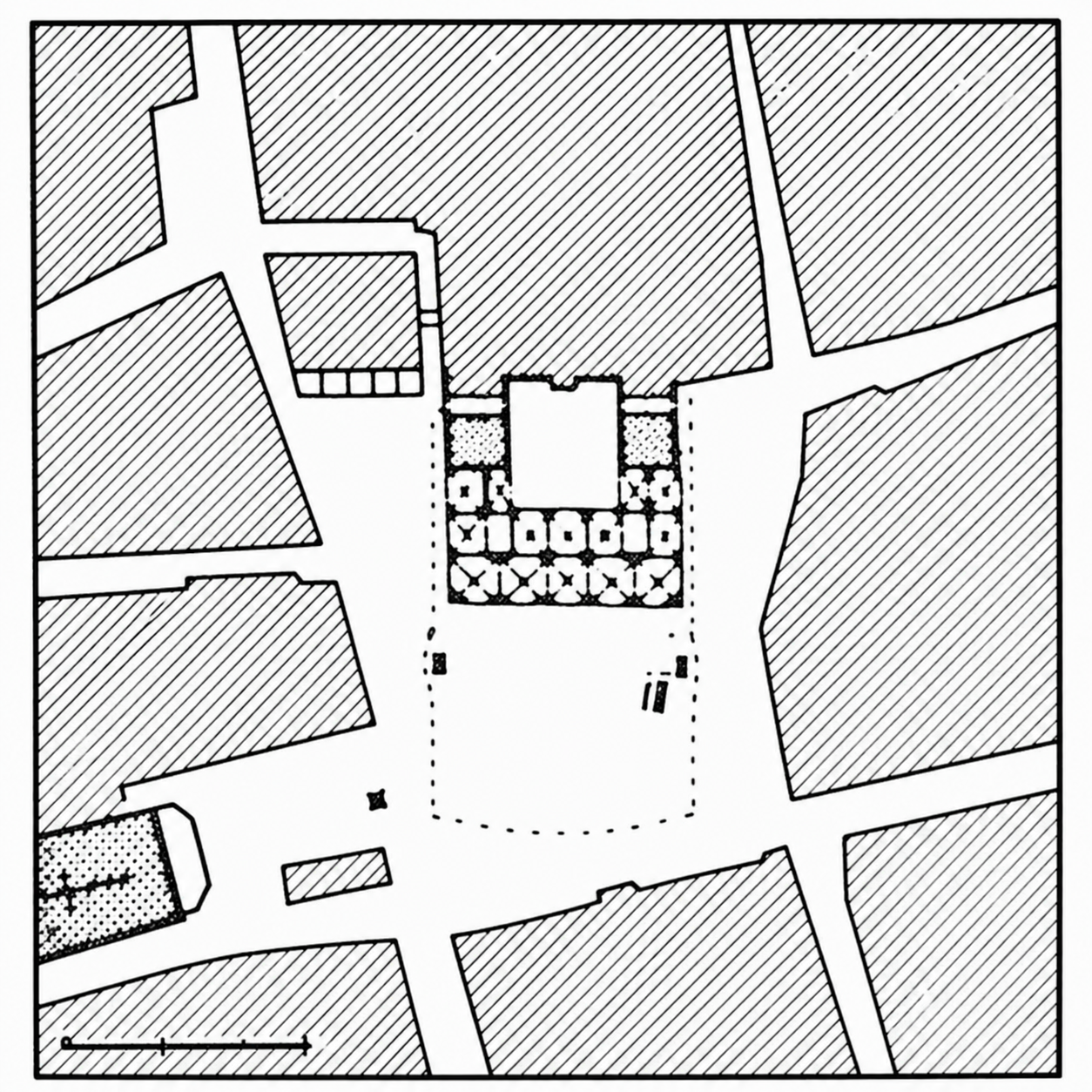
Roughness in a town plan
The house shown on page 214 summarizes the whole situation. To build this house correctly, it naturally takes on an apparent roughness. Our current tendency is to dismiss this house as an archaic building, rough only because the techniques of fabrication forced it to be rough because the techniques could not be precise. A future view may reverse this instinct, and recognize that a still more modern house will have this appearance again, because the size, spacing, orientation, and even modified right angles which are visible in the structure all come about as part of a more encompassing exactness of adaptation. More modern construction techniques that will be available in the future, will, like nature, once again be more capable of making such an organic structure and we shall, by then, no longer be ashamed of it.
Functional Notes
Practical examples of the need for roughness abound. If I am trying to place windows in a building wall with real care for the light in the different rooms, for different views, sunlight and privacy, then the simple row of repeated windows is likely to need modifying, somewhere along its length, to cope with these practical necessities (APL, NATURAL DOORS AND WINDOWS, p. 1046.)
And the beautiful thing is this: the kind of
ia ' i TUT wa
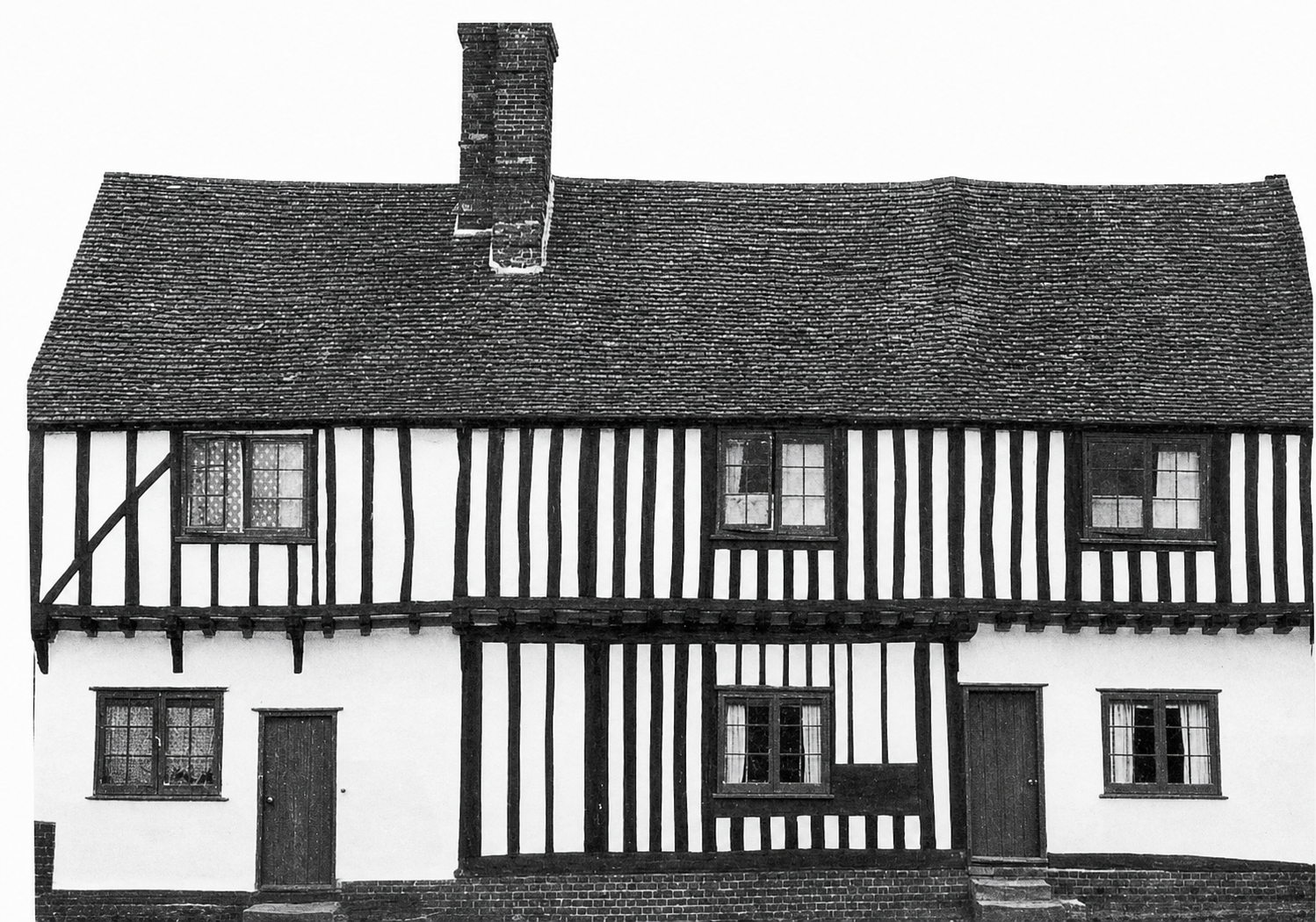
roughness which comes from this sort of attention is always the beautiful, unselfconscious kind, which is almost perfect -- but not quite -- and is therefore so harmonious. When framing a house in two-by-fours it is easiest to place them at equal intervals, and set the last one to a different dimension. It would be crazy to try and space them all at equal intervals, 14 3/4 inches apart.
On another scale, Camillo Sitte's famous empirical study of urban space showed clearly how the life of a public square depends on its geometry. As he found: "Public space is often irregular. The irregularity helps to create an informal atmosphere, which links the square to the town and buildings." Camillo Sitte, THE ART OF BUILDING cries. But, even in spite of the irregularity, the feeling of centeredness also needs to be emphasized and bolstered by local symmetries in the overall formation of axes, by the placing of things near the middle of squares, and by the use of obviously potent symmetrical building fronts to mark important positior and directions.
There are many indications that too careful a plan, too rigid an order in which each thing i is supposed to take its proper place, actually works against function and inhibits proper adaptation. For example, in a building where each room must be the e and must open off a certain main corridor, rooms may get squeezed, and lose their optimal relationship to sun and light. If the lowed more roughly to go wherever they can, a more me re alhappy-go-lucky condition, then each one can be placed exactly where the best sun and light are. But the result of this dramatic and careful attention to functional detail is a certain roughness or freedom in the plan. It cannot tolerate the extra constraints of formal concepts in the plan. Here is an example of the way that roughness allows one center to intensify another. The roughness of dimension allows the space between the buildings to sustain the centers which are formed by sun and light.
In APL there are a number of patterns determining necessary functional relationships which have their origin in the idea of roughness. For example soMETHING ROUGHLY IN THE MIDDLE (p. 606) requires a focus in the middle of a square, but only in an approximate middle, since the position needs to meet other important criteria such as visibility from different streets coming into the square. GARDEN GROWING WILD (p. 801) allows an organic harmony in a garden to be intensified by roughn SOFT TILE AND BRICK (p. 1141), ZEN VIEW (p. 641), HALF- HIDDEN GARDEN (p. 545), and LAPPED OUTSIDE WALLS (p. 1093) all introduce a subtle roughness into different situations of material, view, position, and su e, to get the best functional effect. FLOOR-CEILING VAULTS (p. 1027) shows how the most perfect vault 'or a given room, though not rigidly perfect in geometrical shape, from an adaptation between the room configuration and the vaulting proc
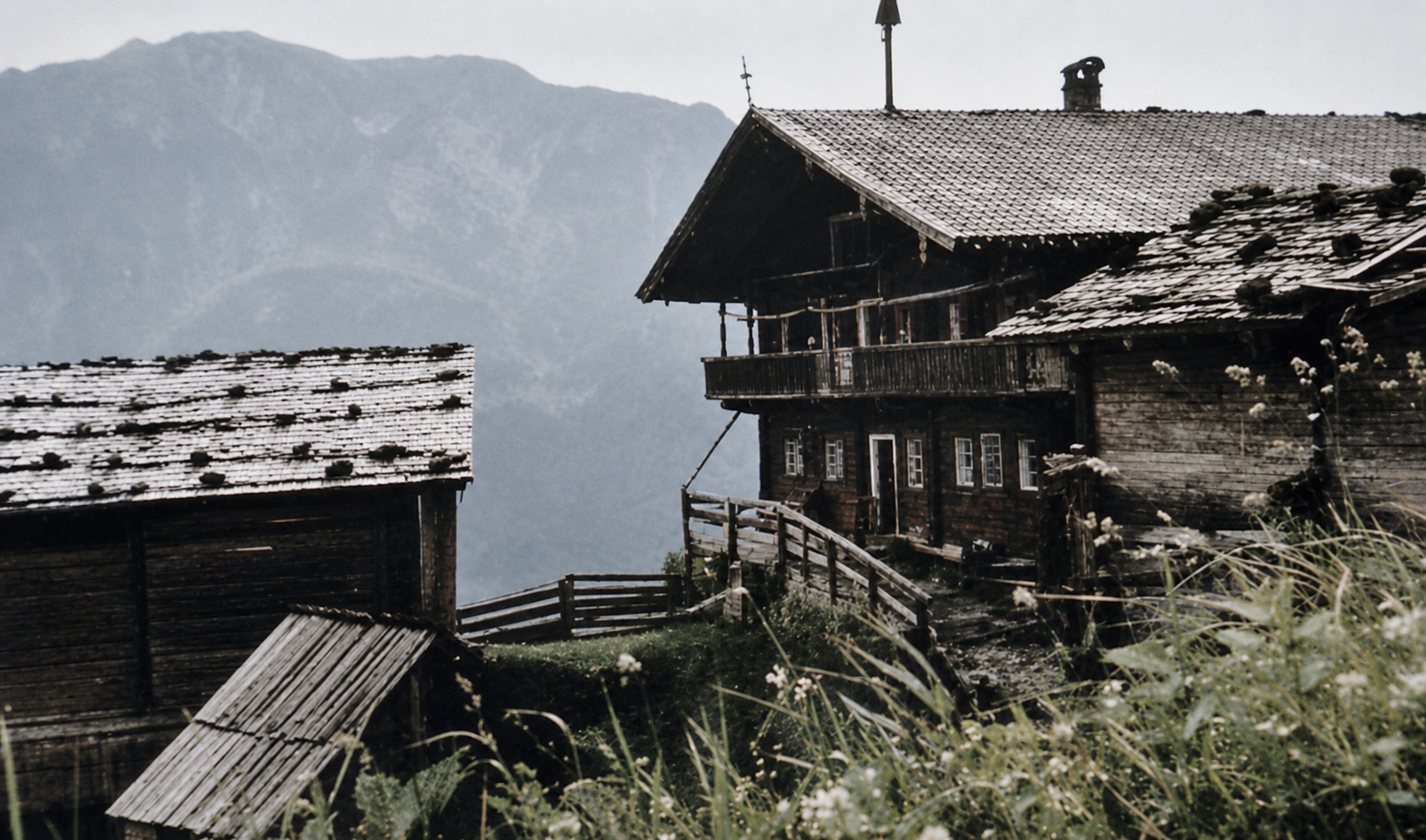
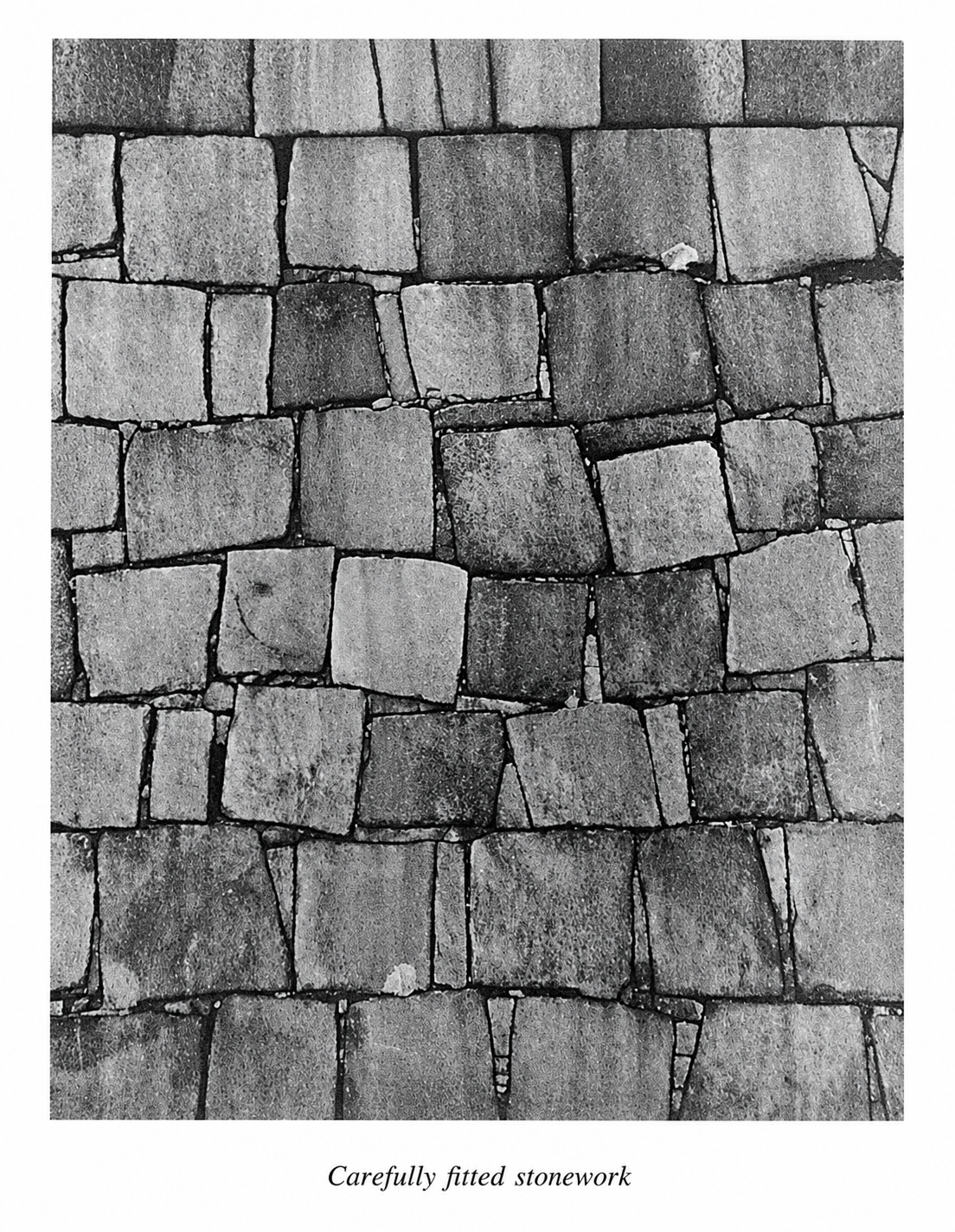
Tn the course of examining things which have profound life, I have found that there is almost always one vital characteristic, very hard to describe accurately, and yet crucial. In general terms, there is a deep underlying similarity -- a family resemblance -- among the elements, so deep that everything seems to be related, and yet one doesn't quite know why, or what causes it. That is what I mean by "ecuoes." Echoes, as far as I can tell, depend on the angles, and families of angles, which are prevalent in the design.
When echoes are present, the various smaller elements and centers, from which the larger centers are made, are all members of the same family; they contain echoes of one another; there are deep internal similarities between them which tie them together to form a single unity.
This family resemblance can be illustrated most easily by a negative example: the building by Michelangelo shown below is, of all the build-
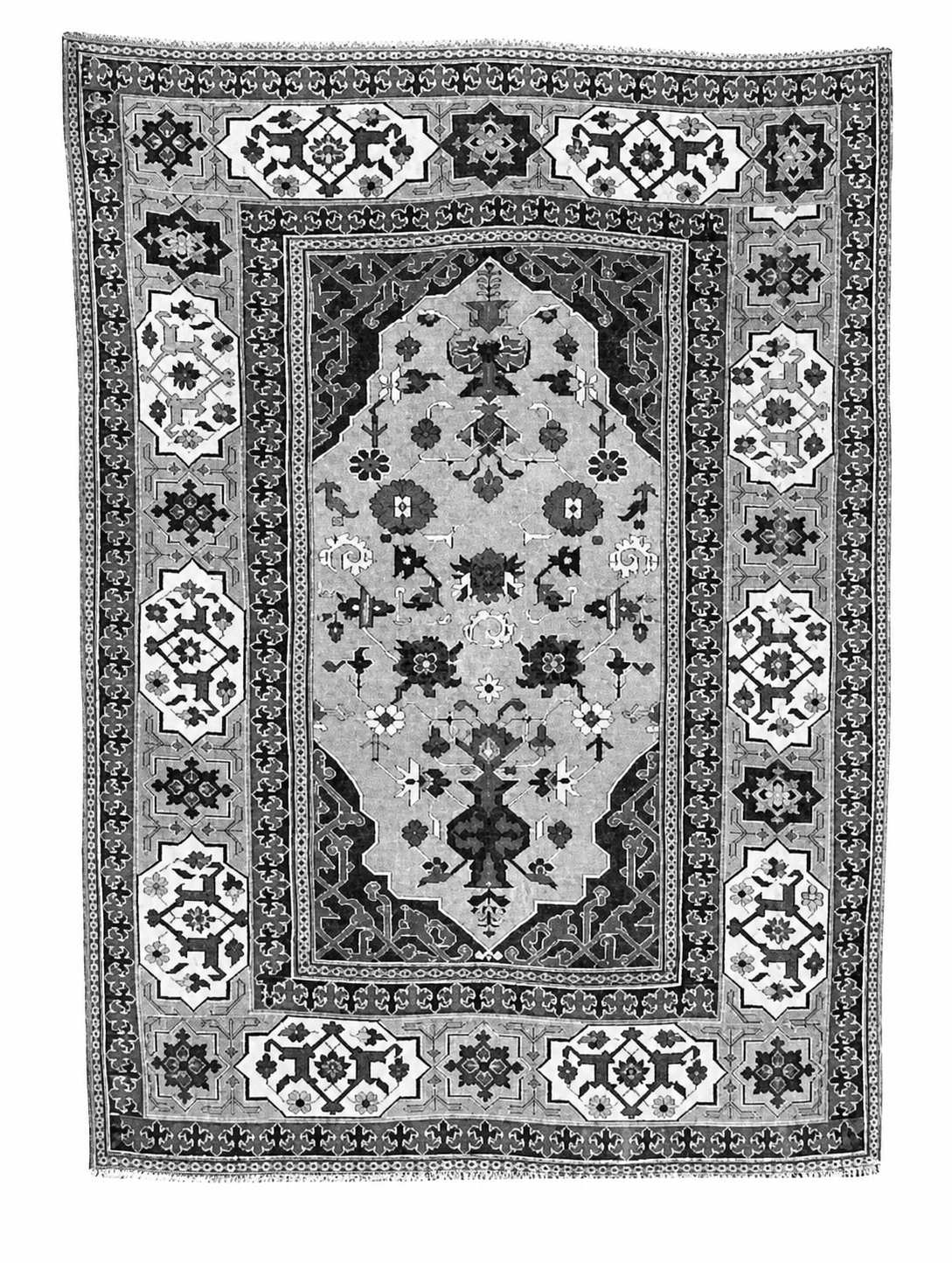
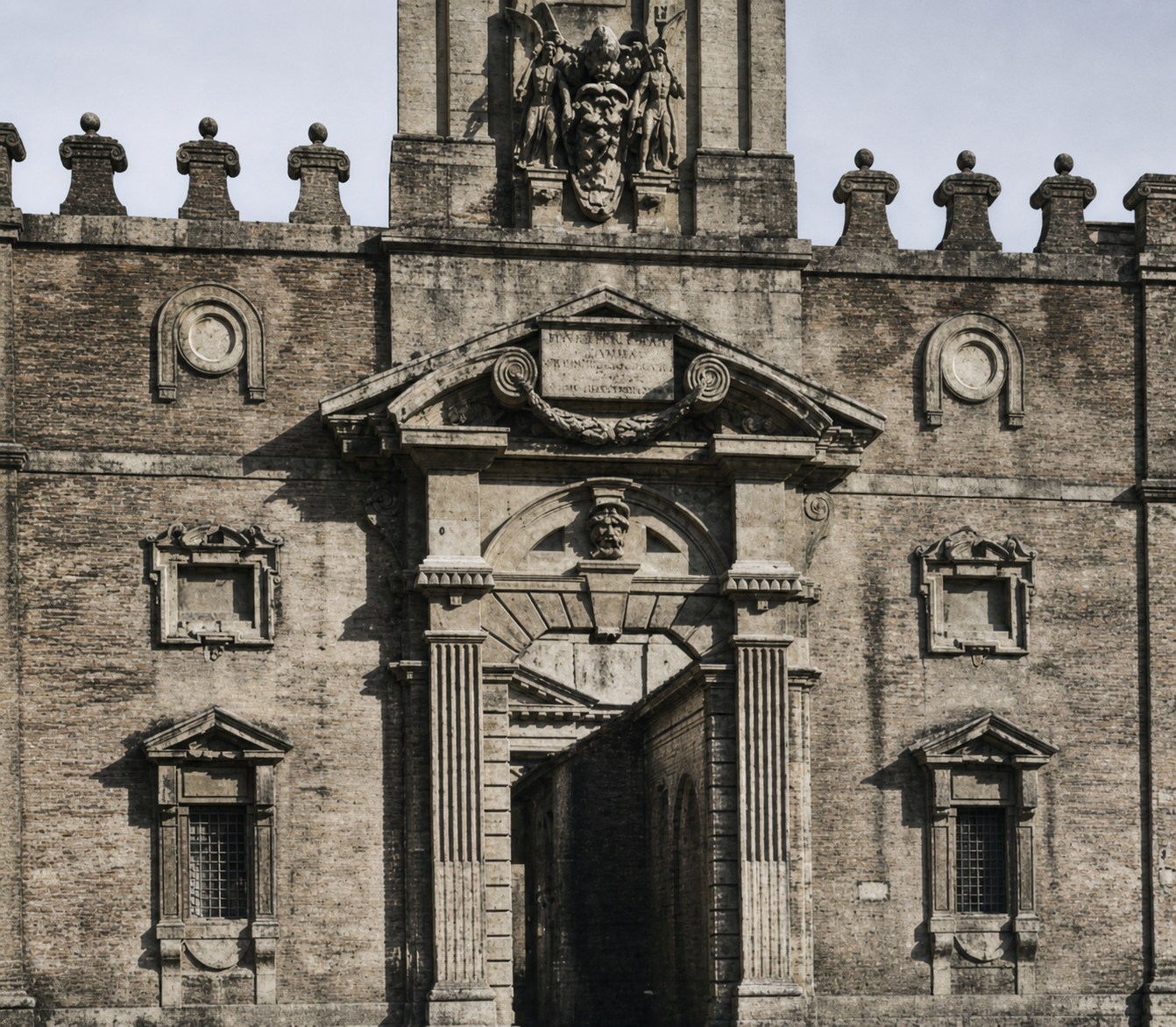

Thyangboche Mon astery, Mount Everest ings I know, the most hopeless hodgepodge. It isa salad of motifs and elements. Squares, circles, broken circles, triangles, are pasted together in a riot of disharmony. The angles are all different. The shapes made by the angles are all different.
Compare Michelangelo's building with the Turkish prayer carpet, where all the motifs -- no matter what their differences and powerful differentiations -- have a single guiding feeling. They all seem cut from the same cloth, poured from the same mold. The forms in the carpet are dominated by the basic cartouche shape, with elements derived from the lines that form a staroctagon (a combination of alternating right angles and 45-degree angles), in the flower trellis, in the field shape. The same feeling, caused by this combination of angles, also exists even in the fleurs-de-lys of the main border, which are superficially quite different in shape and character, but which are once again made of the same combinations of right angles and 45-degree angles that appear in the cartouche.
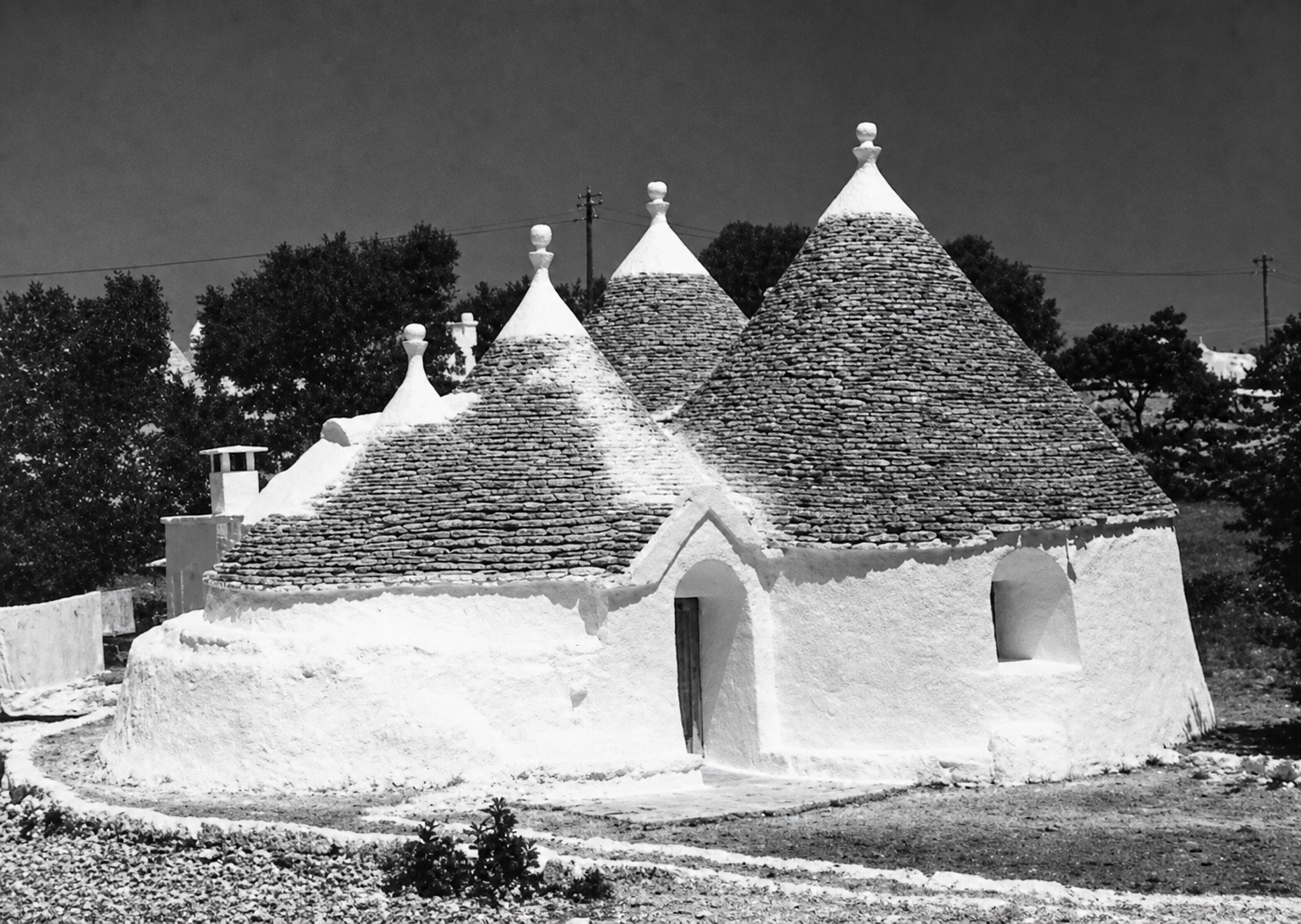
In the simpler cases of ECHOES, we see the family resemblance in the different parts because they are simply similar in shape, again deriving from the angles. For example, in the Himalayan mon astery all the parts -- stones, caps, doors, and steps -- are heavily square with a line and a shallow angle. In the houses from Alberobello, all the motifs are cone-like. In the Nolli plan of
Houses at Alberobello, Southern Italy. The shapes dominated by cone shapes, steep angles in combination with round shapes.
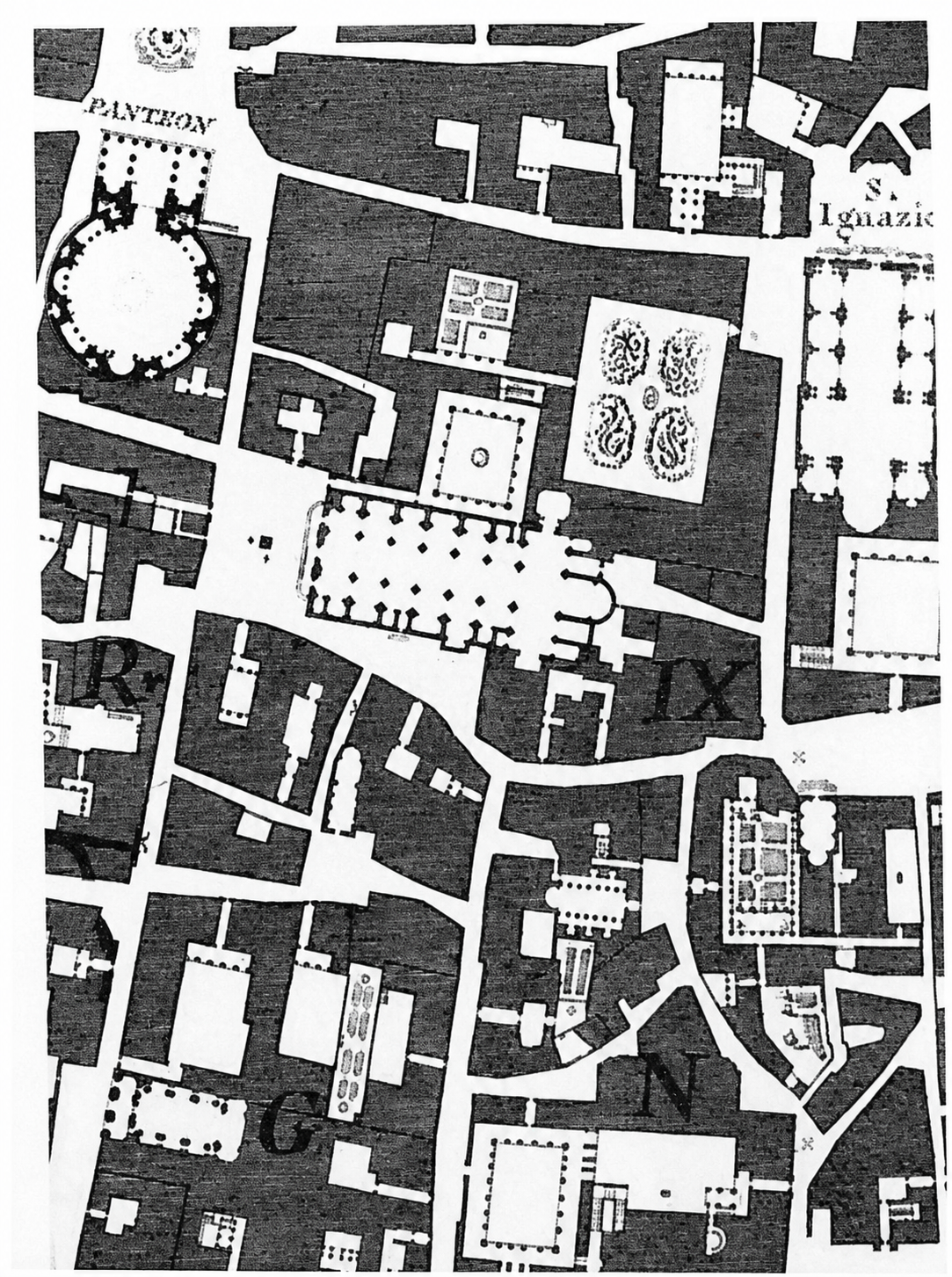
Rome, all the shapes are rectangles, or modified rectangles. However, these are only simple cases.
The more interesting cases arise when we can feel or sense a general family resemblance among a group of motifs -- but the family resemblance caused by angles are deeper, and we cannot really say so easily quite why they all feel similar. In Thyangboche, the mon astery in the foothills of Everest, we feel in some profound and subtle way that this building is part of the mountains: part of the Himalayas themselves.
The angles of the roofs, the way the small roof sits on the larger roof, the "peak" on the largest roof, the band below the roof edge -- all reflect or echo one another, and echo the structural feeling of the mountains themselves.
Even in this complicated case, it is the angles which do most of the work we feel as echoes. But it is the process which generates the building, the way stone is used, perhaps the fact that the stone is cut from those very hills and behaves the same, or perhaps because of a deep intuitive relation to the mountains that the builders had, allowing them to make something that comes from the same womb as the mountains themselves.
The essence of the echoes property lies in the very deepest level of structure. For example, in this Norwegian door, we feel the sense of echoes between all the different rectangles. The doors, the windows in the door, the panes, the panels below the windows -- all have the same morphological feeling, a combination of rectangles and diamonds, and the resulting harmony between these different elements is very great. At first, we may try to identify some particular shaped rectangle as the source of these echoes -- they all have a similar proportion, long and thin -- and certainly there is something in this. But again there is present another deeper structural fact: that the rectangles are all bound in twos, side by side. The two panels making the door (below), the two doors, the two windows, the pairs of panes within each window -- in all these cases there are two rectangles, like the leaves of an open book, and it is this two-ness in the arrangement of the rectangles which is also responsible for the sense of order. And it is this structural theme which is being echoed.
In the Norwegian barn door design made up of diamonds and circles and brackets, where
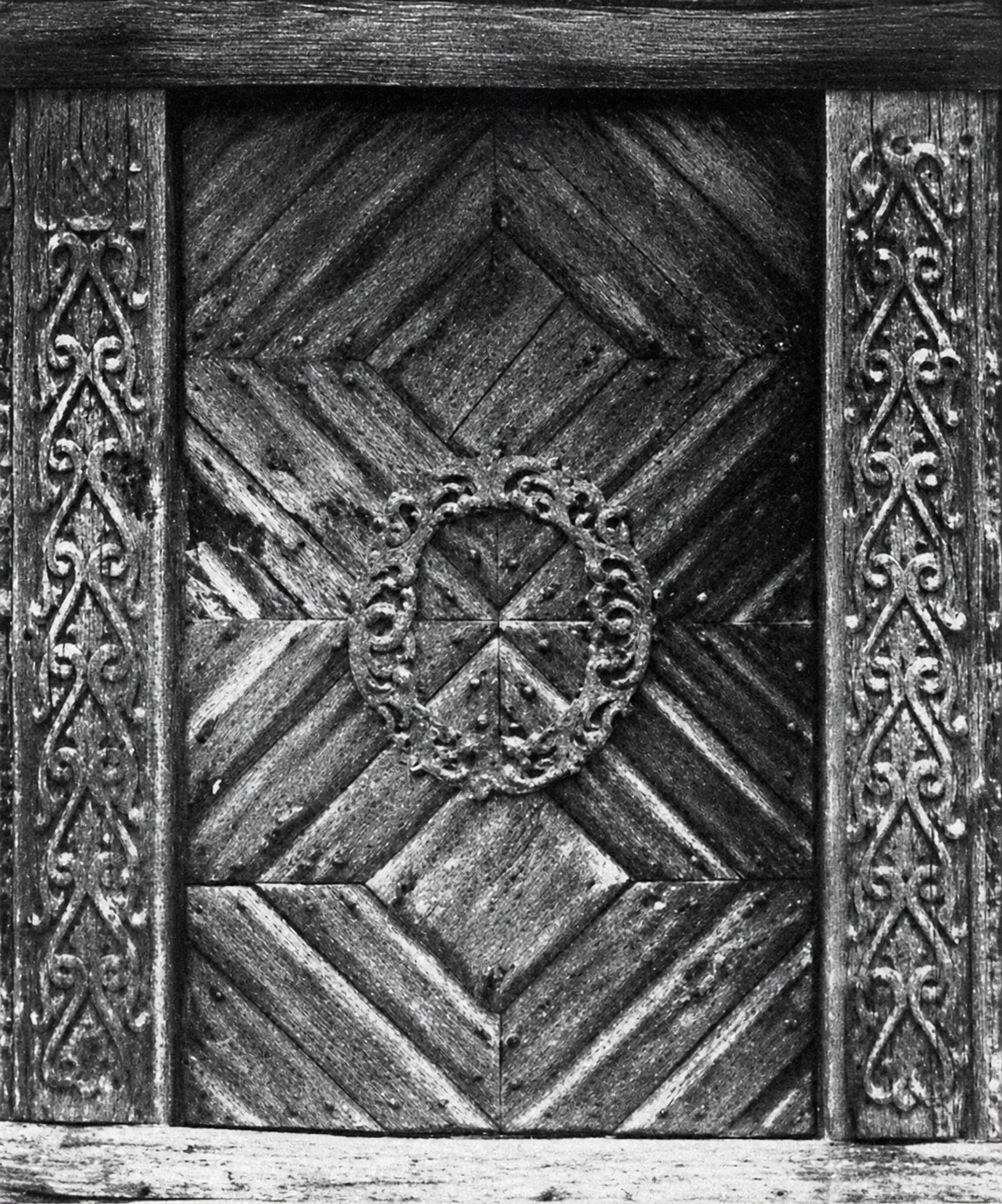
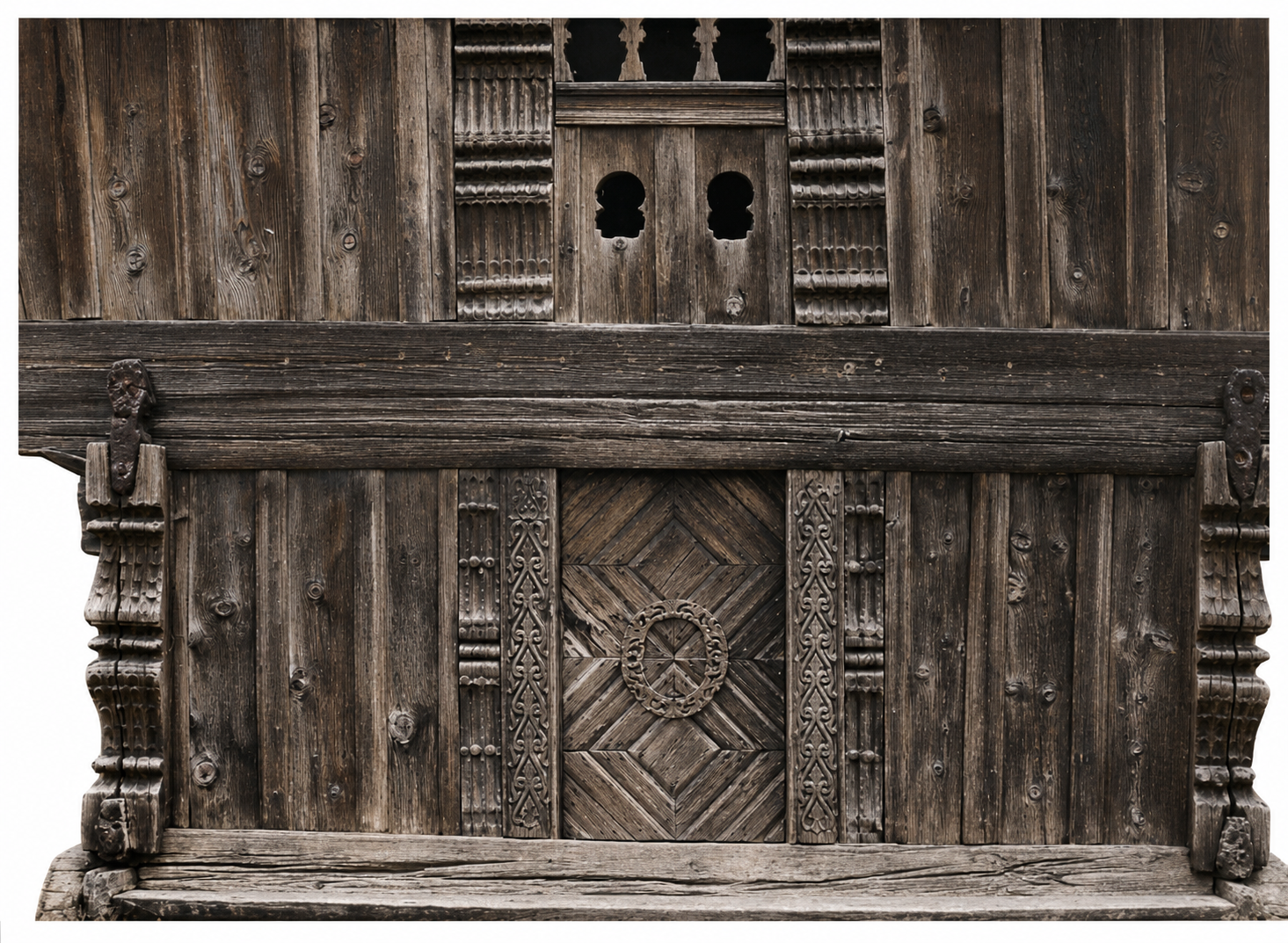
Norwegian barn door the sense of echo is very strong indeed, we may at first wonder what there is in common between diamonds and circles. But the significant fact is that the circles are arranged in diamonds, and that each circle is also at the center of a diamondshaped space between four diamonds -- the brackets embody the shape of the circle and the hint of the diamond in the space at the end, and these four brackets are again arranged to form a diamond -- this is where the echo lies, where the deepest structural relationships exist. They do not exist merely in superficial similarities among the shapes. Often this becomes most pronounced in functional or practical cases where the similar structural geometry derives from deep similarities of process that have created it.'
Functional Notes
A practical example: In a well-made old barn, all the different parts are somehow made in the same way -- adzed beams and columns, pegged and mortised, so that they come from a single family. This arises from practical functional consideration. Often, when all the different details are members of a family, the task of making the building becomes simpler, the rhythm of making it faster, more economical. It can produce the nece without trouble. If, on the other hand, the details are disparate, it is such an effort, mentally, to make the building at all, that there is less room for variation and invention. The result: in a building without echoes, the final adaptation of the building to its needs is often weaker.
When functions are taken seriously, there are usually ary variety various geometric rules which follow, as a result of functional conditions. These rules, applied over and over again, will create a feeling of familiar angles, line: for formal reasons, but simply as a result of ence to functional requirements. For instance, the buildings on a hill all tend to have a similar relation to the slope, and sunand drainage, and avalanches. Asa result, the hillside full of buildings, all of them obeying these laws, will tend to have echoes in their physical forms.
s, shapes, not areful adher-
If something has been made without some echoes of this type, the chances are that certain deep requirements have been ignored, and the variety of non-echoing forms will cause various functional failures.
In APL similar cases are described for entrances (FAMILY OF ENTRANCES, p. 499), columns and beams (GRADUAL STIFFENING, p. 962), windows and light (LIGHT ON TWO SIDES OF EVERY ROOM, p. 746) and owned furnishings (THINGS FROM YOUR LIFE, p. 1164).
2.13 / the Void
In the most profound centers which have perfect wholeness, there is at the heart a void which is like water, infinite in depth, surrounded by and contrasted with the clutter of the stuff and fabric all around it.
In the Ghiordes prayer rug shown below, this takes the form of the deep blue emptiness at the center. It connects with the infinite void, and also with the center of oneself.
We see it also in certain religious buildings -- there, too, one finally comes to this center, to this central void. The altar in a church, the great empty space at the crossing of a church or mosque -- it is the silence, at the heart.
To understand the quality of THE voip clearly, a contrast between two examples. is helpful once again: the plan of the mosque of Baybars in Cairo, contrasted with the plan of a

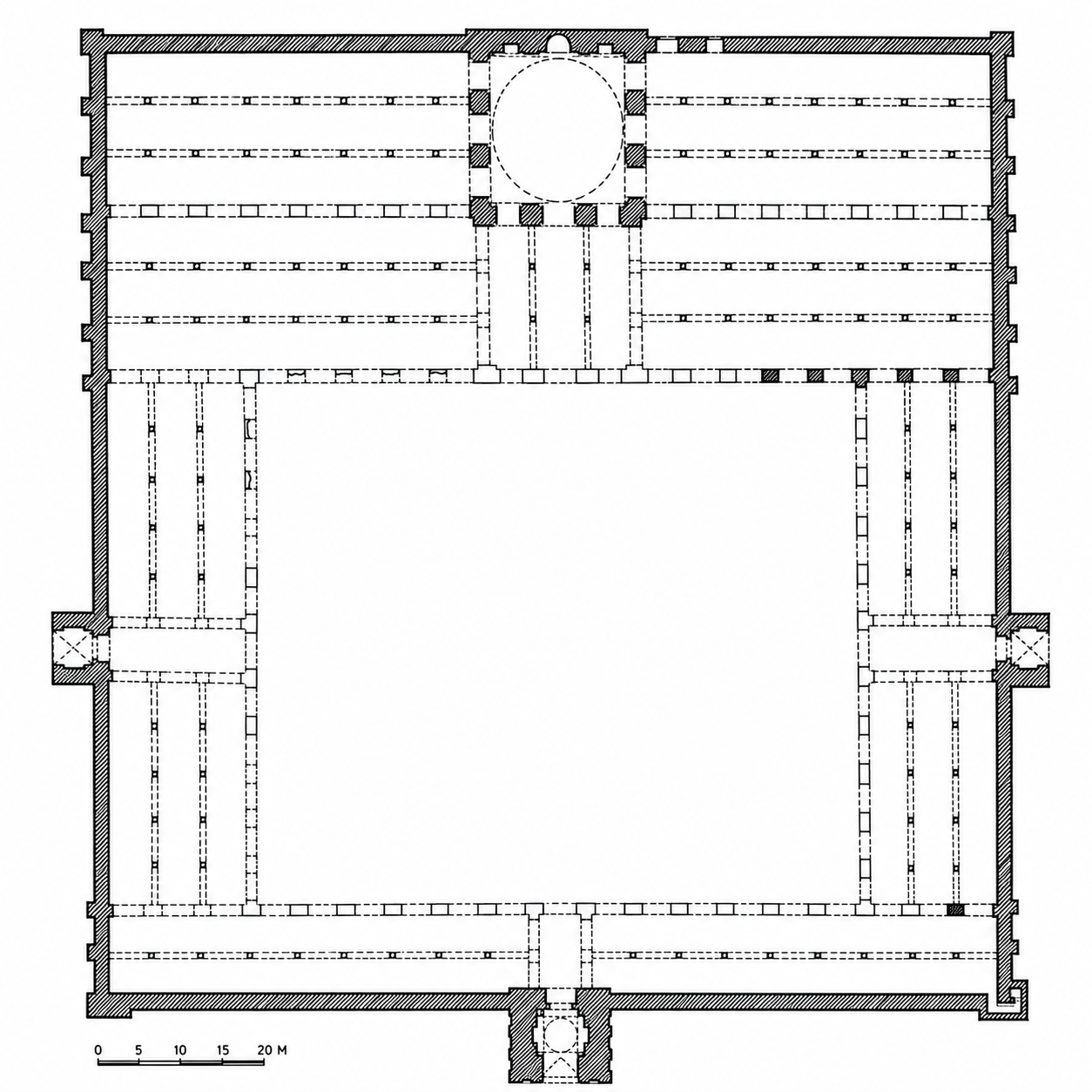
typical American office building of the 1970s. In the center of the mosque we experience the void. In the office building, there is merely an endless clutter and buzz. Nothing is still.
The difference between the two cannot be fobbed off as a difference between a religious building and an office building. When wholeness pervades, the void will be found just as clearly in the forms of workplaces. Consider, for example, a field of corn, a barn, even a duckpond in a farmyard. These are all workplaces in farm society. Each of them has the void. The cornfield is silent, concentrated in its simplicity, uncluttered because what happens there is clear. The duckpond, smaller, with weeds around the edge, has the stillness of water in the middle. Even a
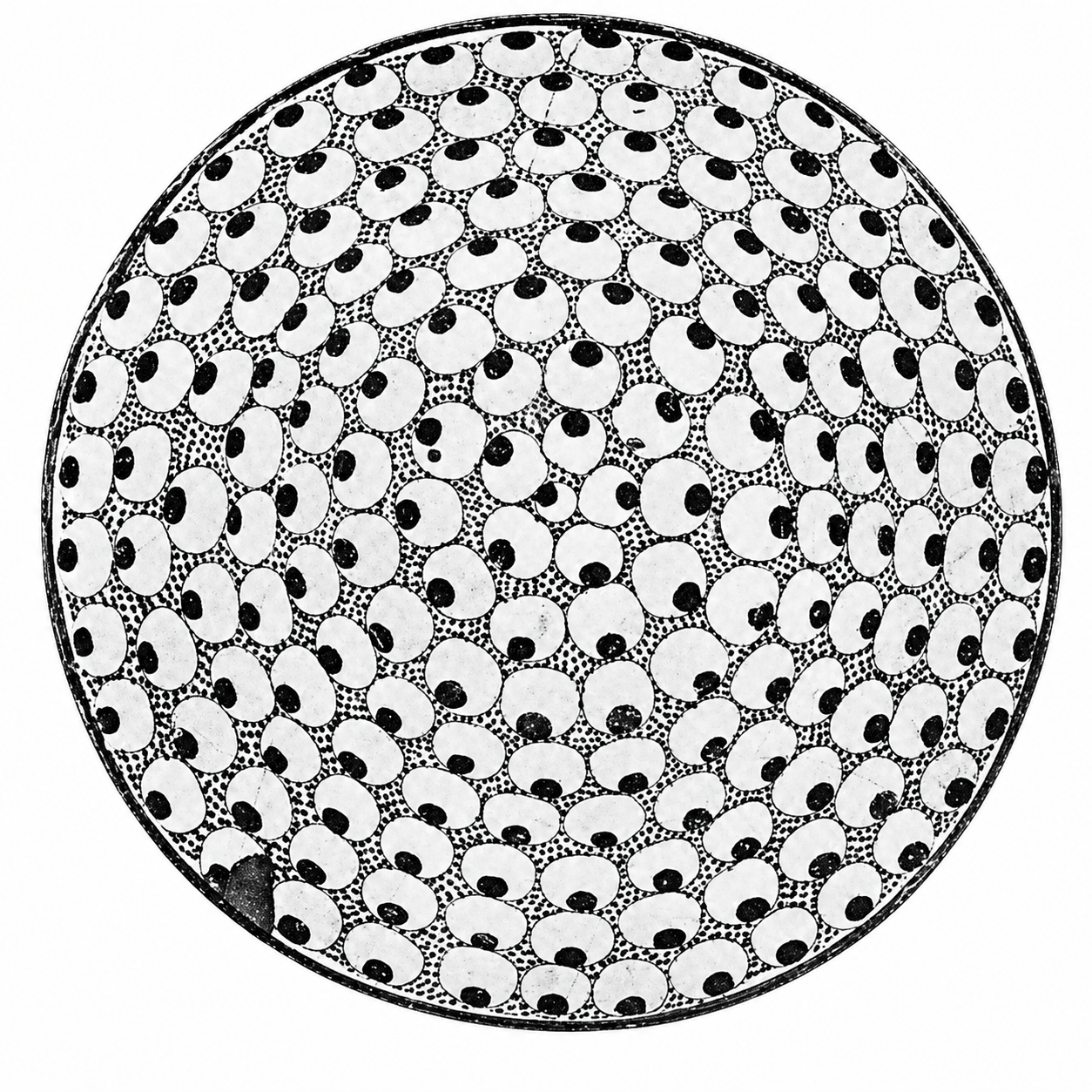
emptiness, experienced and used, surrounded by
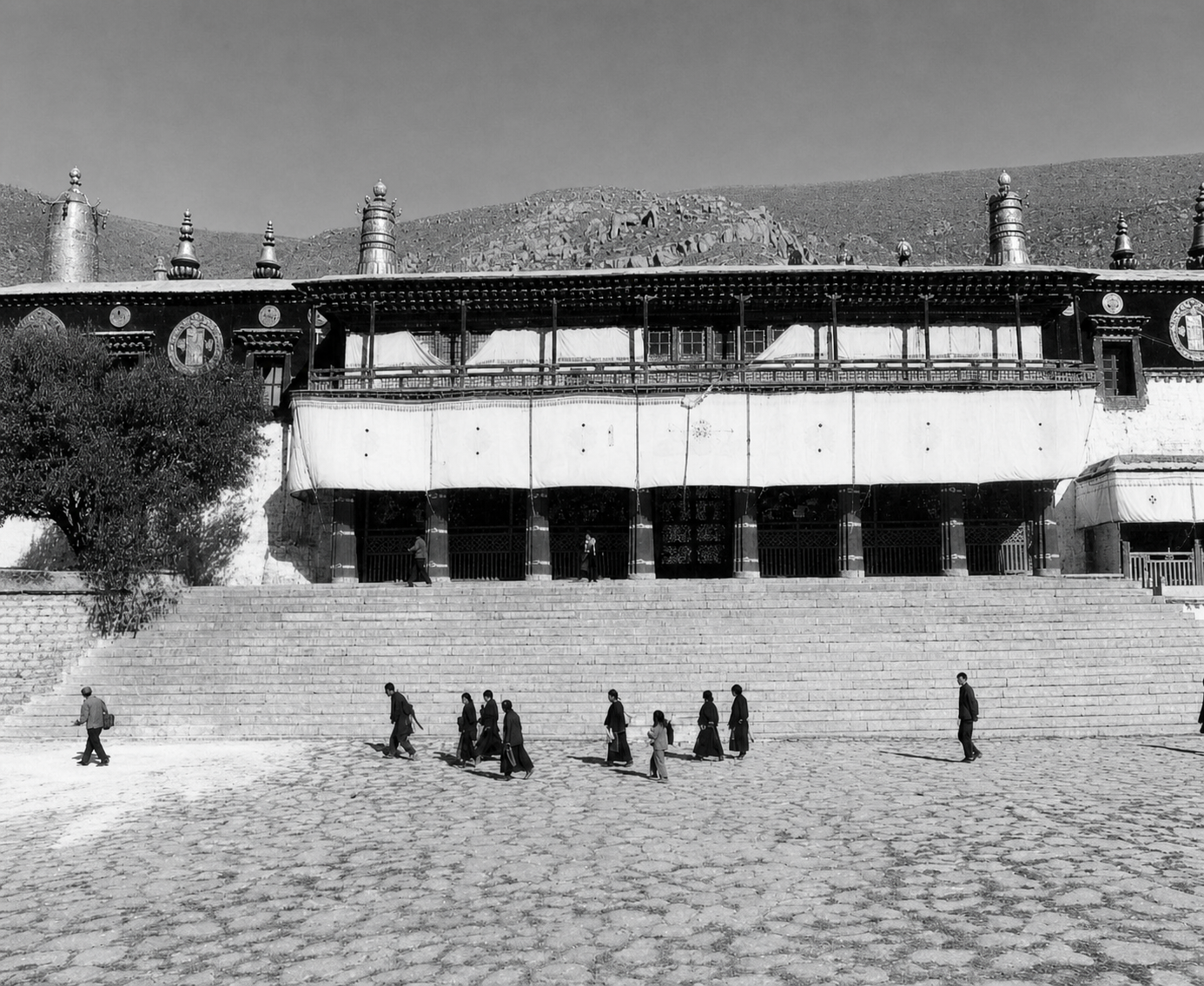
the structure, the braces of the building, the clutter of stored hay and farm equipment in the aisles, the stanchions and troughs along the edge.
This emptiness is needed, in some form, by every center, large or small. It is the quiet that draws the center's energy to itself, gives it the basis of its strength. The fact that the void does not exist so often now, in the buildings and objects we have in our environment, is the result of a general disturbance in our capacity to make wholeness, which is not a necessary functional property of office buildings. Most buildings today have too many small spaces in them, mixed up, scrambled -- often because of a tendency to But there is a great lack of simple, silent, empty, make many funky, small, "human" spac large, calm space.
The need for the void arises in all centers. A cup ora bowl rests, as a living center, on the quiet of the space in the bow itself, its stillness. A painting

thatis ame s of color rests on some quiet unbroken field of color, less differentiated, and concentrating the quiet to itself. In buildings, alarge living room, not cramped -- alarge hall, not cramped -- in ornaments the same. They cannot be all fuss; there must bea balance of calm and emptiness with the delirious detail. It is the we y a large empty center brings life to a mass of smaller centers.
Can this be formulated as a principle of symmetry or differentiation? Is there a way that
Vermeer, Woman in Blue Reading a Letter. The painting gets its energy from the beautiful space visible as white, on the wall behind the woman and above the chair. This void gives quiet forcefulness to the woman, who, though still, is filled with motion against the quiet of that void.
the presence of the void arises mathematically, as part of a stable unified structure, or is it merely a psychological requirement? It is the latter. A living structure can't be all detail. The buzz finally diffuses itself, and destroys its own structure. The calm is needed to alleviate the buzz.
Functional Notes
Function al examples. A large area of one material, sorrounded by small amounts of another, is economical and efficient. It is much rarer to find that equal amounts of two materials will do the job.
The same rule applies in building plans. Within the of smaller functions, itis always essential to have some buzz larger spaces where a larger, slower and more calm atmosphere pervades. The failure to do this, mistakes of modern house and building plans. One of the main things I have learned about houses -- no matter how small -- is that there must be a contrast of the small spaces with at least one larger space, where entirely different kinds is one of the main of social and emotional things can happen. In api we find sacreD sires (p. 131) which shows a great void, in the case of a mountain, or lake, as the
rs) n essence of a sacred site; ACCESS TO WATER (p. 135) which shows it for great bodies of water, and the importance of human settlement in relation to the edge of these just as the small textured centers surround the ILL WATER (p. 358), which requests that the water itself be made still, handled as a void. On an intimate human scale we find the same in sITTING CIRCLE (p. 857), where the circle itself, and the empty space at the heart of the circle, are small-scale manifestations of the void at work. Ata similar small scale we have the tranquility of BATHING ROOM (p. 681), an example of a necessary and bustle of a household; and even a void void in the sf SECRET PLACE (p. 930), a tiny place, hidden, somewhere in the house, yet nevertheless function in our hearts as
ace small zone of perfect, hidden stillness.
2.14 / Simplicity and Inner Calm
Wholeness, life, has a way of being always simple. In most cases, this simplicity shows itself in a geometrical simplicity and purity, which has a tangible geometrical form.
It is a quality -- rather rare in carpets, but more common in other great works of art -- which is essential to the completion of the whole. It has to do with a certain slowness, majesty, quietness, which I think of as inner calm. It is present in this Shaker cabinet, below, but is almost totally missing from the peculiar stylized Italian chairs from the 1920s.
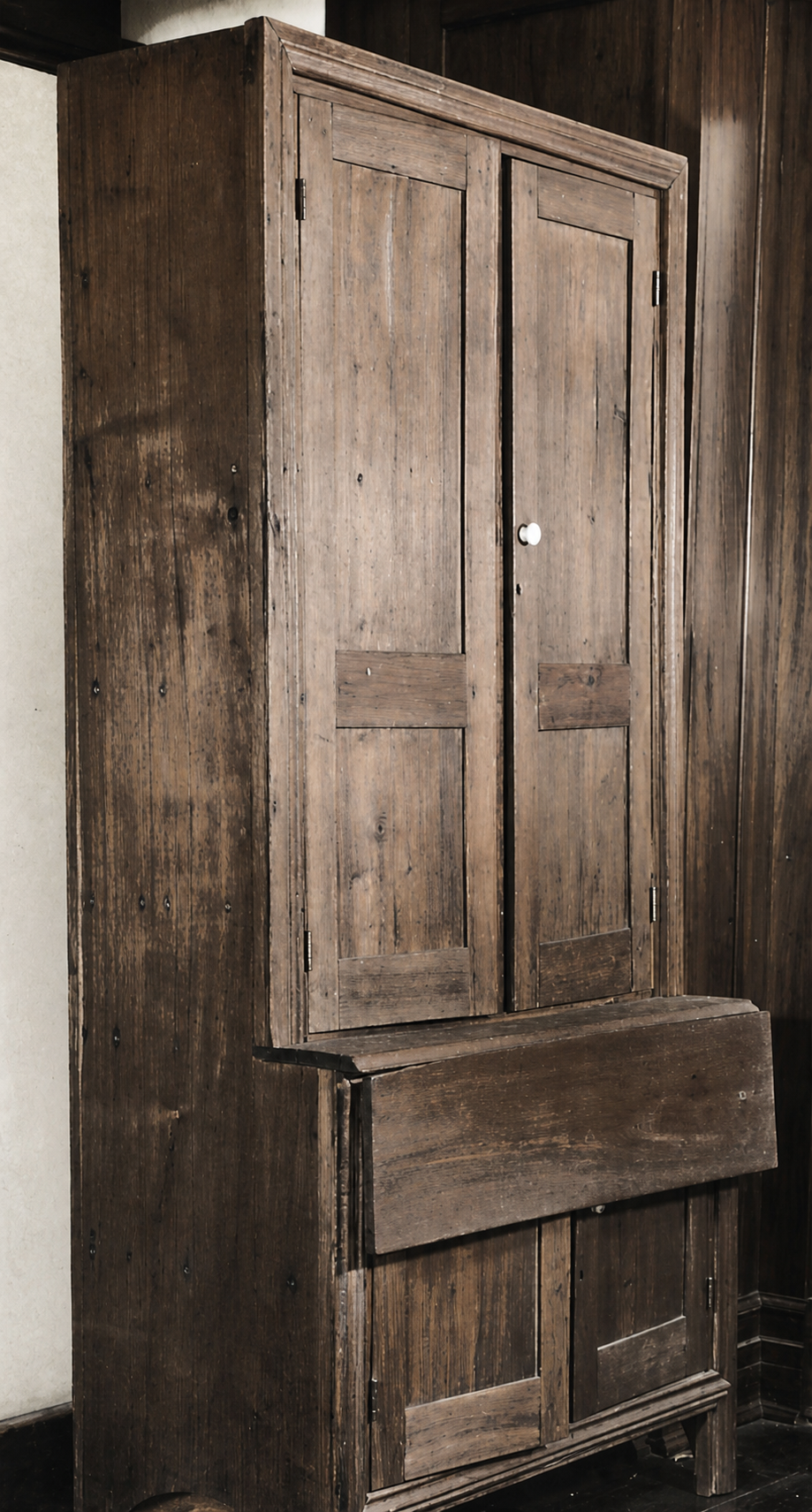
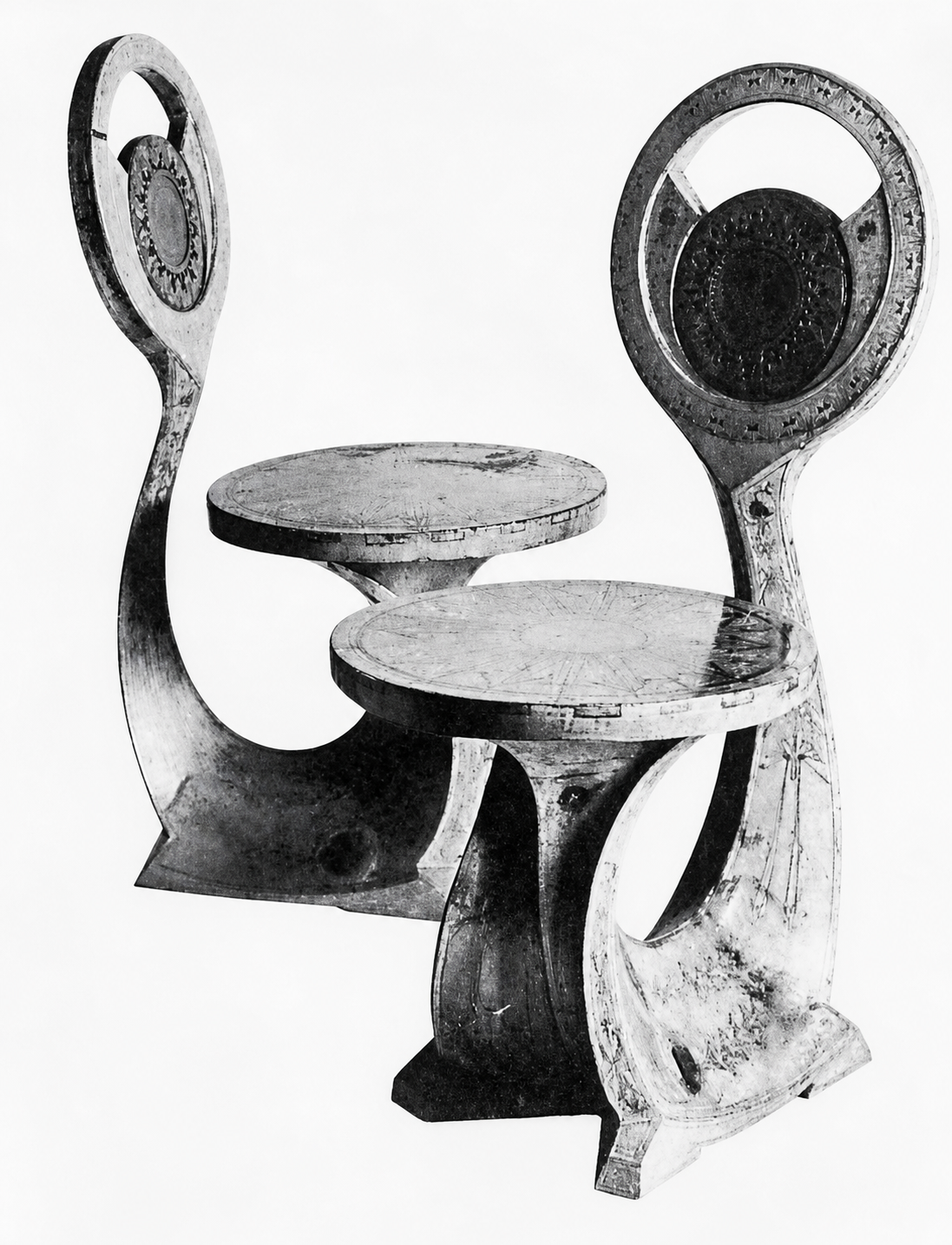
The quality comes about when everything unnecessary is removed. All centers that are not actively supporting other centers are stripped out, cut out, excised. What is left, when boiled away, is the structure in a state of inner calm. It is essential that the great beauty and intricacy of ornament go only just far enough to bring this calm into being, and not so far that it destroys it.
As a perfect example of inner calm, I would choose Shaker furniture. What do we have in the pieces of Shaker furniture? At first sight it looks like other early American furniture. But
Italian chairs: gross, and utterly lacking in inner calm
when we compare it with other early American furniture, we find a number of striking, and crucial, differences.
» It uses very simple shapes (the actual pieces of wood have simple shapes, and are usually close to the form in which they were first milled).
+ The ornament is very sparse, but does occasionally exist to offset the classical line, with an off~ curve here or there, but less than in other American pieces.
- The proportions are unusual. Pieces are unusually long, unusually high, elongated, tall, broad, etc. They are marked by their proportions as slightly unusual, or remarkable -- even startling. Often this has practical good reason behind it (e.g. use all the space available).
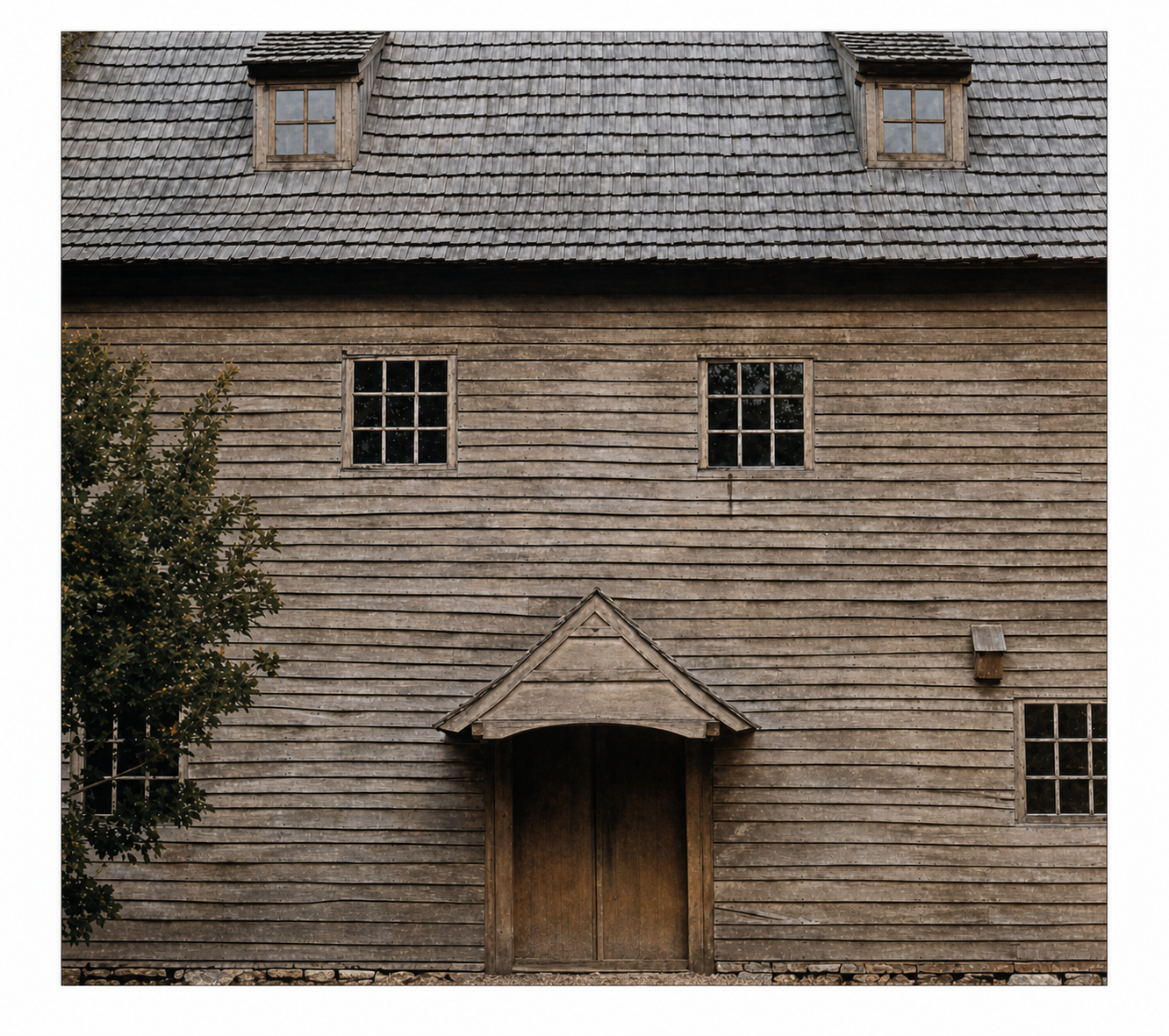
- Many of the pieces are strange in some specific way which marks them as indeed unusual. For instance, a chest with drawers opening from different sides; two beds sliding under a bigger bed; a table with drawers hanging on either side of the pedestal; peg boards. Always these "strange" configurations have good reasons, and come from an uncompromising steadfastness to function, following the thing to its logical conclusion, refusing to be deterred by convention. An extreme freedom.
+ Pieces were colored -- beautiful colors, often worked into the wood (not paint), and coded, yellow, blue, red, green, etc., each type of furniture was color-coded to its function. Yet they were always severe. This severity was the very essence of the inner calm, yet so hard to pin down.
- Finally everything is still, silent.
SIMPLICITY AND INNER CALM is not ovi/y to be produced by simplicity. The Italian chairs are complex in the wrong way, and they therefore lack inner calm. The stuff which had to be cut out has not been cut away. But, for instance, the wild Norwegian dragon (on the next page) has inner calm even though it is so complex. Everything essential has been left; nothing extraneous remains. The result is simple in a profound
Inner calm in ancient plank siding on a house in Pennsylvania. The house has a direct visible spirit. It almost stares at you: and in this case the inner calm is beinglike. The strangeness mentioned in the text is easily visible, at the same time that the calm is so powerful, the simplicity so wonderful.
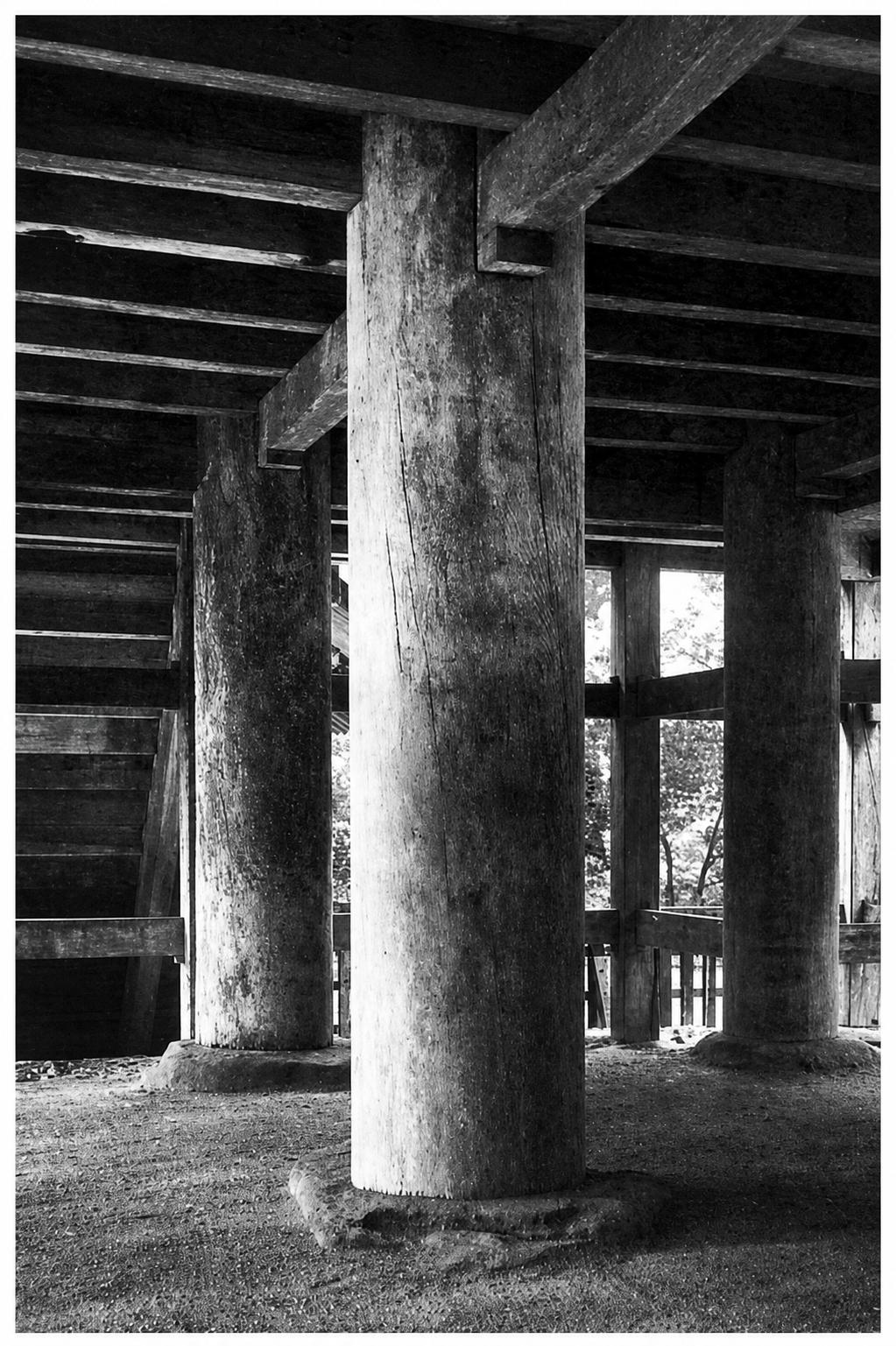
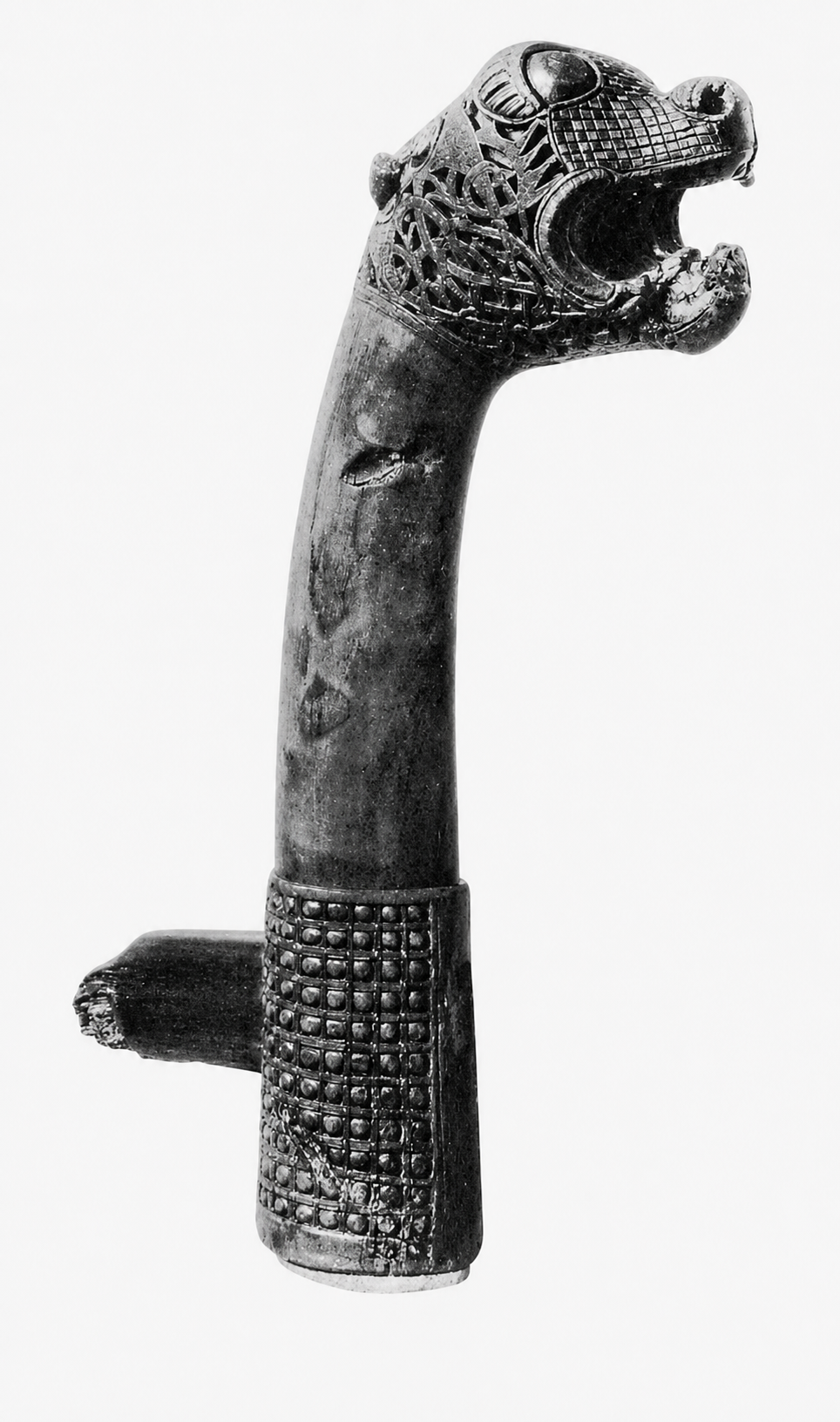
sense, but not in the superficial geometric sense. So it is not true that outward simplicity creates inner calm; it is only inner simplicity, true simplicity of heart, which creates it.
In a living whole which is correctly made, there is a special simplicity. For example, the thick low wall with a broad top is the most solid, easiest to make, and will last the longest. When the main lines of the building are drawn simply, they will tend to give big reference to a few big things: the sun, the view, the slope. The simplicity of this response allows a deeper relationship between the person and the landscape to form; and thus creates more nourishing conditions.
Functional Notes
In APL quite anumber of patterns deal with this kind of ultimate simplicity of heart. They create the eye at the center of the storm, the simple core at the heart of some part of life. Examples include GREEN sTREFTS (p. 266), POOLS AND STREAMS (p. 322), LOW SILL (p. 1050), SOFT INSIDE WALLS (p. 1096), and CANVAS ROOFS (p. 1128).
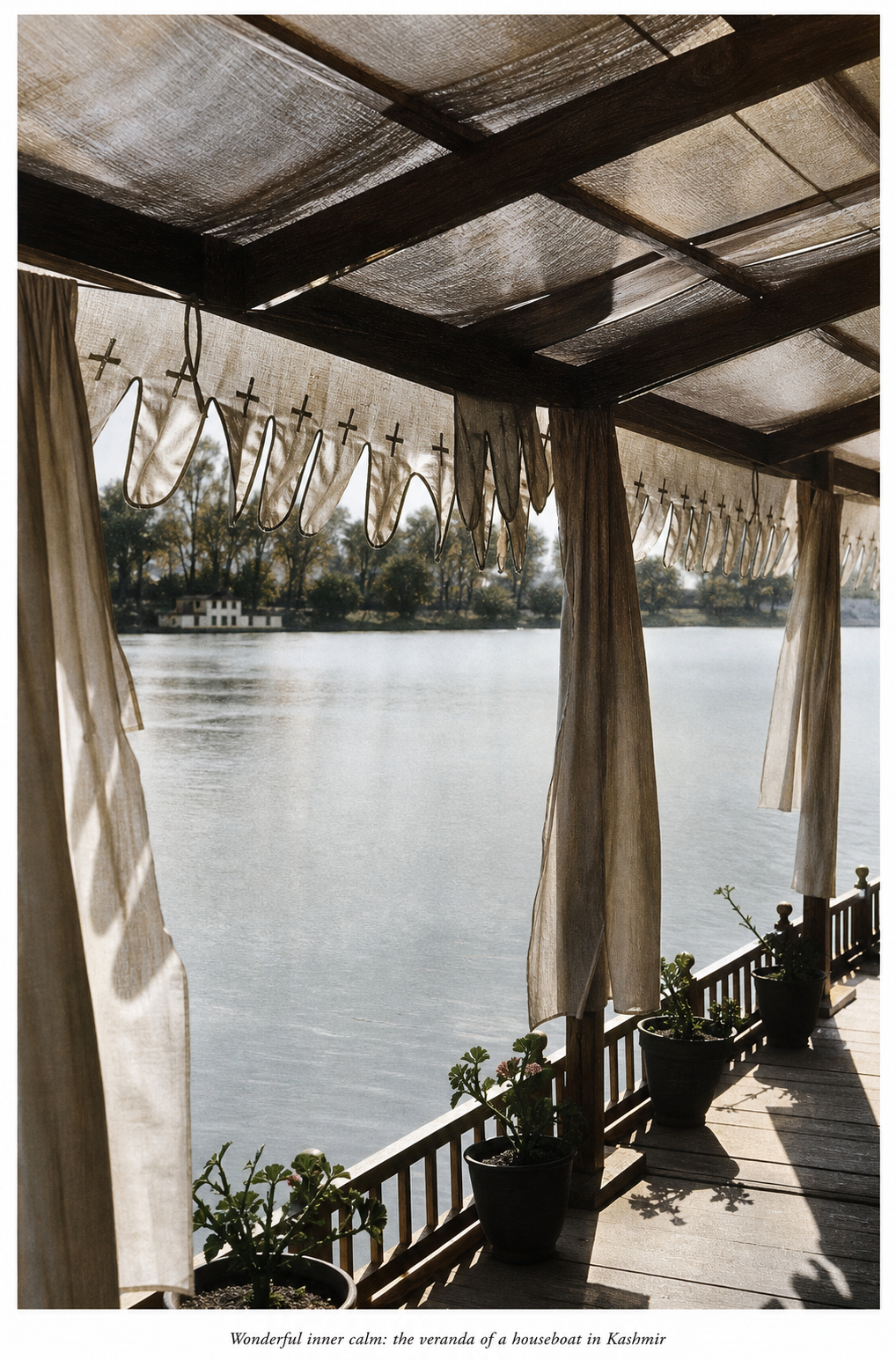
2.15 / Not-separateness
The last of these properties -- ultimately perhaps the most significant -- is NoT- SEPARATENESS, connectedness. What notseparateness means, quite simply, is that we experience a living whole as being at one with the world, and not separate from it -- according to its degree of wholeness.
One of the most beautiful cases of notseparateness that I can point to is the 7th century Tower of the Wild Goose (shown in color on
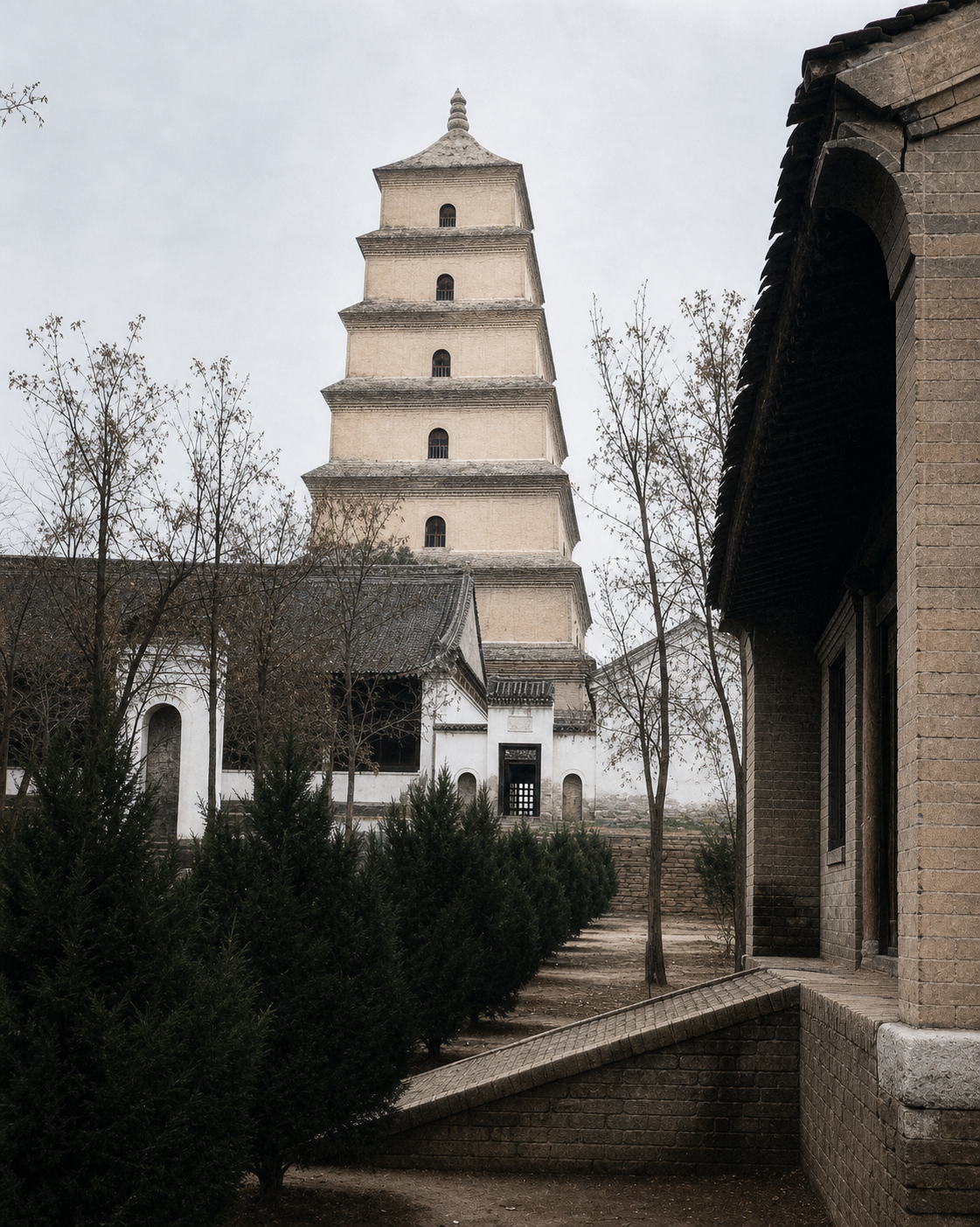
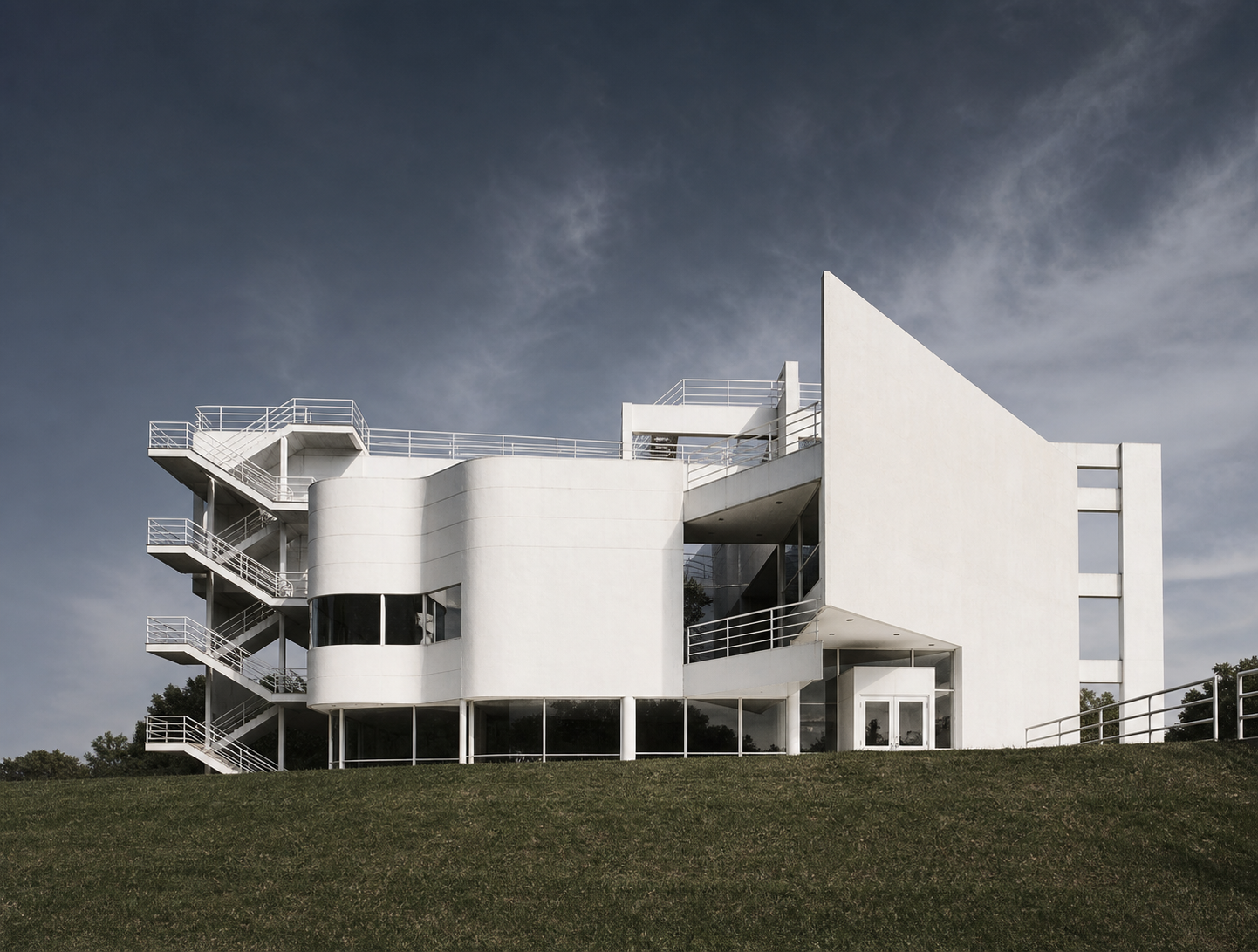
The *X' house, New York. Not-separateness entirely missing: separate and ego-filled page 11). It is so simple, so harmonious, it melts into its surroundings humbly, connects with its surroundings, is indistinguishable from its surroundings. But it does this altogether without giving up its character or personality.
At the opposite extreme, when a thing lacks life, is not whole, we experience it as being separate from the world and from itself. It stands out. An extreme of separateness -- the most disastrous failure of this property -- is shown in the house on this page. This house is utterly isolated. It is intended to stand out. And it does stand out as an awkward triumph of egocentricity. It fails, thoroughly, to be not-separate.
Let me summarize in structural terms what this property is all about. It states that any center which has deep life is connected, in feeling, to what surrounds it, and is not cut off, isolated, or separated. In a center which is deeply coherent there is a lack of separation -- instead a profound connection -- between that center and the other centers which surround it, so that the various centers melt into one another and become inseparable. It is that quality which comes about from each center, to the degree it is connected to the whole world.
This is, finally, perhaps the most important property of all. In my experiments with shapes and buildings, I have discovered that the other fourteen ways in which centers come to life will make a center which is compact, beautiful, determined, subtle -- but which, without this fifteenth property, can still often somehow be strangely separate, cut off from what lies around it, lonely, awkward in its loneliness, too brittle, too sharp, perhaps too well delineated -- above all, too egocentric, because it shouts, "Look at me, look at me, look how beautiful I am."
Those unusual things which have the power to heal, the depth and inner light of real wholeness, are never like this. They are never separate, always connected. With them, usually, you cannot really tell where one thing breaks off and the next begins, because the thing is smokily drawn
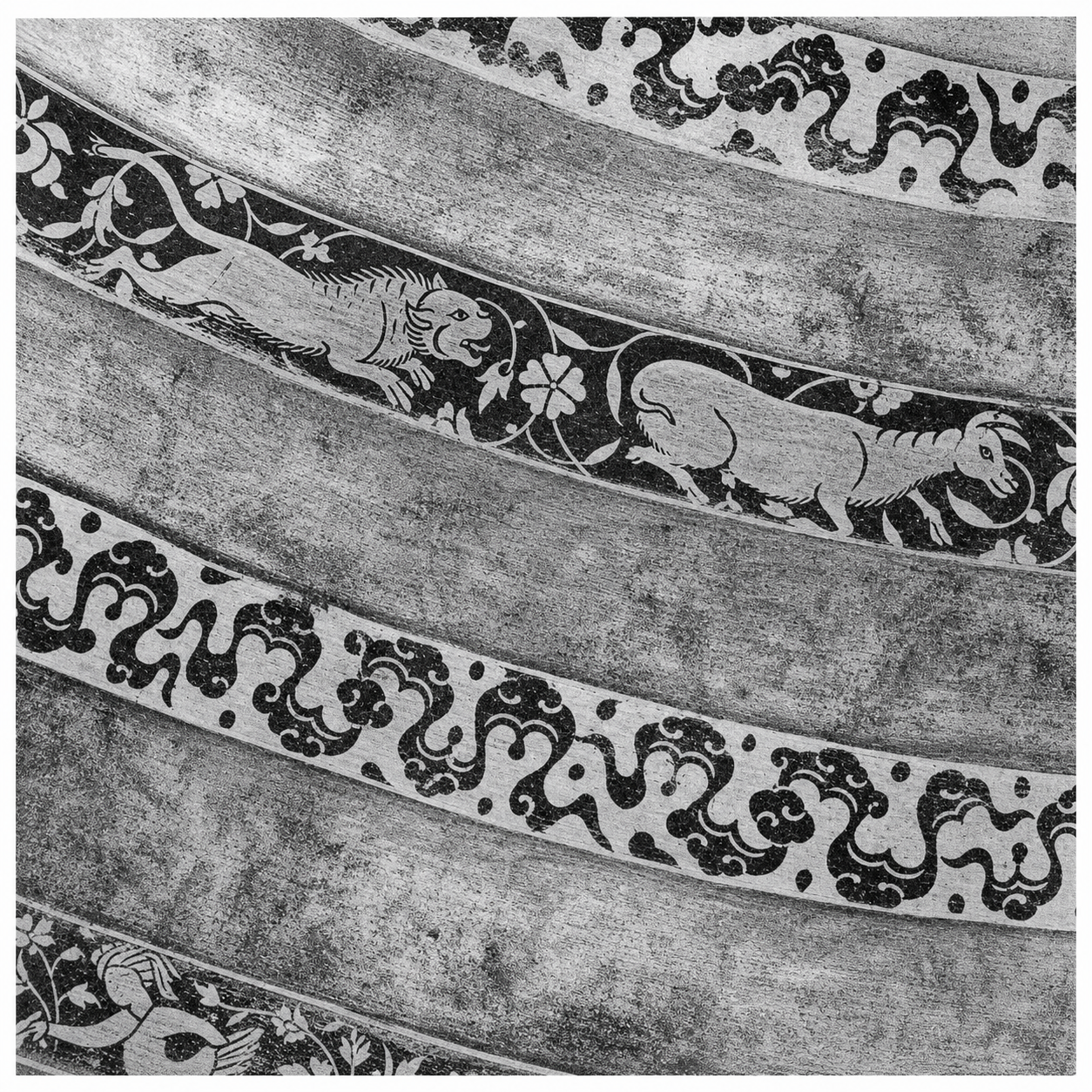
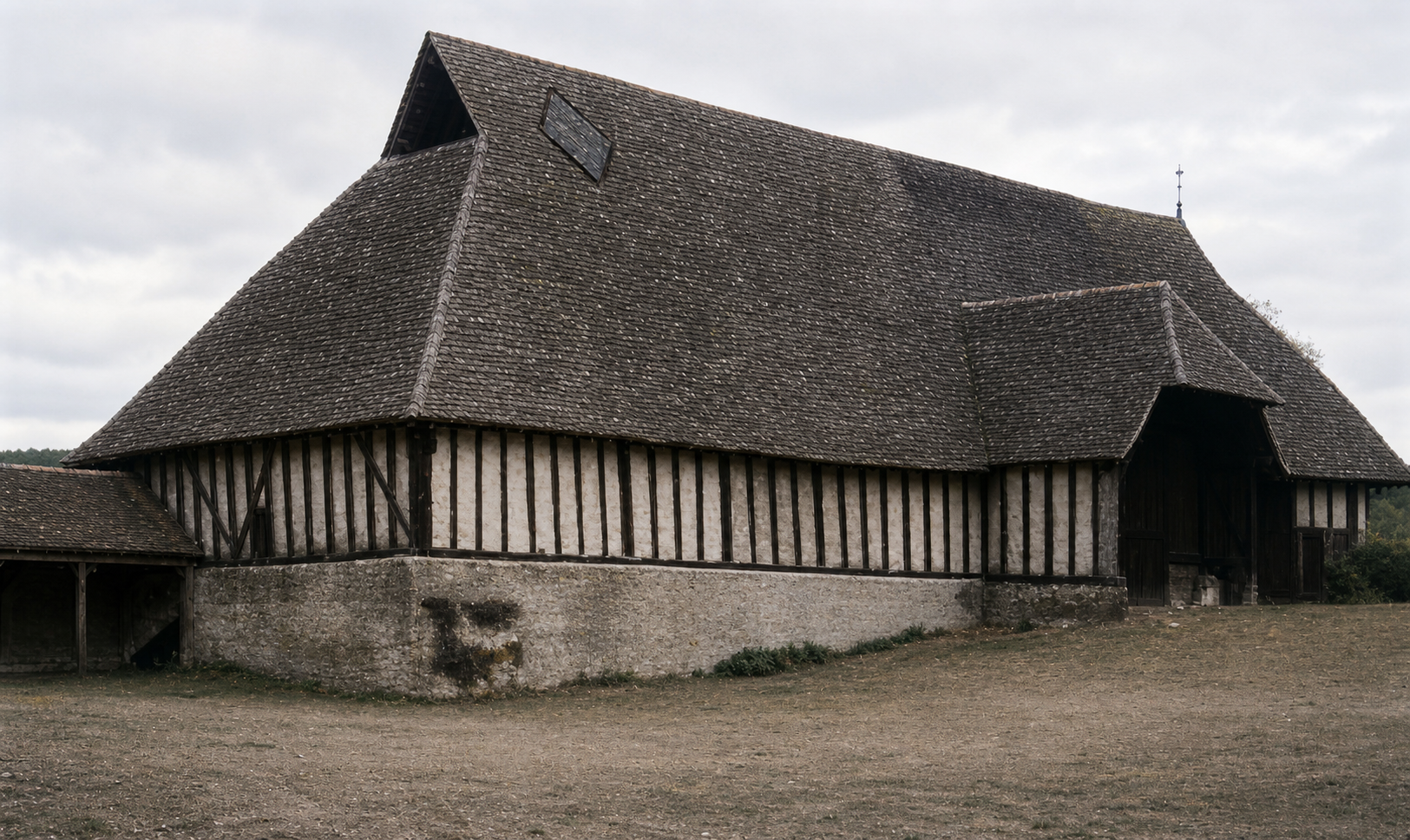
FIFTEEN into the world around it, and softly draws this world into itself. It connects. It asserts the continuity of space, the continuity of all of us, the wisps of morning fog which hang dreaming, over the fields of flowers, like the dreaming spires of Oxford over the valley of the Thames.
This property comes about, above all, from an attitude. If you believe that the thing you are making is self-sufficient, if you are trying to show how clever you are, to make something that asserts its beauty, you will fall into the error of losing, failing, not-separateness. The correct connection to the world will only be made if you are
conscious, willing, that the thing you make be indistinguishable from its surroundings; that, truly, you cannot tell where one ends and the next begins, and you do not even want to be able to do so.
The sophisticated version of this rule, which comes about when we apply the rule recursively to its own products, produces an atmosphere like gentle evening smoke, which ties the whole together inside itself, which never allows one part to be too proud, to stand out too sharp against the next, but assures that each part melts into its neighbors, just as the whole melts into its neighbors, too. This is where the golden colors
help, where joining lines and echoes help preserve the wholeness of the thing, prevent it from disintegrating under its own inner tensions. The structural feature which is perhaps most responsible for the easy, healed feeling of not-separateness is lack of abruptness, of sharpness. A thing which has this quality feels completely at peace because it is so deeply connected to the world around it. This quality, geometrically, depends especially on the state of the which separateness, there is often a fragmented boundboundary. In _ things have notary, an incomplete edge, which destroys the hard line. Many of the most beautiful old carpets also have an infinite pattern which is randomly interrupted, as if by a window, which also destroys the sense of self-containment of the design. Often, too, there is a gradient at the boundary, a soft edge caused by a gradient in which scale decreases (hare-and-tortoiselike) so that atthe edge it seems to melt indiscernibly into the next thing -- this is why things get smaller at the edge -- it destroys the hard edge. Finally, the actual boundary is sometimes rather careless, deliberately placed to avoid any simple complete sharp cutting off of the thing from its surroundings -- a randomness in the actual boundary line which allows the thing to be connected to the world.
The painting of the lake by Gauguin, and the paving stones in the Japanese garden, are high examples of this quality attained.
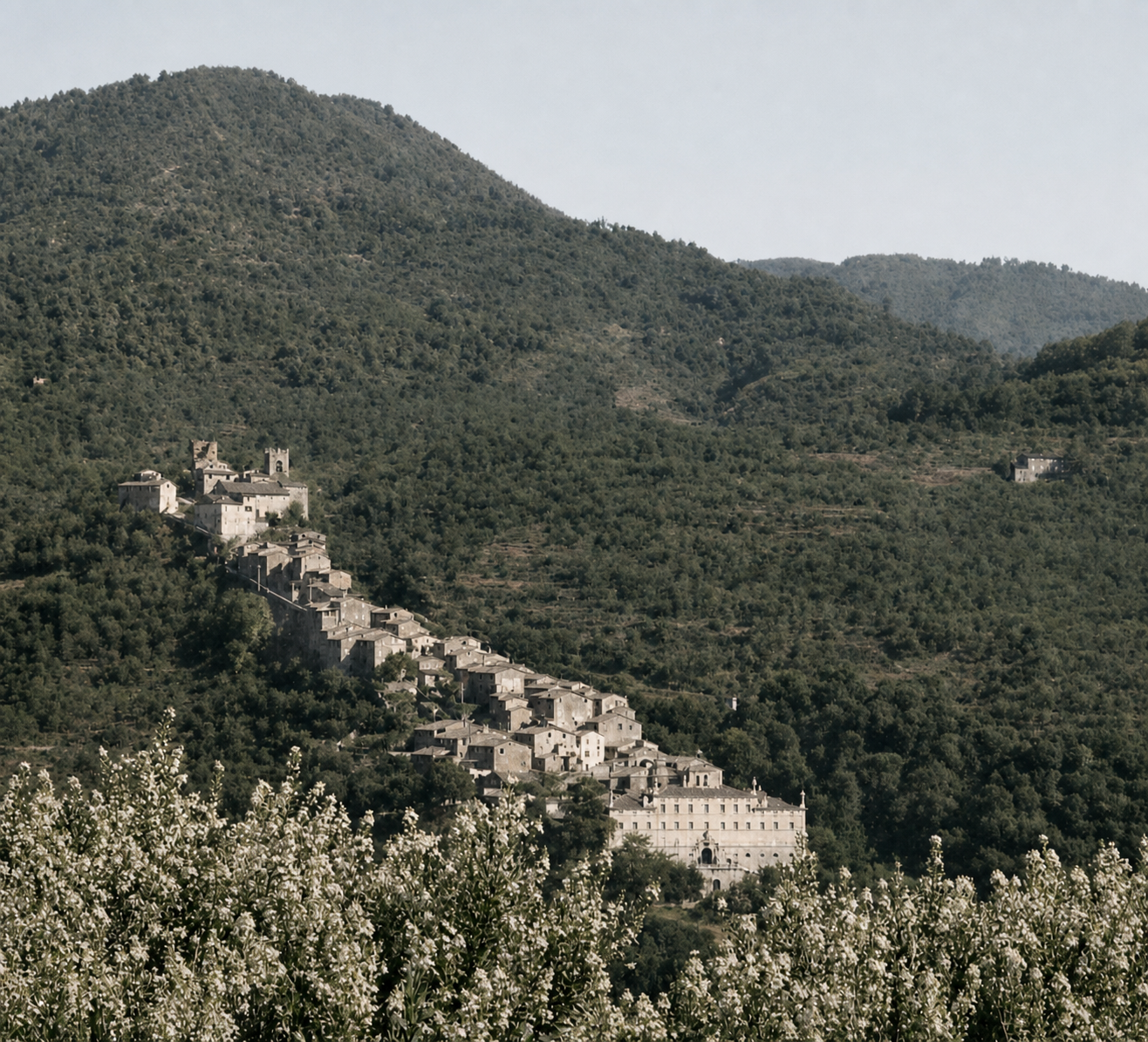

Functional Notes
For a variety of functional reasons environmental systems are made more whole, and have more life, when there is a pervasive connectivity connecting the inside of tems beyond them or outside them, making an unbroken fabric in the world. This subject is treated troughout APL, with examples from many different scales.
At the region al and urban and social scale this connectivity as a vital social matter is dealt with, for instance, in SCATTERED WORK (p. 51), OLD PEOPLE EVERYWHERE (p. 215), and SELF-GOVERNING WORKSHOPS AND OFFICES (p. 398).
It is dealt with as a physical theme in the construction of buildings, next to each other, touching each other (CONNECTED BUILDINGS, p. 531), interlocking with indoor and outdoor space (BUILDING THOROUGHFARE, p. 492, OUTDOOR ROOM, p. 163). and with the car (CAR CON- NECTION, p. 553)-
It is equally dealt with as a social theme in the small scale structure of buildings and neighborhoods as for instance in CONNECTED PLAY (p. 341), and SLE PUBLIC (p. 457).
It appears as a subtle psychological matter in FiL- TERED LIGHT (p. 1105) and WINDOWS WHICH OPEN WIDE the systems with other
rs) n
(p. 1100) where the subtle connection between inside and outside is specified.
Practical and ecological reasons also suggest we must try to make tra edge of ch material is next to something else that it can live with: for example, wood to concrete; concrete to earth. The series of transitions avoids any abrupt juxtapositions that would not hold up over time. Another example occurs in the way that terraces and paths are connected to the earth. They work best, and are most wholesome, when the connection between the stones, the paving, and the soft earth itself is so gradual, so definite, that you can hardly feel it. By comparison, a terrace which is built on stilts, up in the air, gives you access to sun and air but denies a nsitions of materials around the a building, so that e: connection to the earth. These topics are discussed extensively in CONNECTION TO THE EARTH (p. 785), RAISED FLOWERS (p. 1132), and PAVING WITH CRACKS BETWEEN THE STONES (p. 1138). The not-separateness allows the garden, and the path, and the edge of the building, and the building wall, to support each other functionally, by allowing mutual access in the right amounts to encourage necessary practical interactions.
3 / the Nature and Meaning of the Fifteen Properties
Together, the fifteen properties identify the character of living systems. The regions of space which can have this living character vary enormously. If we have a bowl, a picture, a building, a forest, a pathway in a temple, a bay window in a London house -- and we see all fifteen properties repeating throughout again and again and again, there is a good chance we have a thing or place whose life is profound. Systems in space which have these fifteen properties to a strong degree will be alive, and the more these properties are present, the more the systems which contain them will tend to be alive.
These include most examples of natural living systems: a clump of grasses in a swamp. They may include a medieval illuminated miniature; the window in the wonderful room at the Topkapi palace in Istanbul. They will also include, at a lower level, places or things which have more ordinary life. This may include the terrace outside your favorite gas station, a beer garden outside the Oetztal station in Austria. It may include the seaweed in a tidal flat, even with a few cans and bottles lying there.
If we look at things which have a few of the fifteen properties, less densely packed, and not all of them, we often still get some sort of living character, for instance, the stadium at Wrigley Field, a pair of roller skates, a toothbrush.
The things and systems in the world which are most dead -- the most image-laden buildings and artifacts, the most sterile housing projects, the most damaged ecological systems, the most poisoned streams -- will have these properties to the /east degree.
Thus, although these properties define a vast family of possible places and objects and systems, all the members of this family have life in some degree. The properties, taken together, define a rough but graspable family of all those systems and things which have a great deal of life. Systems and things which lack the properties tend to be things with very little life. Thus, roughly (and I must emphasize that this is only true to a first approximation), the fifteen properties define the enormous family of systems, among all possible systems, which have life in them.
The fact that it is possible to characterize this family at all is surprising. The family which is so defined is very complex morphologically. Superficially, the many examples in this chapter look dissimilar. Each belongs to its own time and place. They vary in culture, climate, and technology. But more deeply, there is a sense in which these different cases all look the same. They all have the same deep quality; one sees the same structure, again and again, throughout the examples.
Thus we have a grip, perhaps for the first time, on the actual physical and geometrical character which living systems have. It is not too much to say that any building which has life in it, must be a recognizable member of this family. Any doorknob which has life, any window, any garden, any garden path, which has life in it, must be a recognizable member of this family.
It should be observed that this fact is not neutral with regard to theories of architecture. One cannot help noticing that the buildings of recent decades (1940-90) are noticeably missing in these properties. I believe that this is intention al, and that various unusual 20th-century theories of architecture have led architects and designers consciously to move away from these properties in the effort to promulgate some particular style or intention. For people who have been brainwashed by these recent theories of design, it may be uncomfortable to confront the factual nature of the fifteen properties. I believe this cannot be helped.
It is useful, I think, to make some mention of the dates of manufacture of the artifacts shown as examples. Readers and students have observed that many of these properties belong to ancient artifacts. They ask me, Why don't you give more examples of recently built buildings to illustrate these properties? The sad truth is that the works of the last fifty years have consciously abandoned understanding, or use, of these properties. Such works obviously do not serve well as illustrations except in a bad sense. This does not mean that
the fifteen properties have anything to do with ancient things as opposed to modern ones. Many of the examples (positive and negative) are made in the 20th century. Overall, the dates of objects range from about 1500 B.C. to A.D. 1997 -- a span of some 3,500 years. There is a more or less homogeneous distribution of examples over that very long period. The fact that there are relatively fewer examples to be shown from the last seventy years is not polemical, but merely factual and proportioned.
4 / the Interplay of the Properties
I first identified these fifteen properties during the years 1966-73. By 1976 they were well defined, and it was clear to me that they occurred repeatedly in those artifacts which have life. Somewhat later it became clear, too, that these properties also occur repeatedly throughout nearly all of nature (see chapter 6).
However, in 1976, it was not yet clear to me how to interpret these properties. They were, at that time, only raw products of observation. I knew that these features appeared repeatedly both in great buildings and works of art, and in nature, but I had no clear idea what they meant, or where they came from.
In addition, there was a puzzle caused by the relationship of the properties to one another. The fifteen properties are not independent. They overlap. In many cases we need one of them to understand the definition of another one. For example, if we try to define ALTERNATING REPE- TITION exactly, we need to get clear that there is an alternation between certain things or STRONG CENTERS which repeat. These "things" are discernible wholes only because they have a definite shape. Thus the definition of alternating repetition relies heavily on the GOOD SHAPE of the things that are repeating -- and on the good shape of the things between the things that are repeating. Similarly the definition also relies on the POSITIVE space between the things which repeat, and on the CONTRAST between the two systems of things which are repeating.
The same thing happens when we try to define LEVELS OF SCALE. The different levels are not discernible at all, until we identify the things at different levels as wholes: that is, unless we assume we know what it means for the centers at every level to be STRONG CENTERS and have coop sHaPE. The levels of scale property also doesn't work unless some of the elements are big and open, as required by THE voip. And the hierarchy of levels relies strongly on the fact that the things at lower levels repeat, and sometimes alternate, in their repetition.
GOOD SHAPE is a shape which contains powerful centers within the BounpaRIEs of the shape. ALTERNATING REPETITION succeeds when the space between the alternating entities is POSITIVE SPACE. Centers often become more powerful when they are bounded by Bounparis themselves made of STRONG CENTERS.
The same thing happens for every one of the fifteen properties. The more carefully we think about each property, and try to define it exactly, the more we find out that each property is partly defined in terms of the other fifteen properties. Although the fifteen properties seem distinct at first, they are in fact intertwined and interwoven.
The matrix below gives a rough overview of the way the properties are interdependent. When I first identified the fifteen properties this pattern of interdependence seemed very puzzling and troublesome. It meant that the properties are not "atomic" or fully independent features of systems. However, I soon began to think this was significant and important rather than troublesome. The interdependence of the properties seemed to contain a hint of something else, something richer and more complex than the properties themselves -- and also more unitary -- which somehow lay behind the properties. I began to realize that these fifteen properties were indicators, rough approximations of some deeper structure which looked and felt like "all of them together."
This "deeper" structure had to be an extended thing in space, a "something" which ex-
isted across space, and which allowed the fifteen properties to emerge from it. During the late seventies, I began thinking that this "something" must be some kind of field in which centers create wholeness and wholeness intensifies centers.
I finally recognized that it is the field of centers which is primary, not these fifteen properties, and that the properties are simply aspects of the field which help us to understand concretely how the field works.
At that stage I began to formulate the basis for a new view of space based on wholeness, in which these fifteen properties appear naturally and inevitably from the nature of wholeness, and in which it becomes clear how and why life occurs in space, not as an attribute of living organisms, but as an attribute of Space itself.
If property A depends on property B or we need property B for a complete understanding of property A then an asterisk appears in cell AB
Levels of Scale
Local Symmetries
DEEP INTERLOCK AND AMBIGUITY GRADIENTS
THE voID
SIMPLICITY ANDINNERCALM NOTSEPARATENESS
Levels of Scale
Strong Centers
Boundaries
Alternating Repetition
Positive Space
Good Shape
Local Symmetries
Deep Interlock and Ambiguity
Contrast
PROPERTY A
Gradients
Roughness
Echoes
The Void
Simplicity and Inner Calm
Not Separateness
5 / How the Fifteen
Let me therefore now go over, once again, the specific individual roles of the fifteen properties. Having observed the properties, having noticed them, it is important to ask exactly what they are, and to understand them more deeply, in relation to the structure of wholeness, and the structure of centers. Simply put, J believe that these properties arise because they are the principal ways in which centers can be strengthened by other centers® They are, if you like, fifteen ways of talking about centers, and the way that the existence and life of centers dominates the existence of life in the world.
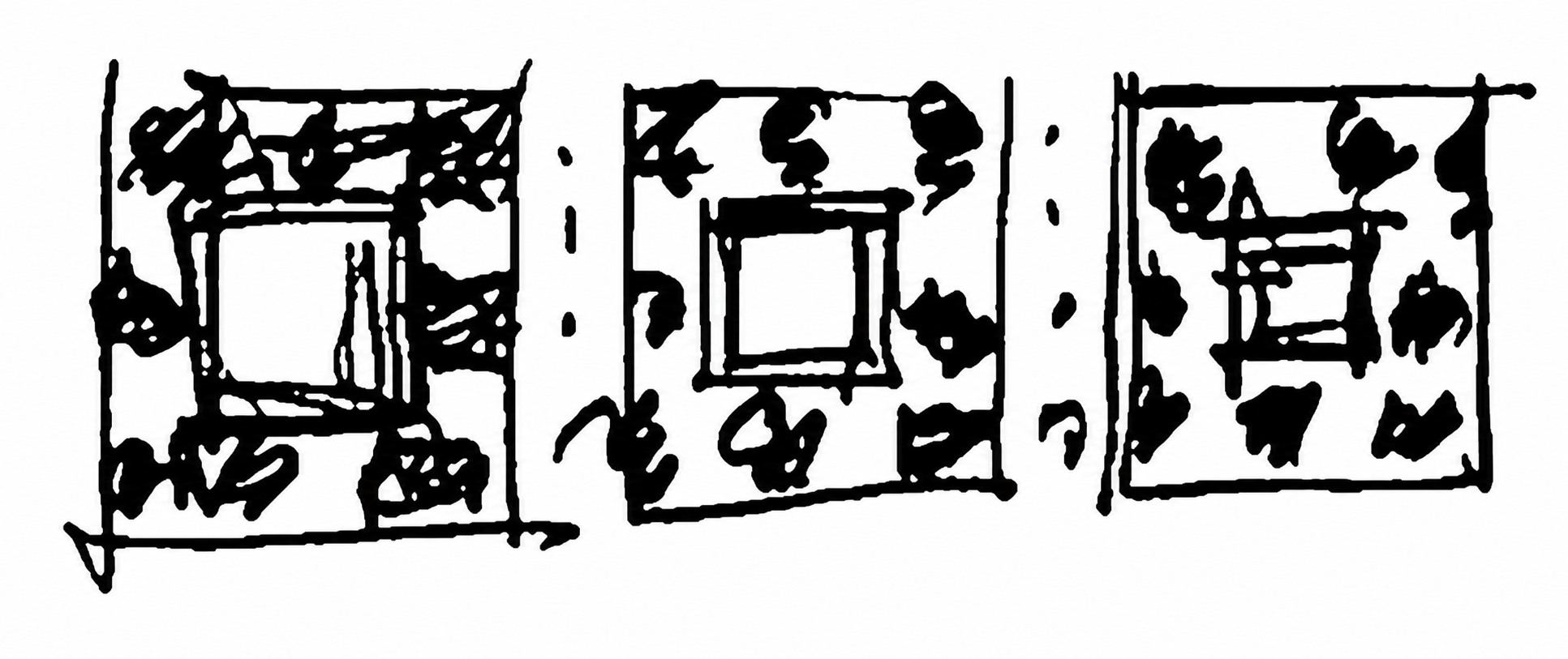
1. Levels of scale
2. STRONG CENTERS defines the way that a strong center requires a special field-like effect, created by other centers, as the primary source of its strength.
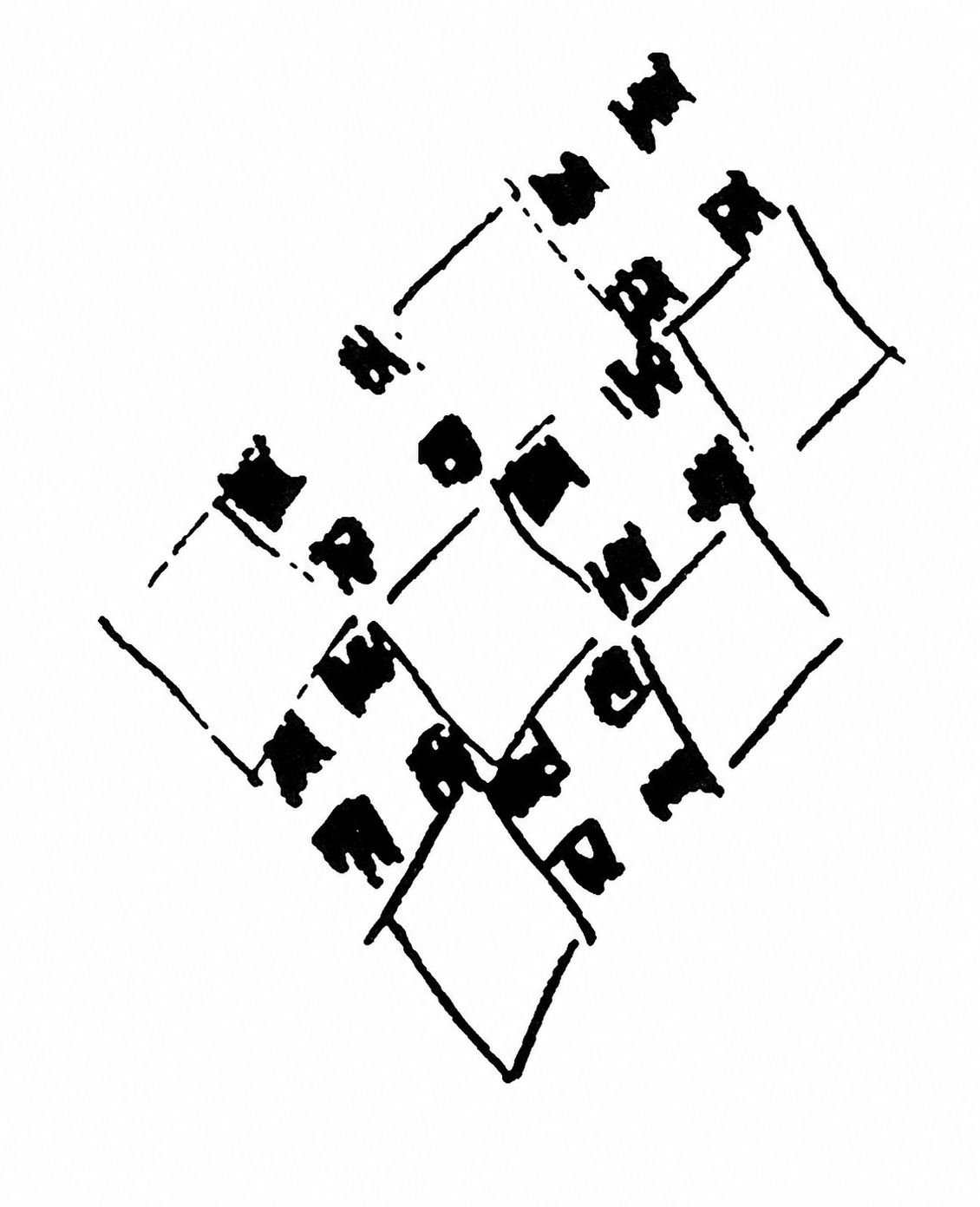
3. BOUNDARIES is the way in which the field-like effect of a center is strengthened by the creation of a ring-like center, made of smaller centers which surround and intensify the first. The boundary also unites the center with the centers beyond it, thus strengthening it further.
3. Boundaries
4. ALTERNATING REPETITION is the way in which centers are strengthened when they repeat, by the insertion of other centers between the repeating ones.
OK EE Of of 2*>e> spades
4, Alternating repetition
5. POSITIVE SPACE is the way that a given center must draw its strength, in part, from the strength of other centers immediately adjacent to it in space.
5. Positive space
6. GOOD SHAPE is the way that the strength of a given center depends on its actual shape, and the way this effect requires that even the shape, its boundary, and the space around it are made up of strong centers.
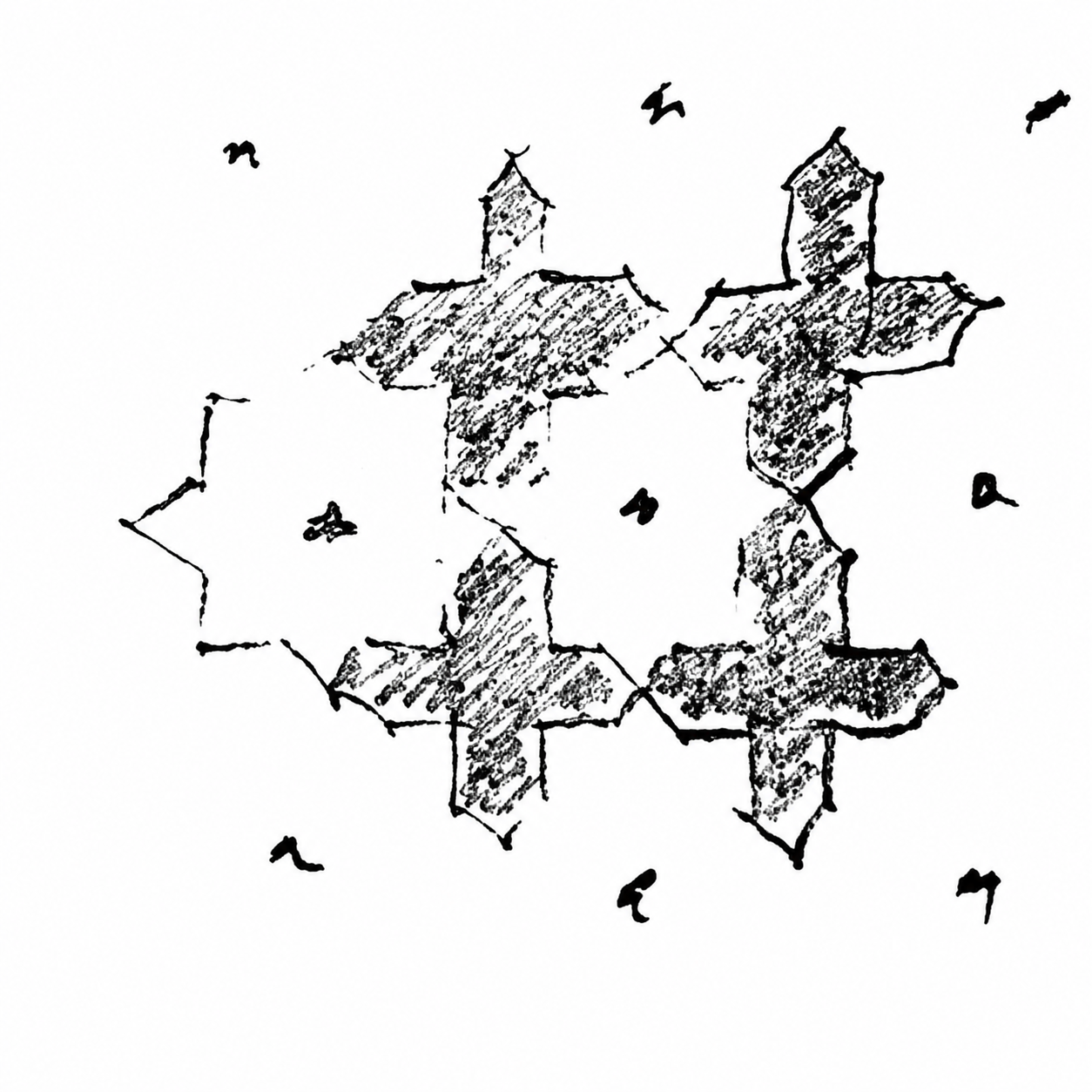
7. LOCAL SYMMETRIES is the way that the intensity of a given center is increased by the extent to which other smaller centers which it contains are themselves arranged in locally symmetrical groups.
-- _ -- _ -- _ -- --
zasil at
, iF 7. Local symmetries
8. DEEP INTERLOCK AND AMBIGUITY is the way in which the intensity of a given center can be increased when it is attached to nearby strong centers, through a third set of strong centers that ambiguously belong to both.
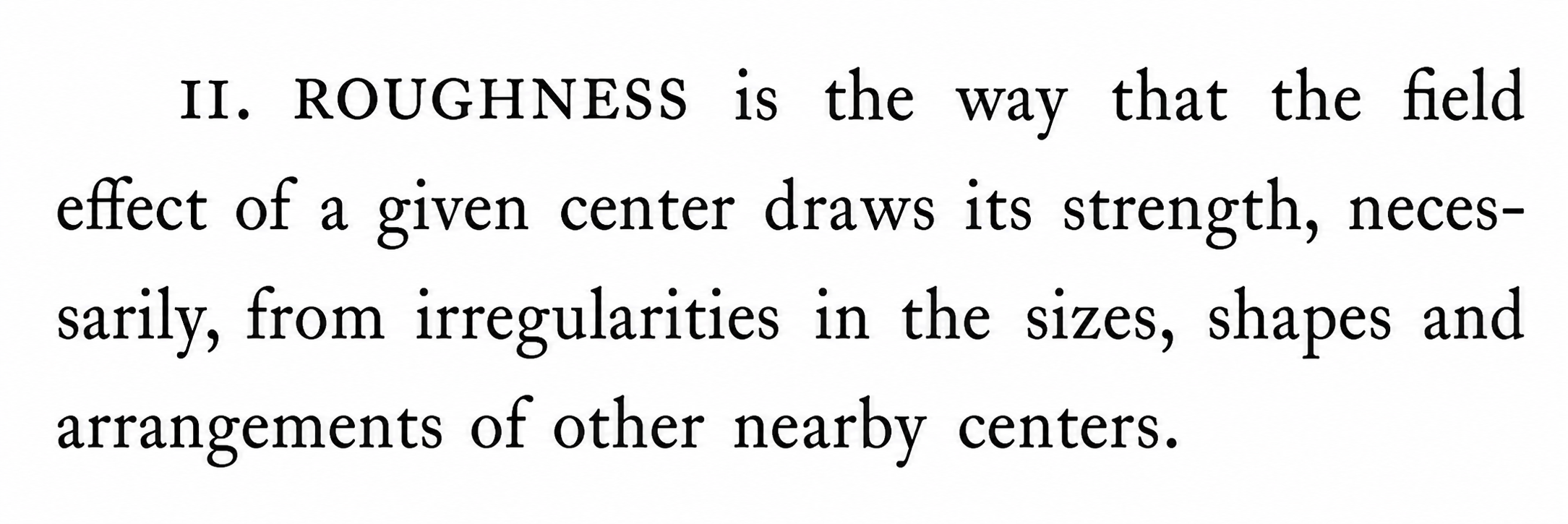
9. Contrast
10. GRADIENTS is the way in which a center is strengthened by a graded series of differentsized centers which then "point" to the new center and intensify its field effect.
- REGEN é on ABOU On» BOAC® ba" Q mane e a* DnR65D2 Aor \ -- _ -- \ Yq: pot
11. Roughness
12. ECHOES is the way that the strength of a given center depends on similarities of angle and orientation and systems of centers forming characteristic angles thus forming larger centers, among the centers it contains.
on
'6/4 wae
A
Ce
12. Echoes
13. THE VOID is the way that the intensity of every center depends on the existence of a still place -- an empty center -- somewhere in its field.
13. The void
14. SIMPLICITY AND INNER CALM is the way the strength of a center depends on its simplicity -- on the process of reducing the number of different centers which exist in it, while increasing the strength of these centers to make them weigh more.
15. NOT-SEPARATENESS is the way the life and strength of a center depends on the extent to which that center is merged smoothly -- sometimes even indistinguishably -- with the centers that form its surroundings.
oo 2% a i Pr ys <.
15, Not-separateness
The fifteen properties are not independent. They overlap. In many cases we need one of them to understand the definition of another one. This is because it is the field of centers itself which is primary, not these fifteen properties. The properties are simply aspects of the field which help us to understand concretely how the field works.
However, even though the properties do not have primary significance and it is the field of centers, or the wholeness itself, which is primary, still there is an important sense in which the fifteen ways may represent an exhaustive description of all possible ways in which the field of centers works. Each of the properties describes one of the possible ways in which centers can intensify each other. Each one defines one type of spatial relationship between two or more centers, and then shows how the mutual intensification works in the framework of this relationship.
In effect, the fifteen properties are the glue, through which space is able to be unified. The fifteen properties provide the ways that centers can intensify each other. Through the intensity of centers, space becomes coherent. As it becomes coherent, it becomes alive. The fifteen properties are the "ways" it comes to life.'
Are there any other ways? Is this catalogue of fifteen merely a random sample of the possible ways in which centers can produce a field? Or is this an exhaustive and complete list?
The number fifteen is only rough. At various stages in the evolution of this theory, I have had a catalog of twelve, fourteen, thirteen, fifteen, sixteen. The precise number fifteen is not significant. But I do believe that the order of magnitude of the number is significant. Throughout my efforts to define these properties, it was always clear that there were not five, and not a hundred, but adout fifteen of these properties. It wasn't possible to go on listing new ones indefinitely.
There is no certainty that this list is exhaustive. On the other hand, if you try to think up other effects which are combinatorially different from these, you will find it is not very easy. When we focus on the mathematical ways in which centers can be built out of other centers, or the ways in which one center helps to make other centers stronger, there is a limit to the number of ways in which this can be done:
Notes
1. These properties may be thought of as an elaboration of the observations, recorded more informally in THE TIMELESS WAY OF BUILDING (New York: Oxford University Press, 1979), chapter 23. It was the content of that chapter, written in 1975, which stirred in me the need to start the observations that are recorded here.
2. Christopher Alexander and Susan Carey, "Subsymmetries," PERCEPTION AND PSYCHOPHYSICS 4 (1968): 2, 73-77; Christopher Alexander and Bill Huggins, "On Changing the Way People See," PERCEPTUAL AND MO- TOR SKILLS 19 (1964): 235-53. The experiments are also discussed further in appendix 2.
3. Toward the end of Book 2 (chapter 14), we shall see that almost everything about life in buildings can, in the end, be understood through symmetries, and that, indeed, there may be a way in which the concept of wholeness, and the field of centers, when understood dynamically, can be understood completely in terms of a sequential unfolding of symmetries.
4. Evidently there is a deep connection between the presence of local symmetries in a field and the occurrence of a center. In empirical studies of wholeness symmetry has always played a role. Symmetry is one of the powerful ways that space is made whole. When a part of space is symmetrical it is internally coherent.
5. For the case of a crystal, Humphries argues that there is more structure in the grid with slight irregularities, because it still has the grid structure, but some addition al differentiations and other structures as well. Humphries in aspects oF Form, ed. L.L.Whyte 1951 (Bloomington, Indiana University Press, 1961).
6. Soetsu Yanagi, THE UNKNOWN CRAFTSMAN (Tokyo: Kodansha Internation al Ltd, 1972).
7. In physics and biology, "homology."
8. See chapter 4.
g. It is vital for the reader to understand that, even though they are so important, the fifteen properties are not essential in themselves. What matters in the end is the life of the centers. The importance of the properties is simply that they help you to understand the way that centers come to life. I often give students the task of making small drawings in which they illustrate the fifteen properties one by one. When a student does this, there are two kinds of things that can happen. In one case, A, the property is present in the drawing so that, formally, one may say that the property exists there. But in the case A, nothing really happens. Life does not enter the drawing because the student has not really understood the meaning of the property. Life and feeling are not increased: so the essential inner meaning of the property has not been understood.
In another case, B, the student uses the property in such a way that because of it the drawing gets more life. Thus the property is useful, active, powerful, in helping to bring life and feeling into that drawing. In this case, B, I say that the student has understood the property.
What is the real difference between these two cases, A and B? It hinges on the fact that a drawing gets life when the centers in the drawing have life; when there are many living centers, instead of a few only; and when the centers have a deep intensity of life in them. So, in a drawing which has life and feeling, it has it because the centers in it are alive. What all this means is that the property itself is not important. What is important is only the fact that centers must be created, densely, and that they must be given life.
That is what I mean by saying that, really, the properties are not so important, and can be "thrown away" -- and that what really matters is the person's ability to see the centers, to make more and more centers, and to make them come to life. But I do not want to undervalue the properties. It takes years -- perhaps three, five, ten years -- to learn the process of making centers, and to know what it means to make a center come to life. In the meantime, the properties are a very useful tool; they are a way of focusing our attention on the centers. By following the properties, even if blindly, like a mechanical tool, we gradually come to know more and more and more about the life of centers -- we appreciate the way that centers interact, we learn to make the life of one center more intense, by adding, or providing other centers -- and the property thus teaches us, concretely, more and more about how we can make centers come to life. That is the whole ball game in the end.