Chapter Eight
The Mirror of the Self
SELF
&
1 / Introduction
The existence of the wholeness as an objective, neutrally existing structure, and the possibility of seeing life in buildings as something which emerges naturally from this wholeness as living structure gives us a unifying picture of reality. The concept of living structure holds the promise of understanding architecture clearly and coherently. It gives us a single way of talking about function in buildings, ecology, and the beauty of artifacts in a single language -- one which shows us the profound meaning and consequence of all these related facets of the world, and one which, above all, gives us an ethical view of things, because the life (really goodness) of any portion of the world is, in this view, then an objective matter which arises from this structure.
In the next chapters, I shall show that this view has a feature which I have not emphasized so far: it is deeply, and necessarily connected to the Auman self.
For three hundred years our mechanistic world view has disconnected us from our selves. We have a picture of the universe that is powerful and apparently accurate, but no clear sense how we, our own selves, enter into this picture. This is the famous bifurcation of nature discussed by Whitehead. We have a disconnected vision of reality, which seems secure, which seems strong and objective -- but which leaves me out. My experience of self, my own actual person, my existence as I experience it every day is not part of the "objective" world-picture. So, in my daily encounter with the world, I have to make do with a world-picture that fails to connect me to the world. I flail around in it and struggle.
We shall see, in the following chapters, that this situation is changed in the world-picture which I propose. In this new world-picture, based on wholeness and the structure of centers, the connection between the outer or objective world and my experience of the self is profound and immediate. It makes sense. It is pervasive. It is direct.
To approach the new relation between self and world-picture, let us turn again to the question of how we decide which things have more life, which have less. What I have described in chapters 1 to 7 tells us that life can be seen as a phenomenon which depends entirely on the existence of centers in the world. Wholeness is made of centers. Centers appear in space. When the wholeness becomes profound, we experience it as life, in buildings, in other artifacts, in nature, even in actions. The life is able to be more profound, or less profound, because the centers themselves have different degrees of life and the life of any one center depends on the life of other centers. The life of a building thus comes about as a recursive phenomenon in which different centers prop each other up and intensify their life cooperatively. It is responsible for the functional life in a building (the way it works) and for the geometric life (its beauty). They are one and the same thing.
But at the bottom of all this, there is still a puzzling question, the question of the life of the centers themselves. The actual life itself which any given center possesses, its degree of life, is still not entirely clear as a concept. We cannot easily avoid the idea that space itself has the power to come to life -- a center is an emerging spot of life in the material substance of space itself. This is disturbing, or at least surprising, because it is inconsistent with most modern interpretations of physics. But even if we want to accept it, we still don't really know what it means. What is it? What is this thing which happens as space comes to life? What is the life of a center, which then multiplies and blossoms to form the life of buildings, ornaments... and perhaps even the life of living things?
Everything I have been talking about depends on the operation al validity of this idea. It is this idea of life in space which forms the underpinning for the objectivity of wholeness, and for the basic idea that architecture can be understood in an objective way. All of it depends on the level of belief, understanding, and certainty we have about this life which can occur in things.
We need to know how to measure it, how to estimate the degree of life inherent in a given center, and above all to find out what it is. If the wholeness is as important as it appears to be, it is of course essential -- indeed necessary -- that we can reach an objective understanding of it, that we learn to recognize it as something which is objectively present in any given part of the
world we pay attention to. Although I have made arguments which depend on the objectivity of its existence, I have not yet presented the empirical methods which are needed to establish it as objective -- which tell us how, in disputed cases, we can reach agreement.
As it turns out, the relation of the outer (and objective) wholeness to the inner (and subjective) self, and the empirical methods needed to establish degree of life in different places, are deeply connected. They turn out, indeed, to be two facets of one and the same idea. It hinges on the question: what kind of judgment are we making when we see that one thing has a greater degree of life than another?
2 / Liking Something From the Heart
Let us start with the idea of liking. What we do as artists, in the realm of building, really depends on what we like. What society builds depends on ideas that are shared about what people like. But contemporary ideas of what is likable are extremely confused. It is a current dogma that you may like what you wish, and that it is an essential part of democratic freedom to like whatever you decide to like. This occurs at a time when the mass media have taken over our ideas of what is likable to an extent unknown in human history. Thus if one were pessimistic, one might even say that there is very little authentic liking in our time. What people like can often not be trusted, because it does not come from the heart.
On the other hand, zea/ liking, which does come from the heart, is profoundly linked to the idea of life in things. Liking something from the heart means that it makes us more whole in ourselves. It has a healing effect on us. It makes us more human. It even increases the life in ws. Further, I believe that this liking from the heart is connected to perception of real structures in the world, that it goes to the very root of the way things are, and that it is the only way in which we can see structures as they really are.
As we begin to appreciate this liking from the heart, we shall find out a number of important things about it.'
1. The things we like (from the heart) make us feel wholesome when we are near them.
2. We also feel wholesome when we are making these things. As we make them, and after making them, we feel whole in ourselves, healed, and right with the world.
3. The more accurate we are about what we really like, in this sense of liking from the heart, the more we find out that we agree with other people about which these things are.
4. What we like from the heart coincides with the objective structure of wholeness or life in a thing. As we get to know the "it" which we like from the heart, we begin to see that this is the deepest thing there is. It applies to all judgments -- not just about buildings and works of art, but also about actions, people, everything.
5. There is an empirical way in which we can help ourselves to find out what we really like from
the heart. Nevertheless, it is not easy to find what we really like, and it is by no means automatic to be in touch with it. It takes effort, hard work, and personal enlightenment to understand it and to feel it. It requires liberation from opinions and concepts and ego to experience deep liking.
6. The reasons for the existence of this deep liking are mysterious, not obvious. To plumb them we shall have to examine the nature of things -- even, ultimately, the nature of matter itself -- very carefully. Nevertheless the reasons are empirical. We may determine, empirically, to what extent a thing has the ability to rouse this deep liking in us. It is not a private matter?
7. Somehow, the experience of real liking has to do with self. As we find out which things awaken real liking in ourselves, we find ourselves more in touch than before with our own selves.
8. When we find out the things we really like, we are also more in touch with all that is.
The essential thing is that, when we really like something, we generally agree on it. This is so shockingly different from modern ideas that it needs to be discussed very carefully. The main breakthrough in understanding will come when we are able to distinguish the everyday kind of liking (where we obviously do not agree about what we like) from the deeper kind of liking where, as I shall try to show, we do agree. Ultimately it will be this deeper kind of liking, where we agree, that forms the basis for good judgment in the realm of architecture. The crux of my argument will be to show that the deeper kind of liking not only exists but also corresponds exactly to the presence of living structure, and to objective and structural life.
3 / an Empirical Test for Comparing
To decide objectively which centers have more life and which ones have less life, we need an experimental method that allows people to escape from the trap of subjective preference, and to concentrate instead on the real liking they feel.
How can this be done? Is there a way of seeing life or wholeness in a building which allows the observer to see life or wholeness clearly as a quality in the object, and to rise above overlays of learned preference, inexperience, opinion, and bias?
I believe there is. The methods I propose make use of the fact that each one of us, as an observer, is directly tuned to the phenomenon of wholeness, and is able to see both wholeness itself and the degree to which it is present in any given situation. It accomplishes this awareness of wholeness, by asking people for a judgment which comes directly from their own feeling. I do not mean by this that we ask someone "Which one do you feel is best?" I mean that we ask, specifically, which of the two things generates, in the observer, the most wholesome feeling.
In the method of observation which I propose, the observer asks to what degree each of the two things we are trying to judge is, or is not, a picture of the self -- and by this I mean your and my wholesome self, perhaps even our eternal self.
Suppose you and I are discussing this matter in a coffee shop. I look around on the table for things to use in an experiment. There is a bottle of ketchup on the table and, perhaps, an oldfashioned salt shaker, both shown on the opposite page. I ask you: "Which one of these is more like your own self?" Of course, the question appears slightly absurd. You might legitimately say, "It has no sensible answer." But suppose I insist on the question, and you, to humor me, agree to pick one of the two: whichever one seems closer to representing you, your own self, in your totality.
Before you do it, I add a few more words.
I make it clear that I am asking which of the two objects seems like a better picture of all of you, the who/e of you: a picture which shows you as you are, with all your hopes, fears, weaknesses, glory and absurdity, and which -- as far as possible -- includes everything that you could ever hope to be. In other words, which comes closer to being a true picture of you in all your weakness and humanity; of the love in you, and the hate; of your youth and your age; of the good in you, and the bad; of your past, your present, and your future; of your dreams of what you hope to be, as well as what you are?
Now I ask you again to look at the two things, the salt shaker and the ketchup bottle, and decide which of the two is a better picture of all that. In the experiments I have made, more than eighty percent of all the people who ask themselves this question choose the salt shaker. The result is, as far as my experiments can tell, independent of culture or personality. People make the same choice whether they are young or old, man or woman, European or African or American.
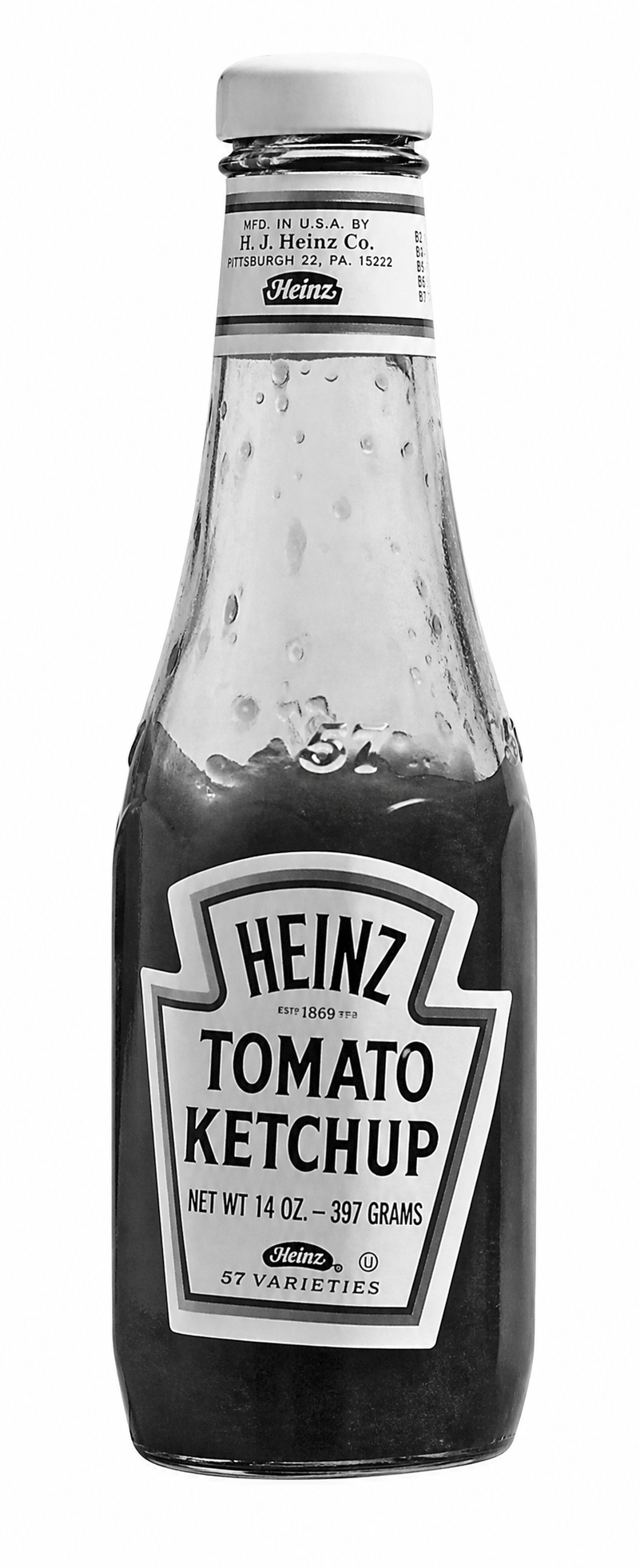
But the value of the result and the success of the experiment depends on the question they are answering: and on whether it really is ¢bis question they are answering. There are, always, those who choose the ketchup bottle. There are good reasons why they do. Ketchup goes with hamburger. It is an icon, almost, of our modern life; we associate with it because it is ordinary, comfortable, relevant to everyday life, and highly identifiable. Also rather nice. The salt shaker is almost archaic by comparison. Though many people still have this type of salt shaker around, it feels as though it might disappear from our lives, be replaced by another way of dispensing salt. All this is true, and explains why twenty percent of the people who ask themselves this question choose the ketchup bottle. But none of this is relevant to the way I mean the question to be asked. The question I mean to ask is, of the two, which is more deeply connected to your eternal self? Which feels as if it is a better picture of your eternal self, your aspiration, the core of you that exists inside?
Ordinary ketchup bottle
The question seems to deal with the deep wholeness of the person -- and with the deep wholeness of these two objects. It does not depend on the personality or character of the observer. The question helps people get away from their preference and opinion. Once it is clearly explained and people agree to answer it, the question seems to hold a great deal of promise as a rock-bottom experiment that can reliably distinguish more life from less life.
As far as I have been able to discover, we can apply this question to virtually any two things whose degree of wholeness we are trying to compare. Whenever we compare two objects, we can always ask, "Which of the two is a better picture of my self?" We can do it for pairs of buildings, paintings, parts of a neighborhood, doorknobs, spoons, roads, clothes, tables, chairs, roofs, walls, doors, windows, towers, groups of buildings, parks, gardens. We can do it for actions, for pieces of music, for a single musical chord, for choices of an ethical nature, for a complex choice, even for a single stone set in the earth.
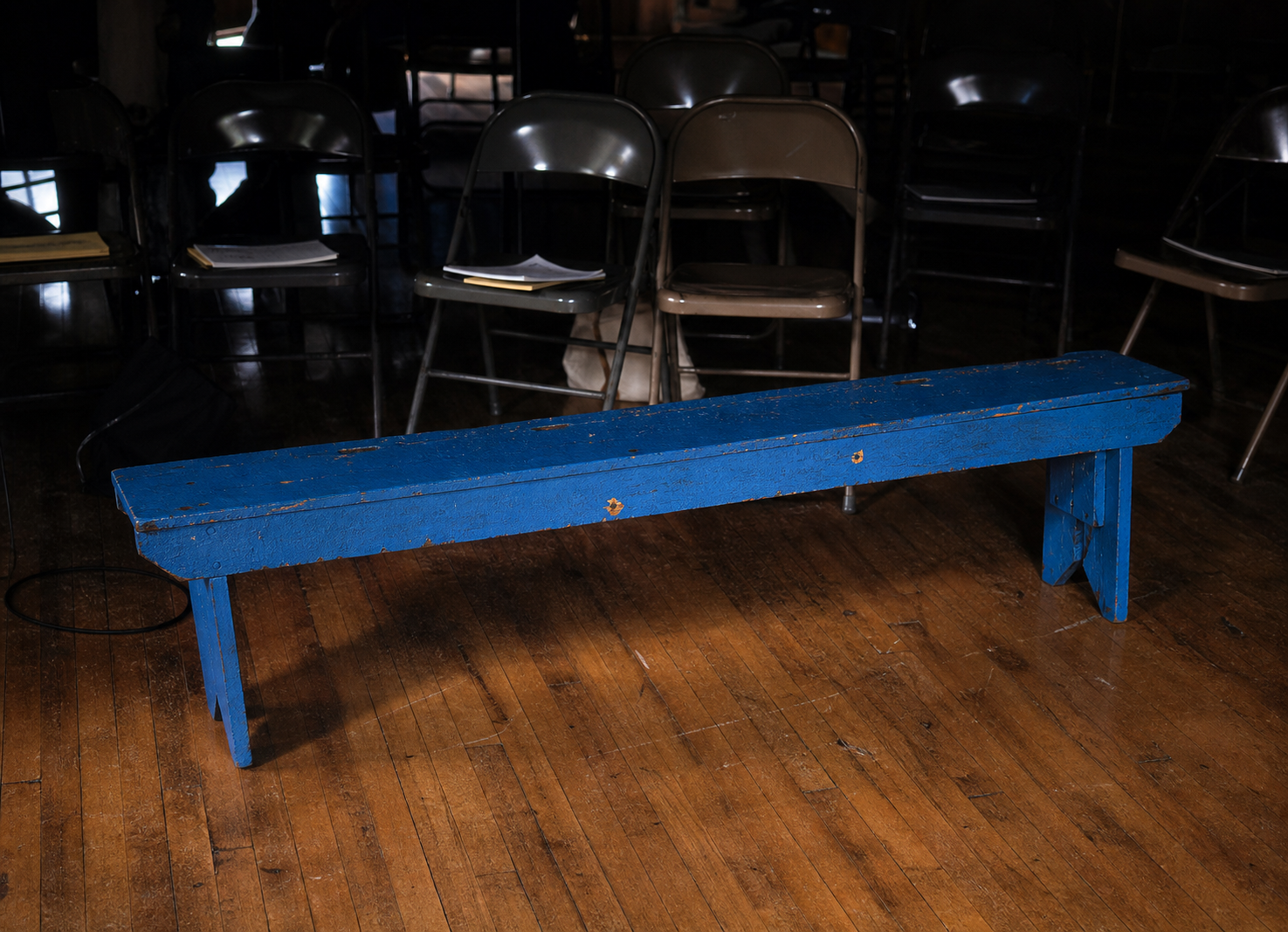
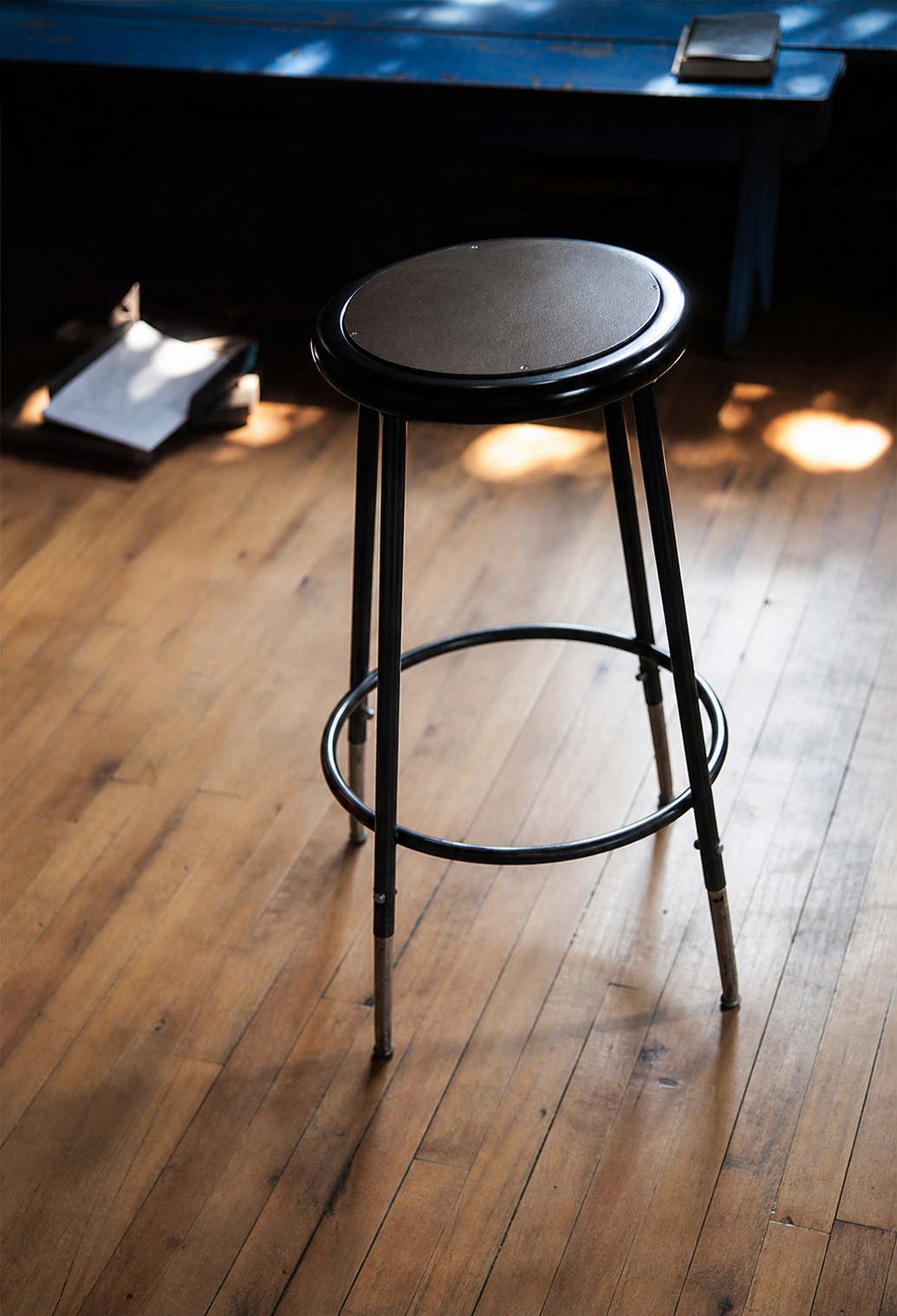
Here is another example of this phenomenon at work. In 1985, about a hundred people were at a conference in New York state, where I was talking about these matters. To demonstrate the idea of the mirror of the self, I pulled two obj ts into the discussion. Both happened to bein the conference room where we were meeting. One was a gray steel working stool with a round top; the other a blue-painted wooden bench.
I pulled these two objects into the middle of the circle where we were talking, and asked people to decide which one of the two was a better picture of their own selves, and explained the question as I have done here. After a few minutes of silence, I asked for a show of hands. All but one of the hundred or so people said that the blue bench was a better picture of their selves. One person said that the gray stool was, for him, a better picture of his self.
The person who chose the gray stool was upset to be in such an isolated position, and became very argumentative. He wanted to insist that he was right, justified, and so on. He wanted, especially, to argue that there could not be a truth such as this. He said it was obvious that such an issue could be settled only on a person-by-person basis, and that each person would choose something different, according to his or her individual nature. 1 pointed out to him that, on the basis of this hypothesis, it was very unlikely indeed that ninety-nine people would all choose the blue bench. He became more upset, and more argumentative. I let him talk for as long as he wanted, hoping he would become more comfortable. To the end, he insisted that he was right.
Two weeks later, when I returned home to California, I had a letter from this man: "You'll remember me, I hope, as the fellow at Omega who made an issue of having chosen the stool over the bench. By Wednesday I had let go the issue altogether. It was not worth the degree to which it was distracting me from the material at hand, so I just dropped my attachment to the stool. As a result, by Friday I was seeing both the bench and the stool differently, and had come to discern the qualities in the bench which made it a more whole entity, or capable of representing my most whole self. The question of nourishment was very different for me in that, from the start, I regarded the bench as more nourishing. It was very powerful to witness my perceptions undergoing such a basic alteration. Overall, this is what I took away from the workshop, a fundamental and profound change in the way I perceive things. What surprised me is the potency of emotions that has accompanied this transformation. For days now, as I think back over the workshop, I am acutely moved, as if a very deep part of me is recognizing some long lost elemental truths."
My experiments show that, in general, people agree to a remarkable extent about which objects are more, or less, like their best, or better, or most whole selves. Very surprisingly, it appears that this judgment is independent of person-toperson differences, and independent of culture. What is more, this form of the question creates the opportunity for growth. Even if an observer
The gray steel stool from the New York conference is at first confused by the question (and perhaps also by the question, "Which of the two is more alive?"), it allows him to teach himself and to grow in his ability to judge the matter.
As we shall see, the question forces a kind of internal development and growth in the observer, so that he or she gradually comes face to face with what wholeness really is, and is able, step by step, slowly to give up his or her own idiosyncratic ideas about what is beautiful, and replace them with a lasting accuracy of judgment.
In order to understand the objectivity of life or wholeness as determined by the mirror-ofthe-self test, it is essential to make sure that the question itself is correctly asked and understood. Thus, for example, the question does no¢ mean "Please tell me which of these two things is more like you, in an autobiographical sense." Nor does it mean "Which of these two things reminds me more of my idiosyncrasies?"
Neither of these questions would accurately include the idea that the thing is a mirror of yourself, as you are and as you hope to be. There is an awareness of the beauty of potential that lies in each one of us which is crucial to the question. If we seek a thing which reflects this potential as well as what we have achieved, it is entirely different from choosing a thing which merely reflects the one-sided imperfection of the present idea we have of ourselves.
Again, neither of these questions would accurately include the idea that the thing must reflect us truly as we are: that is, with our loving and our hating, our triumph and our lament, our hilarity and our abyss of fear. A thing about which we choose to say, "That looks like me" or "That looks just the way I feel," is always onesided, has our peculiarity in it. It will be in no sense universal and this is because, in our immaturity, we try to forget the so-called bad things about our selves, our incapacities, our weakness. But when we look for a thing which reflects everything, both our weakness and our happiness, our vulnerability and our strength, then we enter an entirely different domain. The question takes on a different meaning, and we find that different people do usually choose the same things.
We can put the question in a more primitive sense, perhaps, by asking: which one of these two things would I prefer to become by the day of my death? That tends to remove the idiosyncratic and autobiographical cases very clearly. A student of mine formulated the question in another useful operation al way. He said, "Assuming for a moment, that you believed in reincarnation, and that you were going to be reborn as one of these two things, then which one would you rather be in your next life?"
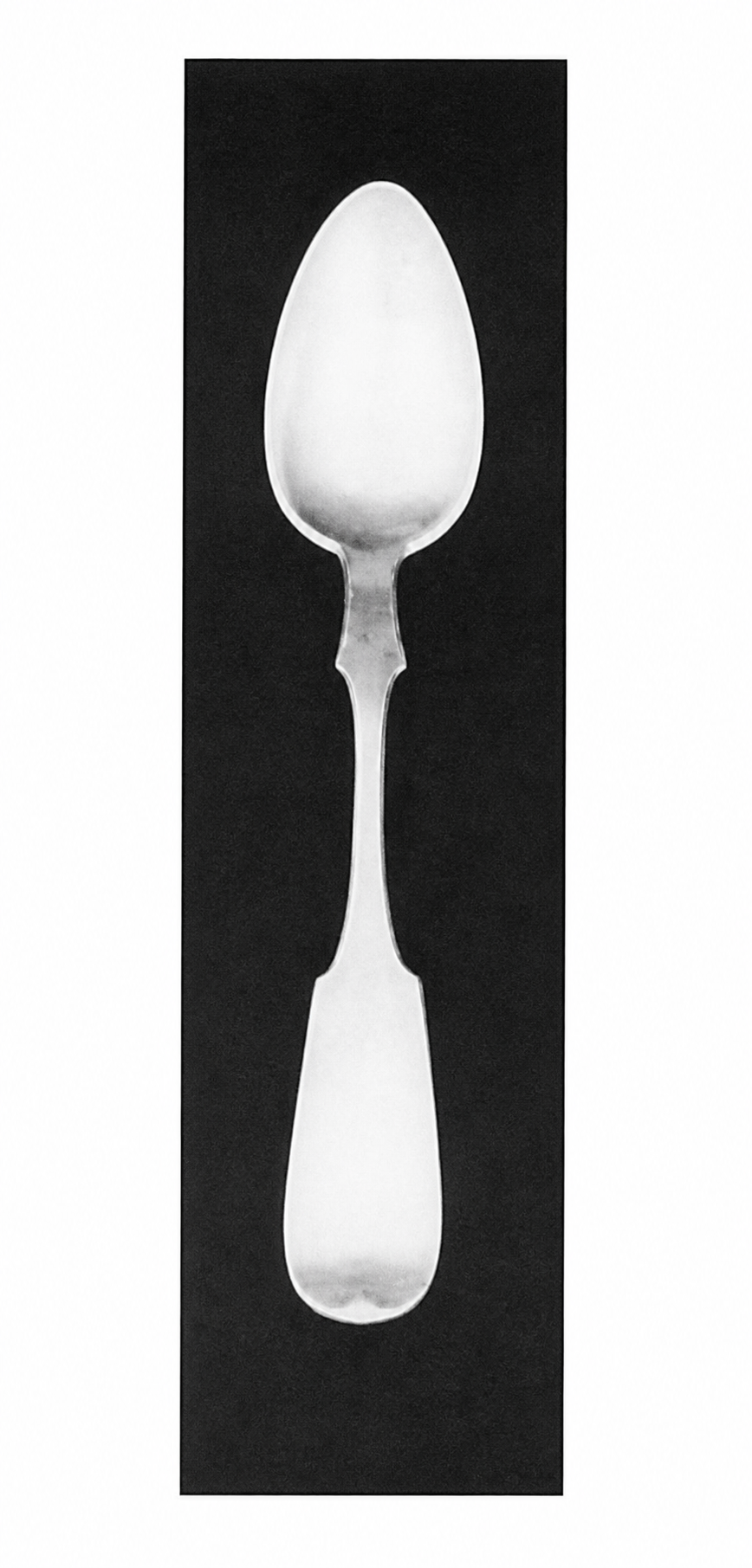
On these pages, there are examples of the kind of distinctions we get from these experiments. In each pair, it is the upper one, or the left-hand one, which is a better picture of the self. We may also ask: which one has more life? It is almost the same question.
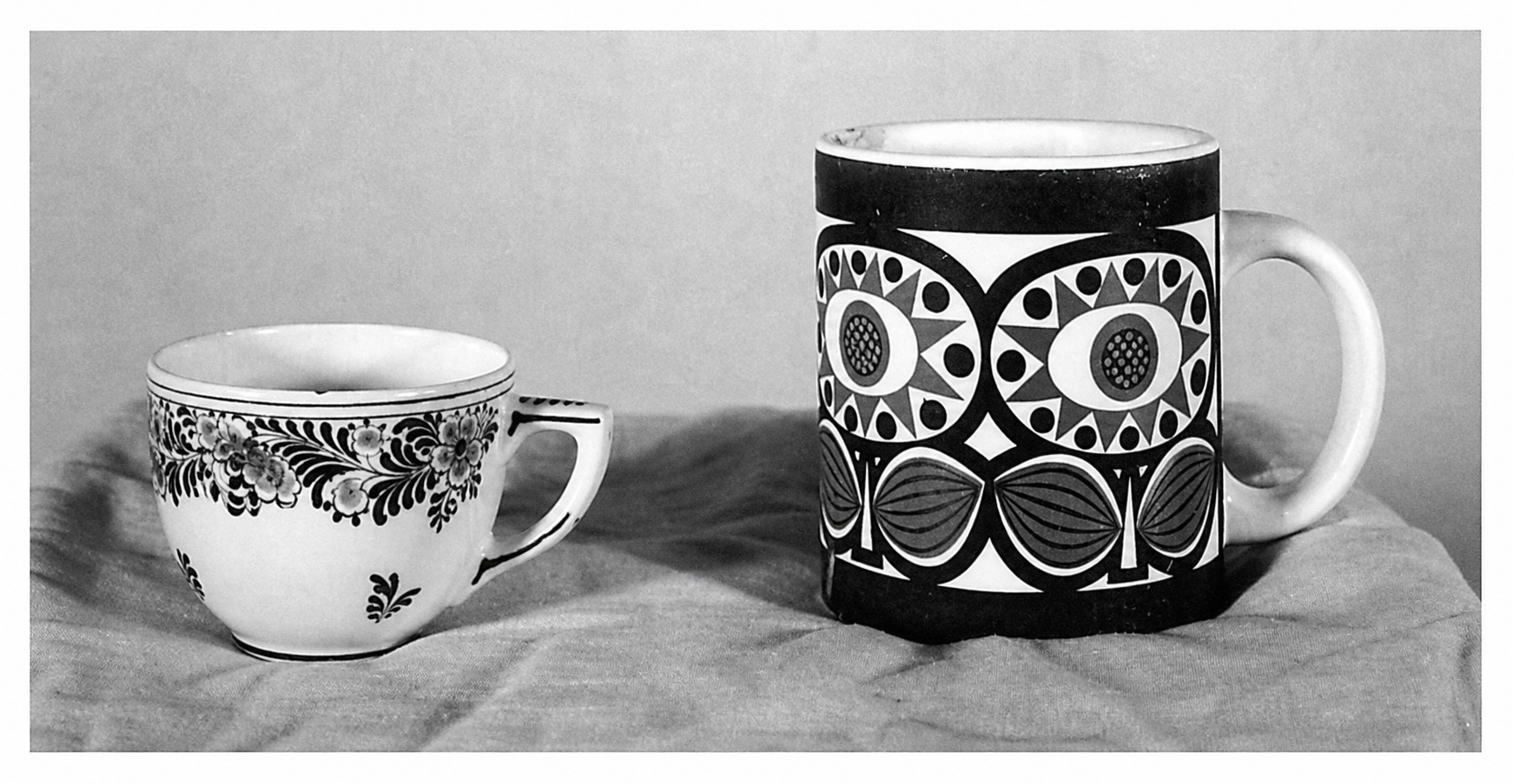
Here are two cups: a small mocha cup and a larger coftee mug. Which of the two is a better picture of my self? Eighty-five percent of the people asked say that the smaller one is better. A caution here, as in the case of the ketchup bottles: the larger coffee mug is more convenient and, many of us, if we are coffee drinkers, might well prefer it, even demand it, as the one to drink our morning coffee from. That, of course, is not the question being asked. The question being asked is really quite rarefied: which one is a better picture of our own true self? This almost esoteric question gets the other answer. Most people choose the small, delicately shaped anc flowered, tiny cup.
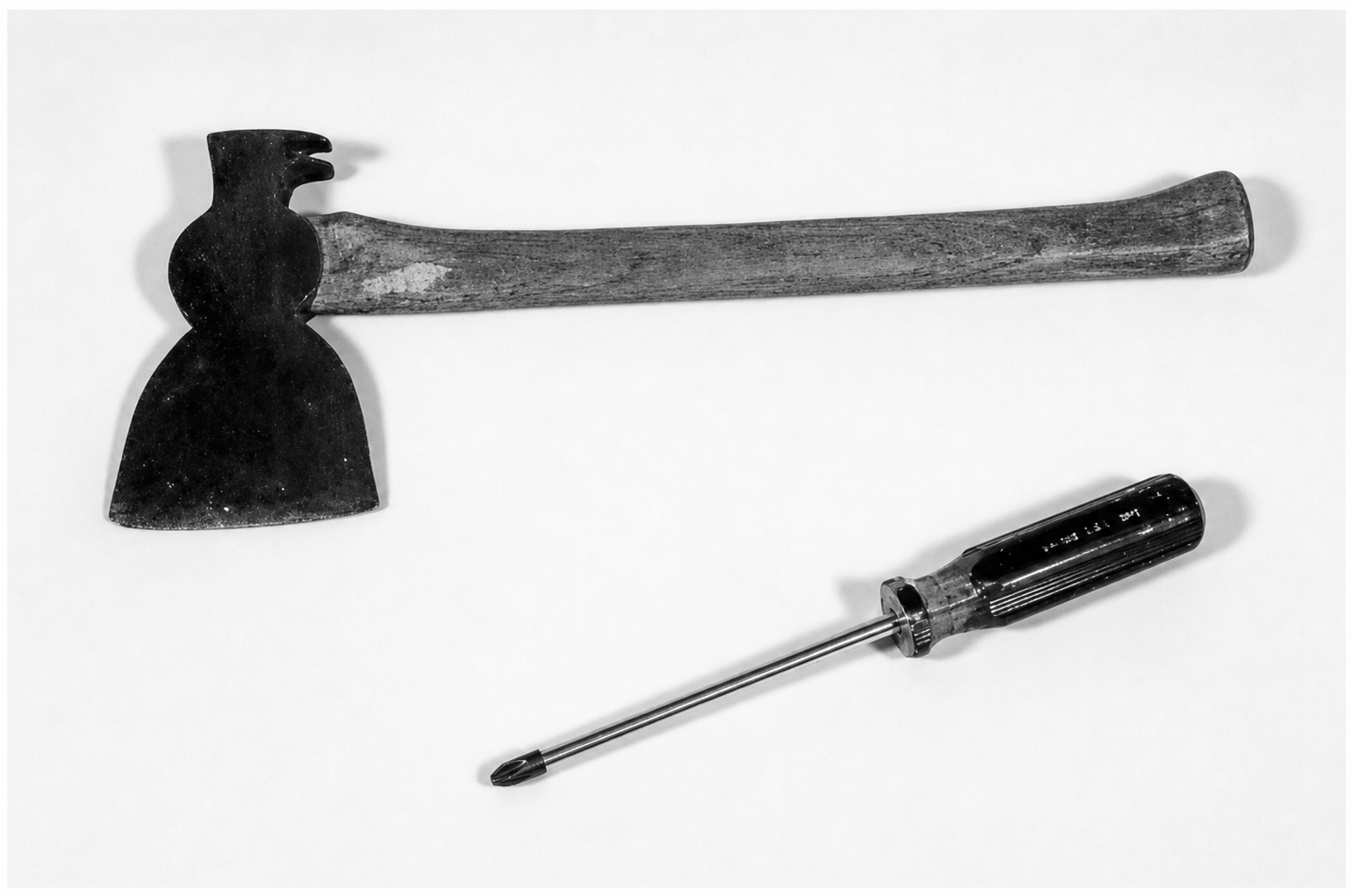
Or take the case of two tools: an ax and a Phillips screwdriver. Which of the two has more life? Eighty-eight percent of people say that the ax has more life.
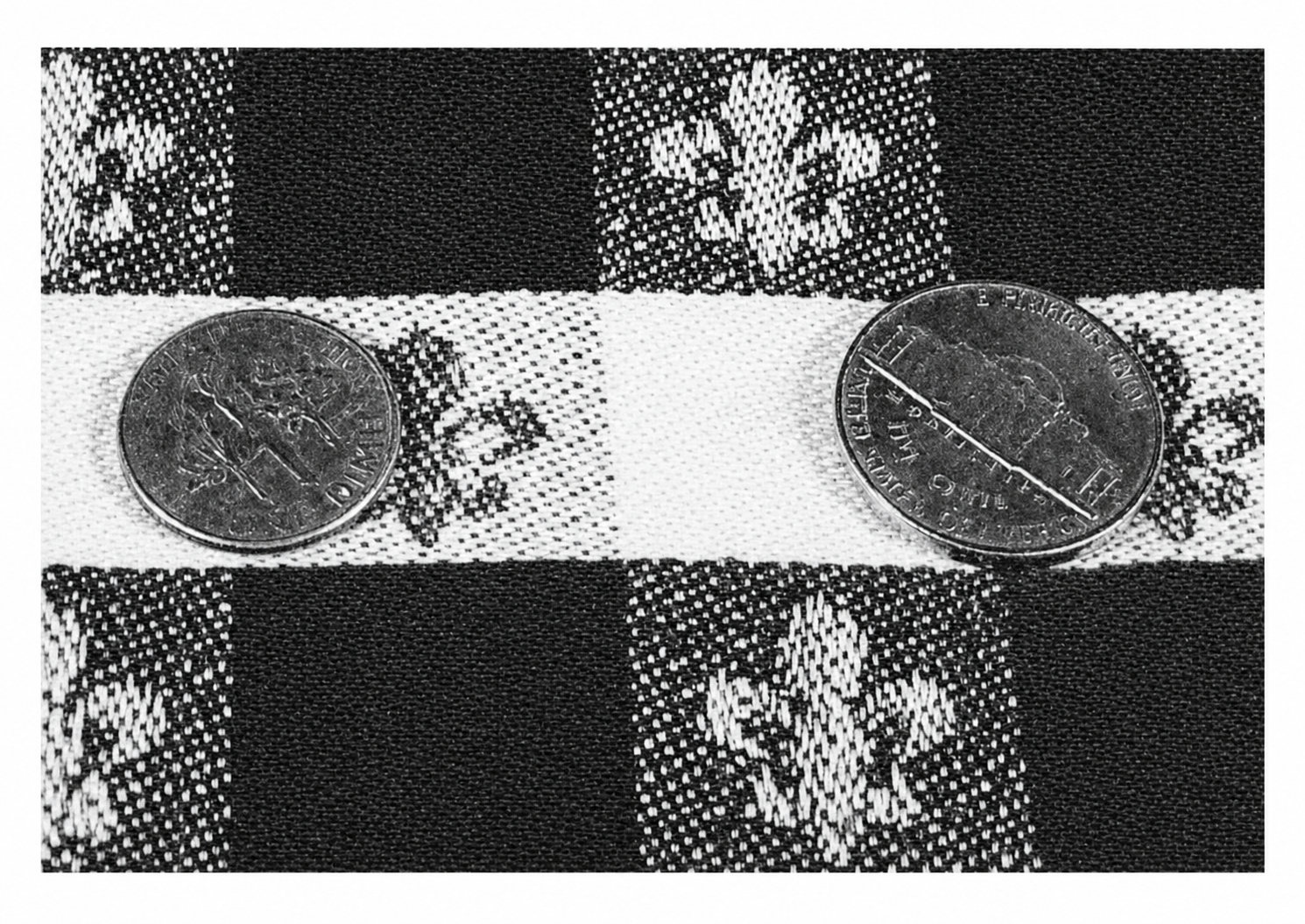
Or consider coins. My photograph shows an American nickel and a dime. Most people say that the dime has more life than the nickel. In case you think their choice has to do with monetary value, you should know that sixty-five percent also say that the dime (10 cents) has more life than a quarter (25 cents): the effect has to do
Two spoons
GaP |
Mi32tLexi1QUART) Seece 641 _,)

A pair of scissors and a can of rubber cement
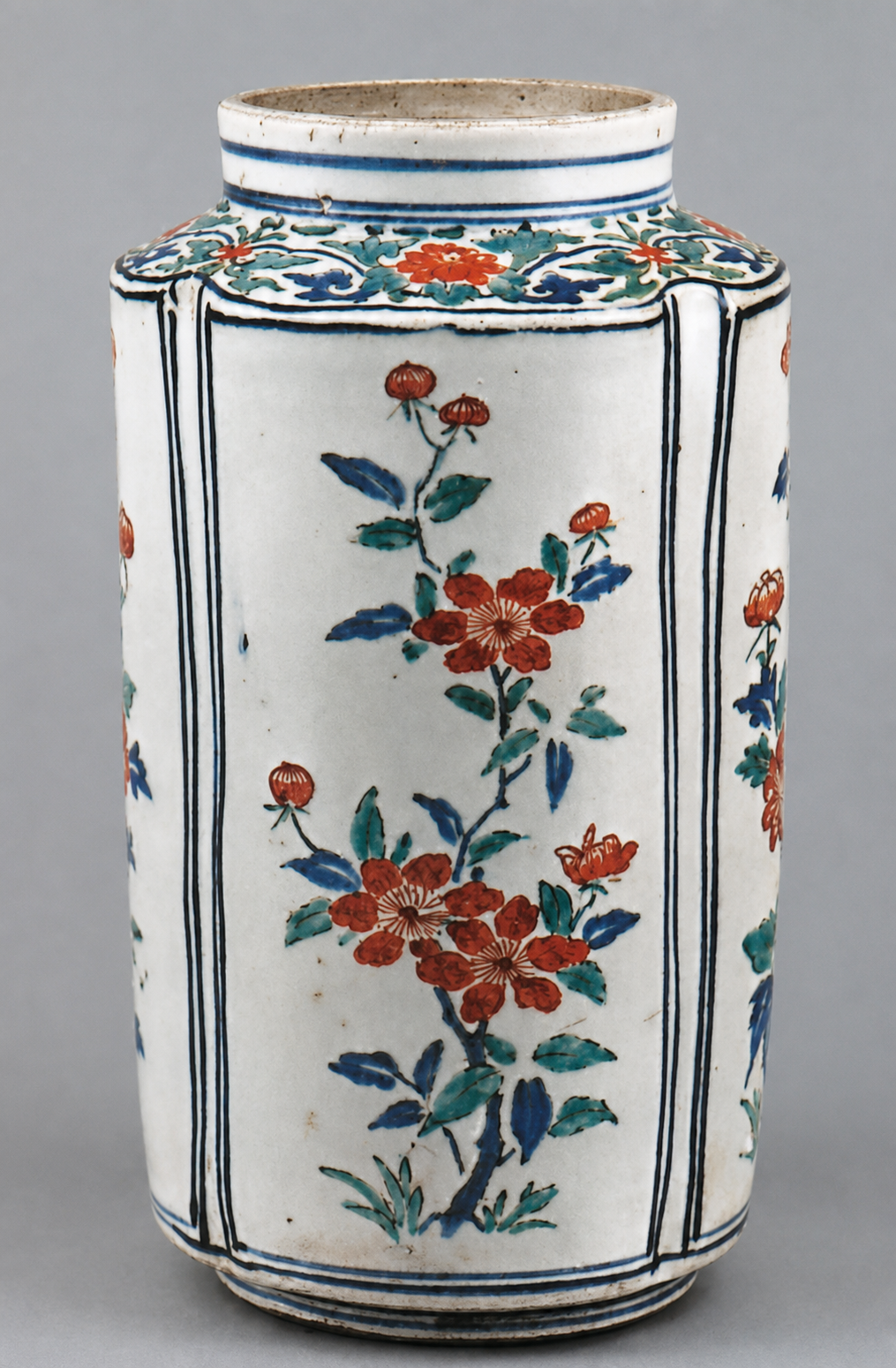
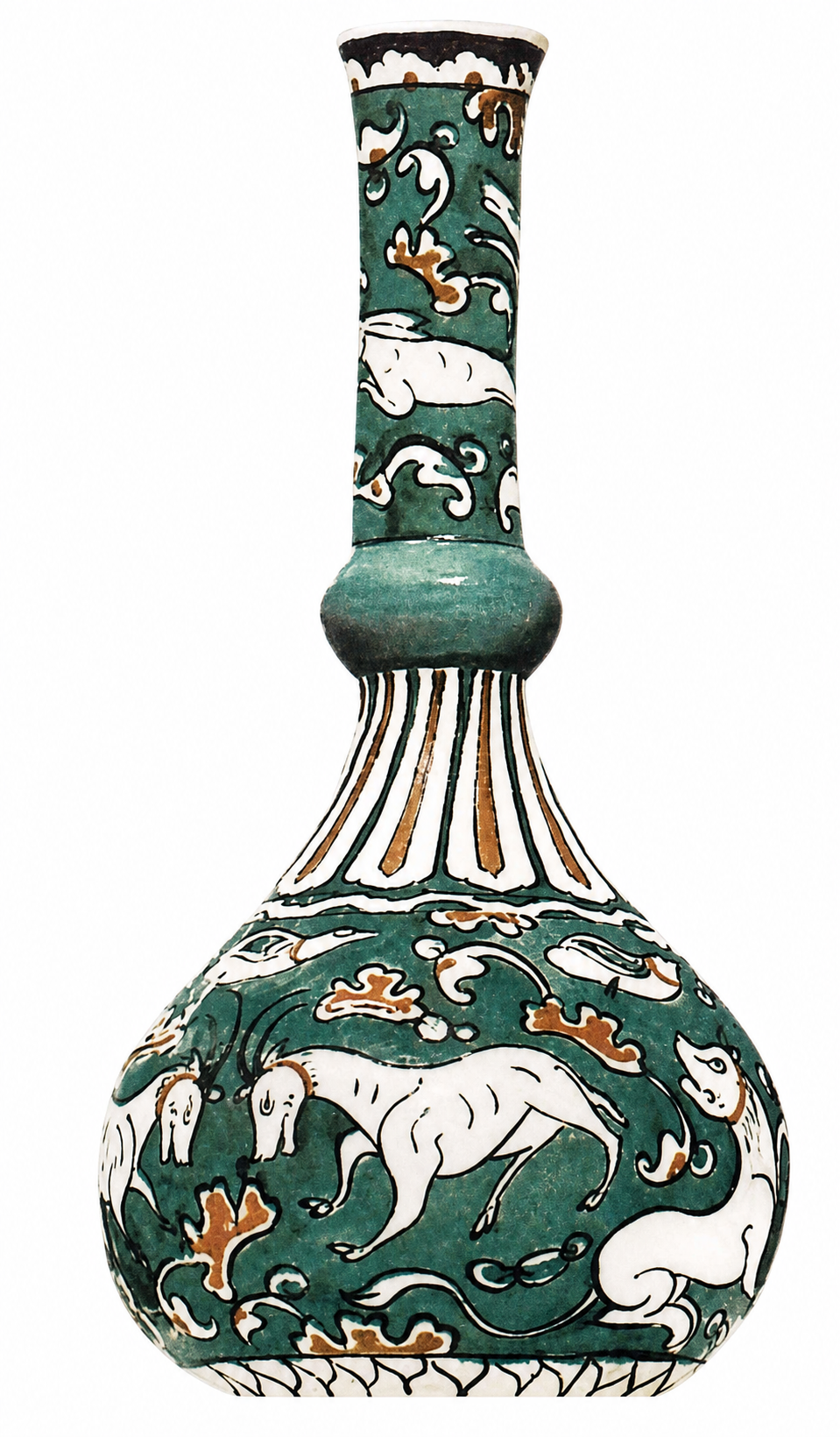
Kakiemon ware jar with flowering stems in four panels: from the 18th century, Japan
The Japanese jar is quite beautiful; merely wish to say that, relatively, the Turkish jar on the left has more of the self quality than this jar has. with it.
do not place it on the right hand side here, to imply that there is something wrong with the concentrated small brightness of the smaller coin.
Here are two items of office equipment: a bottle of rubber cement, and a pair of scissors. Which one seems more alive? Ninety percent of people say that the scissors have more life.
It is very important to emphasize that, like the earlier judgment of life or the judgment of deep liking, this judgment -- "Which one is a better picture of my self?" -- has nothing to do with preference. When I say that one spoon is a better picture of the self than another, I do not say that you, the reader, do, or should, prefer it. I merely state, as a fact, that it is a better picture of the self, and that this fact will be visible to most people who take the trouble to examine it.
A few years ago I was with a friend, Bill Huggins, in London, describing these facts to him. He became intrigued and asked me to show him some examples. I happened to have with me a catalogue of an auction, at which some carpets were to be sold. On one page, two carpets were illustrated in color.
T asked Bill to compare the two, and to tell me which one he felt better described his whole self, all of him, good, bad, past, present, and what he could be -- in short, the same question which I have been writing about.
He sat and looked at the pictures for a long time. Finally, he said, "This is extremely difficult. The first of these is beautiful. I like it, it has bold colors, beautiful graphic quality; it is
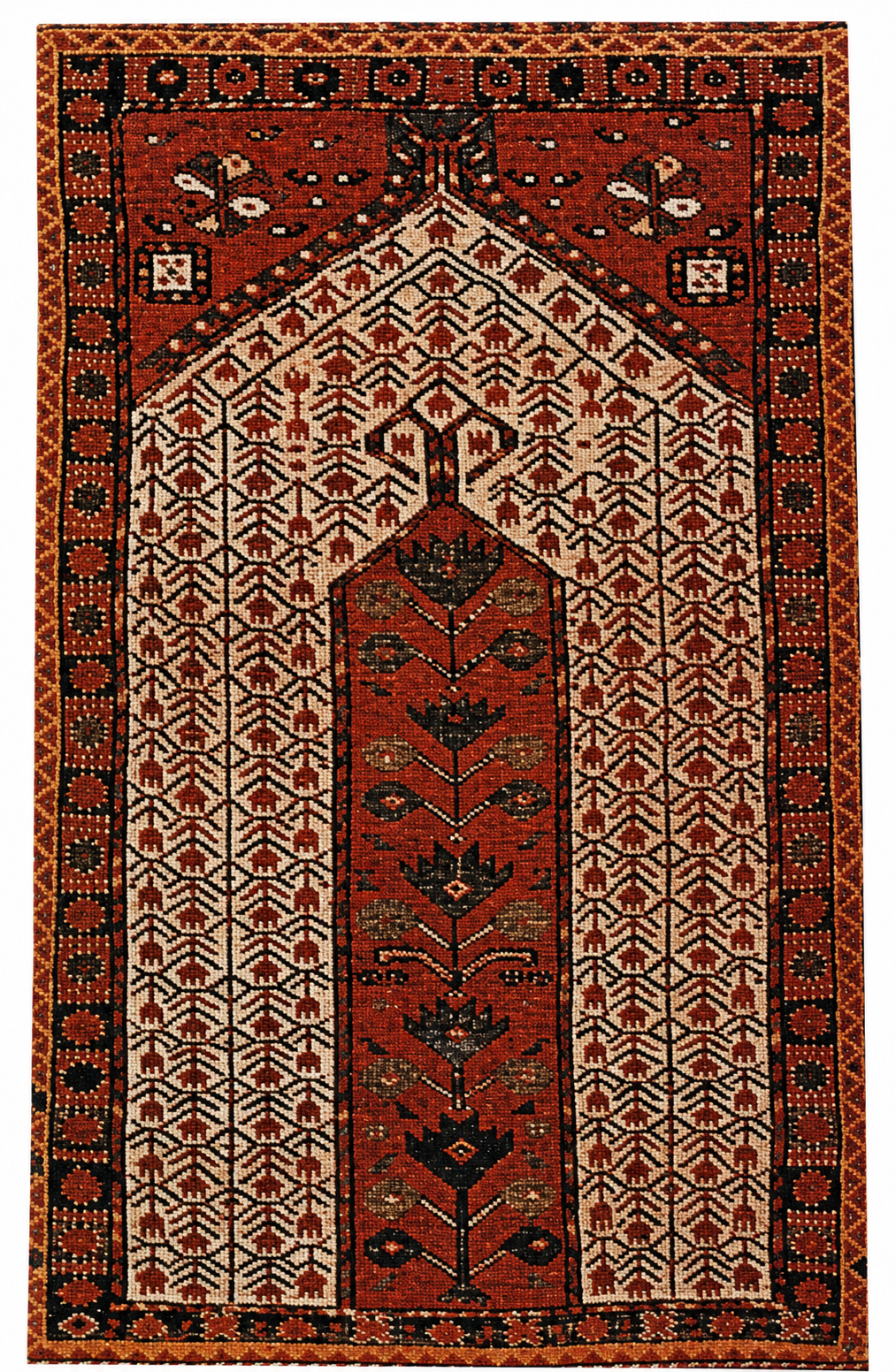
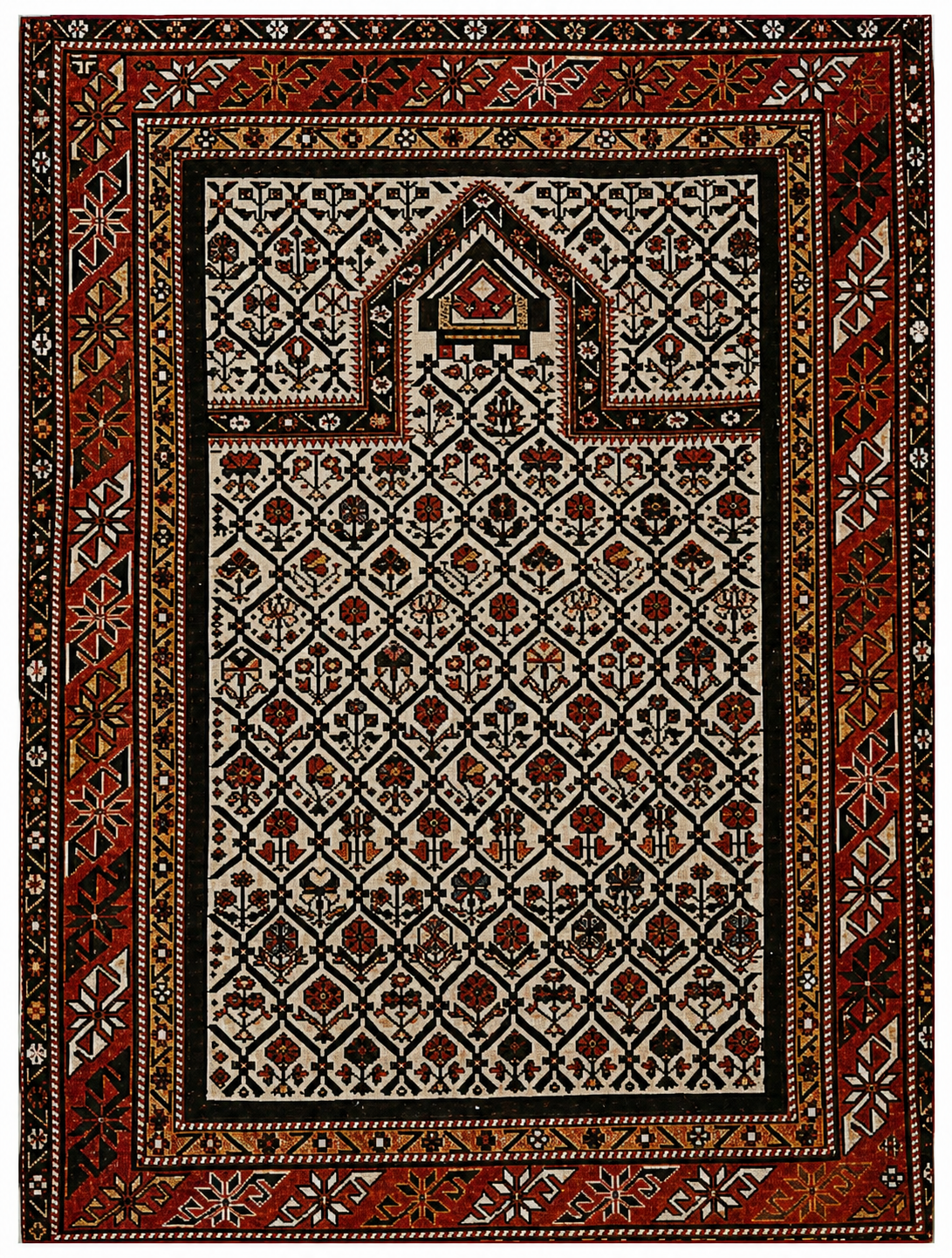
well designed, forceful... and so on. The other one is much softer, quieter. I don't even like it, and yet, in some strange way, when you ask me this question, it seems that the second one, not the first, is a better picture of my self."
I said, "Well, please forget what you like or don't like. I don't care whether you like one better than the other, nor if you think one is better designed than the other, nor which one you consider more beautiful. All I want is that you should look and look and look, until it is clear to you which one comes closer to being a picture of your self as you are and as you want to be."
"Tn that case," he said, "I have no alternative. I must choose the one which I don't like." And he pointed to the second one.
Daghestan prayer rug. This one Bill liked mere, but he said that it was less like his self.
The carpet which Bill didn't like, but which he found to be a truer picture of himself, is a rare Ersari prayer rug. The other carpet, which my friend liked better but did not choose as a picture of himself, is a Daghestan prayer rug, brightly colored, pretty, but less important. Novices in the field of carpets would often choose the Daghestan because they are attracted by its colorful prettiness. Carpet experts would all recognize the Ersari as a more serious carpet because it is "better." It is also worth a lot more money.
By using the picture-of-the-self criterion, Bill transformed his level of seeing from that of a novice to that of a beginning expert in a matter of a few minutes.
4/THE
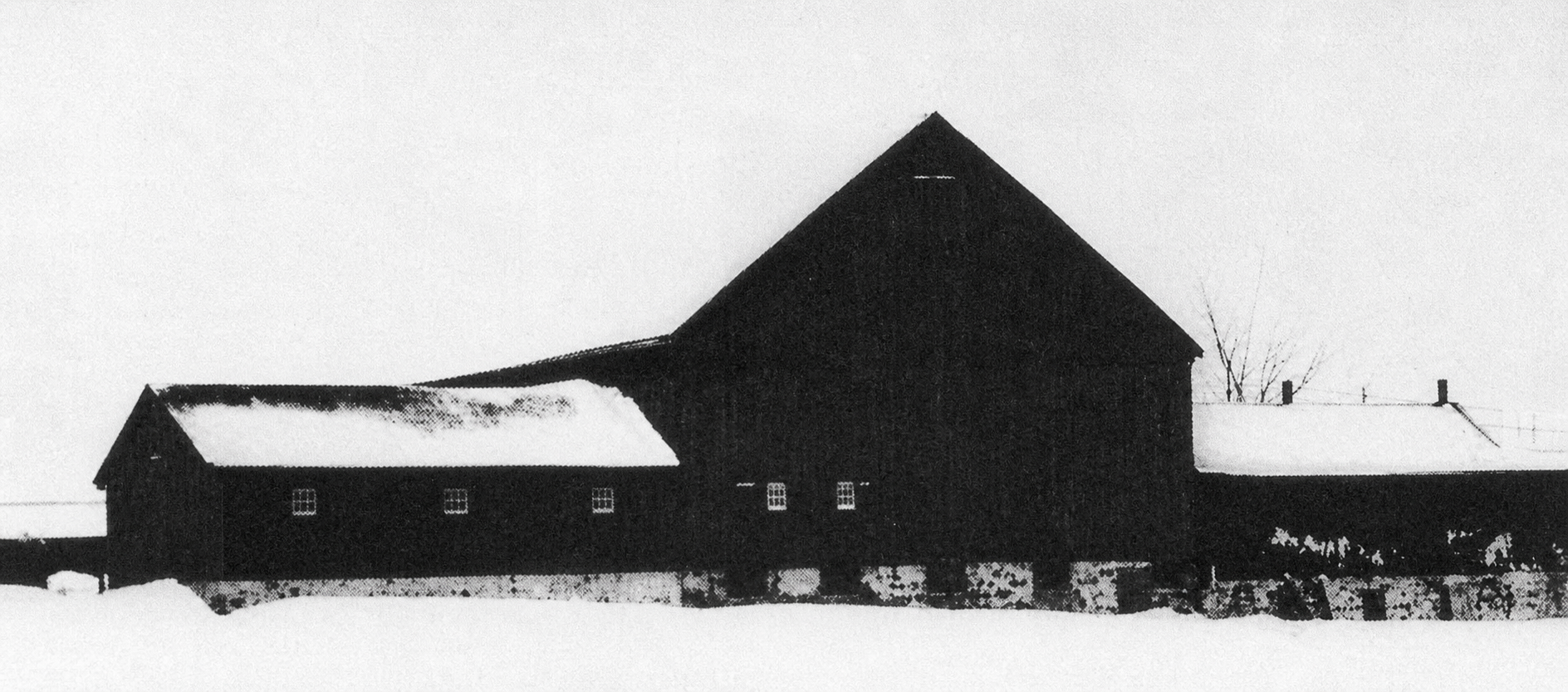
Let us now look at a few buildings and artifacts which are very good pictures of the self. We might start with the yellow tower from the preface (in color on page 11). Some of the buildings and objects and situations shown in chapter 1 are very good also (pages 31 - 57). And on the next five pages, starting with the barn below, there are still others which are very, very good.
If I ask you what you think, you may agree that these things are full of life. You can see the field of centers the yellow tower creates: the graded sequence of smaller centers formed by the roofs, the perfect placing of the windows, their perfect shape within the wall. But I can also ask you a different question -- whether this yellow tower or the barn below in any way reminds you of yourself. The remarkable thing about the tower, and the same goes for the barn, is that, to
a deep degree, for me, for you, it is a picture of our own selves. I believe you may agree that it is also a picture of your self. It is a picture of the self or soul of each one of us. It is not hard to observe this, but it is very hard to understand it. The tower was made around A.D. 600, fourteen hundred years ago, by people who were utterly different in their habits and thoughts from us. It was made at a time which was, culturally speaking, alien to nearly everyone alive today. Similar things may be said of the barn: and of the buildings and artifacts shown on the next four pages. And yet these buildings form a picture of something which is in you and in me as we are today. Somehow, that "something" exists at a deep enough level to transcend time and culture. It reflects, to an astonishing degree, the self which is in every person, regardless of history,
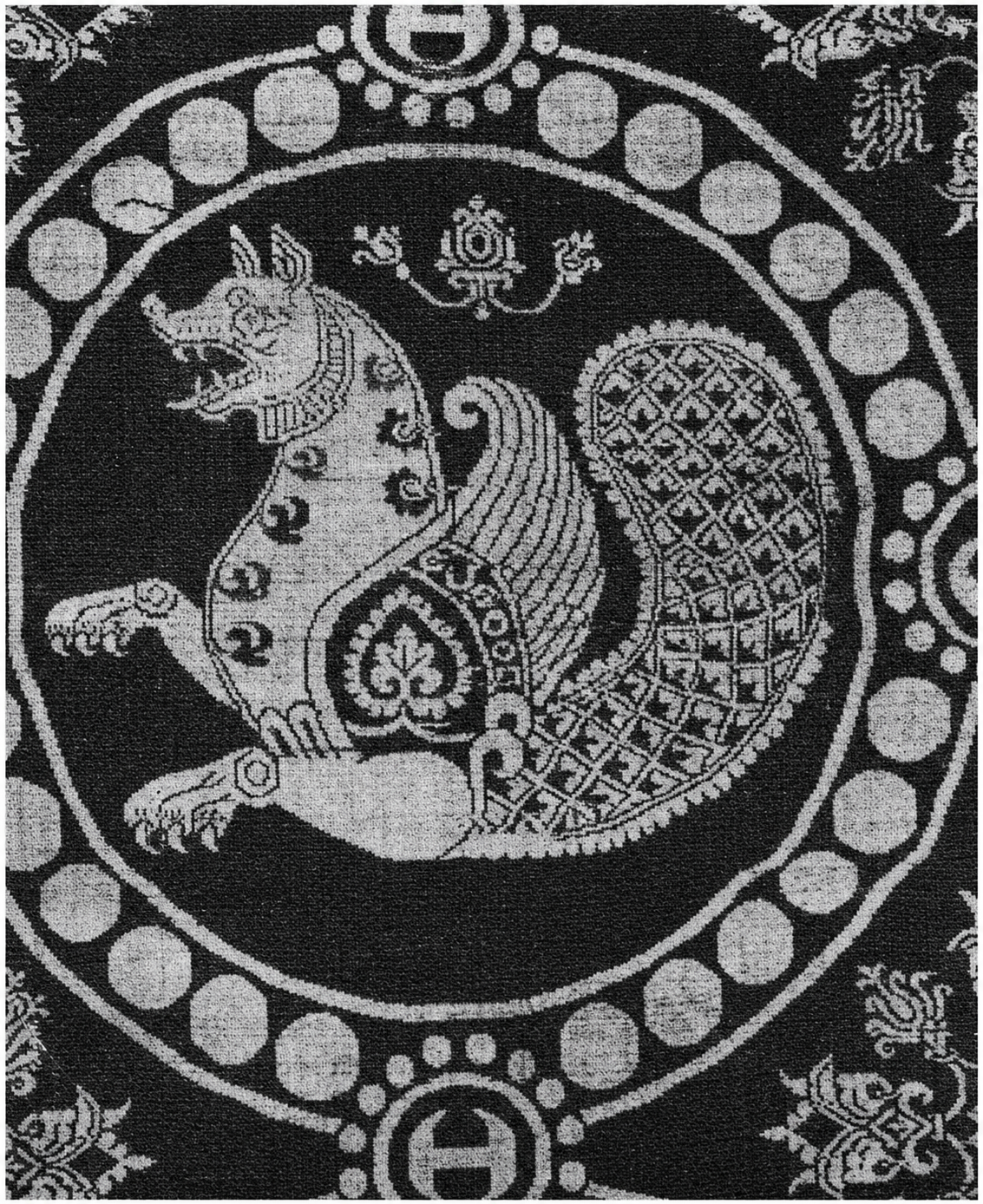
Sassanian silk twill of Senmurg, 7th century culture, and personal idiosyncrasy. I maintain that in every case the buildings which do well as pictures of the self are those which have living structure -- hence the field of centers -- most profoundly.
In chapter 4 I defined living structure, and showed how it allows us to distinguish buildings which are alive from those which are less so. We looked at the centers they contain, and the ways these centers form a field; in those which have most life, the field is most intense. ven when we looked at a pairs of examples which are superficially similar, we saw how in each case the one with more living structure, where the centers are stronger and the field is more intense, are also likely to be judged as having more life.
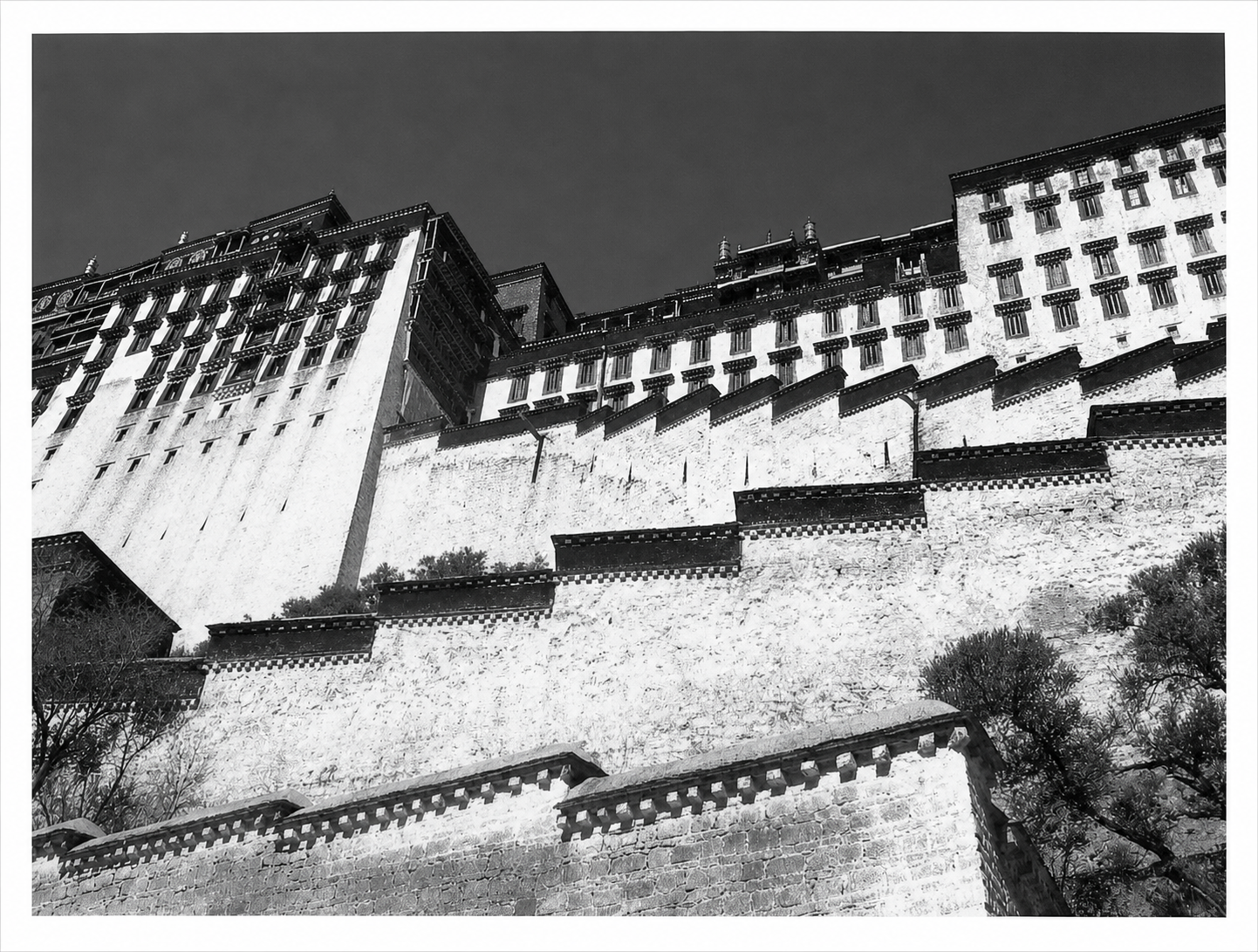
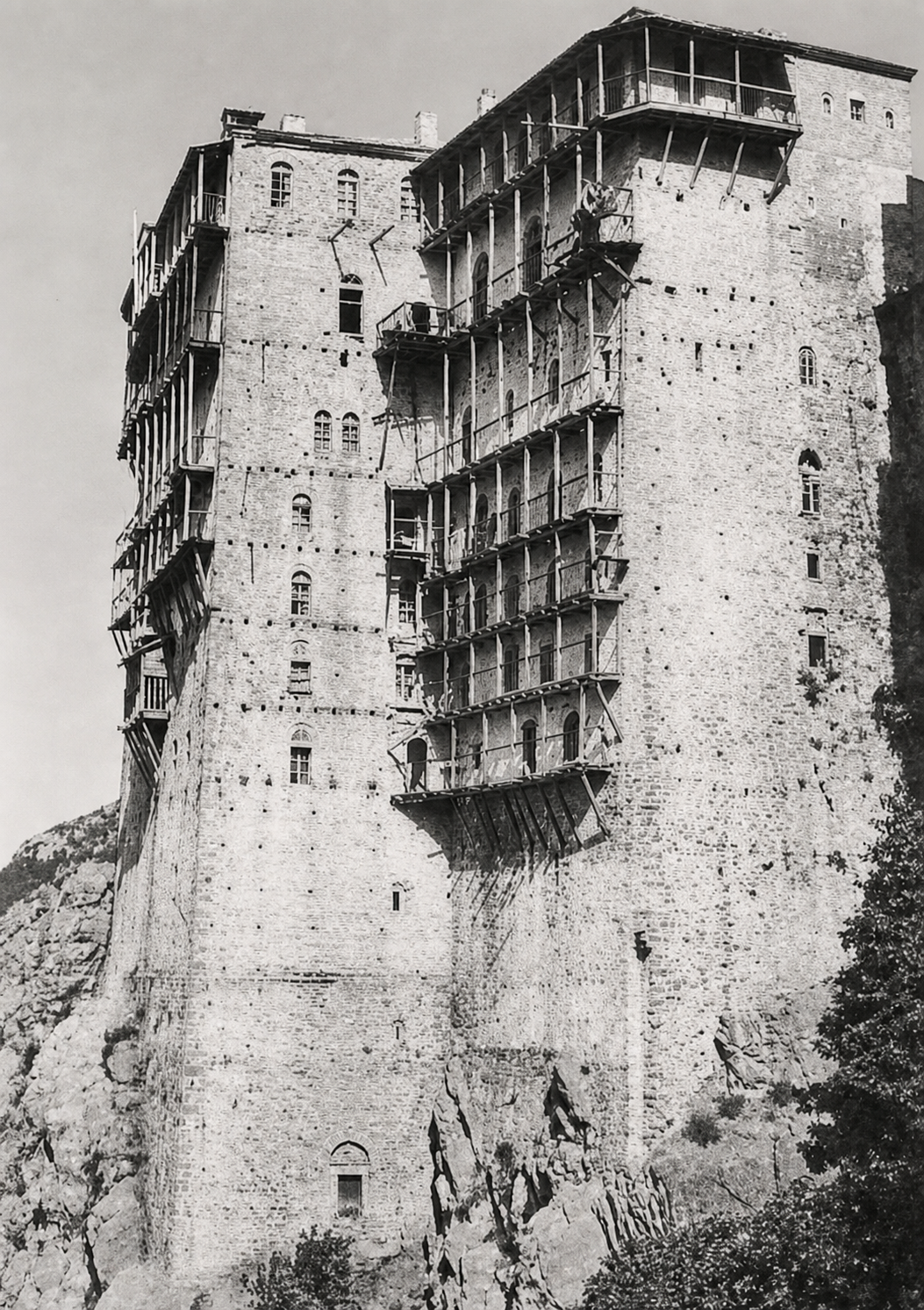
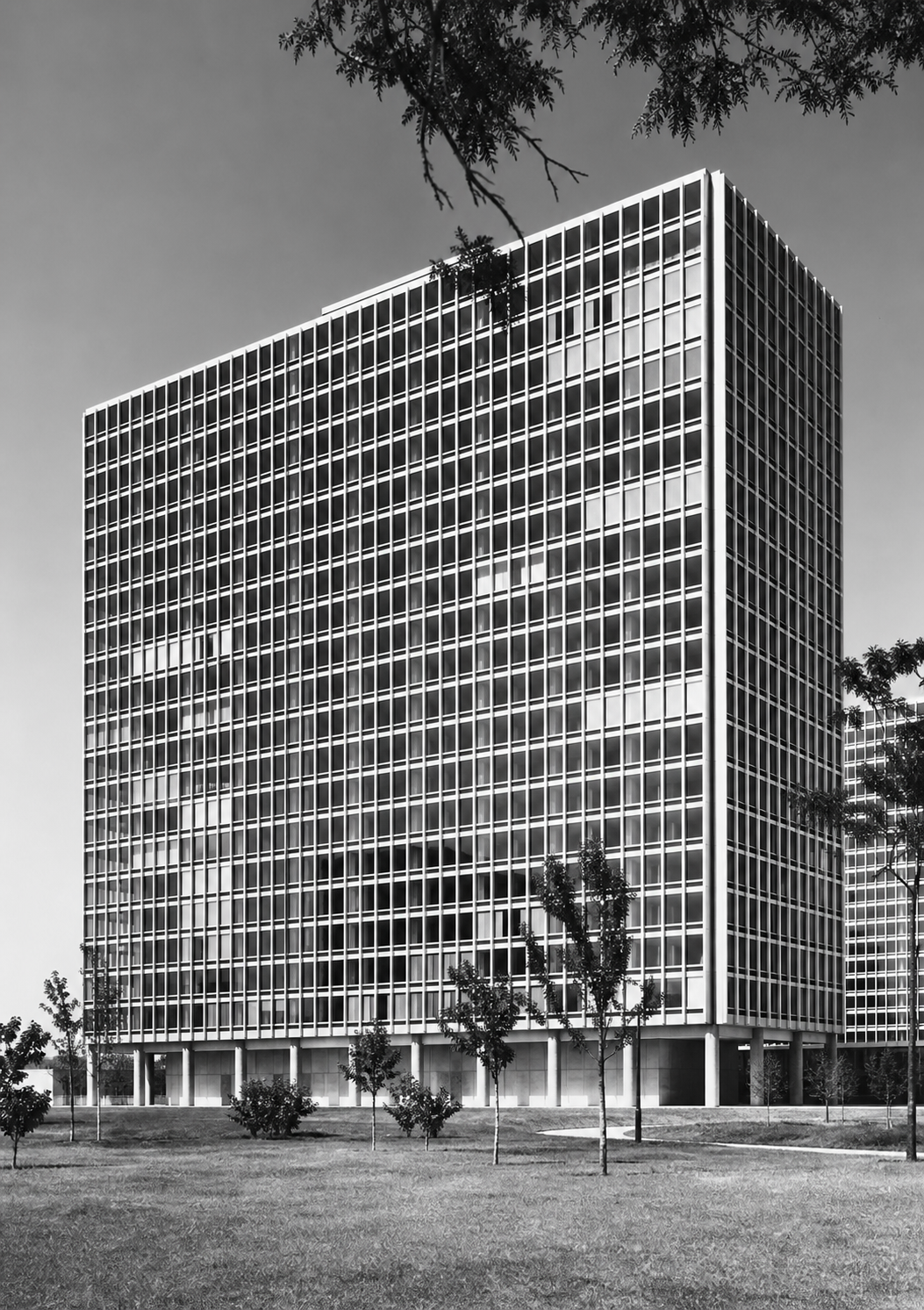
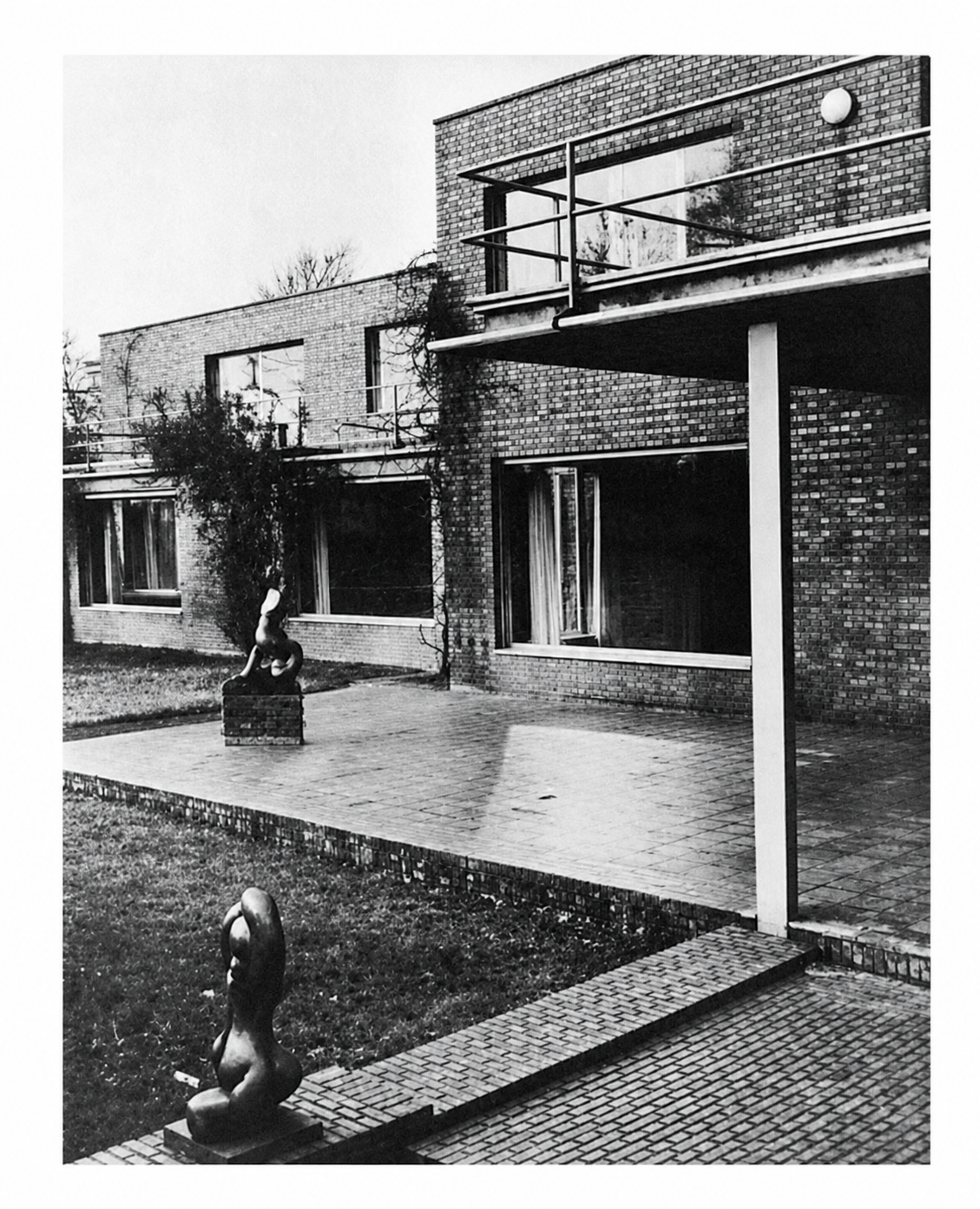
We may now see that the mirror-of-the-self criterion, applied to various similar building pairs, gives the same judgments. Compare, for instance, this pair of high buildings, one the mon astery apartments on the Greek island of Mount Athos, one the Detroit, Michigan apartments designed by Ludwig Mies van der Rohe. In terms of the field of centers, it is clear that the mon astery has a more powerful field of centers and more living structure; the centers are individually more powerful; and they are more subtly unified. That translates, too, into the fact that the mon astery has more life than the Detroit apartments, if we make the judgment of degree of life, in the manner suggested by chapter 2. If we use the picture-of-the-self test, we get the same result. The Mount Athos mon astery is a better picture of your eternal self than the Detroit apartments.
On the following pages, I have presented a number of other pairs of examples. In each case, we may see which of the two is more like a picture of the self, and, again, which of the two has more life. In every case, the one which is the better picture of the self also turns out to be the one which has more life, as well as a stronger field
A Ve Vt Ne (VV A VV
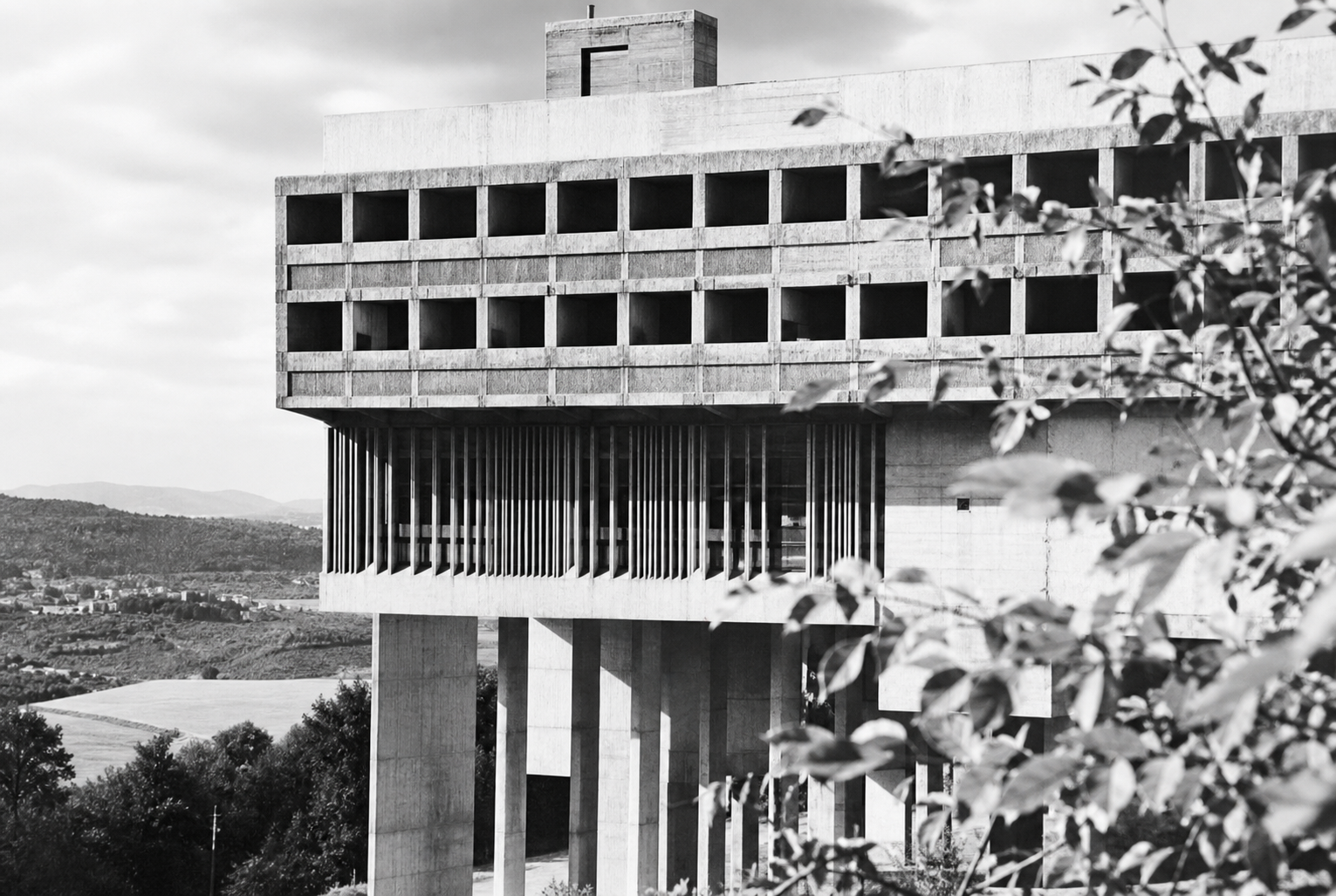
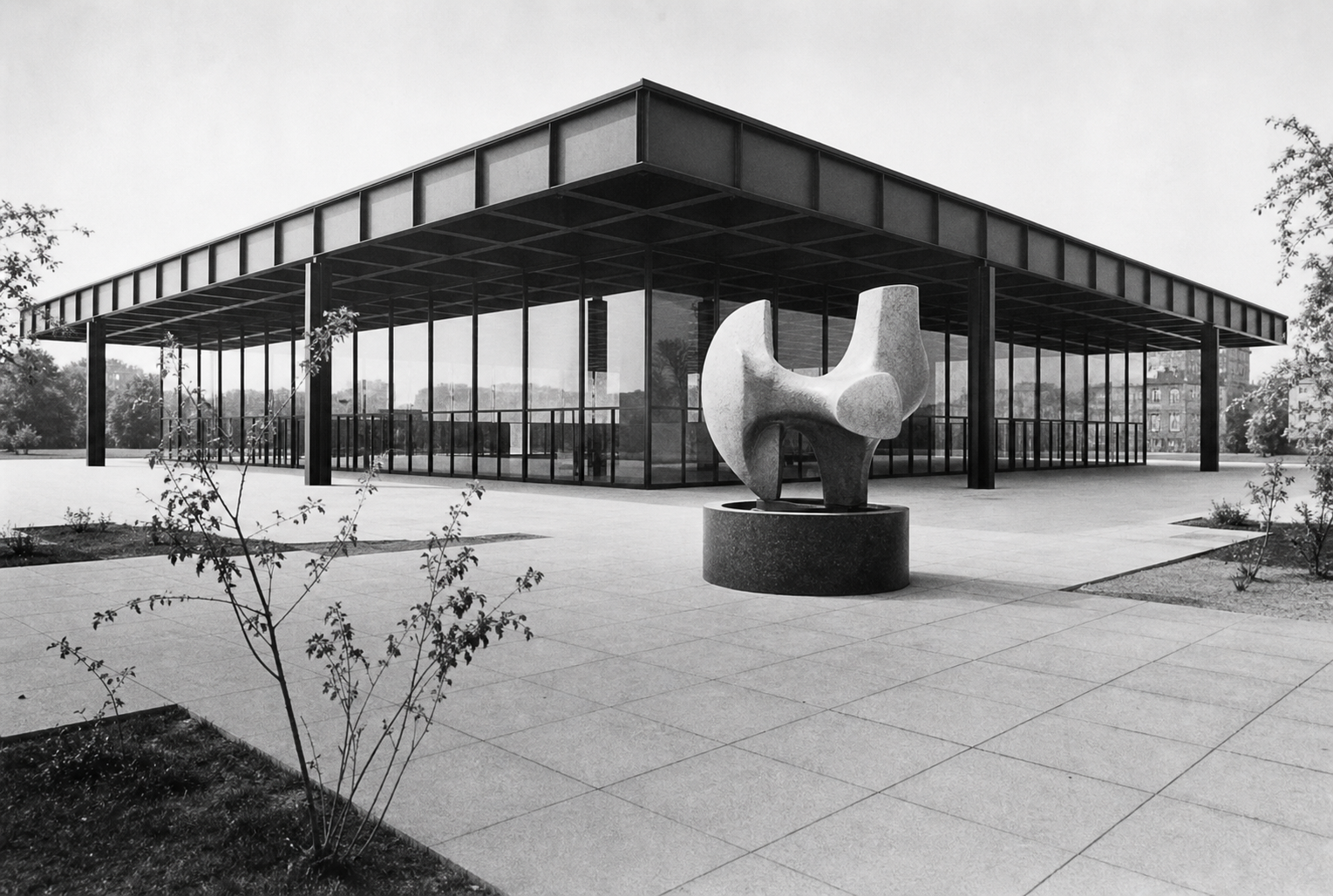
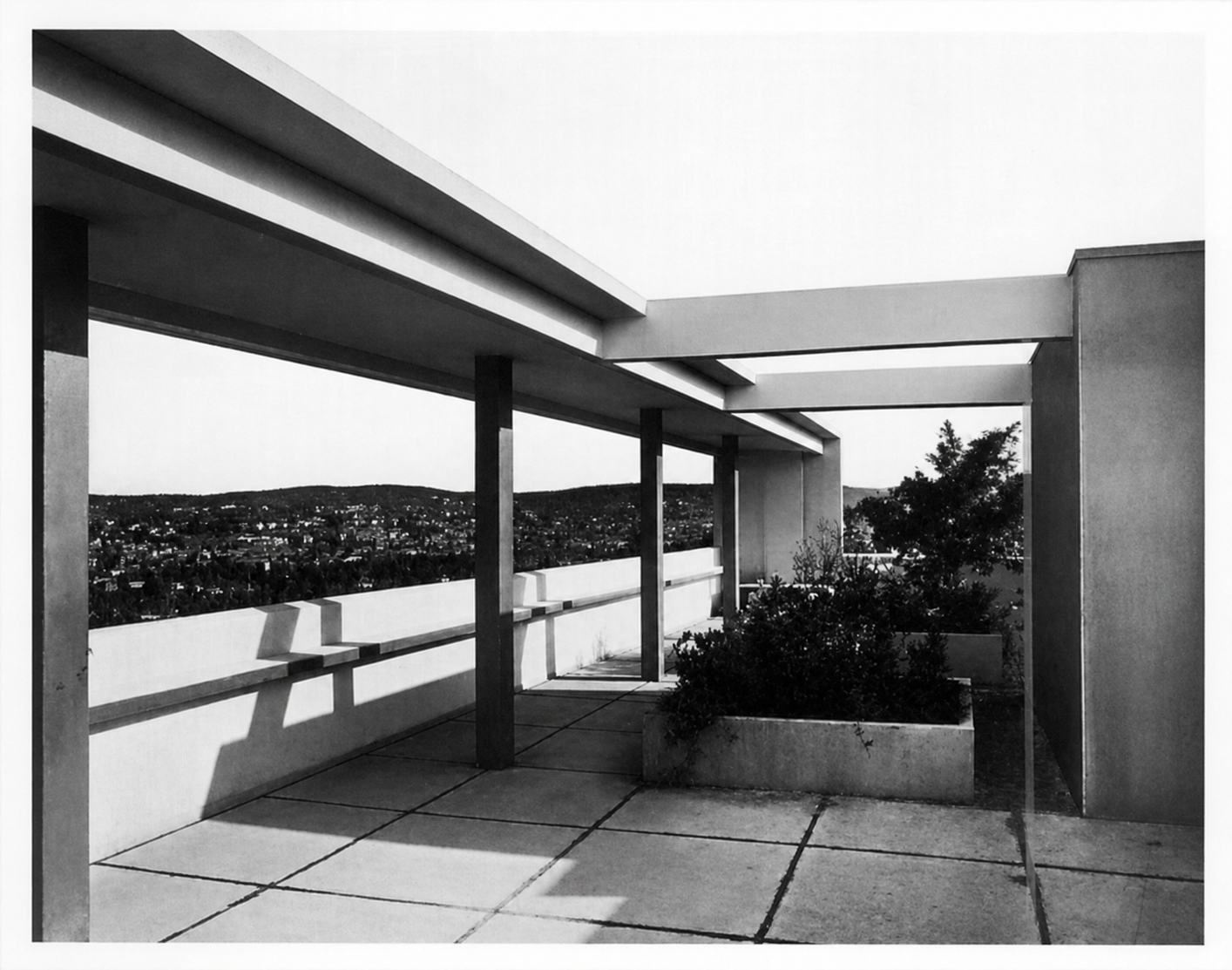
Le Corbusier
Mies van der Rohe
\\ M4
Wall texture
33°
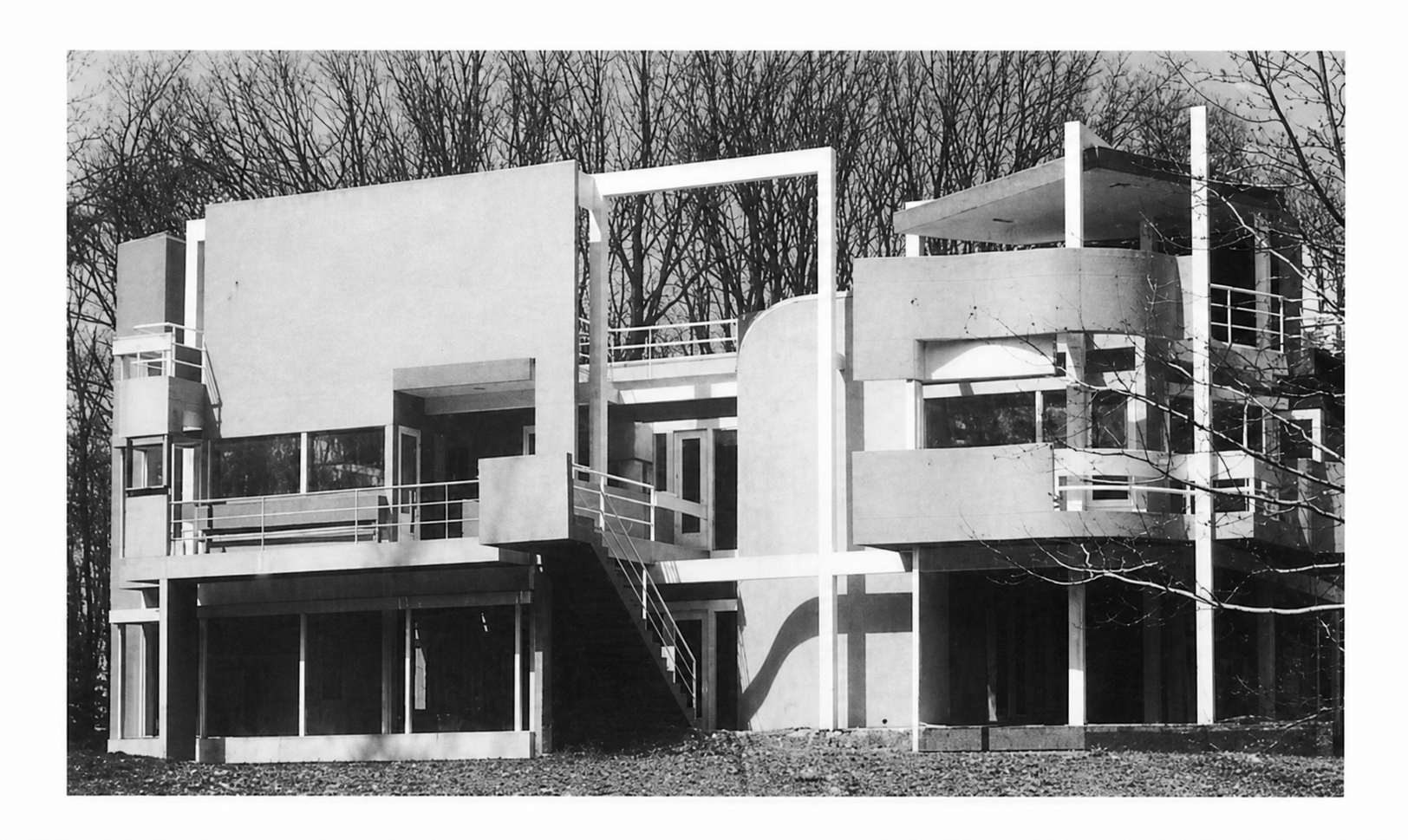
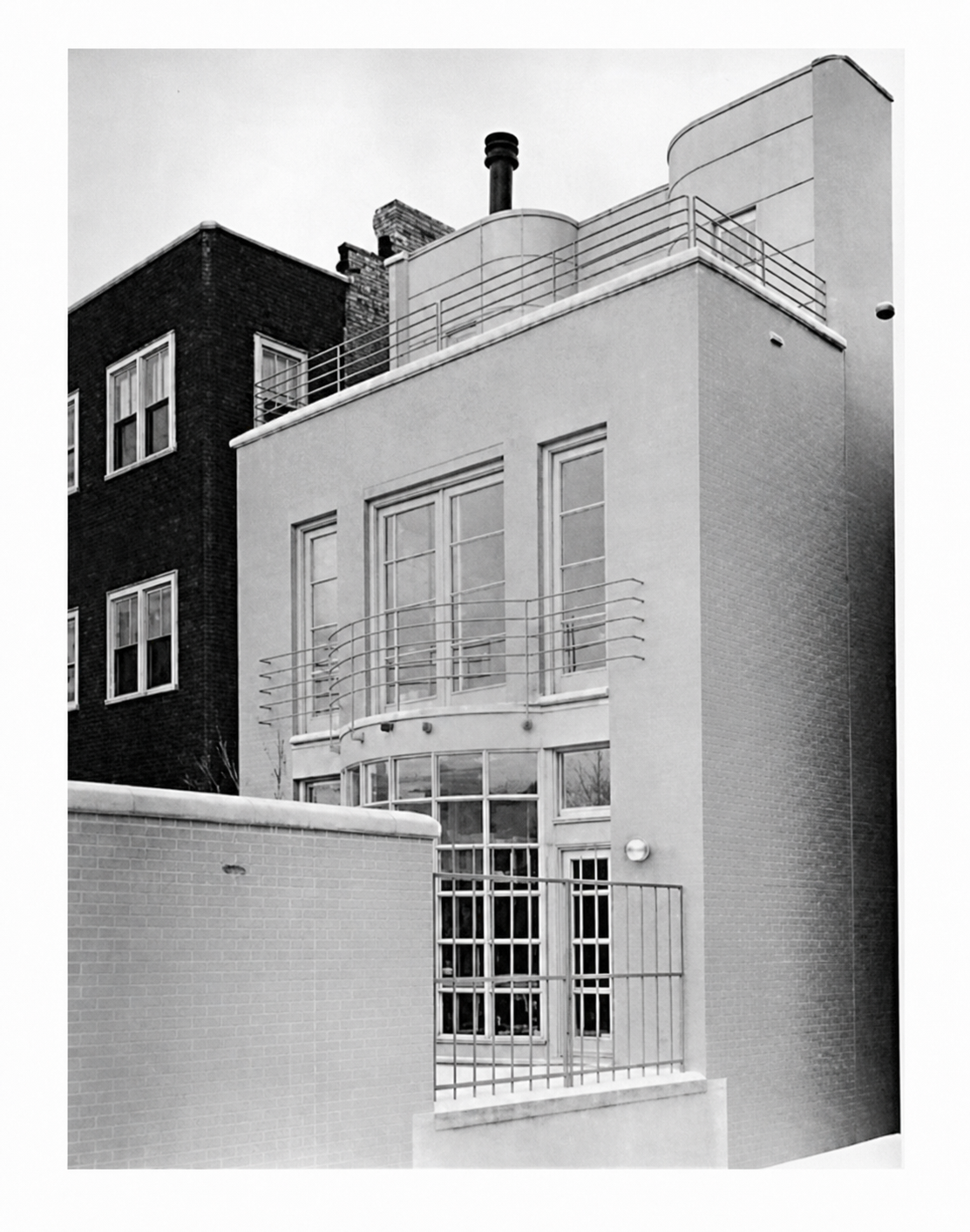
Postmodern building
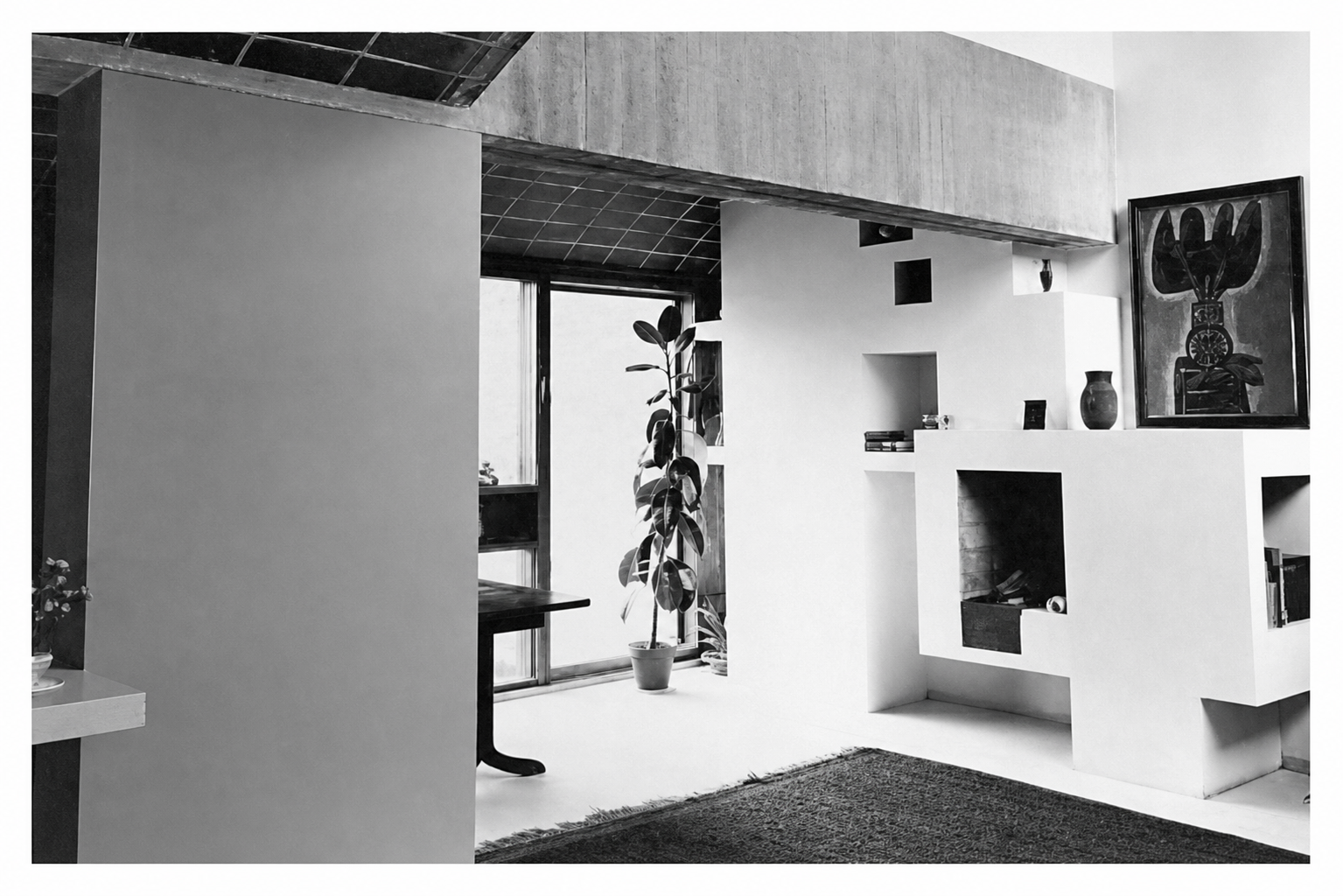
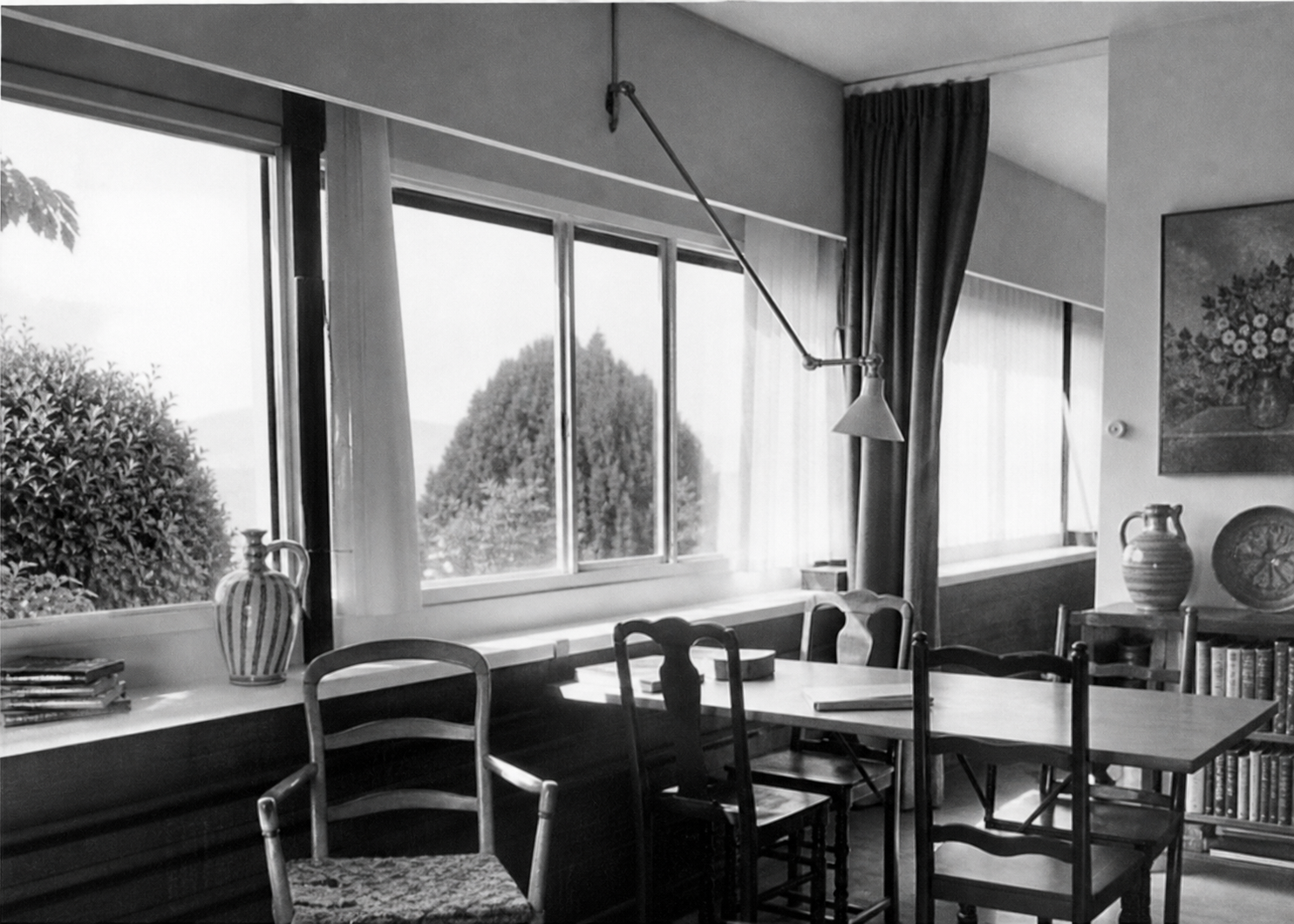
Room by Le Corbusier
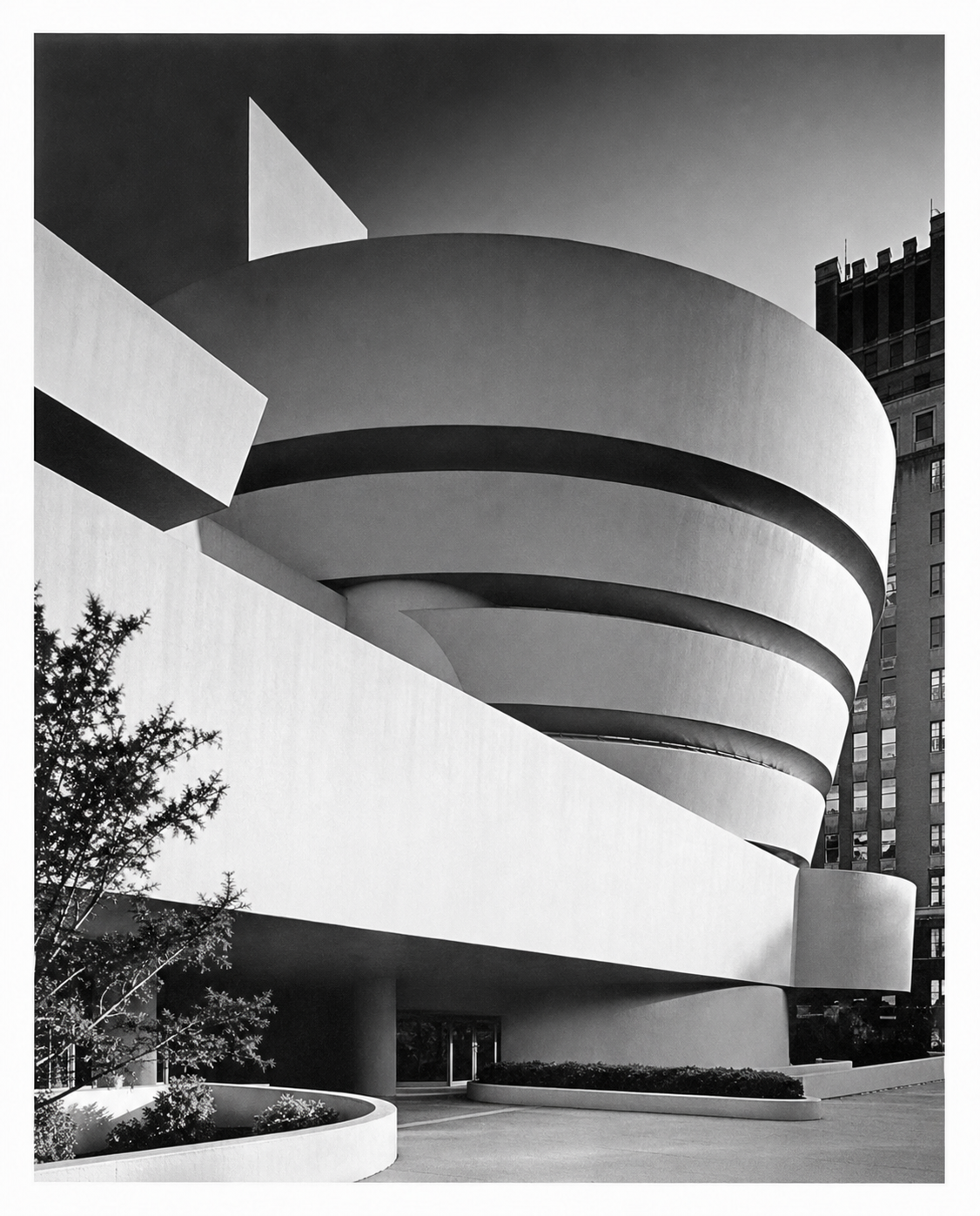
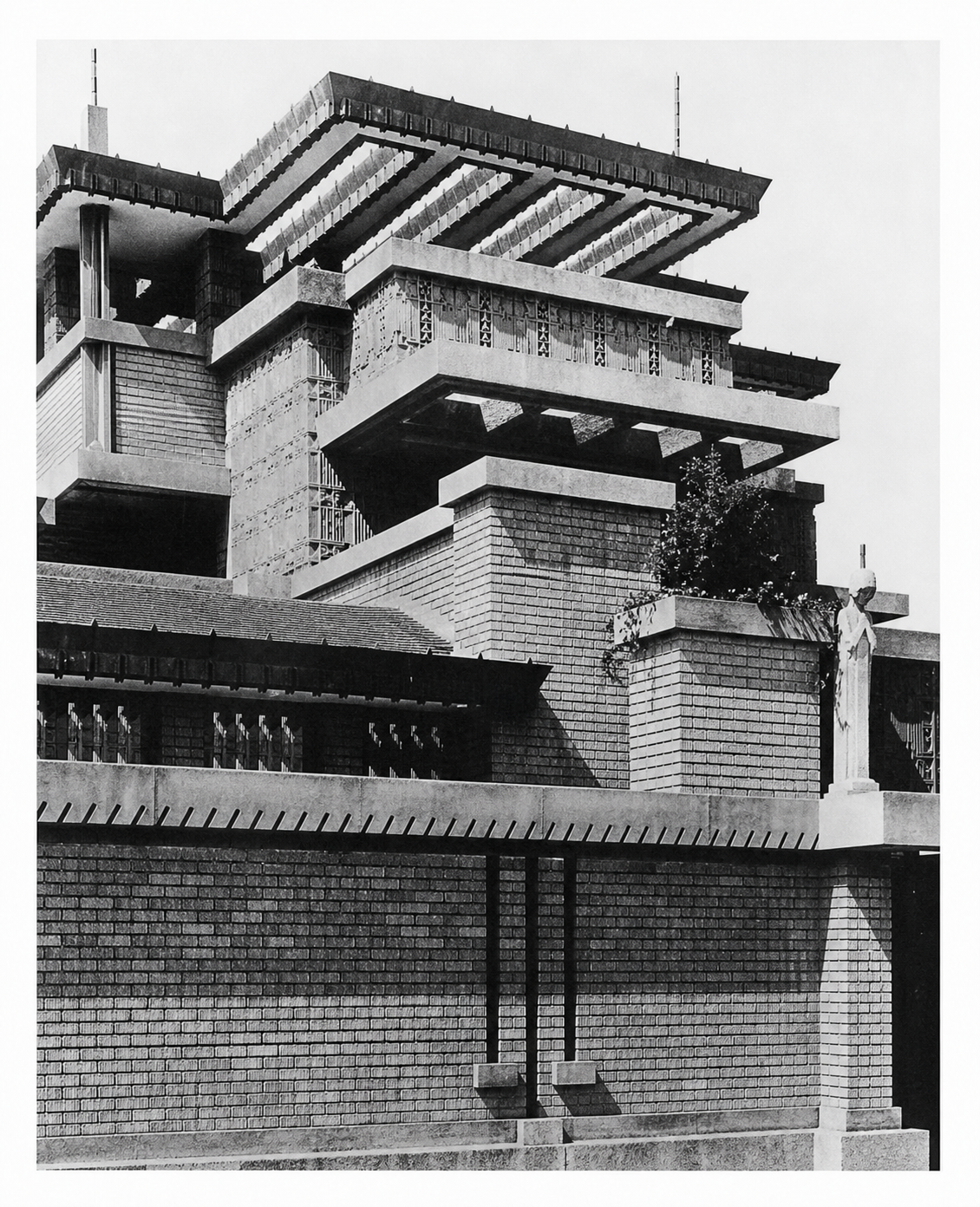
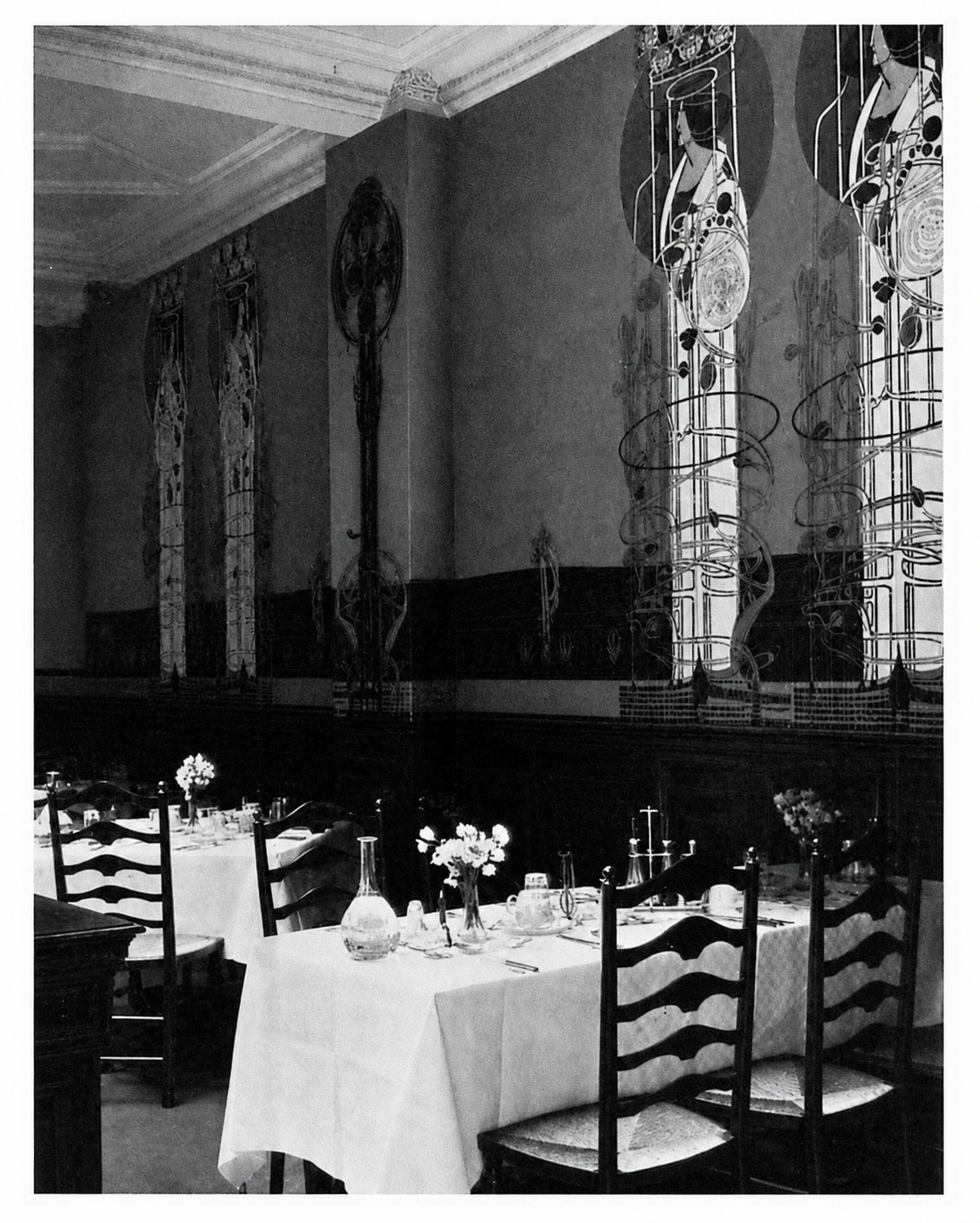
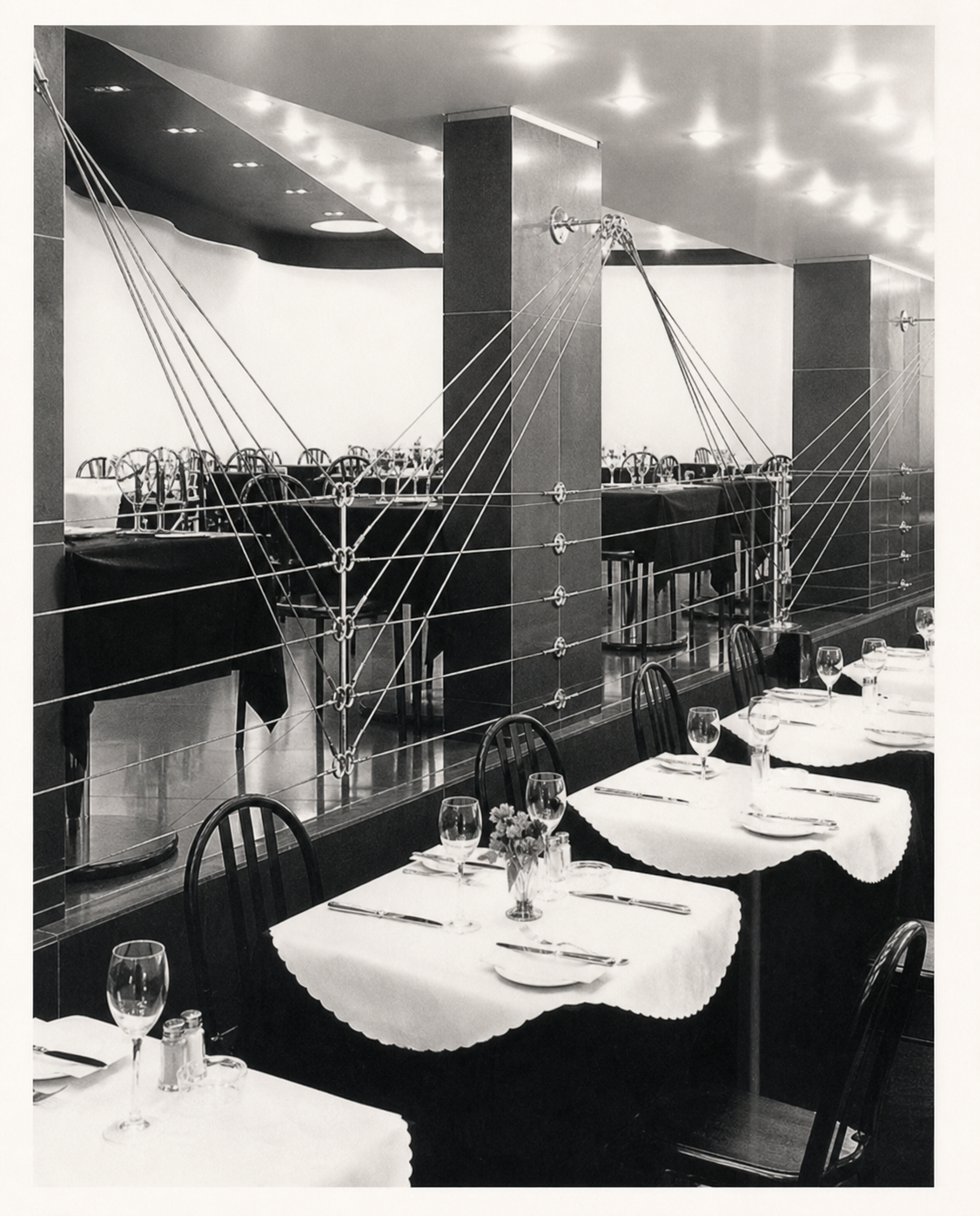
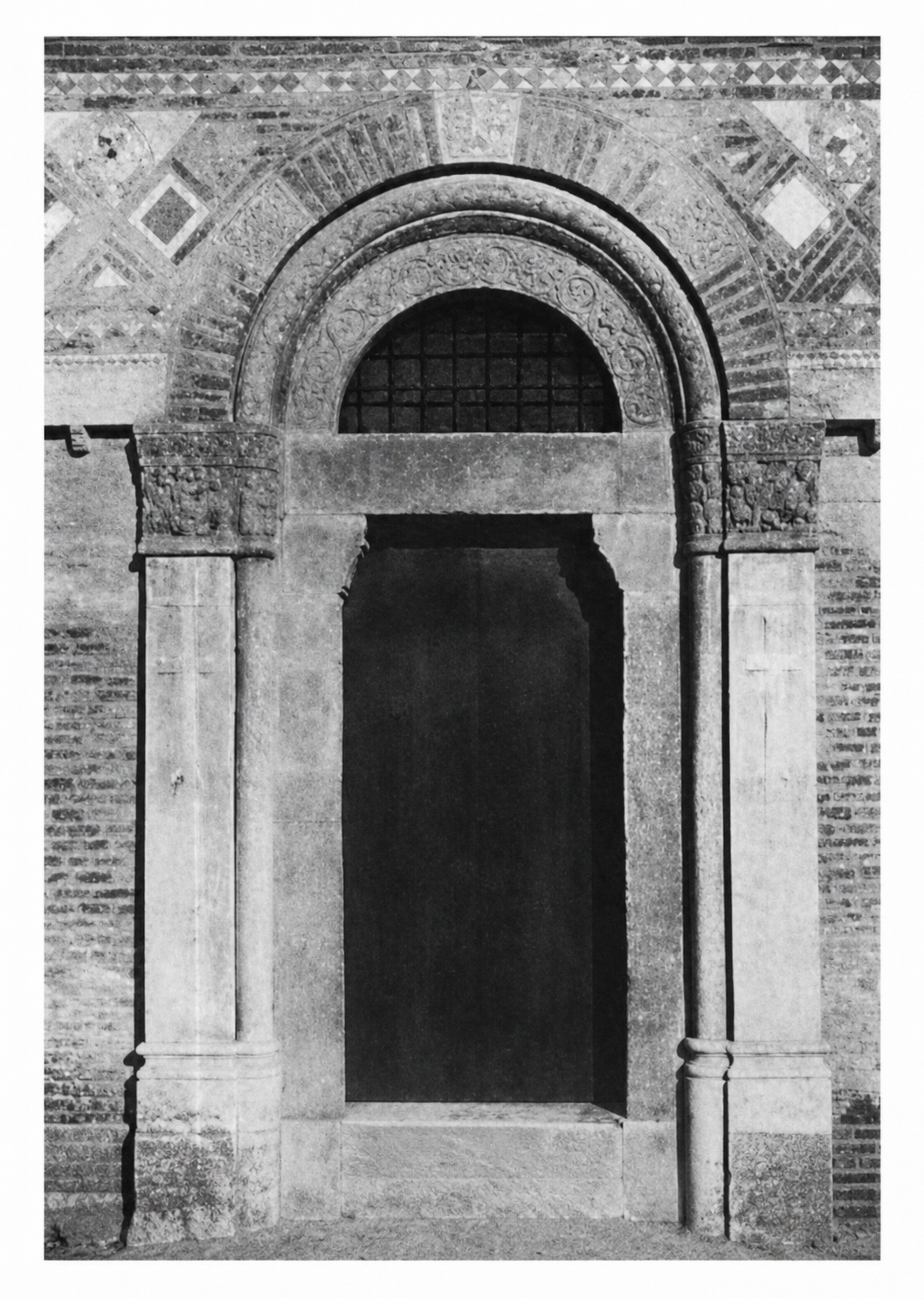
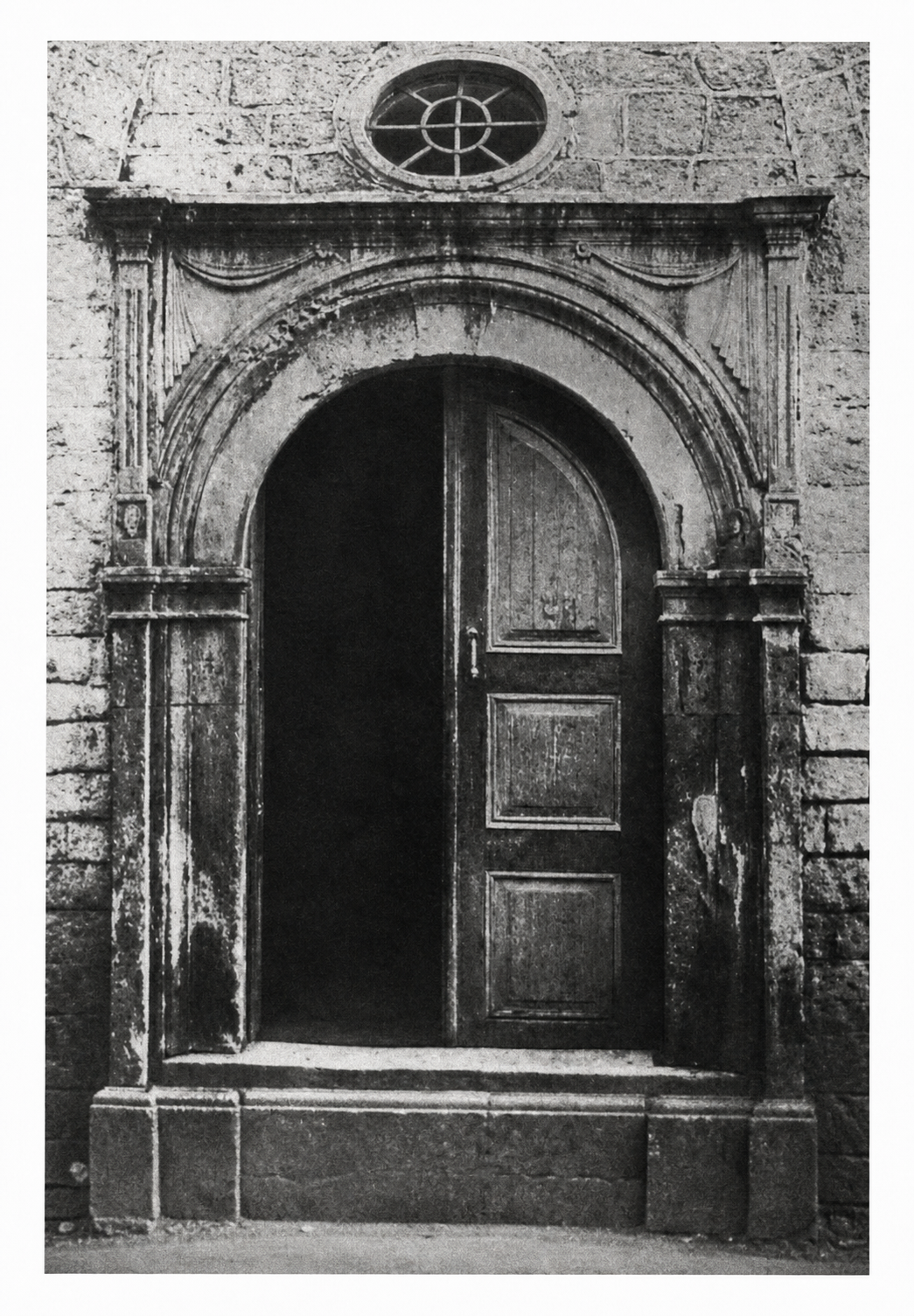
Romanesque arch, slightly more obvious, less profound
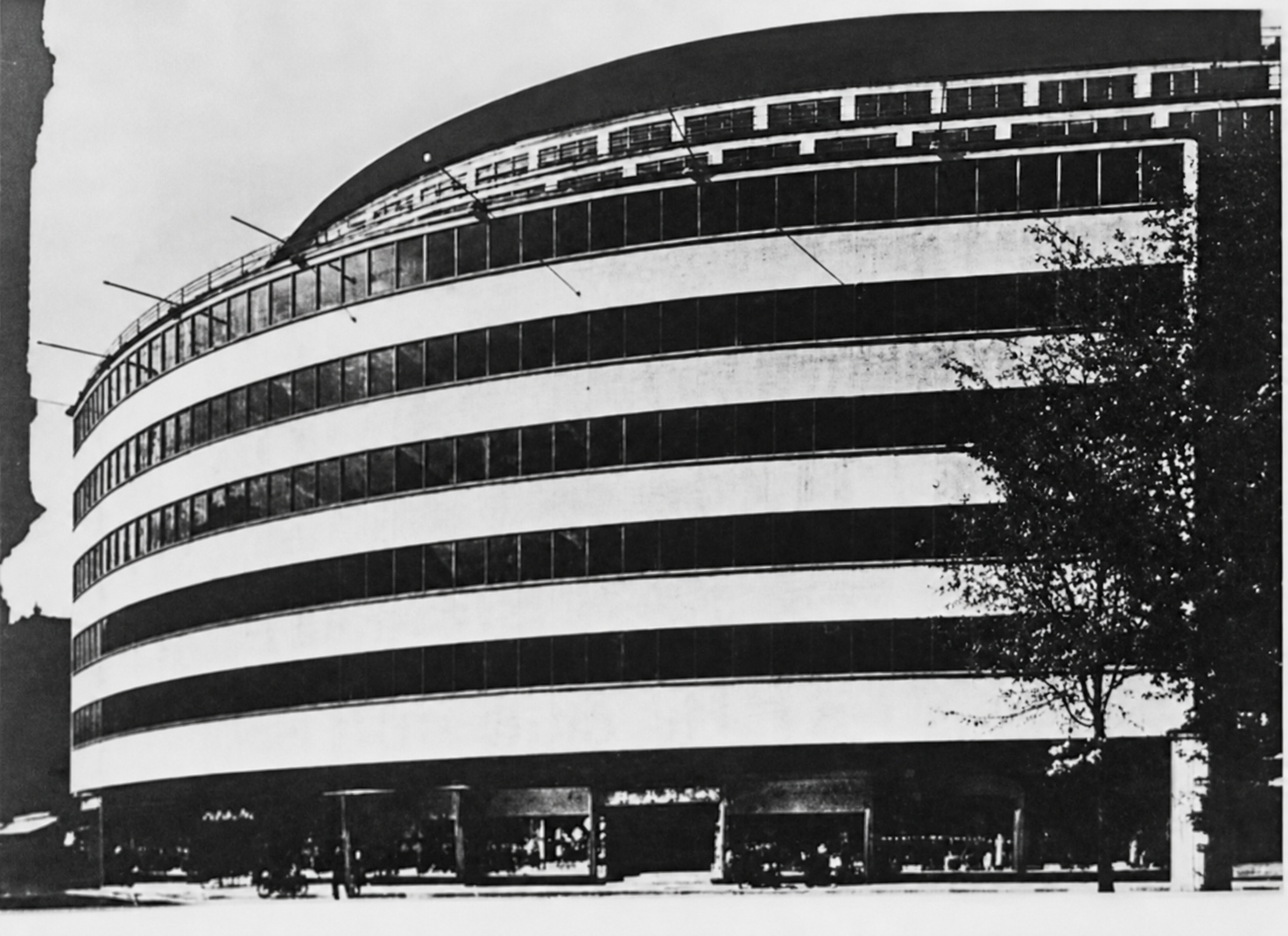
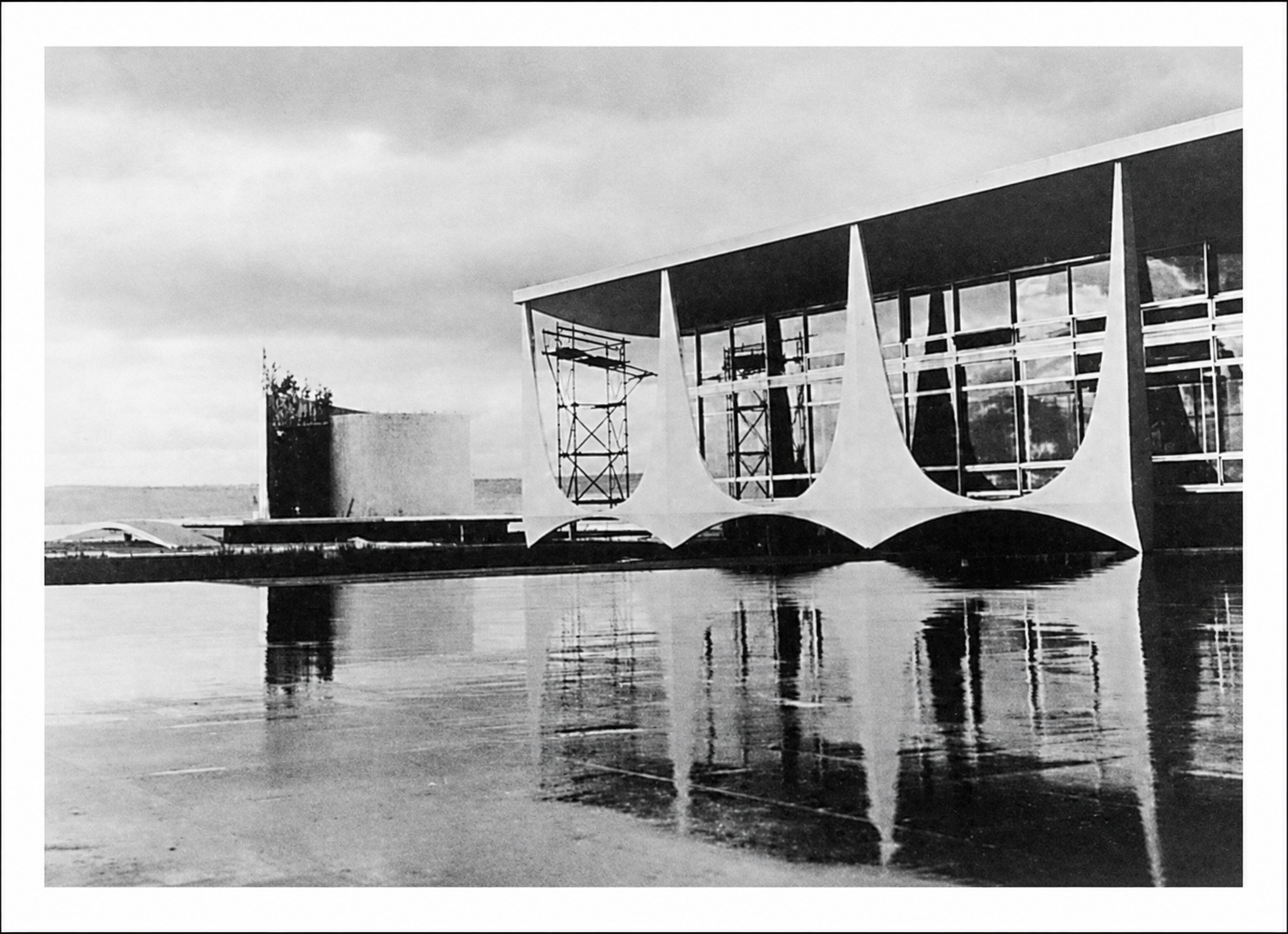
Capital building, Brasilia
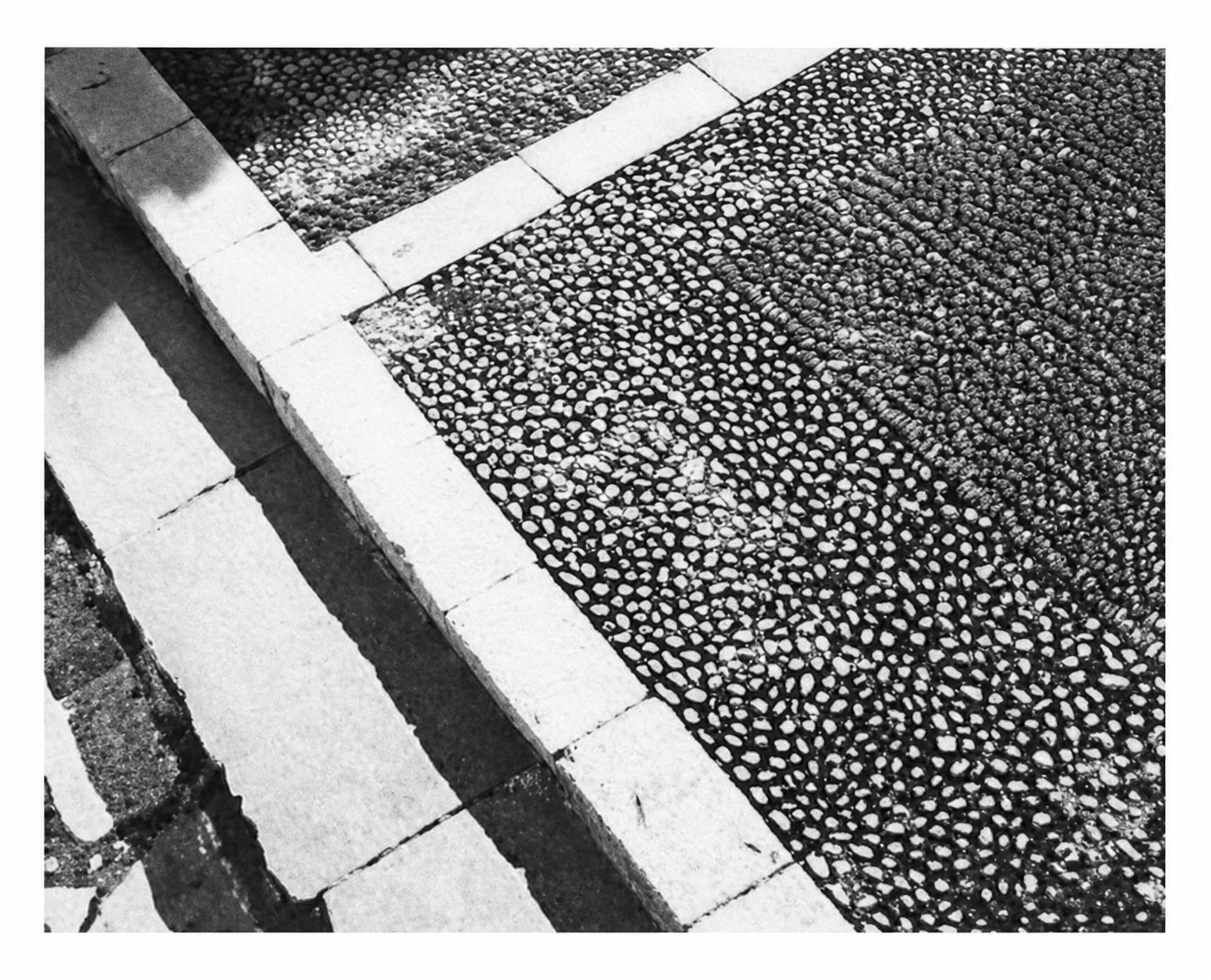
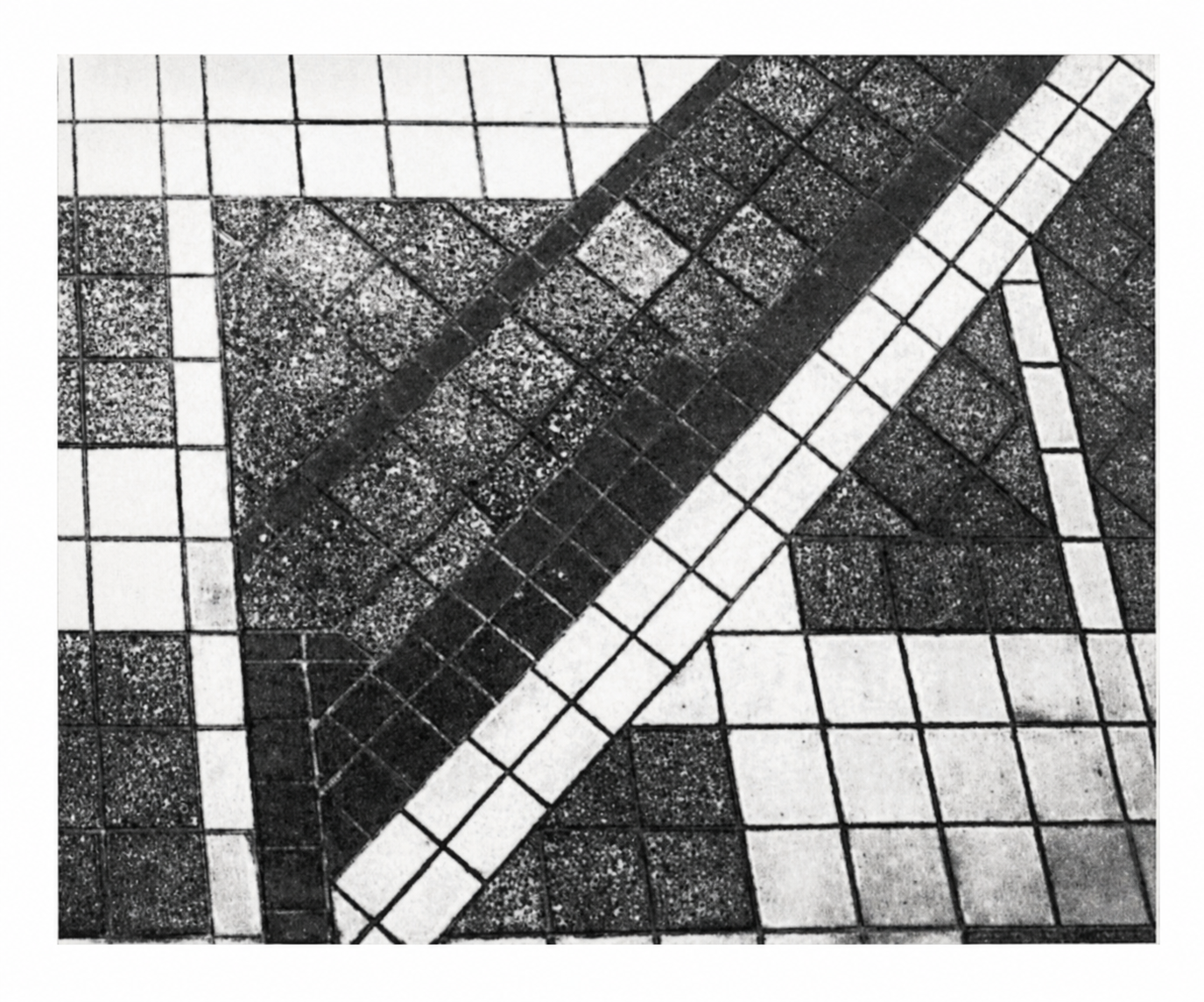
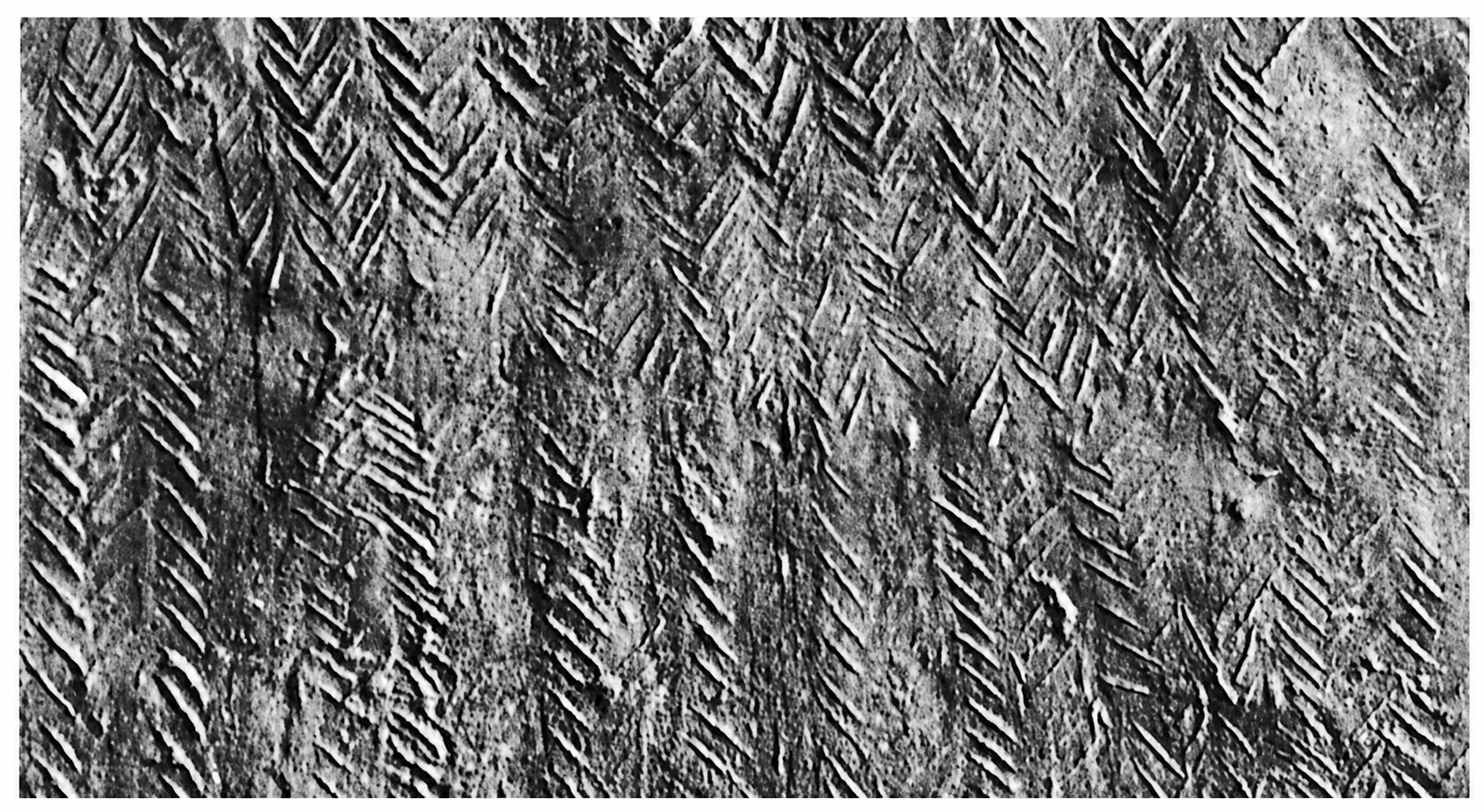
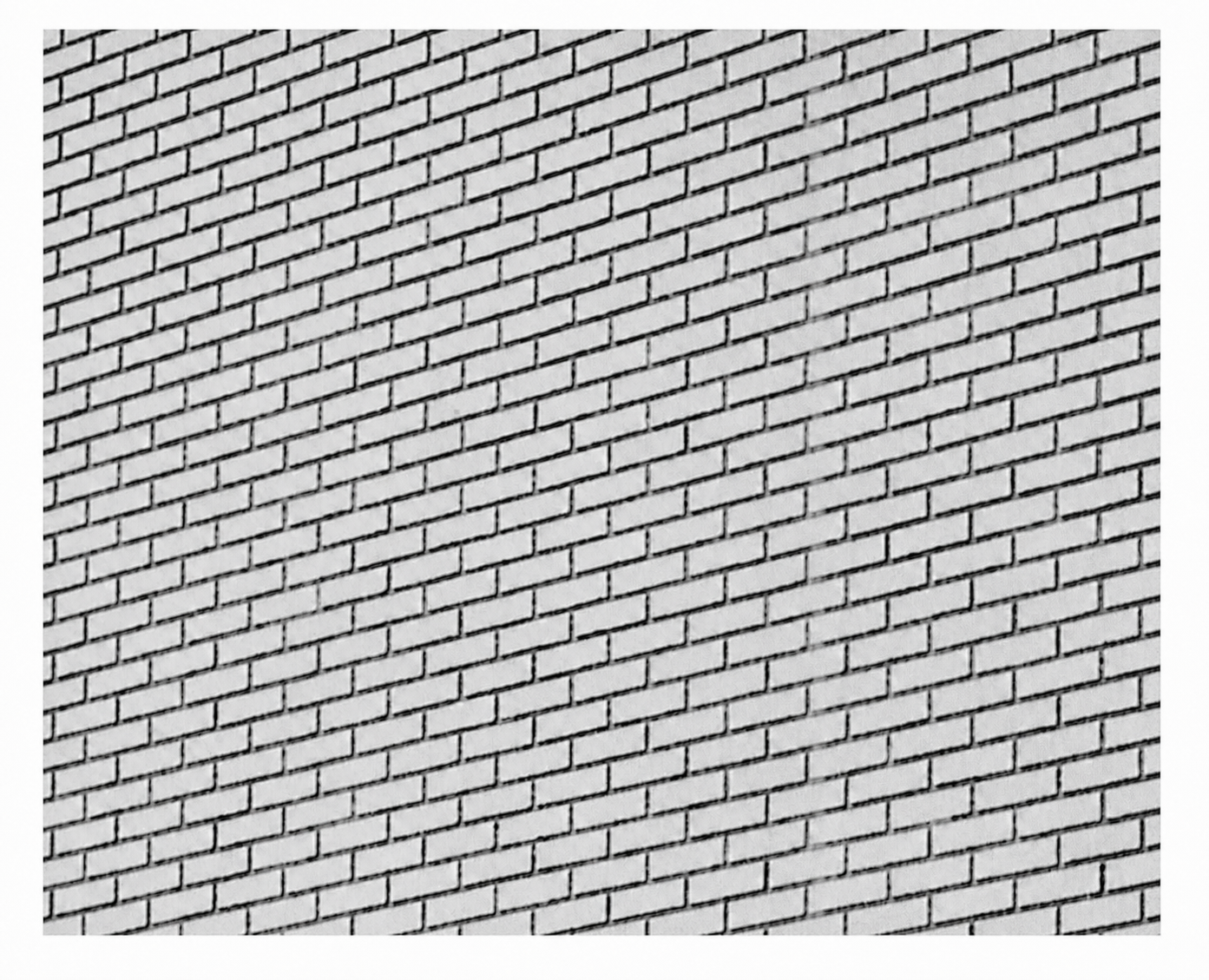
Paving with no meaning
The mirror-of-the-self test and degree of living structure doth give us a handle on life. When living structure occurs in space, it produces a configuration which we recognize as if it were our own self. The more intense the field, the stronger the centers, the more intense the feeling that it is a picture of our own self.
It is very important to recognize that (like the criterion of "life") the quality of being a good picture of the self is always a matter of degree. Some of the examples I have given compare items which are extremely different in the degree to which they reflect the self. I do this for clarity. But it may give the false impression that some things have the picture of the self and others do not have it. This would be wrong. Everything has life in greater or lesser degree.
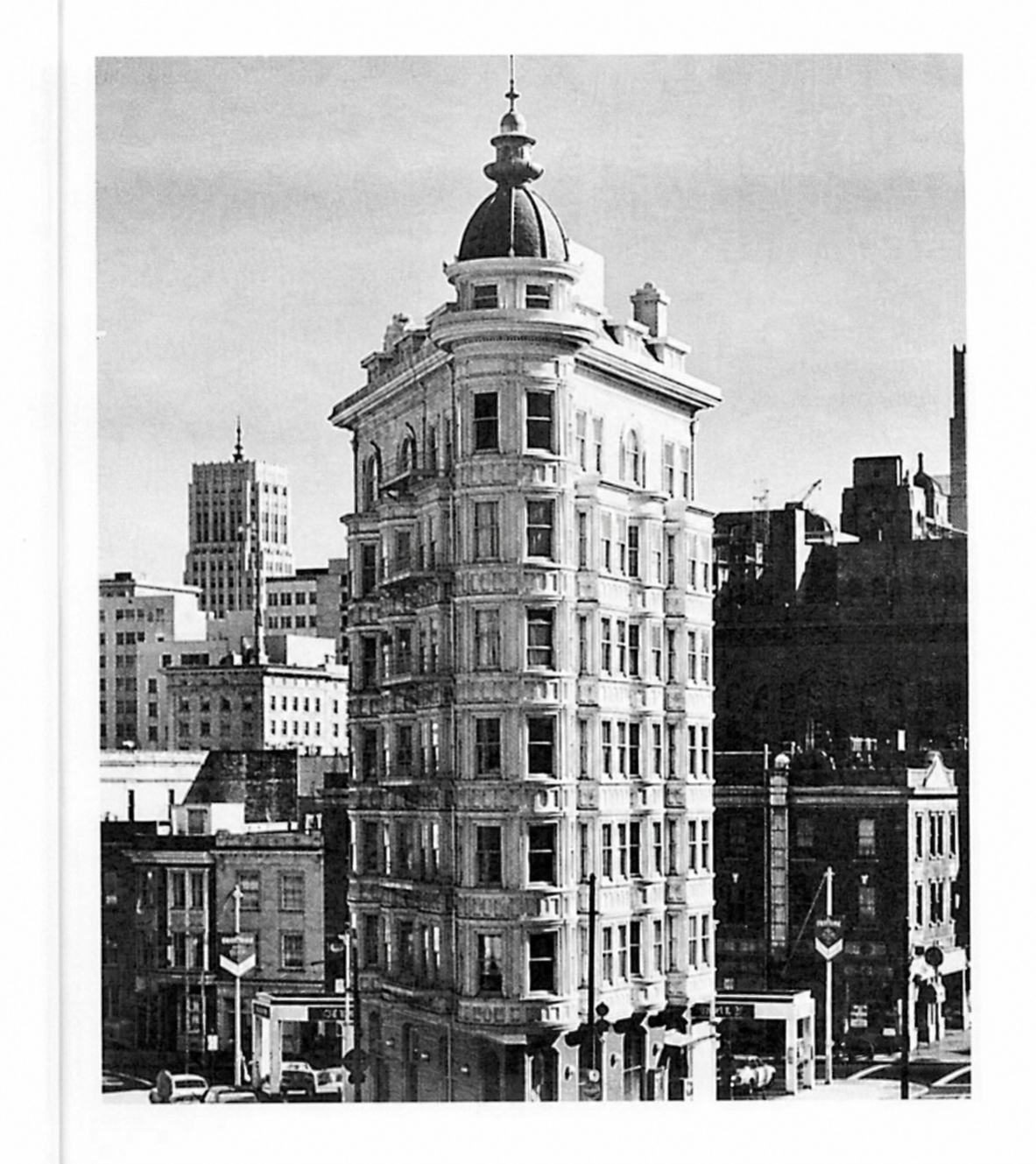
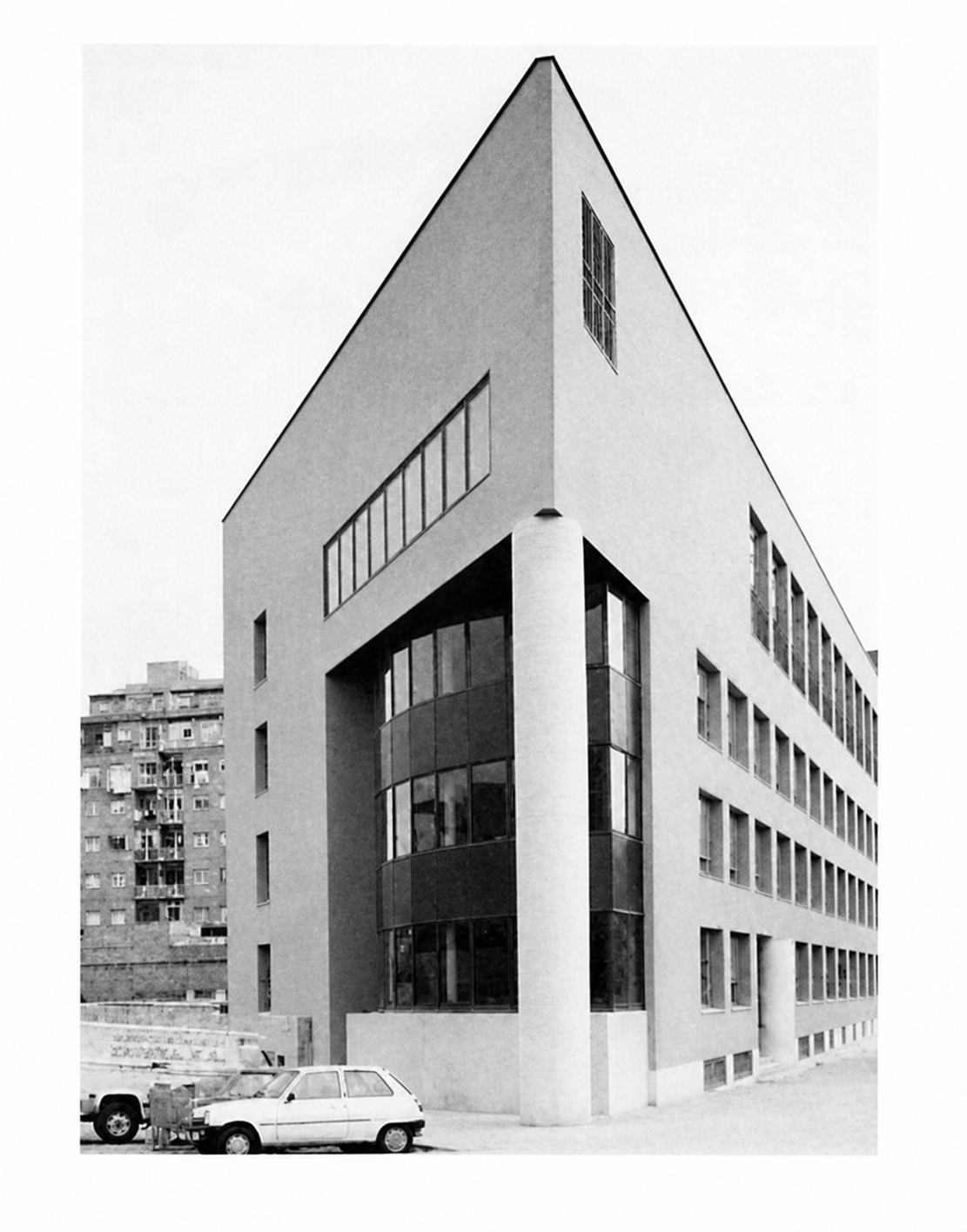
When we measure degree of life in things by means of mirror of the self experiments, we get the same kinds of results about relative life in things as we get when we calculate density of living structure, or use the presence of the fifteen properties within a thing. In many of these examples, neither has the mirror property to a strong degree. But in each case, you can see that one has it more than the other. As you see, for almost any pair of things (provided they are roughly similar in scope), we can choose the one which has it more and the one which has it less. Consider, for instance, the two examples of corner buildings. The first has more self, probably because it is not trying to communicate an artificial image. I must emphasize that I do not especially like this left hand one; nor do I recommend it as a beautiful building. In fact I think it is not. I merely say that, if you perform this experiment, you will find that the left, not the right, relatively of the two, is more of a picture of your self.
Other pairs are subtle, the two examples of Romanesque doors for instance. Both are arched. Both are beautiful. But if you stay with the example, keep looking first at one, then the other, each time asking yourself the question, Which is more like your own true self, then gradually it becomes clear that one is stronger. One is a better picture of my self than the other.
At any level, for any two things, for any two designs, for any two possibilities, we can decide which of two has more of the mirror-ofthe-self quality. With this tool, while we are making things, we can accurately gauge which one has more life and more living structure.
Some of the examples I have given are a bit obvious. One wonders, Is it worth going to such lengths when this merely establishes what we know already? However, the surprising, and the important, thing is that the mirror-of-the-self test does of correspond to our everyday sense of what we like. When we really concentrate on the life in things by checking how much self they have, we find that sometimes, yes, the test does confirm our liking, or our preference. But at other times, it gives us quite different results, which are not stereotypes of good design but which surprise us, shock us out of our complacency, and make us recognize that we are confronted here with an autonomous phenomenon, that has a great deal to teach us.
5 / the Surprising Quality of Self
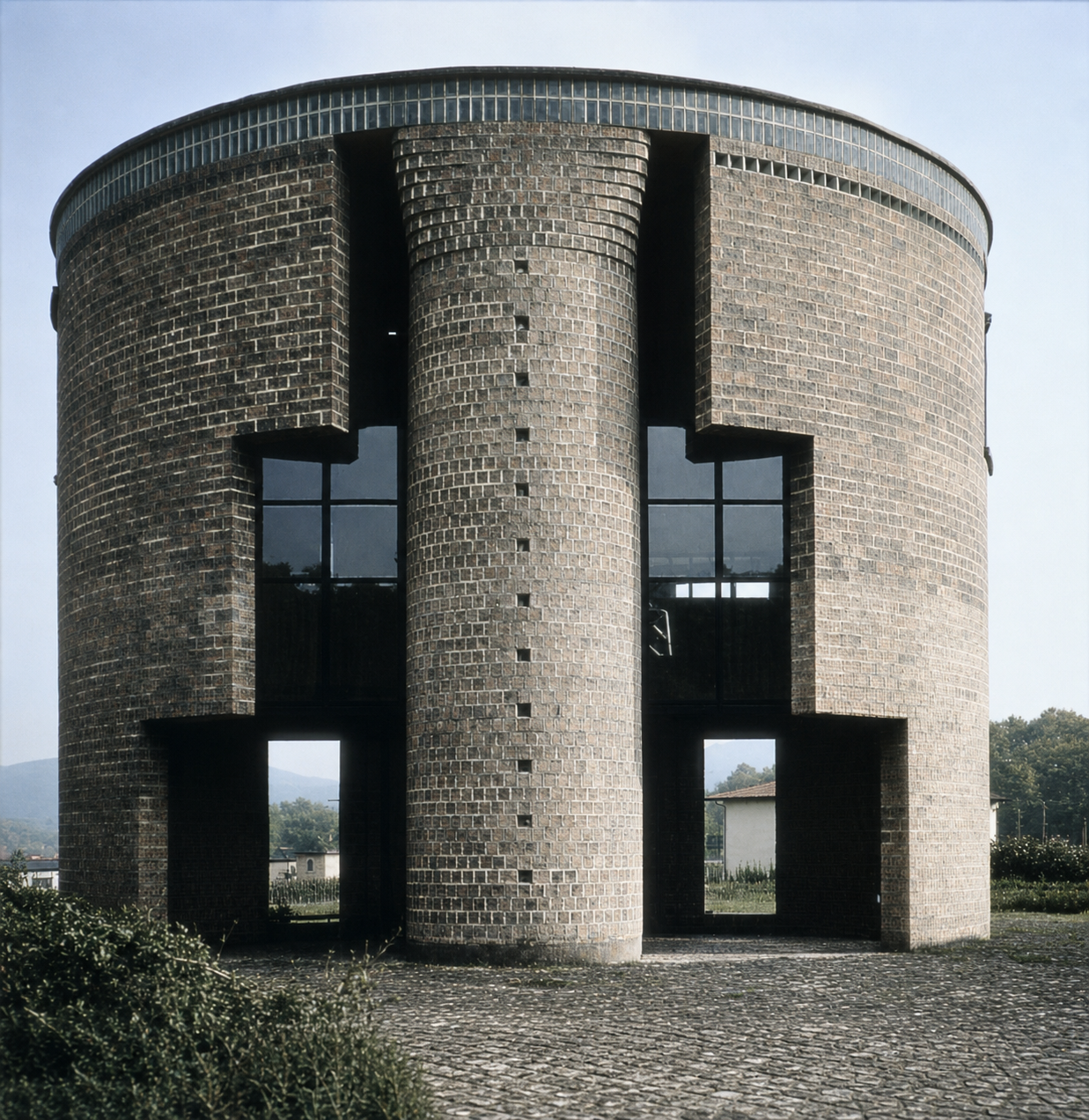
It is very important to recognize that asking what has most life is not the same as asking what people "like." For example, among architecture students in the 1980s, at a time when postmodernist images were very popular, many students liked the lower building of the pair on page 336 (Mario Botta's cylindrical house and a traditional Swedish cottage). The lower house con-
formed to their idea of what their teachers had told them, and what a good postmodernist building ought to be, because it has certain funky, crazy images in it. Seventy percent of the students (in 1988) said that they liked the Botta house more than the other. But when we asked the same students which of the two buildings had most life, sixty-five percent identified the upper one.
Notice that the number of people who said this was not as big a majority as in our other experiments. This happened because the question introduces a certain discomfort. For 20th-century architecture students, the question probed to the core of their assumptions and raised questions about their liking for the Botta house. Some of them still clung to the Botta house and were not willing to be upset by the question -- hence the smaller majority.
But in spite of its discomfort, the question has its own truth. Many of the students could not escape from this truth, even though it made them squirm because it challenged their values. This life or self in things is surprising, and it takes an enormous amount of attentiveness to be constantly awake to it and to keep it clear and distinct as something different from stereotyped liking or preference.
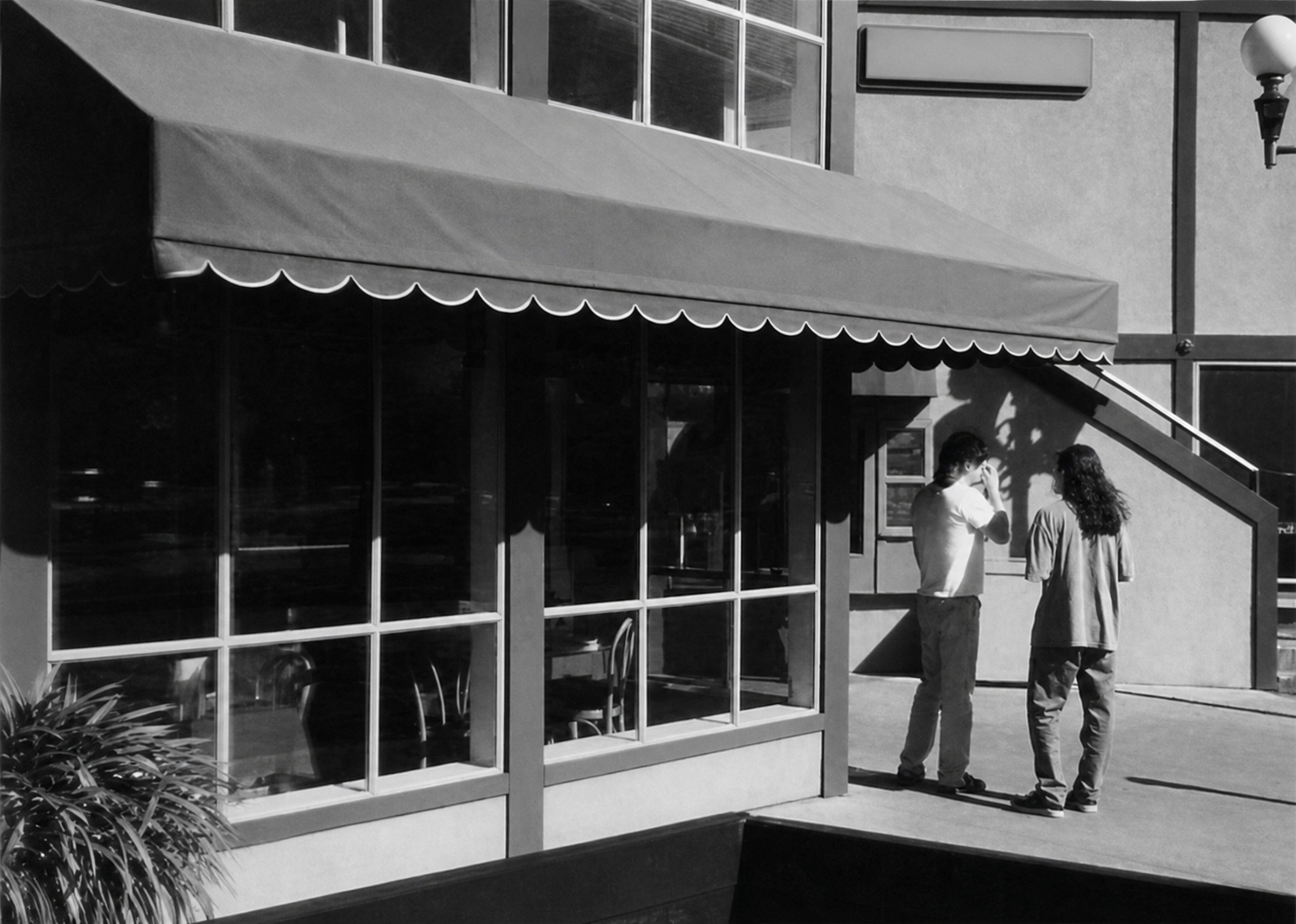
Equally, what has more life is not the saccharine quality of "traditional architecture." On page 337 there is an example which goes the other way: a rugged car repair shop versus a plastic, "nice" restaurant. In this pair of examples, we see that what has more life is not necessarily sweet or delightful. In the comparison of these two examples, the car repair shop has more life. Yet it is industrial, mechanical, and dirty. The restaurant, which is nice and too sweet, has less life.
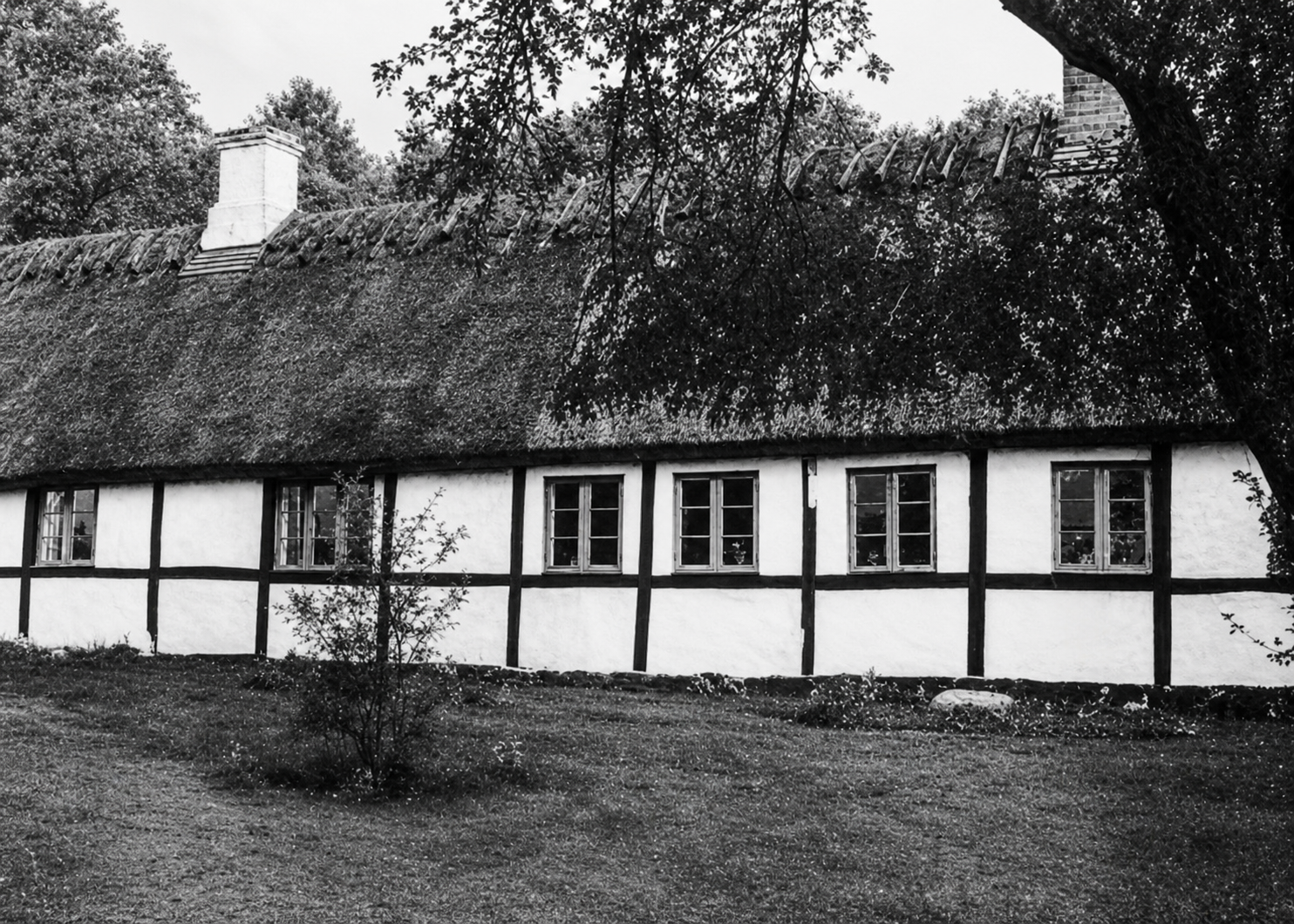
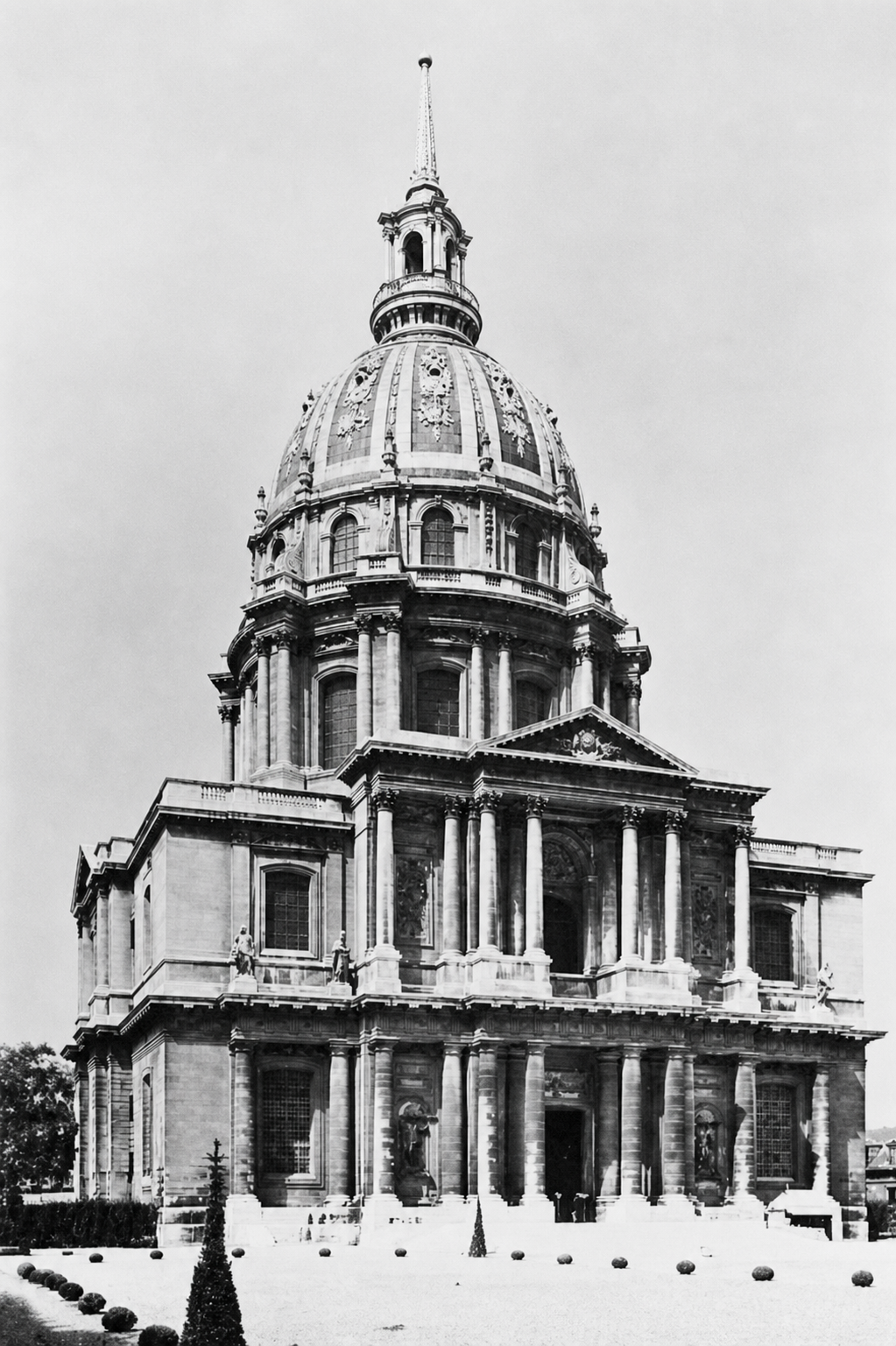
One might argue that this is because the machine shop is more complex. Is this true? No, it is not. What has life is not always complex in appearance. In the pair of examples on page 339, the Danish cottage is simple and informal. The
baroque example of the dome of Les Invalides is highly complex, ornamented, and formal. It has less life, less self.
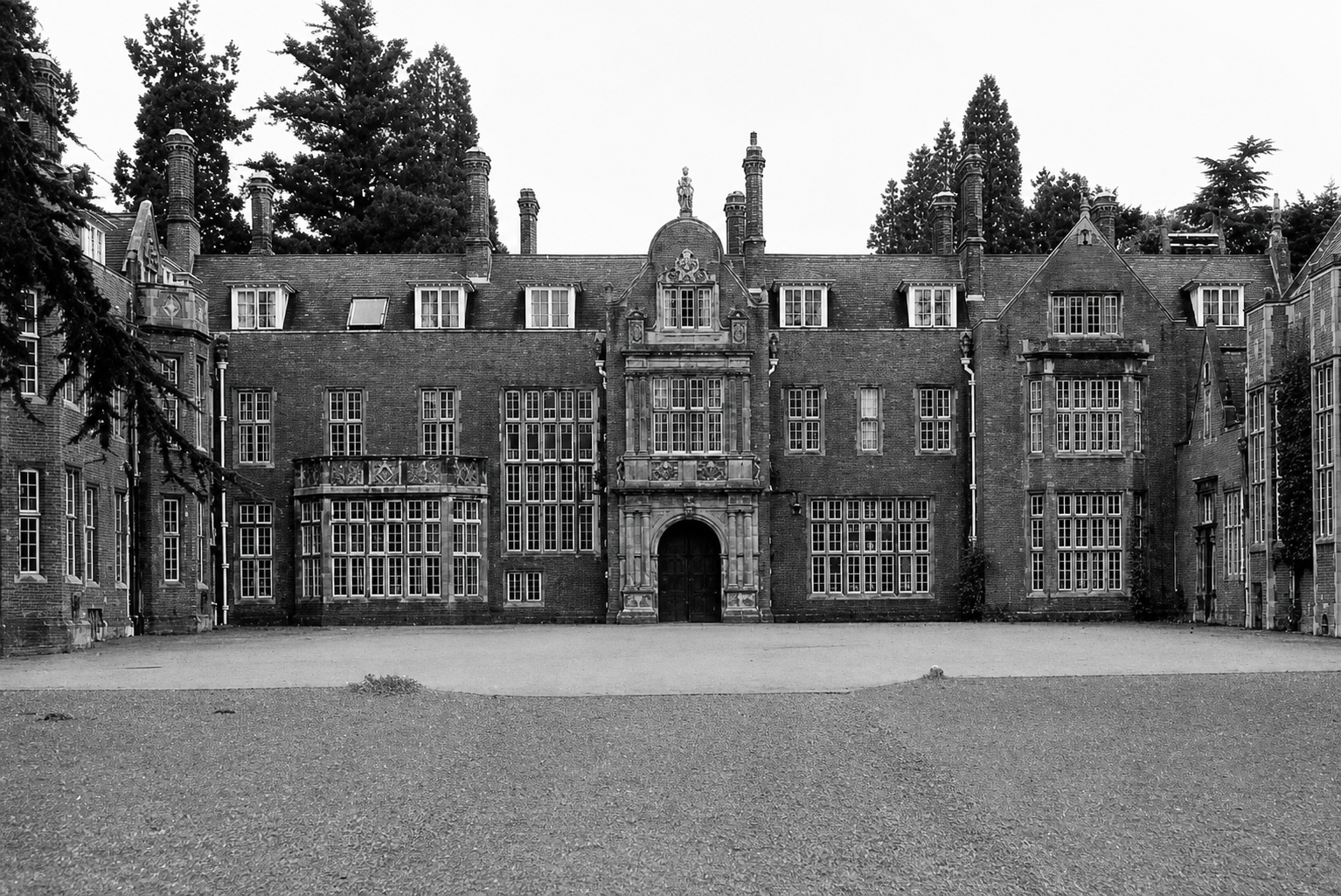
Is it then a question of what is informal compared to what is formal? No, it is not. The example on page 338 shows a case where the formal has more life, and the informal has less. Hardwicke Hall, built in England about 1600, is highly formal. The hippie, shingled, rustic house, built in California about 1960, is highly informal. Yet it has far less life and less self.
a fake
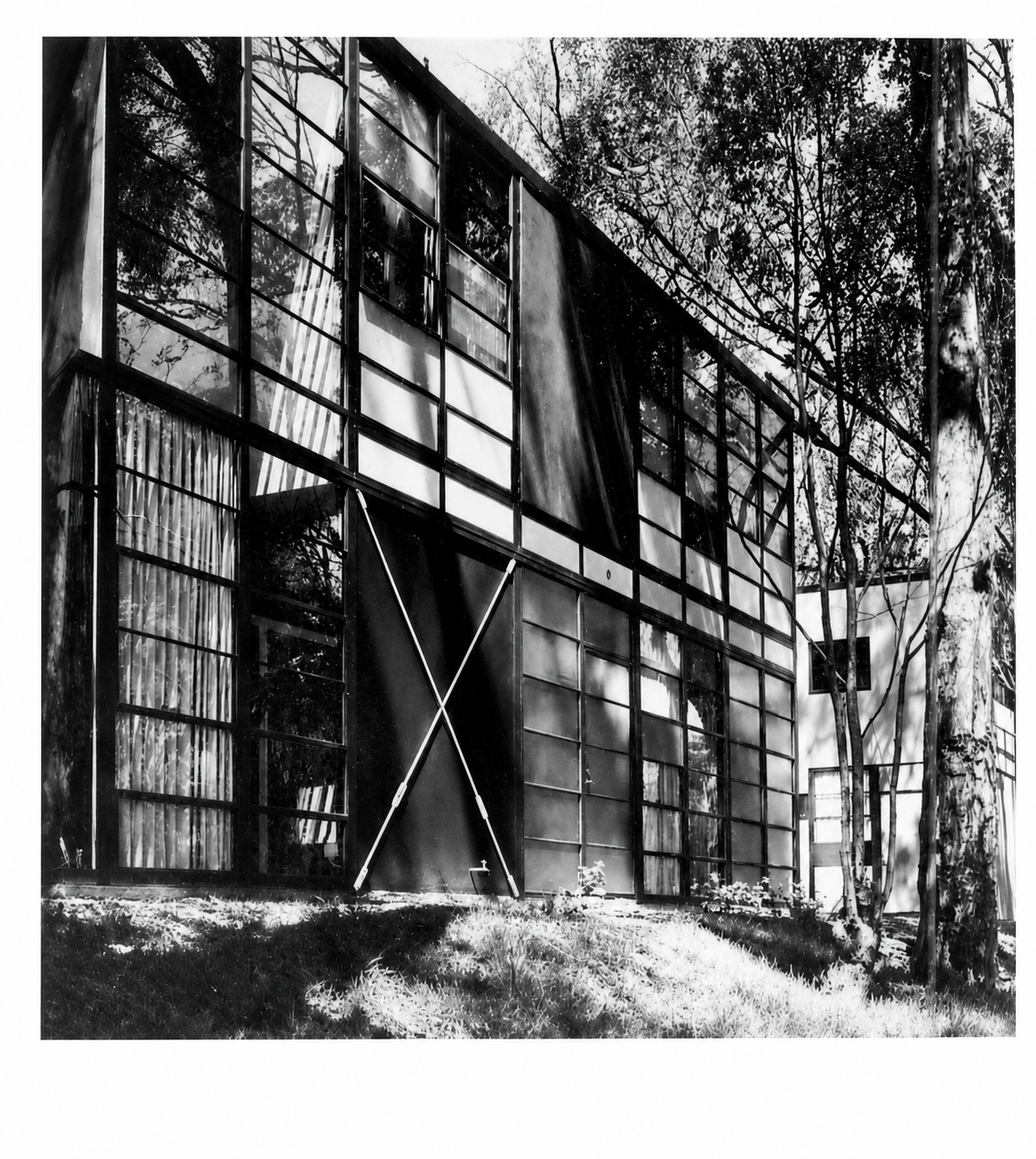
Is it then a question of what is ornamented or unornamented? On page 340, I show the Eames house, built about 1960. It is spare and mechanical. But it has more life than Mrs. Hooper's chocolate shop in Oakland, California, ornament.
traditional building abundant in
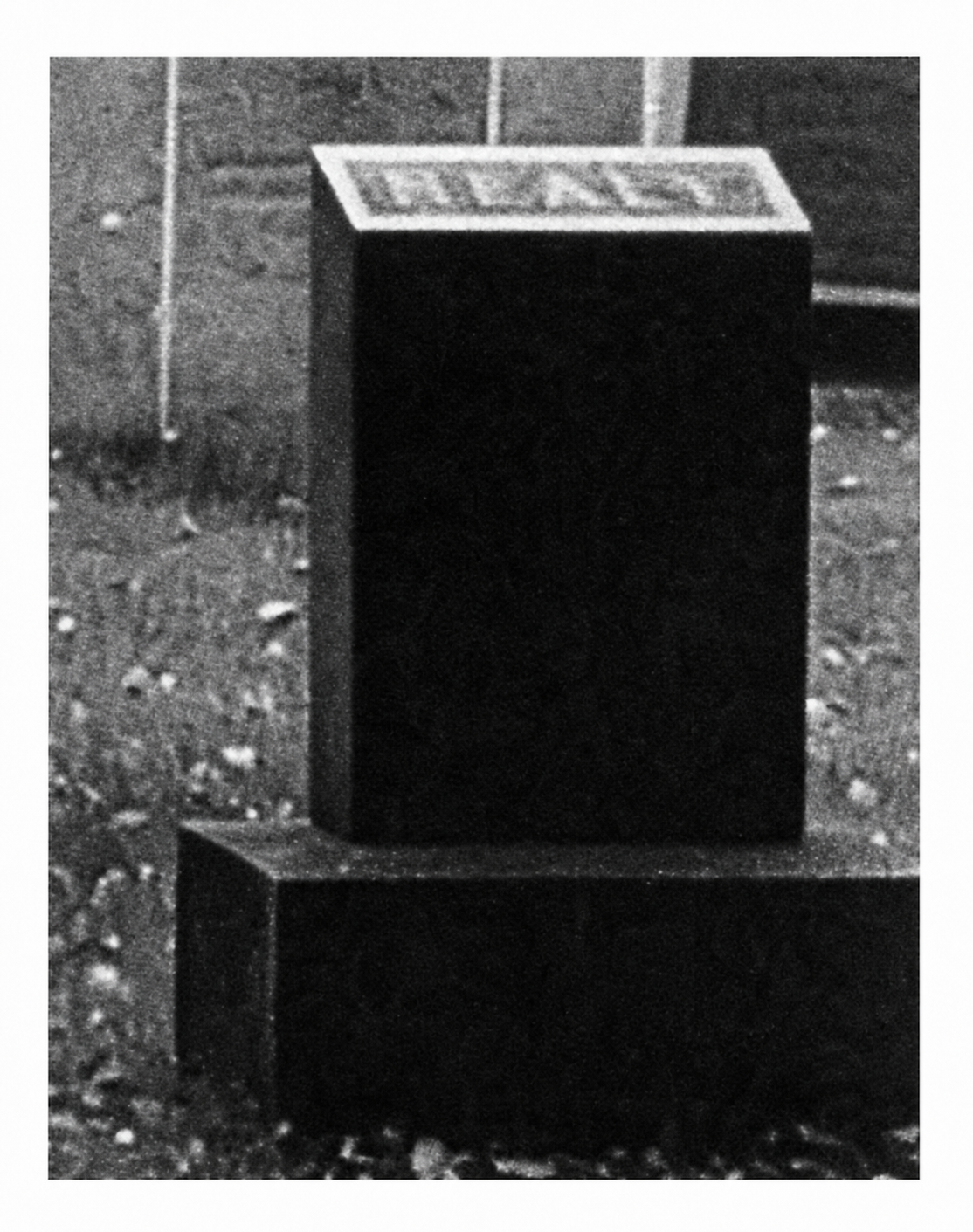
Yet absence of ornament is no guarantee of self either. The last example, on page 341, shows a Seljuk tomb, massively ornamented in black and dark blue tile. It possesses an immense amount of self. The stark, unornamented tombstone shown below it is lacking in life almost altogether.
Here it may be hard to make the determination clearly. If you ask yourself which of the two tombs is more appropriate as a tombstone, it is possible you may find the stark one more appropriate, more "death-like." Certainly it is more conventional. And for some tastes, the highly ornamented, even colored, Seljuk tomb may seem a bit extreme as a tombstone. But I am not asking which is a better tombstone. I am asking on/y: which one is a better picture of your whole self? And to that question, whether reluctantly or not, I think one cannot help answering "the Seljuk one."
What has self and what doesn't cannot be captured by any simple formula. Though I believe it is captured accurately by the field of centers and its degree of centeredness, empirically that too is not so easy to judge. The concept of the mirror of the selfis an undefined primitive, which has to be attended to. It is fundamental.
Partial explanation: Why does the less formal have more self here, while the more formal has more self on page 338? In and of itself, more formality or symmetry and preconceived schemes by themselves are not a strong basis for being like self' What touches the self is the question of the force that generates them, and the Place in the world that is finally created. The symmetry and the formality of the Botta house is an intellectual construct, removed from personal feeling or from any real functional need. Here the cottage goes much deeper, to a result of real life and real need. Yet in another case (the third pair of examples), the formal and symmetrical structure is the deeper of the two, and resembles self more deeply than a rambling, homely structure.

IS SOFT AND TRADITIONAL THE CLUE TO "SELF? NO IT IS NOT. IN THIS PAIR OF EXAMPLES, THE MECHANICAL AND HARD WORKSHOP IS MORE SELF-LIKE THAN A "NICE" RESTAURANT.
Partial explanation: Our intuitive preference toward the workshop comes from the fact that in the workshop there reigns a kind of "messy" order that has been created by the real everyday needs of the people who work there. This order, where every tool finds its own place, comes from functional requirements: keep the shop floor clean, every tool easy to reach, enough space for the car to move in and out, for repair. In the case of the restaurant we can recognize, also, an order. But the order is not as genuine, not as real. It is more arranged, a kind of artifi-
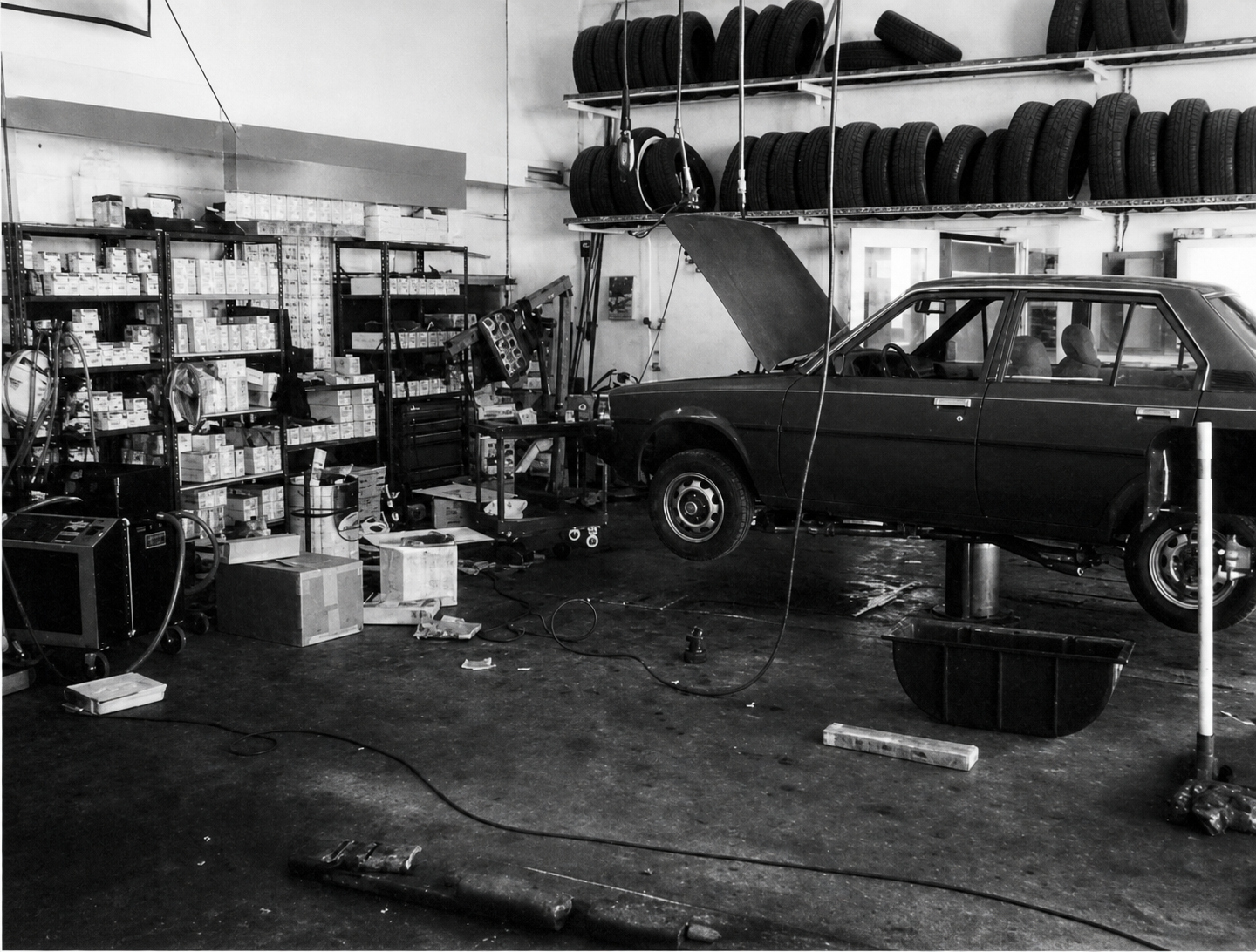
Car repair shop: very simple and ordinary and close to the heart in spite of its rugged, grimy quality
IN THIS THIRD PAIR OF EXAMPLES, THE FORMAL AND APPARENTLY IMPERSONAL ELIZABETHAN COUNTRY-HOUSE HAS MORE SELF THAN THE INFORMAL HIPPIE COTTAGE
Partial explanation: The formality and symmetry of the English country house has been generated by a series of real needs -- aesthetic, functional, the predominant way of life in that era. So the symmetry is broken to allow for all different kinds of things to take place... big windows, different shapes of rooms, ornaments, and so on, all have found their place in a relaxed way, a matter-of-fact way, without disturbing the overall geometry of the building. On the other hand, what we see in the hippie house, all kinds of window sizes and shapes, different volumes, roof shapes, create a feeling of arbitrariness, where not enough mass or matter has been felt to glue them together to create a whole. Just as the Botta house is an intellectual construct which does not relate to the inner self, the hippie house is a fashion construct dictated by the rules of an era to express "freedom," to to react against the established order, and therefore, as a construct that ex-
ceed in connecting to deeper

IN THIS FOURTH PAIR, THE PRETENTIOUS FORMAL DOME OF LES INVALIDES IN PARIS HAS FAR, FAR LESS SELF THAN THE SIMPLE, INFORMAL AND QUIET DANISH COTTAGE.
Partial explanation: Here the extreme stillness of the Danish cottage, the steady rhythm of the wood frame members, the white Plaster, all convey an atmosphere of calmness which penetrates our inner life. The massive dome of Les Invalides, encrusted with ornament, and with rigid, formulaic symmetries of the baroque, are only following rules of an aesthetic canon, and have little or no connection to our real inner feeling.
IN THIS PAIR OF EXAMPLES THE PLAIN, LESS ORNAMENTED EAMES HOUSE HAS A GREAT DEAL OF SELF. THE FAKE TRADITIONAL BUILDING IS MORE ORNAMENTED AND MORE SUGARY, BUT HAS
Partial explanation: Ornament has to find its own real place, to succed in bringing forward the beauty and the structure of the bigger things. This is what jewelry does when worn correctly. In the case of the Oakland shop below, the shape and placing of ornaments is arbitrary, quite thoughtless, scattered all over without any relationship to the building itself. Their only purpose is to break the big volume of the roof and the building, and make it "sweet" to sell chocolates to a conventional public. The Eames house, on the other hand, is true to itself, glass and metal, a clear structure with its levels of scale, which does not need further additions in order to exist, except from the trees which surround it. One might argue that the Eames house, like the Botta house, ts an intellectual construct, but it is easy to recognize that the intellectual procedure that created the
Jor role as well.

IN THE SIXTH PAIR IS A CASE WHERE AN ORNAMENTED THING HAS MORE SELF THAN A PLAIN THING. THE HIGHLY ORNAMENTED SELJUK TOMB HAS MORE SELF, WHILE THE COLDER AND MORE CONVENTIONAL GRAVE STONE HAS LESS SELF.
Partial explanation: The Mevlana tomb is full of ornament, even more than the fake Oakland shop. It is all covered with ornament. But here the ornament "springs out" of the matter, is one with the shape of the tomb, it accentuates its length and its roundness, and certainly celebrates life. The scale and the repetitiveness of the ornament, together with the intense contrasting colors, blue and black, find a deeper response in our inner complex self; than the pure, dull, gray, and simple tombstone.

So we come back to the question of real liking. As I said at the beginning of this chapter, we live in an era when people's likes and dislikes are controlled by dubious intellectual fashions -- often supported by the media. This is only a more extreme form of the way that in all human societies people's likes and dislikes have always been controlled by the opinions of their supposed betters. It is only with maturity that we learn to listen to our own heart and recognize what we truly like.
I assert, as a matter of fact, that the things which people truly and deeply like are precisely these things which have the mirror-of-the-self property to a very high degree. This implies further that as we mature, and as we get rid of the idiosyncrasies and fears of youth, we gradually converge in our liking and disliking. We find out that what is truly likable is a deep thing that we share with others.
REAL LIKING
Let me express this in terms of my friend Bill's experience with the two carpets. According to his own judgment, he liked carpet B more and carpet A less. He then found out that in spite of this A was the carpet which more nearly resembled his own self, even by his judgment. And I now assert that in the end, Bill would have found out that he would have had a more lasting liking for carpet A, even though he himself did not recognize it at the time of the experiment. His guess about what he liked was empirically wrong.
This has a simple empirical meaning. Each thing that we like or do not like may be tested for its staying power. If I look at two drawings for the first time, I may like A more than B. But if I pin the two drawings above my bed and look at them every day, live with them hour after hour, day after day, month after month, gradually I will find out which of the two gives me a more permanent, more lasting satisfaction.
The fifteen properties play an enormous role in helping me to distinguish A and B. If I determine that A has more of these properties, then gradually, over time, I may notice that it has more staying power. As begin to be aware that the structures have predictive power, then my confidence increases, my ability to judge is refined, and my ability to feel accurately is increased.
This is the remarkable thing. The knowledge of the structure, when used in this way, purifies my ability to feel accurately. It does not supplement my feeling as the basic criterion for life. It helps me overcome the lack of feeling which I have in me as a result of opinion and ideology. I am then in a position to deepen my awareness of life in things and to discriminate or distinguish more finely.
It can often happen that B, which I like most at first, turns out to have a short life in this kind of experiment, and that A, though I did not recognize its value at first, has a more lasting quality which allows me to come back to it again and again and again.
This is what I mean by saying that what is truly liked may be different from what is apparently liked. And this is a matter of judgment and knowledge, not a matter of opinion. It takes a lot of experience to know, in advance, which of the two things will pass the test of staying
power. That is, essentially, what the mirror-ofthe-self test makes possible. It establishes which of the two things will be more permanently liked, which has a more permanent and lasting connection with our heart.
This raises a point of great importance about wholeness. The life in things, or the wholeness in things, is not merely an abstract, functional, or holistic life. The things which are alive are the things we truly like. Our apparent liking for fashions, post-modern images, and modernist shapes and fantasies is an aberration, a whimsical and temporary liking at best, which has no permanence and no lasting value. It is wholeness in the structure that we really like in the long run, and that establishes in us a deep sense of calmness and permanent connection.
But the peculiar fact is that it is not so easy to find out what we really like. It is a skill and an art to become sensitive enough to living structure so that we see it accurately and become sufficiently aware of it, so that our liking, as we experience it superficially, is in tune with the real liking that has permanence in us. That is why we need the mirror-of-the-self test. It is an instrument that not only helps us discover living structure and see living structure accurately: it also helps us to discover what we truly like.
7 / Learning to Identify the Things We Really Like
I may have given the impression that the mirrorof-the-self test is a mechanical test which always produces the right answers and which always produces agreement. The real situation is not so neat and tidy. It can take years and years to learn to perform this test correctly. Also, in the process of learning it, one is forced to learn more and more about one's own self. Thus even one's understanding of one's own self is changed by the task of learning to perform this test. Since even the process of applying this test depends on an evolution of development in the observer, the test is far from mechanical and is not always accurate.
In order to make this clear, I should like to describe in more detail some of the real problems which occur when you do this experiment. First of all, suppose we look at a variety of objects and try to decide which ones are more like the self. In some cases, this is easy, and the experiment gets clear results, as in the salt-shaker and ketchupbottle experiment. In other cases, it is really hard to tell. You look at the two objects, and you try to decide which one you want to choose as a picture of your self, and it is very hard; you look and look... and finally you pick one. But when you compare notes with other people, you find out that they have chosen differently.
The experiment seems to have failed. But then, after finding out what other people say, or think, or comment on, you look back at the two things, think about them, look some more, and gradually you change your mind. You realize that you chose the one you did because of some extraneous reason -- that it seemed slicker; that it had a softness which reminded you of your old family home; that it made you think of X, or Y or Z. But after looking and looking and looking, it gradually becomes clearer that the one you chose is the more trivial of the two, that it is not a very good picture of your self after all, and that the other one which you did no¢ choose at first has more lasting power. So, really, in the long run, it is this other one which is a better picture of your self.
A hardened empiricist who reads this comment may say, "Well, there is nothing here, this is not an experiment at all, just a lot of talk being made to sound like an experiment." But this is precisely the problem. The wholeness is real, and you do gradually approach convergence as you find out whether a particular thing is whole or not, or how much wholeness it has in relation to another thing -- dut it is very hard to find out. That is the experimental and empirical reality. Sometimes, it can take five or ten years to find out which one really is a better picture of your self.
I myself have experienced this dramatically, many times, in the case of ancient Turkish carpets. I used to collect carpets and did, for years, try to find those in which this quality appears most deeply. I found that sometimes I had to look at a particular carpet for hours, weeks, and even years before I knew how good it really was. But all the time, what I found out was something real. This is not a process in which our subjective preferences are merely shifting (though that can happen too). It is a process in which you gradually find out which one of a group of things is the most alive. The mirror-of-the-self experiment helps to hasten this process by allowing you to focus, clearly, on the issue at hand -- and by helping to drive other irrelevant criteria out of your mind.
Thus the experiment is real and legitimate, but it is taking place within an immensely complex process in which you are both finding out about the relative degree of life in different things in the world and, at the same time, also finding out about your own wholeness and your own self.
As far as I know, this process of finding out about wholeness and living structure cannot be simplified. It is deep and difficult. The confusion, the gradual separation of preferences from living structure, the difficulty of comparing notes and sorting out cultural bias and opinions foisted on us by others -- getting through this maze does pay off in the end. There is a real quality which gradually emerges as the true thing which can be identified and relied upon.
What is happening then as we perform this test? Why do I consider this test a reliable way of estimating the relative degree of living structure in a thing? Our own minds are confused by opinions, images, and thoughts. Because of these, we often fail to see accurately the relative life or degree of wholeness in different things. Nevertheless, their degree of life may be gauged by the degree to which the thing resembles our own self. However, even in making this judgment, we can again be confused, because our idea of our own self is also confused by images, thoughts, and opinions. Gradually, as we mature, we learn to recognize our own mind or self as merely a part of some greater thing or self. I can refer to this larger self as the original mind. I am then able to judge the degree of wholeness or the degree of life ina building according to the degree to which it is a picture of this original mind. Since the original mind is part of me (or I am part of it), I have it available to me, in principle, whenever I want to make this test. But I shall succeed in making my judgment only to the degree to which I have gotten rid of mistaken notions of what my own mind is, or my own self.
This is an arduous task.
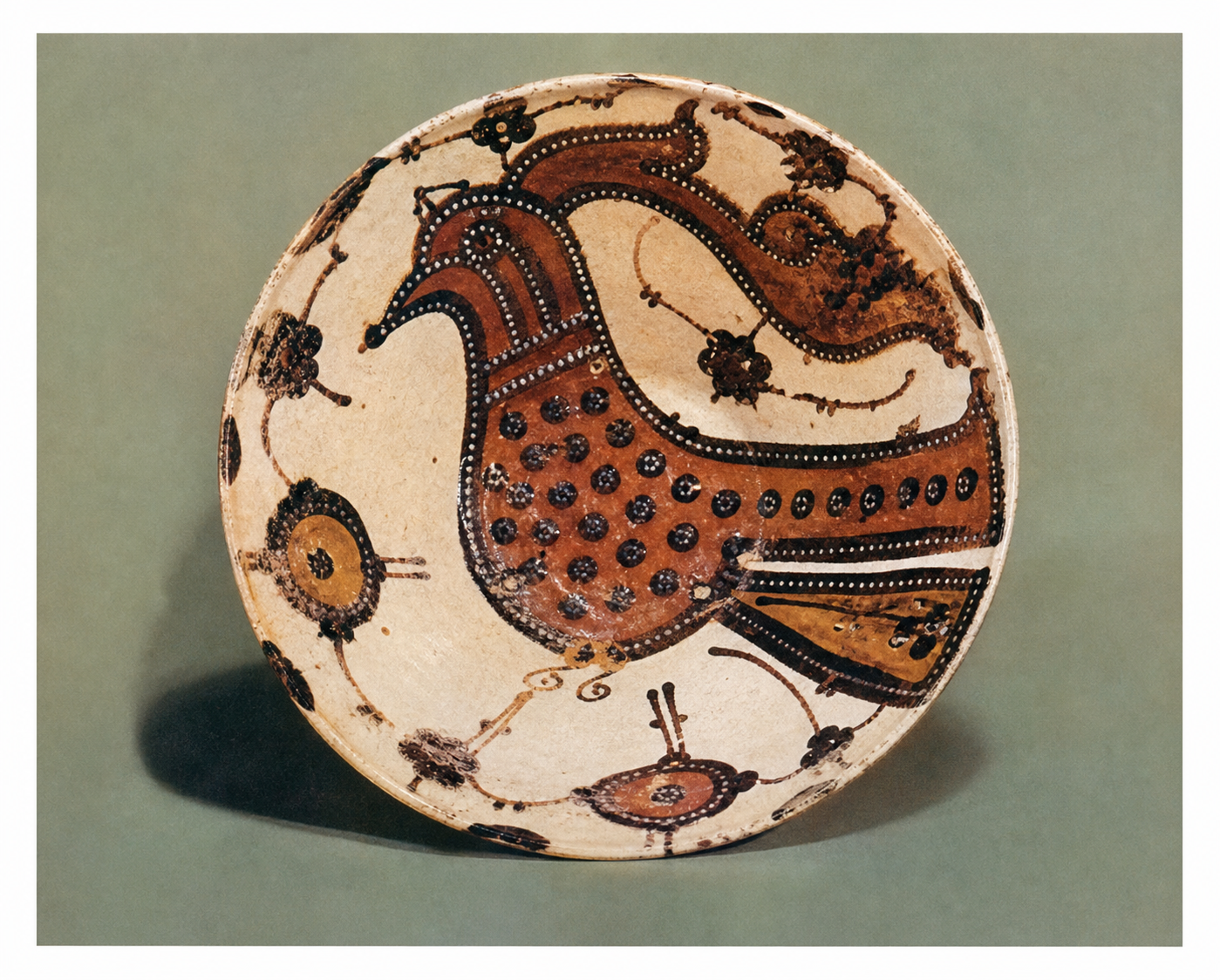
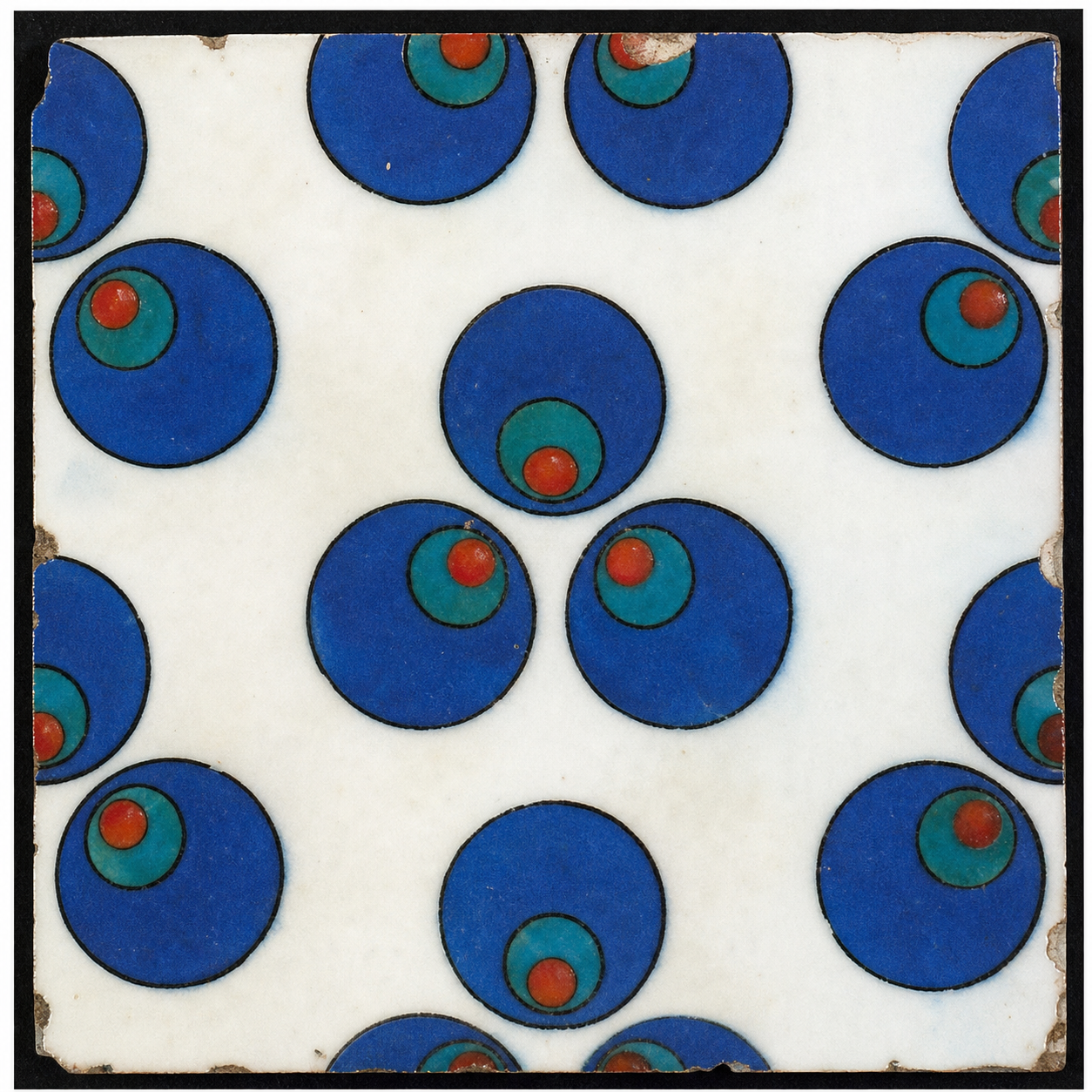
PERSIAN BOWL AND TILE WITH BLUE CIRCLES
The bowl with the bird looks more friendly. We are attracted more to it at first.
The tile with blue circles is more austere, and perhaps more design-like. But in the end, after examining both for a long time, it turns out the blue tile has more staying power... and that it is, in the end, a better and deeper picture of the self:
KAZAK CARPET AND ANATOLIAN CARPET
At first sight the Kazak is more colorful and more mirror-like. The other is damaged and not obviously appealing. But after long acquaintance, the multiple prayer carpet shown below is profound and lasting in its capacity to be a picture of the self: It may take years to find this out.


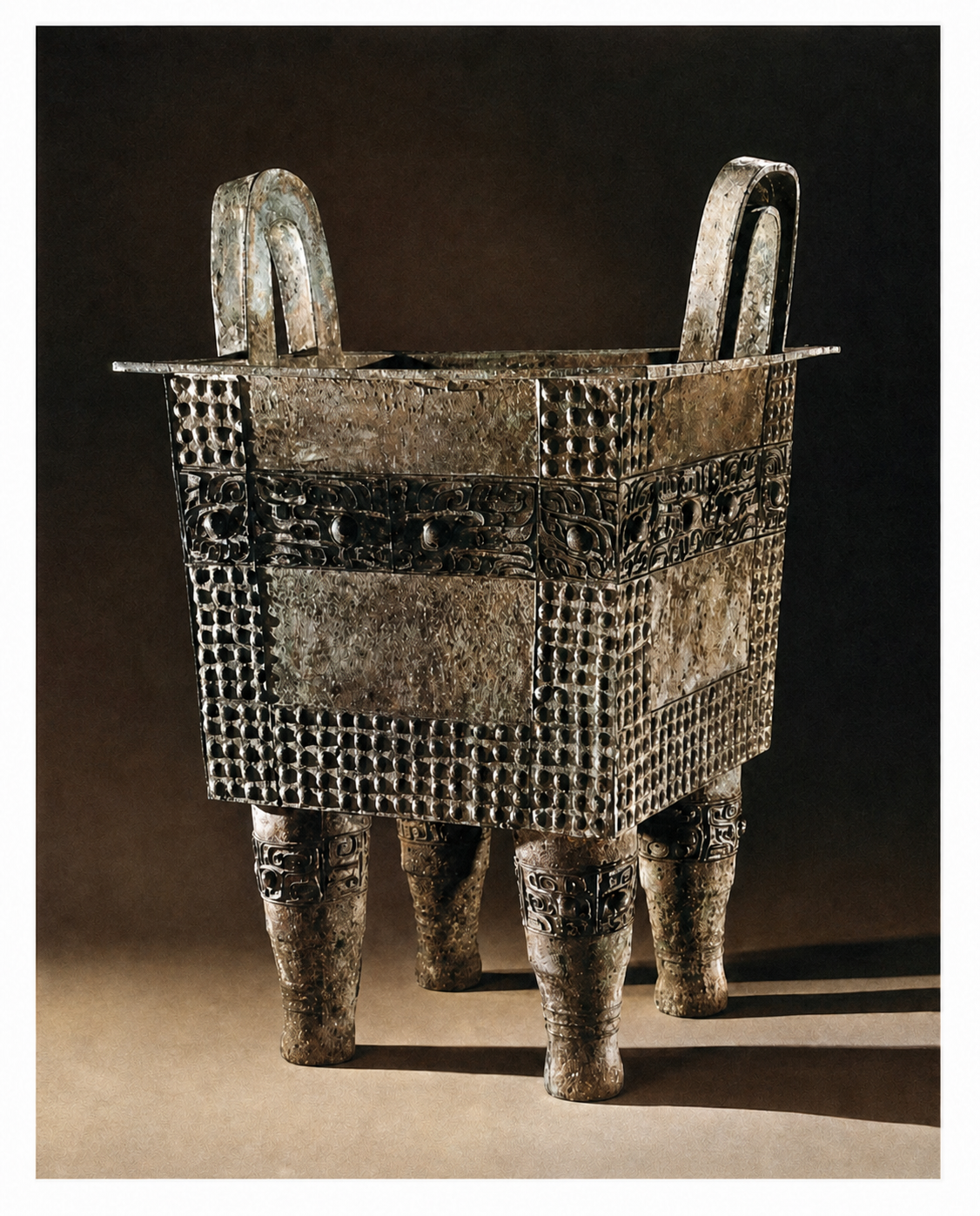
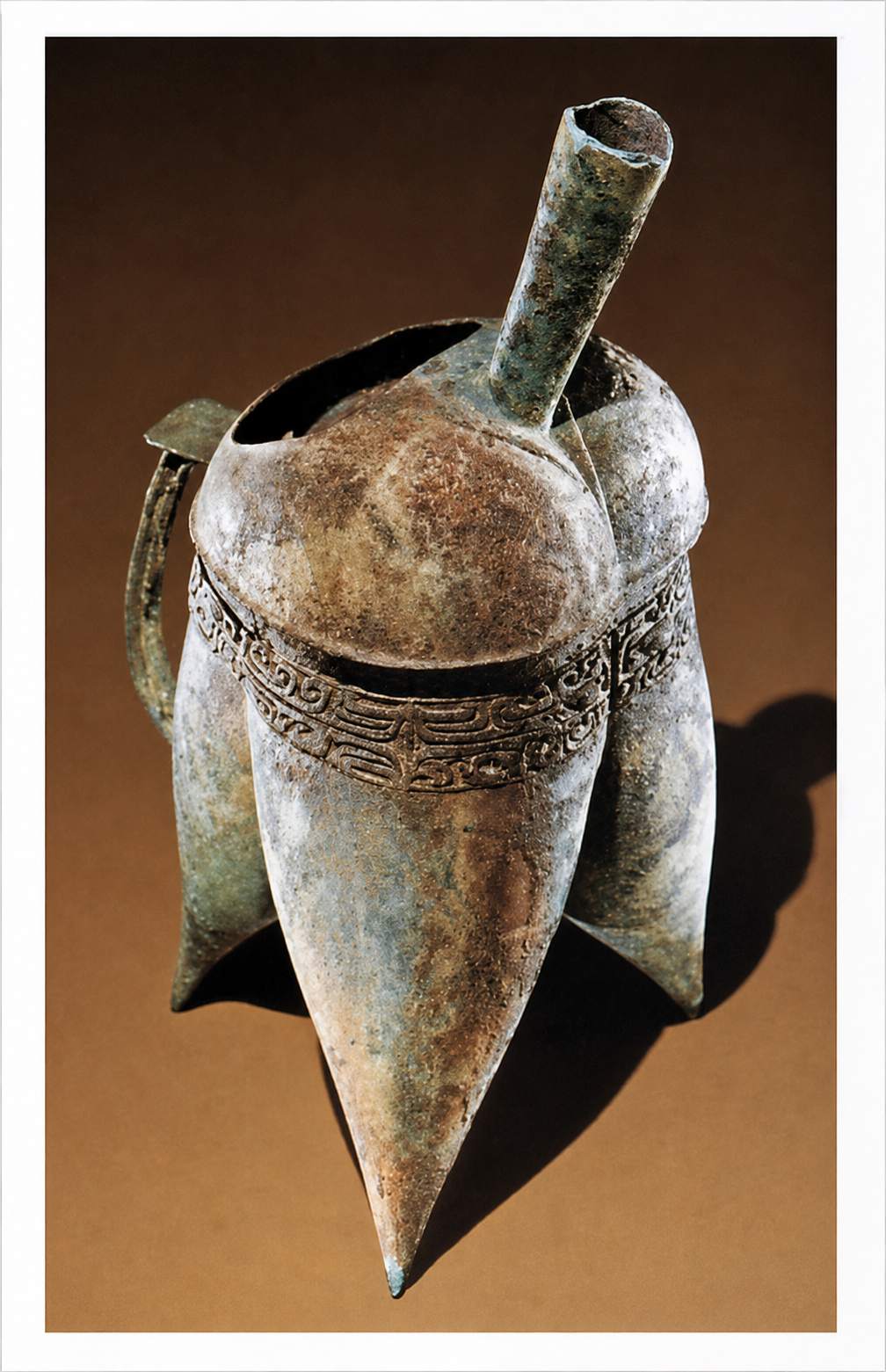
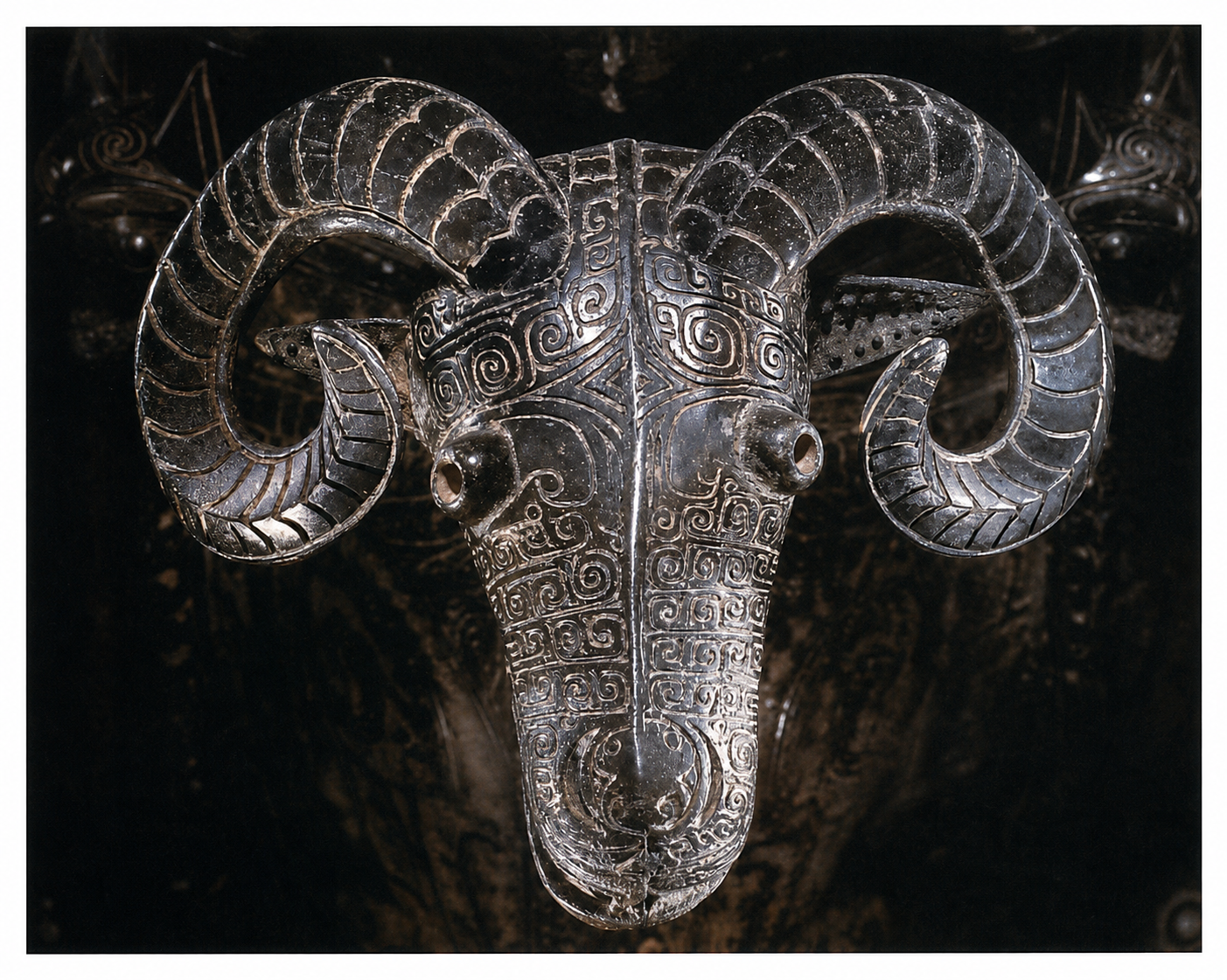
TWO PREHISTORIC CHINESE BRONZES
The ram is beautiful and profound. The urn, at first, seems merely weird. But in the long run, the urn has a more definite and pronounced relation to our inner self, and in spite of ourselves, gradually we come to recognize it.
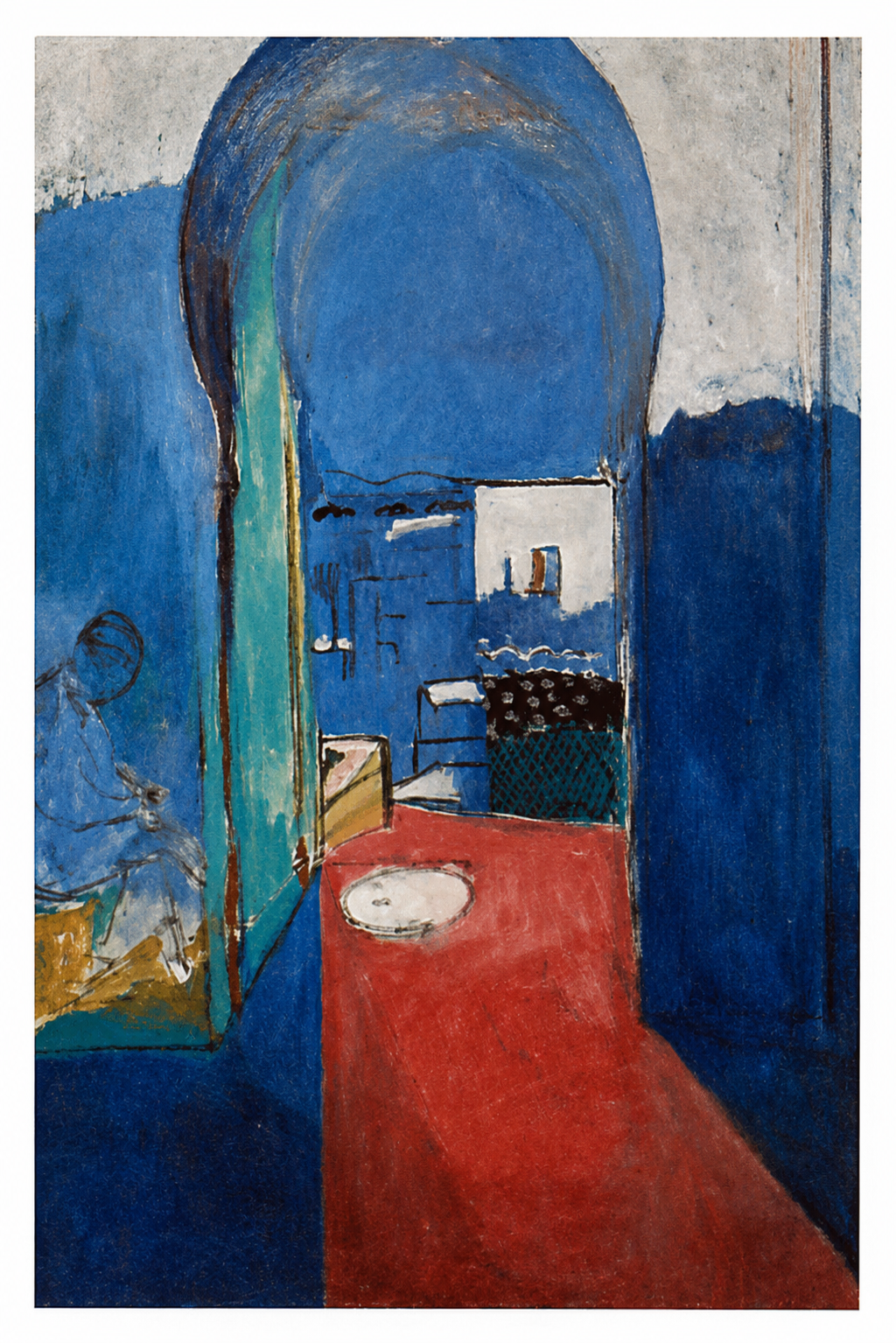
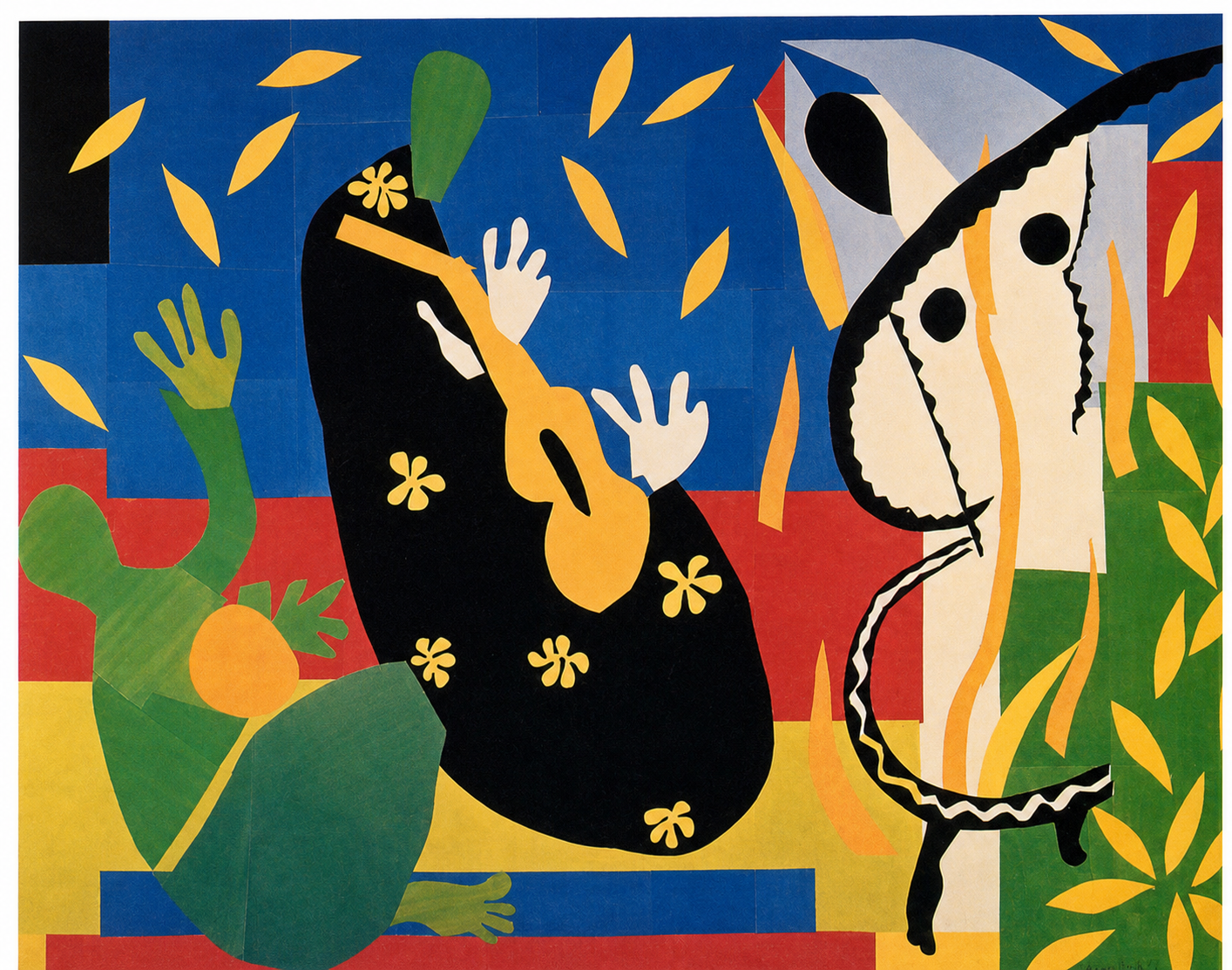
TWO PAINTINGS OF MATISSE
The early Moroccan painting is one of Matisse' great works: it has an immediate feeling and reaches far into the self. As a piece of the self it has power without question.
The Sorrows of The King cut paper is at first alarming, disquieting. Slowly its majesty sinks in. After years of looking at it, even yf the Moroccan painting is more beautiful, I believe the Sorrows comes much closer to a picture of the eternal self.
Luckily, there is a reverse interaction which helps me get closer to the original mind. As I try to perform this test, as I look at things and ask to what extent they are pictures of my self, as I encounter the contradictions and difficulties which this test exposes in me, gradually I start to get rid of all the things which seem good because of images and opinions -- and retain only those which really are full of life. As this process continues, it sandpapers away my opinion ated conceptions of my self and replaces them, slowly, with a truer version of what my self really is. In this way, the task of trying to perform this mirror-of-the-self test gradually brings me closer and closer to contact with the original mind. And then, of course, the more I do so, the more useful this original mind is to me as a criterion of wholeness and life in buildings. The purer it becomes, the more accurately I see it, the more accurately I use it to form judgments about buildings.
We see then that life, as it occurs in buildings or in works of art, can be measured. But it can only be measured, or estimated, in a way which relies on the degree of development, or enlightenment, of the observer.
According to the Cartesian canon, this method of observation might not be considered valid. The observation al methods of Cartesian science rely on methods which are available to any observer. The idea that a given thing is to be measured, for its life, by the degree to which it is a picture of the self of the observer -- or by the degree to which it makes the observer feel
Gs
Yi
wholesome -- would appear, at first sight, as the most rank form of subjectivity -- just the kind of thing which the Cartesian method was designed to exclude.
But what if, objectively, the phenomenon we call life cannot be measured by any other method? In this situation, the narrow confines of Cartesian method would then be the cause of the problem we face in the construction of an adequate environment, since it would place the idea of life, arbitrarily, beyond the bounds of what can properly be measured or observed. I suggest that the ugly and lifeless environment which we have been building since the 1950s has come about because public bodies and authoritative opinion have been most comfortable with that which can be measured or discussed within the Cartesian framework. This has then made real quality all but impossible.
In order to correct this problem and to bring the life of buildings into the canon of normal scientific discourse, we should adjust our scientific ideas of what can be measured, and how we can measure it.
This is not something new in the history of science, which is a continuous series of adjustments in what we may claim to measure, and how we may claim to measure it. In this history, using the mirror of the self to measure the presence of living structure, though highly unusual, would be merely one more step in the evolution of the observation al methods needed to deal truthfully with reality as it is.
8 / Many Cultures, One Measure
I am well aware that the ideas of this chapter may pose tremendous problems for a professional architect, or for a person oriented to the scientific thinking of the past century. The idea that truth is to be found in the self; not in the world beyond ourselves, seems questionable from almost any reasonable empirical point of view. And the idea that, even in the middle ofa world where we struggle to understand the "other" through empathy, participation, and anthropological wisdom, we should just now turn to ourselves for ultimate truth, not to that other, seems headed for madness.
But, in all soberness, I believe this is simply true. I have spent my life working with people from cultures other than my own, in Peru, Mexico, India, Japan, Brazil, Israel, Germany. In many of these cases, I have been successful, I think, because of my desire to be that person, to understand -- from the inside, as it were -- what it is to be an Indian, a Japanese, a Peruvian; and I have done this by becoming Indian, Japanese, Peruvian -- and from the inside, then, knowing what it is to be and feel what people in that culture feel.
I am profoundly aware of the differences which arise from culture to culture, climate to climate, place to place, and have built buildings which reflect these differences hugely. I have no doubt at all that these things must be understood and that the most elementary rules of architecture are (1) ask people what they want and (2) give it to them almost without question, so that the dignity of their inner response is recognized, preserved.
But, when all is said and done, it is my view that this matter of the self, the mirror of the self, lies still deeper. I believe that, in all contemporary cultures, people have been robbed of their heritage, not so much because ancient culture has been destroyed, but more because today's prevailing culture robs people of the feeling that is inherent in them, their true feeling, their true liking.
Although, of course, true liking is different from one culture to another, still, I am more likely to succeed in creating a thing that a Japanese person truly likes by making a thing that I truly like than by following a handbook of modern regulations in Japanese style. The fact is that the worldwide advance of money-based democracy has created a profound sameness which is (so far) based on falsehood, on a denial of what it really means to be human. The proper acceptance of what it means to be human, the work of creating living structure which respects that true inner structure of human beings, is a deeper and more serious matter, by far, than the minor variations which culture creates.
If we get this inner truth right, we can then afford to introduce cultural variation -- indeed, it will come naturally, just because when people do what seems like "self" to them, it does come automatically. But following the mechanical objective criteria of modern participatory democracy, or of technical society, or of the money-based economy that has driven out true value from our hearts -- that is only cant and hyperbole, something dressed up as good to mask something that is deeply bad.
Since the 1970s I have seen how the truths expressed in this chapter unnerve people. I believe these truths are so deep that they are unnerving, essentially, for all of us who have grown up in the 20th century. Yet although they are troublesome, hard to accept, hard to understand -- they go against the modern grain -- I do believe that they are true, and must be understood, no matter how unpalatable they seem.
They describe something which, no matter how improbable it seems, is simply there in the world: it is one of the essential descriptions of how things are.
Notes
1. Many of these points are developed further in chapter 8. They are also developed and extended in the chapters of Book 4, THE LUMINOUS GROUND, especially chapters 2, 3, 5, 9 and 10.
2. Discussion of the aspects of matter which create a connection between matter and self is highly complex, and my attempt to define the connection cover a large part of Book 4. Whatever this self really may be, it is, in any case, personal. It is abstract, universal, underlying all things, yet so intensely personal that throughout Book 4 I refer to it most often as the "I." In Book 4, I suggest that this aspect of matter in which all living structure is rooted may have to be considered material, certainly a part of psychology, possibly a part of physics, and that it is this feature of the world which explains the experimental findings described in the present chapter.