Chapter Ten
The Impact of Living Structure on Human Life
To fill out my picture of living structure and its relation with the human self, I shall now examine a supremely practical question, one essential to all of us: What is the impact of living structure on human life?
I have tried to show that the degree of presence of living structure in artifacts and buildings can be judged, and measured, and that it may be measured by estimating the degree of life which people experience in themselves. Thus the living structure of the world is not only real and objective, but also tied inextricably, it seems, to the very nature of our human self.
Oo) 'O)
4,
0)
One can hardly doubt, then, that the physical structure of the world, and especially the world of buildings where we spend most of our time, has a massive effect on us; that our good fortune, our future, our very ability to live, is profoundly tied up with the presence or absence of living structure in the world around us.
In this chapter I shall try to give some idea of how this interaction between buildings and people works, how high the stakes are, and how deeply, indeed, our own daily lives are touched at every waking minute by the living structure of the world.
1 / How Does the World Have Its Effect on Us?
What is the effect on our daily lives of the complex structure that I have characterized as living structure in nature, in buildings, in artifacts?
Common sense tells us -- or seems to tell us -- that the physical environment affects our lives. It has often been said, certainly, that the shape of buildings affects our ability to live, our well-being, perhaps our behavior. Winston Churchill is believed to have said "we shape our buildings; and they shape us." But how do they affect us?!
I shall argue that the geometry of the physical world -- its space -- has the most profound impact possible on human beings: it has impact on the most important of all human qualities, our inner freedom, or the sense of life each person has. It touches on internal freedom, freedom of the spirit.
I shall argue that the right kind of physical environment, when it has living structure, nourishes freedom of the spirit in human beings. In the wrong kind, lacking living structure, freedom of the spirit can be destroyed or weakened. If I am right, this will suggest that the character of the physical world has impact on possibly the most precious attribute of human existence. It is precisely /ife -- the living structure of the environment -- which has this effect.
Those environments which are composed of living centers, which meet the functional conditions described in chapter 7, which meet the extraordinary mirror of the self test, and thus reflect the human self, which do this in accordance with culture and society, and which have the fifteen properties working to support human existence -- these places are the ones where we feel most free. Those environments which lack this structure are ones where we feel -- and may easily become -- dead.
Our emotional freedom, our spirit, is nurtured and supported by those environments which are themselves alive. In an environment which has living structure each of us tends, more easily, to become alive.
2 / Freedom of the Spirit
Can it really be true that something as elusive as freedom -- and perhaps the even deeper capacity to be human -- depends in some way on the environment? Is it possible that the rude form of walls, windows, and roads could affect something so subtle and precious as the freedom, or the wholeness, of a person?
The effect I suggest is large, but subtle, and resembles the effect of trace elements in the human body. It is well known that various substances -- certain vitamins, for example, and to a lesser degree even certain rare metals -- have a disproportion ate impact on the health of a human body. These substances do not represent a large part of the body's intake, nor are their direct products a large part of the body's biological structure. Nevertheless, they are necessary in tiny quantities, since they make possible the construction of crucial enzymes, which themselves catalyze crucial and highly repetitive components of protein synthesis.
The reason these trace materials are necessary is that they play a catalytic role in various processes. They are used again and again and again in reactions which happen millions of times per day. Without this catalysis, the major and more gross processes of the body simply break down. The impact of the geometry of our environment -- its living or not-living structure -- has a similar, nearly trace-like effect on our emotional, social, spiritual, and physical well-being.
A healthy human being is able, essentially, to solve problems, to develop, to move toward objects of desire, to contribute to the well-being of others in society, to create value in the world, and to love, to be exhilarated, to enjoy. The capacity to do these many positive things, to do them well, and to do them freely, is natural. It arises by itself. It cannot be created artificially in a person, but it needs to be released, given room. It does need to be supported. It depends, simply, on the degree to which a person is able to concentrate on these things, not on others. And this steady-mindedness, even in joy, is damaged by the extent to which other unresolved or unresolvable conflicts take up mental and physical space in the person's daily life.
Such damaging interference from extraneous factors can take many forms. It can come about as a result of hunger, starvation, disease, or physical danger -- all these, obviously, force a concern that stands above any of the more subtle issues. It can come about as a result of an unhealthy social milieu, such as a dysfunctional family; it can come about as a result of internal unresolved emotional conflicts. So long as these conflicts remain unresolved, not much else can go forward successfully.' Once the larger sources of need and conflict and interference are removed, or taken care of, the more subtle positive life-seeking aspects of the organism take up the challenges, desires, aims, that a person wishes.
More subtle issues can also create such preoccupation, hence damage, to the individual. Conflict in the workplace, for instance, can absorb a person's energy to the near exclusion of all other matters. Person al tragedy does the same, always for at least a short while, sometimes for longer, too. While active, it simply stops a person from functioning well.? Preoccupation with other matters, with one's own mental illness or neuroses, with family problems, with money problems, with boredom at work, with cruelty, with the well-being of a loved child -- all these may dominate while unresolved.
And still more subtle issues, in lesser degree, have the same effect. A chance remark can throw off a person's functioning for a day or two; a badly fitting shoe, a headache, even an irritating noise of motorbikes outside the house can make concentration, productive problem-soliving, ultimately creative work, or love, or joy nearly impossible. They take so much energy, so much at-
tention, that it is hard to rise above these problems.
Of course, it is often said that challenge makes us more alive. Climbing a hitherto unclimbable mountain, soliving a problem at home, finding a way around a difficulty, running along the edge of the sea where it is hard to run in the shallow water -- all these are exhilarating. They make us more alive. The artist starving in his garret is more likely (it is said) to create the great work than one who is pampered and supported. Orville and Wilbur Wright refused a grant because they felt that too much money would destroy their ingenuity in the face of necessity -- the very factor which they both treasured most dearly in their search for a flying machine.
The nature of the interference caused by hardship and conflict must therefore be very well understood, and accurately gauged, before we can say that we have a clear picture of its effects -- either negative or positive.
3 / Freedom and Loss of Freedom
Let us now come to the topic of human freedom. It will be accepted, I think, that the best environment would be one in which each person can become as alive as possible -- that is as vibrant morally -- and which people can reach, as far as possible, their intellectually, physically, in own potential as human beings. One may assume, too, that each person naturally does everything possible, to be alive. The tendency to enjoy life, seek life, live life to the fullest, is a natural human force. It is the thing a person most naturally aspires to, and seeks.
The psychologist Max Wertheimer once wrote a short article called "A Story of Three Days," in which he proposed a simple, and extraordinary definition of freedom.* In his article, Wertheimer describes a man who is searching for a definition of freedom. What is freedom? What is true freedom? he asks again and again throughout the story. In an effort to find a satisfactory answer, he continually proposes possible answers, by a kind of self-imposed Socratic dialogue, and then visits people and places to see if the answer is correct.
At one moment, for example, he contemplates a man in prison, someone who is caged behind bars, yet nevertheless extraordinarily free as a human being. Clearly, he argues, it is not the absence of bars, then, which defines freedom.
Nor is it the restriction of the bars, the incarceration in and of itself, that causes the loss of freedom. So he goes on to propose another hypothesis, and visits other places and people and situations.
This searching, in Wertheimer's allegorical story, goes on for three days. Finally, at the very end, and having by-passed all the obvious definitions of freedom, having exhausted all the other definitions he can think of, Wertheimer's protagonist concludes that true freedom lies in the ability a person has to react appropriately to any given circumstance. The perfectly free human being is a person who, no matter what she or he encounters, can act appropriately.
And what is /ack of freedom? Anything which causes a blockage of this ability to react appropriately -- whether it be internal obsessions or mental rigidity, or a political system, or the bars of a cage -- causes a loss of freedom. Lack of freedom is loss, from whatever source, internal or external, of the ability to act appropriately.
We see here, how the environment can cause loss of freedom. A company which forces top administrators to deal inappropriately with human conditions that arise among the staff is reducing freedom. A building which creates so many small stresses in ordinary matters that people
THE IMPACT OF LIVING
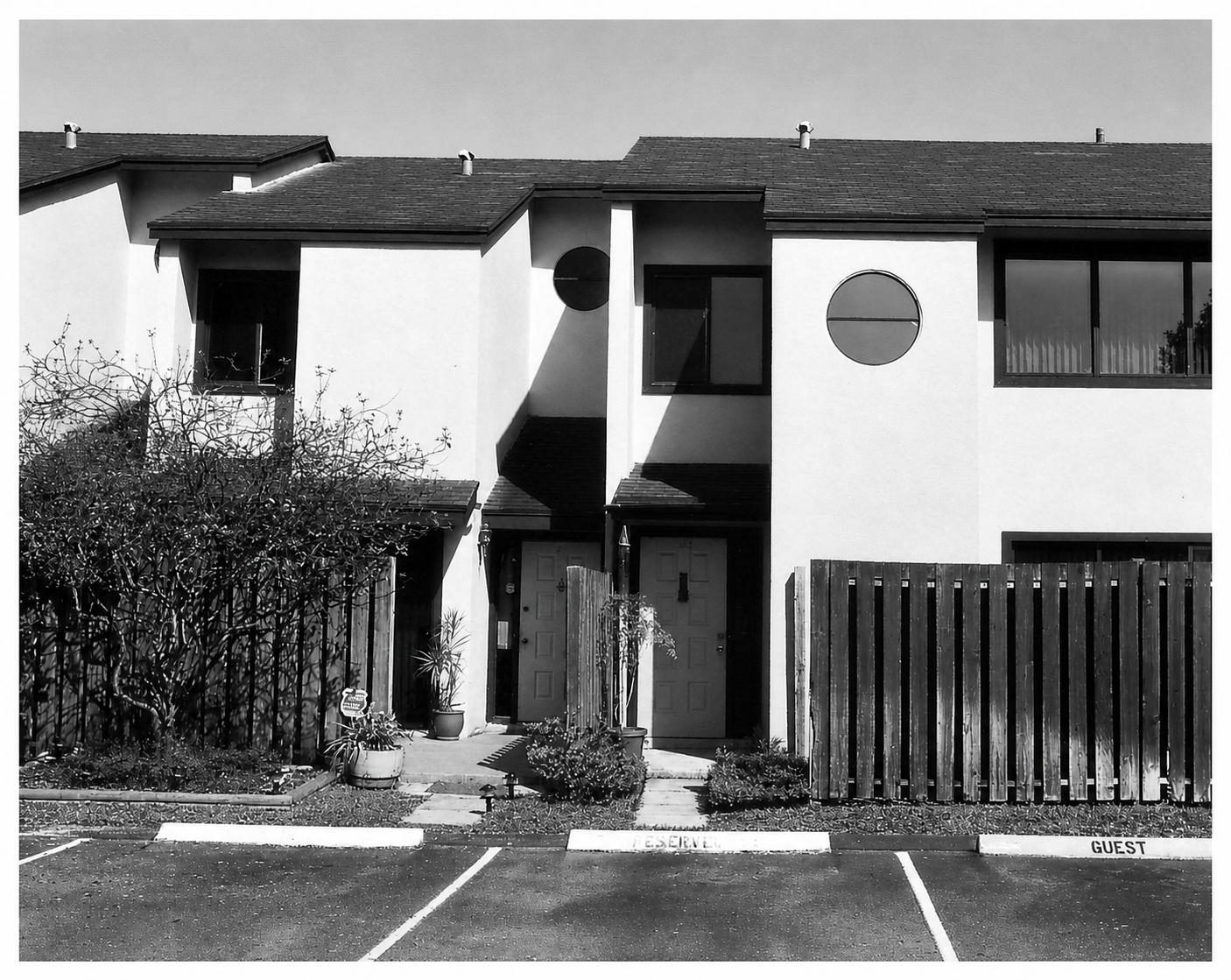
The loss of freedom. A typical example of our contemporary normal standard: what is commonly considered acceptable public housing today, Yet it has a deathly structure. Freedom is reduced. In this deathly environment, stress cycles dominate, and people have greater trouble being free in themselves.
cannot pay attention to what needs to be done, also reduces freedom. So does an environment which encourages a person to think obsessively about the image of the environment, while ignoring everyday feelings and practical realities.
Various conditions exist on earth in every human society which constrain people, which reduce their freedom, make it more difficult to live life to the fullest. A great number of these conditions come from the environment and its physical structure.
Let us consider an architectural example of interference with freedom. Illustrated on this page is a housing project in which the parking lot leads directly to the houses. (This structure is in Fort Lauderdale, Florida, but could be almost anywhere in the world today.) It creates conditions which make it hard for people to react appropriately to their living experience. There is no common land and therefore no real opportunity for people to experience any sharing or public or common interaction. The desire for this kind of interaction may well be slight. But when it occurs, as a natural impulse, it cannot be satisfied -- indeed it is prevented, frustrated, forces run underground, natural expression of action is modified and curtailed.
Consider the same housing project from another point of view. Families cannot express their individuality. Each family is different. But shut into a box that makes allowance only for the most gross physical functions (cooking, sleeping, using the bathroom), the opportunity for the individual to grow is reduced, curtailed.
In both ways, this housing project undermines and interferes with freedom.
Broadly speaking, the reaction to each unsolved problem, or annoyance, or conflict that is encountered creates in the individual some level of stress.> Stress is initially functional and productive. Its purpose is to mobilize the body in such a way that problems get solved. Adrenaline and other agents are mobilized throughout the system, creating special alertness and energy. All these help to address conflicts, unwind them, and to remove sources of annoyance. Each conflict or difficulty that the organism encounters, so long as it remains unsolved, adds to the st that is mobilized. But there is a limited capacity for stress in every human individual. Varying from person to person, it is nevertheless quite finite in all of us.
There is, in effect, a stress reservoir in the body. The amount of stress being coped with fills
this reservoir, to different levels at different times. Butas the stress reaches the top of the reservoir, the organisms ability to deal effectively with the stress decreases. This then gives rise to the "stress," as used in its popular meaning. The organism is overloaded. There are more problems occurring than can be solved. The total stress mobilized is beyond what the organism can cope with effectively. Slowly the situation deteriorates. When the stress is too great, creative functioning is impaired. Sometimes it finally breaks down altogether.
Perhaps the most important finding of modern research on stress is that this stress is cumulative, because it is all in one currency. Stress from money worries, stress from physical pain, stress from an unresolved argument, stress from light shining in one's eyes -- it is all stress, and it is all one kind of stress. So each of these apparently disparate stress effects fills the same stress reservoir.
THE IMPACT OF
Almost any unresolved problem, even when small, adds to the reservoir of stress, and can reduce a person's ability to function well. So long as challenges faced are within the limits of the stress reservoir, a person is actively soliving problems, and becomes more alive, more capable, more rewarded in the process of meeting the challenges. When the stress reservoir fills to impossible levels, the effect is opposite, and the accumulated stress prevents productivity, prevents loving relationships, prevents artistic and intellectual creativity, prevents people from being effective.
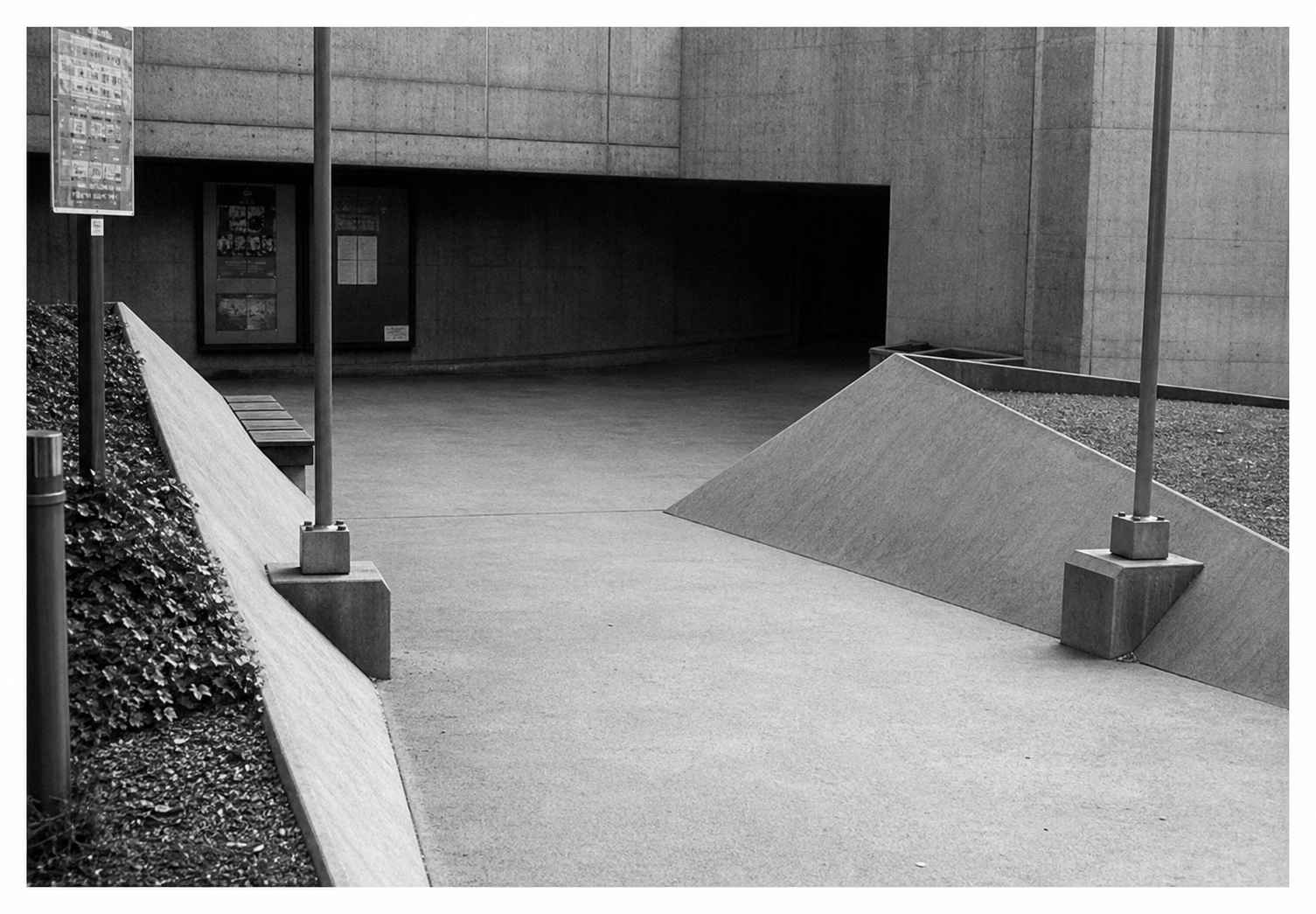
To see more exactly how the accumulation of stress, and disruption of the healthy relation between living structure in the environment and human freedom works, look at the case of a wall outside the University Art Museum in Berkeley, California. This wall has sloping sides, unlike a normal wall which has straight sides. Both ground surface and wall are made of concrete, and the concrete slopes and curves continuously from the flat ground to the vertical surface of the wall to form the wall. I suppose the architect thought this would be fun, or exciting -- or perhaps just "different." But what it actually does is to create very tiny amounts of stress. A person walking along cannot quite tell where the sloping part starts, so there is a chance of tripping. One has to walk away from the wall, minding one's feet, and has to give up what one is thinking in order to concentrate on not bumping into the wall. And if you were inclined to sit on the wall, you could not. The top of it is too far back from the flat part of the ground; your legs don't quite reach. So this wall, apparently fun and interesting, is actually a little expensive in needless stress, and in discomfort. This could have been avoided by an ordinary wall 16 inches high, thick enough to sit on, with a wide top, where you can see what it is when you walk by, and where you can sit down if you are tired, wait for a friend, or have a sandwich.
Of course, this example is small scale. Human life would be easy if we only had a few problems of this kind to contend with. It seems almost petty to mention it; perhaps too critical of the architect who was, conceivably, just having fun.
Let us now consider a rather more troublesome example from architecture. This concerns the life of families with small children on the fifth or sixth floor, or higher, in apartment buildings. The problem has been well documented: the mother with small children; the apartment usually small. Naturally the children -- when they are home -- want to go out to play with their friends, on the ground, six stories below. The mother wants them to be able to play there. But she cannot easily keep an eye on them, and she can't get to them quickly if something happens. But she can't keep them in the apartment, which is too small anyway. So the children go down. She worries constantly, thinking perhaps about kidnapping, or a car accident. But there is no alternative. If she finds it too stressful, she keeps them in the apartment, but after an hour of children romping about breaking things in the apartment, which is too small to contain many friends, she gives up and goes back to the inevitable. She lives with this stress day in, day out. If she tries to go down to watch the children, from the ground, then the cooking doesn't get done, and all kinds of other negative consequences come from it. There is no way to win. One way or another, this condition remains in her for the few years when her children are young enough to need supervision, but not young enough to keep at home. This stress cycle contains a series of factors linked in a "can't-win" pattern. It is just one example of a negatively charged system of conflicting forces which occurs in certain kinds of apartments: one of the many other things that might be said about not very good apartment buildings.
But the main point is that here we have a second example, in structure like that of the museum wall, of a system which absorbs energy and makes living more difficult, and thus interferes with a positive development of people's lives. This example is somewhat larger in scope and in its effects than the art museum wall. The nature of the stress that is induced is the same.
Each example adds to the total reservoir of stress people must contend with. It makes everything else more difficult, and a meaningful life just that little bit harder to attain. By themselves, the stress from these two cases could not fill up a person's stress reservoir. But when these small items increase, and multiply, they begin to have a cumulative effect which is not positive, but negative.
It is in the subtle interplay of factors of this kind that the environment has its effect -- positive or negative -- on human life.
5 / Separation From Reality
The further the stress reservoir is brought to overflowing, the more people are surrounded by conflicts which make it impossible for them to meet their ordinary striving and aspirations. They struggle, but are undermined continuously by a separation from every reality, and by a separation from the experience of soliving problems, overcoming them, and meeting challenges and overcoming them, and becoming, therefore, free.° So the apparently small trace-like conflicts in the environment all cause stress. But they go much further. They cause a separation of people from reality: they form a world, so removed from everyday human events, that it might almost be said that it is made for fictitious people to live there at all.
Thirty years ago, the film-maker Jean-Luc Godard made a science horror film, ALPHAVILLE, in which he tried to convey the deadness and nearly horrific stillness of an imaginary coming world, where people behave almost like robots.' Opposite is a real building, built by Terry Farrell, which achieves this quality in a building now standing on the River Thames, in London. On
el viii iiit
ctl
ch, ladle eal woul Lore ud a
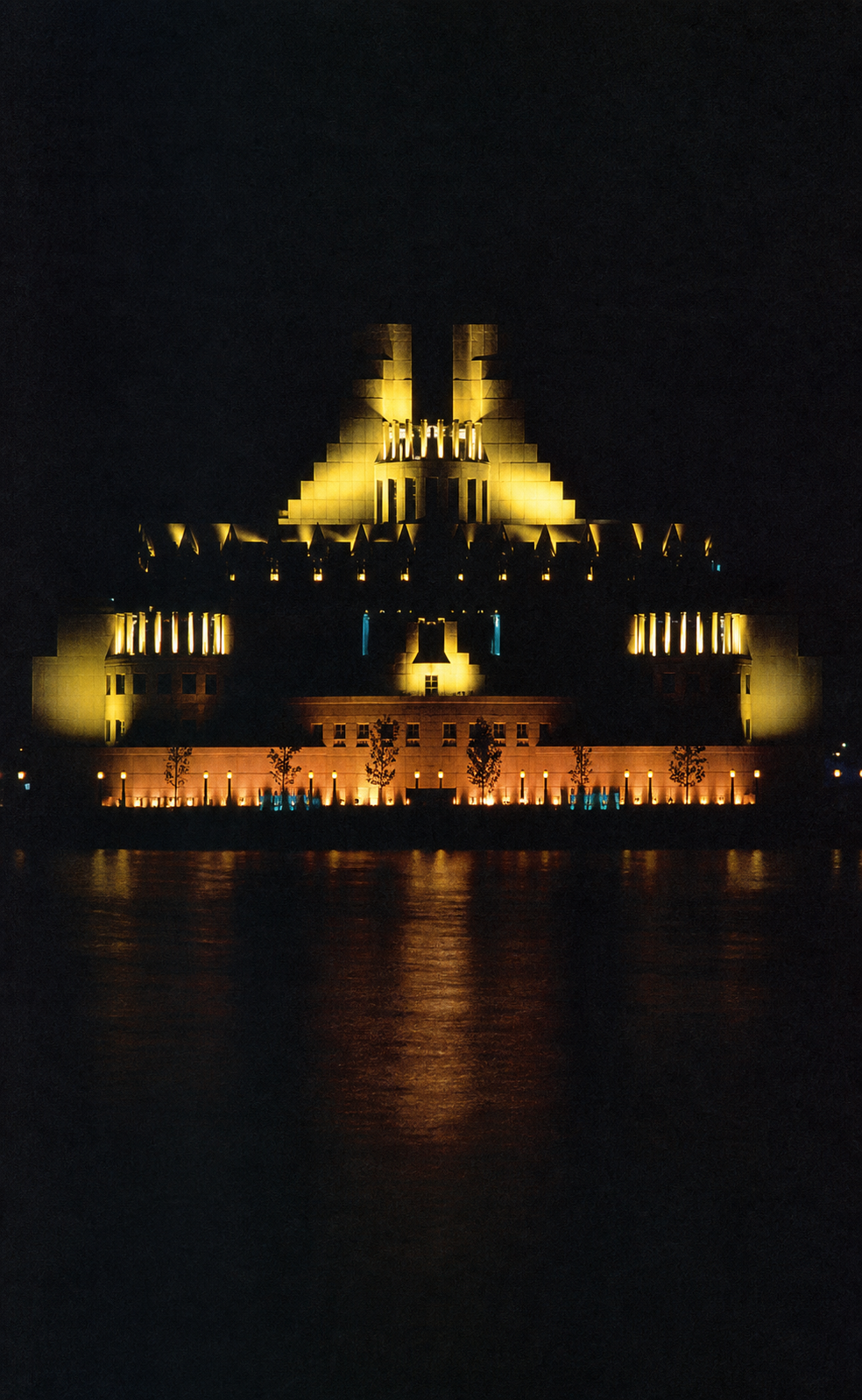
An environment -- not from horror film, but from real life, on the south bank of the Thames, in London. This can hardly create anything but a shudder of apprehension, deep down. Certainly it is not a nurturing environment which allows one to be oneself. or to be free.
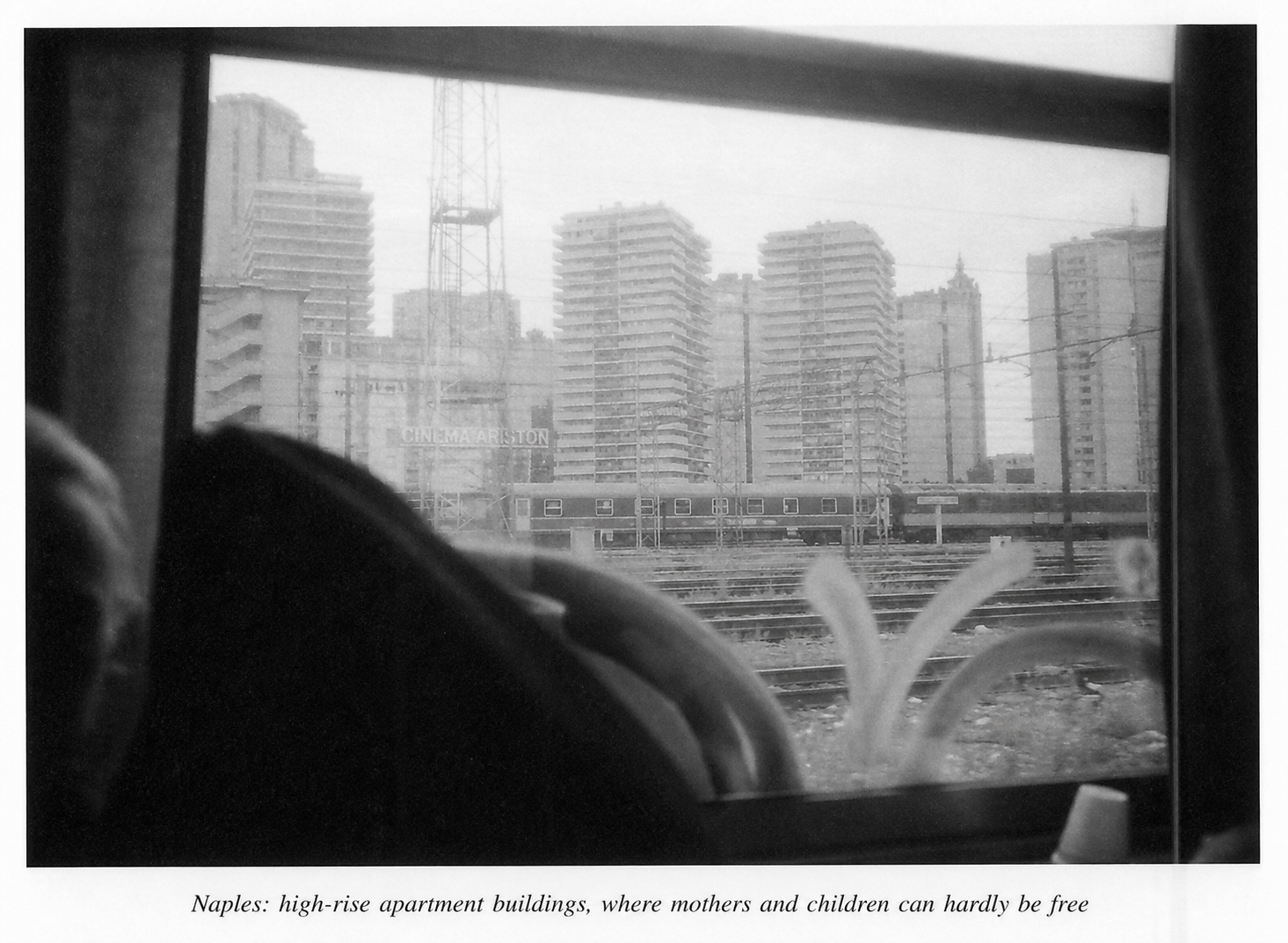
page 376 there are high-rise apartment buildings crowded together in Naples. And a more recent realistic film DIARY OF A POOR YOUNG MAN, by Ettore Scola,* where a young man is slowly annihilated by the oppressive environment of a massive repetitive public housing project.
In each case, one reacts with a certain horror. The inhumanity of the environment, and the inhumanity it causes in us, are not imagined, not literary fictions. We easily re-create, in our hearts, the sense of hopelessness and despair, the confining reality of a sterile world, that are summarized by these illustrations. We can feel it in ourselves. And we know, from our own walks through the empty office building, through the still, despairing upstairs mall of shops, or through the empty motel room, devoid of all but bed and bathroom and small window and plywood door, how real this despair can be, and how little this atmosphere does to sustain us -- how, rather, it can bring us nearly to the brink of hopelessness.
6 / a World Which Enhances Human Life
Using Wertheimer's definition of freedom, we may define the best environment for human life. It would be one which gives people the maximum chance to be free, one which actually a/lows them to be free. A living environment is one which encourages, allows, each person to react appropriately to what happens, hence to be free, hence to encourage the most fruitful development in each person. This is an environment which goes as far as possible in allowing people's tendencies, their inner forces, to run loose, so that they can take care, by themselves, of their own development. It is an environment in which a person is free to grow, if she wishes to grow, and to do so where, and how, she chooses.
This environment will be, by character and in structure, something far less ordered in the superficial sense than we architects may imagine. It will be more rambling, with a deeper kind of order than we have come to expect from our profession, something more like the rock pool with its hundreds of species, a subtle biological order containing vast structure, but seeming, on the surface and geometrically, almost disorderly.
It has just that structure which I have described, throughout this book, as living structure. It is a highly complex system of centers, like those in nature, which support each other, and where each part, in itself, is alive.
This environment releases you, allows you to be yourself, allows you to be free. Ease. The yawn, a smile, a perfect ease which allows you, above all, to be yourself, to provide that part of social existence which also protects and heals the self.
This ease, this freedom, depends on configurations which are opposite from the conflictinducing, stress-inducing configurations I have been describing earlier. Rather it depends in part on "opposite" configurations, those which remove energy-wasting conflict from the environment. These "opposite" configurations release human effort for more challenging tasks, for the freedom to be human.
The 253 configurations in A PATTERN LAN- GuacE are of this type.' Each pattern, when examined carefully, describes some conflict -- better said, some system of conflicting forces -- which will arise in the wrong sort of environment, but which can be tamed, resolved, when the environment is right. LIGHT ON TWo SIDES OF EVERY ROOM, FOR EXAMPLE, describes a situation in a room with light coming from one side only, where the light is not reflecting enough, where people cannot see one another's faces well enough, and where deep stresses will remain. In this case, again, the structure is not easily changed. Only an increased wisdom, which
INDEPENDENT REGIONS describes a situation in a large nation state, where local regions -- for climatic and cultural reasons -- have their own identity, but where this identity is trampled and disturbed when the nation state is too powerful. The pattern (described in 1970, when giant nation states were common, and small countries less common) was so powerful that the forces in tension began to have major historical and political effects, eventually culminating in the breakup of the Soviet Union and Yugoslavia and the creation of small independent countries throughout Africa and eastern Europe and the Indian continent. The conflicting forces, in this instance, can be more easily resolved within the configuration of small countries, and political force and political wisdom therefore move the world in that direction, to permit the autonomy of individual cultural identity.
In both cases, so long as the con aguration is wrong, the conflict remains underground. Yet there is no benefit to keeping the conflict under the surface. All that does is add to stress. It does not contribute challenge. It is, in any case, invisible, experienced only in the built-up stress, not as a creative challenge.
Some people thought that a PATTERN LAN- GUAGE was written to recreate a nostalgic atmosphere, since so many of the patterns resemble things "as they used to be." In fact, the content is far more practical. The patterns describe 253 of the most common subtly conflicting systems of forces which can occur in the human environment, and show what configurations will eliminate the stress cycle, release peoples natural force, and thus make room for positive forces, positive emotions, and positive human interactions to have free play.
A world in which these patterns and others like them are present, thus tends to support human beings in their efforts, in their striving for life, in their search for happiness.
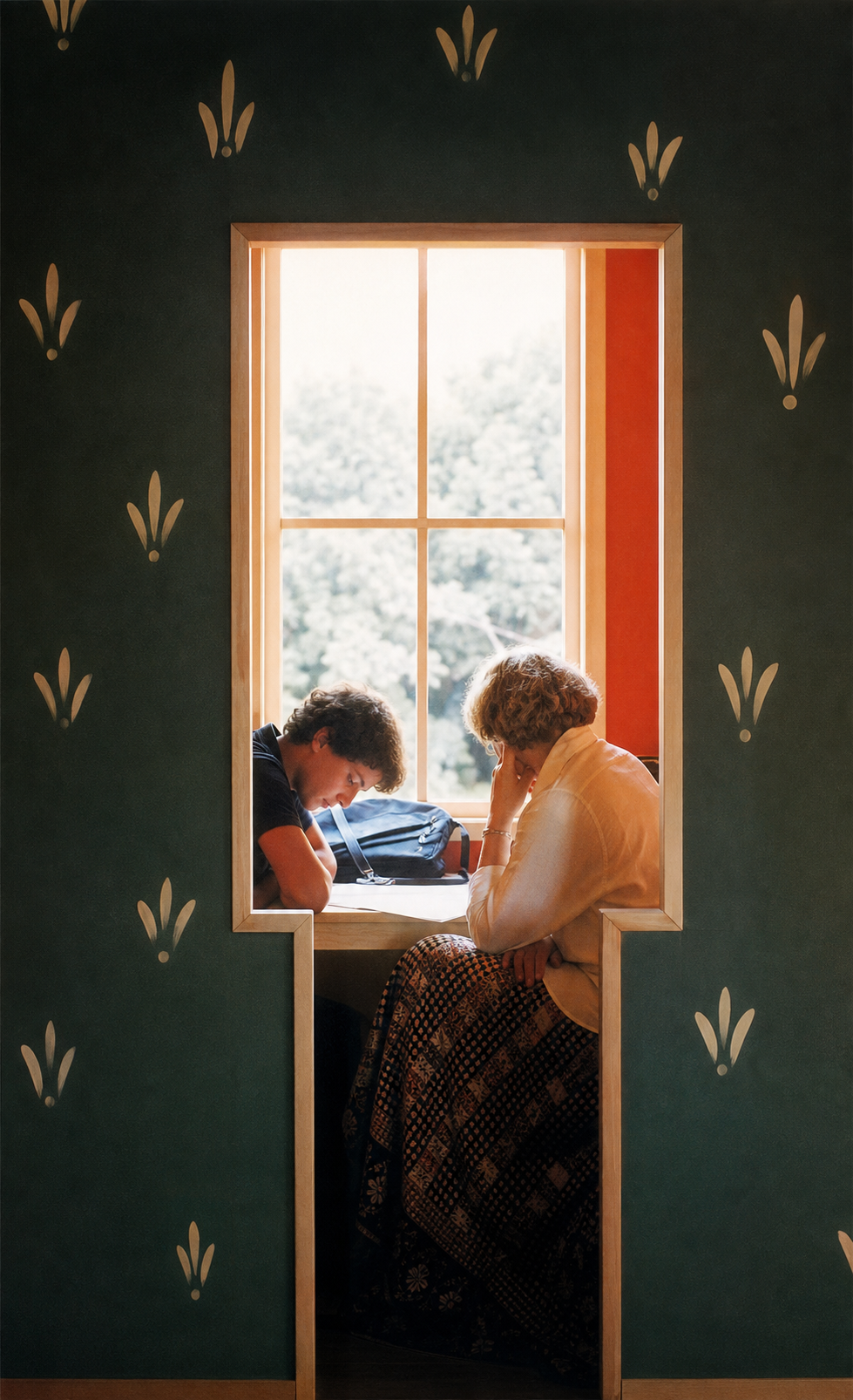
7 / Andre Kertesz's Paris
Look at the pictures of Paris on the next several
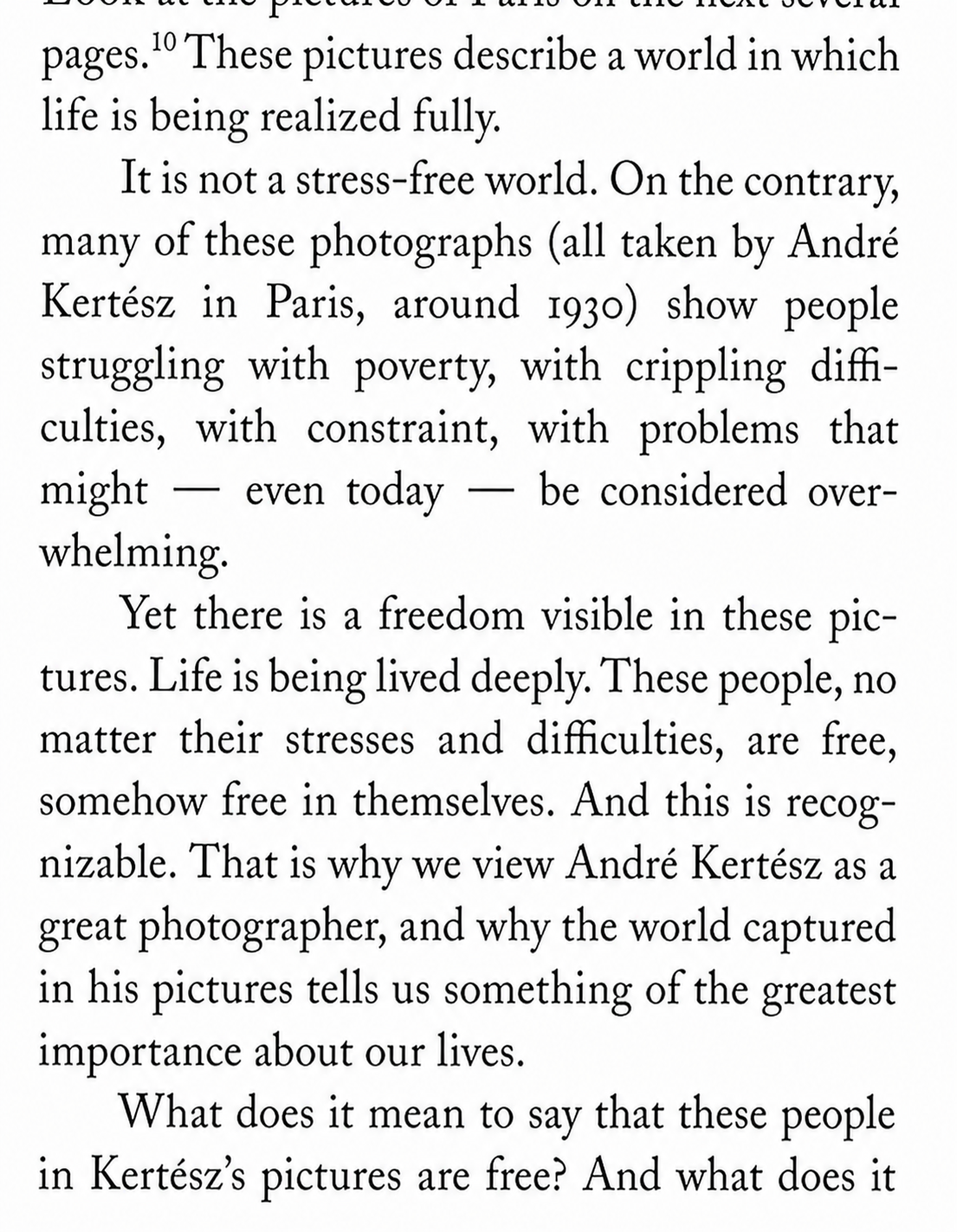
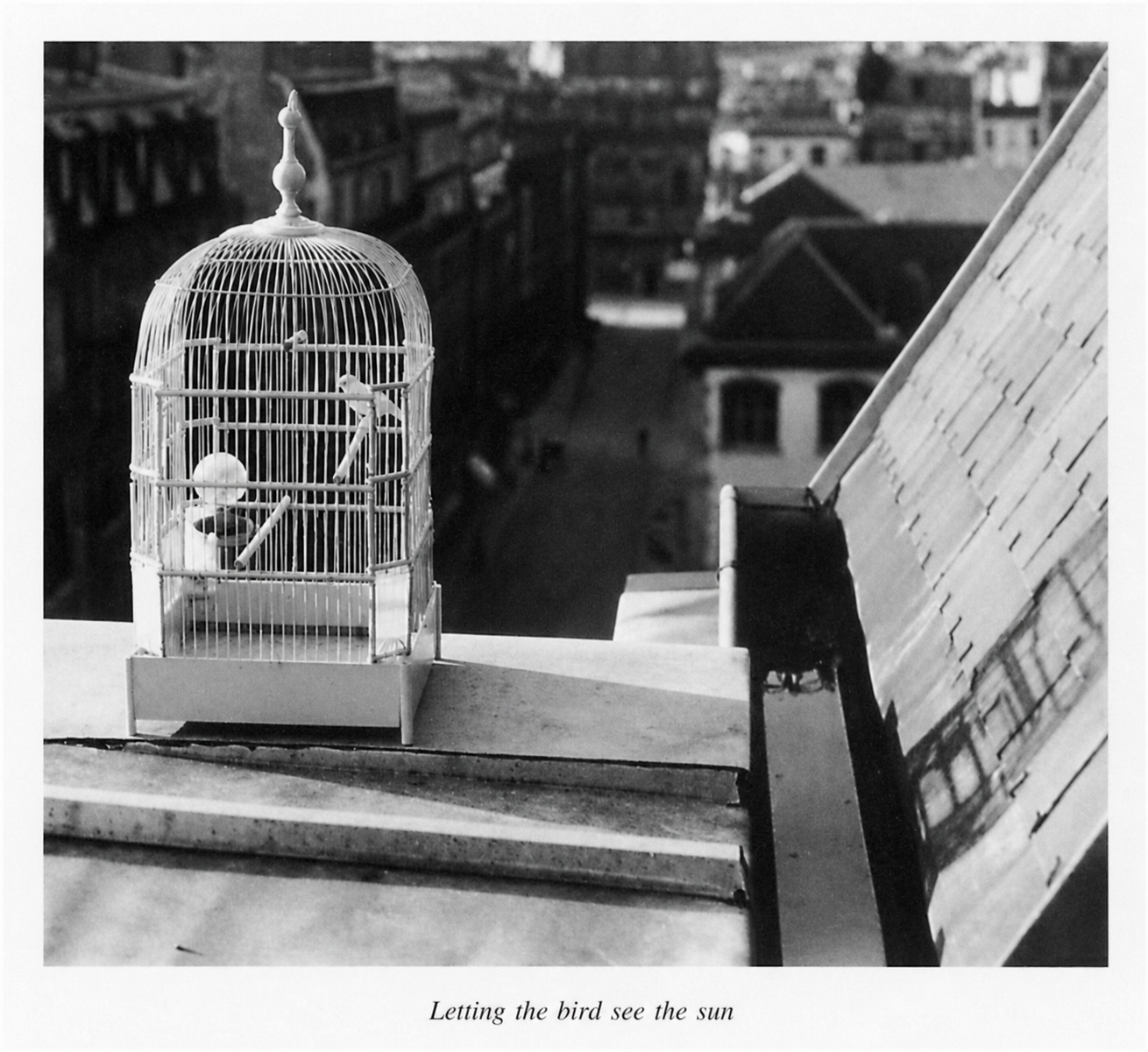
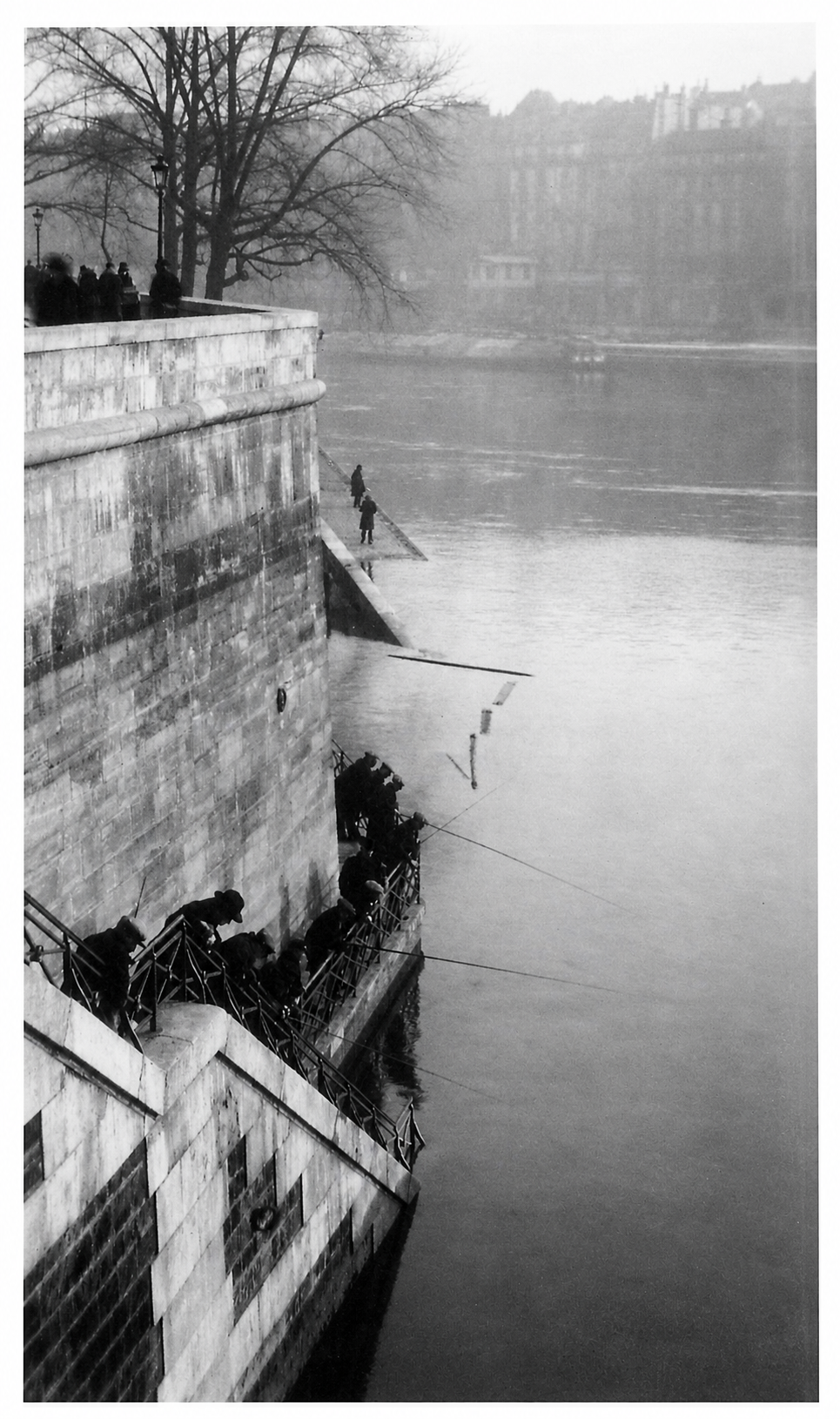
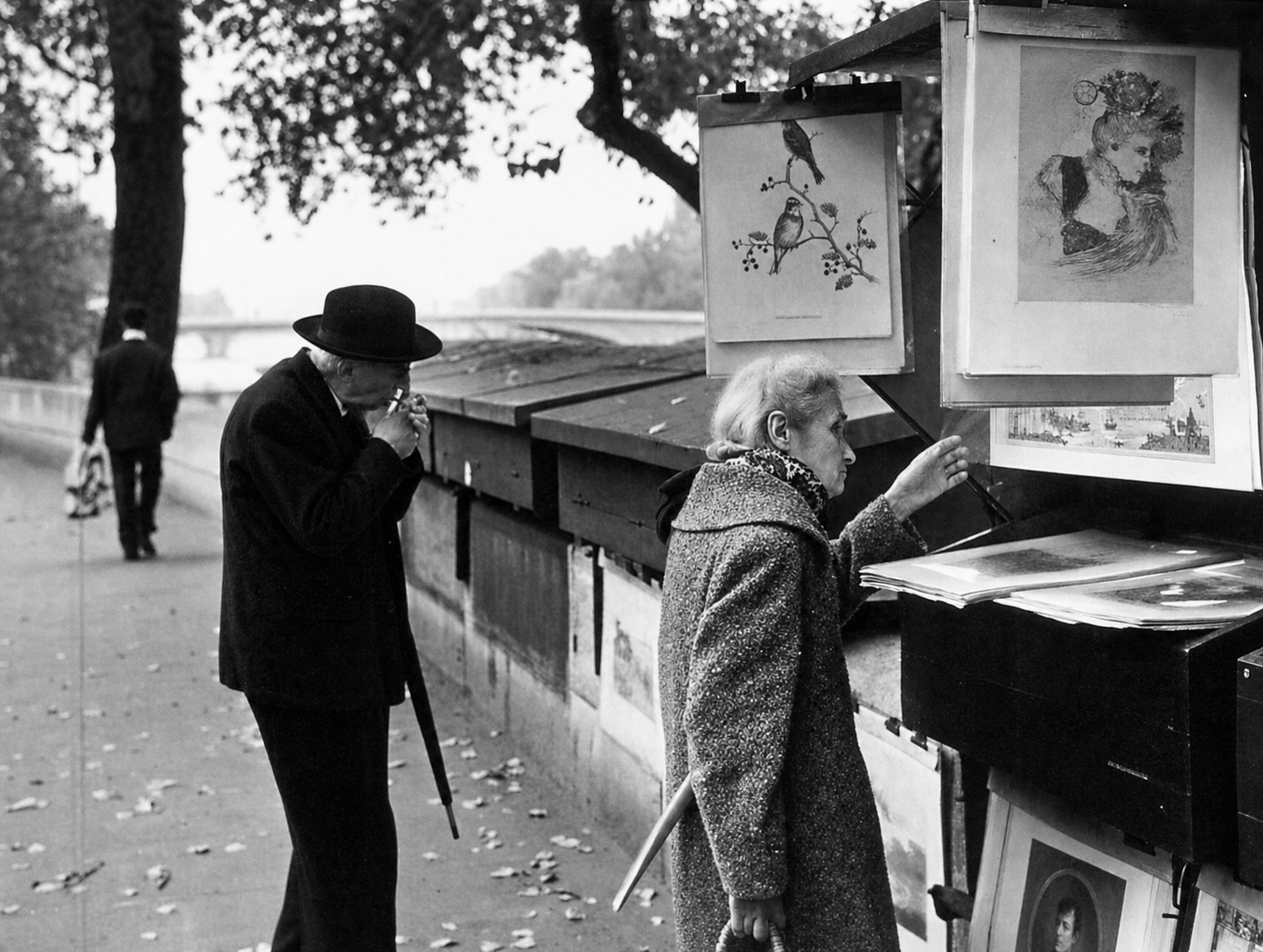
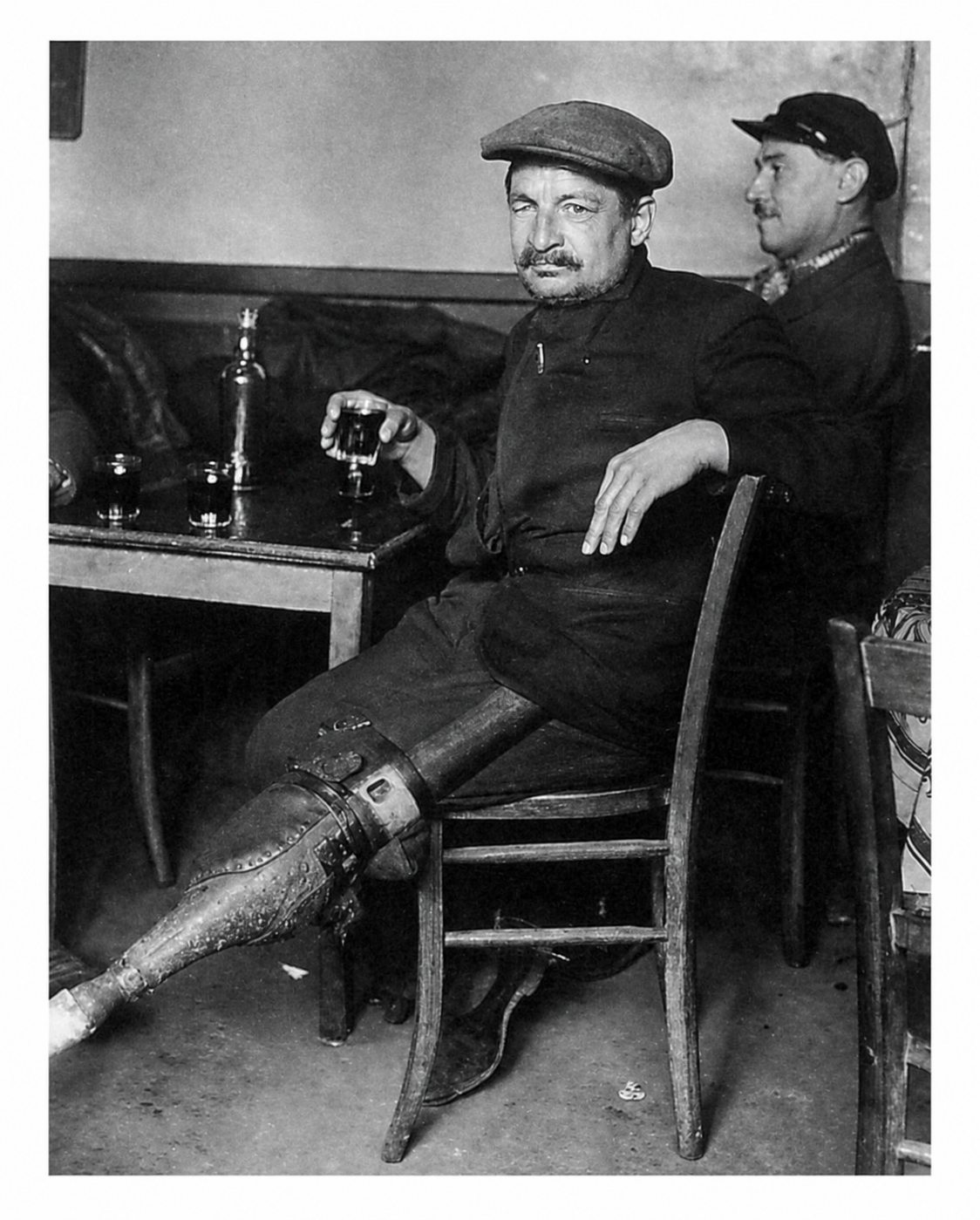
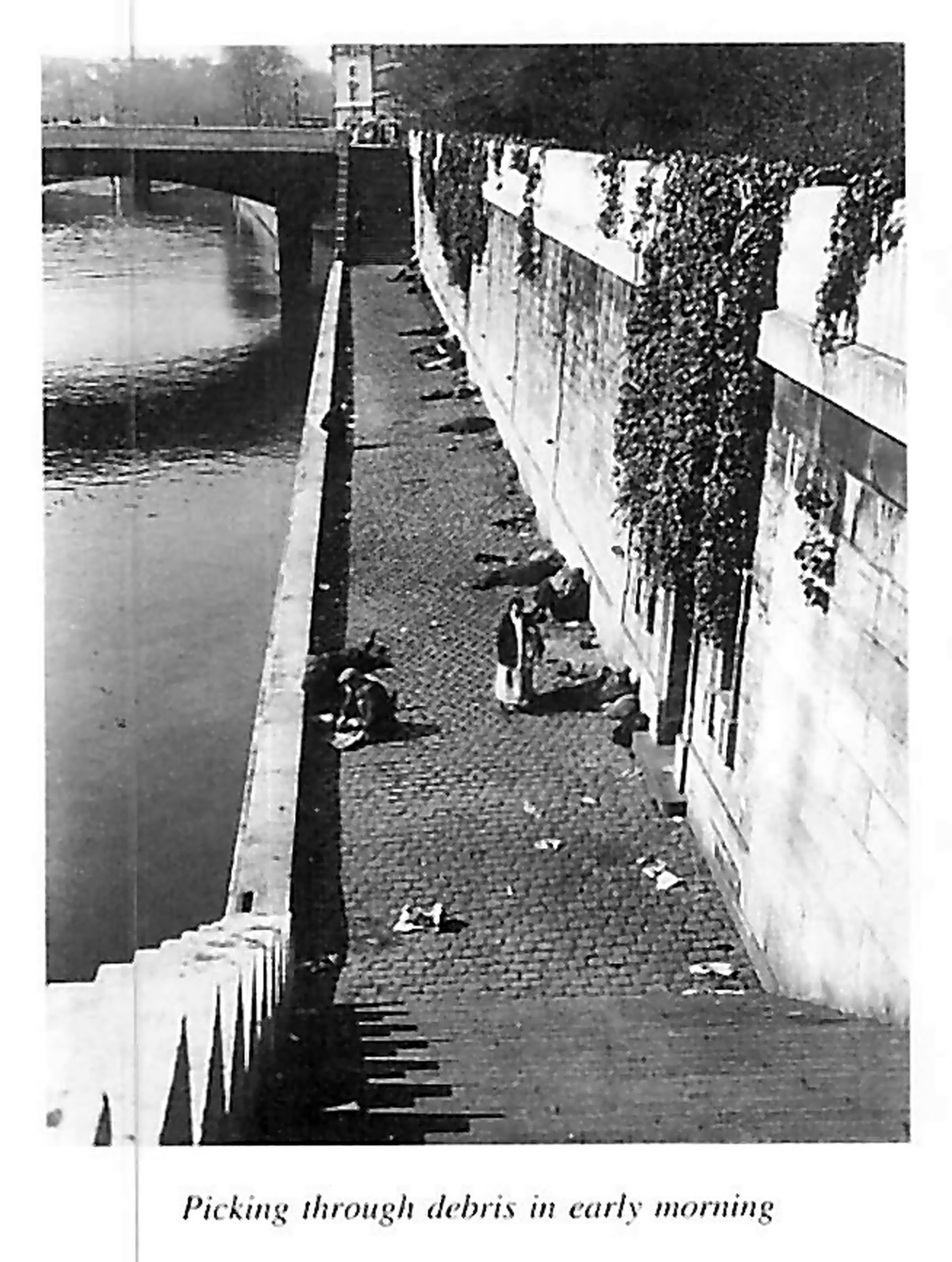
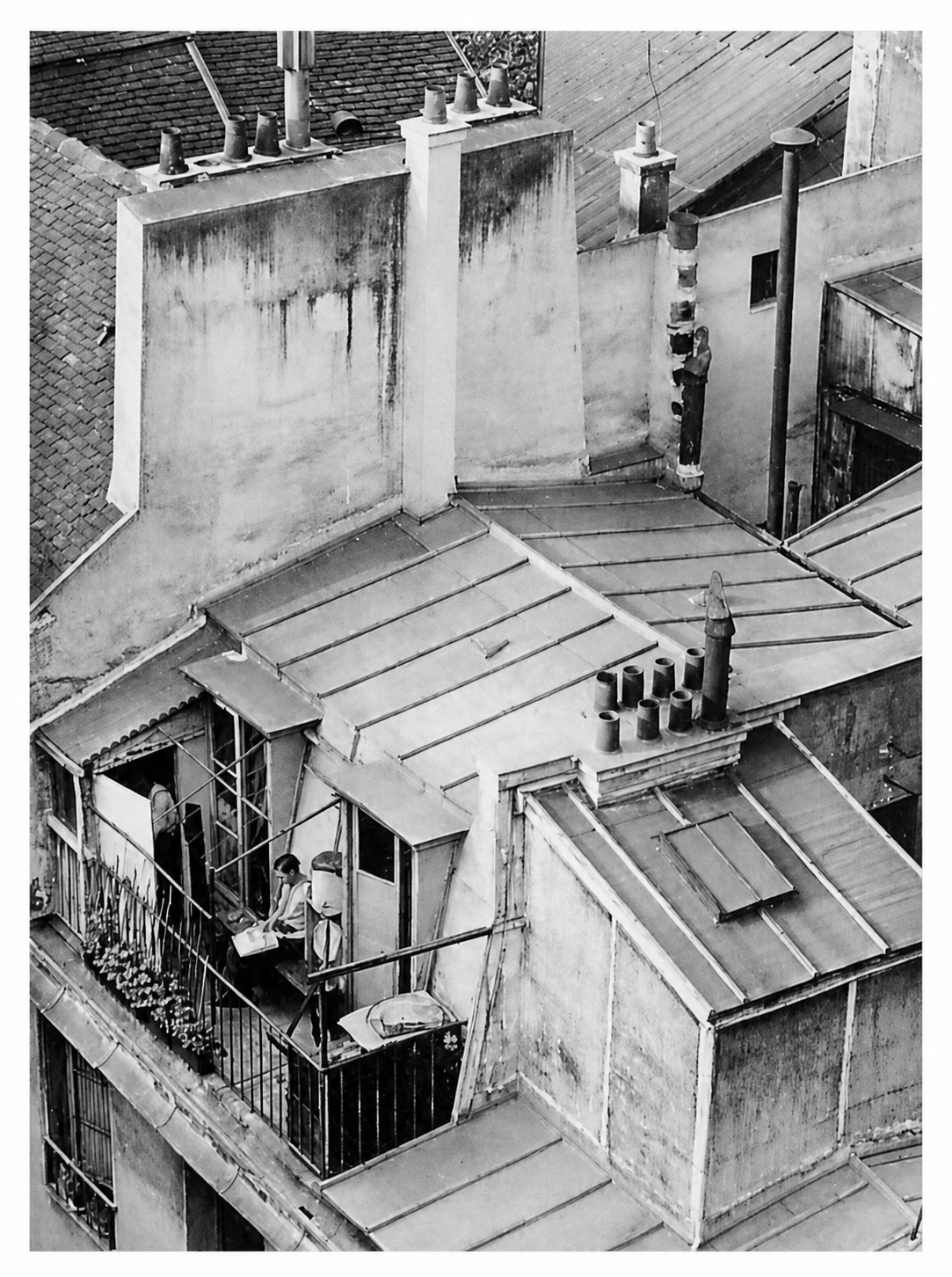
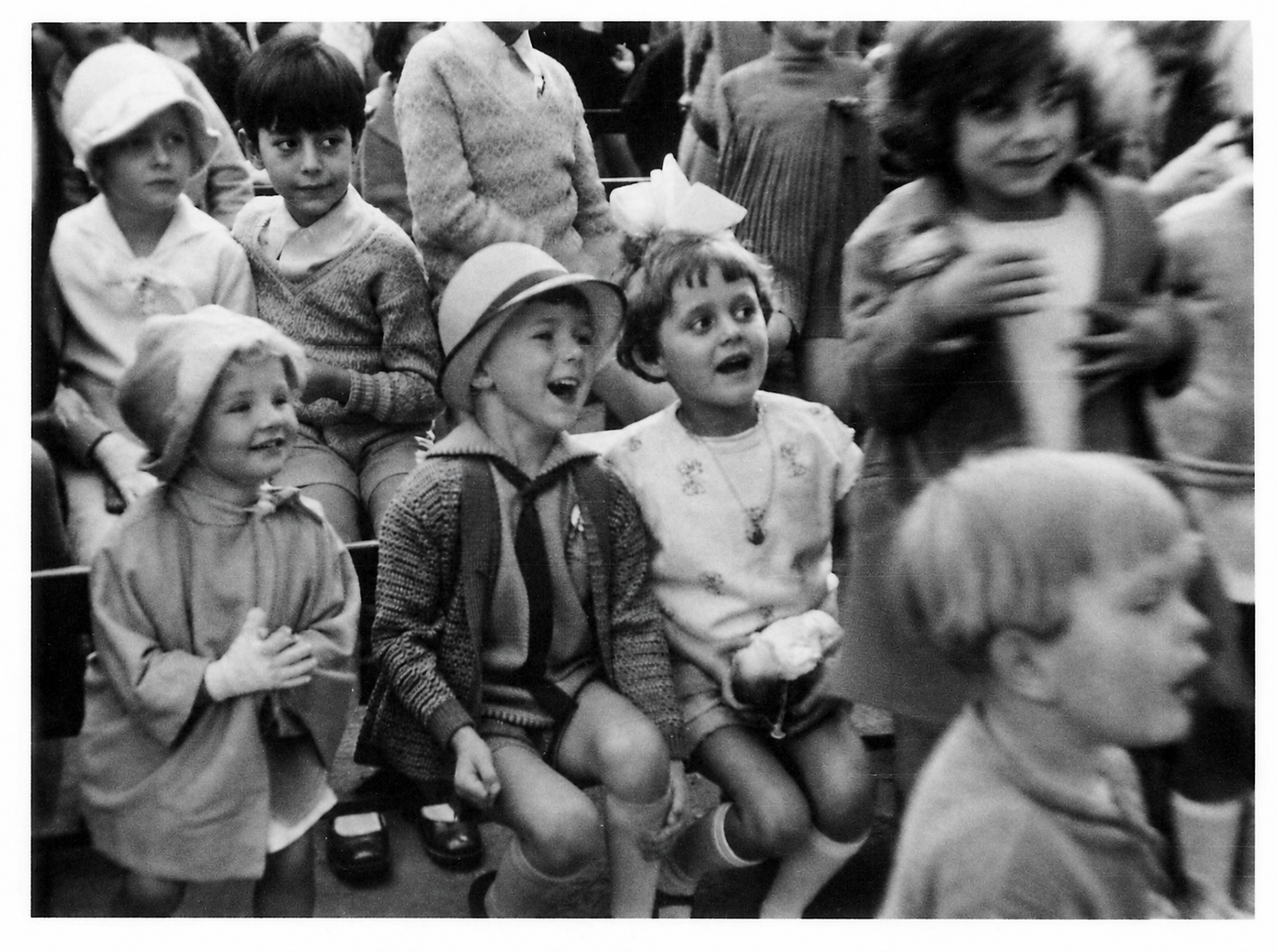
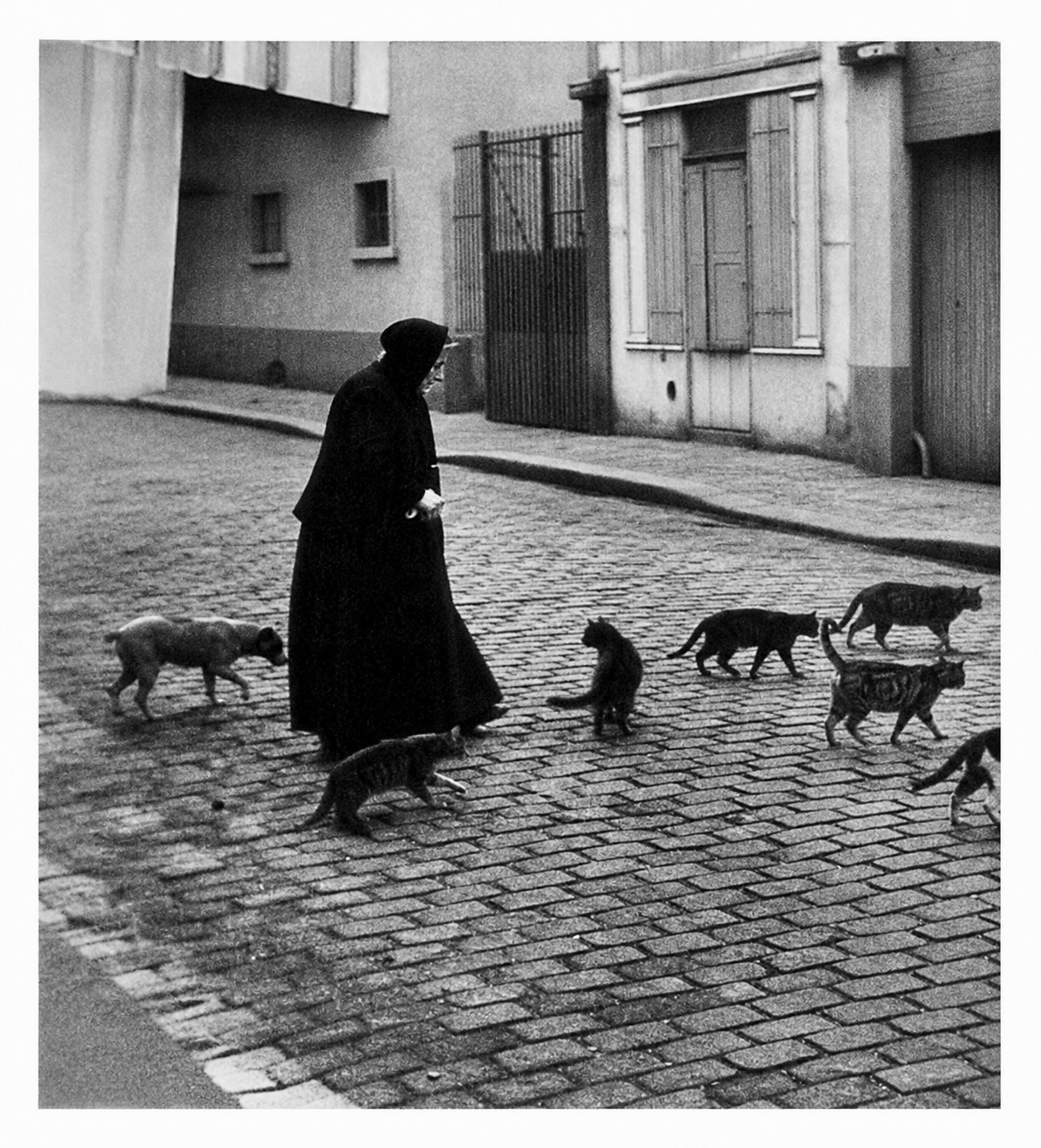
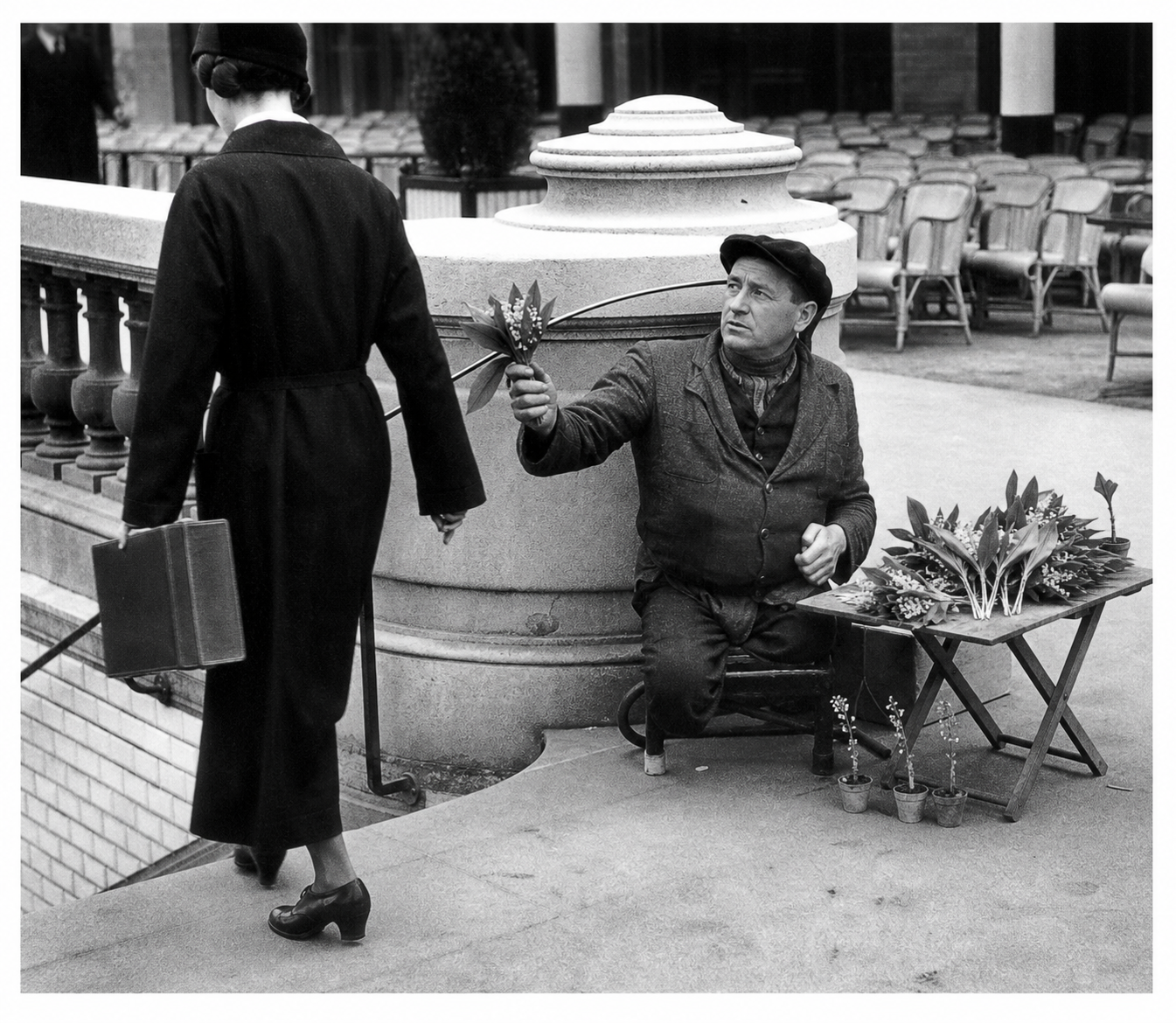
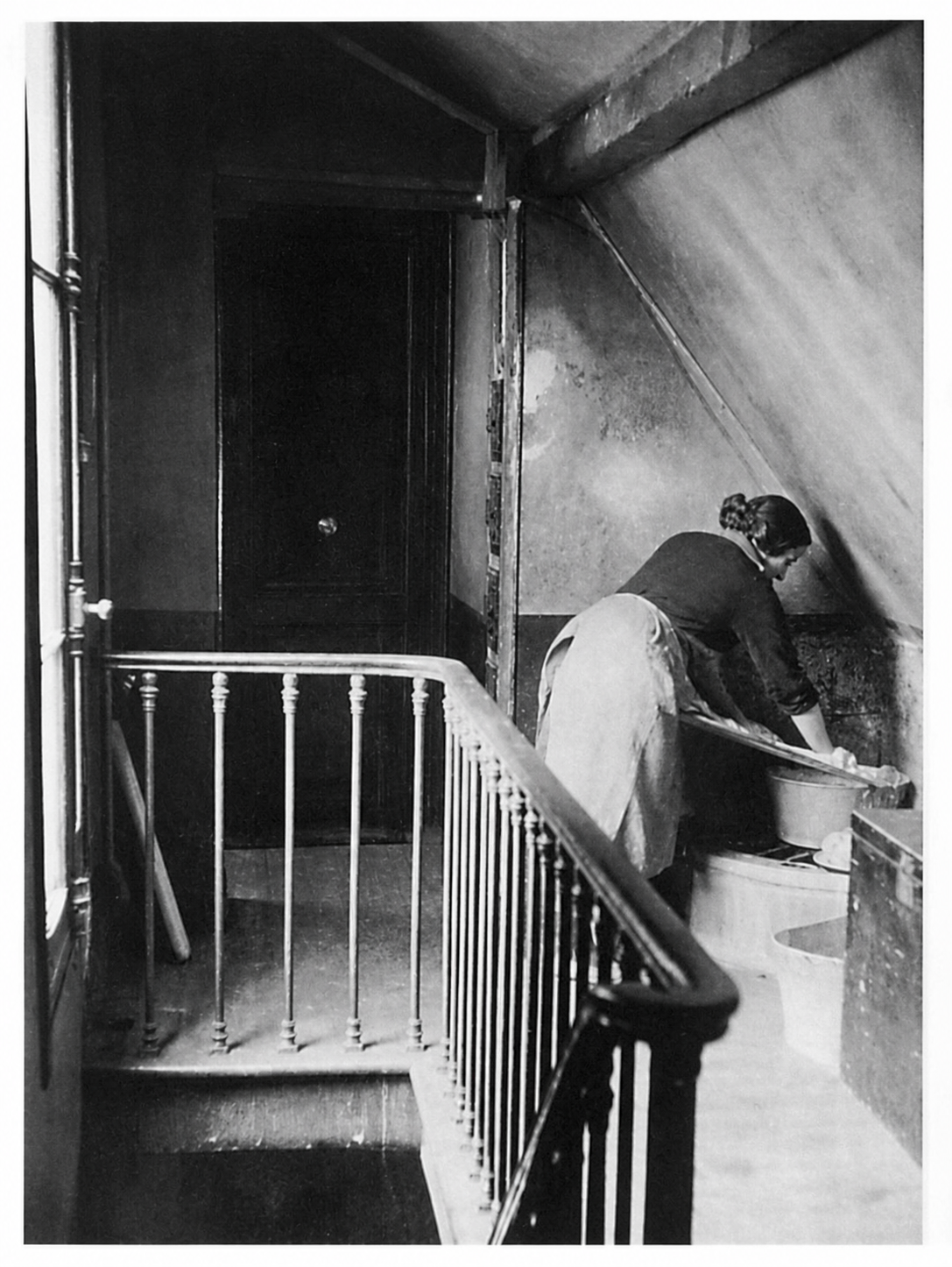
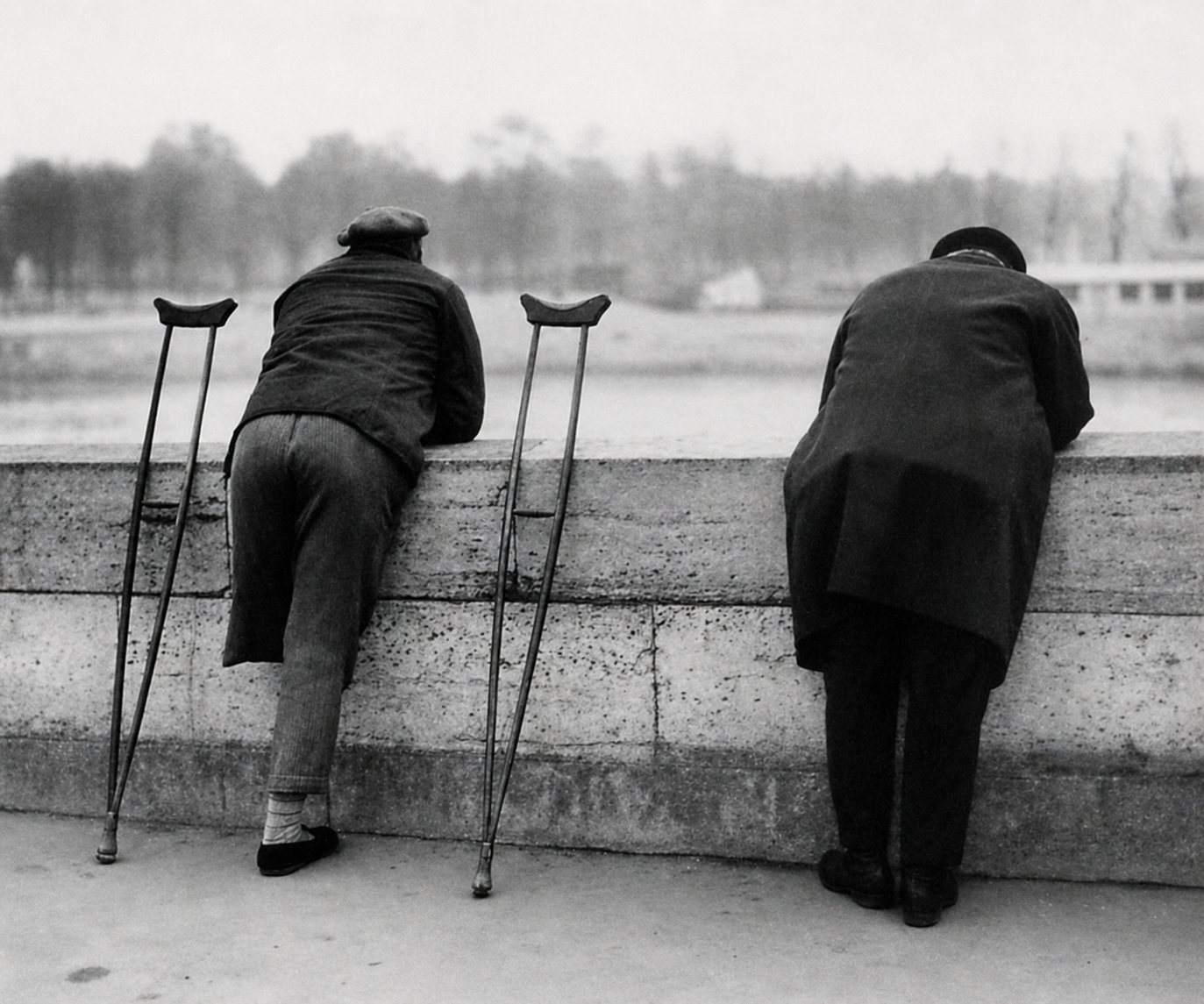
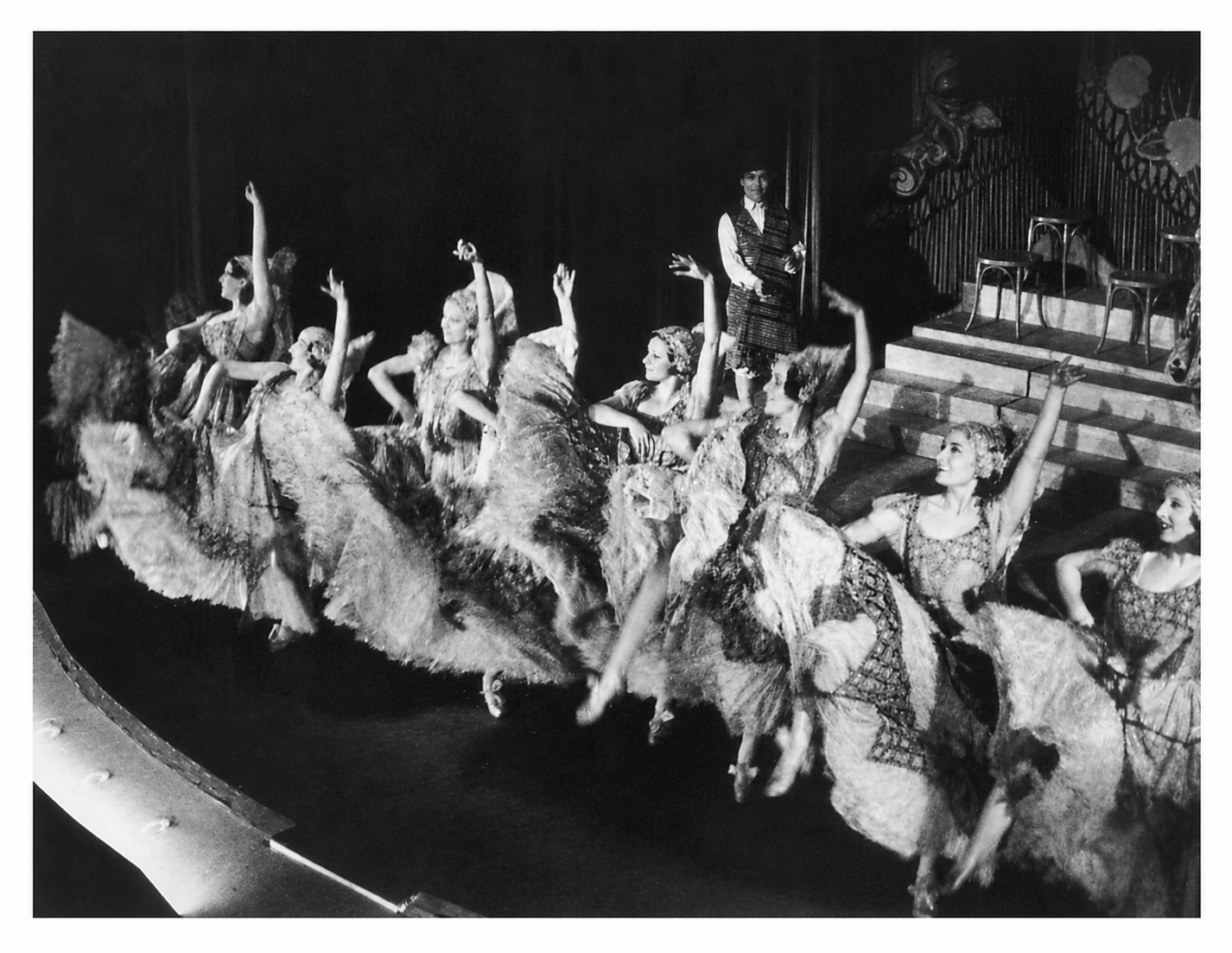
THE IMPACT OF show. The old lady walks her cats across the road. A man on a balcony catches the last glimmer of afternoon light, in his shirtsleeves, with his newspaper. The flower seller, legless, fails to catch the young womans attention as she hurries past. Lovers look out from their small window. The old lady peers at the prints in the print shop along the riverbank. The river flows; leaves fall; dust settles. Fishermen wait in silence in the early morning. Somewhere else the traffic roars. A woman washes her clothes.
It is obvious that these experiences shown in Kertész's pictures are profound examples of life. We know it just from looking at the pictures. The pictures are at once happy and sad. They have in them the full reality of life. It is neither fully pleasant nor wholly unpleasant. Certainly it is not pampered, or conflict-free. It just is. Remembering the death that is to come, knowing that at that moment life was lived, these are records of experiences in which that fact of life is experienced to the most extreme.
How is freedom encouraged or supported by the environment? What is it about these archaic, not refined, rather rough pictures of Paris, with living structure, that supports freedom, allows people to be free?
Simply put, many of the energy-draining conflicts or stress cycles that could happen have been removed. What exists in these places is something in balance, cleaned from extraneous stress, rather as a meadow of grass is free from stress cycles.
In what sense then are these living experiences also centers or caused by centers? Look at the woman doing the laundry in her attic (page 390). It is not a wonderful attic. It is not a dream laundry. Her work is hard, not soft. So why does this picture convey such substance? Because the washing of the clothes is part of the attic, part of the roof, part of the structure of the house. The wholeness of life is experienced. And this occurs because that washboard, the sink, fit awkwardly into an otherwise unused corner. There is no waste, nor money available for waste. Hard, dour as it is, it is complete.
The fishermen at early morning water, the Seine without ripples: How is that related in any way to living centers? Each fisherman, as a center, takes up his position, and these centers of the men and their rods are part of the larger scene, each center helping the others which are there.
Can this be created? Can the intense life, lived in these moments which André Kertész recorded, be designed-in, incorporated, intentionally built into the world? Can architecture go that far?
I think it can. The physical world, its wholeness, enters into these events very specifically in the following way: each of these situations is marked by a structure which leaves itself alone. What happens there can happen because what is there is only the essential of the world. There is no superfluous structure. It is easy. It feels relaxed, life-extreme, because there is no dross, no developer's trademarks, no attempt to sell the buyer, no room for extras which are not real. It is the purity of the Paris scene which allows these forms of life.
This paring away of non-essential centers, the filtering out of extras, leaving only the essential centers there, can be created in a physical world which has only the essentials in it, and deliberately avoids all physical centers which are not absolutely required.
This spirit is hard to attain. Perhaps it has always been hard, for all human beings, at all times in history. It is, perhaps, especially hard in our time. We have a world in which some live in poverty, not even having the bare essentials, while those who have more money generally have far beyond the bare essentials. A world made of essentials is unfamiliar to us. It does not exist in poverty; it does not exist in luxury. It does not exist in the vast acres of middle-class well-designed convenience.
But still, the presence or absence of this necessary atmosphere is embedded -- or not -- in the physical world. What is needed to allow these events is a structure whose wholeness is pure, empty, has nothing in it except the barest. This is not at all a structure which is missing. It
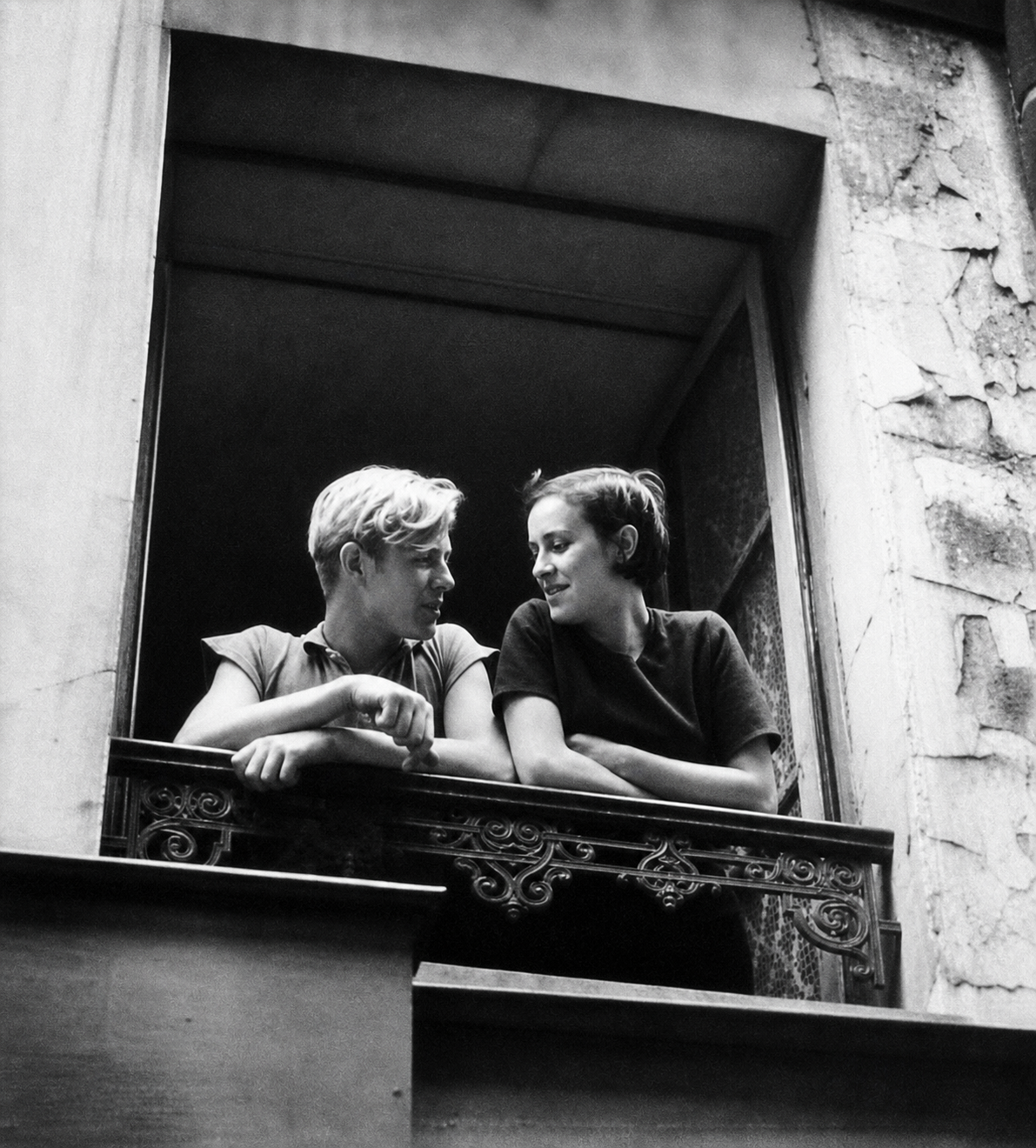
Looking out together
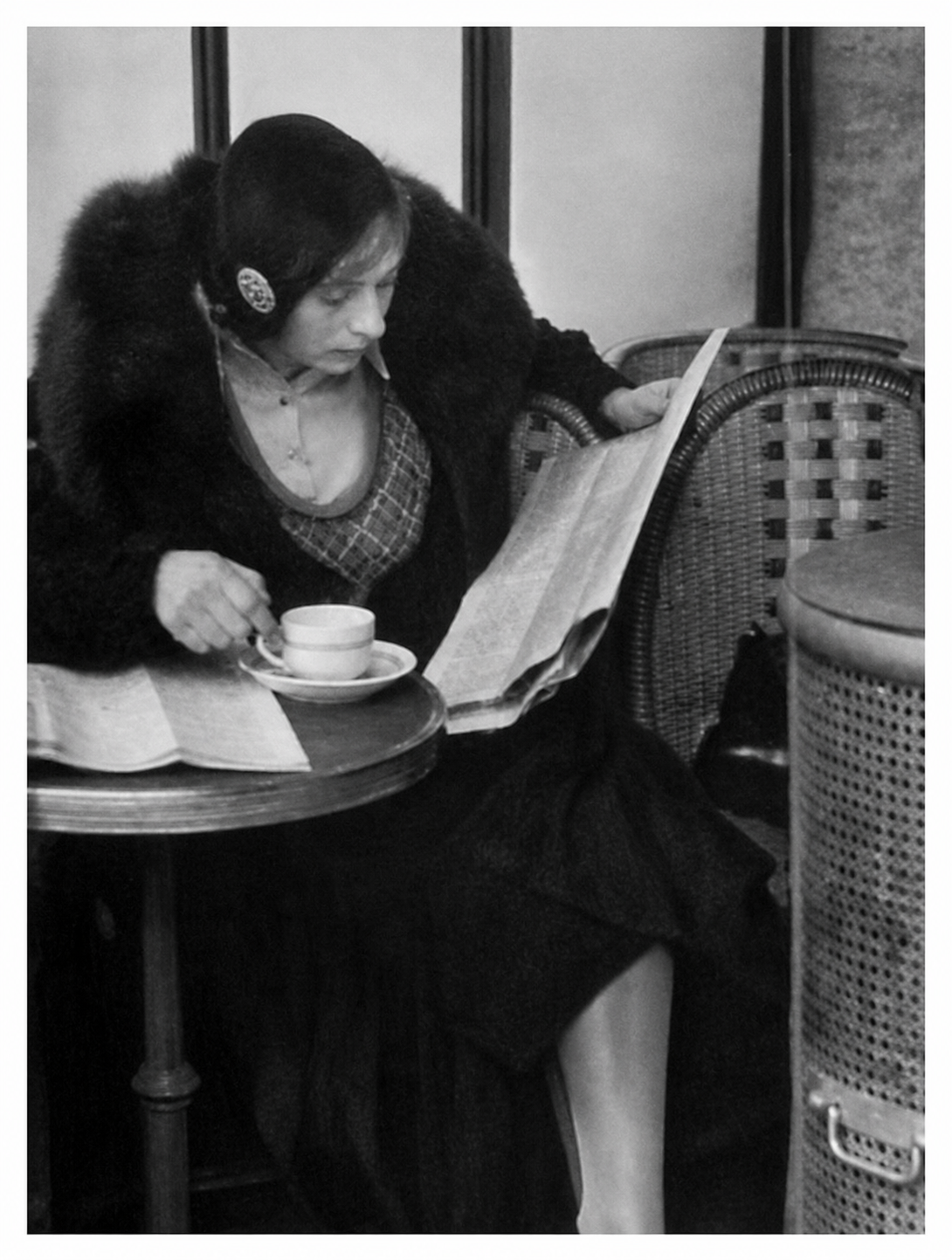
Reading the paper
IMPACT OF LIVING
Dancing. sweet, bitter, ugly, the riot of joy waiting for morning is a very specific structure which must be present. Ifthe edge of a river is furnished with public picnic tables, this may make the picnics easier. But it does not help the bare bones of existence flourish. The freeway along the river's edge does not help this communion between man, woman, and water. The expensive restaurant creating valuable real estate for the business lunch or dinner will not, also, allow these essentials to occur.
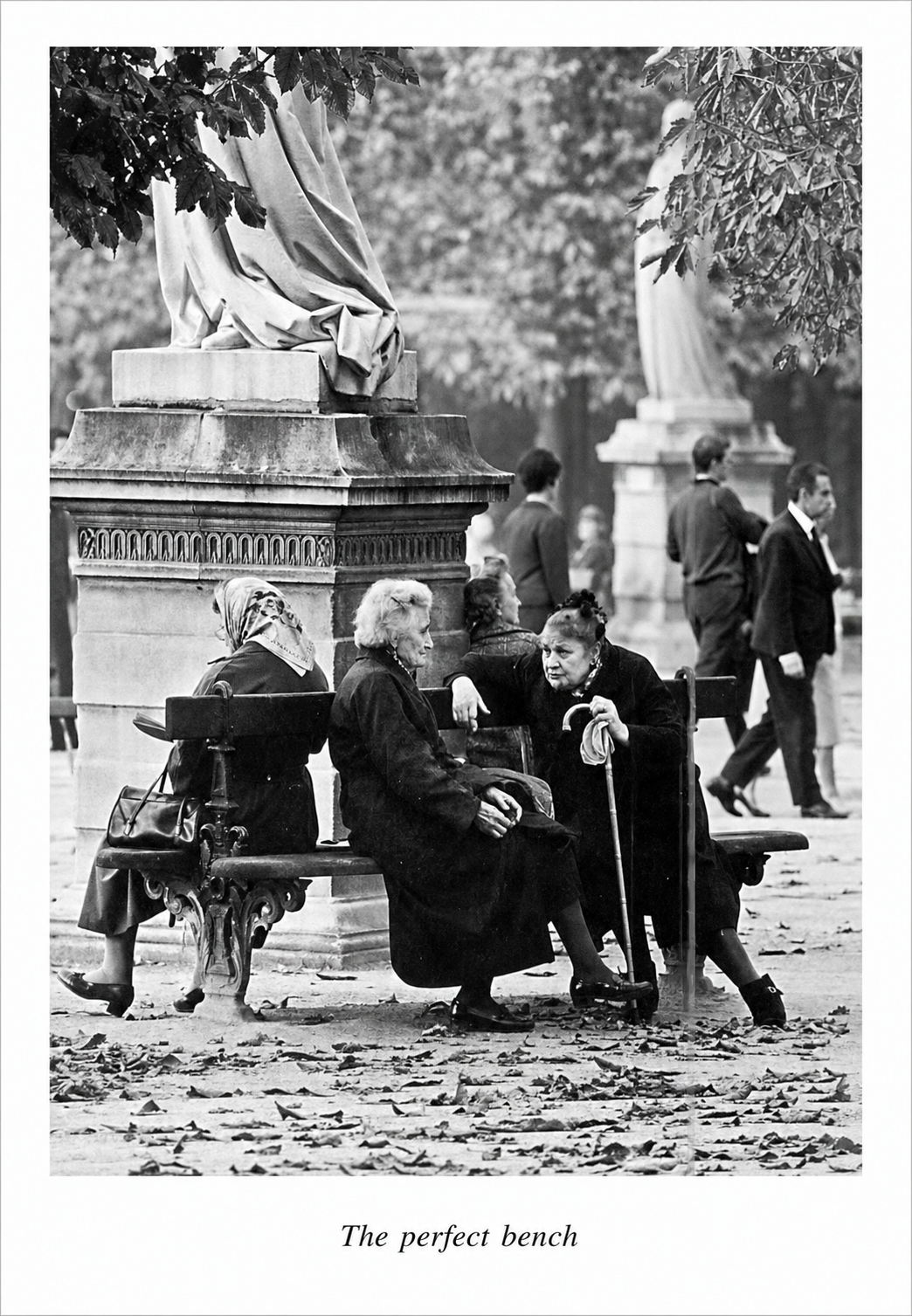
It is easy to see from such negative examples, as from the positive settings of Kertész's pictures, that the geometry of space has an enormous role to play in the presence or absence of deep human life: the centers in the space either support, or hinder, the evolution of free life. Consider Kertész's bench with the old ladies talking. The wholeness of the bench includes the way the sun falls on it, the fact that it is sheltered from the wind, the people sitting on it, children playing behind it. These are all centers. All of them, though in the realm of what we usually call "actions," can still be understood geometrically as part of the hierarchy of centers which are relatively more whole or more intense. But we now understand this wholeness to include centers which grow and fade as life goes on during the dynamic minute-to-minute actions and events which are occurring, there. This new wholeness (which includes centers that are events) may still be sustained or not by other centers within the em. For example, it may be sustained by a gap ally sit.
in the buildings to the south which allows sunlight to fall on the bench. It may be sustained by the slope in the back of the bench which increases the comfort of the seat as people actu-
The wholeness may also be sustained by centers that are pure actions. For instance, if the bench is close to a path where people walk and wheel their children, this movement can sustain
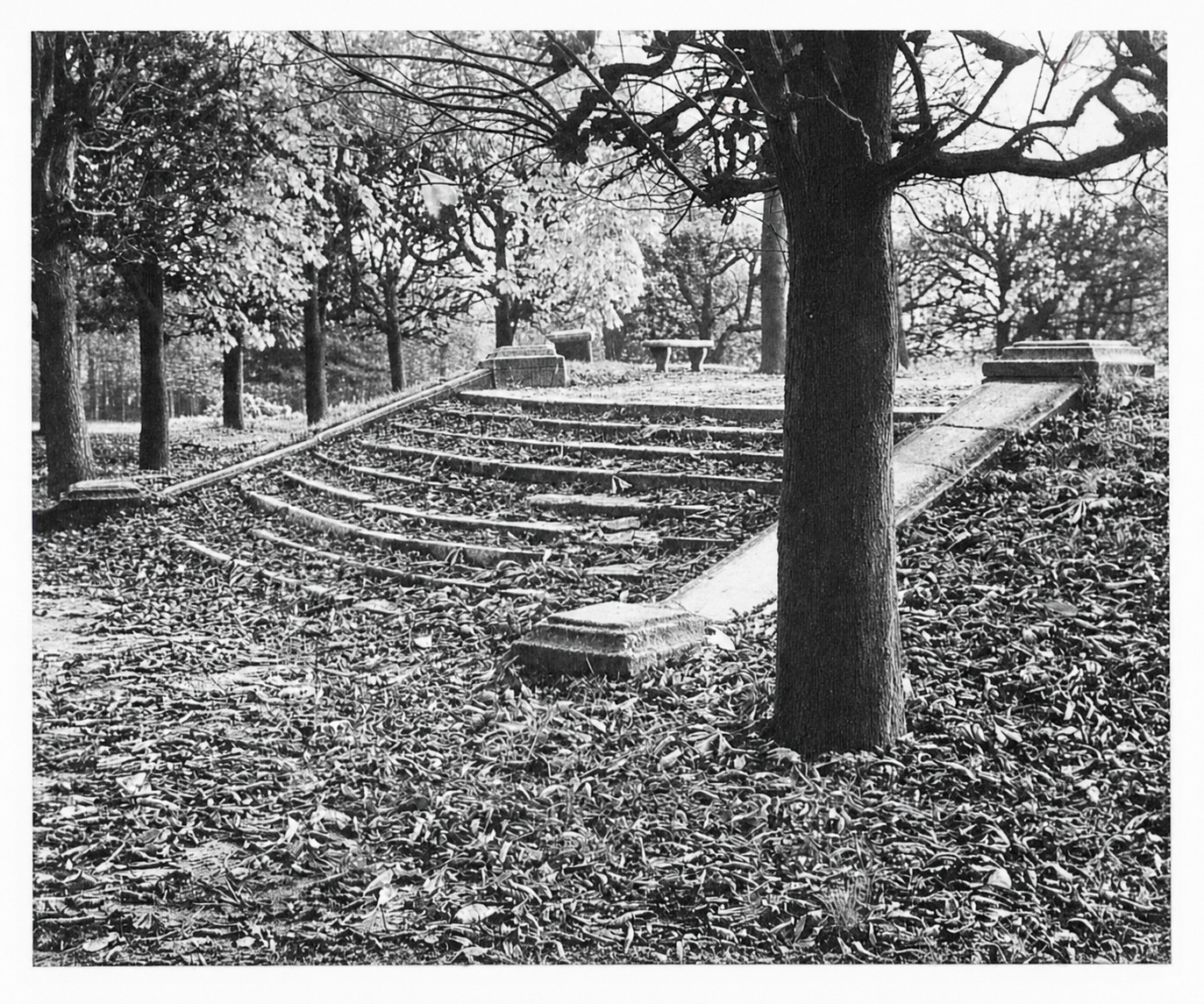
Dead leaves fill the gaps, memories and dust the wholeness of the bench. If the flowers on the trees attract birds, and the singing of the birds then intensifies the beauty of the bench, the birds contribute directly to the wholeness of the bench.
The flowers may contribute indirectly, by contributing to the wholeness of the bird-filled trees. Thus the wholeness is a complex living structure: it may be sustained, or not, by countless aspects of the various systems which surround and fill the space where the wholeness occurs.
Tfwe ask how this environment in Paris works to help people be free in themselves, the answer lies in the living structure. Again and again, a living world contains living centers, and we see them, feel them, experience them, are surrounded by them, bathed in them. Strong centers, boundaries, roughness, alternating repetition -- all create living centers, and they do it in a way that makes things work. But, in addition, there is a factor which is large and overwhelming. It has to do with the strong nurturing sensation that occurs in that environment. Said simply, we feel
SELF overwhelmingly, deeply, comfortable in the structure of that Paris which Kertész photographed.
What is this nurturing sensation? [t can still be felt today, in those places depicted. But where does it come from? Over and above the functional patterns, and the presence of living centers, the answer is given, by the findings of chapters 8 and 9. What we see, in Kertész's photographs, is a profound version of the living structure, so made that it -- very deeply -- connects us with ourselves. That is where its comfort comes from: it supports us in our souls. If ] want to say the same thing more formally, more empirically, I can say the places which are visible in Kertész's pictures are very strong on the mirrorof-the-self test.
In effect, then, these people in the photographs -- no matter what miseries, what struggles, what human problems they experience -- are nevertheless bathed in Self, they are surrounded by it, surrounded and sustained by a world in which every particle, each stone, each sidewalk, every door and window, reminds them of their own self, affirms the existence of their own self. And that is, of course, precisely the same living structure which will fare best on the mirror-of-the-self test. It is just this sort of thing, beautiful and rough, which most reminds us of our true self, the self which is sorrowful and happy, trivial and deep.
There can hardly be a greater form of sustenance. It is not surprising then, that this enrichment, allows people, to find the strength in themselves, so that they may also be free. In this fashion, I believe that the self-like character of the environment has a direct impact on us, it nourishes us, it supports us. And in this way, it provides us with a certain freedom and ability to be free.
One feels that in the Parisian environment of Kertész's time, people are grappling with real problems: a lost limb, no work, too little food. The stressed and hopeless people in the notnurturing motel or in the empty shopping mall of more recents times -- they are not suffering from a real problem, more from a lack of engagement, a loss of connection to the earth, to their fellow creatures, even to themselves.
Life in that Paris is rough. It is hard. But it does not impose the lethal disembodiment of the human being, which the pictures on the previous pages portray, and which those buildings implement.
The photographs by Kertész are great photographs precisely because they remind us of just such a world, where life is real, challenges are endless, yet luxury, even in a puff of a cigarette
on the river embankment, can be treasured just because it is so brief.
That is the environment which is most able to support the inner life, and which will, in the end, do the most to support life as most of us hope to live it. It is an environment which does the most to support true life, equally in the depths of our despair and in the course of the most happy love affair. The dirt assembles, the rocks tumble, and the wild rose blooms in the crack between two bits of concrete.
But these issues are still not simple; they should not be oversimplified.
Let us go over the ground again. Human beings differ in their strength, in their freedom of spirit, in their ability to be free. Nelson Mandela was in prison for twenty-five years, and his spirit did not crack, his inner freedom sustained him throughout it all. One could hardly imagine a less nurturing environment than the bars of his cage, or the quarries of South African stone-breaking gangs to which he was chained. But he remained free, perhaps became more free during his experience.
Another person, at the opposite end of the scale, may be unfree, obsessed by guilt, or inner conflict, or lack of will, and may thus be miserable, even in the most nurturing environment.
So, you may say, what then is the connection? In what sense can one say that the environment helps us to become free, or hinders us from becoming free?
What we may accept, I think, is that the environment has the capacity to nurture. The origin of this capacity -- and the impact of the environment, of living structure on ourselves -- are more complex, and deeper, than the mechanical analysis of stress can quite encompass.
The connection hinges simply on the fact that as one center is lifted, made more alive, by the sustaining quality of other living centers, so we, too, being living centers, are sustained, uplifted, made more alive, by the presence of other living centers.
It, in the end, is as simple -- and as profound -- as that.
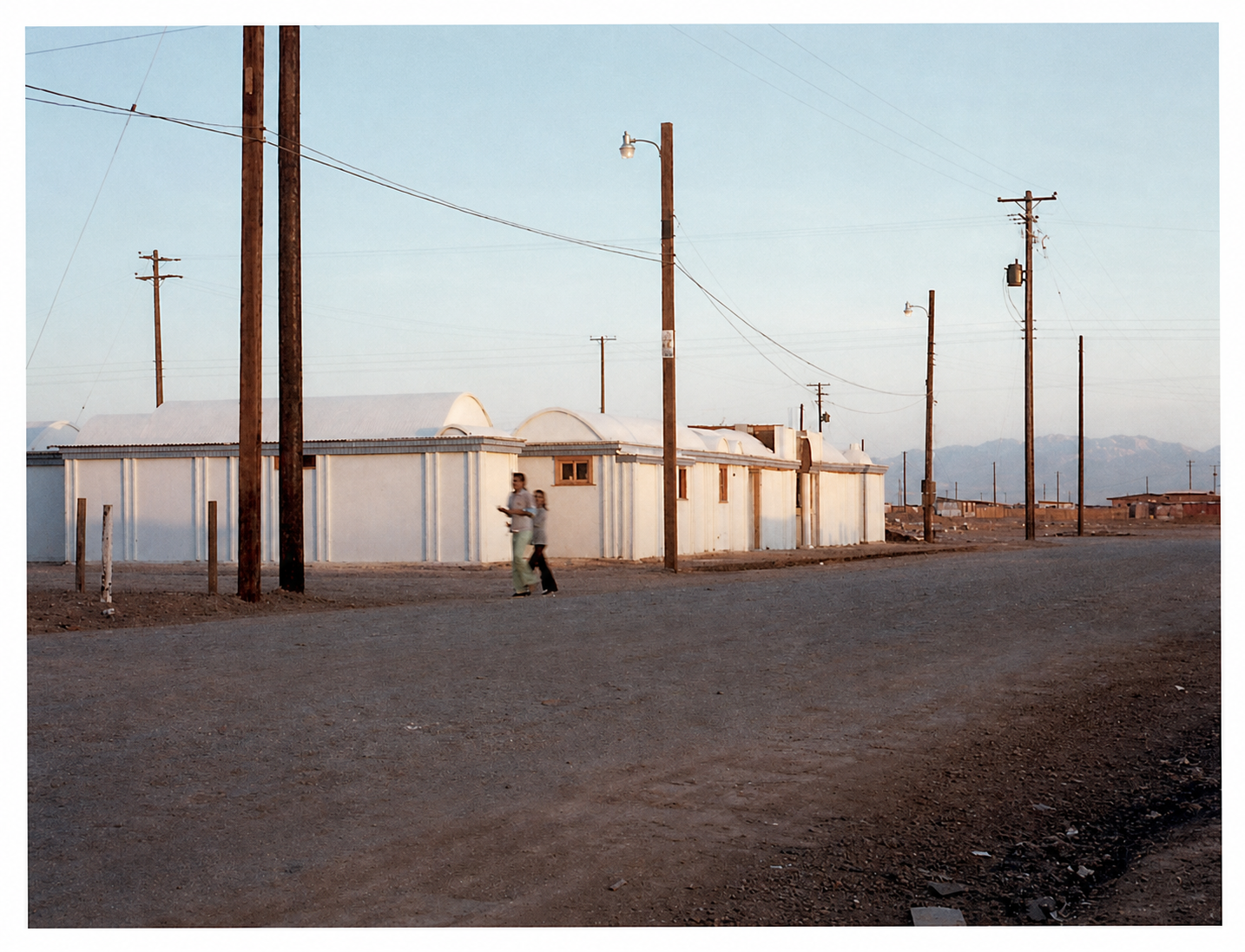
10 / Experiments in Our Time
Can we aspire to this? To Kertész's pictures? Can we aspire to that atmosphere now? Is it even possible for us to create such an atmosphere, and to create this loving, even when somber, relation of ourselves to our environment?
This is a vital question. Analysis of the freedom that is evident in the Kertész pictures would be a little empty if there was no hope that we ourselves might reproduce it, create another version of it in our time.
Until a few years ago, it would not have occurred to me that this might be possible, or that we might aspire to.it. But almost as an-accident, I began to find out that things that I was myself building, when I was trying to create the kind of living structure described in this book, had such an effect on people.
If I had not had that experience it would not even have occurred to me to write this chapter. The first time that it happened was in Mexicali, where I built low-cost housing for some Mexican families. The techniques I used to build the project were closely related to the theory I have put before you in this book, and to the processes described in Books 2 and 3. The family members themselves played a big part in planning and building these houses. And then, after the families moved into the houses; one of the family members (José Tapia) said to me:
Well, I have not specifically noticed any effect of the project on my work, or my attitude toward society -- but I have noticed that I now do quite different things at home from what I used to do in our old house. In our old house, when I came home from work, we used to go the mov-
ies, go to the bar, things like that, in our spare time, more or less just to kill time. Now, because I like it here, and feel so good here in this house, because it suits me so well, I have suddenly realized that there are all sorts of other things to do. I can make something. I can talk to my wife about what we can do to improve the house, or do something with my brother in the yard outside... so it has changed me personally; it has changed my personal life, I feel more potent in myself, not in relation to society, but in relation to the small things I do every day, when I am in the home, and when I come home from work."
I knew, in Mexicali, that I was trying to capture, in some way, the essence of traditional architecture -- what made buildings live. But until that day, talking with José, I had not realized that once one achieved the life of the architecture, people would then feel liberated, in some literal fashion, and that their lives would change because of it.
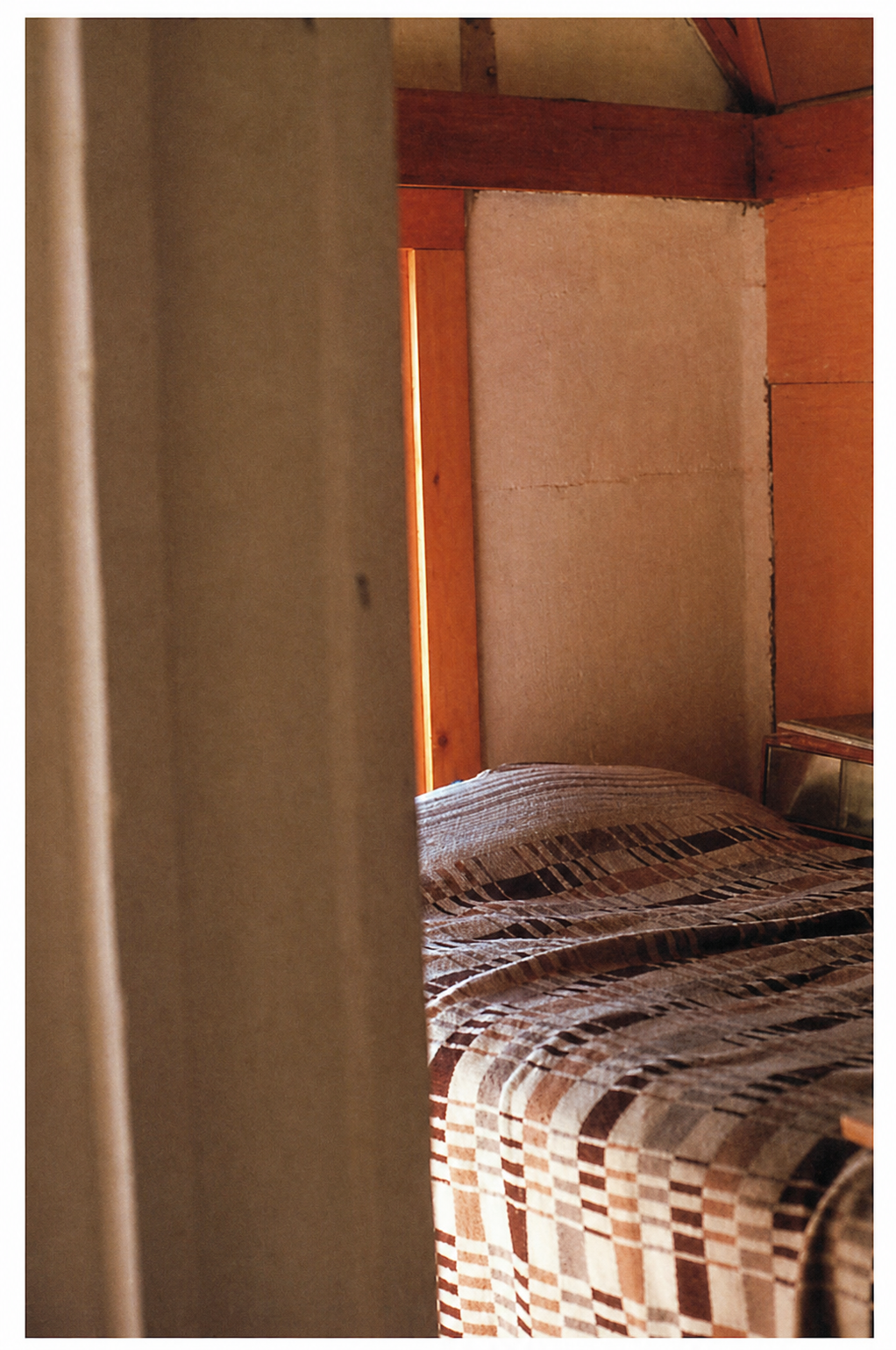
Theard a similar res' ilding the ponse after build st um others, low cost housing, Mexicali, Mexico, 1976
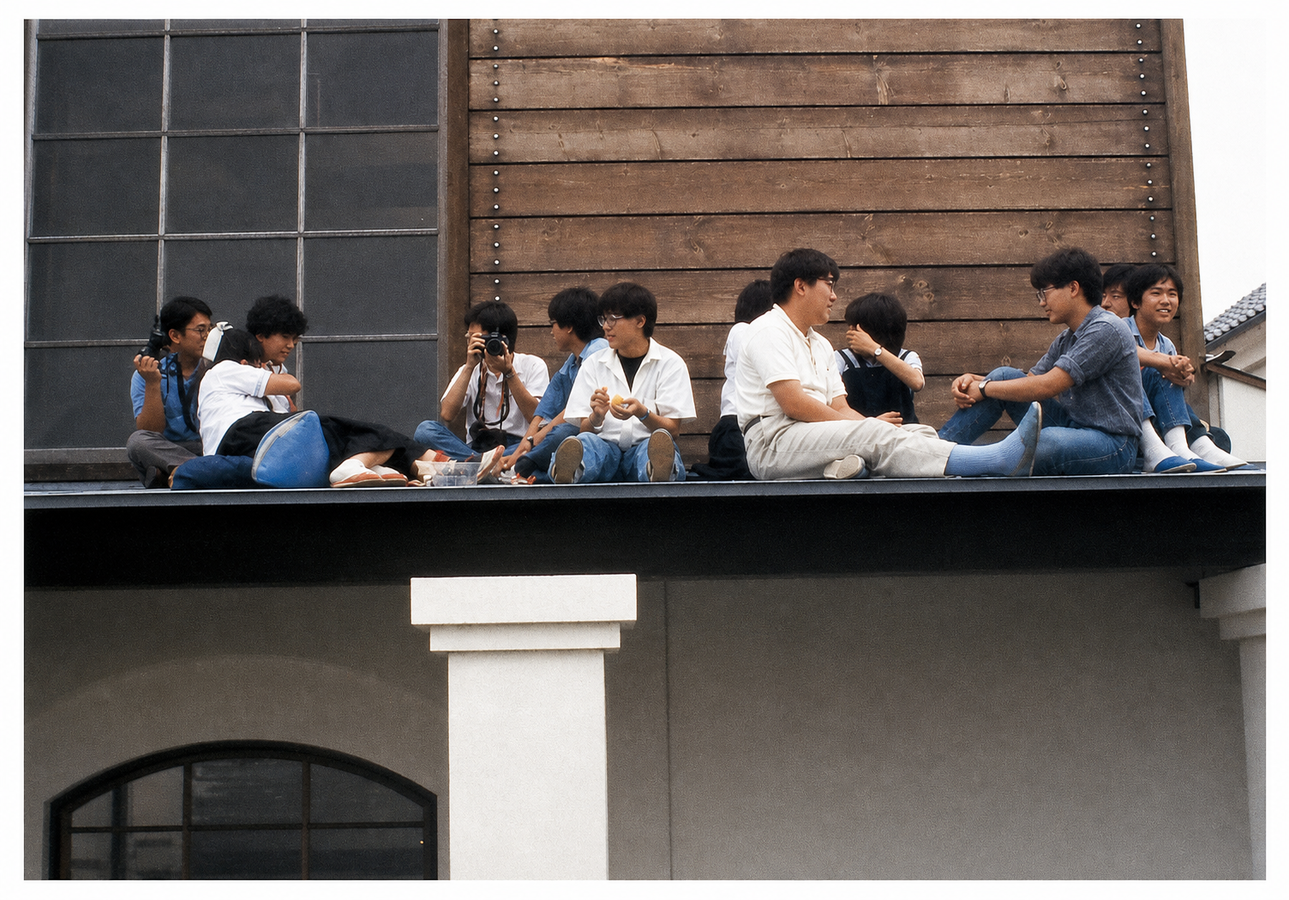
Eishin campus, a high-school and college campus I built in Saitama province, west of Tokyo, Japan, in 1985. My clients thanked me, at the end, not for the beauty of the buildings, which was sometimes also mentioned, but because I "had helped them find the new way of life that they had been hoping for."
I heard it again in Ann Medlock's poem, where she thanked me for the house I built for her and her husband on Whidbey Island in Seattle, Washington:
Feasting on tabouli and cold birds, we talk of poetry and paintings, of terraces in Tuscany and home-made wine, of our work, our passions, our quests.
We are friends, gathered here by the grace that emanates from this holy place.
It is lacking in humility for me to recount these stories. I apologize for that. But it is necessary for me to describe these cases. It was only
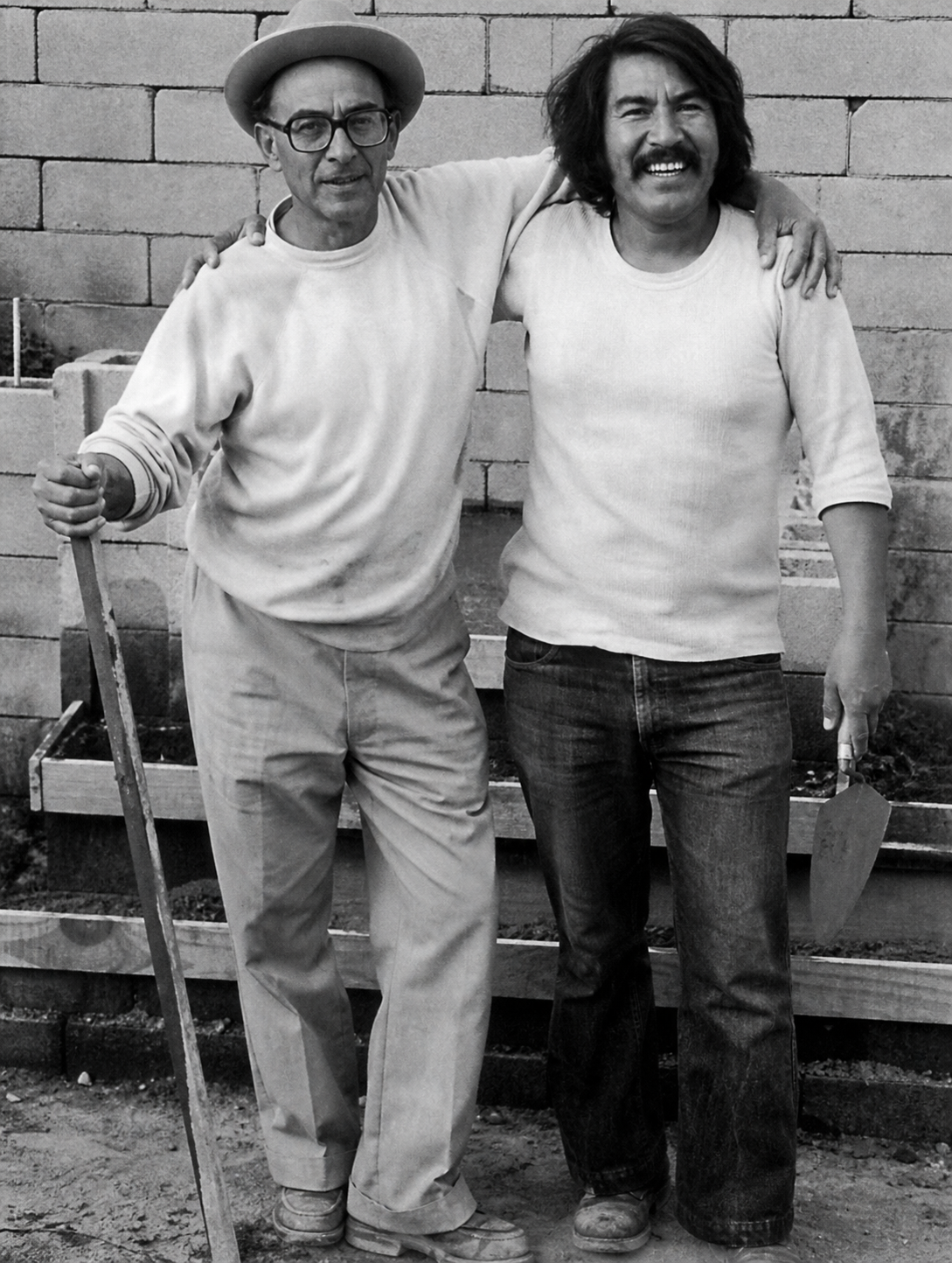
Two men enjoying construction of this neighborhood in Mexicali, 1976
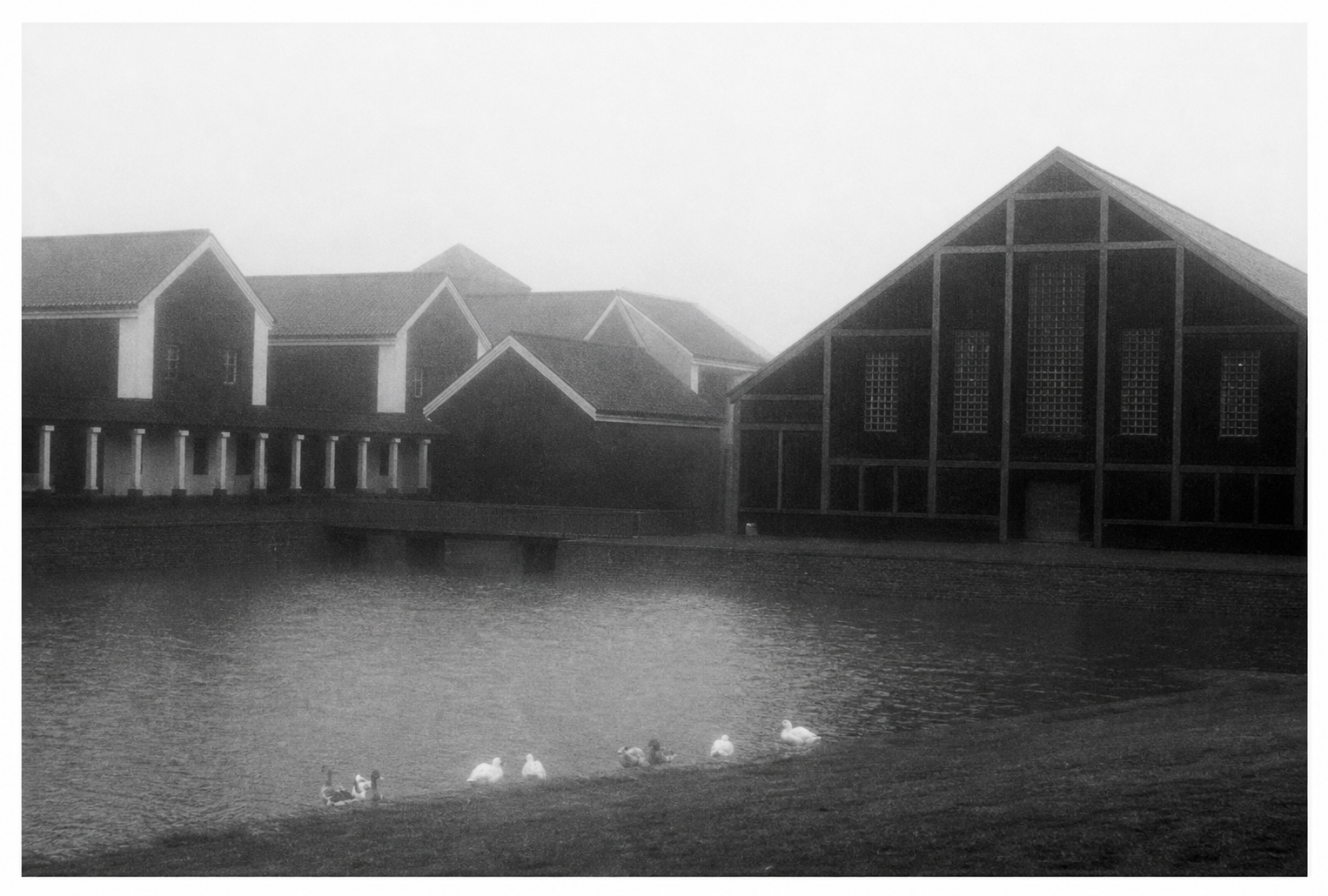
View of the Eishin campus, Saitama prefecture, near Tokyo. Christopher Alexander with Hajo Neis and others, 1985 these effects on people that I began to understand that the new architecture I was groping toward had an even more profound root than I had imagined.
I first built these kinds of buildings, originally, because I believed, instinctively, that it was the right thing to do. I gave them living structure as best I could. It was extremely hard to do. But as I began to succeed in it, and these qualities were actually reached, I found, then, that people were affected in their inner freedom -- as if something that had tied them up had been loosened, and as if, in the presence of these buildings, they were more honestly able to be themselves, to be what they wanted to be.
If I had not had these experiences and then seen, many times, that people had these feelings, and described them, it would not have occurred to me to draw the connection -- the causal connection -- that I have tried to explain in this chapter. Indeed, I think, it would not even have occurred to me that Kertész's Paris influenced people, supported them, actually gave them life and that this life, which was attained there, is attainable for us, concrete, and can be aspired to, and created."
That is, perhaps, where my conviction about the subject, and my effort to write these books, consolidated itself. People's experiences in the places I have built gradually made me understand that it is possible far ws to build a world in which people are emotionally free, fully themselves, alive, extant in their own reality.
Occasion ally, in these places, people seem to feel their own freedom more sharply. The character of the world, its geometry, is so closely tied to them -- to their pains, their breath, their thoughts -- that it makes them free in themselves, allows them to act appropriately. It gives them the environment which supports them in their freedom.
We may conclude that this kind of geometry, this kind of world -- wherever it occurs -- creates a slightly greater chance that each person is enabled, made more free in thought and action, and is given encouragement and liberty to live as that person really wants to live -- by the existence of the living structure all around.
THE IMPACT OF
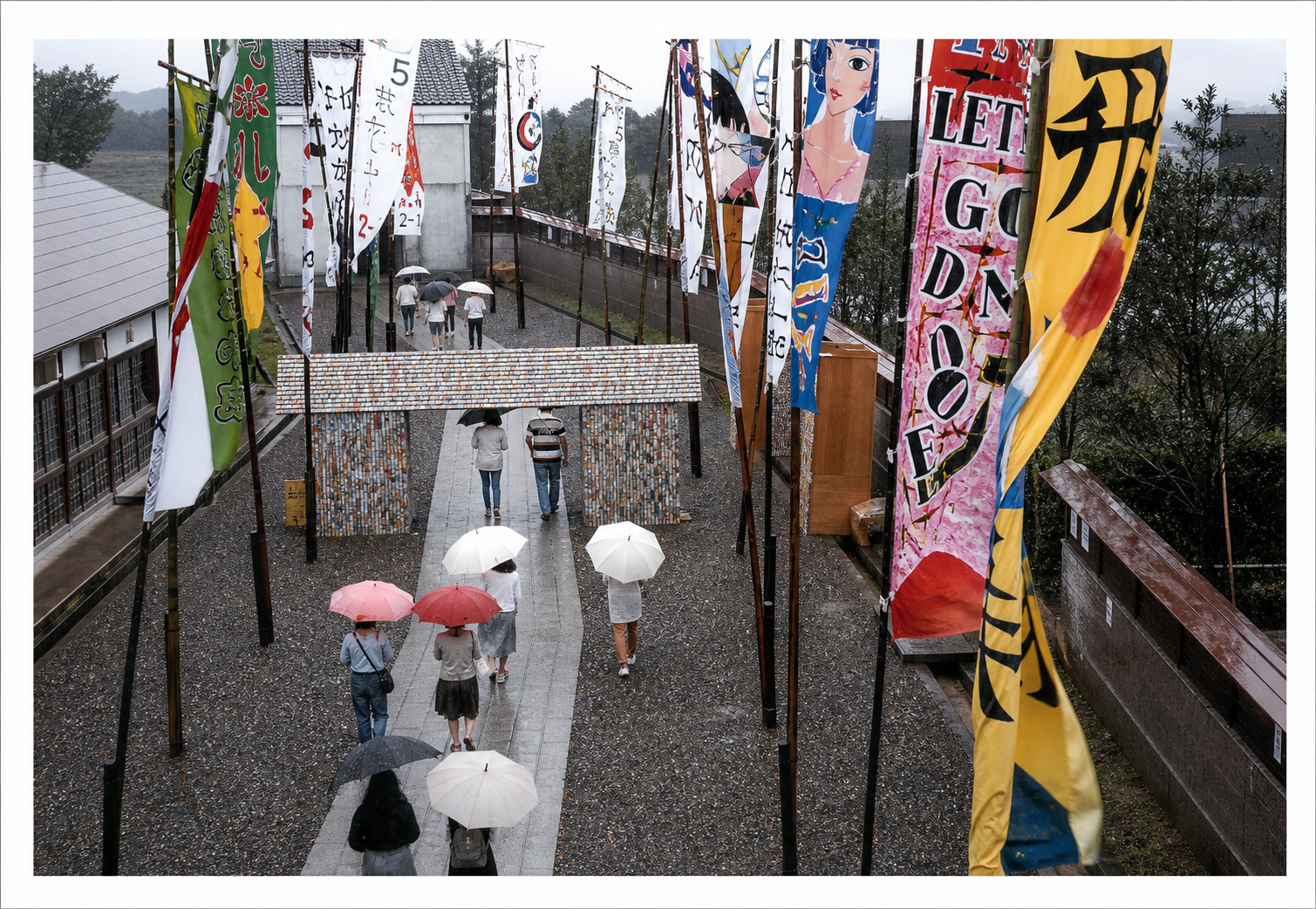
11 / "for the First Time I Was Free"
I should like to add two other bits of evidence which suggest that the liberation of the human spirit may be connected with the contemporary creation of living structure. Both come from the Eishin campus in Tokyo, which my colleagues and I built for the Eishin school in 1985.
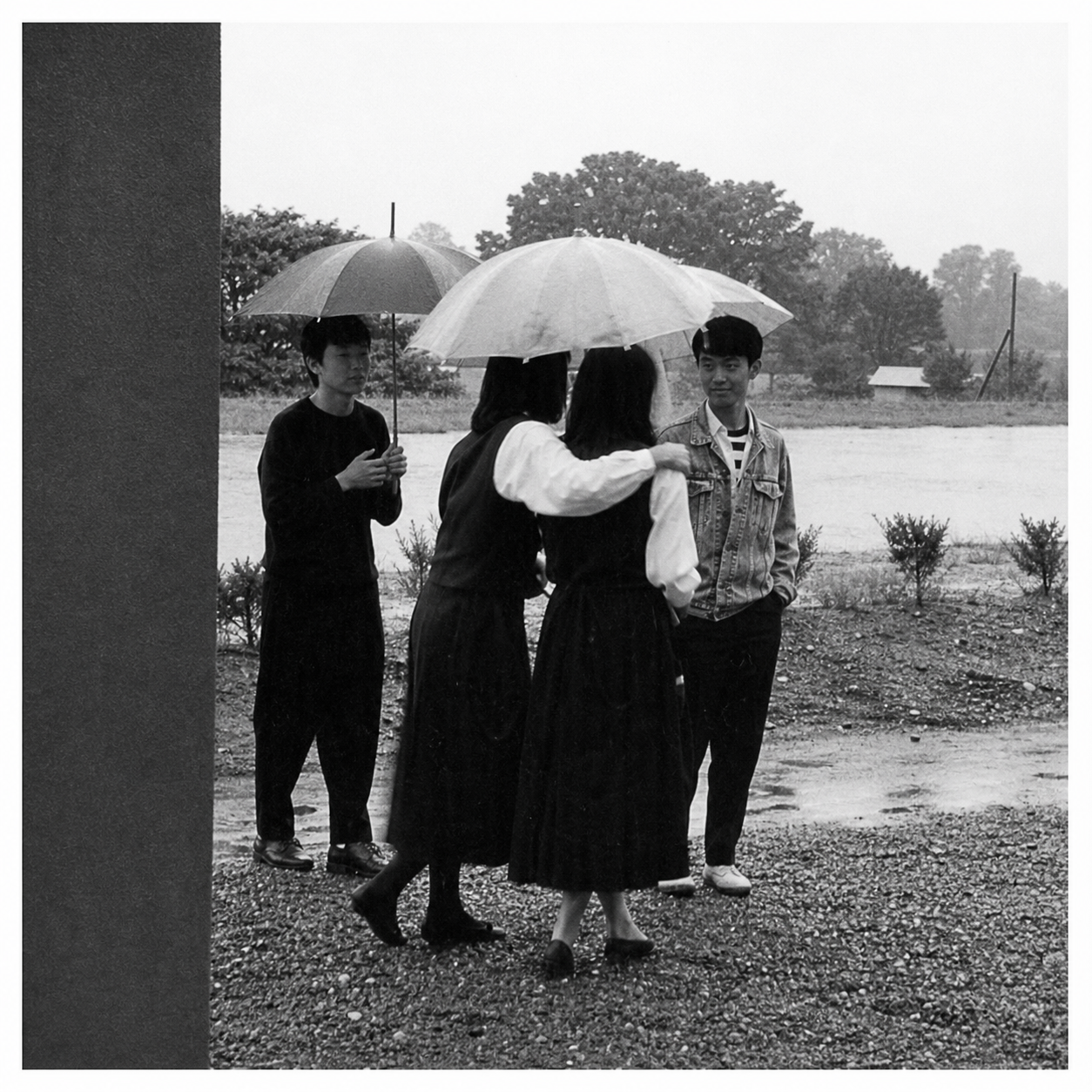
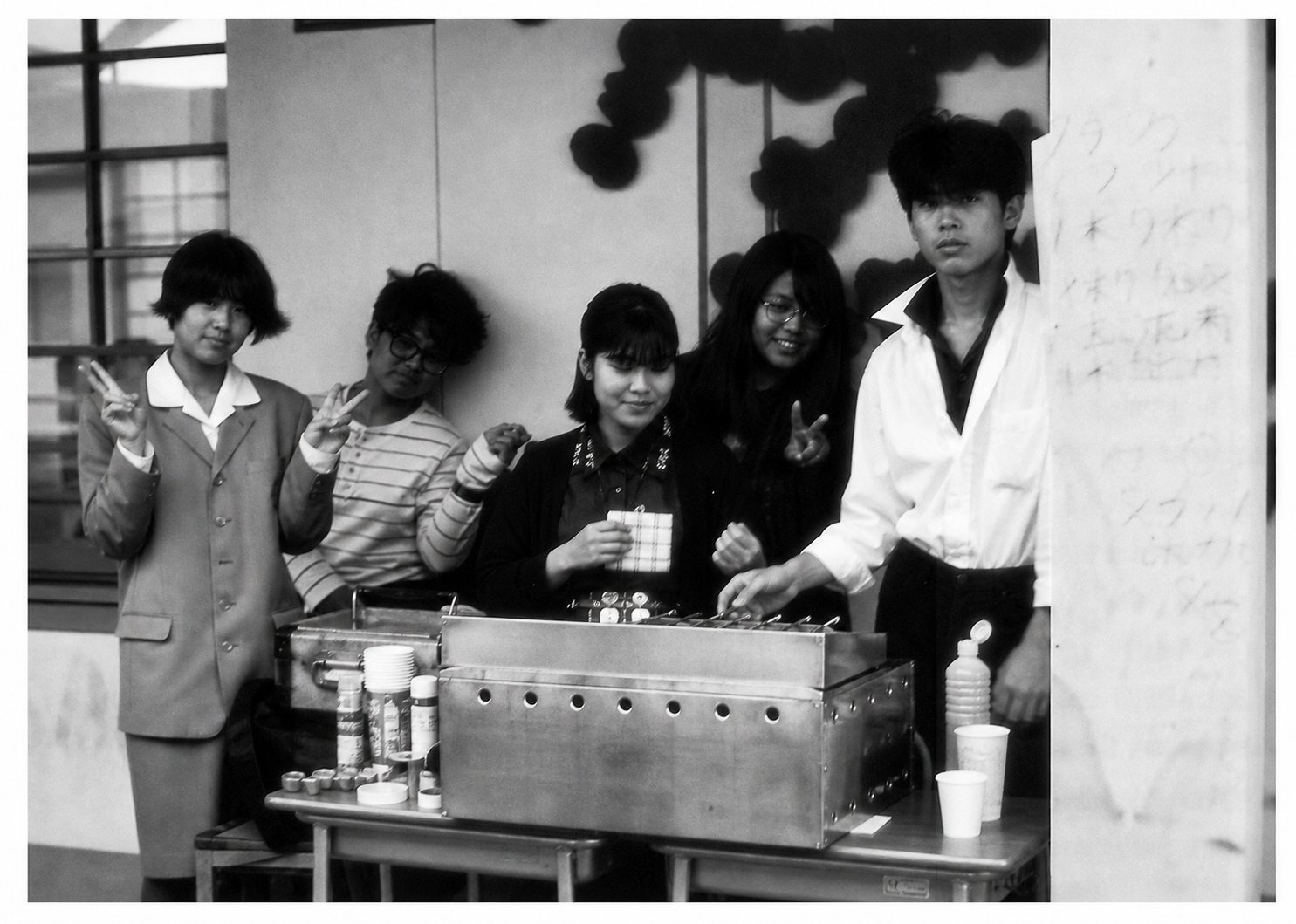
On December 7, 1991, the fiftieth anniversary of the attack on Pearl Harbor, as a memorial and as a healing tribute, NHK (the Japanese Nation al Television company) had a one-hour program showing five examples of Japanese- American cooperation since 1945.'* One of the five was about the Eishin campus. They showed pictures, had interviews with Hisae Hosoi, the managing director of the school, with teachers, and with students who discussed the life of the campus as it had become.
One of the high points of the program remains etched in my memory. The director of the program was interviewing a young man, a student at the school. He was an art student, eighteen or nineteen years old, dressed in black from head to toe, with something of a punk look about him. He had left his class to give this interview, and he and the film's director were talking behind one of the buildings, so that he would not be called back to class.
The interviewer asked him what the campus meant to him. He thought for a long moment, then answered quietly: "I grew up in Tokyo. All my life I did not know what to do, or who I was. All those years of growing up, I felt I was in prison.... I never could get out of that prison...."
He paused. Then staring straight into the camera, he said, "When I came to Higashino, to this campus..." He paused again. Then, looking softly, even more intently, into the camera's eye, he said,
"For the first time in my life, I felt that I was free."
After saying that, he was silent.
12 / the Jumping-in-the-water Film
Ten million viewers watched this young man make that statement in that quiet way. I have always felt shocked by his statement, and yet in
some kind of wonderment, thinking about both what he said and how he said it. The intensity of his expression stays with me. So do the words themselves, what he said.
There was another event, also on that campus.
When we began the Eishin project, I had asked teachers in the old school (in Musashinoshi) what they thought about the life of the new school, what would make them happy, what would make them be themselves. At first, many did not want to speak about it. They assumed that a high school had to be an asphalt jungle, a big block in the middle of an asphalt playground. What point is there in discussing it?
But I persisted. I told them that I understood the frustration, but that our purpose was to do something which really went to the heart of their dream. One by one, to each of them, I asked, "Please close your eyes, imagine a most wonderful place where you could dream of being a teacher. Imagine that you are ina place which is perfect, the most wonderful school that you can
THE IMPACT OF LIVING imagine. You are walking about there.... Now, keep your eyes closed, imagine yourself walking about there. What, then, do you see. What is it like, where you are walking?"
I was surprised that many of the teachers, in answer to this question, said to me something along these lines, "It is a place like this... I am walking along by a stream, quietly thinking, preparing my classes, thinking about my next lesson. It is quiet. I can walk quietly along in such a place."
Another said that she was walking by a pond. Another spoke of a river and a lake. Again and again, water appeared in their descriptions. So, indeed, when it came time to plan the campus, we did include patterns describing this water -- a lake, in particular. And then, when we actually made the site plan, we made the low swampy area in the middle of the site, into a lake.
In 1989, several years later, the students were living and working there. On the occasion of an annual festival, some of these students made a film, a low-budget surrealistic film about the school. It was eight minutes long.
The film began showing many students running about the streets of Tokyo, parched, like
dogs, their tongues are hanging out, they run up and down the streets, always parched, panting, their tongues hanging out, like hot and tired dogs. After a minute or two showing this kind of thing, the film showed the students coming to the campus. They arrive at the main gate, and gaze in, as if into a paradise. They run in, down the entrance street, one by one, all running in. As they approach the lake, they see it ahead of them, but they do not hesitate. They run toward the lake, and one after the other, they jump in, clothes and all.
Joyfully they swim about, oblivious to their clothes.
The film ends.
I have often thought about that film. It is true, that when one asks the students, or the staff, what they like most about the school, it is the lake. So it started with the initial feelings, which they expressed at the time of our making the pattern language: the desire to walk by a stream, quietly composing their thoughts. Then came the construction of the lake. Then came the feeling about the lake as the most important thing. Then came the surrealist film, made by students, trying to express their feeling for the place, jumping, fully clothed, into the water.
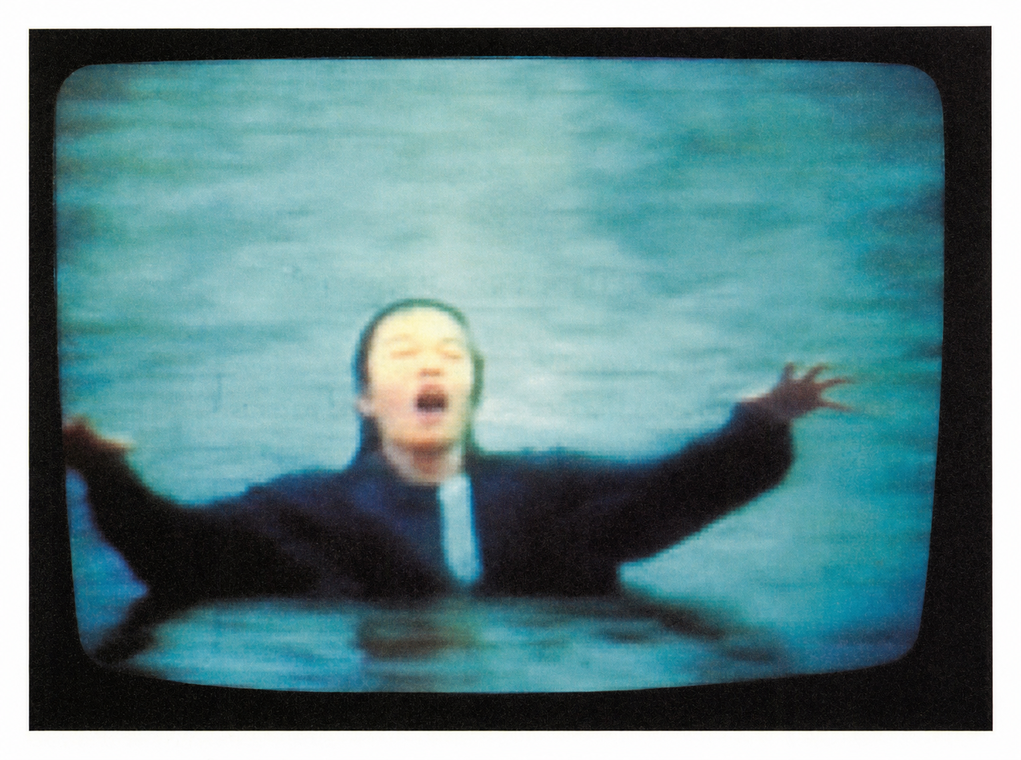
T experienced all this in the students' film, as a kind of hymn to freedom. The real feeling in a person is at last released. It is expressed, the dream is allowed to become real; the dream is fully realized. The dream, their freedom, the capacity to experience that fresh water, the freedom of the soul, are all made actual.
Interestingly, in 1989, the same year that the students made this film, some of them also made, spontaneously, a poster, expressing their feeling about the school. I came across it in a classroom where I had not been before. Somehow, wherever they went, the school made them experience their own freedom.
13 / Ordinary Reality
Hosoi told me once that one of the remarkable things about the school, in his eyes, was the fact that boys and girls could go to secret places, be alone, be untroubled, unwatched. "They feel at home there, these students," he told me.
He was criticized by other school administrators for making this observation, but he defended it strongly, saying that the experience of real freedom was something infinitely more precious, and more important, in the education al process than adherence to the watchful eye of teachers and parents.
This freedom that the Japanese students felt in the school, and feel to this day -- the freedom that José Tapia felt in his house, the freedom that Ann Medlock felt in her house -- comes, in each case, from the physical layout. It comes, in part, from the actual freedom which is realized because of the real unfolding process that made the plan in relation to the land. The fact that what
THE IMPACT OF
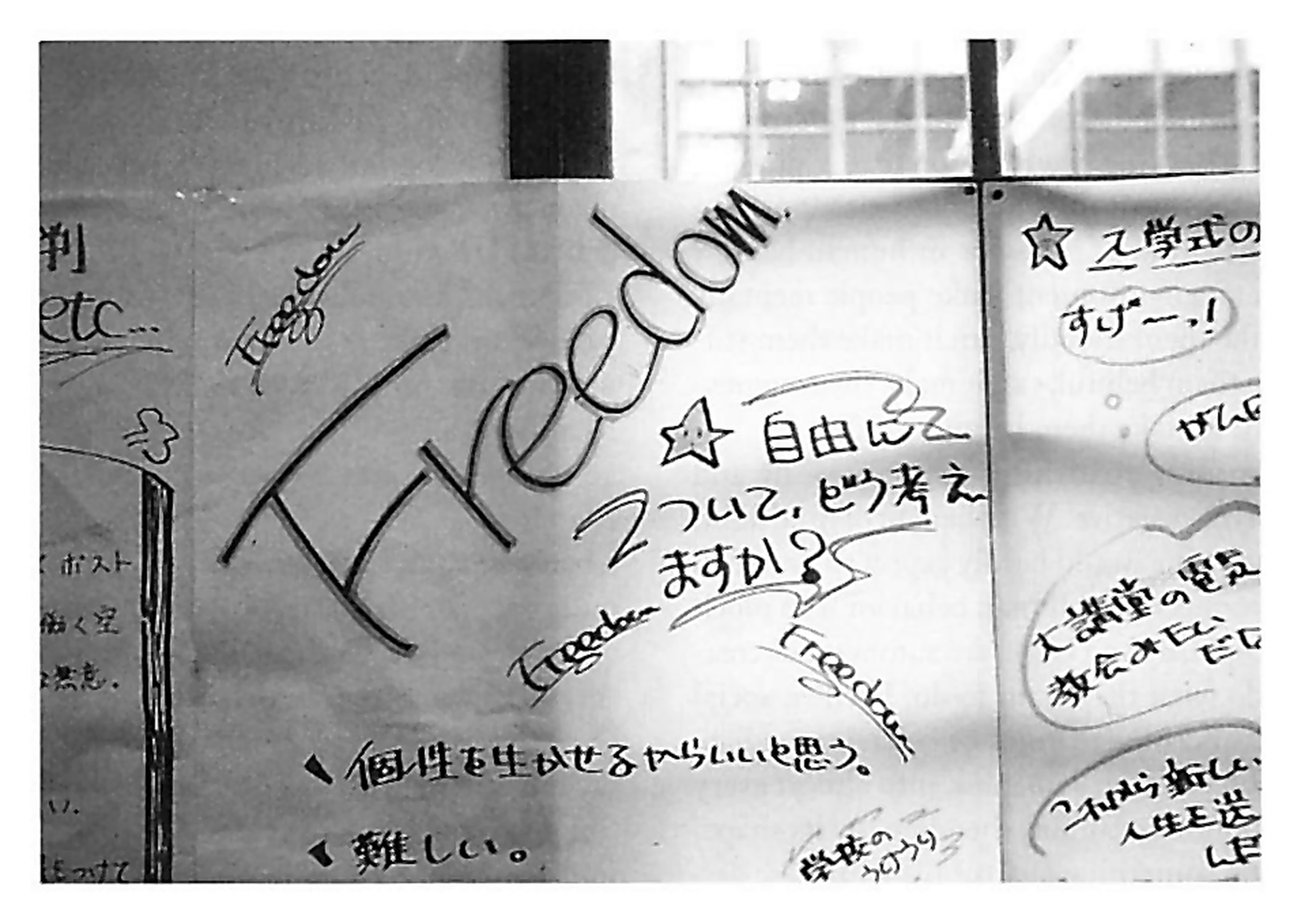
The students' poster, expressing their feeling about the school has happened is true -- real, coming just from the symmetries of space, from the ordinary reality of the world -- this has a free breath in it, very much as the rippling sand dunes have because they arise from the same process. We recognize the freedom of the forces, liberated by the unfolding process, and we can breathe more deeply there. And the freedom in people comes also -- at least in part -- because the space, both buildings and exterior space, has something approaching an archetypal character that goes so deep inside our own stomachs that, once we experience it in a real place around us, it connects us to ourselves.
Notes
1. During the mid-20th century, several investigators began trying to pin this question down, and to find out what kinds of causation linked our lives to the structure of the environment. It proved extremely difficult to find the nature of this linkage. These studies are reviewed in Constance Perin, WITH MAN IN MIND (Cambridge: M.1.T. Press, 1970); Harold Proshansky, William Ittleson, and Leanne Rivlin, eds., ENVIRONMENTAL PSY- CHOLOGY: PEOPLE AND THEIR sETTINGS (New York: Holt, Rinehart and Winston, 1970); Robert Gutman, ed., PEOPLE AND BUILDINGS (New York: Basic Books, 1972).
A classic example of the difficulty was the attempt to find a negative correlation between density of neighborhoods (a physical pattern) and social indicators of mental health. The assumption was that in overcrowded and high density living conditions, people's mental health would be damaged, lower, on average. For rats, for instance, such correlation does exist between overcrowding and organic damage and mortality. Although it seemed "obvious" that there must be such a linkage for human beings, too, in fact this "obvious" point turned out to be wrong. In one classic study, the most positive mental and social health occurred in a very high-density neighborhood -- Boston's North End. The reason was that the area was, at that time, a mainly Italian neighborhood. Italian family and neighborhood coherence was extremely high, and mental health was found to be better than in comparable areas of lower density. Similar results were found in Chinese neighborhoods, also marked by strong family cohesion. But the mental health and social health came mainly from the social structure and culture, not from any direct link with the physical environment (See Robert C. Schmitt, "Density, Health and Social Disorganization," AIP JOURNAL 32 (1966), 38-40). This underlines the point by showing how hard it is to find a pure and direct linkage between physical structure and human well-being. It draws attention, too, to the dangers of looking for a connection which is too simple-minded.
This sort of muddle led some social scientists to conclude, in broad terms, that the physical environment, when taken by itself, has few directly causative effects on human life. Common sense tells us that there is some sort of effect. But no one quite knows how to characterize the effect. This odd episode in the intellectual efforts of psy-
chologists and sociologists occurred because they were looking, in all likelihood, for something too simple. They were, perhaps, asking the question: can a physical configuration of the environment cause -- that is, induce -- a particular kind of behavior in human beings? For instance, can an environment make people mentally healthy, can it make them friendly, can it make them studious, can it make them helpful, can it make them aggressive or passive, can it make them happy or sad?
It is not surprising that this question was, by and large, answered in the negative. With benefit of hindsight, it seems obvious that one would hardly expect to find such a simple kind of connection. Human behavior is so much more complex. People, by and large, are autonomous creatures, They will do what they want to do. Further, social behavior, culture, and human rules of behavior mediate the interaction, and enter in, somehow, into almost every human event. A building cannot, therefore, by its shape, force a person to do something against his will.
But of course the conclusion that was sometimes drawn -- namely, that the shape of buildings does not matter -- was far, far from correct. The search for a too-direct effect had trivialized the question, and hence the answer. Such a direct effect in human-environment interactions is not what we could reasonably expect to find. But the effect which does exist is, I believe, truly enormous.
2. Abraham Maslow, TowARDS A PSYCHOLOGY OF BEING (New York: Van Nostrand, 1968). Maslow's discussion of self-actualization gives a rough account of this process.
3. Alexander H. Leighton, My NAME Is LEGION. Volume 1 of THE STIRLING COUNTY STUDY OF PSYCHIAT- RIC DISORDER AND SOCIO-CULTURAL ENVIRONMENT: FOUNDATIONS FOR A THEORY OF MAN IN RELATION TO cutture (New York: Basic Books, 1959), especially pp. 133-78, (1) A given personality exists more or less continuously throughout life in the act of striving and (2) Interference with that striving has consequences which in turn often lead to psychiatric disorder. (p. 136)
4. Max Wertheimer, "A Story of Three Days," in Ruth Nanda Anshen, ed., FREEDOM: ITS MEANING (New York: Harcourt Brace, 1940), pp. 52-64.
5. Stress, and the stress reservoir model I summarize here, has been studied extensively, by Hans Selye and others. Hans Selye, THE sTREss OF LIFE (New York: McGraw-Hill, 1984).
6. The loss of connection to reality which occurs in a disordered environment is well-known and discussed by many psychiatrists. Architects have been slower to recognize their role in this process. One example of a failure to recognize such a role appears in the argument made by Peter Eisenman in the Alexander-Eisenman debate, "Discord Over Harmony in Architecture: The Eisenman/Alexander Debate" (partial transcript of debate with Peter Eisenman), in HARVARD GRADUATE SCHOOL OF DESIGN NEWS, editor Yvonne V. Chabrier, May-June, 1983, Vol. 11, No. 5, pp. 12-17. Also published in 40 LOTUS INTERNATIONAL, 1983, IV, pp. 60-68; ARCH, March 1984, Vol. 73, pp. 70-73; Japanese translation in ARCHITECTURE AND URBANISM, editor Toshio Nakamura, September 1984, No. 168, pp. 19-28.
7. Jean-Luc Godard, ALPHAVILLE, 1965.
8. Ettore Scola, DIARY OF A POOR YOUNG MAN.
g. Christopher Alexander with Sara Ishikawa, Murray Silverstein, Max Jacobson, Ingrid Fiksdahl-King, and Shlomo Angel, a PATTERN LANGUAGE (New York: Oxford University Press, 1977).
10. The pictures in this section come from André Kertész, J'AimE Paris (New York: Viking, 1974).
11. Quoted from Christopher Alexander, Howard Davis, Julio Martinez, and Don Corner, THE PRODUC- TION OF Houses (New York: Oxford University Press, 1985), p. 311.
12, Ann Medlock, "Clergy," in END TIMES TWO (Whidbey Island, Washington: Bareass Press, 1996).
13. For the reader, the plausibility of an interaction between human freedom and the shape of the environment, may be explained further by the nearly 700 pages of examples in Book 3. Although these examples do not explicitly deal with the topic of freedom -- but rather with the problem of how a living structure may be generated in human society, and with the shape it takes -- still the examples are telling, and gradually build up a conviction that they show what it is like for human beings to be nurtured in the physical world.
14. Director, Makoto Ozawa, NHK, Japan Nation al Broadcasting Company, Tokyo, December 7, 1991.
15. What, in my view, is the full intellectual answer to the puzzle of the impact of living structure on human freedom of spirit is not given until Book 4, chapter 4, where I shall argue that the wholesomeness and integrity of a person's existence is directly dependent on the extent to which that person is able to sustain an inner relatedness with the world in its entirety. I shall argue that this, too, depends on the extent of living structure in that world.