Chapter Six
The Fifteen Properties in Nature
1 / Introduction
The fifteen properties are not merely visual features which appear in works of art. According to the theory put forward in chapters 3 and 4, these properties must be viewed as fundamental to the existence of the wholeness in the world, wherever it exists. They must, therefore, be fundamental to the appearance of life in all centers that are generated or created in any system.
If this is true, the properties would be fundamental to all physical structures of any kind at all and must be expected to appear not only in successful artifacts but in nature, too.
In this chapter, I shall show that the fifteen properties do indeed appear at many scales throughout the natural world. It is important for the reader to understand that this is a significant and rather surprising resu/f, not merely a casual observation. Although itis easy enough to see that the properties do appear in many natural systems, none of the present-day theories of natural systems explains why these properties appear so widely. The explanation of their appearance in nature will require powerful new dynamic methods of analysis that are defined in Book 2.
2 / Beyond Cognition
Tf we are to use the theory of centers -- and the concept of life -- as the basis of all architecture, it would be reassuring to know that wholeness, together with the properties which bring centers to life, is a necessary feature of material reality, not merely a psychological aspect of things which arises during perception of works of art. In the previous chapters, we have seen how wholeness and its field of centers illuminate our understanding of buildings, paintings, bowls, columns, seats, and carvings. We have seen abundant physical evidence that this wholeness exists in the world of buildings and artifacts, and that their quality depends on the system of centers, and especially on the degree of life the individual centers give each other. The more pronounced this field of centers is -- the more intense the centers, the more connected, and the more dense they are -- the more life there is in the thing. Askeptical reader could, however, make relatively light of these claims. According to a "cognitive" interpretation, the centers could merely exist in the mind's eye (as products of cognition), and the fifteen properties, which apparently make the centers work, could also exist merely as artifacts of cognition. According to such an interpretation, it might be said that buildings and works of art look good when they are made of centers in the way I have described, simply because they correspond somehow to deep cognitive structures -- that is, to the way human perception and cognition work. In this interpretation, these explanations would be a powerful way of understanding the psychology of buildings and works of art -- and would tell us something important and significant about visual phenomena in the world. But they would not have implications beyond the psychological -- certainly not for the way the material world actually works. By themselves, they would certainly not support my claim that this new view of architecture is necessarily linked to a new view of space and matter and to the fundamentals of the way the world is made.
Now, to suggest the unity in which atoms, rivers, buildings, statues, trees, paintings, mountains, windows, and lakes are all part of one unbroken system, I shall argue that nature too is understandable in terms of wholeness, and must
be understood this way. I shall try to show that the structure of centers J call the wholeness goes deeper than mere cognition, is linked to the functional and practical behavior of the natural world, not only the architectural world, and is as much at the foundation of physics and biology as it is of architecture. This will, later, give new insights
into the character of nature, how the unfolding of the wholeness which occurs in nature is responsible for the character of natural structures -- and how, finally, the unfolding of wholeness might one day be understood as a single law which underlies the entirety of everything we know as nature.
3 / Appearance of the Fifteen Properties in Nature
Centers, wholes, and boundaries occur repeatedly throughout the natural world. For example, the water in the river is never perfectly homogeneous. There are variations of temperature, depth, velocity, concentration of chemical ions, and so on. If these variations did not exist, then we would not be able to distinguish any special zones in the river. But in practice, we distinguish definite kinds of places in the river: the fastflowing stream, the slow-moving edges, the warmer upper layer, the relatively colder depths, the sunny areas, the muddy shallow parts, and so on. We recognize these distinct parts not merely because they are relatively more homogeneous but because the differentiation and homogeneity have structural and ecological consequences. The fast-moving stream in the middle is the place where fish, animals, boats move quickly. The slow-moving edge nourishes plant life and encourages animal habitats. The cold water at the bottom is better for various kinds of fish. The mud at the bottom is the right place for worms, larvae, fish debris.' Each of these zones attracts different secondary and tertiary conditions and finally becomes established as a "system." Thus the differentiated, non-homogeneous zones gradually develop with their own properties, and their own unique kinds of action, events, organisms, and behavior.
This is entirely typical. Similar differentiations occur in the sun, in a fire, in a desert, ina chemical "soup," in a growing crystal, in a developing embryo, even in interstellar space. It is simply part of the way the world is made that the non-homogeneity of space leads to progressive differentiations, which then allow different kinds of systems and boundaries to develop. The zones where conditions are relatively more constant tend to be identified as zones of a single "type." Then, by contrast with these zones, the transition areas between them tend to become boundary zones.
wholes.
This kind of differentiation, which occurs continually throughout the physical world, is not a matter of our perception. It is real physical organization, which manifests itself in the world and has functional consequences in the behavior of the systems. For example, if we look at a leaf, we see the harder parts of the leaf where ribs occur and the fleshier parts between. This is not merely a perceptual distinction, but a real distinction between two types of components in the nature and behavior of the leaf. The harder spinier ribs deal with structural forces, and the softer fleshier parts allow photosynthesis to occur. If we break a leaf in such a way as to maintain the integrity of these wholes, the leaf is more likely to survive than if we rupture the leaf across these systems, thus destroying the integrity of the
Further, the wholeness or integrity of each subsystem creates a center. When a cell, which has a nucleus and an outer boundary zone, acts as a center within the organism, it becomes stronger than either the boundary zone or the cell nucleus by itself. It becomes mechanically more coherent as a result of its role in the larger system. Here we see a "mechanical" counterpart of the strength of centers which we have seen cognitively in chapter 5.
In general, the "strength" of any center -- its degree of life -- is a measure of its organization. One might measure this by its lifetime as a structure, or by its ability to resist disruption, or by its influence on the wholes around it. By almost any of these measures, the stronger a center is, the more powerful its impact on other nearby centers, and the more it will influence the behavior, motion, coagulation, organization, and reorganization of the other centers which come under its influence. Thus the system of powerful centers in the world has a practical and immediate physical influence on the behavior of other nearby centers.
The relationships of different nearby centers follow the same scheme we have already seen. Again and again, the fifteen properties appear as geometric features of the way that space is organized in nature, and of the way the centers that appear in space are distributed.
4.1 / Levels of Scale
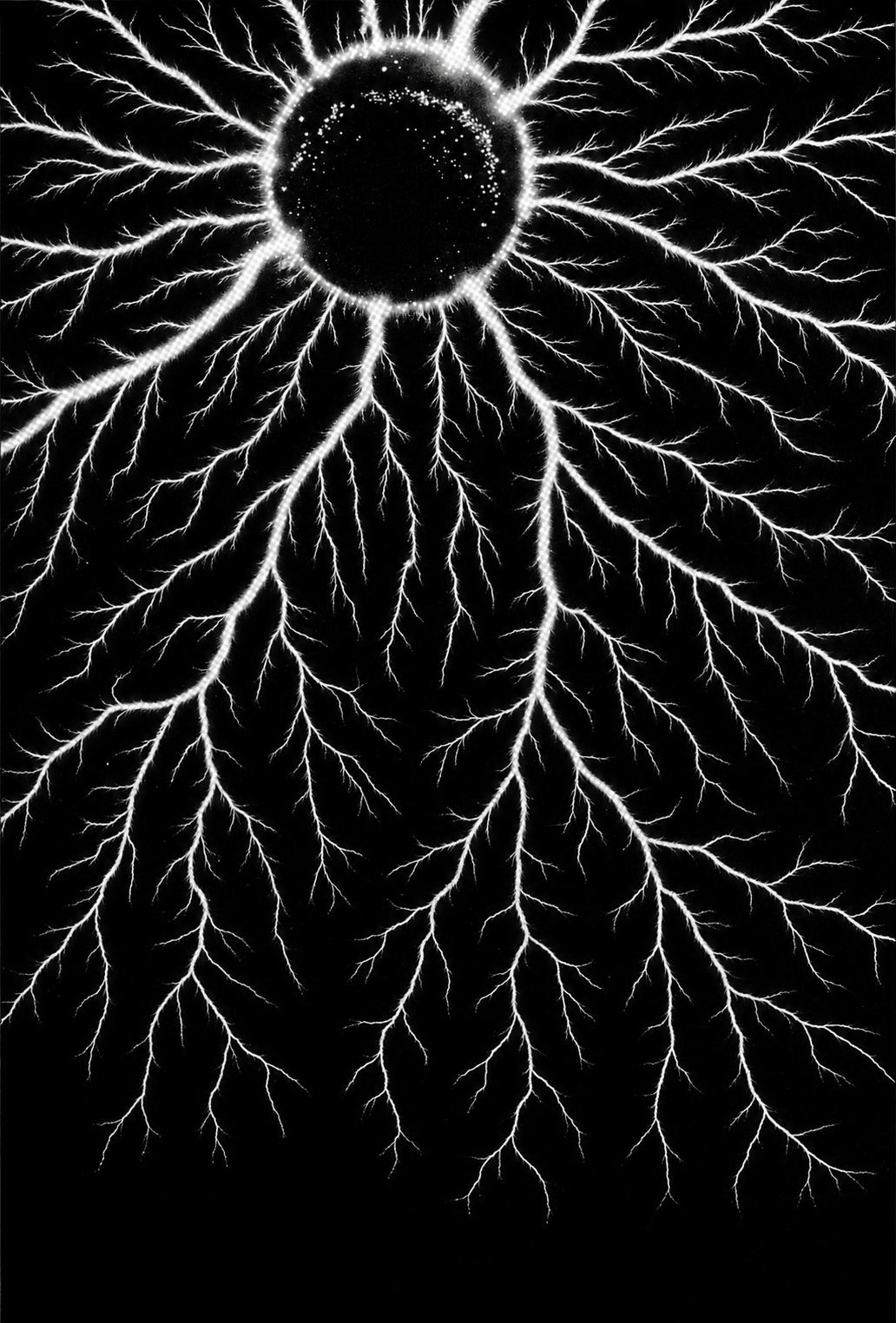
Why does the electrical discharge in the photograph opposite have levels of scale in it? The massive build-up of charge dissipates in a rush, leaving zones which have a remaining charge that are by definition much smaller than the original charge. These small zones discharge, once again leaving still smaller ones, which then discharge in a kind of mopping-up operation. The levels of scale follow naturally from the way this system brings itself to order.'
In related fashion, the appearance of levels of scale is widespread throughout natural systems. The tree: trunk, limbs, branches, twigs. The cell: cell wall, organelles, nucleus, chromosomes. A river: bends in the river, tributaries, eddies, pools at the edge. A mountain range: highest mountains, individual peaks, surrounding foothills, still smaller sub-hills. Limestone: large particles, smaller particles, smallest particles each in the interstices of larger ones. The sun and solar system: planets and their orbits, satellites and their orbits. A molecule: component complexes, individual atoms and ions, neutrons, protons, electrons. A flower: individual flower heads, center and petals, sepals, stamens, pistils.
In general terms, it is not hard to see that in any system where there is good functional order it is necessary that there be functional coherence at different levels, hence necessary that there are recognizable hierarchies in the organization of these functional systems. The presence of a continuous range of structures, at different scales, with one level never too far from the next level above or below, is common both in organic and inorganic nature. For instance, a tree has a trunk, limbs, branches, and twigs to carry the load of the leaves and to distribute sap. There is a hierarchy because a limb of any one size can serve only a comparable volume and cannot therefore reach each part of this volume, except by breaking down into smaller elements, which can, more economically, reach smaller volumes of the tree. In the case of formation of galaxies, stars, solar systems, planets, and satellites, it seems that, in the overall process of gravitational condensation, there is always a residue, a level of structure not accounted for by the forces at one level, which then condenses, usually under the impact of a slightly different pattern of forces, to produce yet another level of structure in the hierarchy. In the same way, a molecule is made up of component complexes, which contain individual atoms and ions, which themselves contain neutrons, protons, and electrons. These fundamental particles are themselves
made up in some way from the combination and recombination of the underlying quarks. In this case, the explanation goes the other way: each small element, of whatever size, is
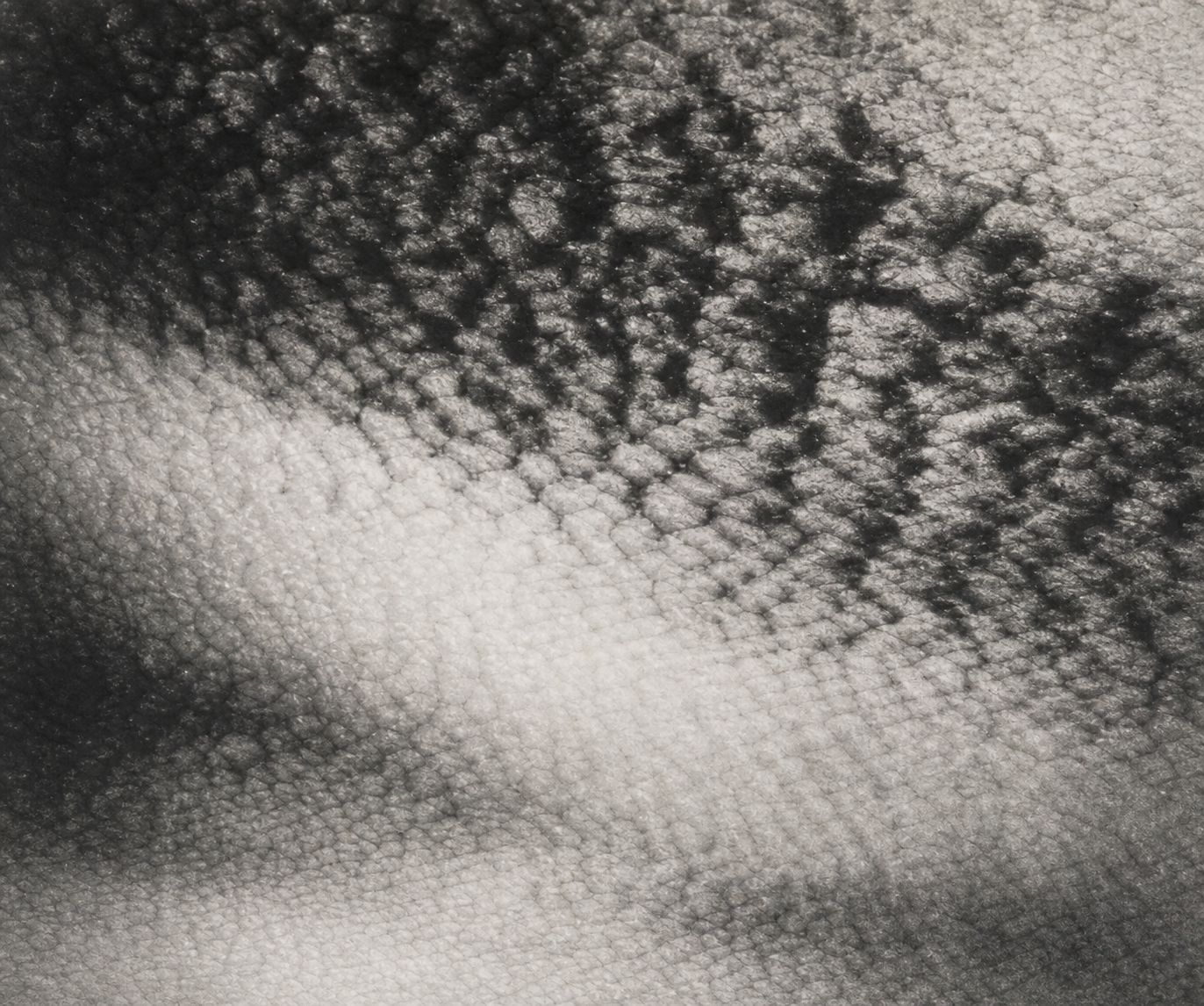
Two levels formed by the scales of an armadillo. Reasons for this structure are still speculative sufficiently complex, so that by the time there are two or three, or ten of them, the geometry of the combination is complex enough to produce entirely new kinds of forces, which therefore exhibit new kinds of behavior, and so gain existence as coherent semistable entities at a higher level. The phenomenon of levels is so pervasive, in nature that it even occurs within the physics of the human cognitive system itself, as a feature of information processing and memory.
Few natural systems lack the structure of levels because, in nature, scale plays such an important role. When we double or triple the size of a given thing, there are already different forces at work, a different interplay of phenomena, and therefore new kinds of wholes are born, for purely physical reasons. Thus, at the next scale larger than cells, in a plant, there are aggregations of cells which obey different laws and start to form new wholes -- the aggregations themselves form larger aggregations, again with new laws -- and each new level comes into being as soon as the order of magnitude of the phenomenon is changed.
However, it is extremely difficult to formulate a theory which explains the gevera/ phenomenon, and the general existence of levels of scale in almost all naturally occurring systems. Attempts have been made, for instance by L. L. Whyte, Albert Wilson, and Donna Wilson, by Cyril Smith, and by Michael Woldenberg.* But, to my knowledge, no general mathernatical explanation has been given which predicts the formation of these levels or the size of jumps between levels. Particular theories deal only with particular cases of level-formation, not with the formation of levels in general. And indeed, there is no easily defined form of mathematics within which the emergence of such a phenomenon might be predicted. Bifurcation theory might give a possible clue by identifying natural breakpoints in development of a system. But, to my knowledge, it has not yet been attempted.? Explained or not, the property itself is pervasive throughout nature.
"centrai sheath edga of flag allar
\ outer paired
Flagellae in cell structure form their own distinctive level of scale in the cell-nucleus, and provide still smaller levels of scale in the flagellar groove, and in the central sheath and outer fibers of each part.
THE FIFTEEN
4.2 / Strong Centers
Why does the splashing milk drop form such a perfect center as it splashes, almost like a medieval crown? I shall not be able to give the full answer to this question until Book 2.° But we can see, in part, what happens. First, the falling drop has radial symmetry: as it hits, the milk splashes out almost equally in all directions. But why does a little drop form at the end of each ray, almost as if the structure were a crown, and so that these small drops then intensify the center of the main ring that has been formed?
We certainly see strong centers throughout the physical world. Many natural processes have centers of action. The action, or development, or force-field radiates outward from some system of centers. This is implicit in much of physics and biology. In physics, we have the fact that electric, magnetic, gravitational, and nuclear

forces are carried by spatially symmetrical fields, thus most often creating centrally and bilaterally symmetrical structures. In biology, the most familiar case of centrally driven order is the development of an embryo, where nodes known as "organizers" serve as sources of chemical fields, the fields formed by concentrations of different endocrine substances which contro] growth.' The centers formed by these nodes play the major role in the organization of the embryo's growth. We see the residue of these growth centers in the actual hierarchy of centers in the adult organism. Field-like systems of centers appear also in fluid flow, hydrodynamics, pressure systems, and electrostatics, and have been proposed for particle dynamics also.' Among the best-known, very large-scale cases are the thread-like centers that appear in the interaction of plasma with magnetic fields to create galaxies, galactic systems, stars, and planets.' Similar but less coraplex processes occur in many other non-organic systems and, of course, in the pervasive system of centers which occurs in a molecule, formed by nuclei and electron orbits."
However, as in the case of levels of scale, it is very hard to give a genera/ explanation of the widespread occurrence of centers and centerbased phenomena. We observe the fact of their existence in a wide range of phenomena, but have no general mathematical theory which fully explains it.
Electron orbitals forming centers in a complex molecule

4.3 / Boundaries
Tn nature, we see many systems with powerful, thick boundaries. The thick boundaries evolve as a result of the need for functional separations and transitions between different systems. They occur essentially because wherever two very different phenomena interact, there is also a "zone of interaction" which is a thing in itself, as important as the things which it separates.
Consider the surface of the sun: there is a zone there, many thousands of miles deep, where the flames of the sun's inner fire shoot out into space. This is where the near vacuum of space interacts with the inner nuclear reactions of the sun's interior, an interaction so peculiar, in its own right, that it occupies a massive volume.
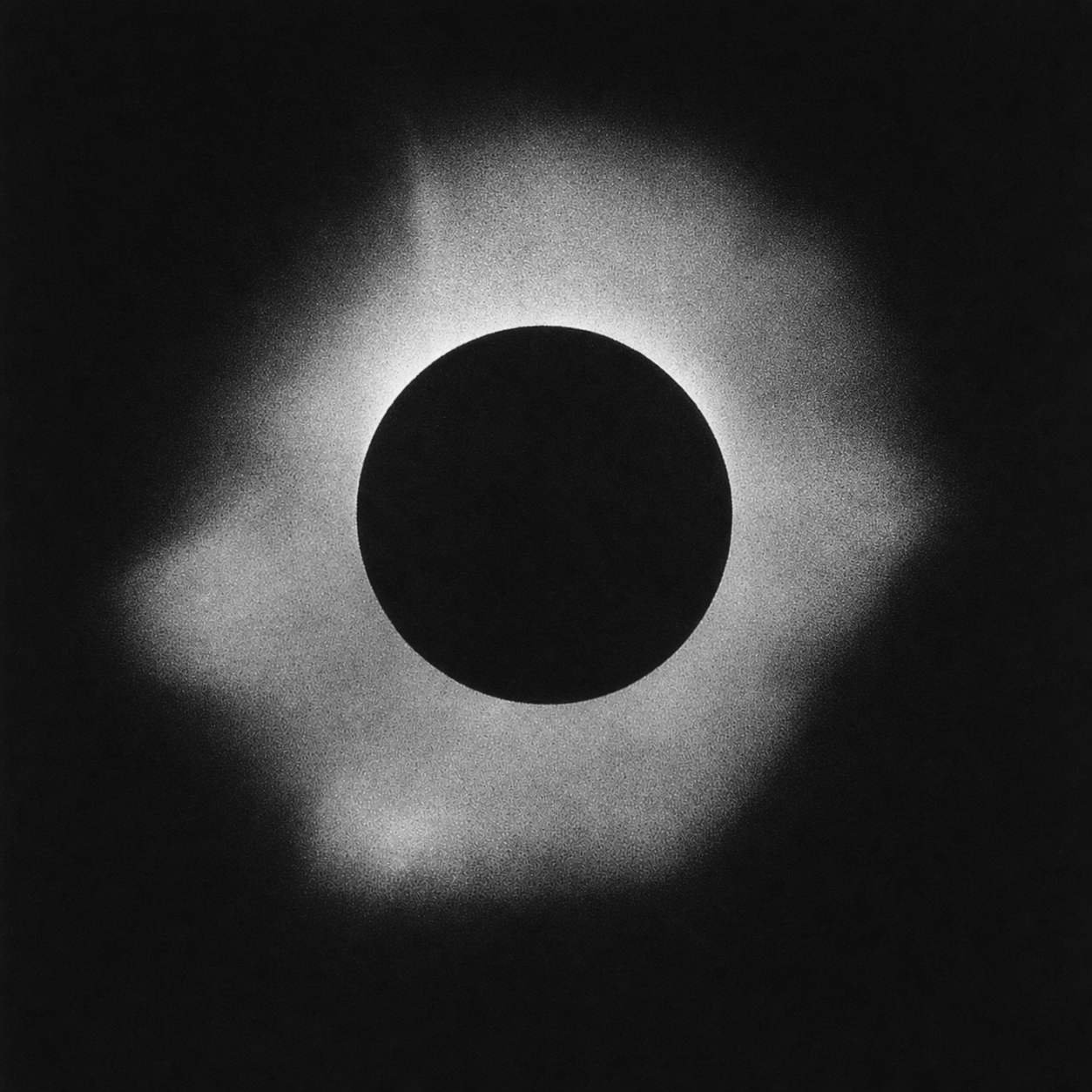
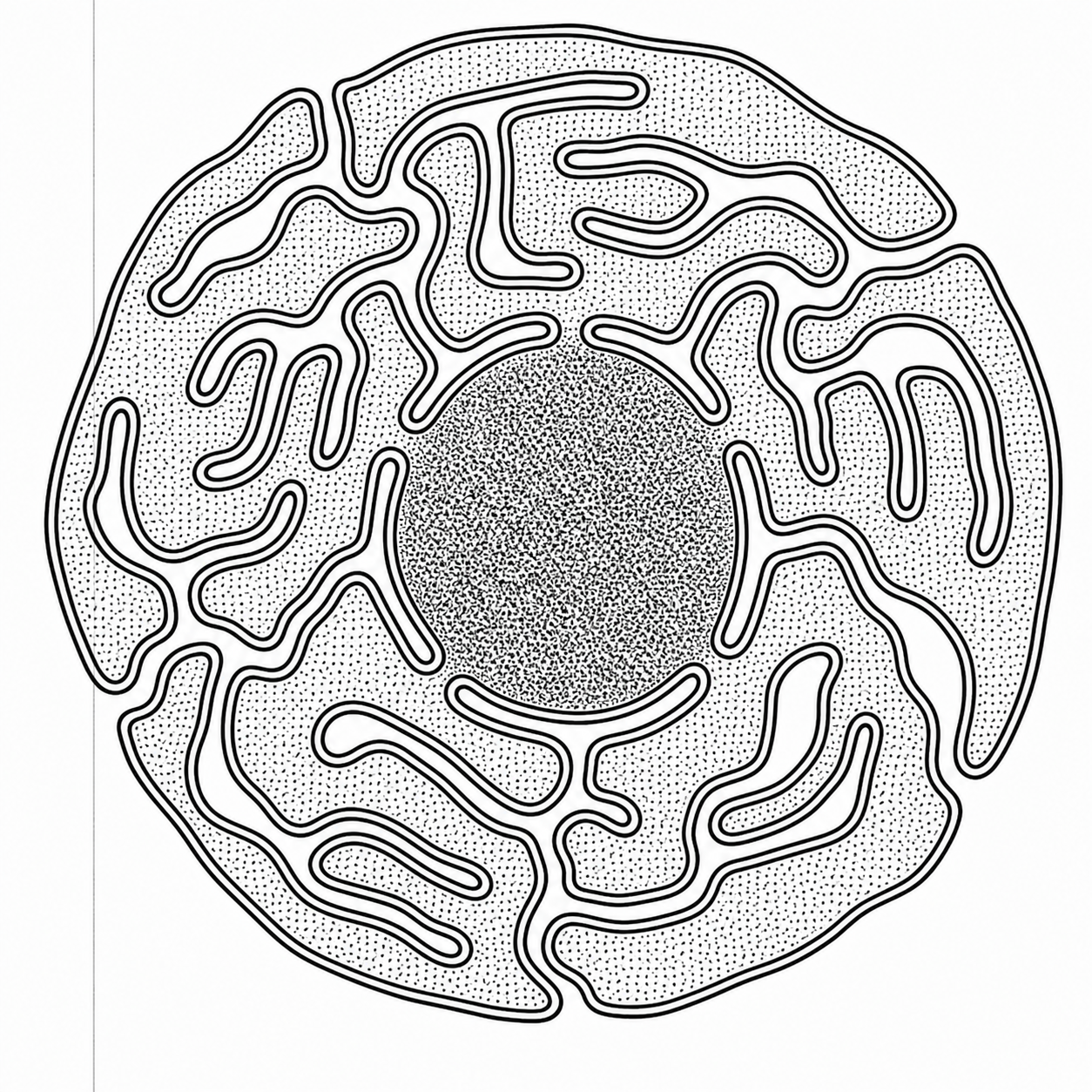
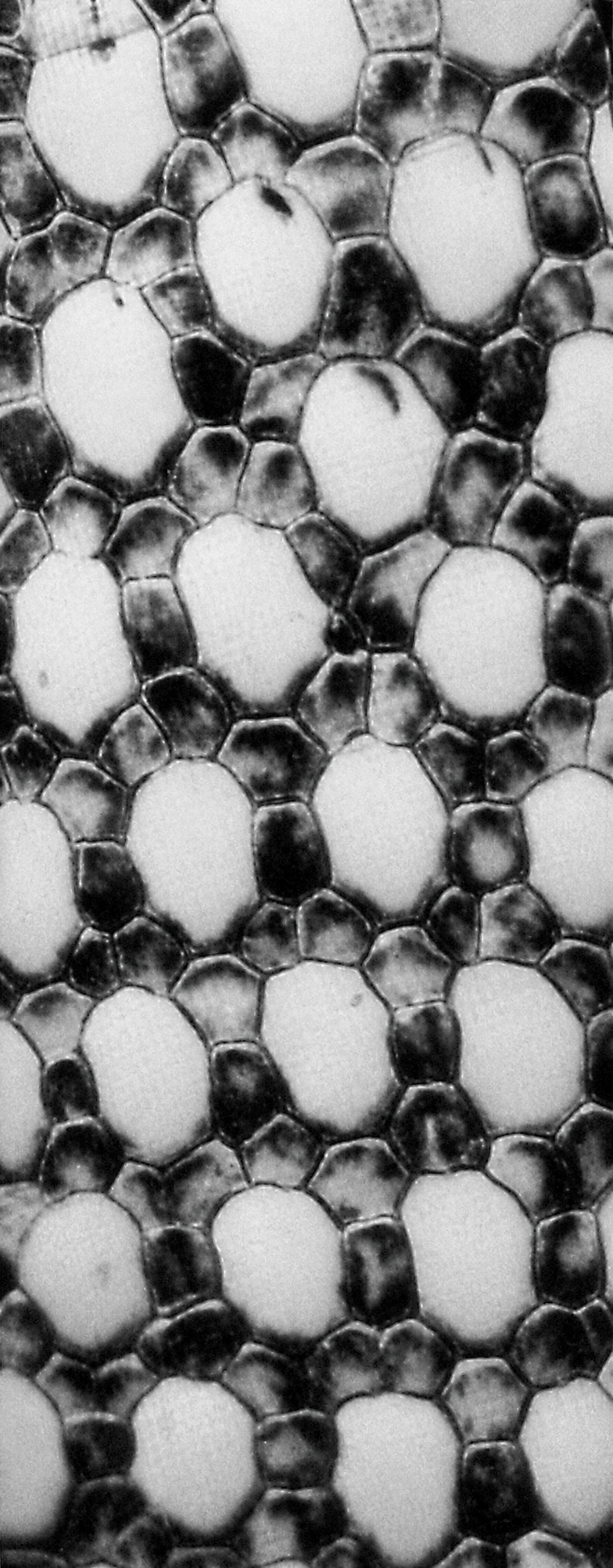
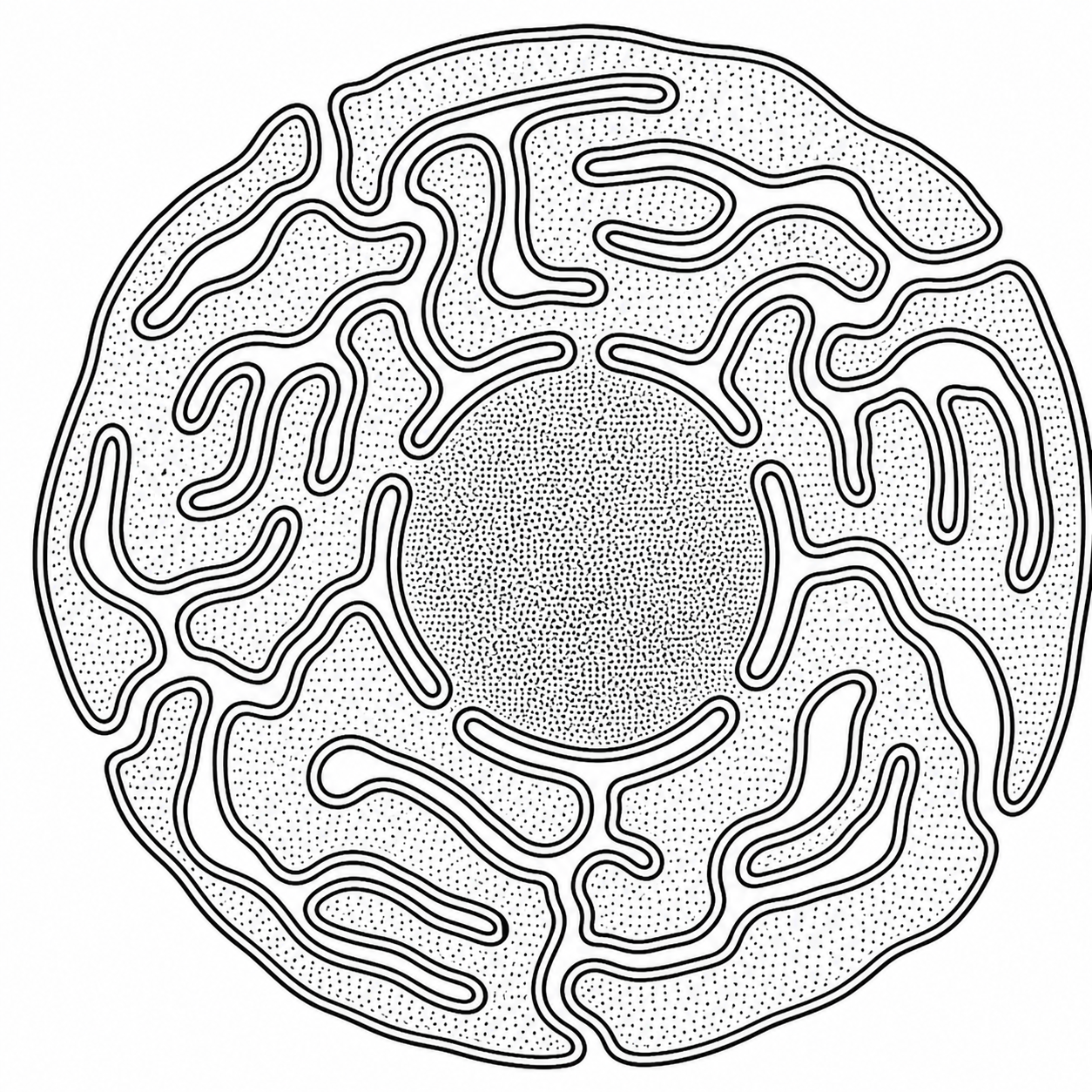
Or, at a very different scale indeed, consider the wall of an organic cell, a massively thick structure where all the flow in and out of the cell is controlled. The cell wall is as thick, almost, as the interior of the cell itself!' Or consider the banks of a river: the zone between the actual dynamics of the flowing river itself and the fields or countryside which surround it. Here again, there is a massive boundary, an area of shallow water, a muddy edge, with its own specific animals and plants, its own quite definite ecology, formed once again by the fact that this zone has its own laws, its own necessary structure. In the case of the Mississippi River, the high-velocity stream flow carries mud and silt out into the Gulf of Mexico, depositing the boundary material of
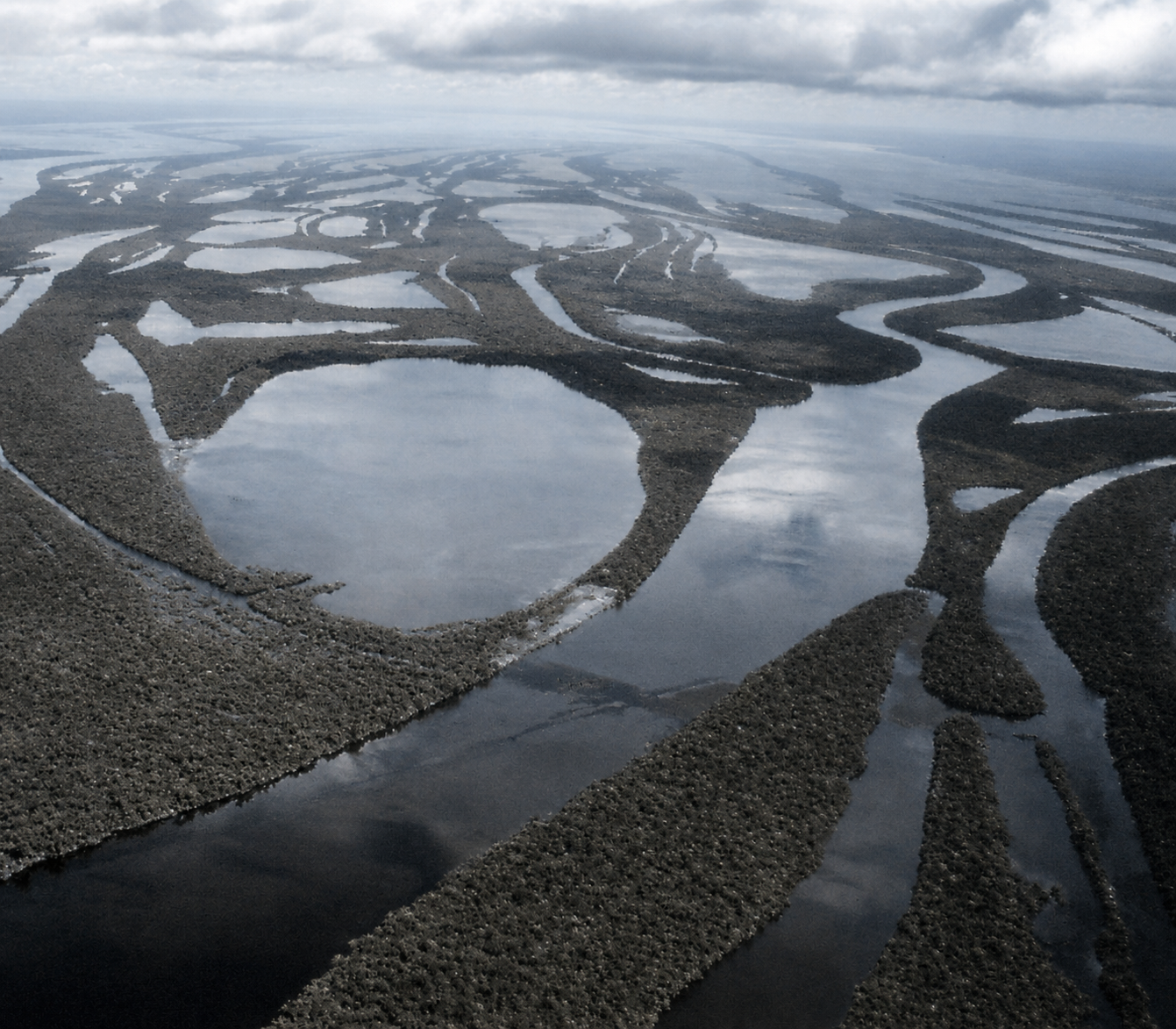
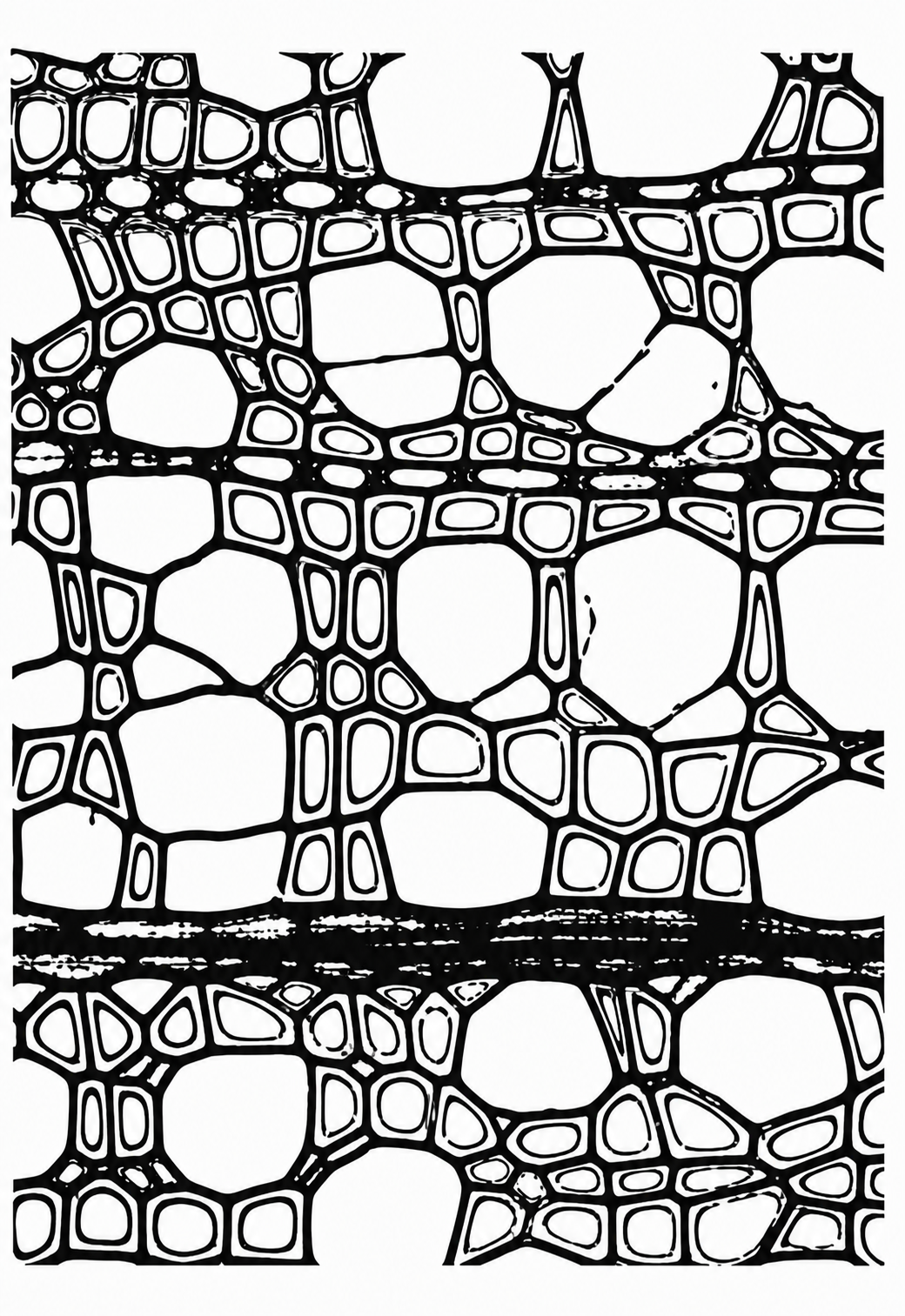
Layers of boundaries in wood tissue the "banks" so far out into the gulf that the river's boundaries are visible from the air, almost one hundred miles out to sea. The photograph shows a similar phenomenon where the Rio Negro flows into the Amazon.
As in these examples, it is widespread in many other natural systems that the boundary between two phenomena, instead of being merely a dimensionless interface, is itself a solid zone with its own distinct coherent properties and shape. Thus, for instance, the wall of a cell is as thick as its entire diameter because a great deal of chemical structure is needed to control exchanges between its interior and exterior. The wall of a lung is an imbricated boundary structure where all the actual "work" of the lung occurs, where oxygen is absorbed by the hemoglobin and placed into the bloodstream, and later carboxyhemoglobin is broken down so that its carbon dioxide can be released. The outer layer of an atom -- its electron shells -- is far larger than the nucleus, and it is precisely in this outer layer that connection and interaction occur as the atoms combine to form molecules. Although each of these cases is understandable in its own terms, the difficulty of providing a genera/ explanation of the appearance of boundaries is considerable.
4.4 / Alternating Repetition
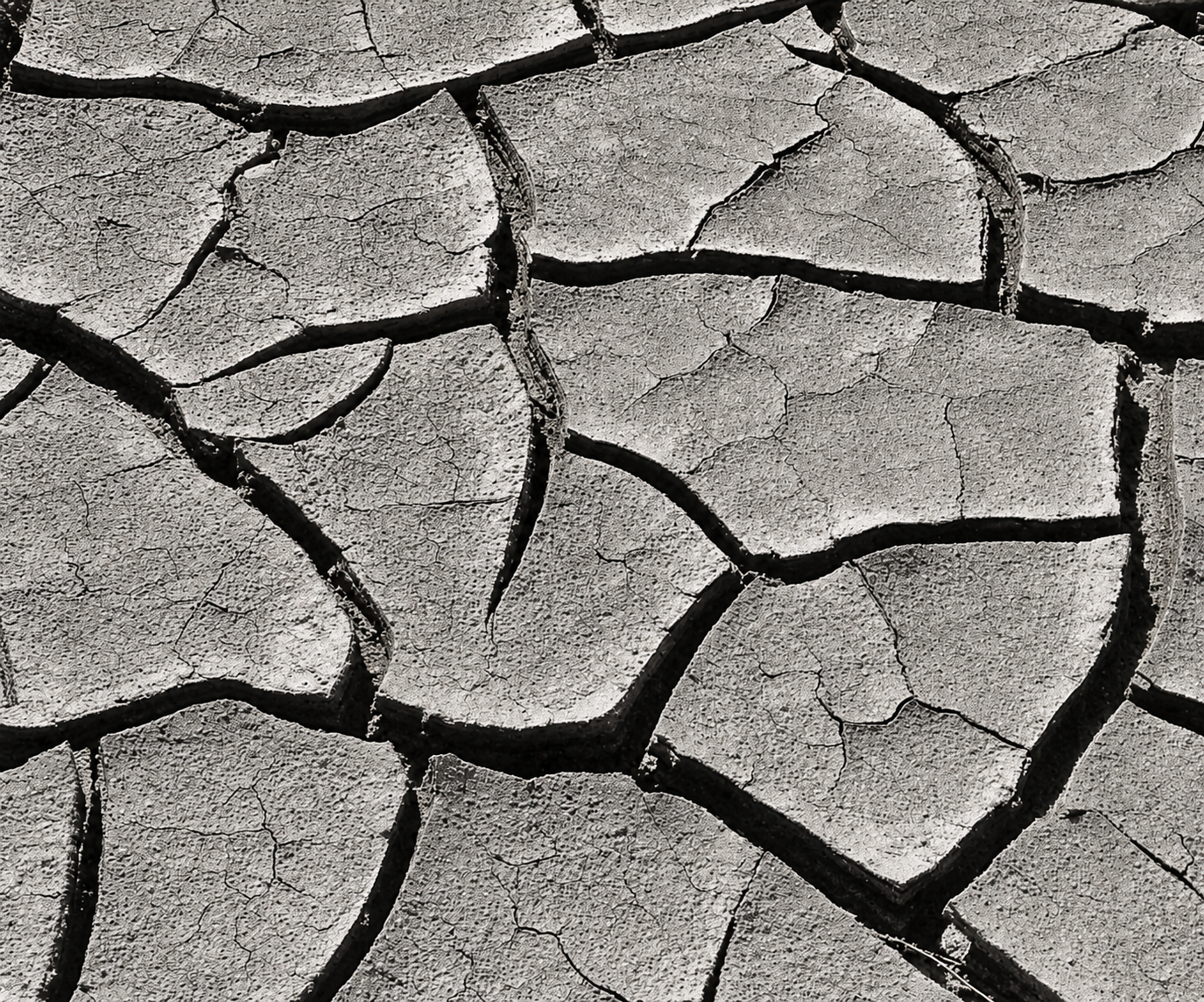
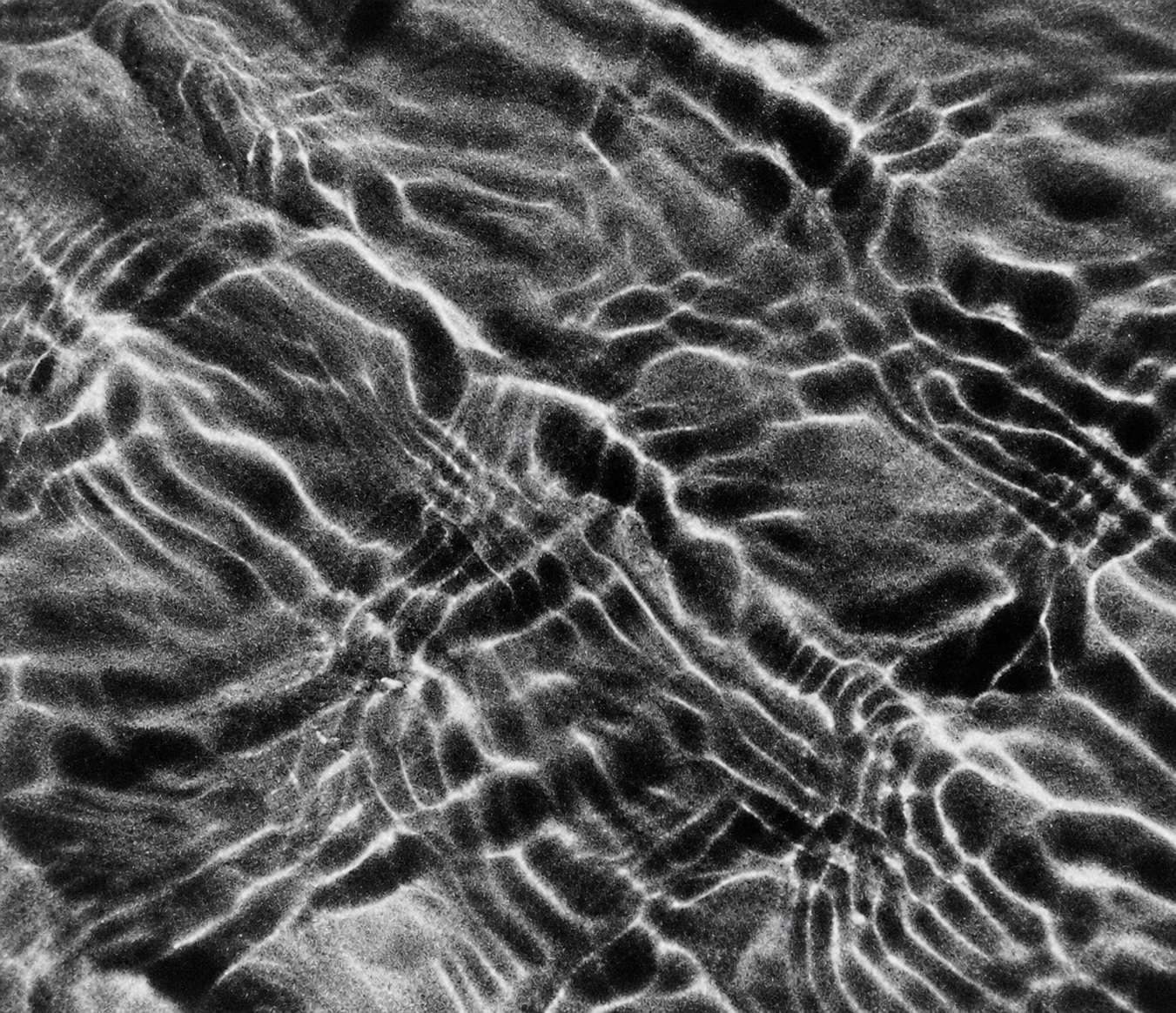
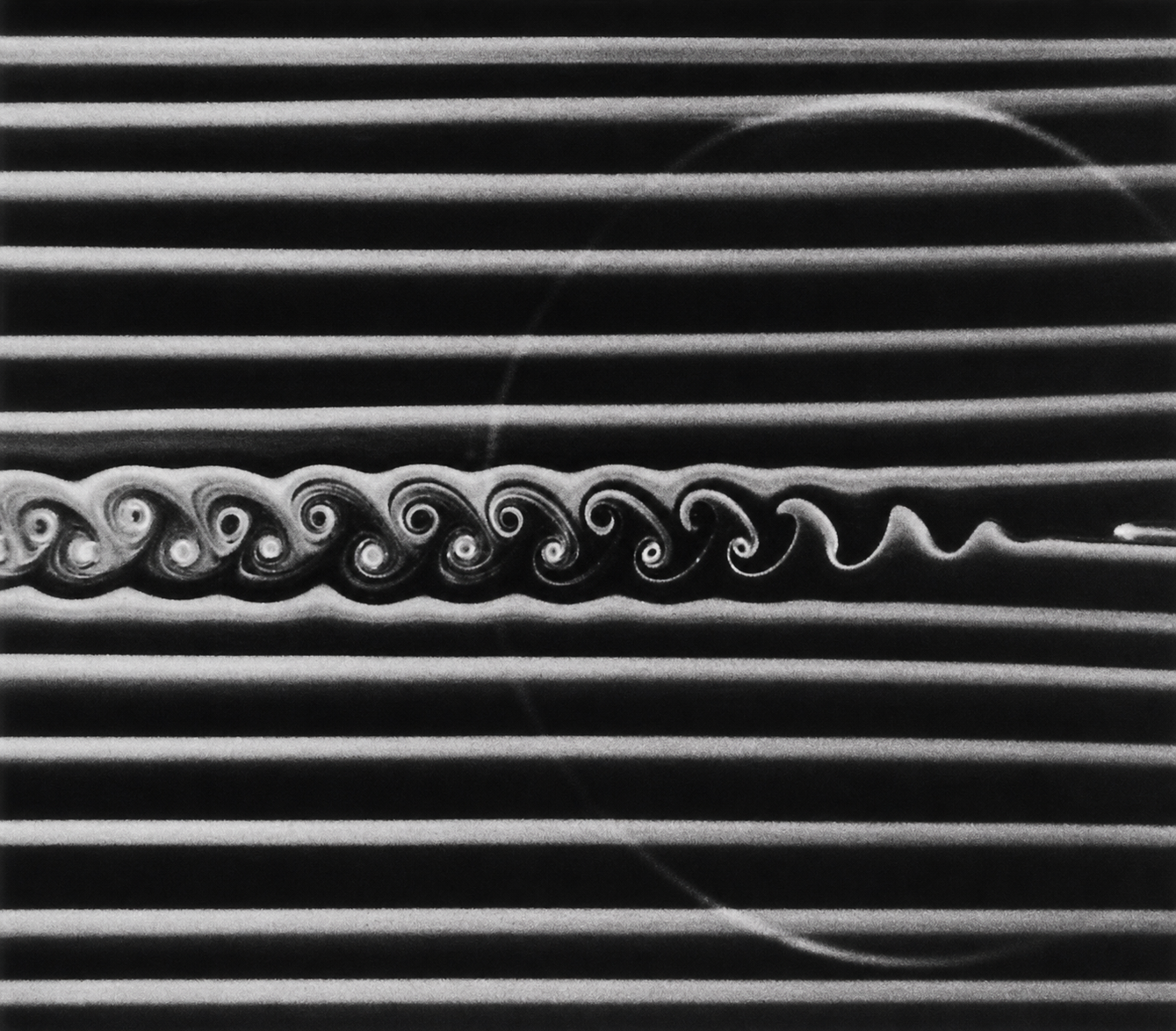
Recall the distinction, made in chapter 5, between simple repetition and alternating repetition. In nature most of the repetitions which occur are alternating rather than simple. Repetition itself of course occurs simply because there are only a limited number of archetypal forms available, and the same ones repeat over and over again, whenever the same conditions occur. Atoms repeat in a crystal lattice; waves on the surface of water repeat; cloud forms repeat in cirrus; Mountains in a mountain range repeat; so do the trees in a forest, leaves on a tree, atoms in a crystal, cracks in a piece of dried-up mud, petals on a flower, flowers on a bush.
In most of these cases of natural repetition, the repeating units do alternate with a second structure, which also repeats. When atoms repeat, so do the spaces which contain the electron orbits; when waves repeat, so do the troughs between the waves; as mountains repeat, so do the valleys; when the trees in a forest repeat, so do the open patches of undergrowth where more
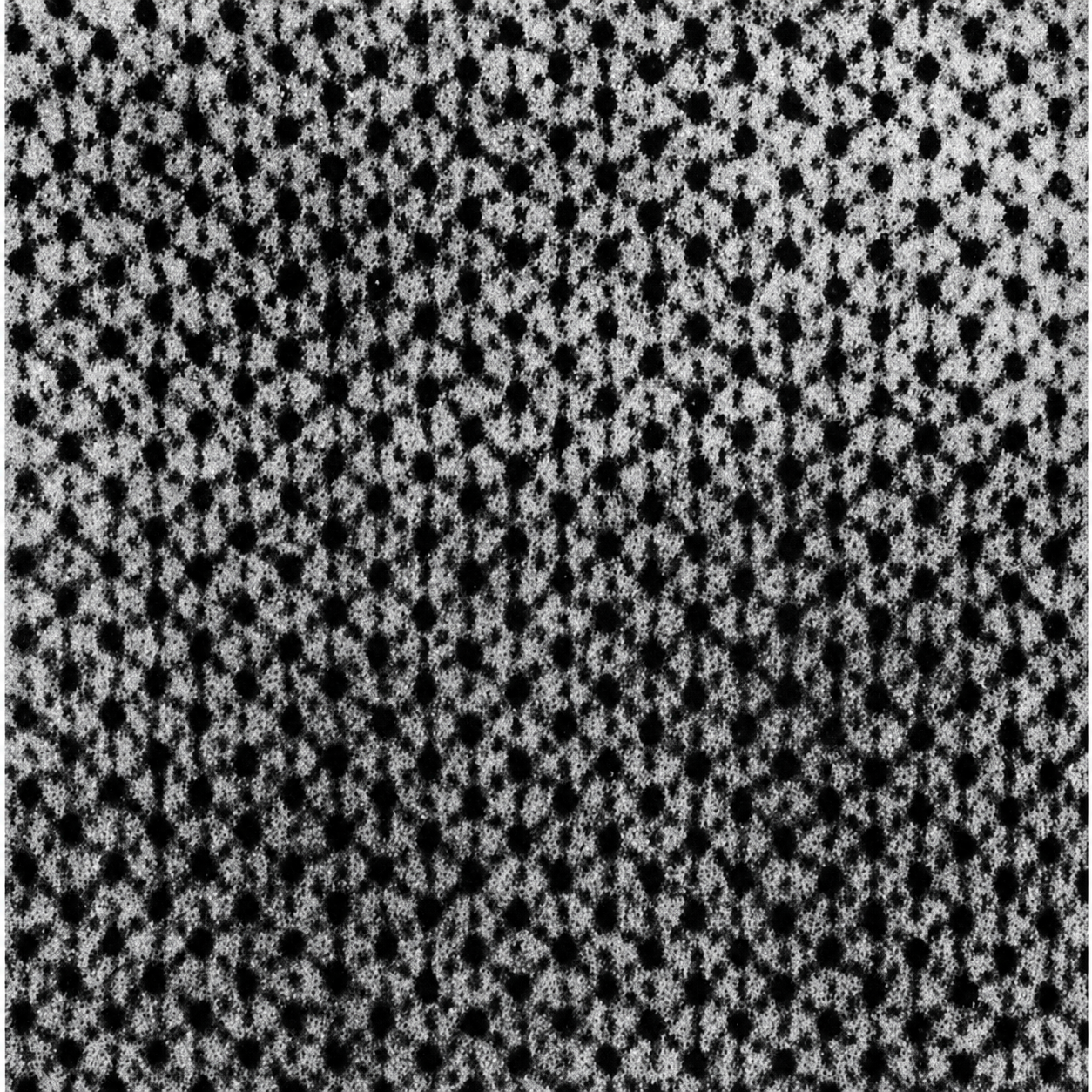
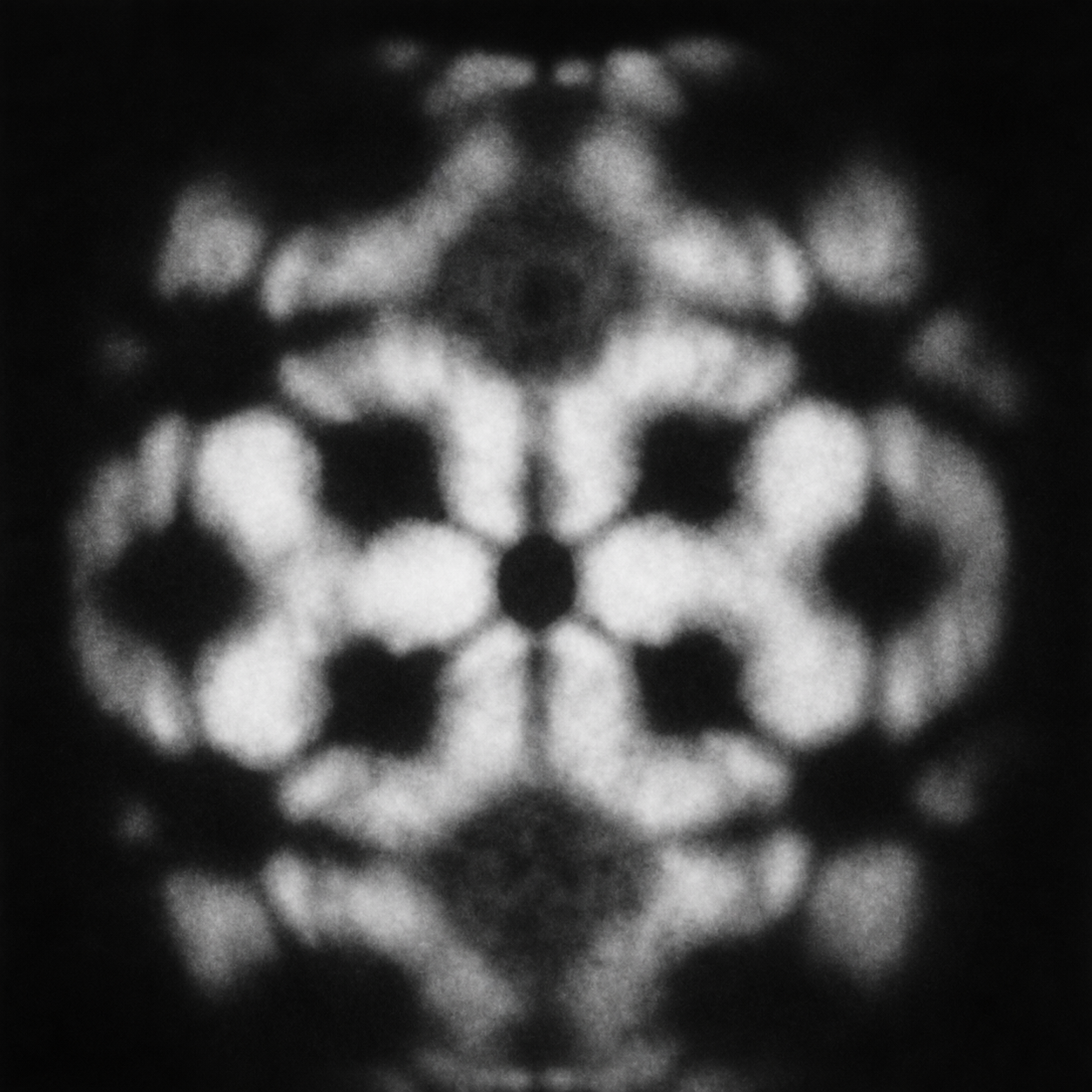
Uranium oxide on tungsten light falls; when leaves repeat, so do the spaces between the leaves that allow the sun to reach the leaves; when cracks in mud repeat, so do the coherent and harder units of the uncracked mud between them; when petals in a flower repeat, so do the sepals which lie behind the petals and overlap them; when the flowers on a bush repeat, so does the space between the flowers; when the tiger's stripes repeat, so do the lighter stripes between them.
Some of these cases (like waves and troughs) are so obvious that they almost seem tautologous -- as if the second repeating structure cannot help being there -- not for physical but for logical reasons. But that is not so. In all these cases, the significant issue is the coherence of the secondary centers. The defining feature
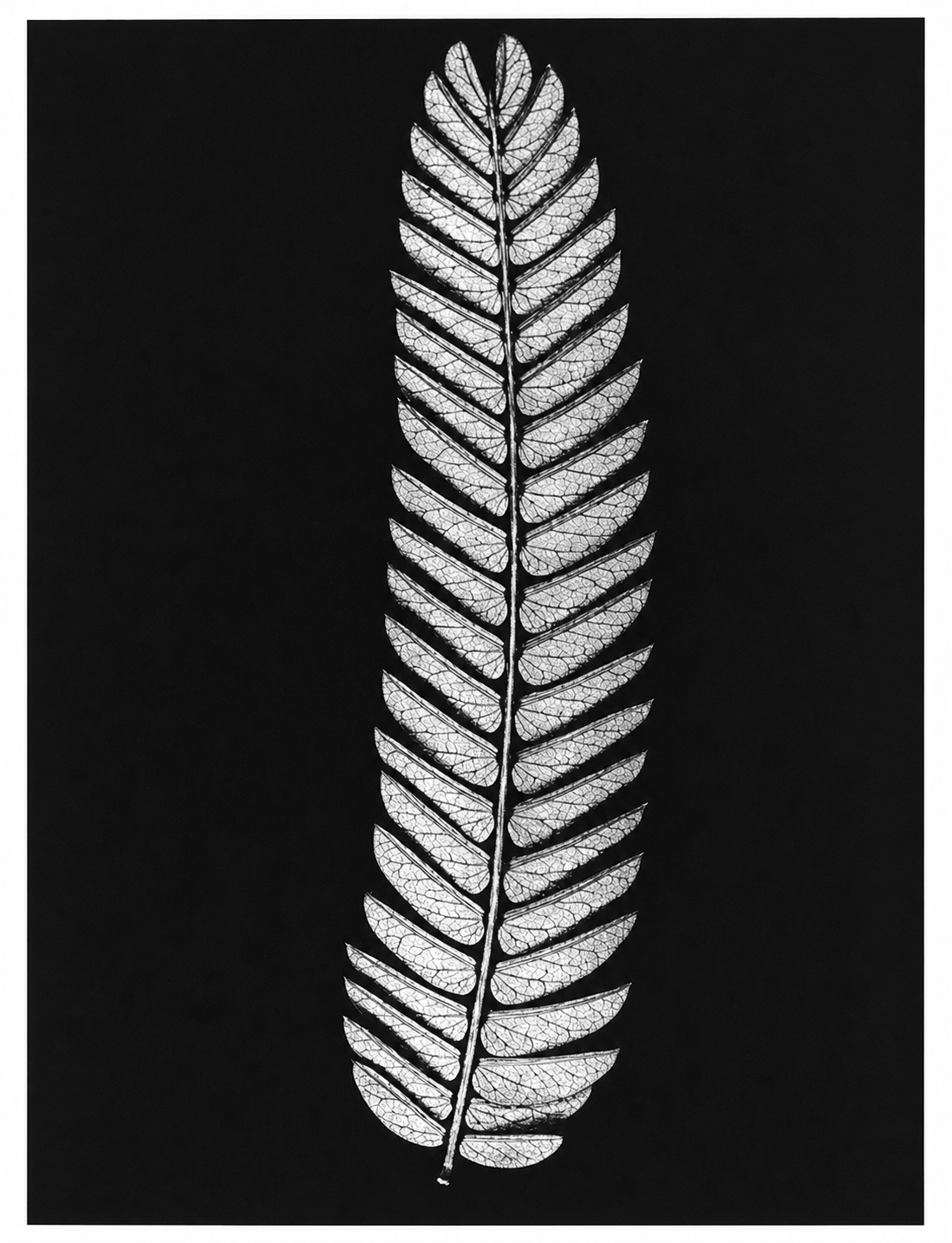
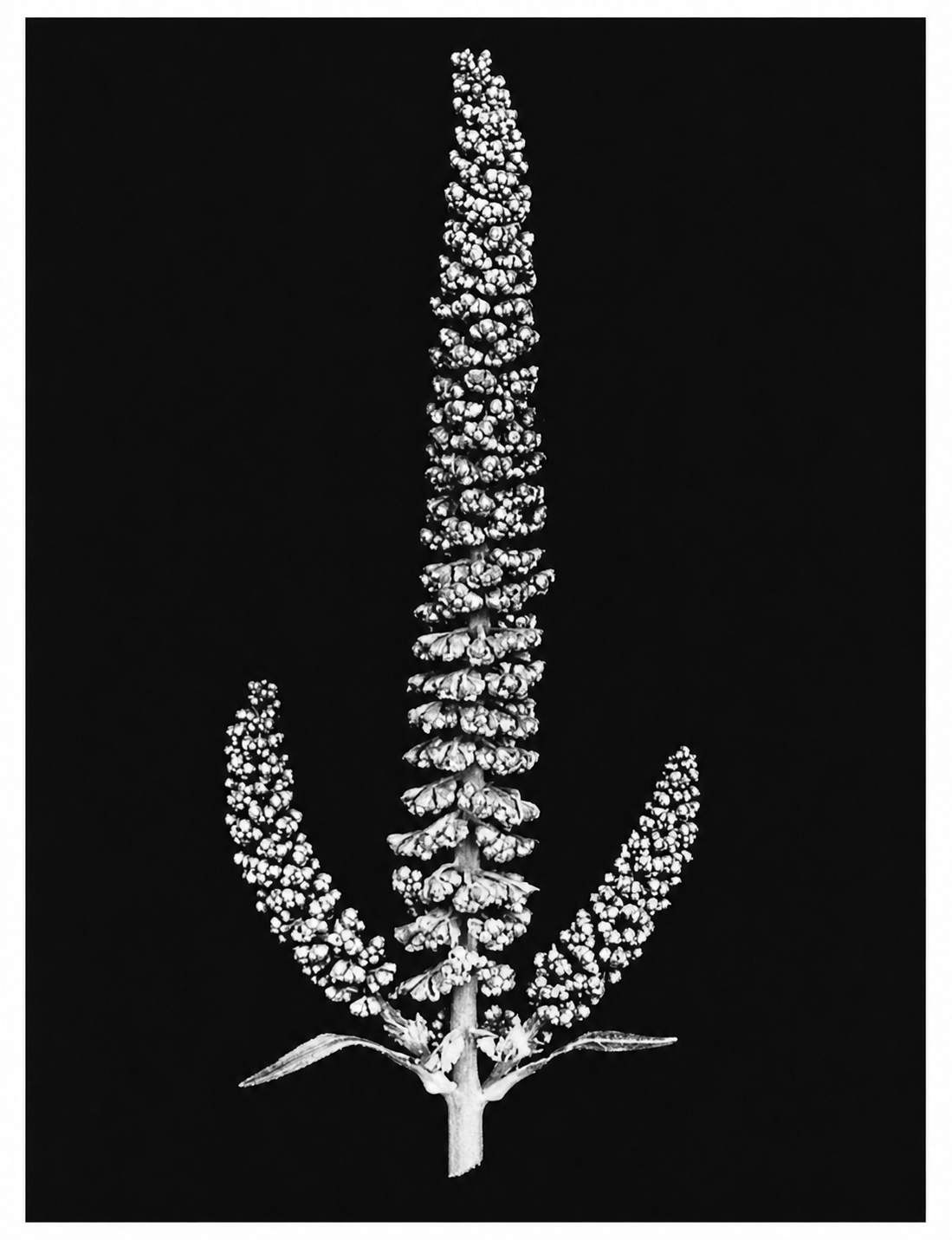
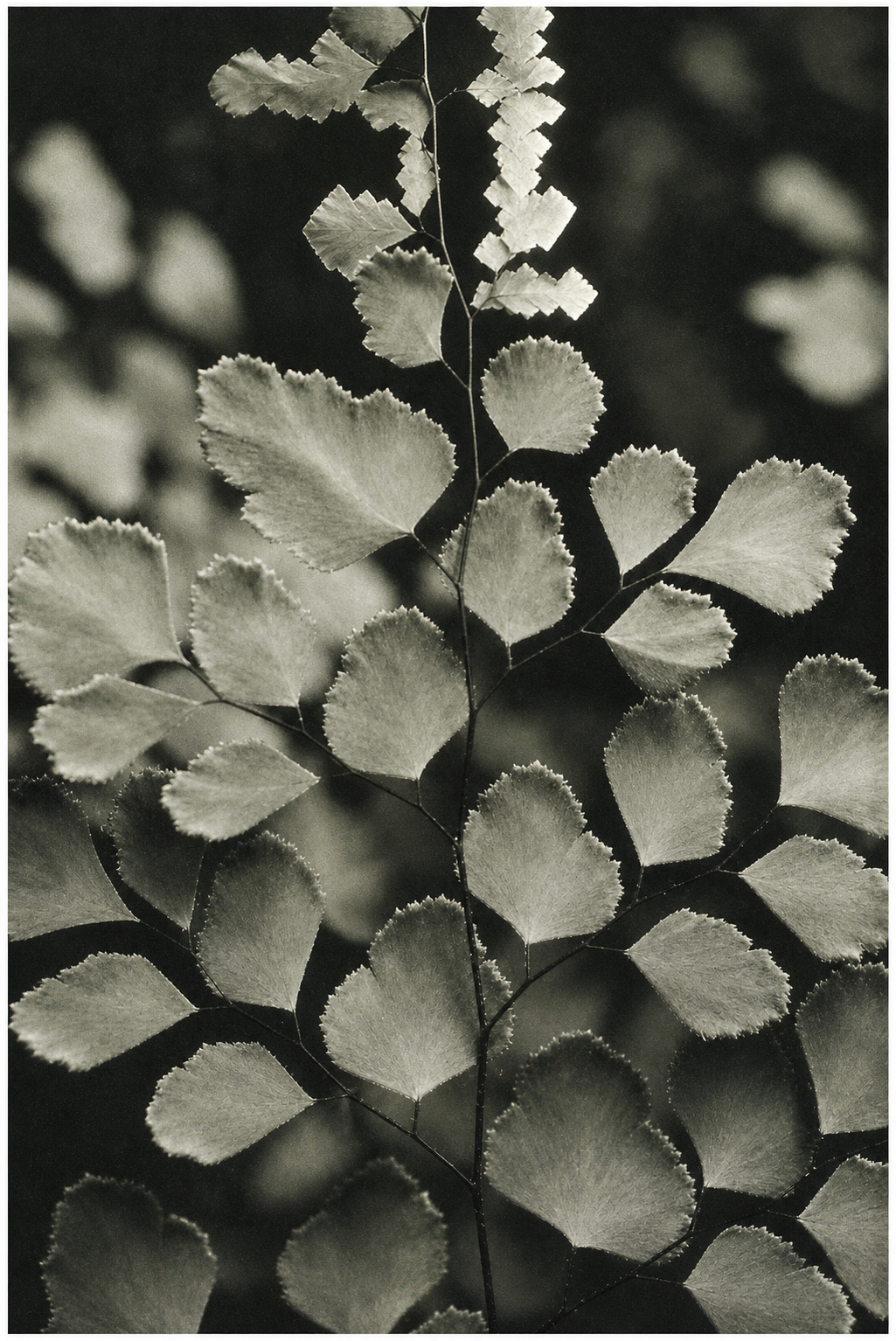
Another fern
Mackerel sky: clouds beginning to form ripple formations for ALTERNATING REPETITION lies in the fact that the secondary centers are coherent in their own right, are not left over. This happens in most natural systems because the secondary centers occur as coherent systems in themselves, with their own laws, their own defining processes and stability.
It is also significant that the physical size of the secondary alternating units is very often at the same order of magnitude as the size of the primary repeating units. In the mackerel cloud formation seen above, why is it that the size of the space between the white parts is about the same as the white parts themselves? The dynamics of vapor formation create clouds of a certain size. The nucleation of the vapor in this clump "sweeps" another volume clean of vapor. The space loses its vapor as the denser droplets form in the adjacent zone. As the cloud forms, the space full of vapor and the spaces emptied of vapor alternate and form the striated pattern we see in the sky.
As the examples make clear, we sce the appearance of this phenomenon in a plethora of forms throughout nature. In particular cases, its occurrence is certainly not a mystery. Yet no simple theory that I know of explains or predicts its pervasiveness.
THE FIFTEEN
4.5 / Positive Space
In a great variety of natural systems, we find something very much akin to the positive space I have described in chapter 5. In the majority of naturally developed wholes, the wholes and spaces between wholes form an unbroken continuum. This arises because the wholes form "from the inside" according to their specific functional organization, thus making each whole positive in its own terms. The positive nature of the space is necessary to preserve the wholeness of the system.
For example (next page), each bubble in a cluster of soap bubbles presses outward; as a result of this equilibrium the bubble walls flatten out, and the space inside the bubbles becomes
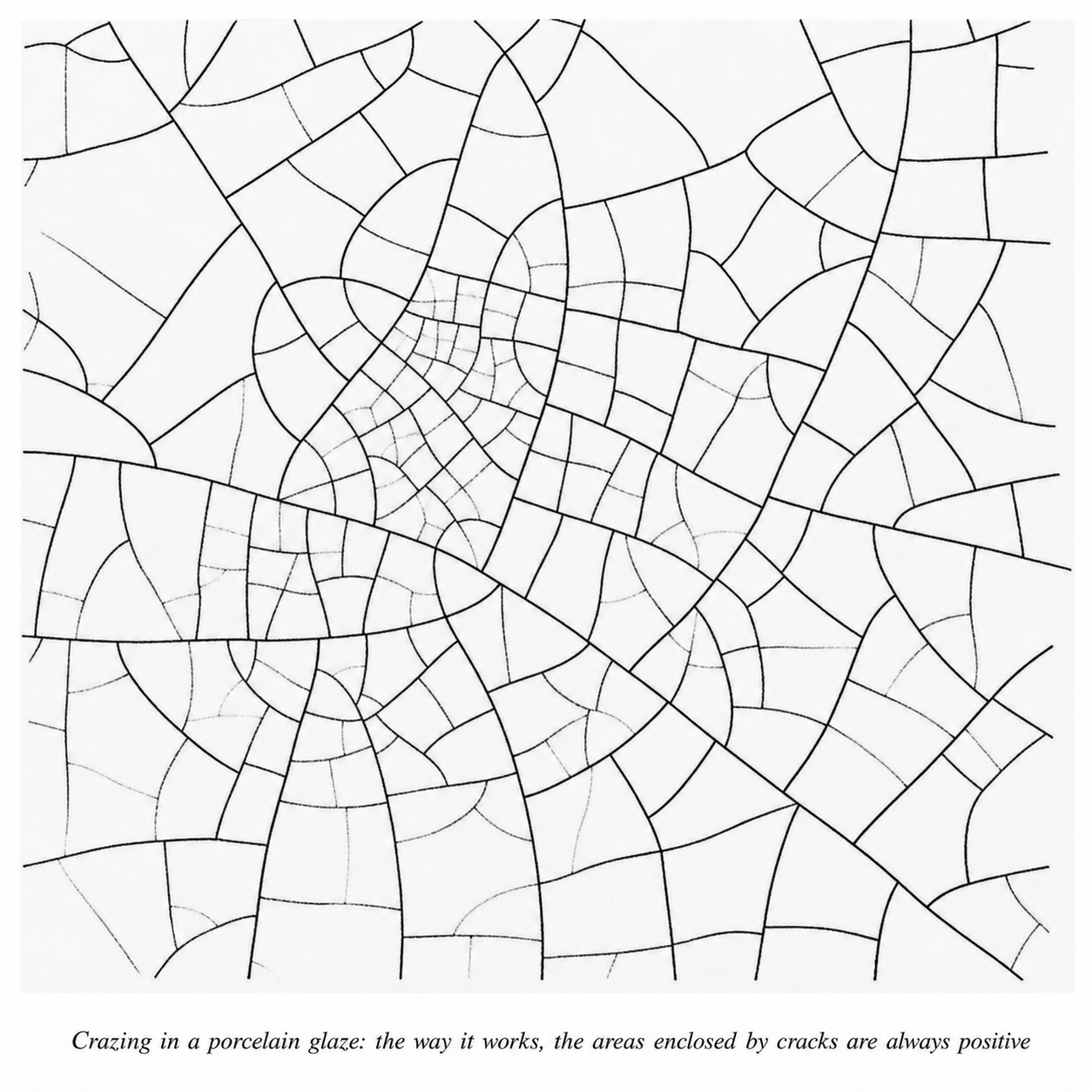
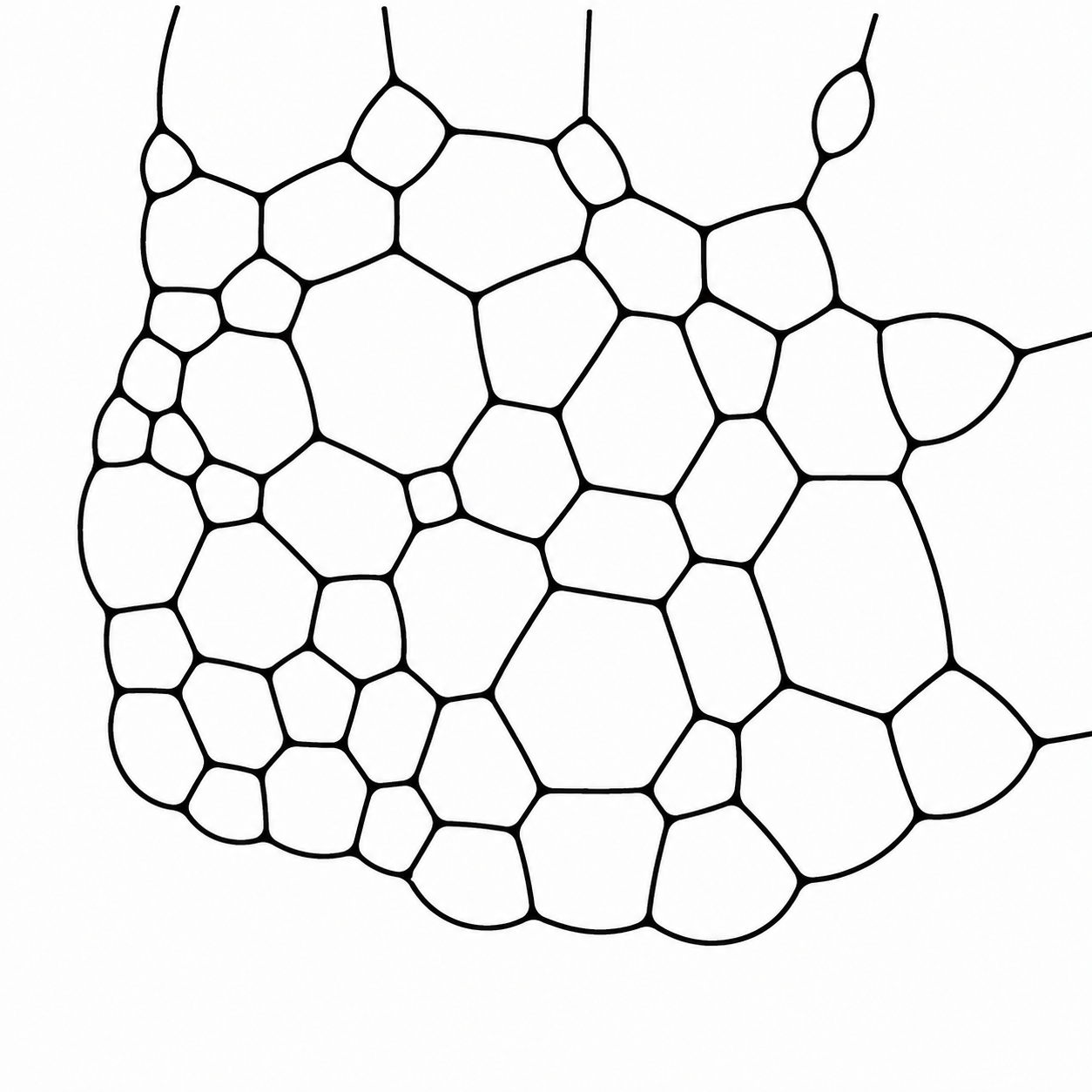
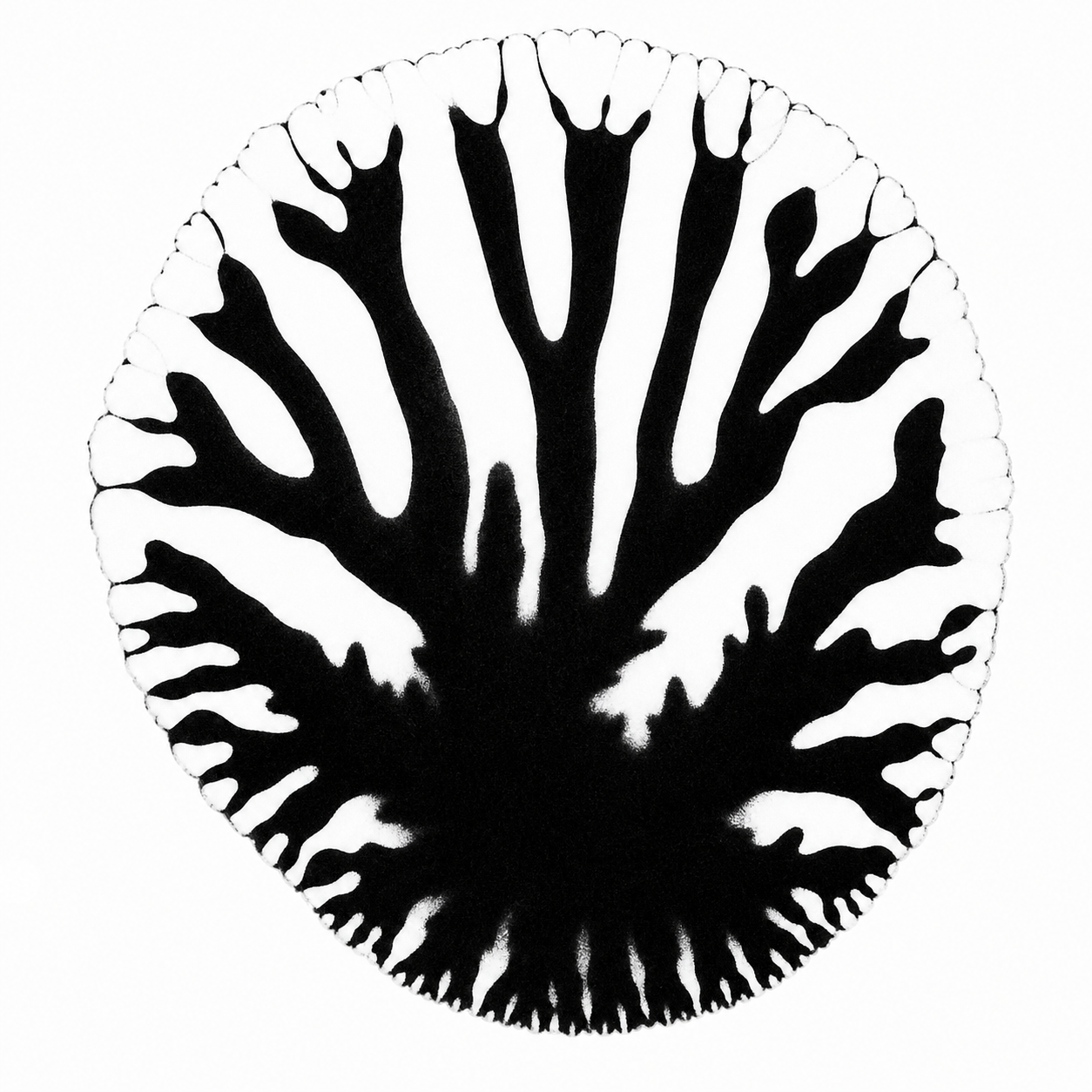
Crazing in a porcelain glaze: positive. In the second example illustrated on the next page, of ink flowing in gelatin, the river of ink has its own laws and its own pressure, as does the gelatin. The same thing happens with the crystals which take on coherent polyhedral shapes as they butt into each other while they grow. Unlike a single crystal, which may form non-positive space next to it, each bit of space is occupied by an outward thrusting crystal, making all the space positive.
In the crazing of porcelain (below), we see a similar effect. As the surface cools, the glaze shrinks, forming cracks. The areas bounded by cracks are coherent in shape because
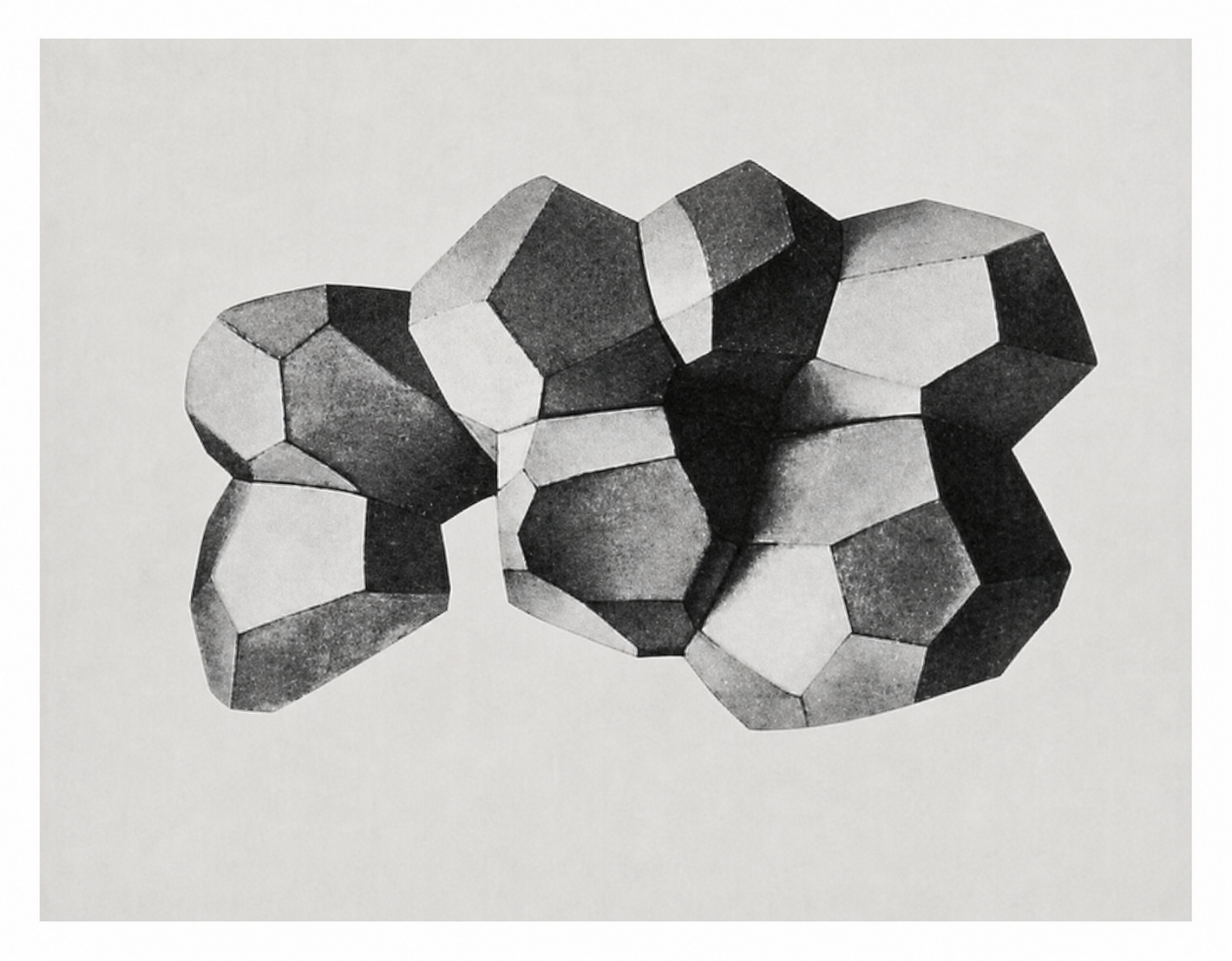
Clumped crystal polyhedra -- each one is positive
the cracks follow maximum stress lines and form in such a way as to relieve maximum stress. As a result, the areas bounded by the cracks all turn out to have good shape, more or less compact, and all about the same size. The energy of the crazing equalizes out, and ensures that they are all positive.
In all these cas es, the positiveness of the space -- what we might also call the convexity and compactness of the centers which form -- is the outward manifestation of internal coherence in the physical system. Thus we have an intuitive idea of why it keeps happening. It is difficult, however, to formulate in terms which can be established as a general rule, because, without the language of living centers, it is not clear how the idea of positive space could be formulated accurately.
THE FIFTE
4.6 / Good Shape
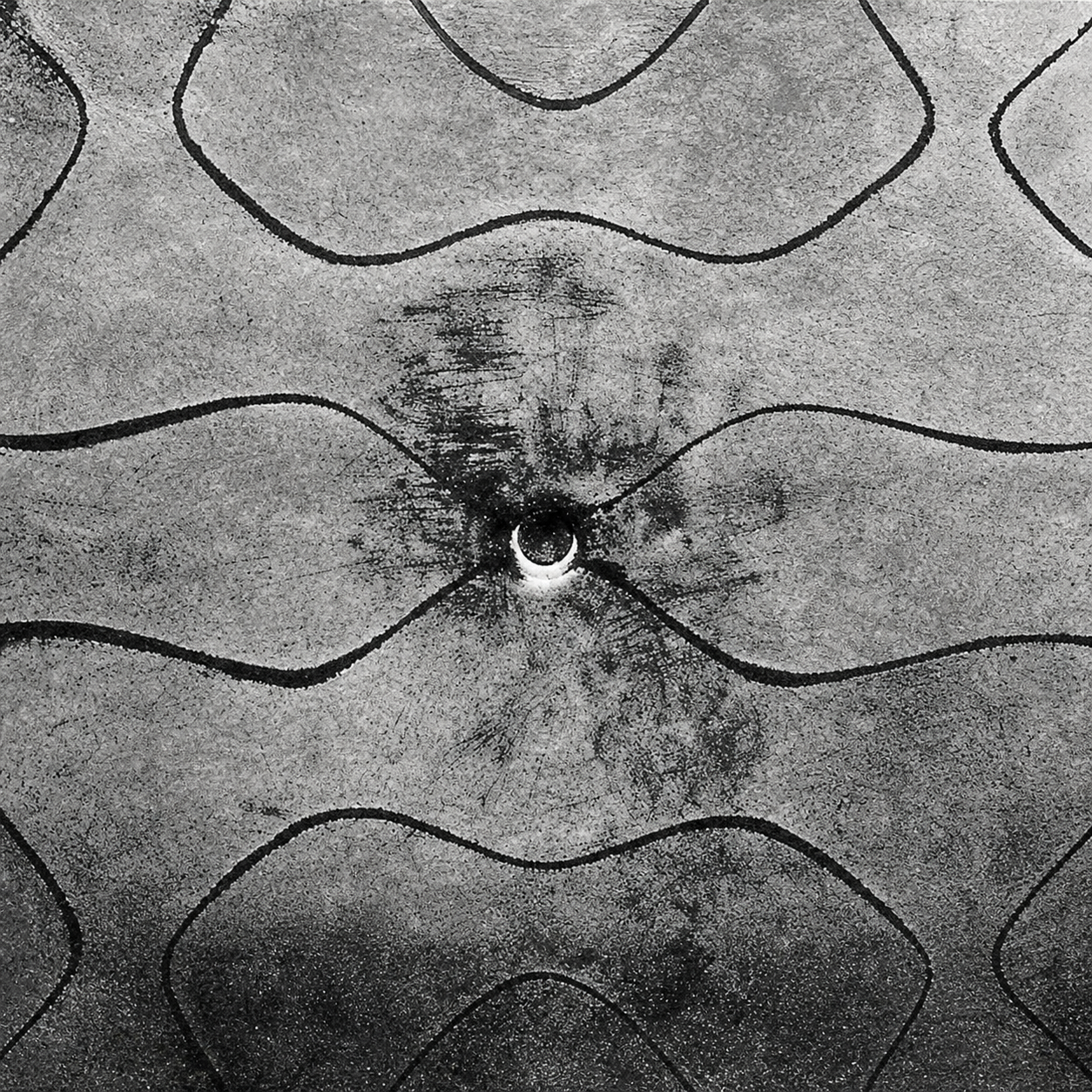
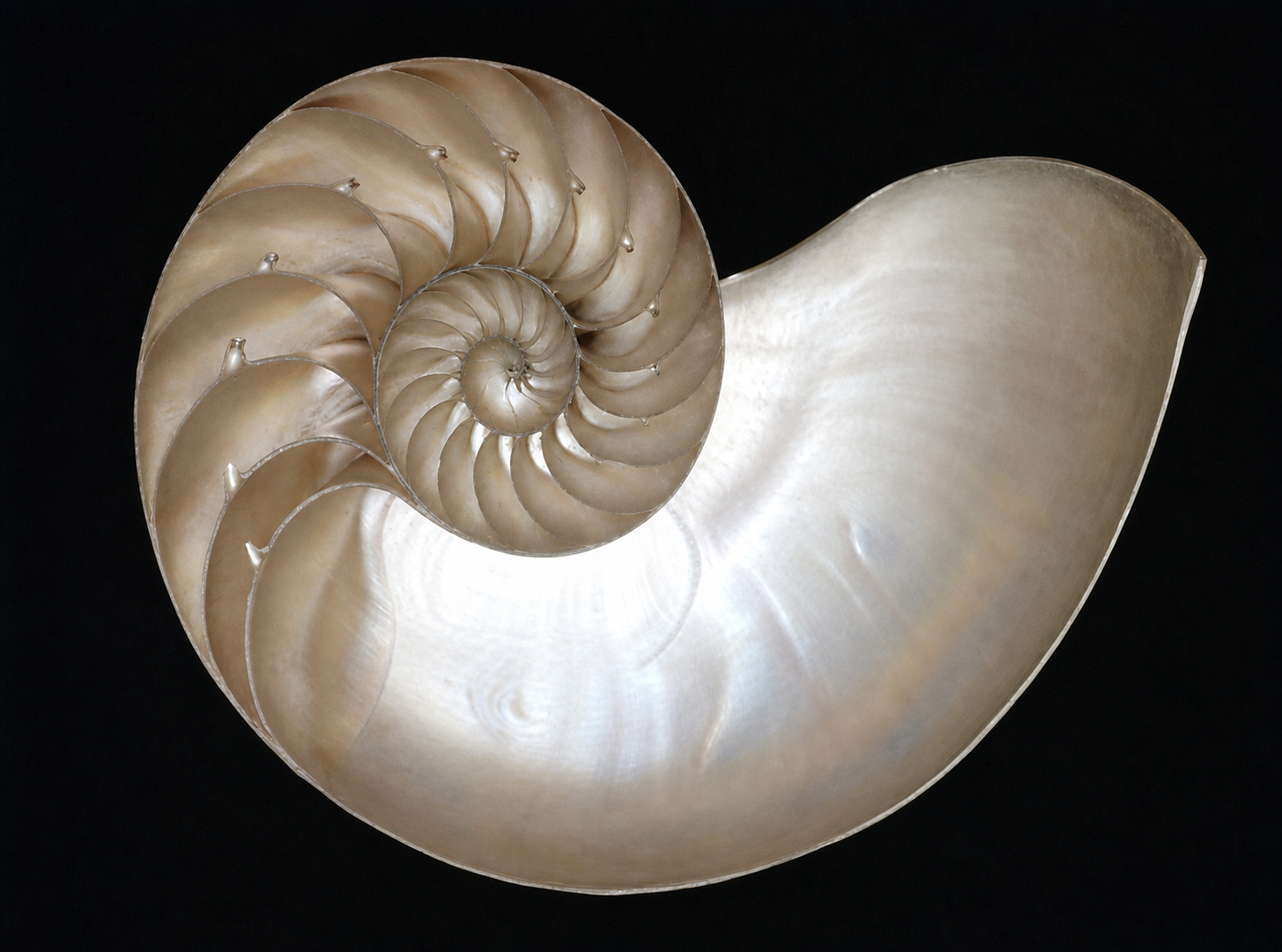
A great many natural systems have a tendency to form closed, beautifully shaped figures: leaves, the curl of a breaking wave, a cowrie shell or a nautilus, a harebell, a bone or a skull, a whirlpool, a volcano, the arch of a waterfall, the hooves of a horse, the outline of a moth or a butterfly, the Chladni figures produced by a violin bow vibrating a steel plate with sand on it -- all have natural and beautiful shape.
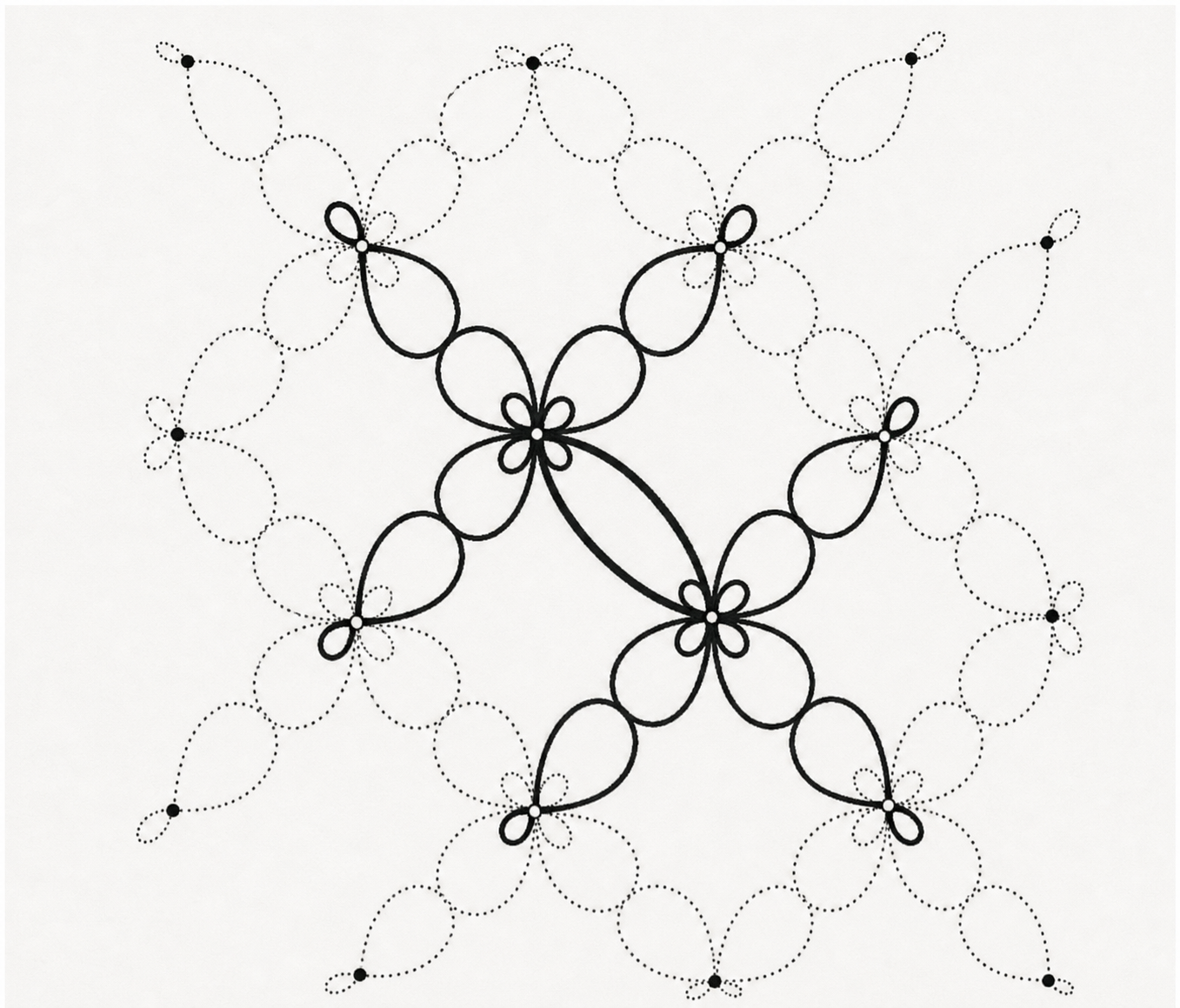
In order to understand the widespread occurrence of beauty of these shapes in nature, we must remember that a GOOD SHAPE is a geometric figure -- often curved -- which has in it some major center that is intensified by various minor centers. If we look carefully at the
Chladni figure, we notice that the curves of which it is made have a definite and noticeable peculiarity. This comes from the fact that each curve surrounds one center, then surrounds another center on its opposite side, then back again. The particular character of the curve comes from the double system of centers which exists inside the curve formed by the station ary nodes of the vibration. In each case, the fact that an intense major center is surrounded by various intense minor centers is directly connected with the physical behavior of the system. The special shape of the sycamore leaf, with its full curves and reverse-curves at the tips, comes from the relative rates of growth of different parts of the
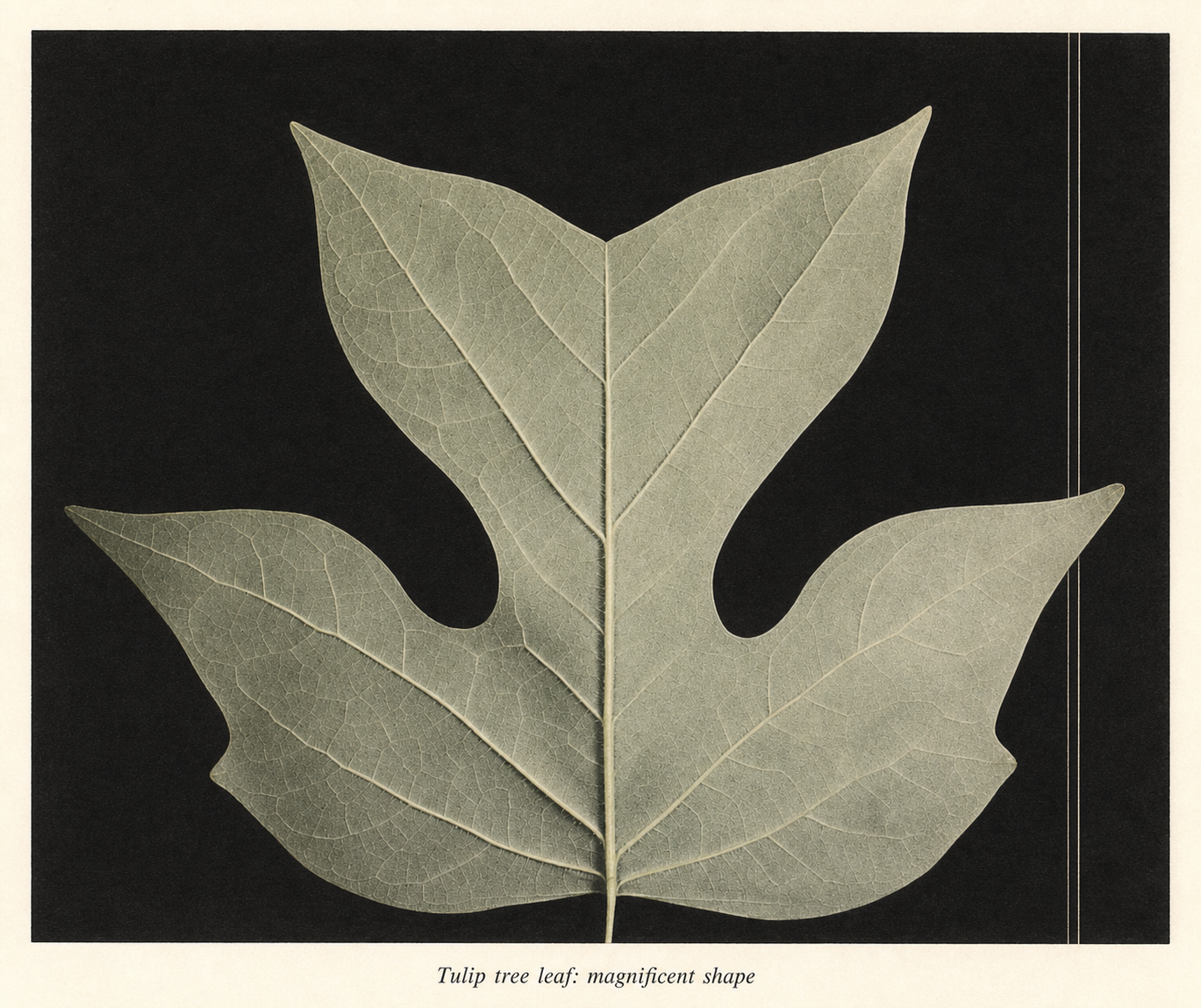
perimeter. Again, the good shape arises because each part -- the inside of the full curve, and the sharp point of the tip -- exists as a center, which is developed very fully in the growth process." In the electron orbitals inside a molecule, for similar reasons, we see similar curved surfaces, with their own three-dimensional version of good shape caused by the interaction of the curves in space.
The appearance of good shape in nature has been noted informally by many writers, notably by D'Arcy Wentworth Thompson." I believe however, that a general explanation of this widespread appearance of good shape in nature has not yet been formulated, chiefly because the concept of good shape has not yet been expressed in precise language. Once again, without the concept of a living center, it is hard to see how this could be formulated precisely.
4.7 / Local Symmetries
Local symmetries are pervasive throughout nature. The sun is symmetrical (roughly), a volcano is symmetrical around its center, trees are symmetrical around their trunks, crystals are symmetrical, the human body is symmetrical in its major bilateral symmetry and in many of its individual parts (a finger around its length, an eye, a fingernail, a woman's breast, a knee).!* Rivers are roughly symmetrical about their line of flow; so, approximately, is a spider's web, and so are the leaves on the tree -- even the veins which lie within the surface of the leaf are more
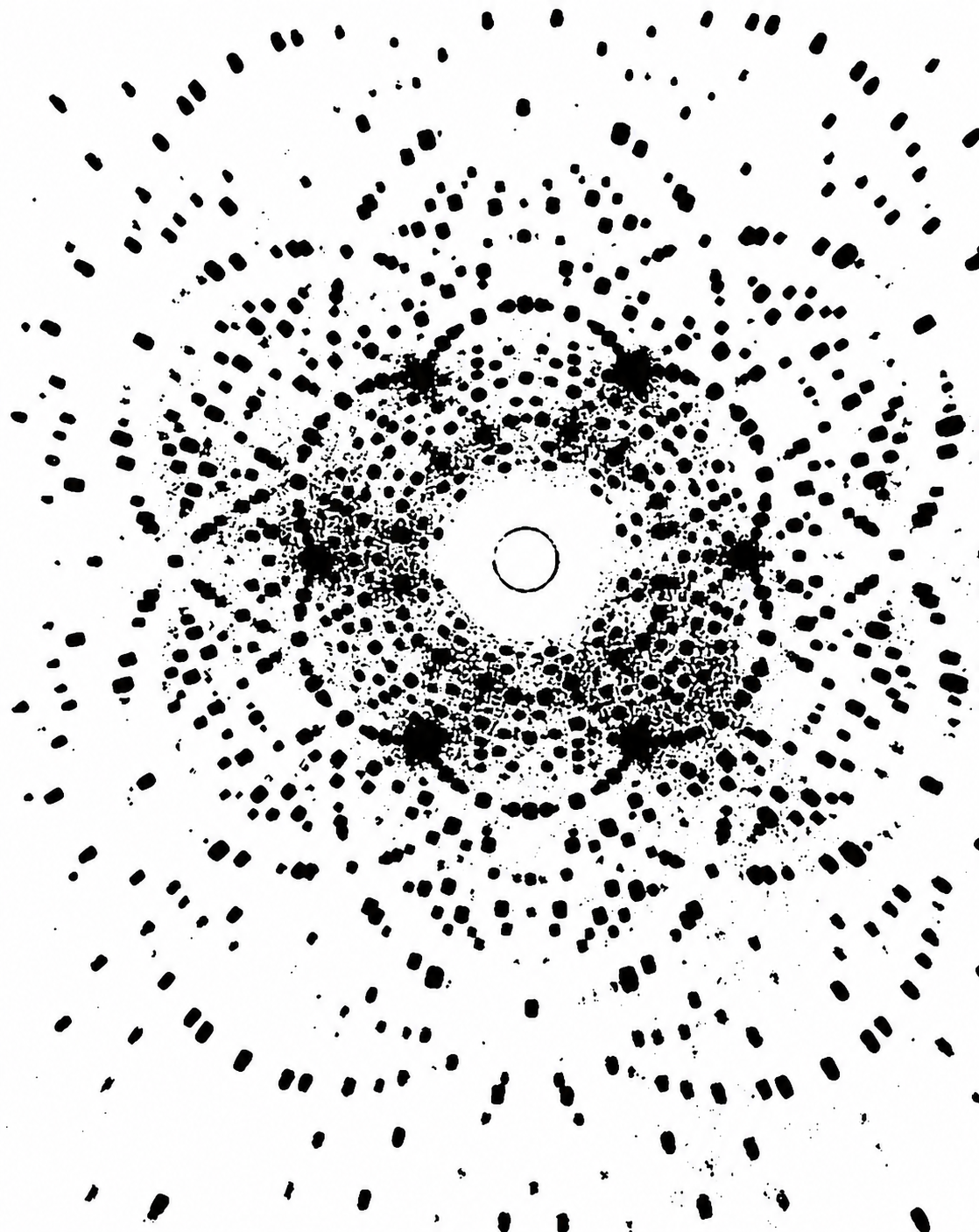
Scattering from a beryllium atom: the pattern shows intricate symmetries
or less symmetrical. Plants are often roughly symmetrical, both in their totality and, more finely, in details like their leaves. And, of course, local symmetry also occurs in simpler phenomena. For instance, when a star forms, it creates a rotating sphere which is symmetrical around its axis. A drop of water is approximately symmetrical about the vertical axis; a free-floating soap bubble is symmetrical. A ray of light, being a straight line, is symmetrical about its own axis and from end to end. Molecules often have one or more axes of symmetry.'
a we, 'eq ry
ieege
.Y
THE FIETELN
SPDT Se ee es a
a
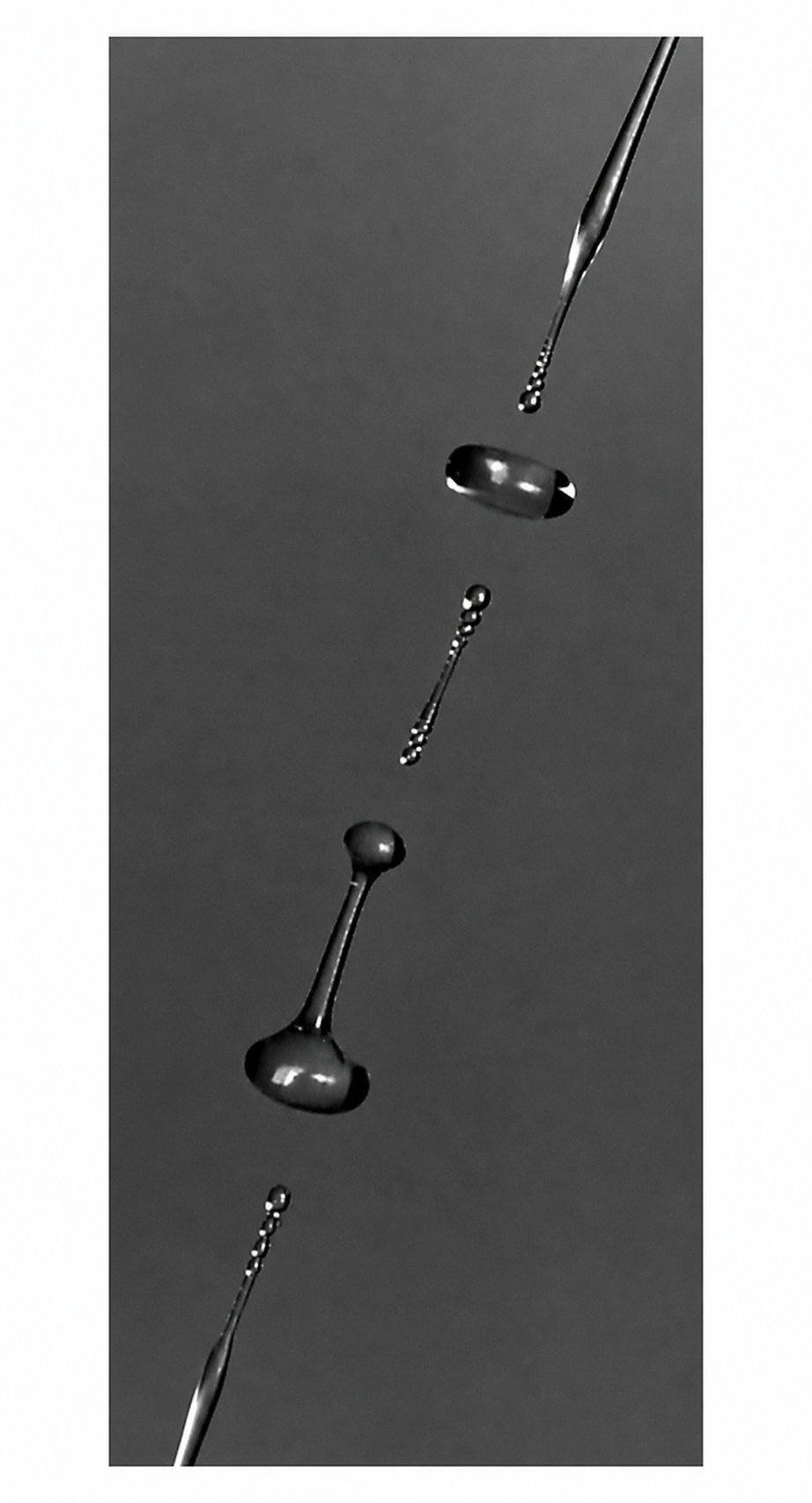
In general these symmetries occur in nature because there is no reason for asymmetry; an asymmetry only occurs when it is forced. Thus, for instance, a water drop, falling through the air, is asymmetrical along its length, because the flow-field is differentiated in the direction of fall, but symmetrical around its vertical axis, because there is no differentiation between any one horizontal direction and any other. In short, things tend to be "equal" unless there are particular forces making them unequal.
In addition, the existence of local symmetries in nature corresponds to the existence of minimum energy and least-action principles. A soap bubble is symmetrical because the symmetrical sphere is the shape which minimizes the
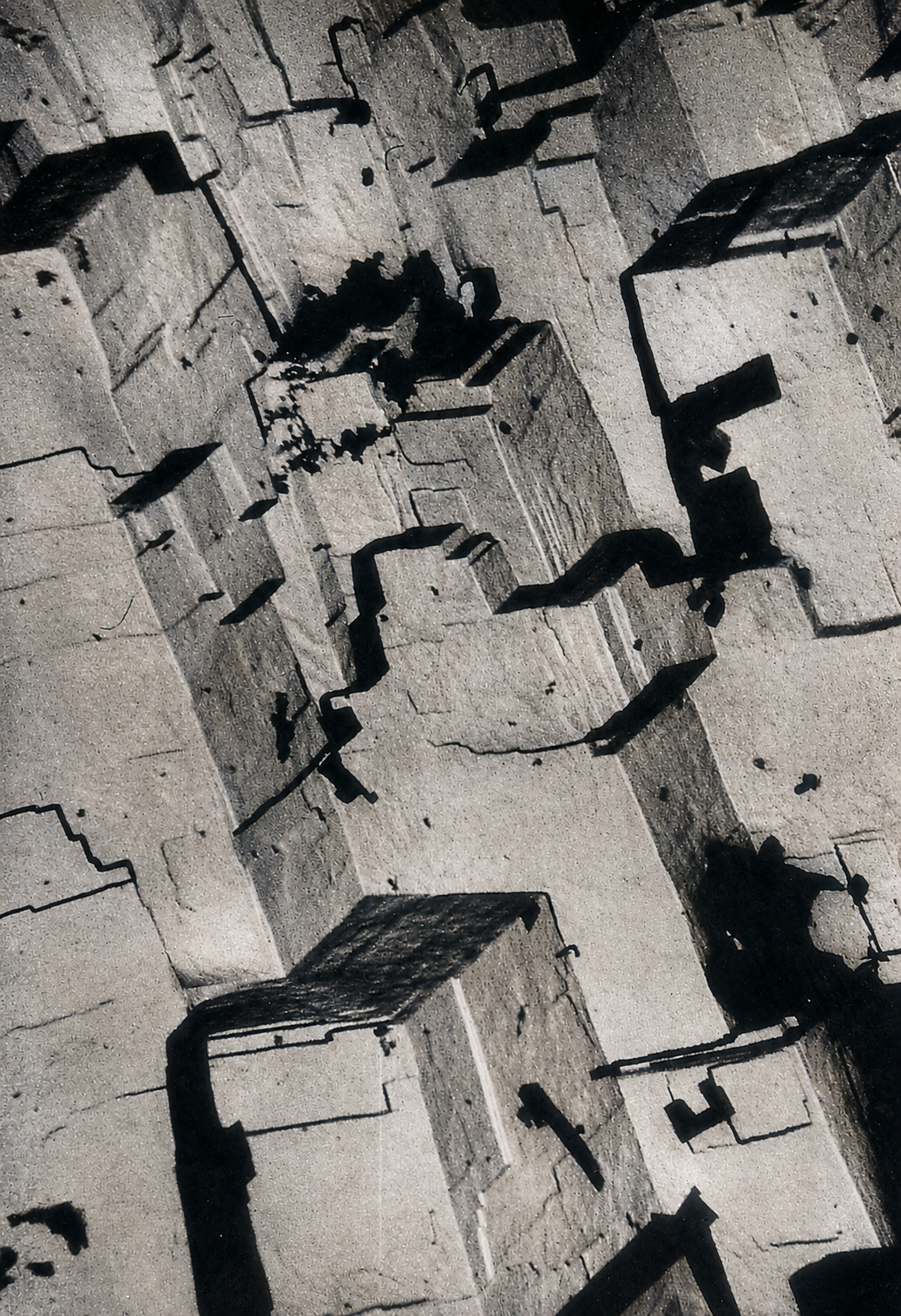
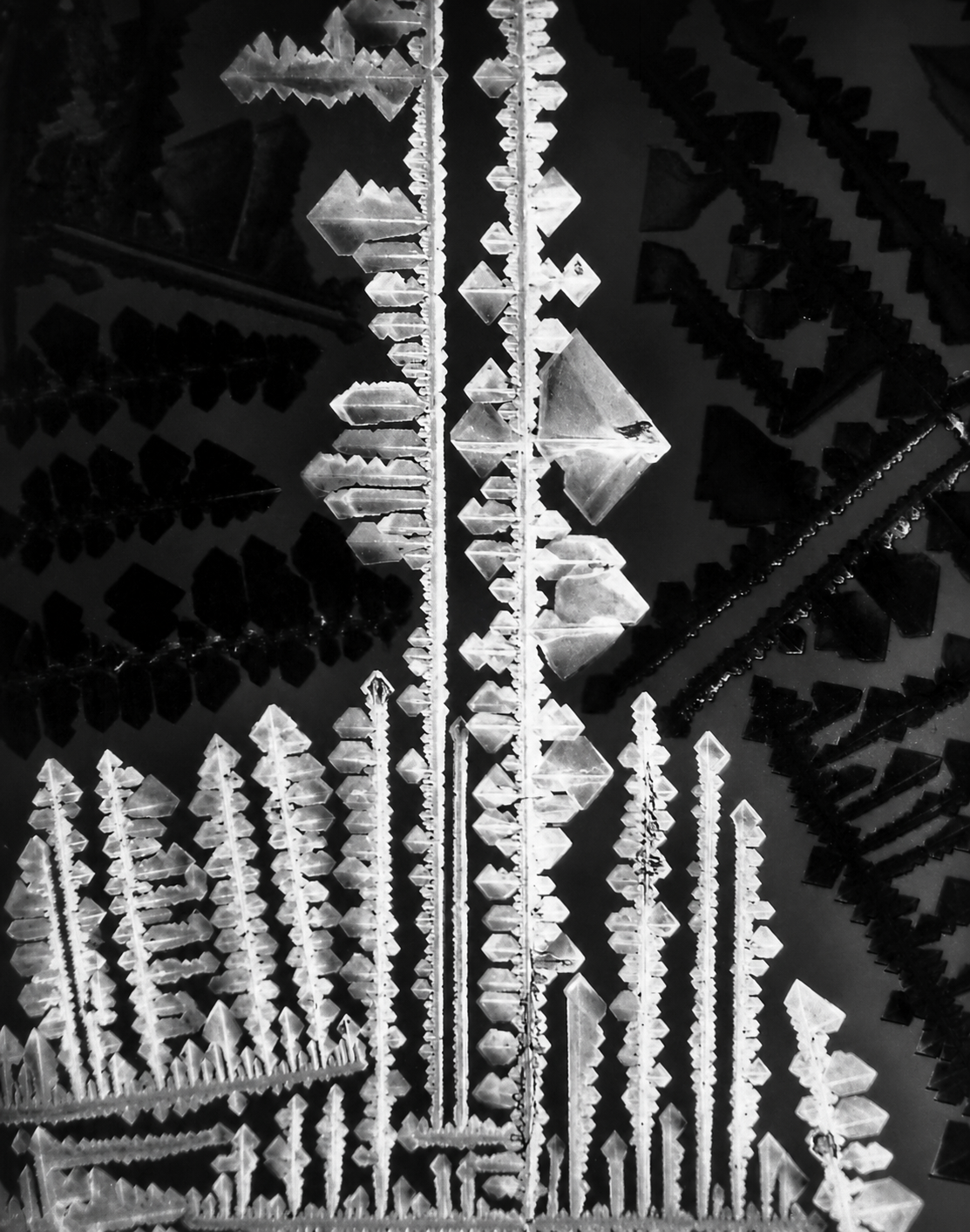
Surface structure of aluminum: here we see many local symmetries, not only on the fully formed crystals, but in the partially formed crystals which have started to grow. Each zone of growth establishes its own local symmet
THE FIFTEEN
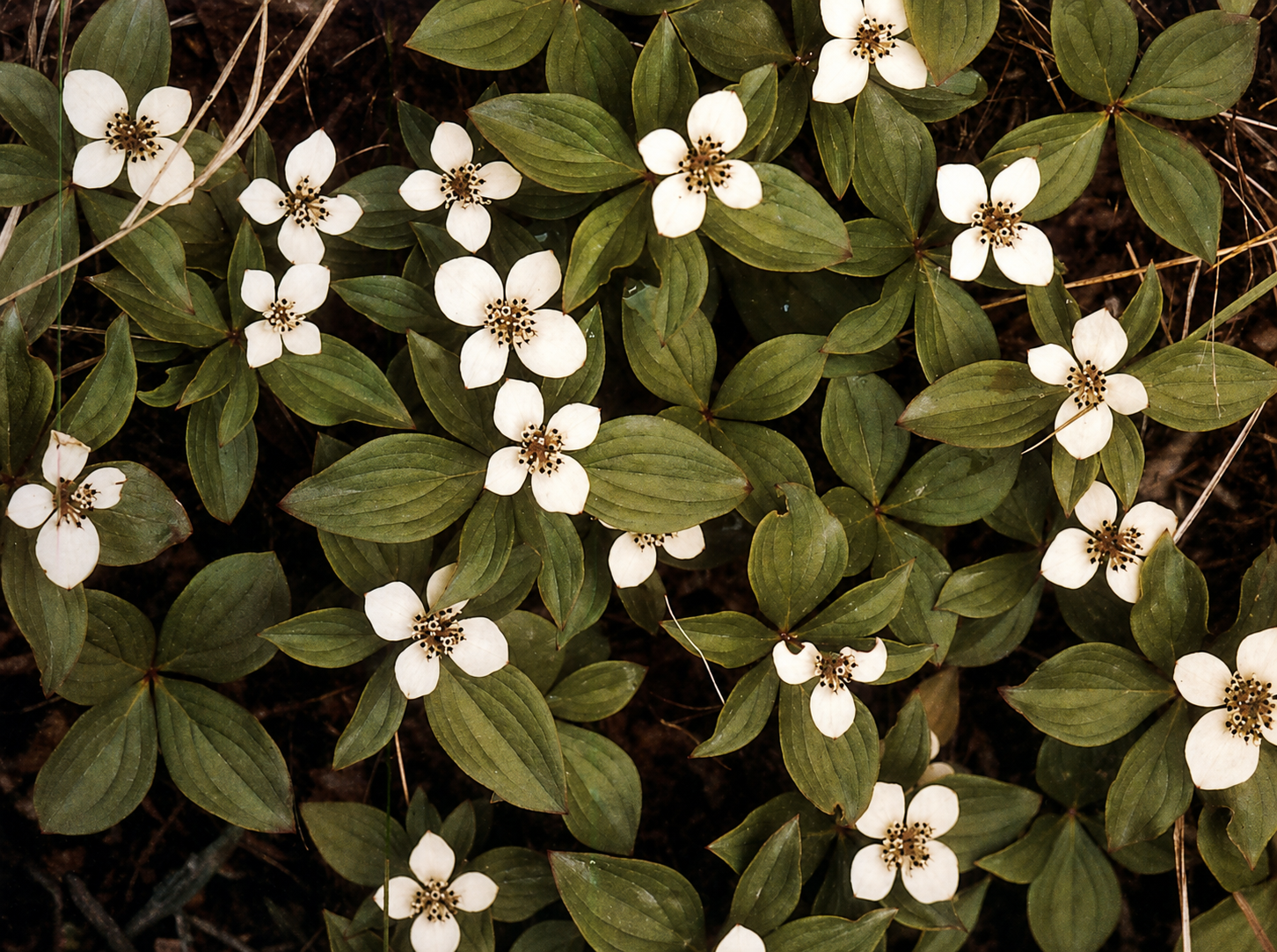
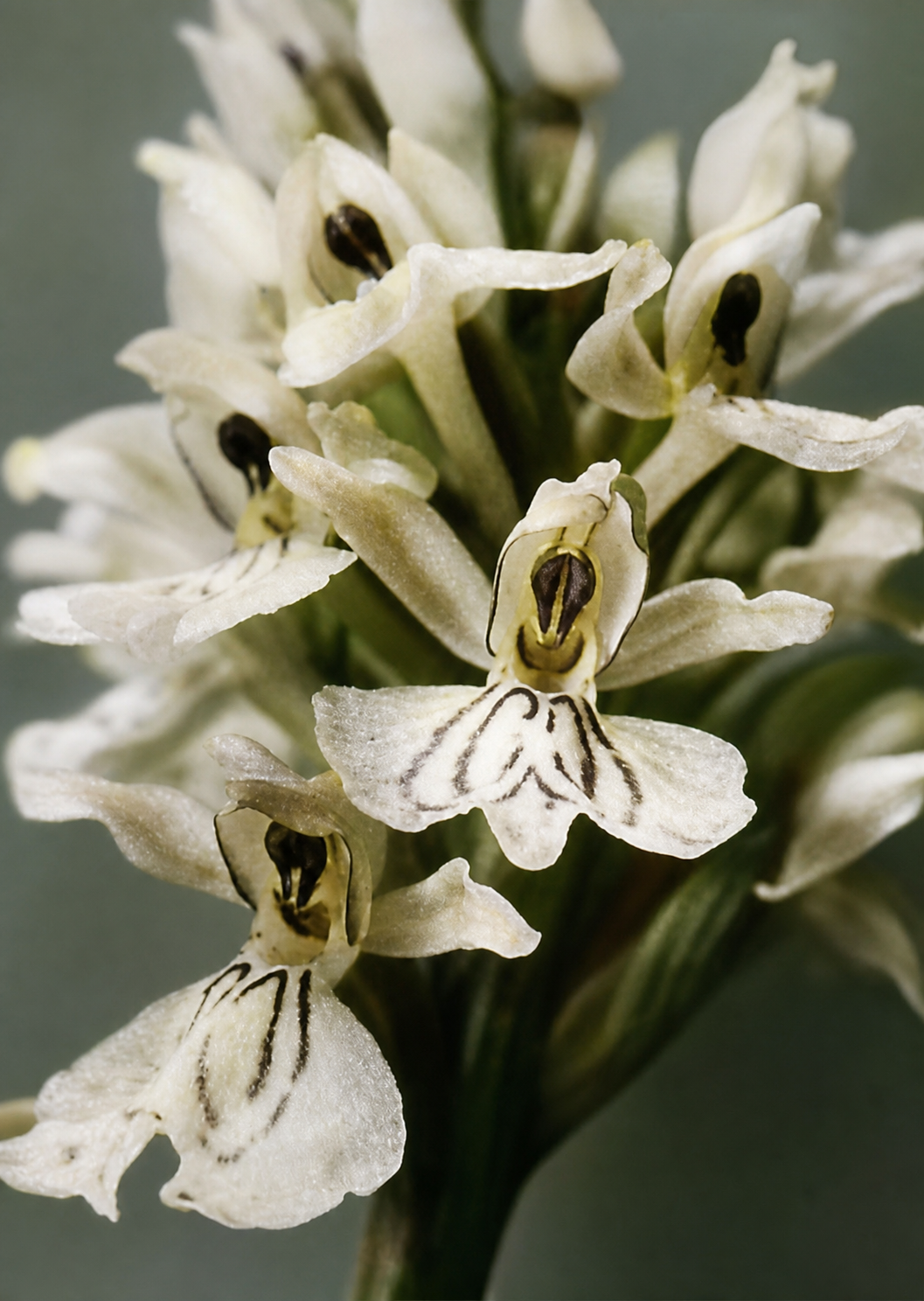
Cornus Canadensis (Dwarf Dogwood or Bunchberry): another example of local symmetries potential energy due to surface tension. The crystal is symmetrical because the continuous aggregation of equal particles usually leads to an array which, for geometric reasons, has global symmetry."°
In the majority of these cases, it is also the presence of layer upon layer of subsymmetry at smaller scales which is important. A Rorschach blot is symmetrical as a whole, but possesses no significant symmetries at lower scales. This kind of form, random at lower levels but symmetrical in the large, is relatively uncommon in nature. Contrast it with snow crystals which display symmetries at many levels. They are symmetrical in the large, but the smaller symmetries, nested within the whole, give them their structure. Each branch is repeated six times, on the six arms of the hexagon. Each one of the six arms is bilaterally symmetrical along its length. And the smaller shoots, which branch off from the main arms at 60 degrees, are again symmetrical within themselves. It is this multiple, multilayered symmetry that convinces us of the "structure" in the snow crystal.
The appearance of symmetry in nature is possibly the most widely noticed of the fifteen properties. It has been written about by a multitude of writers. And local symmetries, particularly, were discussed by Alan Turing, in his essay on morphogenesis." Later work on symmetry breaking has also begun to explain in general how local symmetries form, and propagate, in a wide variety of general physical systems.'® So in the case of this property, we do have the beginnings of a general theory which predicts that locally symmetric structures and nested symmetries will arise, in general, throughout the range of natural systems.
4.8 / Deep Interlock and Ambiguity
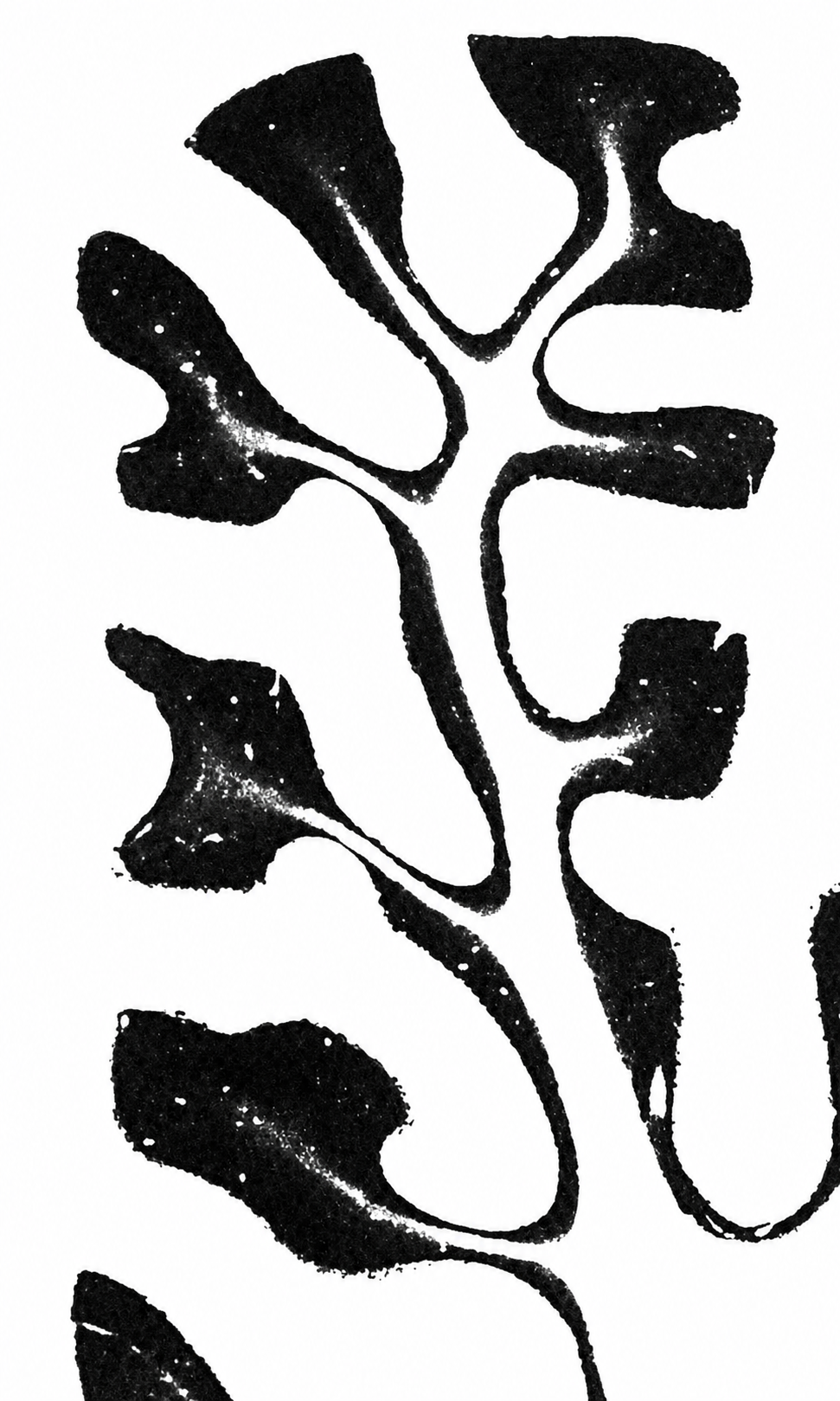
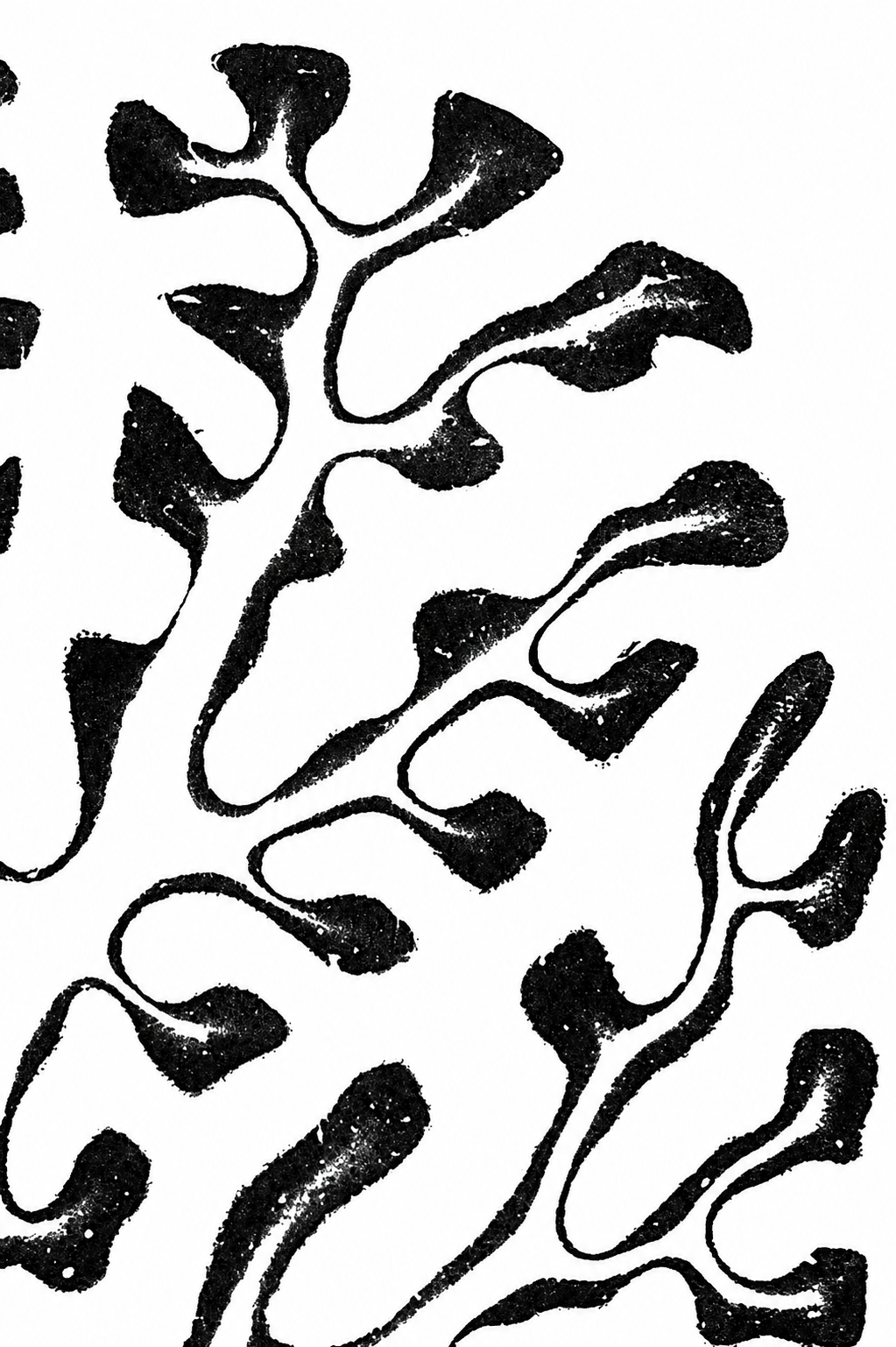
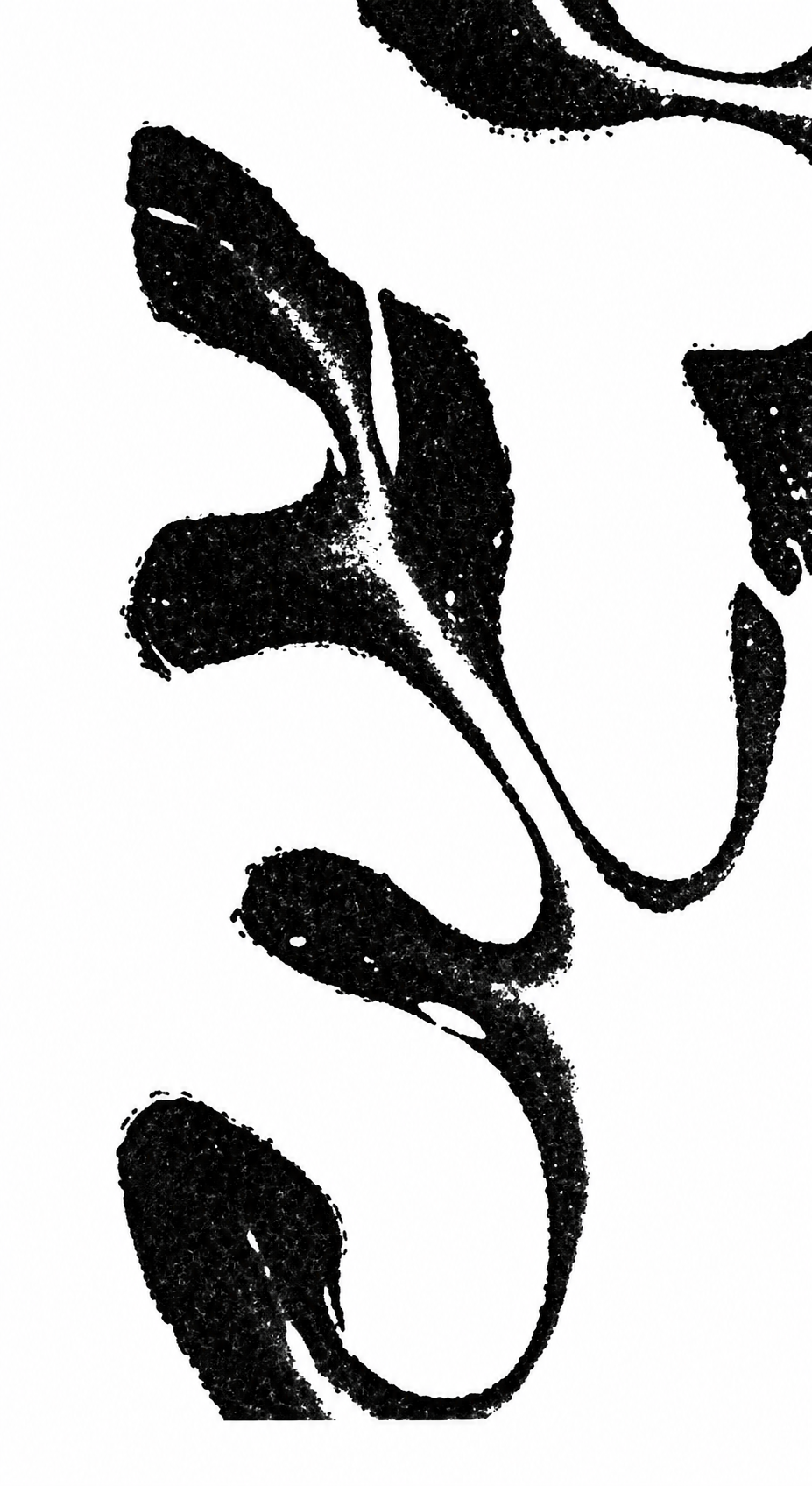
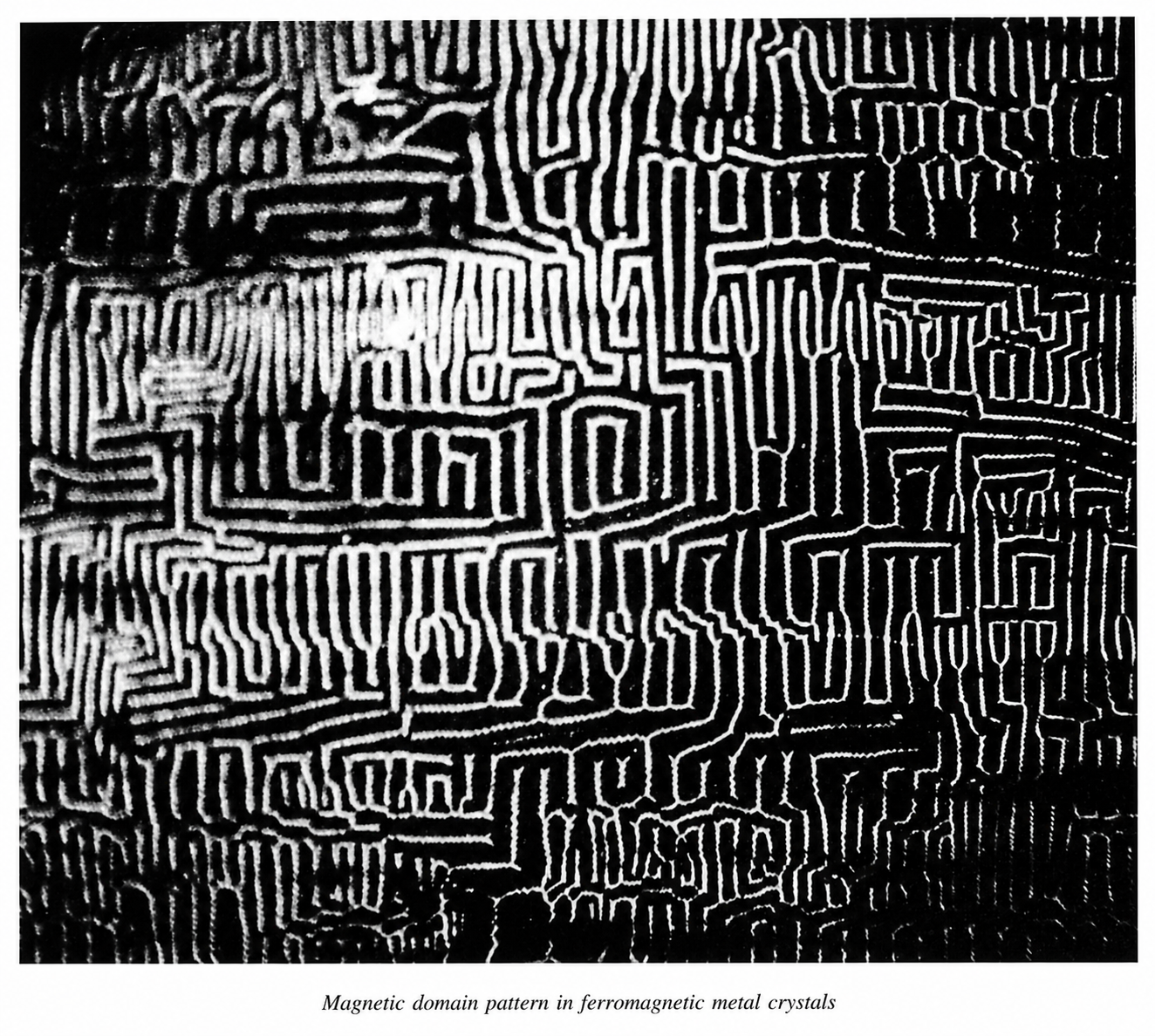
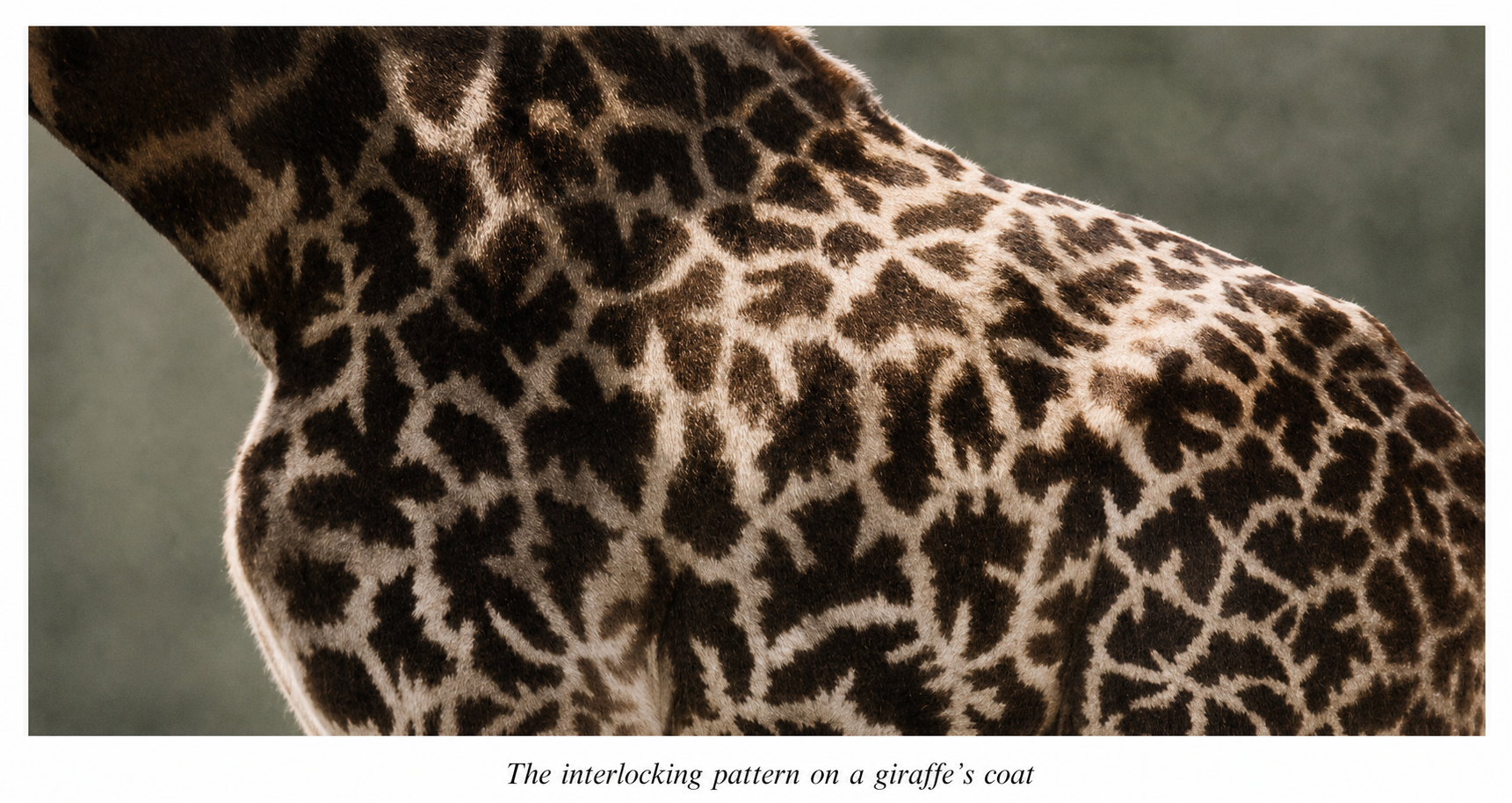
Deep interlock comes about in many natural systems because neighboring systems interact most easily along extended or enlarged surfaces, where the surface area is large compared with the volume.
A well-known example exists at the surface of the cerebellum. In order to increase the surface area, and thus permit the maximum number of connections with surrounding tissue, the cerebellum is crinkled deeply. The magnetic domain in a ferrous crystal has a similar structure: two domains, deeply interpenetrated, allow two materials to be in contact for an enormous surface area within a constant volume.
Ambiguity, a similar phenomenon, comes about when a subsystem belongs simultaneously to two different overlapping larger systems. One of the most important and dramatic examples of
this kind of overlap exists in the case of molecules. Simply put, the molecule is given its structure by the overlap of the electrons in the outer electron shells of the component atoms. What is important for our purposes is the following: the stability of the molecule (or the binding energy of the bond) is determined by the depth of overlap or interpenetration of the electron shells. A table published by Bernard Pullman shows how the deeper the interpenetration and overlap, the more stable the molecule."
A general theory to explain the pervasiveness of deep interlock and ambiguity might be formulated in terms of surface area and the impact of reactions and interactions between systems. Although it would be hard to do this in numerical terms which are fully general, it might be done in qualitative terms.
4.9 / Contrast
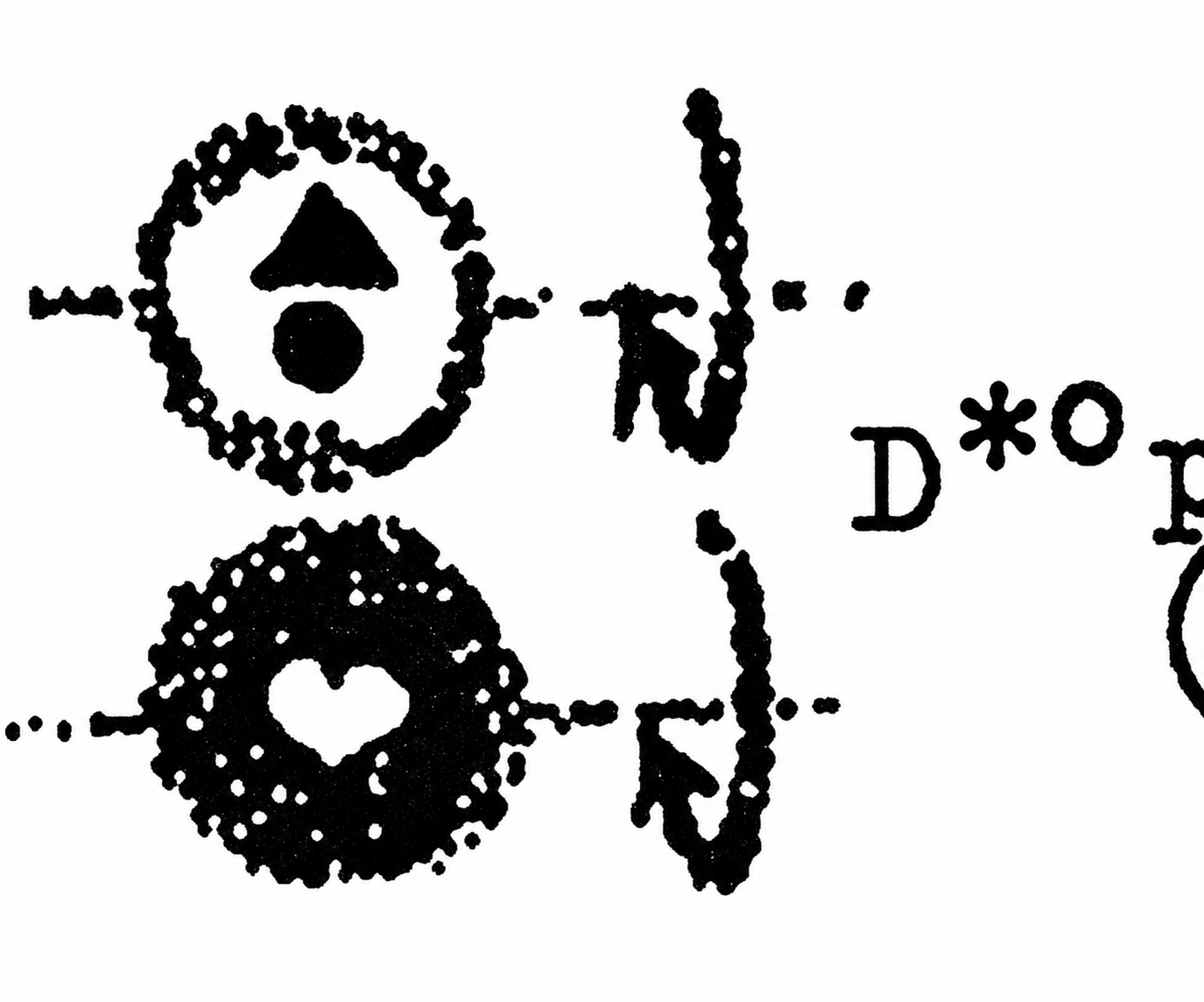
Many -- perhaps all -- natural systems obtain their organization and energy from the interaction of opposites. We see this at a fundamental level in the following chart of elementary particles, which contains particles and antiparticles, positive and negative electric charges, charmed and anti-charmed quarks, up and down quarks, and anti-up and anti-down quarks.
On a biological level, we see it in the contrast of male and female which exists in almost electron
SiN abegere
%.
anti-charmed & charmed quark g anti-up
Os
every kind of organism. It appears in the cycle of day and night, formed by a rotating earth in sunlight. It appears in the contrast of solid and liquid phase which provides the action and catalysis in chemical reactions. More informally it exists in the contrast of dark and light in the surface of a butterfly, which attracts the mate.
As in other properties, the obviousness of the way that contrast works in particular cases is nevertheless hard to explain or predict as a
were
Si
eo): charmed quark @) anti-electron
-- ~o -- -- -- ® up quark
@ anti-up >) up quark anticharmed n D° particles (Lighter)
1g elementary particles particles (heavier)
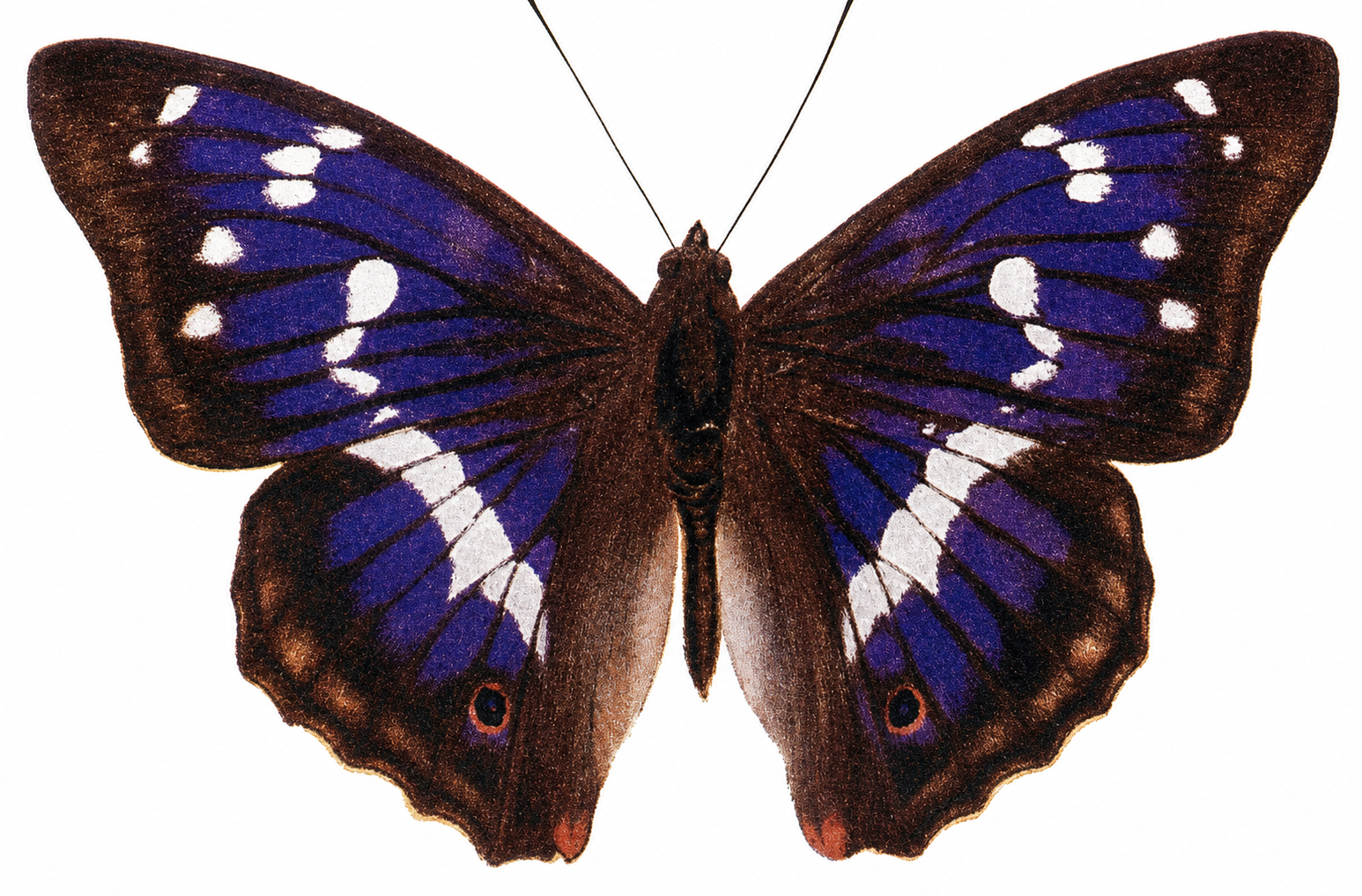
Purple Emperor butterfly general rule. It would be extremely hard to show, from first principles, why contrast must arise, necessarily, as a property of any naturally occurring system, and one wonders whether the matter is not merely cognitive. We read contrast; our cognition depends on it; therefore we think it is important. And yet the fundamental contrast of dark and light, positive and negative, can hardly be an artifact of our cognition.
The nearest thing I know to a general explanation of its appearance in the world is the one given by Spencer Brown. His beautiful account of all mathematics arising from the contrast (distinction) between nothing and something tries to show how all structure and form, at the most elementary level, come from contrast."" But why the systems in which living structure appears seem to have contrast more strongly than others -- that remains a mystery.
THE FIFTEEN
4.10 / Gradients
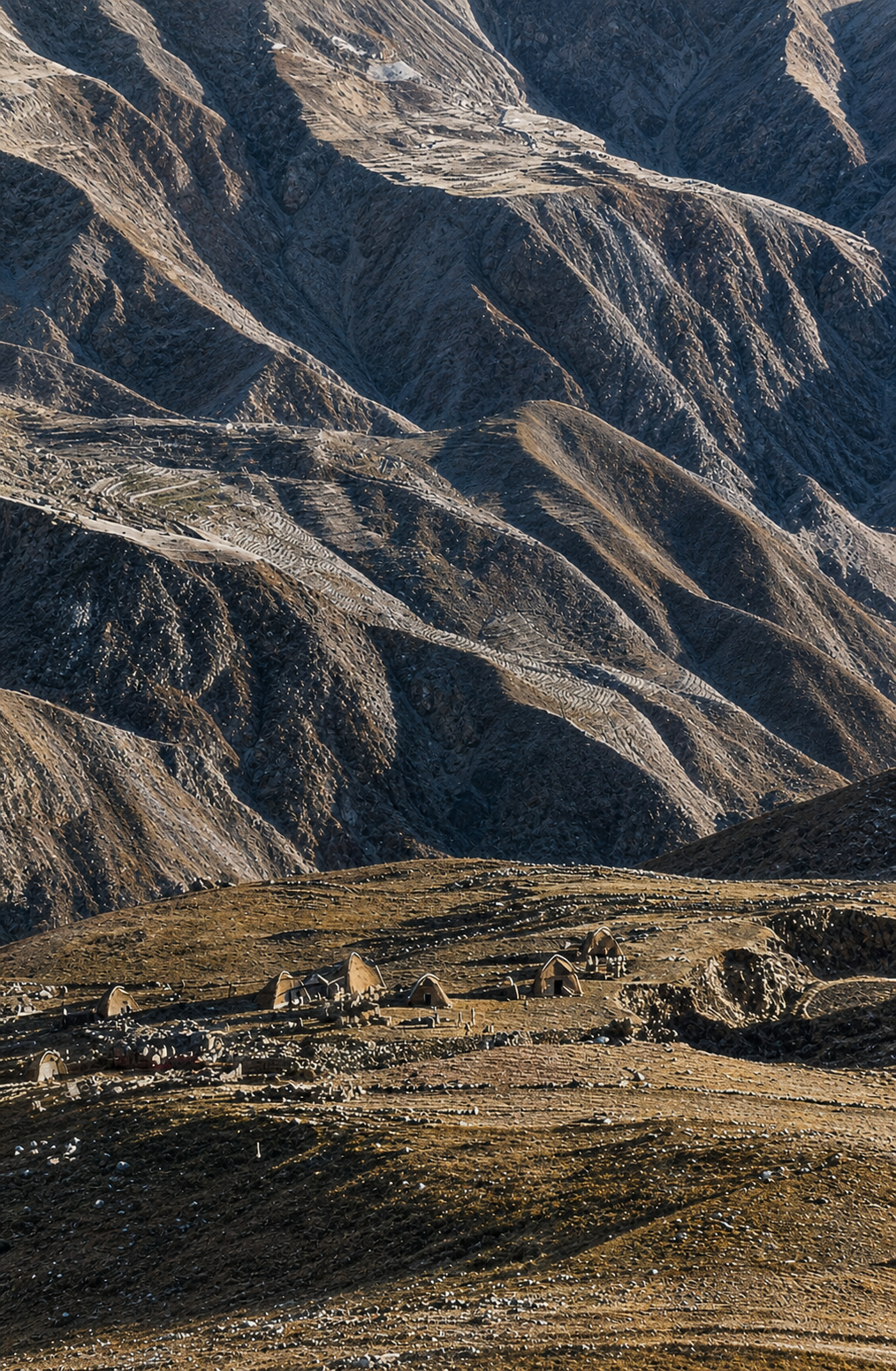
Gradients play a very large role throughout nature. Any time that a quantity varies systematically, through space, a gradient is established. For instance, as we climb on a mountain, the higher we go, the climate becomes colder, and the air becomes thinner. In these gradually changing conditions, trees become more thinly spaced, finally giving way to grass and then to rocks, and then to rocks and ice.
In an electric field, the field-strength varies with distance from the charge, forming a gradient of intensity. In a growing plant or embryo, chemical gradients induced by concentrations of different growth hormones, control emerging cell division and cell type, thus forming morphological gradients in the growing organism.
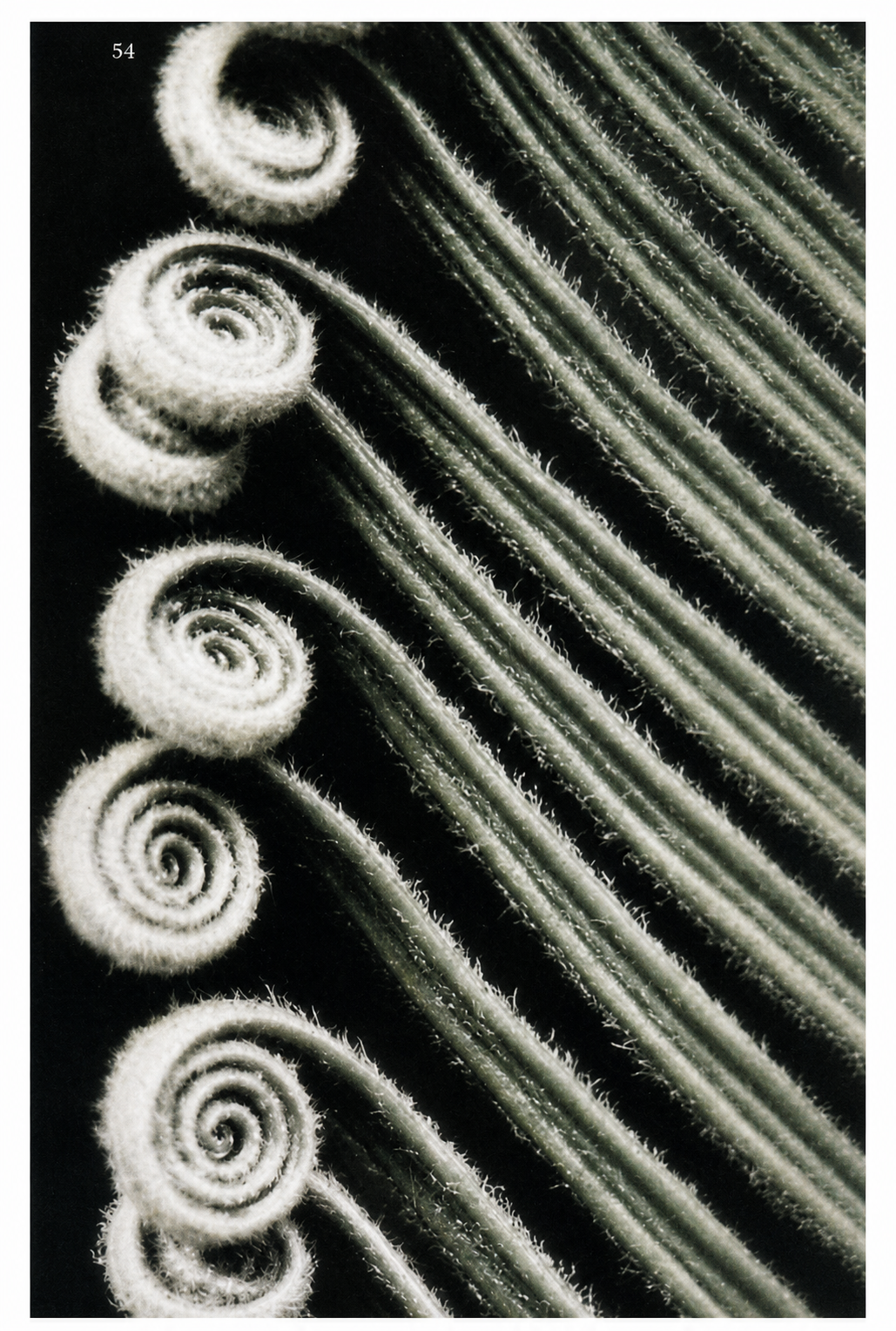
In a river, we have gradients of turbulence and velocity near the river bank; we have a gradient in the size of drops as we go around the curl of a breaking wave; we have a gradient of sizes visible toward the edge of almost any phenomenon. An organism grows as a result of a field of chemical hormones which vary in concentration outward from some central point. The size of
THE FIFTEEN
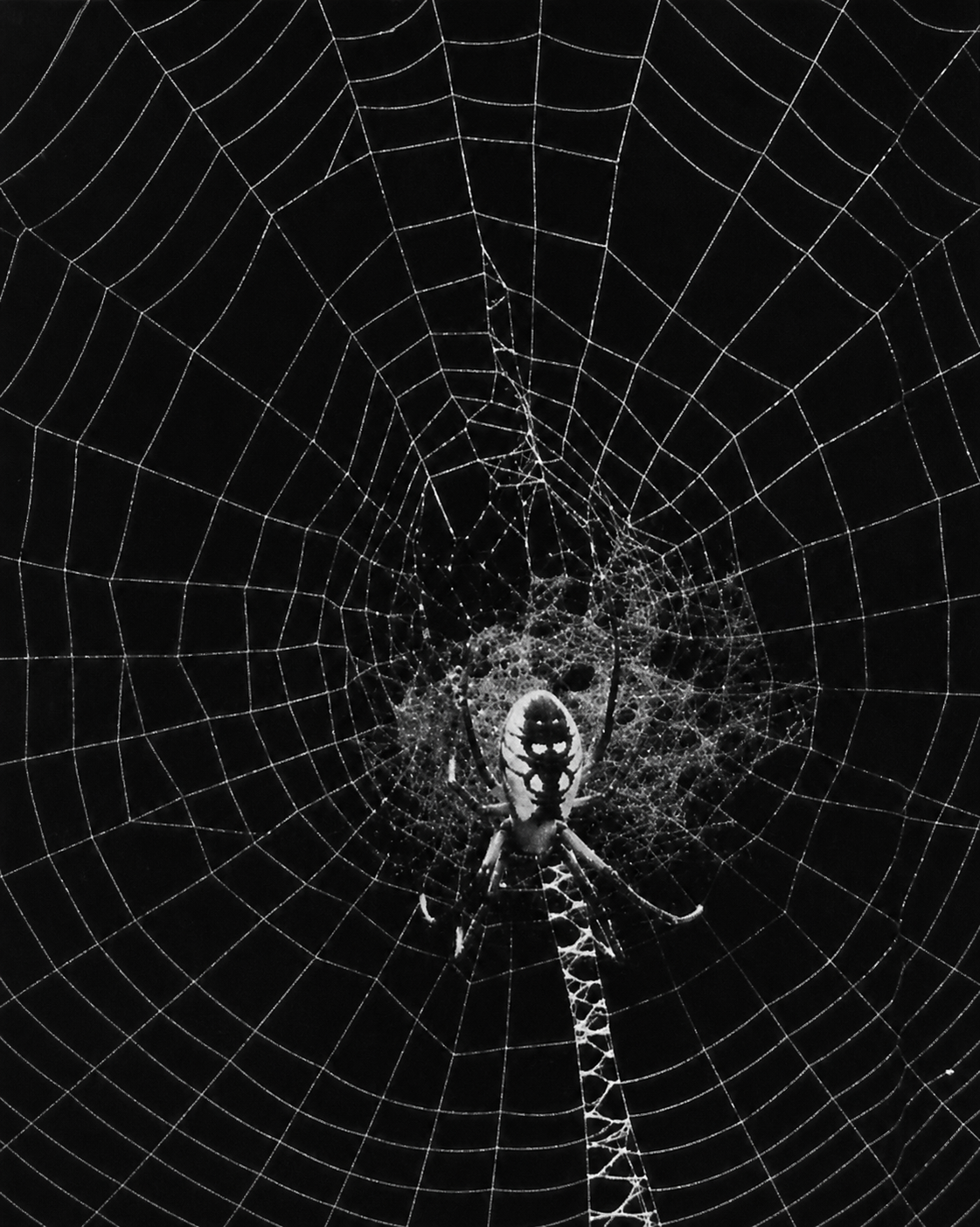
i)
twigs varies in a gradient-like way, outward from the center of a tree; the ice crystals in a zone of varying temperature exhibit a gradient."
The idea of regular gradient-like variation is fundamental to the whole integral and differential calculus, and it is the fact that these mathematical tools are closely mirrored in many phenomena of nature that is essentially responsible for the success mathematical physics has had. The gradients of an electromagnetic field, of a hydrodynamic field, of a gravitational field are the tools, first made available by tensor calculus, which have given us such powerful analyses for a vast array of phenomena in physics.
Even so, there is little of a general nature in complex system theory that explains why those living structures that are stable among rocks, plants, and animals have graded variation in such pervasive and accentuated form.
4.11 / Roughness
2GLELS HS
ae Ee BP SRC
§ 3 Os OF &
e ZBZSREARo ye ER ee Bo 5
SERRE EE
«Bf Sees oes See +2 SBS e Sees 'a < ese x. aah SSessesssees Sshieri ios tae $35 8 2B mSO2@se 2. SSS: SSS. a4 siesee 38-3 335 as > Sp = Es = eS E ESTERS menE Qeih sities ere austen ruristaeeaiiegiiantes eee rieaaen SEB EEE 2 <, seeece. >. ee o 6 ee ee nw ee carat < oe? _ aes. sopssscees eS Post sessoestics + $3 2s OS Sioess '
bs Sa Q ou
ei} SSEt; S585 85 a: Sates 8 5 =spegg Sicresics $3 Sv B S ' ' aoe HSH 3 PI DANA: se ' > PIII 6 Ses Te o§$326% 332333 Seeeseres:: ~ Baer riseererenracesrasearraeaesia? Spee stesceteterstssses) eS ee eee BDI =a vo A, ess 6 SN Ow e &
SIS gee *3 og ges Ceties 3. piri se eeu ef ese" 33: > See. Peg ae aS x:::
rap Es 2 © 5::
2333333333 aS avs Bee: Se erses segs x ee::
33 d:. SEER oe appears pervasively
wes pespessiassas SSS = +3
ee seeserrs ire
sane serenisresesesssnitaresee r3. Set SS
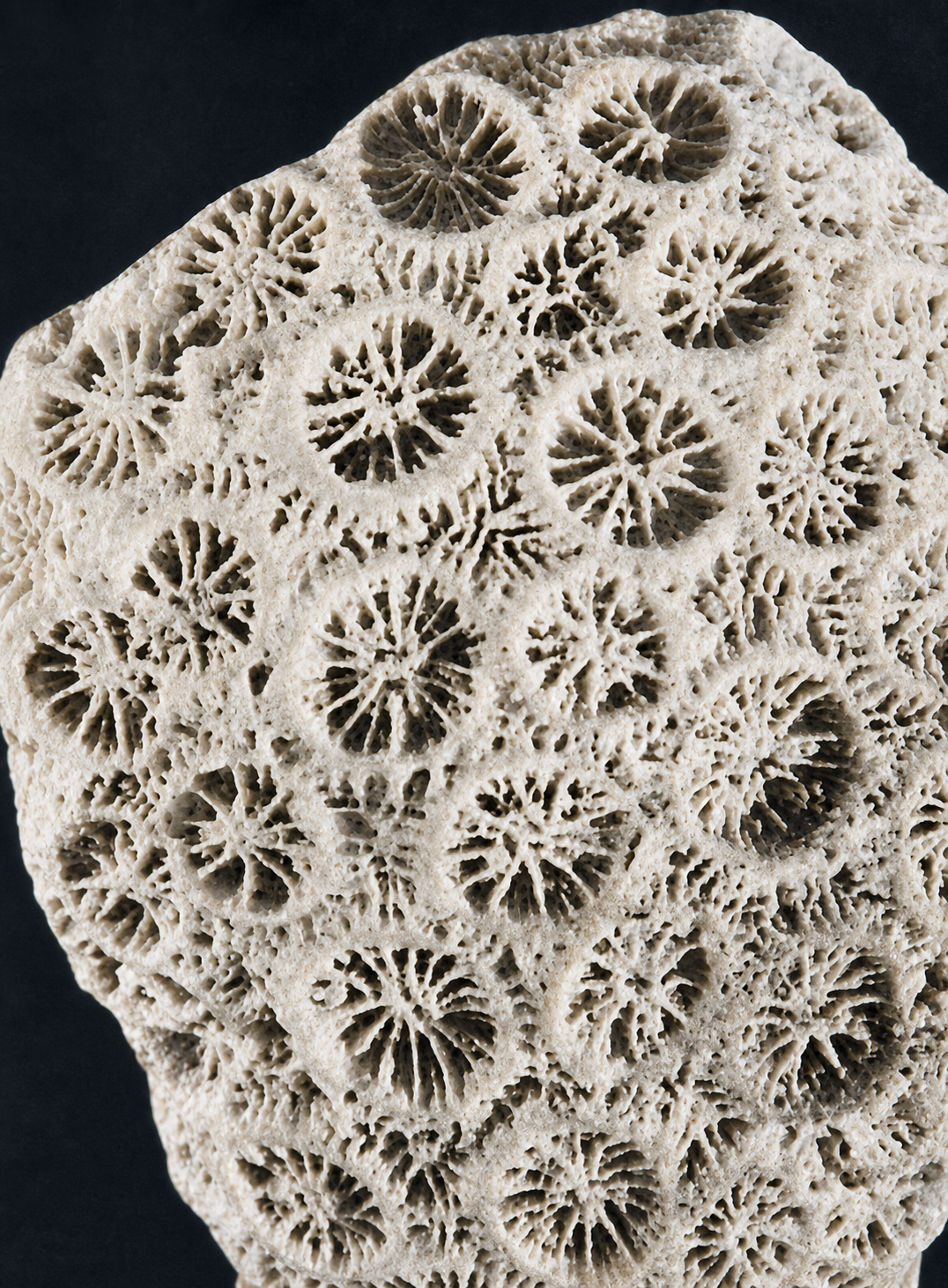
The kernels in a corn cob, for example, are in natural systems. It appears as a result of the interplay between well-defined order and the constraints of three-dimensional space.
all bead-like; but when squashed, each takes on a slightly different shape as it adapts itself to the complex configuration of the cob. The waves of
Roughness, or irregularity, in crystal growth under natural conditions.
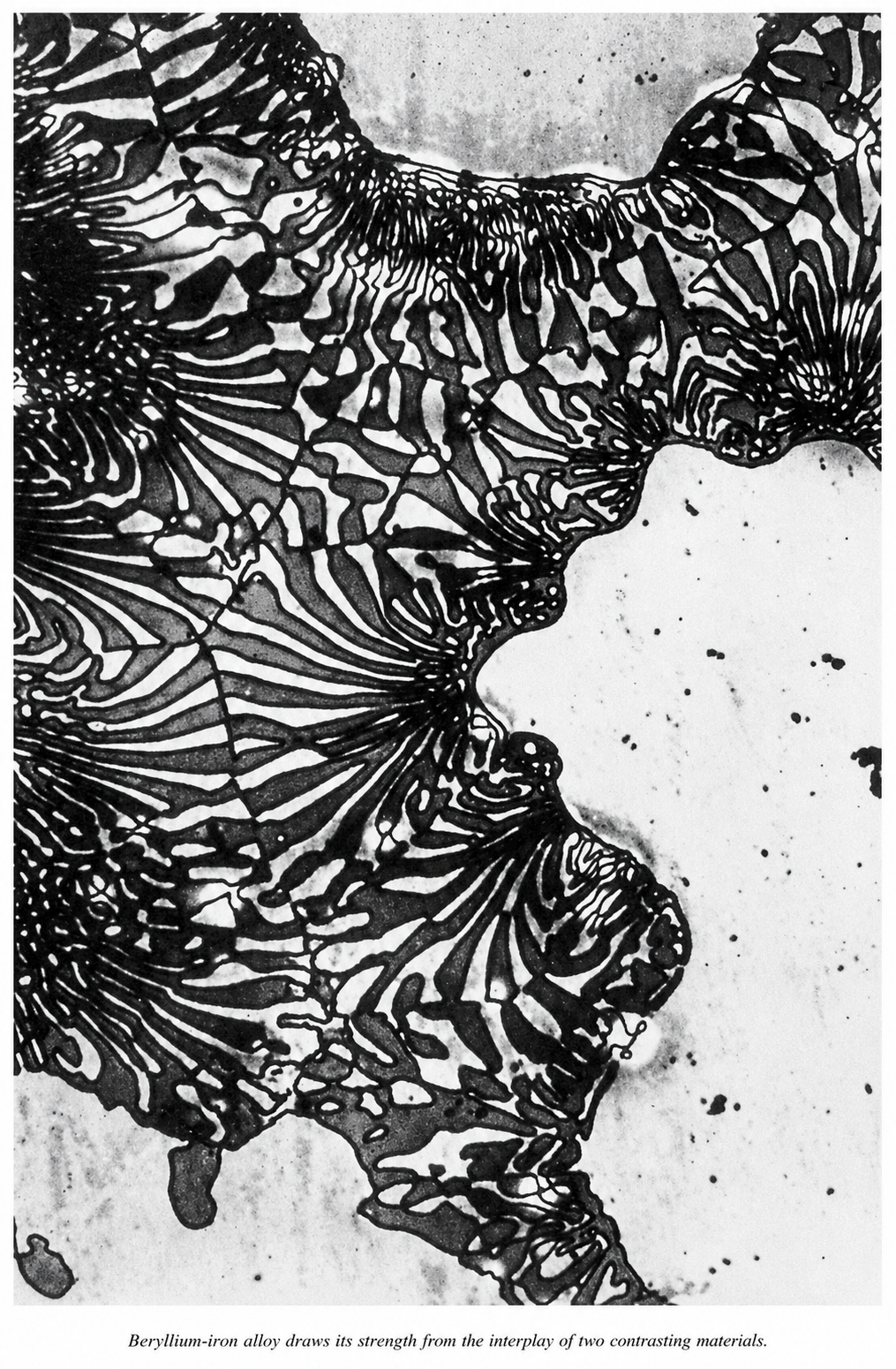
A raft of bubbles, representing crystal dislocations, shows that roughness is inevitable
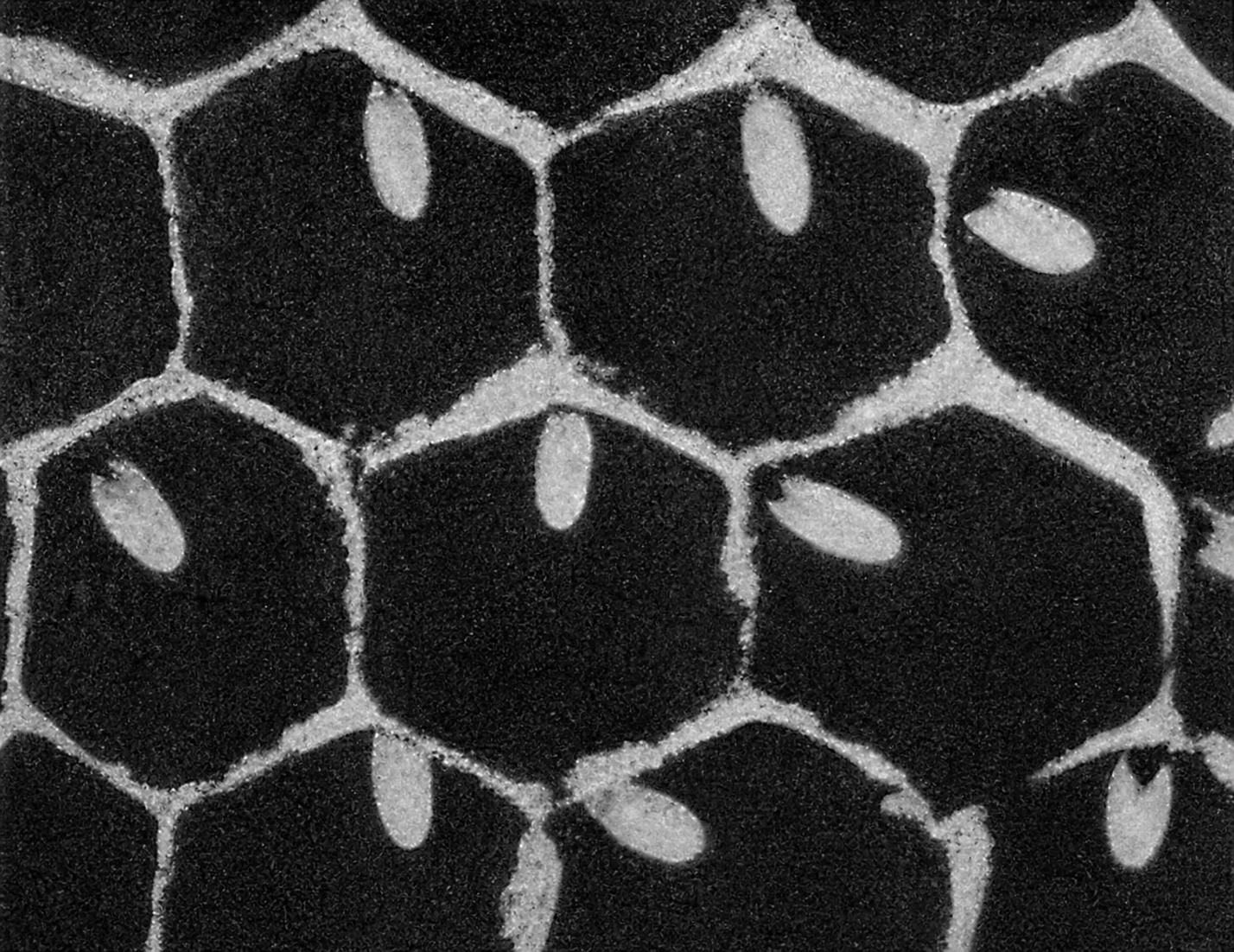
Even a very regular thing like a crystal is interrupted by the irregularities we know as dislocations because small increments of error make it impossible to continue the exact periodicity and grid structure forever. Crystal dislocations are now understood to be a necessary feature of ordinary crystal growth." An irregular world
struggling to be regular always achieves a certain level of regularity which is interrupted by unusual configurations created by the very forces that produce the regularity as they act against a framework of three-dimensional constraints inherent in space.
An excellent example of roughness in nature is visible in the radiolarian, illustrated by Hermann Weyl. This animal's outer shell is a sphere made of a mesh of hexagons. However, a wellknown theorem of Leonhard Euler's proves that a sphere cannot be covered with a mesh of hexagons, since the number of sides and vertices do not add up right." So, for a reason which has to do with the nature of space itself, the radiolarian must have a few cells with fewer than six sides -- and indeed, in the actual creature, we see that about five percent of the cells are pentagons. This illustrates vividly how the quality of roughness, far from being caused by inaccuracy or "sloppiness," instead occurs where there is a partial misfit between a very well-defined order and the space or configuration where it occurs.
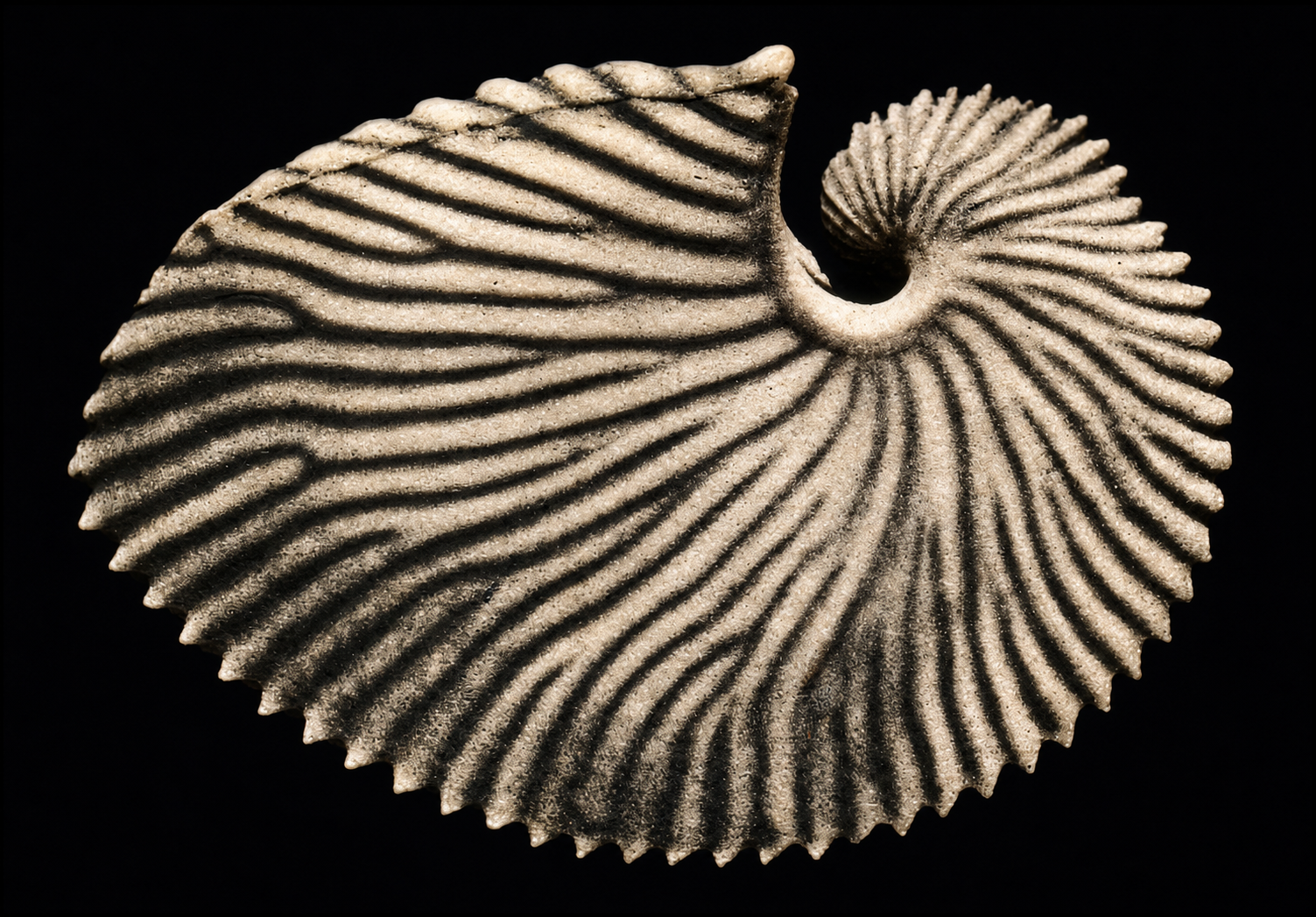
279, the nautilus shell
This forces an apparent irregularity, not for its own sake but to create a greater regularity.
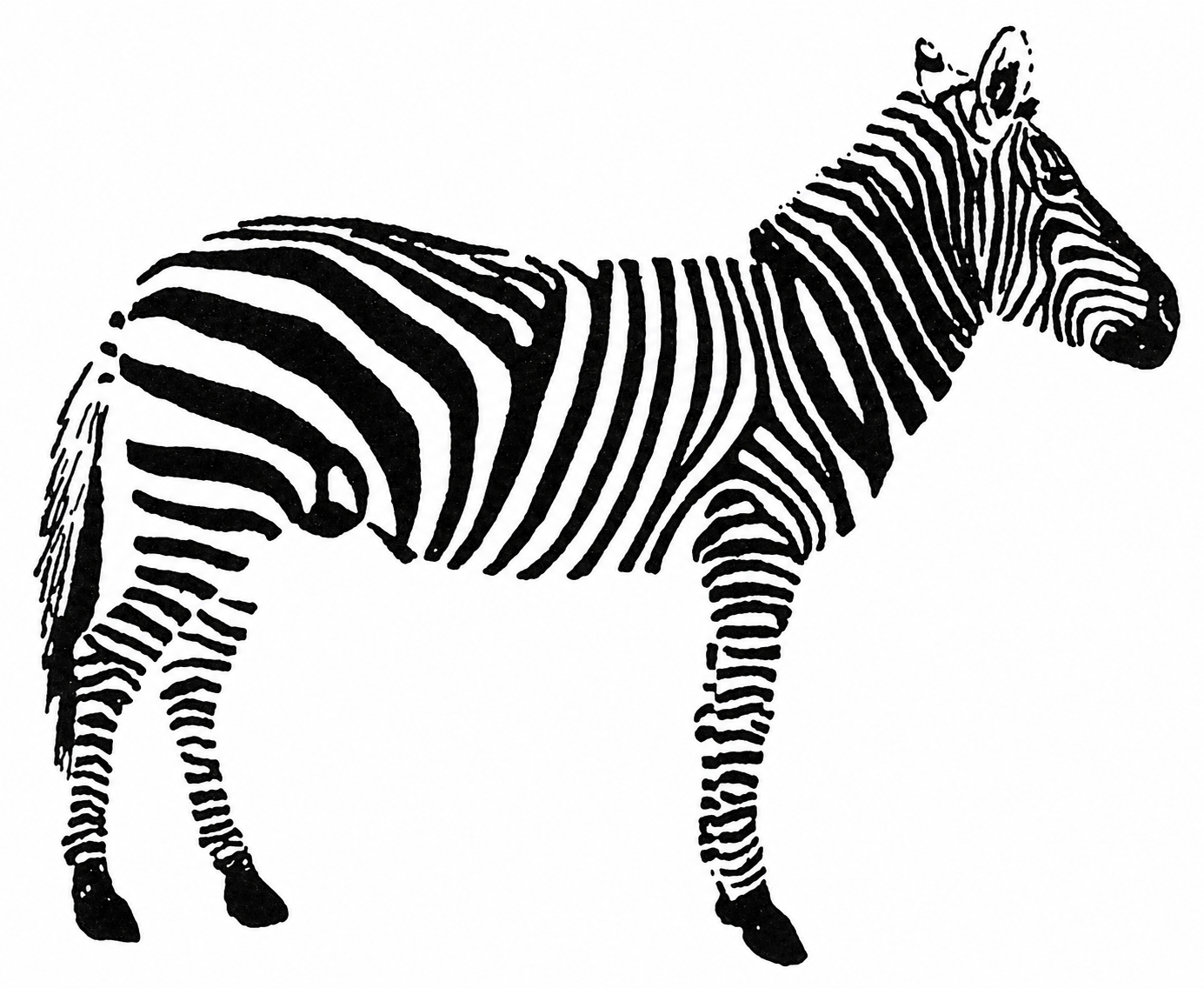
We see the same thing, less vividly, in the markings and coats of animals. The stripes of a zebra come about simply from the interaction of a regular generative process with a complex surface: the outer skin of the animal. If we were to try and paint stripes on a horse with perfect regularity, they would not fit at all, and we should have something that looked, and was, far less regular, far less orderly than the zebra's coat. Once again, the apparent irregularity arises from the system's attempt to be as orderly as possible."
It is fascinating that even atoms, for so long virtual archetypes of perfect repetition, are now known to vary, each from the next, according to the subtle electronic orbits and boundary conditions causing interactions. This is physically visible in photographs recently showing -- for the individual atoms in their individual
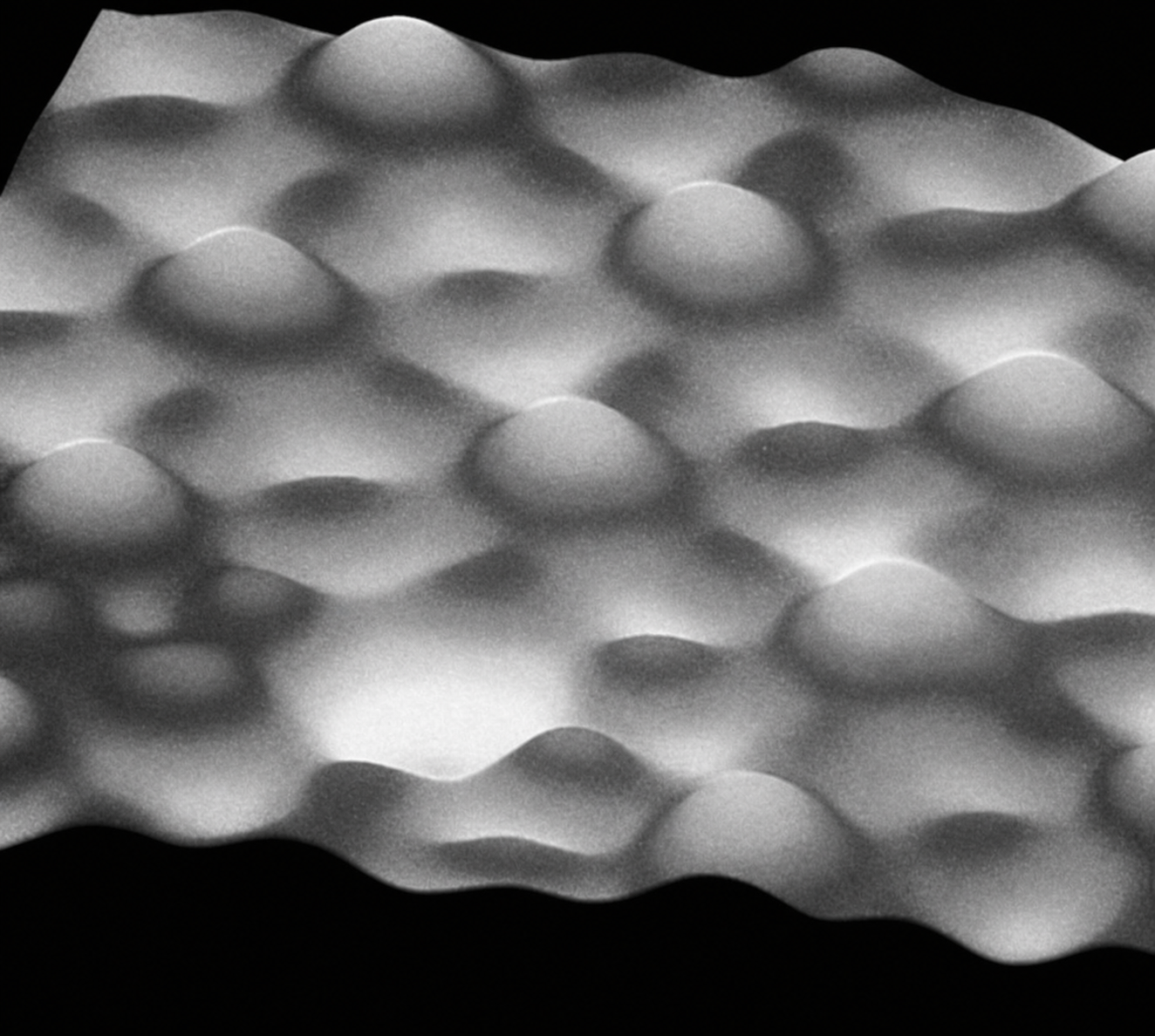
first time shapes within a crystal. Within the regular array, each atom is slightly different according to its position." To my knowledge, there has not yet been a general account of roughness as a necessary feature of a morphological system in which minute adaptations are occurring.
Photograph of silicon atoms shows that each atom is slightly different. The electronic orbits, though nominally the same, create subtle variations of dimension and position, according to their interactions.
In all natural systems, deep-lying fundamental processes ultimately give geometric form to the static structure of the system. These processes repeat certain typical angles and proportions over and over again, and it is the statistical character of these angles and proportions which determines the morphological character of the system and its parts -- even within parts which seem superficially different. For example, an aging man's face has a certain craggy character which appears in his nose, eyebrows, cheeks, stubble, and chin. The same process of skin tightening,
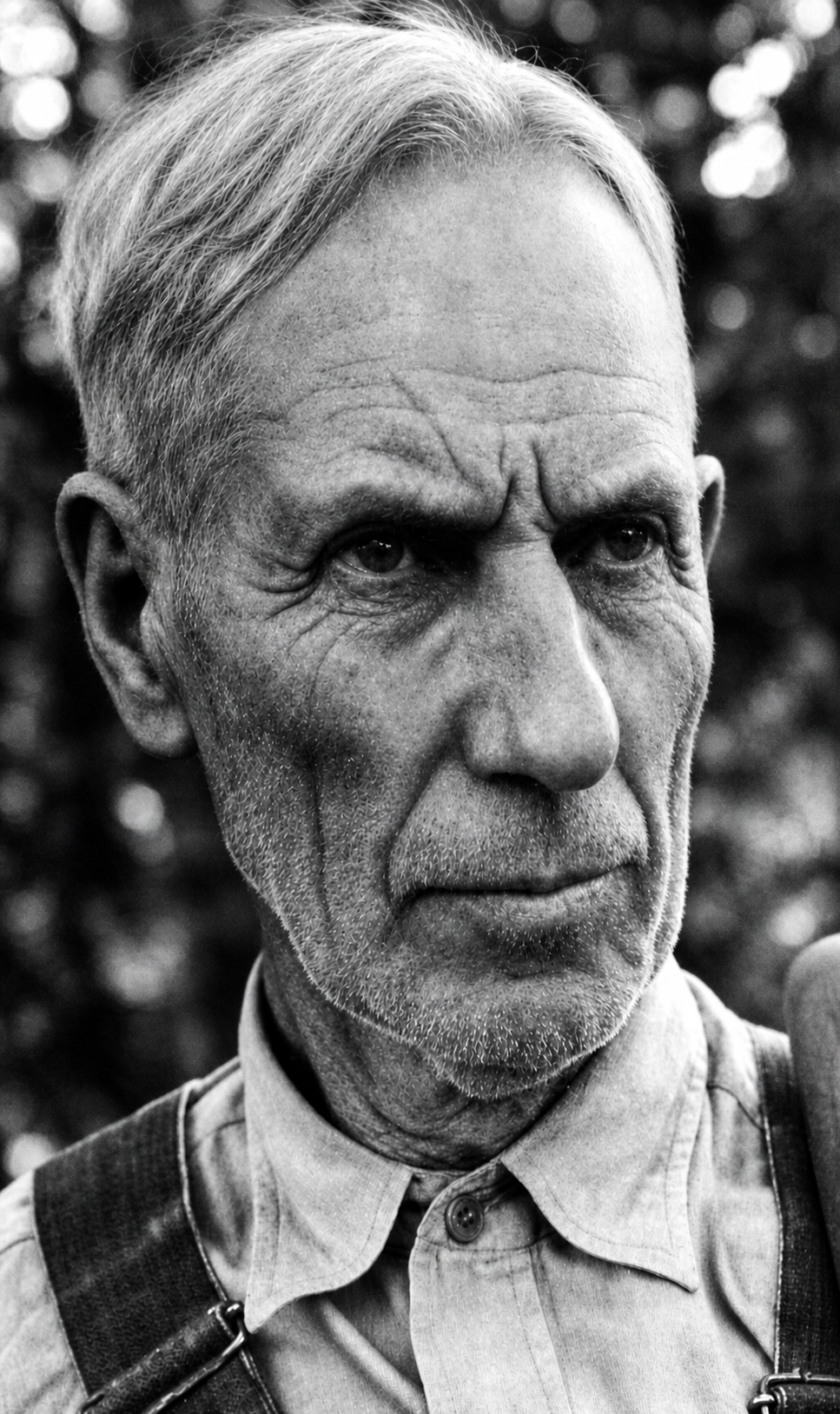
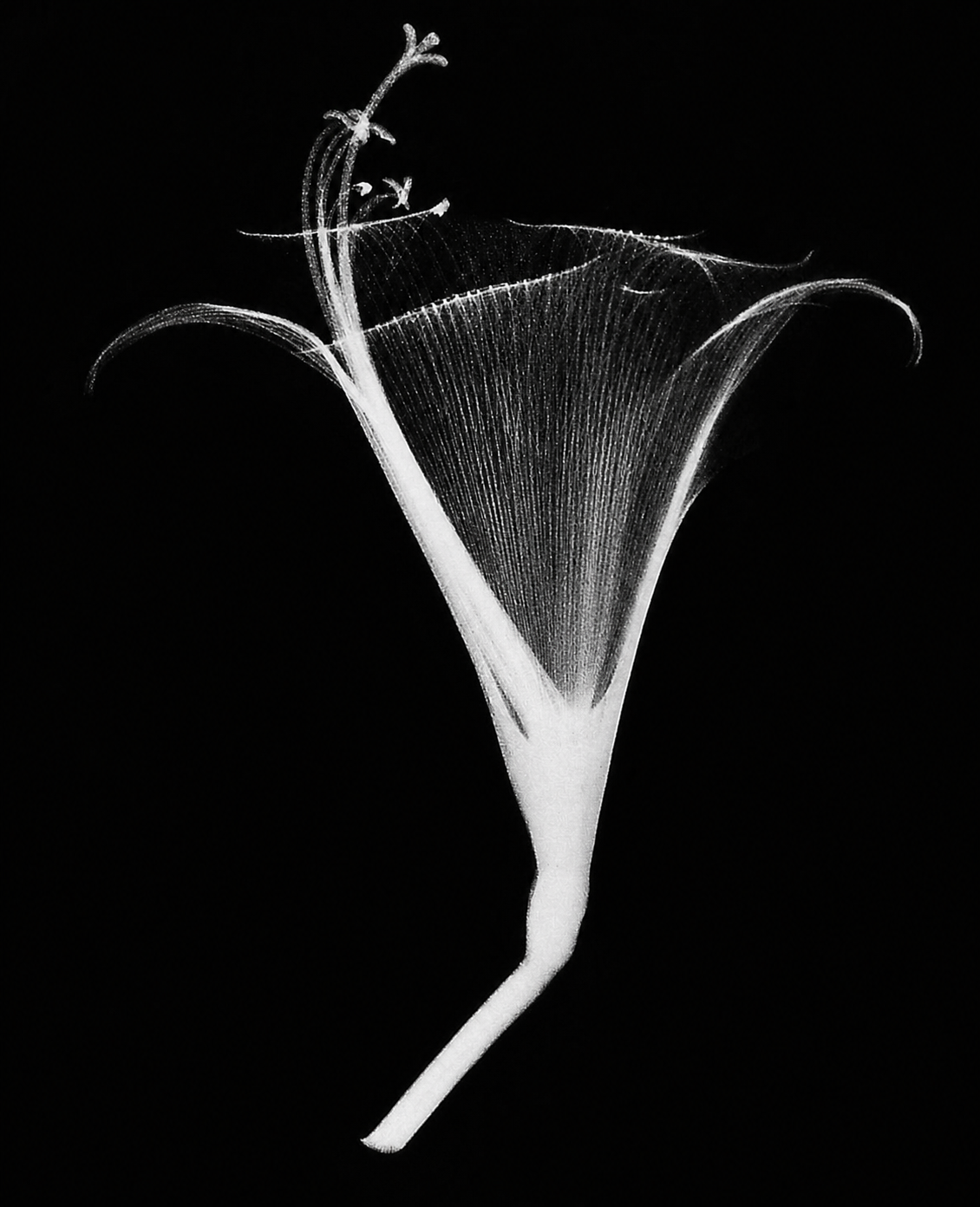
X-ray of a lily showing echoes of a single family of forms sagging, and weathering repeats similar combinations of angles over and over again. It is this which gives the beautiful consistent character of the different areas in the man's face.
The lily has its characteristic curves and the same delicate proportions formed by similar growth processes in each different component. As a result, its stems, lips of the petal, stamens, all have the same proportions and the same combinations of angles, and we feel the echoes in the system. The similarity of character -- the echo -- is a result of key parameters in the growth rules. One example published by Peter
Stevens, a detailed study of sap flow in trees, shows why a given species of tree always has a similar system of branching angles as a result of least energy expended in relation to the sap viscosity."°
If we wanted to give a general theory, we might say that echoes appear in nature because uniform growth processes create natural homomorphisms and isomorphisms among the different parts of any single system. However, a precise theory explaining the appearance of echoes in natural has be systems yet to formulated.
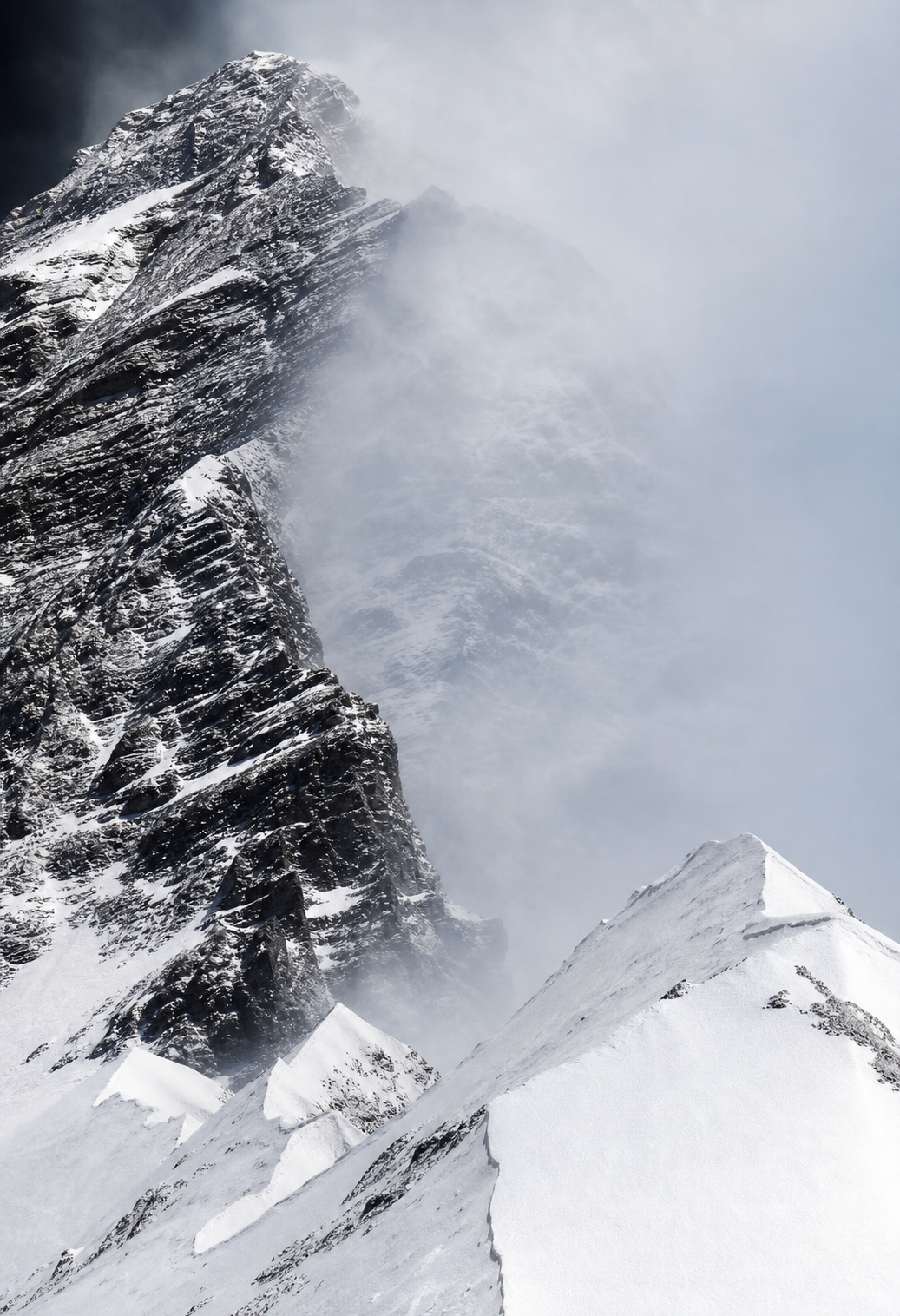
4.13 / the Void
The void corresponds to the fact that differentiation of minor systems almost always occurs in relation to the "quiet" of some larger and more stable system.
Thus smaller structures tend to appear around the edge of larger and more homogeneous structures. In plasma physics, for example, this appears in the form of systems of galaxies which have strongly homogeneous zones, bounded by more intricate zones where the structure is more intense and more densely distributed."
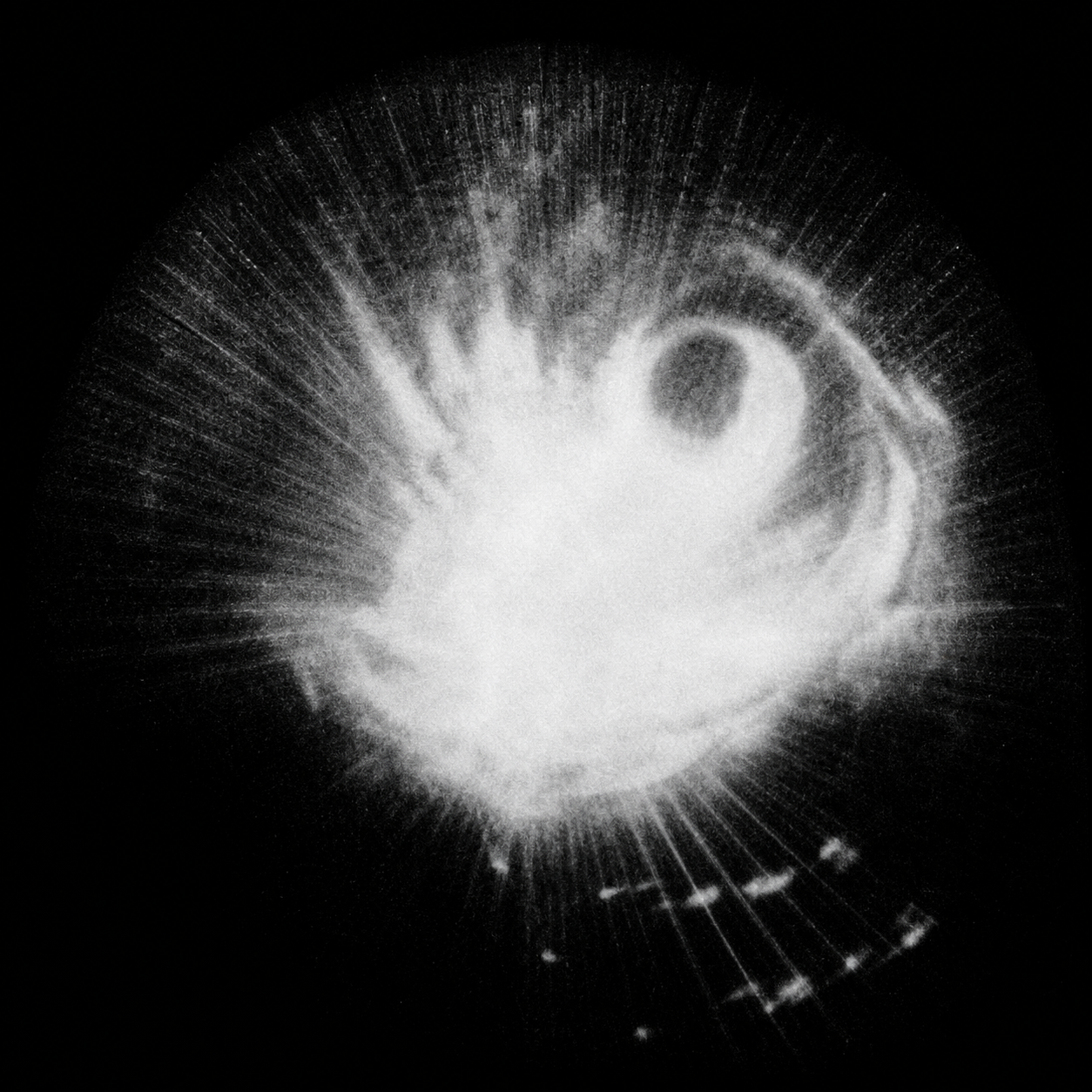
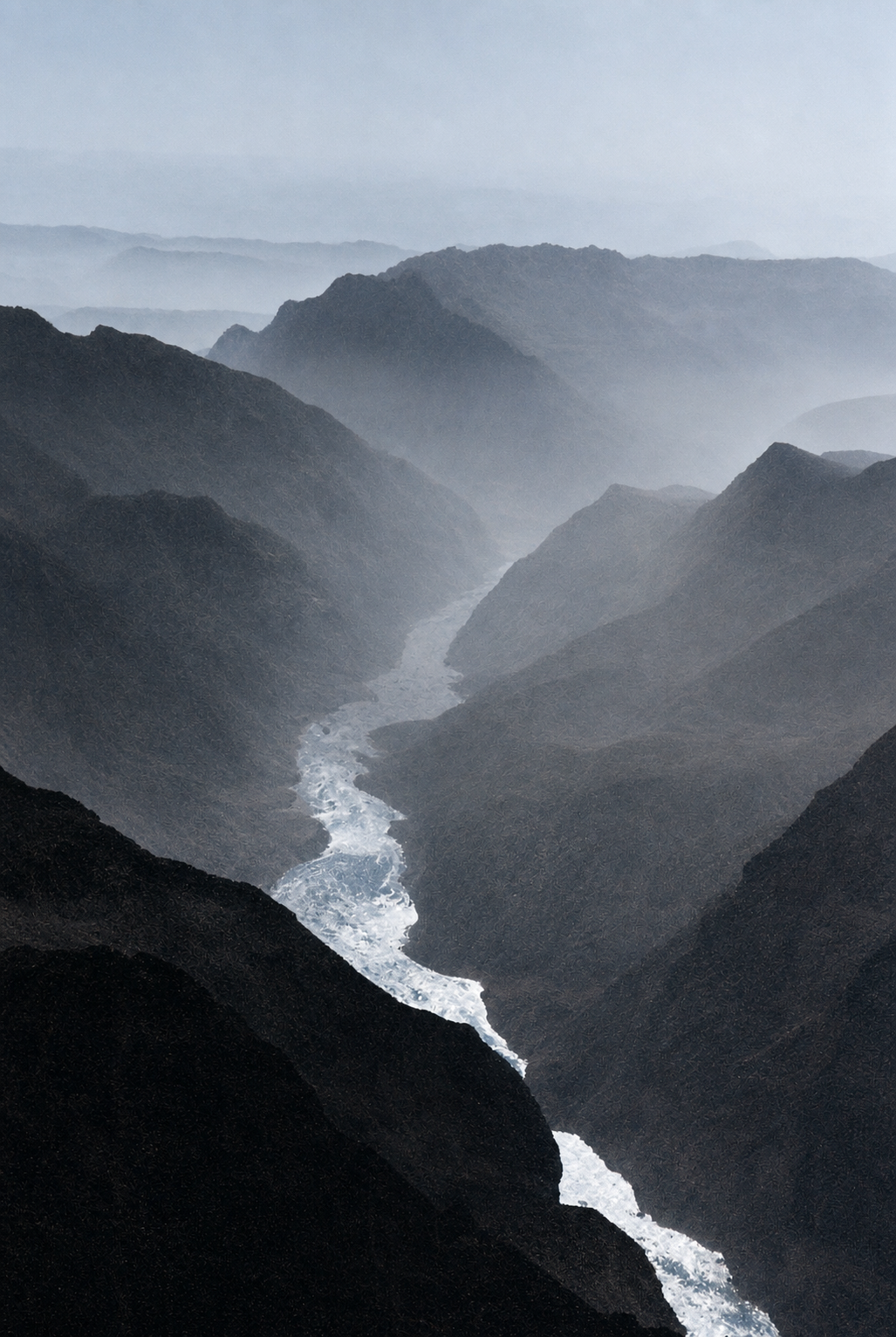
A hint of something that might one day be a general theory showing why the void will occur in complex systems to maintain their wholeness, appears in the most general models of fractal geometry.* Beyond that we have little explanation.
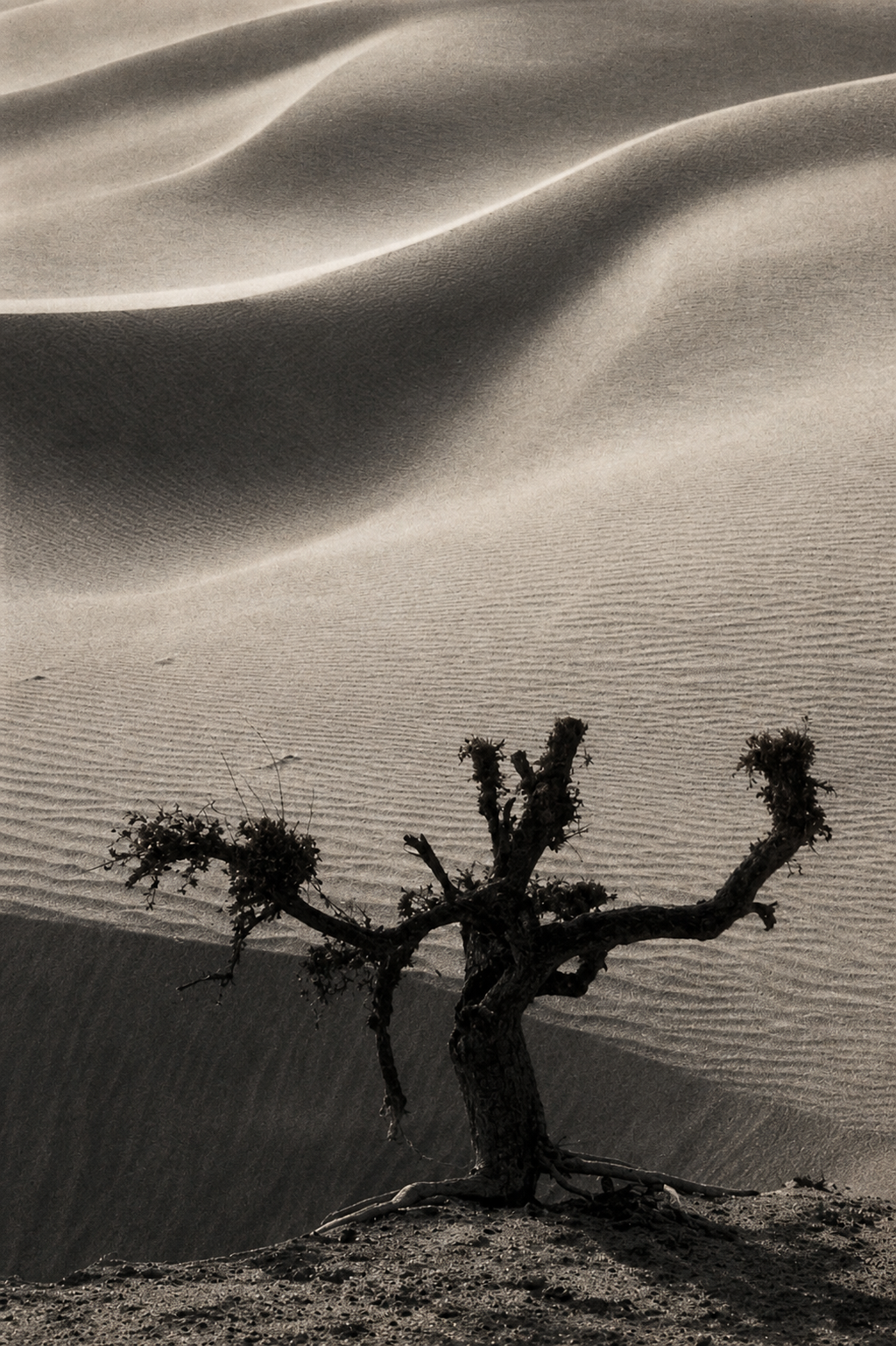
An example of simplicii and inner calm: a lone tree in the Sahara, a tiny oasis against the endless sand, shows that the istence of the void as a feature of living structure may not be easy to explain. A detailed complex structure appears here against the counterpoint of a vast repeating simplicity. Why does this feature recur.
THE FIFTEEN
4.14 / Simplicity and Inner Calm
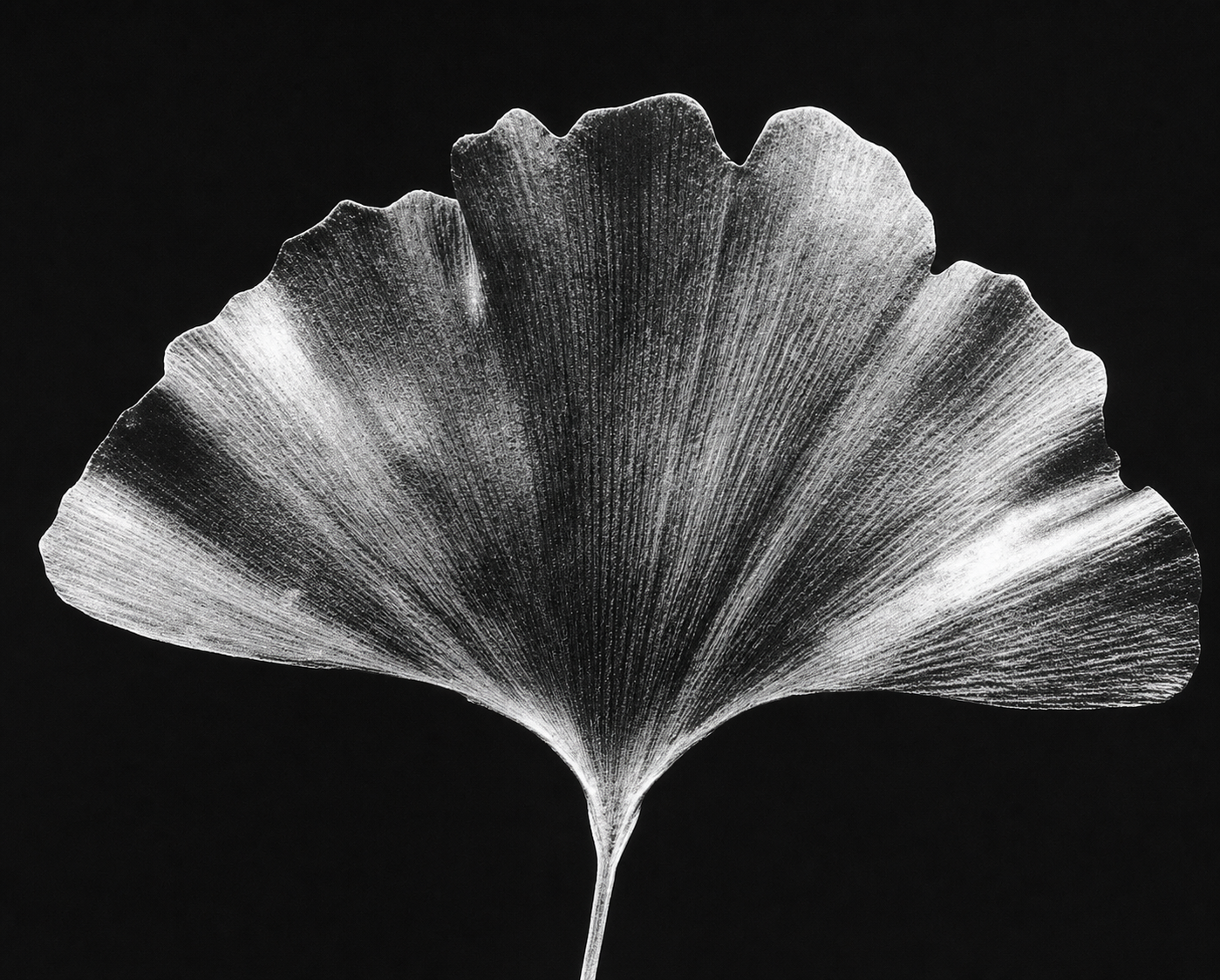
Simplicity and inner calm is the Occam's razor of any natural system: each configuration occurring in nature is the simplest one consistent with its conditions.
For example, Michel's theorem shows that the typical three-dimensional form of a leaf, with the particular way the plan and crosssection vary from stem to tip, is the least-weight structure for a cantilever supporting a uniformly distributed load. Thus, the natural form of a leaf closely approaches the "ideal," least-weight, and simplest form." The surface of a boiling fluid takes the shape which has least energy per unit mass. Many naturally occurring forms are given by minimum principles of this kind.*° Why nature follows these minimum energy
v
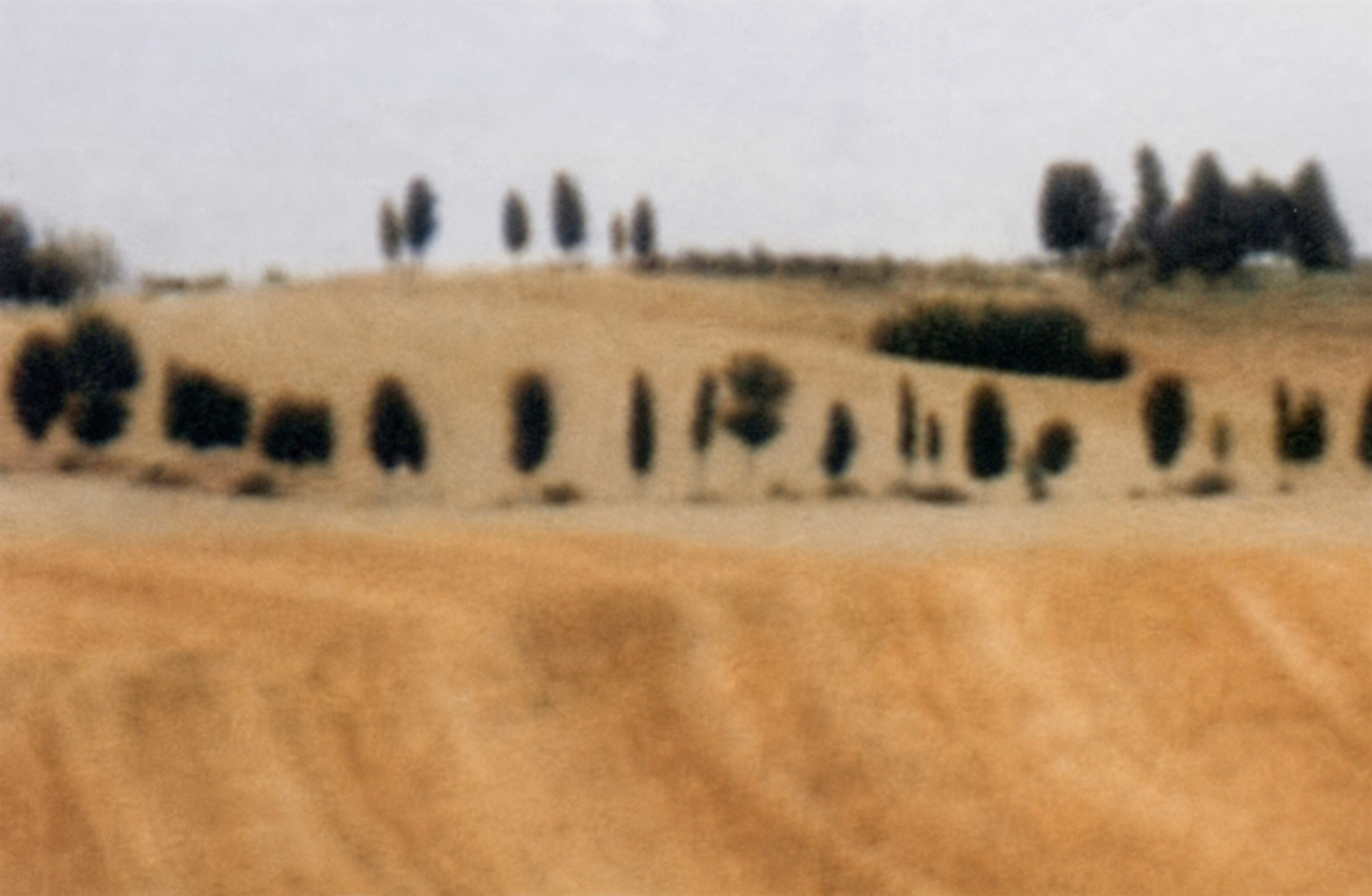
However, the principle of least action, discussed at some length in Book 2, chapter 1, provides a rather ancient formulation of simplicity and efficiency which approximates the condition in a highly general way.
Simplicity of a Tuscan landscape
4.15 / Not-separateness
Not-separateness corresponds to the fact that there is no perfect isolation of any system, and that each part of every system is always part of the larger systems in the world around it and is connected to them deeply in its behavior.
This deep interconnectedness of all things is visible in science and in the quantum mechanics of the late 20th century has been openly talked about. However, there is very little actual scientific research which directly deals with it. For examples of theory which even touch on this matter, one must go far afield and stretch small bits of theory, metaphorically, to extend them to domains where they have not yet concretely appeared.
An early formulation of a similar general intuition was given in the Mach's principle which asserts that all particles of matter are somehow deeply connected so that gravity itself, and the gravitational constant G, are dependent on the total amount of matter in the world, and thus are somehow directly linked to every other particle of matter.*!
In terms of current theory, this intuition could be understood as related to the principle known as Bell's theorem, which asserts a deep connectedness in the fabric of matter and space so fundamental that it appears that parts of the world are linked even without the transfer of normal mechanical or causal processes."
This property and the previous two properties (the void and simplicity and inner calm) are so complex that, at our present state of mathematical knowledge, there is almost no possibility that they might be formulated in precise language, or that one could give a general theory of why these phenomena occur that is more than poetic.
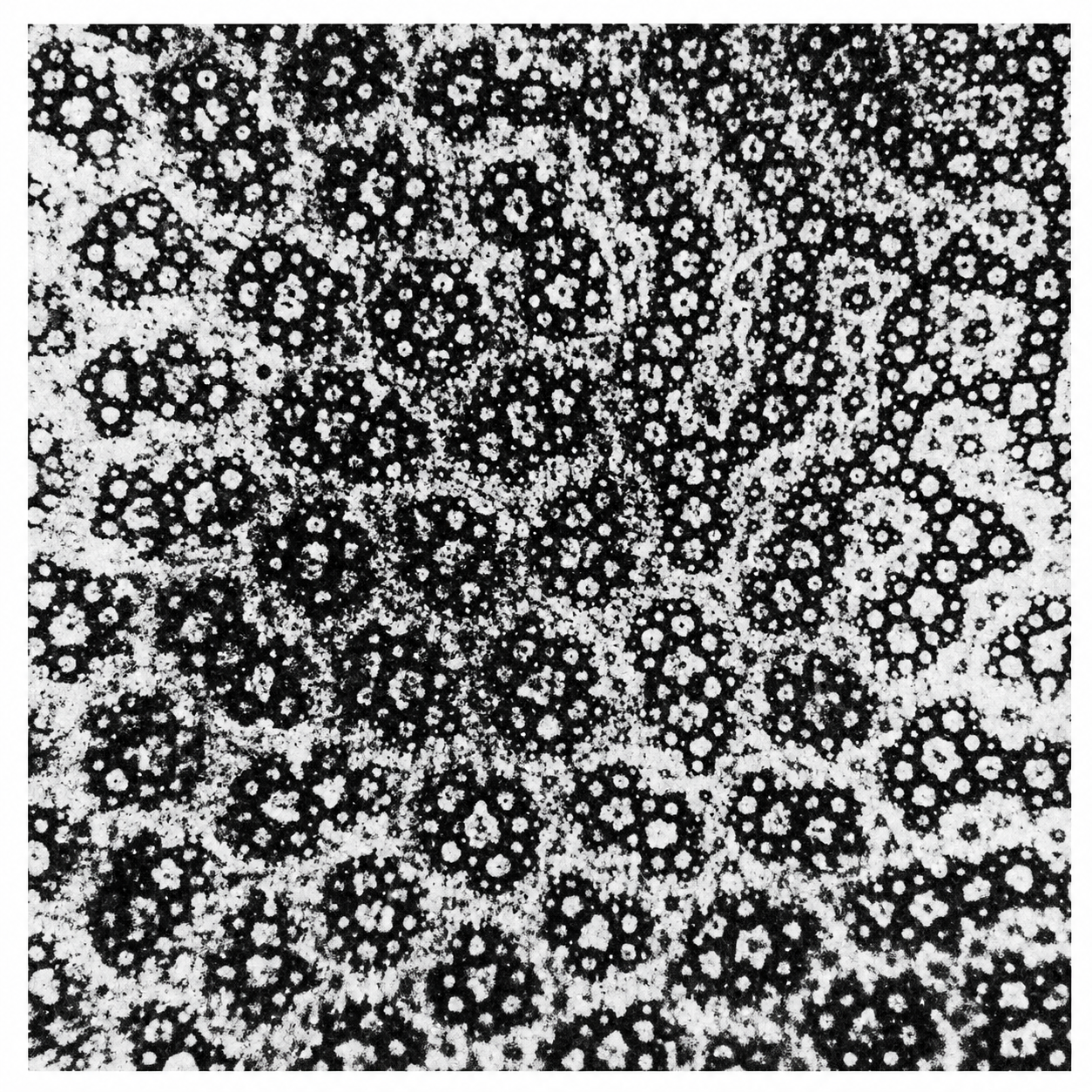
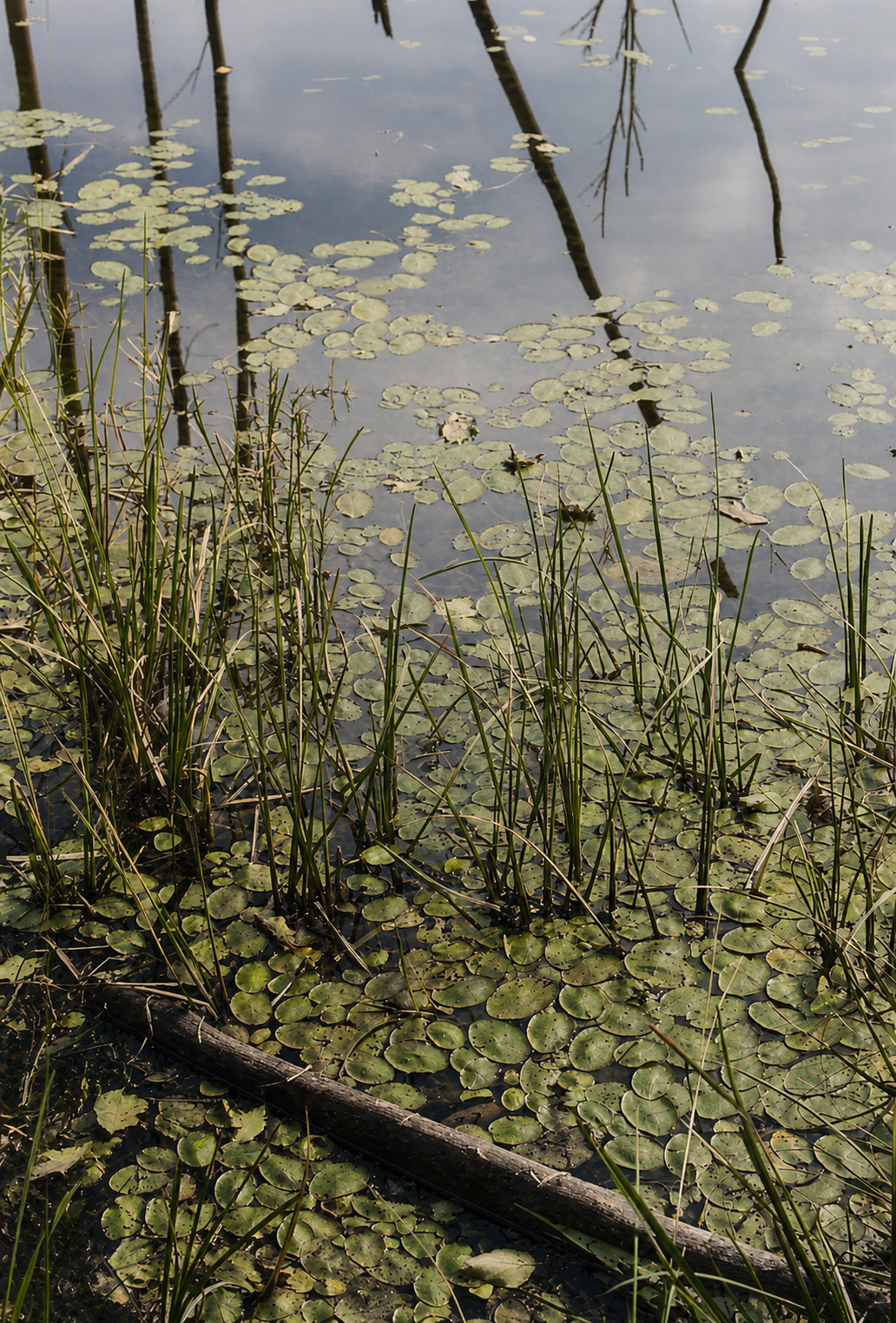
5 /WHY DO THE FIFTEEN From the examples in this chapter, we see that the fifteen properties appear again and again throughout nature. They occur and recur at every scale -- in subatomic particles, atoms, crystals, organisms, rocks, mountains, forests, global phenomena, and large-scale water and weather systems. They appear in plants, streams, clouds, animals, flowers, valleys, and rivers. In effect, they appear throughout nature -- apparently because of the normal evolution of systems.
Virtually always, the specific structure of centers in a given case can be explained as a result of forces and processes which are mechanical in the conventional sense. For example, a mountain has a certain slope which keeps repeating because at any steeper angle the material simply falls off, thus creating echoes in the slopes and rocks and hillocks of the mountain's shape. A drop of water has a flattened, nearly spherical good shape, because the surface tension of the drop pulls it into a minimum surface area for its volume, and forces of wind friction, gravity, and elasticity slightly modify the sphere.
However, such mechanical explanations do not explain why the properties themselves keep showing up. The properties appear over a wide range of scales. They certainly appear at the scale of "everyday" (that is, at the scale of our own human bodies). They also appear equally at microscopic and subatomic scales, and at astronomical and cosmological scales. In short, these geometric properties occur commonly, throughout nature, at all scales. Yet, in spite of that, as I have said, it is not usually possible to give a general explanation, or general theory, which explains why a particular property occurs pervasively as a repeating feature of the natural world.
Let me illustrate this argument in more detail. Consider the example of boundaries. Why do "large" or "fat" boundaries appear repeatedly in different kinds of systems? The reason that a human blood cell has a thick boundary is that
NATURE?
it "needs" a processing zone, where inputs to the cell are filtered and distributed before reaching the nucleus. On the other hand, the reason that the Rio Tapajés has an immense boundary where it enters the water of the Amazon is simply that the silt deposits which come down the river are hurled out into the water of the larger river, creating a chain of islands along both sides of the stream, for nearly one hundred miles. And the reason that the sun has a thick boundary -- the coron a -- is different again. There is a temperature gradient from the hot interior of the sun to the cold of outer space. The relatively cooler transition zone between these two zones takes up an enormous volume of space, hundreds of thousands of miles deep, which gives rise to physical phenomena of plasma, flames, and radiation quite unlike those in the sun's interior. So, a big boundary does in fact appear in all three cases -- but the reasons for the existence of the fat boundary are entirely different in each. Can it be a coincidence? That is hardly credible. It does not seem possible to dismiss the
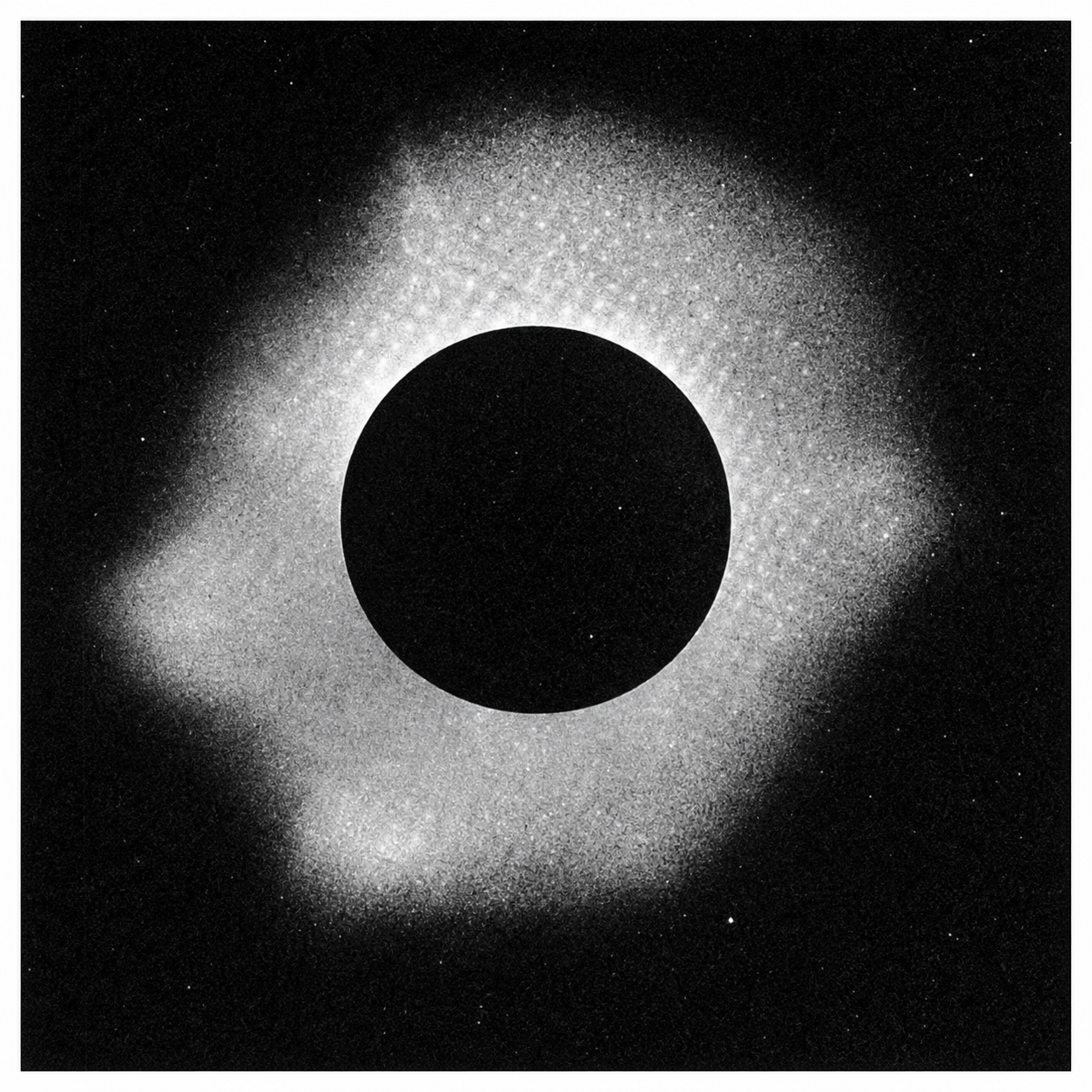
THE: FPIFT BEN appearance of thick boundaries as meaningless or as a coincidence. One guesses that there must be some higher-order explanation for the repeated formation of the boundary property. And, more generally, one guesses that there must be a higher-order explanation, too, for the repeated appearance in nature of all the fifteen properties.
What might these explanations be? We have learned, in chapter 5, that the fifteen properties are fifteen different ways in which centers in the world can intensify each other and form larger centers.
One wonders, then, if there might be a more general language for talking about function than the one we are used to -- a language which talks only about the most fundamental connections and relations between systems and is based on centers. In such a language, the properties might be explained, reasonably, as the structural complements to the formation of stable and semistable systems. Just as I have suggested, in chapter 5, that the fifteen properties are the ways in which centers can sustain each other's coherence, so this might apply equally to those functional wholes in nature which appear within any stable or semistable system. They would then be the fifteen
major ways in which "sustaining" between subwholes of a system does actually take place.
From this point of view, consider again the boundary property of the sun. The coron a is a zone several hundreds of thousands of miles deep, occupying an intermediate zone between the very hot interior of the sun where thermonuclear fusion is taking place and the cold reaches of outer space beyond the sun. In this intermediate boundary zone, certain specific reactions take place, which form a magnetic container for the sun's plasma, and which are needed to maintain the equilibrium of the whole system. We see then that in this case, the integrity or wholeness of the boundary layer plays a vital role in helping to maintain the integrity of the sun's interior.
In different fashion, the boundary of a cell's nucleus also plays a vital role in maintaining the wholeness and stability of the living cell. And the boundary of the Rio Tapajés's stream flow and the silt deposits in the Amazon are a natural result of the way the river flows. They, too, serve to separate the flow of the river in the Tapajos from the dynamically and ecologically different water of the Amazon.
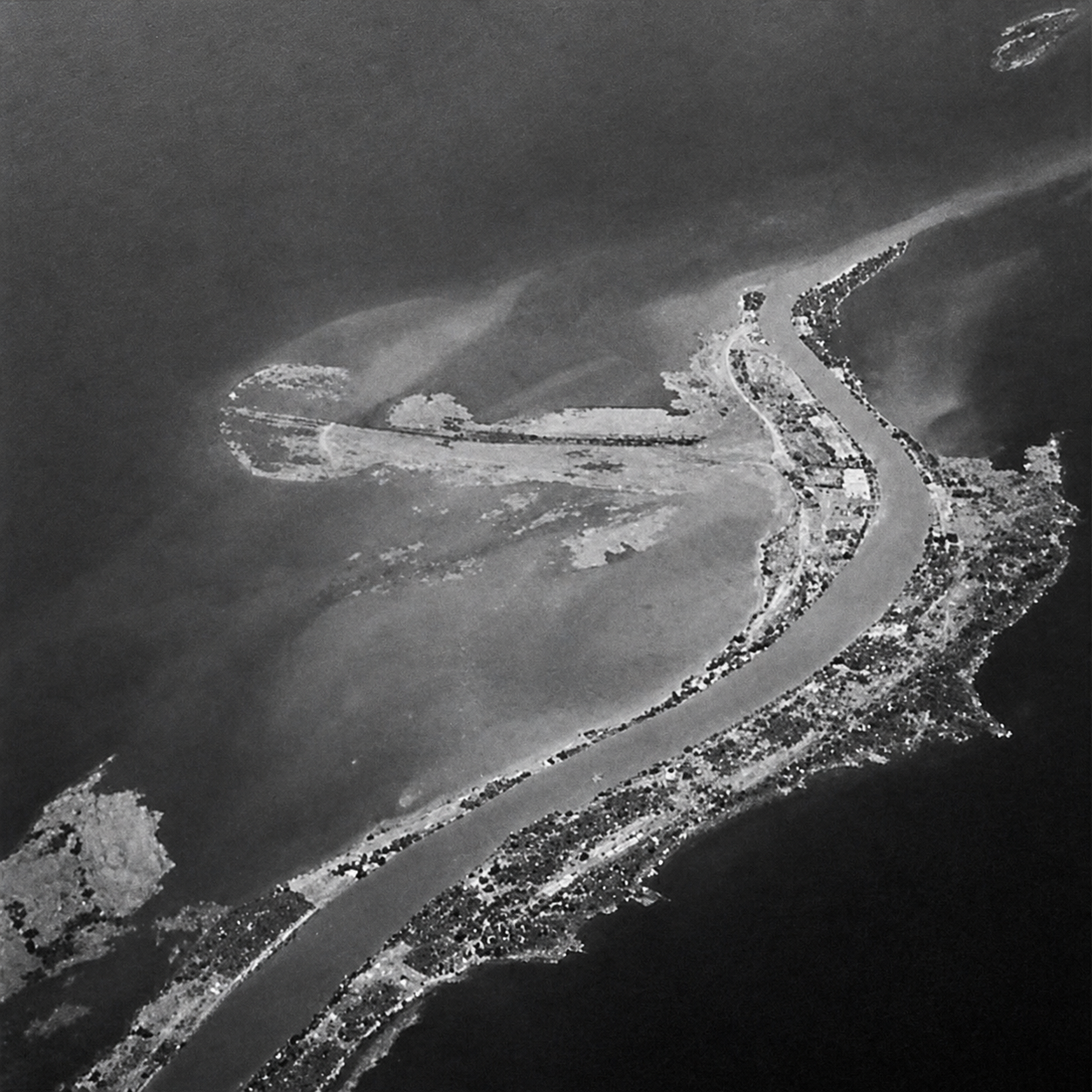
Mud boundaries formed by silt deposits where the stream flow of the Rito Tapajos enters the water of the Amazon
Of course, none of these possible arguments explain why natural processes tend to create stable systems in the world. (This matter is taken up in Book 2.%) But I do observe, for the present, that, for whatever reason, boundaries contribute to the stability and coherence of natural systems. For similar system-reasons -- so my argument goes -- the other fourteen properties, too, will tend to appear in almost any natural system which is functionally stable or semistable, contributing in some way to its coherence and stability. Each of the fifteen properties does something of a characteristic nature to maintain the integrity and viability of natural systems. The appearance of these properties is linked to the stability and robustness, of the world.
That is because these properties represent the most fundamental ways in which space can be molded to form character, to create form, to form unique structure that is capable of having properties, behavior, and interesting or useful interactions with other structures.
We might say that it is the fifteen properties which are responsible for the robust and practical character of nature, the very fact that the world works, that things happen, that matter has behavior. The fact that storms blow, that cows can be milked, that streams run on mountains, that rocks form, that trees fall over or are consumed by fire, that the earth. regenerates in spring, that earthquakes come, that buildings rock and shake and then sometimes withstand the shaking, that birds perch in the tree and snakes move in the grass, that human community is present in the ecology of a neighborhood -- all this, what I call the robustness of the earth, comes directly from the fifteen properties. It arises because of the character of natural stuff as living structure, endowed with centers which support each other, and which make each other more alive. All this that we recognize as the normal stable character of nature comes from its robustness -- from an evoliving morphology which words.
6 / the Concept of Living Structure
If the foregoing arguments are correct, the repeated appearance of the fifteen properties in natural systems is a profound result, not merely a by-product of presently available mechanical explanations about the world.™ Rather, it suggests a new view of all nature as living structure. It implies that the scheme of things I began to define in chapters 1 to 5 -- the distinction between degrees of life in things, the role played by the fifteen properties in creating life in space -- is not merely appropriate for artifacts, but must be extended to include all naturally occurring structures. In this scheme of things, nature itself then becomes visible as something quite different from the mechanical nature that 19th- and 20th-century physicists used to imagine.
Let us go back to the issue of life defined earlier. In chapters 1 to 5, I introduced the idea that the structures I am trying to characterize are structures which have life. In nature, these structures appear in a wide variety of systems and phenomena -- indeed, in virtually all structures, and not only in those of an organic nature (where there is literally biological life) but in all natural structures. In some sense the same morphological character occurs in mountains, rivers, ocean waves, blown sand, galaxies, thunderstorms, lightning, and so forth. There is life -- more of it and less of it -- in inanimate nature, too.
But all this -- all of what we loosely and traditionally call "nature" -- is then characterized by just that actual life which I have identified in the better human artifacts. Within the terms of my definitions, then, nature as a whole -- all of it -- is made of living structure. Its forests, waterfalls, the Sahara desert and its sand dunes, the vortices in streams, the ice crystals, the icebergs, the oceans, all of it -- inorganic as well as organic -- has thousands of versions of living structure. Whether organic or inorganic, most of it is alive in the terms that I have defined. The living character of these structures is different from the character of other conceivable structures that could arise, and it is this character which we may call she living character of nature.
When we think it through, there appears to be a puzzling anomaly in this conclusion. Among natural phenomena, the fifteen properties seem to appear, pervasively, in almost everything. Yet among human artifacts, the fifteen properties appear only in the good ones. How can the very same properties be marks of good structure in human artifacts, and yet be present in all of nature? What is it about nature which always makes its structures "good"?
The essence of the problem is that we have not, as far as I know, ever yet concentrated our attention on the fact that in nature, all the configurations that do occur belong to a relatively small subset of all the configurations that could possibly occur. It is that which permits, I believe, the characterization of a certain class of structures as living structure.
To make this more clear, consider two mathematical sets of possible configurations. First, is the domain C, which contains all possible three dimension al arrangements that might exist. It is almost unimaginably large, but nevertheless (in principle) it is a finite set of possible configurations. Second is the domain L, of all configurations which have living structure as I have defined it. L, too, is very large, but smaller than C. Just how large depends on the cutoff for structures we include as being living.
These two sets, Cand L, are rather artificial. My definitions have not been precise enough to make them perfectly welldefined. Still, naming them is useful, because it allows me to say some- 'thing important, that I could not say otherwise. The essence of my point is simple. It may well be that all naturally occurring configurations lie in
The domain C, of all possible configurations; and the domains L, of living structure. L,, L; L,..L, are shown as smaller and smaller domains, reflecting progressively greater degrees of life with correspondingly smaller numbers of possible configurations.
L while, on the other hand, not all man-made configurations lie in L.
For this to be true, we merely need to show that for some reason nature, when left to its own devices, generates configurations in L, but that human beings are able, for some reason, to jump outside L, into the larger part of C. That is, human beings -- and designers, above all -- are able to be un-natural.
The sum total of all that could occur (C), is the set of all possible (imaginary and actual) configurations that might appear in the world. But nature does not create all possible configurations. In fact, what we call nature only creates things from a drastically limited set of configurations (L), which are constrained by restrictions on the types of process that occur in nature. Essentially, nature always follows the rule that each wholeness which comes into being preserves the structure of the previous wholeness, so that all of nature is just that structure which can be created by a smooth structure-preserving process of unfolding.
That is why we see the fifteen properties throughout almost all of nature, at almost all scales." And, even though this living structure in nature is a product of natural laws, in buildings and human artifacts, which are works of imagination, these restrictions on structurepreserving processes do not necessarily apply. It is possible -- very easily possible -- for human designers to design unnatural structures of a kind which could not (in principle) occur in nature.
In nature the principle of unfolding wholeness (to be described in Book 2) creates living structure nearly all the time. Human designers, who are not constrained by this unfolding, can violate the wholeness if they wish to, and can therefore create non-living structure as often as they choose.
The important thing to recognize is that nature -- all nature -- is a living structure. This, on reflection, must lead to insights and modifications in our idea of what nature is and how it works.
8 / a New View of Nature
The concept of wholeness as a structure depends on the idea that different centers have different degrees of life, and therefore on the idea that the existence of these varying degrees of life throughout space is a fact about the world. To say that every part of nature has its wholeness, is to say that we cannot look at nature correctly without seeing distinctions of degree of life -- and hence of value -- within nature itself.
If we consider one part of nature -- the interplanetary space between Jupiter and Saturn, for example -- we cannot help being impressed by the relatively featureless character of this space. Even if this space has important minor variations in it, it is relatively featureless when compared with the structure of a rock, or a birch tree, or a meadow. The articulation and complexity of the field of centers is less developed in the interplanetary space.
The traditional scientific view has been that, in spite of this obvious difference between more complex and less complex space, still, as scientists we should be committed to a view where each of these structures -- the empty space, the rock, the plant -- are "equal" in value.
A world-view based on the existence of wholeness comes out rather different. If the field of centers is a governing structure which underlies all physical reality, then there is a crucial objective sense in which there is less value in the empty space, somewhat more value in the rock, and still more value in the birch tree.
In this objective sense, the relative degree of value, or relative degree of life, in different parts of matter, must then be a fundamental and objective feature of reality. Not all nature is equally beautiful. Not all of it is equally deep in its wholeness. Some of nature may be "better" than other parts of nature.
Tf this is true, it must provoke thought about deep problems. We must acknowledge that some places in the world are more damaged, and have a less coherent, less limpid structure. When man interferes with nature, we very easily get places where the simple and deep beautiful structure is replaced by something stark and harsh. Love Canal in New York, for instance, famous in the 1960s, was a place where chemicals destroyed the life of the water and took the place of a complex structure with hundreds of species and dozens of ecological niches. Introduction of certain chemicals destroyed this complex structure, left a toxic slime, and barely a handful of species remained. The complex structure of the water habitat had been destroyed or severely damaged.
Within the view of wholeness, and within the view that recognizes the existence of living structure, one of the most fundamental tenets of contemporary science -- that value is not part of science and that all matter is, from a scientific point of view, equally value-free -- can no longer be sustained. If different centers have more life and less life, more intense life, and less intense life, then material structures in which centers with more life occur -- or where they occur more densely -- are inherently more valuable.
This would represent a change of viewpoint. In the new viewpoint, the harmony of na-
THE FIFTEEN ture is not something automatic, but something to be marvelled at -- something to be treasured, sustained, harvested, cultivated, and sought actively. We are led to a new view of the natural world, different from the scientific-mechanistic view which has prevailed in recent centuries. Value, emerging as a deeper life in the wholeness of the world, turns out to be a fundamental aspect of nature itself. The variation in degrees of value occurs even among ice crystals; among the plants in a forest; in a planetary system; on a single mountain; in society; in human beings. Although much of nature is relatively neutral, beginnings of differences in value occur within nature itself.
Once people appear on the planet, the difference becomes sharply accentuated. Most human actions are governed by concepts and visions. These may be -- but may easily not be -- congruent with the wholeness which exists. Under the influence of concepts, it becomes harder and harder for us to remain in harmony with the emerging wholeness. Often our actions, intentionally or unintentionally, are at odds with our own wholeness, and at odds with the wholeness of the world. The gradual emergence of value is then drastically threatened. The activity of building the world -- what we call architecture -- plays a huge part in this process. Both those parts
of the world which are still natural -- such as valleys, fields, and streams -- and those which are clearly man-created -- such as towns, buildings, streets, gardens, and works of art -- may either go towards greater value and greater wholeness, or towards greater ugliness and confusion.
In our era, this situation has become acute. We may recognize that the world is a system in which deep wholeness can occur as an objective matter of fact. But it does not necessarily occur. The activity of building -- what we call architecture, and with it also the disciplines we call planning, ecology, agriculture, forestry, road building, engineering -- may reach deeper levels of value by increasing wholeness, or they may break down value by destroying wholeness. This is not a stylistic observation, or a culturally induced opinion, depending on a point of view. If what I have argued is true, this is a matter of fact about the wholeness in the world. Life will increase, or it will degenerate, according to the degree in which the wholeness of the world is upheld, or damaged, by human beings and human processes.
In this situation, the task of architecture, as something which contributes or does not contribute to the overall emergence of living structure in the world, becomes a vital issue which touches all of nature.
Notes
1. Rachel Carson, THE sea (London: Hart-Davis, MacGibbon, 1964); Paul Colinvaux, "Lakes and Their Development as Ecosystems," INTRODUCTION TO ECOLocy (New York: John Wiley & Sons, 1973); and J. David Allen, sTREAM ECOLOGY: STRUCTURE AND FUNCTION OF RUNNING WATERS (New York: Chapman & Hall, 1995).
2. Michael J. Woldenberg, "A Structural Taxonomy of Spatial Hierarchies," COLSTON PAPERS, 22 (London: Butterworths Scientific Publishers, 1970); and Peter Stevens, PATTERNS IN NATURE (Boston: Little, Brown & Co., 1975), 108-14.
3. George A. Miller, "The Magical Number Seven, Plus or Minus Two: Some Limits on Our Capacity for Processing Information," PSYCHOLOGICAL REVIEW 63 (1956): 81-97.
4. One symposium devoted only to this topic is L. L. Whyte, Albert G. Wilson, and Donna Wilson, eds.,
HIERARCHICAL sTRucTURES (New York: American Elsevier Publishing Company, Inc., 1969). Another author much concerned with the necessary appearance of hierarchy is Cyril Stanley Smith, a sEARCH FOR STRUC- TURE: SELECTED ESSAYS OF SCIENCE, ART, AND HISTORY (Cambridge, Mass.: MIT Press, 1981). Michael J. Woldenberg, A STRUCTURAL TAXONOMY OF SPATIAL HIERARcHies (Cambridge, Mass.: Laboratory for computer graphics and spatial analysis, Graduate School of Design, Harvard University, 1970).
5. For an account of bifurcation theory, see René Thom, sTRUCTURAL STABILITY AND MORPHOGENESIS: AN OUTLINE OF A GENERAL THEORY OF MODELS trans. from French by D.H. Fowler (Reading, Mass.: The Benjamin/Cummings Publishing Company, 1975):
6. For a fuller explanation see Book 2, chapter 1, "The principle of unfolding wholeness in nature," and chapter 2, "Structure-preserving transformations."
7. For Spemann's theory of organizers, see H. Spemann, "Experimentelle Forschungen zum Determinationsund Individualitatsproblem," NATURWISSENSCHAFT 7 (1919).
8. Avery long shot, that might conceivably give a general basis, is the possible use of spinors or twistors as a way of describing particle processes in terms of centers, Roger Penrose and Wolfgang Rindler, sPINORS AND SPACE-TIME (New York: Cambridge University Press, 1986).
g. Hannes Alfvén, WORLDS-ANTIWORLDS: ANTI- MATTER IN cCosmoLocy (San Francisco: W.H. Freeman & Co., 1966).
to. Bernard Pullman, THE MODERN THEORY OF MO- LECULAR STRUCTURE, trans. by David Antin (New York: Dover, 1962).
u. Stephen W. Hurry, THE MICROSTRUCTURE OF cexts (London: John Murray Ltd., 1965); and THE Liv- ING CELL (San Francisco: W.H. Freeman and Company, 1965).
12. The idea that curves are essentially defined in their most important attributes by cusps and concavities -- which means precisely by the centers formed in the curve -- is developed fully by Louis Locher Ernst, e1n- FUEHRUNG IN DIE FREIE GEQMETRIE EBENER KURVEN (Basel: Birkhauser Verlag, 1952).
13. D'Arcy Wentworth Thompson, oN GROWTH AND ForM (Cambridge: Cambridge University Press, 1917).
14. For very nice overall discussion of symmetries in nature see Hermann Weyl, symmetry (Princeton: Princeton University Press, 1952). Also see A. V. Shubnikov, N. V. Belov, and others, coLOoRED SYMMETRY William T. Holser, ed. (Oxford: Pergamon Press, 1964).
15. H. Jaffe and Milton Orchin, sYMMETRIE IN DER CHEMIE (Heidelberg: Dr. Alfred Huthig Verlag, 1973).
16. See, for example, Brian P. Pamplin, ed., crysTAL GROWTH (New York: Pergamon, 1980).
17. L. Fejes Toth, REGULAR FIGURES (New York: Mac- Millan, 1964); Andreas Speiser, THEORIE DER GRUPPEN VOM ENDLICHER ORDNUNG (Berlin 1958); and H.S.M. Coxeter, INTRODUCTION TO GEOMETRY (London 1961). Turing's early theory of morphogenesis includes the idea that local symmetries must develop, and will play a significant part in, the morphogenesis. A. M. Turing, "The Chemical Basis of Morphogenesis," in PHILOSOPHICAL TRANSACTIONS OF THE ROYAL SOCIETY, B (London: 1952), 237 ff.
18. See discussion in Ian Stewart and Martin Golubitsky, FEARFUL SYMMETRY: IS GOD A GEOMETER? (Oxford: Blackwell Publishers, 1992), throughout, and especially 166-68.
20. Spencer Brown, Laws OF FORM (London: Allen & Unwin, 1969), 1 ff.
21. Stevens, PATTERNS IN NATURE.
22. See for example Simon Toh, "Crystal dislocations," in INTRODUCTION TO MATERIALS SCIENCE (University of Queensland: Department of Mining, Minerals, and Materials, 2000).
23. Weyl, syMMETRY, 89-90.
24. A detailed explanation of the formation of zebra stripes has been given as a diffusion reaction model, in James D. Murray, "How the Leopard Gets Its Spots," SCIENTIFIC AMERICAN 258, no. 3 (March 1988): 80-87. In this model the roughness, which comes about as a result of interaction between the rules of the diffusion reaction system and the surface geometry of the animal, is clearly explained as a necessity.
25. Hans von Baeyer, TAMING THE ATOM (London: Viking, 1992). The first photographs of atoms.
26. Stevens, PATTERNS IN NATURE, 94-6.
27. See, for example, Hannes Alfvén, "Galactic Model of Element Formation," 1EEE TRANSACTIONS IN PLASMA SCIENCE, 17 (April 1989): 259-63.
28. Benoit B. Mandelbrot, THE FRACTAL GEOMETRY OF NATURE (New York: W.H. Freeman & Co., 1983).
29. H.L. Cox, THE DESIGN OF STRUCTURES OF LEAST WEIGHT (Oxford: Pergamon Press, 1965), 105-13, and especially fig. 44.
30. For many examples of variation al problems, see Stefan Hildebrandt and Anthony Tromba, MATHEMAT- ICS AND OPTIMAL FORM (New York 1984); see also L. A. Lyusternik, SHORTEST PATHS: VARIATIONAL PROBLEMS, translated and adapted from Russian by P. Collins and Robert Brown (New York: Macmillan, 1964).
31. See, for instance, Charles Misner, Kip Thorne, and John Wheeler, Gravitation (San Francisco: W.H. Freeman, 1980); and Hermann Weyl, PHILOSOPHY OF MATHEMATICS AND NATURAL SCIENCE (London 1950).
32. Foranon-mathematical account of Bell's theorem, see David Peat, EINSTEIN'S MOON: BELL'S THEOREM AND THE CURIOUS QUEST FOR QUANTUM REALITY (Chicago: Contemporary Books, 1990).
33. See chapters 1 and 2.
34. I am very grateful to Professor Nikos Salingaros for discussion which helped me to get this point clear.
35. This topic is discussed extensively in Book 2, where the dynamical origins of the distinction between the action of nature and the action of human designers is made clear. That explains how it is that the fifteen properties occur so often in all naturally occurring systems; while, in human artifacts -- buildings, and works of art, and our environment -- they occur infrequently. They occur in buildings only when human beings are able to act as nature does. See Book 2, THE PROCESS OF CREATING LIFE, chapters 1 to 4.
36. In Book 2, chapter 2, I shall show why the unfolding of wholeness by structure-preserving transformations must inevitably create these fifteen properties, when wholeness is allowed to unfold naturally.
In chapters 1 to 6, I have laid a foundation for order to be understood as some degree of living structure, a well-defined structure that occurs in varying degrees in buildings and in every part of space.
Now, in Part 2, I come to a second view of the same subject matter. In the next five chapters, it will turn out that order -- and living structure -- cannot be fully understood if we regard them merely as something in Cartesian space, a mechanism separate from ourselves. Rather it turns out that living structure is at once both structural and personal. It is related to the geometry of space and to how things work. And it is related to the human person, deeply attached to something in ourselves, even emanatin ig perhaps from ourselves, in any case inextricably connected with what we are, who we are, how we feel ourselves to be as individuals and persons, beings whose lives are ultimately based on feeling.
This revelation -- and after seeing what I have to say about it you may agree, hope, that it is a revelation -- means that the nature of order as I have defined it, in principle at least can finally bridge the gap that Alfred North Whitehead called "the bifurcation of nature." It unites the objective and subjective, it shows us that order as the foundation of all things (and, not so incidentally, as the foundation of all architecture, too) is both rooted in substance and rooted in feeling, is at once objective in a scientific sense, yet also substantial in the sense of poetry, in the sense of the feelings which make us human, which make us in secret and vulnerable thoughts, just what we are.
This 1s, scientifically and artistically, a hopeful and amazing resolution. It means that the four-hundred-year-old split created between objective and subjective, and the separation of humanities and arts from science and technology can one day disappear as we learn to see the world in a new fashion which allows us simultaneously to be cold and hard where that is appropriate, and soft and warm where that is appropriate. It can lead to a mental world where art, form, order, and life unite our feeling with our objective sense of reality, in a synthesis which opens the door to a form of living in which we may be truly human.
Above all, this is the threshold of a new kind of objectivity.